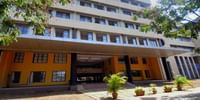
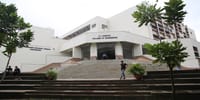
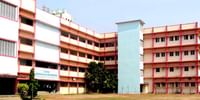
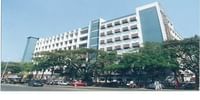
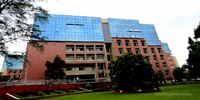
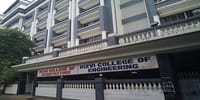
KJ Somaiya Institute of Engineering and Information Technology (KJSIEIT) is an autonomous engineering institute in Mumbai. It was established in 2001 under Somaiya Vidyavihar University. The institute is affiliated with the University of Mumbai, has AICTE approval and holds a NAAC A grade with a 3.2 score.
KJSIEIT is based in Chunabhatti, Sion, Mumbai. In the NIRF 2025 Engineering category, it holds the national rank of #275. It was also placed in the 51 to 100 band of the NIRF Innovation category in 2023 and was the only private institute from Mumbai among the top 100 in that category.
Students have access to specialised laboratories, smart classrooms, campus Wi-Fi and a central library. The institute does not provide an on-campus hostel.
- BE (Bachelor of Engineering) is offered in four specialisations: Computer Engineering, Information Technology, AI and Data Science, and Electronics and Telecom Engineering.
- Course length: 4 years
- General category total fee: INR 23,14,800
- BE Lateral Entry for diploma holders is available in Computer Engineering, IT, AI and Data Science, and Electronics and Telecom Engineering.
- Course length: 3 years
- Total fee: INR 17,64,849
- The ME in Artificial Intelligence takes 2 years and has a total fee of INR 9,30,508.
- PhD programmes in Computer Engineering, IT, and Electronics and Telecom Engineering have a total fee of INR 13,28,497.
Every four-year BE branch has a total fee of INR 23,14,800. This includes INR 6,01,200 in the first year and INR 5,71,200 in each of the next three years. Recent placement figures include a highest package of INR 13 LPA, an average package of INR 7 LPA and visits from more than 207 companies.
KJSIEIT Courses and Fees
KJSIEIT runs four-year BE courses in four engineering fields, a two-year ME in Artificial Intelligence and research programmes at the PhD level. Fees are the same for all four BE specialisations. General category students pay INR 23,14,800 for the complete BE programme.
| Course | Duration | Eligibility | Total Fees (General) |
|---|---|---|---|
| BE in Computer Engineering | 4 years | At least 60% in 10+2 with PCM and a valid MHT CET or JEE Main score | INR 23,14,800 |
| BE in Information Technology | 4 years | At least 60% in 10+2 with PCM and a valid MHT CET or JEE Main score | INR 23,14,800 |
| BE in AI and Data Science | 4 years | At least 60% in 10+2 with PCM and a valid MHT CET or JEE Main score | INR 23,14,800 |
| BE in Electronics and Telecom Engineering | 4 years | At least 60% in 10+2 with PCM and a valid MHT CET or JEE Main score | INR 23,14,800 |
| BE Lateral Entry in all branches | 3 years | Diploma in a relevant engineering branch | INR 17,64,849 |
| ME in Artificial Intelligence | 2 years | BE or BTech in a relevant field with GATE or MH CET PG | INR 9,30,508 |
| PhD in CE, IT or E&TC | Minimum 3 years | ME or MTech in a relevant field | INR 13,28,497 |
Subject to revision. Kindly check with the official sources to confirm
The first-year BE fee is INR 6,01,200, including one-time deposits and caution money. The fee for each year from the second through the fourth is INR 5,71,200. Maharashtra government rules provide reduced tuition rates for OBC and other reserved category students.
KJSIEIT Admission Process
Entry to KJSIEIT depends on the programme. First-year BE and lateral-entry seats are filled through the relevant Maharashtra CET Cell CAP route. ME applicants follow the PG CAP process, while PhD applicants apply directly to the institute.
BE Admission
For first-year BE admission, students must qualify through MHT CET or JEE Main and complete the Centralised Admission Process conducted by the Maharashtra CET Cell. CAP registration is available through cetcell.mahacet.org.
- Academic requirement: 10+2 with Physics, Chemistry and Mathematics, with at least 60% aggregate. The minimum is 50% for reserved categories.
- Accepted test: MHT CET for the PCM group or JEE Main Paper 1.
- Admission sequence: obtain a valid examination score, register for CAP, submit course and college choices, receive the round-wise allotment, complete document verification and confirm the allotted seat.
For the GOPENS category, the 2024 MHT CET cutoff for Computer Engineering ranged from 97.5 to 97.88 percentile. The Information Technology range was 96.88 to 97.19 percentile. The projected 2026 cutoffs were expected to remain within a similar range, subject to applicants' performance and the number of available seats.
BE Lateral Entry
Engineering diploma holders can join the second year directly through the lateral-entry route. Applicants need a diploma in the corresponding engineering discipline with the required minimum aggregate. Selection uses MHT CET Lateral or JEELAT scores and takes place through a separate CAP round for Direct Second Year admission.
ME and PhD Admissions
Admission to the ME in Artificial Intelligence accepts GATE or MH CET PG scores and is processed through the Maharashtra CET Cell PG CAP. PhD applicants must have an ME or MTech degree in a related discipline and clear the institute-level entrance test. Applications for the PhD programme are submitted directly to the KJSIEIT admissions office.
The programme-wise examination and admission routes are given below.
| Course | Entrance Exam Accepted | Process |
|---|---|---|
| BE First Year | MHT CET or JEE Main | Maharashtra CET Cell CAP |
| BE Lateral Second Year | MHT CET Lateral or JEELAT | Maharashtra CET Cell CAP Direct Second Year |
| ME in Artificial Intelligence | GATE or MH CET PG | Maharashtra CET Cell PG CAP |
| PhD | Institute-level entrance test | Direct application to KJSIEIT |
KJSIEIT Placements
More than 207 companies, including 18 first-time recruiters, took part in the latest KJSIEIT placement season. The highest offer reached INR 13 LPA, while the average package was INR 7 LPA.
Recruitment covers IT services, product companies, BFSI and telecom. Employers include TCS, Cognizant, Infosys, LTI Mindtree, Accenture, Reliance, Vodafone, Amazon Web Services and Mu Sigma. Placement activity is higher in Computer Engineering and Information Technology than in Electronics and Telecom Engineering.
| Placement Metric | Recent Data |
|---|---|
| Highest Package | INR 13 LPA |
| Average Package | INR 7 LPA |
| Companies Visited | 207+ |
| Top Recruiters | TCS, Cognizant, Infosys, LTI Mindtree, Accenture, AWS, Mu Sigma |
| Core Sectors | IT Services, Product, BFSI, Telecom |
KJSIEIT Rankings
KJSIEIT appears in the NIRF Engineering rankings and has also received recognition in the NIRF Innovation category. Its institutional accreditation is a NAAC A grade with a 3.2 score.
| Ranking Body | Category | Rank or Band |
|---|---|---|
| NIRF | Engineering | #275 in 2025 |
| NIRF | Innovation | 51 to 100 band in 2023, the only private institute from Mumbai in the top 100 |
KJSIEIT Campus and Infrastructure
KJSIEIT operates from Chunabhatti in Sion, central Mumbai. Students can reach the institute through Sion and Chunabhatti railway stations. Its teaching facilities are designed for specialised engineering education.
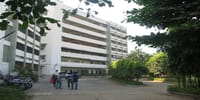
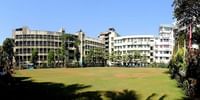
The campus has separate laboratories for Computer Engineering, Information Technology, AI, and Electronics and Telecom Engineering. Other facilities include a central library with digital resources, projector-equipped smart classrooms, Wi-Fi, sports amenities and a canteen. KJSIEIT has no on-campus hostel. Students commonly arrange housing in Sion, Kurla, Chembur or Ghatkopar, with access through local trains and the Metro.
KJSIEIT vs Thadomal Shahani Engineering College vs Fr. Conceicao Rodrigues College of Engineering
KJSIEIT, Thadomal Shahani Engineering College and Fr. Conceicao Rodrigues College of Engineering are Mumbai-based, AICTE-approved autonomous engineering institutes affiliated with the University of Mumbai. The comparison below covers their location, accreditation, ranking, fees, branches, hostel availability and admission route.
| Parameter | KJSIEIT | Thadomal Shahani Engineering College | Fr. Conceicao Rodrigues College of Engineering |
|---|---|---|---|
| Location | Chunabhatti, Sion, Mumbai | Khar, West Mumbai | Bandra, West Mumbai |
| NAAC Grade | A (3.2) | A+ | A |
| NIRF 2025 Rank | #275 in Engineering | Outside the NIRF top 200 | Outside the NIRF top 200 |
| BE Total Fees | INR 23,14,800 | INR 20 to 22 Lakhs | INR 20 to 22 Lakhs |
| Key Branches | CE, IT, AI and DS, E&TC | CE, IT, EXTC, Mechanical, Civil | CE, IT, EXTC, Mechanical |
| Hostel | Not available | Not available | Not available |
| Admission Route | MHT CET, JEE Main and Maharashtra CAP | MHT CET, JEE Main and Maharashtra CAP | MHT CET, JEE Main and Maharashtra CAP |
Of the three institutes, KJSIEIT holds a #275 NIRF Engineering rank for 2025. TSEC has the higher NAAC grade and offers more branch options, including Mechanical and Civil Engineering. Students seeking a west Mumbai campus often consider CRCE in Bandra. Admission to all three institutes follows the Maharashtra CAP route.
KJSIEIT FAQs
Ques. Where does KJSIEIT stand in the NIRF rankings?
Ans. KJSIEIT holds the #275 position in the NIRF 2025 Engineering category. In 2023, it was placed in the 51 to 100 band for NIRF Innovation and was the only private institute from Mumbai among the category's top 100. It also has a NAAC A accreditation with a 3.2 score.
Ques. How much does the complete KJSIEIT BE programme cost?
Ans. General category students pay a total of INR 23,14,800 for the four-year BE course. The first-year charge is INR 6,01,200, including one-time deposits, followed by INR 5,71,200 in each of the next three years. OBC and other reserved category students receive reduced tuition rates according to Maharashtra government rules.
Ques. How can a student secure BE admission at KJSIEIT?
Ans. Students must qualify through MHT CET for the PCM group or JEE Main and then join the Maharashtra CET Cell CAP. The steps include portal registration, option submission and participation in merit-based seat-allotment rounds. Applicants need Physics, Chemistry and Mathematics in 10+2 with at least 60% aggregate, or 50% for reserved categories.
Ques. What are the main KJSIEIT placement figures?
Ans. KJSIEIT has recorded a highest package of INR 13 LPA and an average package of INR 7 LPA. More than 207 companies participated in recent placements. Major recruiters included TCS, Cognizant, Infosys, LTI Mindtree and Accenture.
Ques. Is student accommodation available inside the KJSIEIT campus?
Ans. No, KJSIEIT does not operate an on-campus hostel. Students generally arrange accommodation in Sion, Kurla, Chembur or Ghatkopar. These areas are accessible through the Central Railway and Metro networks.
Ques. What engineering programmes and branches does KJSIEIT offer?
Ans. The four BE branches are Computer Engineering, Information Technology, AI and Data Science, and Electronics and Telecom Engineering. Postgraduate students can study ME in Artificial Intelligence. PhD options cover Computer Engineering, IT, and Electronics and Telecom Engineering.

.png?tr=h-40,w-155,c-force)