Indian Institute of Science (IISc) is a public research university in Bengaluru, Karnataka, founded in 1909 through the joint efforts of Jamsetji Nusserwanji Tata and the Government of Mysore. It is an Institute of National Importance, a Deemed University under the UGC Act, and a UGC Category-1 institution. IISc holds NAAC A+ accreditation.
In the NIRF Rankings 2025, IISc secured 1st place among Indian universities and 1st place in Research. It was also ranked 2nd Overall by NIRF and 219th worldwide in the QS World University Rankings 2026.
The institute is known for advanced study and research in science, engineering, design, and management. Its 400-acre campus in the Malleswaram-Yeshwantpur area has more than 40 departments and research centres, a national science library, the Tata Memorial Centre, and a national biodiversity reserve.
- B.Sc (Research): This is a 4-year interdisciplinary UG course with a total fee of INR 3.58 Lakhs. Entry is based on JEE Advanced, with a General category rank below 1,000, or a KVPY scholarship.
- B.Tech: The 4-year degree is available in Aerospace Engineering, Material Science Engineering, Mathematics and Computing, and Mechanics and Computing. Students enter through JEE Advanced, and the General category rank requirement is below 856. Each programme costs INR 8.38 Lakhs in total.
- M.Tech (Research mode): Students can choose from more than 30 research-based disciplines. The 2-year programme costs INR 56,600 and includes GATE-funded stipend support.
- M.Tech (Industry mode): These self-funded courses include AI at INR 9.60 Lakhs, Data Science at INR 8.90 Lakhs, and ECE at INR 9.60 Lakhs.
- M.Sc and M.Sc + Ph.D (Integrated): These courses cover Sciences, Life Sciences, and Physical Sciences. Admission uses JAM or JEST scores, and total fees range from INR 1.34 Lakhs to INR 2.28 Lakhs.
- Master of Management: Designed as a 2-year management course for professionals, this programme has a total fee of INR 5.79 Lakhs.
- Ph.D: Doctoral study is available in more than 40 disciplines across IISc departments. Admission may use GATE, CSIR-NET, UGC-NET, or JEST, while the total fee is INR 92,400. Eligible scholars receive an MHRD fellowship of INR 37,000 to INR 42,000 per month.
Research-mode M.Tech students receive INR 12,400 to INR 28,000 per month, depending on their year of study and funding source. IISc directly provides INR 4,000 per month to B.Sc (Research) students who do not hold a KVPY scholarship.
During the 2025 placement cycle, the highest offer reached INR 65 LPA, while M.Tech students recorded an average package of INR 27.05 LPA. Recruiters included Amazon, Google, Microsoft, Samsung, Nokia, Dell, and Goldman Sachs.
Admission Update: The next Ph.D intake is expected in January 2027. The next UG and M.Tech admission cycles will be linked to JEE Advanced 2027 and GATE 2027.
IISc Courses and Fees
IISc runs courses in basic sciences, engineering, design, and management. Research M.Tech and Ph.D students pay comparatively low fees and may receive stipends or fellowships that cover these costs. Industry-mode M.Tech courses do not carry this funding and must be financed by the student.
| Programme | Duration | Admission Route | Total Fees |
| B.Sc (Research) | 4 years | JEE Advanced / KVPY (JoSAA) | INR 3.58 Lakhs |
| B.Tech (4 branches) | 4 years | JEE Advanced (JoSAA) | INR 8.38 Lakhs |
| M.Sc (Chemical, Life, Physical Sciences) | 2 years | JAM / JEST | INR 1.34 to 2.28 Lakhs |
| M.Sc + Ph.D (Integrated) | 5 to 6 years | JAM / JEST / JEE Advanced | INR 1.34 Lakhs |
| M.Tech (Research mode, 30+ disciplines) | 2 years | GATE score | INR 56,600 |
| M.Tech (AI) | 2 years | IISc test and interview | INR 9.60 Lakhs |
| M.Tech (Data Science) | 2 years | IISc test and interview | INR 8.90 Lakhs |
| M.Tech (ECE) | 2 years | IISc test and interview | INR 9.60 Lakhs |
| M.Des (Product Design) | 2 years | CEED / IISc test | INR 56,600 |
| Master of Management | 2 years | IISc test and interview | INR 5.79 Lakhs |
| Ph.D (40+ disciplines) | 4 to 6 years | GATE / CSIR-NET / UGC-NET / JEST | INR 92,400 |
Subject to revision. Kindly check with the official sources to confirm
The four B.Tech specialisations are Aerospace Engineering, Material Science Engineering, Mathematics and Computing, and Mechanics and Computing. The separate 4-year B.Sc (Research) course follows an interdisciplinary structure, with students choosing their major after completing Year 1. Stipend support can cover the fee paid by research-mode M.Tech and Ph.D scholars.
IISc Admission Process
Admission requirements differ across IISc programmes. JoSAA handles entry to the undergraduate courses, while GATE and JAM are used for several postgraduate programmes. Applicants to research courses may also need to attend an academic interview after being shortlisted through their entrance scores.
Programme-wise Entrance Routes
| Programme | Entrance Exam |
| B.Sc (Research) | JEE Advanced score through JoSAA counselling or KVPY scholarship holder |
| B.Tech (all 4 branches) | JEE Advanced score through JoSAA counselling |
| M.Tech (Research mode) | GATE score in the relevant discipline |
| M.Tech (Industry mode: AI, Data Science, ECE) | IISc written test and interview |
| M.Sc and M.Sc + Ph.D | JAM for Science, JEST for Physics or CS, or JEE Advanced |
| Master of Management | IISc written test, group discussion, and interview |
| Ph.D (all disciplines) | GATE, CSIR-NET, UGC-NET, JEST, JAM, or ICAR, depending on the discipline |
B.Tech and B.Sc (Research) Admission
JoSAA counselling allocates IISc B.Tech and B.Sc (Research) seats using JEE Advanced results. IISc appears in JoSAA under the INI category, which is similar to the category used for IITs.
- For B.Tech, applicants need Physics, Chemistry, and Mathematics in Class 12 and a valid JEE Advanced score. The 2025 closing ranks were 856 for the General category and 446 for OBC-NCL.
- B.Sc (Research) applicants need an eligible JEE Advanced rank through JoSAA or an active KVPY SB/SX fellowship. After the first year, students choose a major such as Physics, Chemistry, Mathematics, Biology, Materials, or Earth Sciences.
- Students first register for JoSAA after the JEE Advanced result, add IISc B.Tech or B.Sc (Research) to their preferences, accept the seat offered through counselling, and report to the campus when classes begin.
M.Tech (Research Mode) Admission
A valid GATE score in the relevant subject is required for research-mode M.Tech admission. IISc prepares a shortlist from these scores and calls selected applicants for an academic interview. Successful students receive seats supported by stipends.
- Applicants need a B.Tech, B.E., or M.Sc degree in the relevant field. Departmental GATE requirements differ, though core IISc departments generally use scores above 700 out of 1,000.
- Depending on the scholarship and year of study, monthly support ranges from INR 12,400 to INR 28,000.
Ph.D Admission
IISc generally conducts Ph.D admissions twice each year. The August semester commonly uses an application period from February to April, while the January semester normally uses a September to October application period. Doctoral education is a central part of IISc and represents its largest academic activity.
- Candidates usually need a master's degree in the relevant subject, although B.Tech graduates may apply for direct Ph.D entry. A strong research record and a valid GATE, CSIR-NET, UGC-NET, or JEST score may be required according to the discipline.
- Eligible scholars receive an MHRD Doctoral Fellowship of INR 37,000 to INR 42,000 per month.
- Outstanding students entering through the IIT or IISc B.Tech direct route may receive a PMRF amount of INR 70,000 to INR 80,000 per month.
IISc Cutoffs
IISc uses programme and category-based entrance requirements. The available figures include the 2025 JEE Advanced closing ranks for B.Tech and the general GATE score level commonly used by core departments for research-mode M.Tech shortlisting.
| Programme | Category or Requirement | Cutoff |
| B.Tech | General category, JEE Advanced closing rank 2025 | 856 |
| B.Tech | OBC-NCL, JEE Advanced closing rank 2025 | 446 |
| M.Tech (Research mode) | General level used by core departments | 700+ out of 1,000 in GATE |
IISc Placements and Career Outcomes
Research is the main focus at IISc. Many Ph.D and research M.Tech graduates move into academic work, national organisations such as DRDO, ISRO, TIFR, and DAE, or research and development teams in global companies. Students from M.Tech, M.Sc, M.Des, and the Master of Management programme who want industry careers can use the institute's placement programme.
In 2025, IISc reported a highest package of INR 65 LPA. The average package for M.Tech students was INR 27.05 LPA. Amazon, Google, Microsoft, Samsung R and D, Nokia, Dell, Goldman Sachs, Intel, and Qualcomm were among the major recruiters.
| Career Pathway | Typical Destination |
| Research Mode M.Tech | Research and development roles at Samsung, Qualcomm, Intel, or IBM, Ph.D study, and national laboratories |
| Industry Mode M.Tech (AI, Data Science) | Product companies, analytics organisations, and AI laboratories, with the average in the INR 27 LPA range |
| B.Tech and B.Sc (Research) | Leading graduate schools in India or abroad, entry-level industry positions, and start-ups for students admitted through JoSAA |
| Ph.D | International postdoctoral research, teaching positions at IITs, IIMs, and NITs, and roles at DRDO, ISRO, TIFR, government laboratories, or global research centres |
| Master of Management | Management work in the technology sector, consulting, and analytics, supported by an active Placement Cell |
IISc Ph.D graduates regularly obtain positions at leading institutes worldwide. Under the NIRF Research measure, the institute records the highest research paper output per faculty among Indian institutions. This measure also carries the largest single weight in the NIRF ranking.
IISc Rankings
IISc is placed at the top of India's research and university categories. Its QS rank of 219 in 2026 also made it the highest-ranked Indian institution in that edition of the QS World University Rankings.
| Ranking Body | Category | 2025/2026 Rank |
| NIRF | University | 1 |
| NIRF | Overall | 2 |
| NIRF | Research | 1 |
| QS World University Rankings | Global | 219 (QS 2026) |
| NAAC | Accreditation | A+ |
The institute's 1st position in NIRF Research reflects its performance in research volume, publications per faculty member, and citations for each paper. IISc stood 2nd Overall, behind IIT Madras at rank 1. Graduation and placement outcomes carry weight in the Overall category, where IITs benefit from their larger undergraduate groups.
IISc Scholarships and Fellowships
Most IISc research students can receive financial help through GATE stipends, the MHRD Doctoral Fellowship, or institute awards. Undergraduate students may also qualify for support from IISc or national scholarship programmes.
| Fellowship / Scholarship | Programme | Amount |
| MHRD Doctoral Fellowship | Ph.D qualifying scholars | INR 37,000 to INR 42,000 per month |
| PMRF (Prime Minister Research Fellowship) | Outstanding Ph.D entrants through the direct B.Tech or B.Sc route | INR 70,000 to INR 80,000 per month |
| GATE Stipend (Research M.Tech) | M.Tech (Research mode) | INR 12,400 per month through AICTE or a higher IISc rate |
| KVPY Fellowship | B.Sc (Research) KVPY scholars | INR 5,000 per month plus INR 20,000 annual grant |
| Inspire Scholarship (DST) | B.Sc (Research) students who qualify for Inspire | INR 5,000 per month plus INR 20,000 annual grant |
| IISc Institute Scholarship | B.Sc (Research) students without KVPY or Inspire | INR 4,000 per month |
| CSIR-UGC NET Fellowship | Ph.D students in science disciplines | INR 31,000 to INR 35,000 per month under JRF and SRF rates |
For most research students, fellowship or stipend amounts are higher than the programme fees, leaving no net education cost. Students enrolled in industry-mode M.Tech programmes must fund their studies themselves and cannot claim GATE or MHRD stipends.
IISc Campus and Infrastructure
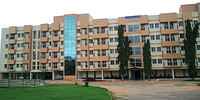
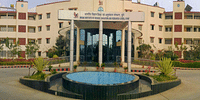
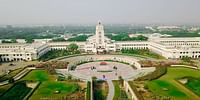
IISc occupies a 400-acre residential campus in Malleswaram, North Bengaluru, next to the GKVK campus of the University of Agricultural Sciences. Academic, research, housing, and recreation facilities are available within the campus.
Its research facilities include more than 200 laboratories spread across 41 departments, high-performance computing centres, an electron microscope facility, a national wind tunnel, synchrotron beamline access, and a separate nano-fabrication facility. The J.R.D. Tata Memorial Library contains one of India's largest scientific collections and provides access to leading international journal databases. IISc also houses the Society for Innovation and Development (SID), its incubation and technology-transfer centre, which has supported more than 100 start-ups since it began.
All courses are residential. Separate hostel blocks accommodate Ph.D scholars, M.Tech students, and undergraduates, while housing is also available for international students. Other facilities include a hospital, shopping centre, gymnasium, swimming pool, several cafeterias, and grounds for cricket, football, and athletics.
IISc vs IIT Madras vs IIT Bombay
Students with a General category JEE Advanced rank within the top 1,000, as well as research applicants comparing leading science and technical institutes, often consider IISc, IIT Madras, and IIT Bombay. Each institution is an Institute of National Importance and held a top-five position in the NIRF Overall ranking.
| Parameter | IISc Bengaluru | IIT Madras | IIT Bombay |
| NIRF Overall Rank 2025 | 2 | 1 | 3 |
| NIRF Research Rank 2025 | 1 | 2 | 3 |
| QS World Rank 2026 | 219 | 227 | 118 |
| Campus Area | 400 acres | 620 acres | 550 acres |
| B.Tech Branches | 4 | 16+ | 12+ |
| B.Tech Total Fees | INR 8.38 Lakhs | INR 8 to 9 Lakhs | INR 8 to 9 Lakhs |
| Primary Strength | Research and Ph.D excellence | Engineering and technology at every level | Industry placements and alumni connections |
IISc leads the three institutes in research output per faculty and holds NIRF Research rank 1. IIT Bombay has the best QS position of the group at 118, supported by international faculty and citation measures. IIT Madras is 1st in NIRF Overall and provides a wider range of engineering programmes. A student's choice generally depends on whether the goal is research or industry, the required programme variety, and location preference.
IISc FAQs
Ques. Where did IISc Bengaluru stand in the 2025 NIRF rankings?
Ans. IISc Bengaluru was ranked 1st among universities, 1st in Research, and 2nd Overall in NIRF 2025. It also holds NAAC A+ accreditation. In the QS World University Rankings 2026, IISc placed 219th globally and was the highest-ranked Indian institution in that ranking.
Ques. Which JEE Advanced ranks closed IISc B.Tech admission in 2025?
Ans. The 2025 closing rank was 856 for General category students and 446 for OBC-NCL applicants. IISc admits B.Tech students through JoSAA counselling in the INI, or Institute of National Importance, category. Its branches are Aerospace Engineering, Material Science Engineering, Mathematics and Computing, and Mechanics and Computing.
Ques. How much does the complete IISc B.Tech programme cost?
Ans. The total fee for the 4-year B.Tech course is INR 8.38 Lakhs. For comparison, the 4-year B.Sc (Research) programme costs INR 3.58 Lakhs. Research-mode M.Tech students pay INR 56,600 over 2 years and may receive INR 12,400 to INR 28,000 per month through GATE fellowship funding.
Ques. What placement results did IISc report for 2025?
Ans. IISc recorded a highest offer of INR 65 LPA and an M.Tech average package of INR 27.05 LPA in 2025. Amazon, Google, Microsoft, Samsung, and Goldman Sachs were among the recruiters. The Placement Cell serves M.Tech, M.Sc Data Science, and Master of Management students, with strong participation from IT and analytics employers. Many Ph.D graduates instead enter academic careers or government research laboratories.
Ques. What financial support can IISc Ph.D scholars receive?
Ans. Qualifying Ph.D scholars may receive an MHRD Doctoral Fellowship of INR 37,000 to INR 42,000 per month. Exceptional students entering through the direct B.Tech or B.Sc route can receive INR 70,000 to INR 80,000 per month under PMRF. A CSIR-NET JRF holder receives INR 31,000 per month. Since the complete Ph.D fee is INR 92,400, fellowship support can cover the full education cost.
Ques. Are undergraduate degrees available at IISc, or is it limited to Ph.D study?
Ans. IISc offers programmes at UG, PG, and doctoral levels. Its 4-year interdisciplinary B.Sc (Research) course admits students through JEE Advanced or KVPY. The institute introduced B.Tech in 2018 and now offers four branches: Aerospace Engineering, Material Science Engineering, Mathematics and Computing, and Mechanics and Computing. PG options include M.Tech in more than 30 disciplines, M.Sc, M.Des, and Master of Management. Ph.D remains the largest programme by student enrolment.
Ques. How does IISc compare with IIT Madras and IIT Bombay for research?
Ans. IISc is ahead in the NIRF Research ranking at rank 1, followed by IIT Madras at rank 2 and IIT Bombay at rank 3. It also records India's highest research paper output per faculty member. IISc is suited to students seeking fundamental science, cross-disciplinary research, and a Ph.D-centred setting. IITs provide more B.Tech branches and larger undergraduate peer groups for engineering students planning industry careers.