
GMAT Sentence Correction: Question Types, Errors, Tips and Tricks, and Study Materials


Content Curator | Updated On - Apr 5, 2024
GMAT sentence correction questions ware an important part of the verbal section. GMAT sentence correction questions consist of around 40% of all questions and almost one-third of the verbal score. It consists of 11–16 questions to be answered within 65 minutes. GMAT questions on sentence correction evaluate your understanding abilities and skills in applying the right strategies. Regularly, solving GMAT sentence correction practice papers will help you to understand the error types.
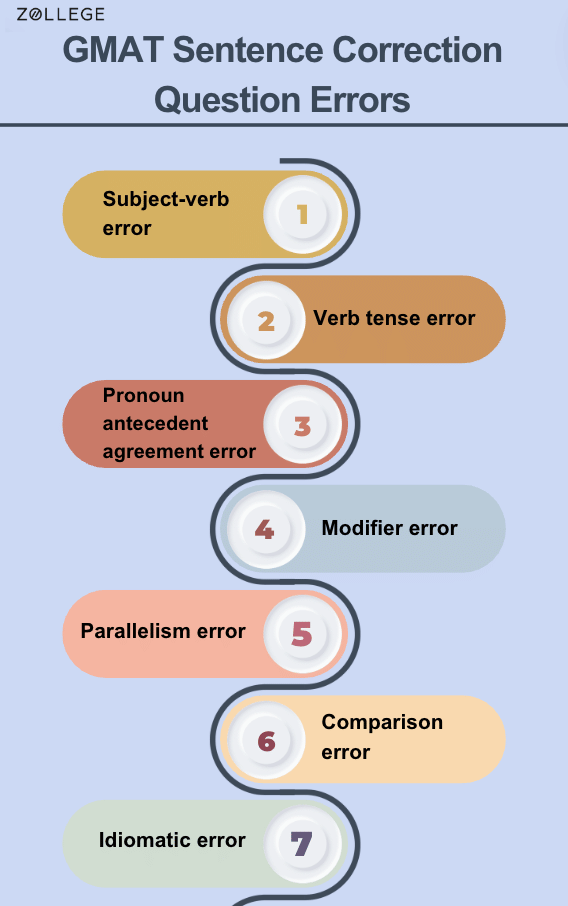
There are 7 types of error questions on GMAT sentence correction. GMAT has launched a focus edition and made some major changes to its exam format. GMAT focus edition syllabus no longer consists of sentence correction-type questions. You must check the official website to check the recent updates on the exam pattern. Although it’s not a part of the exam pattern, GMAT sentence correction practice can help you in the verbal section.
Many best books are available for effective GMAT sentence correction practice. These books not only cover GMAT syllabus but also include GMAT sentence correction questions and answers. Each GMAT question has a sentence with an underlined segment of the sentence with 0–2 errors. The right GMAT questions on sentence correction response must avoid repetition and poor word choices while conveying a clear, logical idea.
- Questions Error Types
1.1 Subject-Verb Error
1.2 Verb Tense Error
1.3 Pronoun-Antecedent Agreement Error
1.4 Modifier Error
1.5 Parallelism Error
1.6 Comparison Error
1.7 Idiomatic Error - Effective Ways to Follow Sentence Correction
- Sentence Correction Tips
3.1 Best Books for Sentence Correction
3.2 Sentence Correction Practice Papers - FAQs
GMAT Sentence Correction Questions Error Types
GMAT sentence correction questions include around 40% of all questions and almost one-third of the GMAT verbal section. Each GMAT question has a sentence with an underlined segment of the sentence with 0–2 errors. The following are the different error types in GMAT sentence correction question:
- Subject-Verb Error
- Verb tense error
- Pronoun- antecedent agreement error
- Modifier error
- Parallelism error
- Comparison error
- Idiomatic error
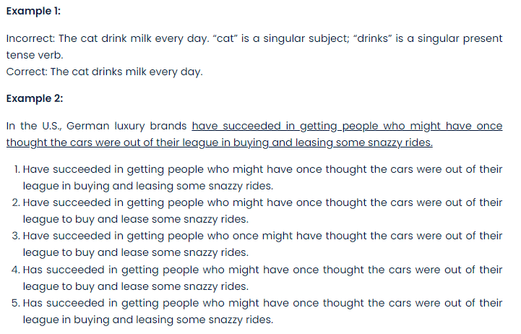
Subject-Verb Error
There can be many subjects and verbs in a sentence. A subject should match its verb in number - singular subjects must require singular verbs, and plural subjects need plural verbs. That means the subject and Verb must agree in numbers. Having a good understanding of subject verb error will improve your GMAT grammar errors.
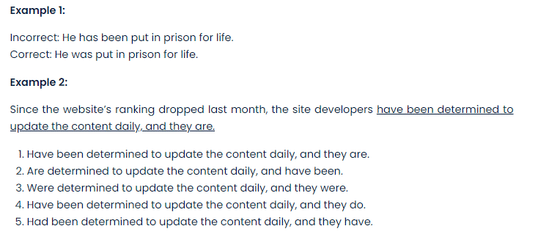
Verb Tense Error
Verb tense errors happen when the verbs are used inconsistently, which makes the meaning confusing or unclear. Mixing tenses, like using future tense in one part of the sentence and past tense in another part. The verb tense may change throughout a passage, so it's important to be consistent to avoid errors in sentence correction rules to improve your GMAT score.
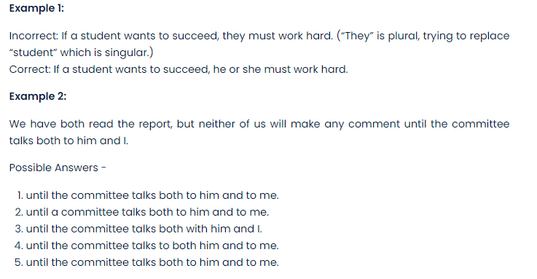
Pronoun-Antecedent Agreement Error
When a pronoun does not agree with its antecedent, candidates are making a pronoun-antecedent error, which can be confusing in your writing. Pronouns, like him, her, it, and them, serve as generic noun substitutes. The noun that a pronoun replaces is known as an antecedent.
Modifier Error
A word, phrase, or sentence that is inappropriately spaced off from the word it modifies or describes is known as a misplaced modifier. Sentences with this fault frequently sound awkward, absurd, or unclear due to the split. They may also be completely irrational.

Parallelism Error
When the sentences in a series do not share the same grammatical structure, the parallelism is flawed. Incorrect parallelism Example: I adore snowboarding, skiing, and ice skating during the winter.
Example:

Comparison Error
In English, a degree of comparison is a specific kind of adjective that is used to compare one thing or person to another that has the same quality.
Example:

Idiomatic Error
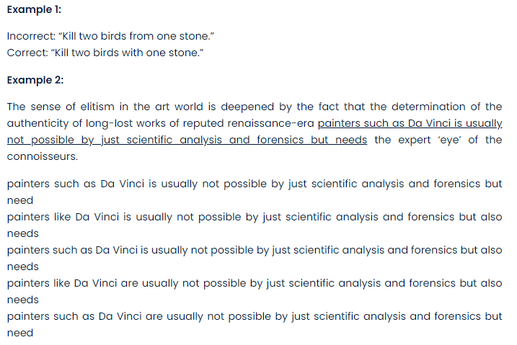
Using the incorrect preposition with idioms is the most frequent mistake.
Effective Ways to Follow GMAT Sentence Correction
- Proper expression: The sentence must be grammatically structured and expressed properly.
- Effective sentences: Expression of an effective sentence should be short and to the point when expressing an idea or a relationship.
- Correct Usage: Appropriate word choice and usage is important for an effective sentence.
- Creative problem-solving: Develop a method of using imagination to generate fresh ideas and solutions to issues.
- Critical Thinking: A way of thinking in which question, analyze, interpret, evaluate, and form an opinion about what a candidate read, hear, say, or write.
- Good Decision-making: Concerning both grammar and vocabulary usage.
- Hypervigilance: Constantly assessing potential grammar mistakes.
- Effective communication: Ideas, thoughts, opinions, knowledge, and data concerning all aspects of language.
GMAT Sentence Correction Tips and Tricks
GMAT sentence correction questions require the candidates to identify errors and give the right answer. It is important in GMAT preparation to scan all options and eliminate wrong choices. Mastering these GMAT sentence correction tips and tricks is important for success in this section. Following are the tips for sentence correction GMAT:
- Identify the concept of the language being tested.
- Scan all the answer options, eliminate the wrong options, and get reasons for the right answer.
- Differentiate between concision and clarity in the given example sentence.
- Find out all the possible errors in the sentence.
- Find out whether it is a mistake concerning grammar or vocabulary.
- Once decide on an option as the correct answer, remember to verify how it looks when used in the given sentence.
- Follow the sentence structure rules.
- Only eliminate answers prematurely from the given options with proper thinking.
- Do not just stress over the fully underlined part, but also the entire question.
- Before answering the most difficult sentence correction problems, focus on additional measures to improve GMAT sentence correction practice knowledge.
- Understand what the author is attempting to communicate.
Best Books for GMAT Sentence Correction
GMAT sentence correction books contain the best resources for preparing sentence correction techniques. These GMAT books provide GMAT sentence correction strategies on grammar rules, question types, and practice papers along with detailed answer explanations.
- The Sentence Correction Bible(Powerscore)
- The GMAT Sentence Correction Strategy Guide(Manhattan Prep)- Check PDF
- Practice Pill Platform Review: Sentence Correction- Check PDF
GMAT Sentence Correction Practice Papers
GMAT Sentence Correction Practice Papers help candidates to know the previous year's questions, and practice accordingly. Here are the GMAT practice paper PDFs for candidates:
GMAT sentence correction practice requires understanding what is being tested. Regular practice from top resources helps candidates improve grammar rules, identify common errors, and develop critical thinking skills for the GMAT verbal section.
FAQs
Ques - How to improve sentence correction GMAT?
Ans - Paying attention to word order, understanding the grammatical meanings, and practicing question papers will help to improve GMAT sentence correction strategies.
Ques - How can I practice GMAT sentence correction?
Ans - Check for problems with parallel construction, use the process of Elimination, and gather great grammatical knowledge will help to practice GMAT sentence correction.
Ques - Is sentence correction hard in GMAT?
Ans - Most of the test takers consider GMAT sentence correction to be a complicated section.
Ques - What is GMAT Sentence Correction?
Ans - It tests the test taker's ability to identify grammatically and structurally correct sentences.
Ques - What types of errors are tested in GMAT Sentence Correction?
Ans - Subject-verb agreement, pronoun errors, parallel structure, idioms, modifier placement, etc.
Ques - What is the format of GMAT Sentence Correction questions?
Ans - A sentence with an underlined part and 5 answer options to choose from.
Ques - How to approach GMAT Sentence Correction questions?
Ans - Scan answers first, eliminate the wrong ones, and pick the best grammatically correct option.
Ques - How long should I spend on each Sentence Correction question?
Ans - 1–2 minutes per question on average. Don't spend more than 3 minutes on any.
Ques - What is the difference between concise and clear sentences?
Ans - Concise means brief, while clear means unambiguous and easy to understand.
Ques - How many Sentence Correction questions are there in GMAT?
Ans - Around 40% questions out of the 36 questions in the Verbal section.
Ques: How much sentence correction in GMAT?
Ques: What are the sentence correction errors in GMAT?
Ques: How can I score good in SC in GMAT?
Ques: Does GMAT ever repeat questions?
Ques: Is real GMAT harder than practice tests?
Ques: Does a good GMAT score guarantee admission?
Ques: What is the best time of day to take the GMAT?
Ques: Which section of GMAT is most difficult?
Ques: When should a student start preparing for GMAT?
Ques: How to crack GMAT sentence correction?
*The article might have information for the previous academic years, please refer the official website of the exam.