
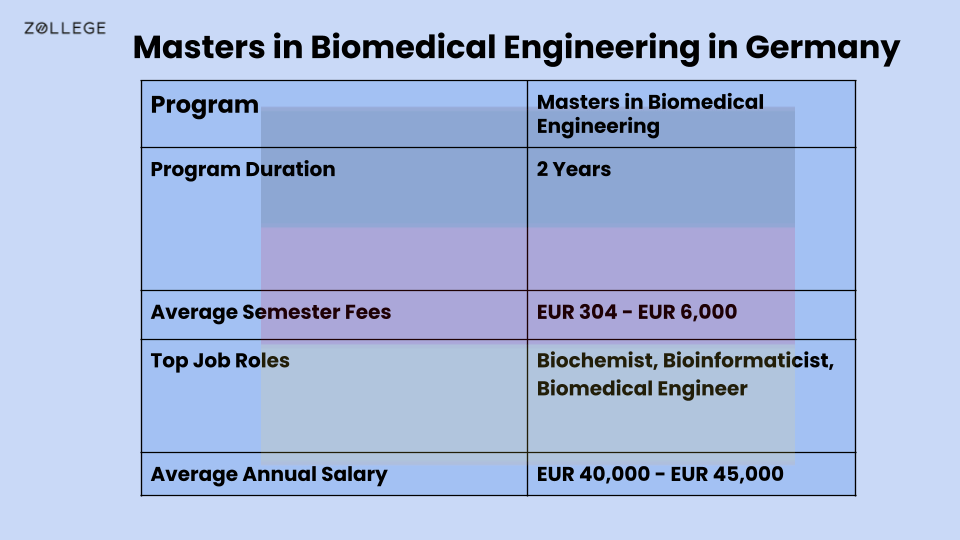
If you are aiming for a career in biomedical science and engineering, Germany has lots of scope of and opportunities for you. Masters in biomedical engineering in Germany takes around 2 years to complete. The course involves the study of data acquisition, medical image processing, simulation and VR in medicine, modeling of medical systems, etc. The top universities in Germany charge a semester fee ranging from EUR 304 (INR 27,463.97) - EUR 6,000 (INR 5,42,052).
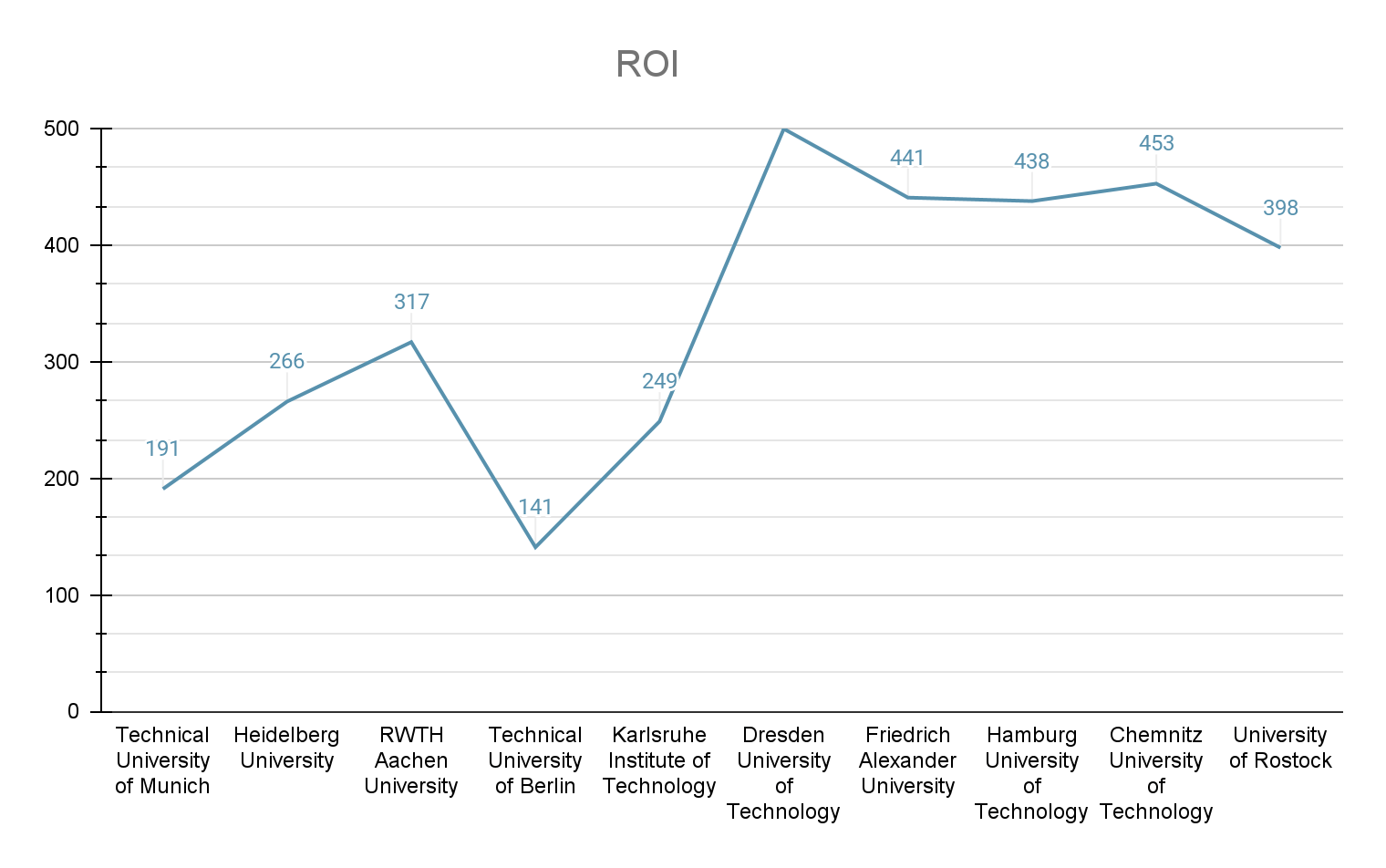
A ROI graph has been given above. If we put it in simpler terms, then ROI is defined as the monetary return value that you receive after studying and staying in Germany. It is calculated in percentage by taking an estimate of your course fees and expenses of student accommodation in Germany. From the above graph, we can see that Dresden University of Technology provides the maximum ROI to candidates, whereas Technical University of Berlin provides the least.
Now, let’s talk about the entry requirements for Biomedical engineering master Germany. A past bachelor’s degree in a related discipline is required. You must also try to maintain a GPA score of 3.0. English Proficiency test scores of IELTS, TOEFL, PTE as well as German Language Proficiency scores of Goethe, TestDaF, Deutsch C1 Hochschule, DSH-II are also mandatory. We recommend that you must view the complete list of requirements in the individual course page of the university before applying.
Why Study Masters in Biomedical Engineering in Germany?
It is important to understand the unique reasons before applying for admissions in Germany. We recommend that you must check the official statistics and placement report for understanding the scope of biomedical engineering in Germany. Given below are some important reasons to study in Germany as an international student:
- The rate of employment after pursuing masters in biomedical engineering in Germany is more than 85%
- The highest salary for a biomedical engineer may reach up to EUR 95,000 (INR 85,82,490)
- Most German universities do not charge tuition fees from any candidate. They only charge a nominal semester fee, which makes Germany an affordable place to study and live
Top Universities for Masters in Biomedical Engineering in Germany
The best universities in Germany for masters in biomedical engineering provide ample scope for medical careers of students. The top universities provide ms in biomedical engineering in Germany in summer and winter intakes. However, for admissions in these top universities for studying MS in Germany, you need to meet all the admission requirements of biomedical engineering. The table given below shows the top universities for masters in biomedical engineering in Germany:
| University | Semester Fees | Admission Deadline 2024 |
| Technical University of Munich | EUR 6,000 (INR 5,42,052) | Winter Semester: April 1 - May 31 Summer Semester: September 1 - November 30 |
| Heidelberg University | EUR 1,500 (INR 1,35,513) | Winter Semester: February 1 - March 15 |
| RWTH Aachen University | EUR 304 (INR 27,463.97) | Winter Semester: July 15 Summer Semester: January 15 |
| Technical University of Berlin | EUR 5,409 (INR 4,88,659.88) | Summer Semester: December 1, 2024 Winter Semester: June 1 |
| Karlsruhe Institute of Technology | EUR 1,500 (INR 1,35,513) | Summer Semester: March 31 Winter Semester: September 30 |
| Dresden University of Technology | EUR 305 (INR 27,554.31) | May 31 |
| Friedrich Alexander University | EUR 144 (INR 13,009.25) | May 31 |
| Hamburg University of Technology | EUR 345 (INR 31,167.99) | Summer Semester: January 15 Winter Semester: July 15 |
| Chemnitz University of Technology | EUR 500 (INR 45,171) | July 15 |
| University of Rostock | EUR 530 (INR 47,881.26) | July 15 |
EUR 1 = INR 90.34 as on March 26th 2024
How to Apply for Masters in Biomedical Engineering?
It is suggested that you must know the correct process to apply to German Universities. Some universities may ask for an application fee while submitting the admission form. An educational counselor can also be appointed for applying to the universities of Germany. The admission process is given below for Biomedical engineering master in Germany:
- Shortlist a university
- Visit the official website
- Select the level of study
- Fill up the application form
- Provide the academic, personal, and professional details
- Submit the English and German Language Proficiency test scores
- Pay the application fee of the university, if any
- Submit the application
- Keep checking the status of your application regularly
Eligibility Criteria for Admissions
For admissions in the top universities for masters in biomedical engineering in Germany, you will require certain eligibility criteria. Past qualifications in a related discipline is recommended for international students. Some universities may also ask candidates to appear for an entrance exam. Personal Statement or SOP and LOR for Germany are also required. Given below are some important eligibility criteria for MS in biomedical engineering in Germany:
- Bachelor’s degree in a related discipline
- A minimum GPA of 3.0
- GMAT/GRE scores if required by the university
- English Proficiency test scores
- German Language Proficiency test scores
- Work experience may be required in some universities
- SOP for Germany
- LOR
- Entrance exam (depending on the university)
Documents Required for Admissions
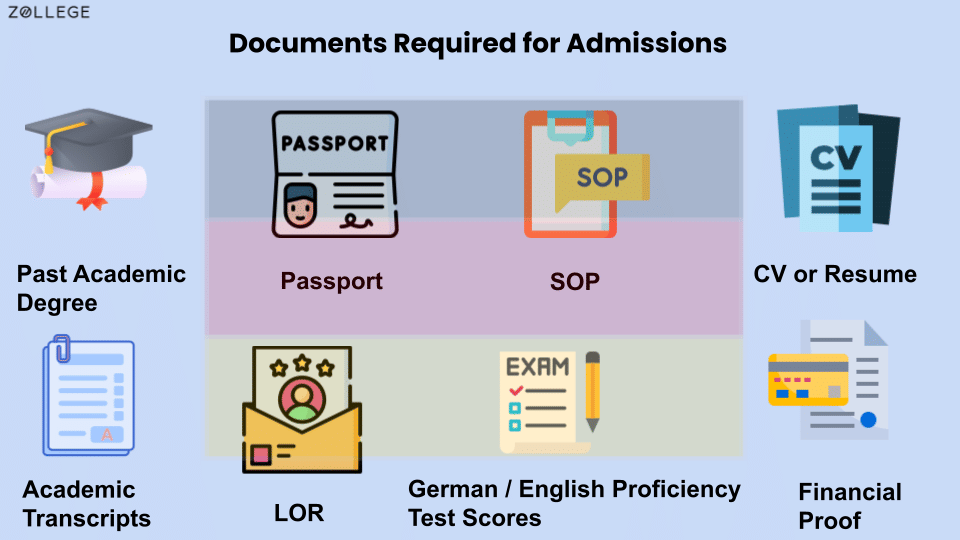
International candidates would also need to submit certain documents to the university they are applying for. The important documents such as transcripts, past degrees, SOP, LOR must be submitted along with the application. Some universities may also have an extended documents submissions deadline. The important documents that are required to be submitted in the intakes of Germany are as follows:
Masters in Biomedical Engineering in Germany Entry Requirements
Biomedical engineering master Germany has certain entry requirements in the universities. The entry requirements include certain exams to study in Germany. These exams include IELTS, TOEFL, PTE, TestDaF, DSH, Goethe, etc. Along with the other eligibility criteria, the submission of these test scores is also mandatory. Given below are the detailed entry requirements for biomedical engineering master in Germany exams:
| University | English Language Proficiency Requirements | German Language Proficiency Requirements |
| Technical University of Munich | TOEFL Score: 88 IELTS Score: 6.5 PTE Score: 65 |
Passing Certificates in exams like Goethe, TestDaF, Deutsch C1 Hochschule, DSH-II |
| Heidelberg University | TOEFL Score: 79 IELTS Score: 6.5 |
Official scores required in Goethe, TestDaF, Deutsch C1 Hochschule, DSH-II |
| RWTH Aachen University | TOEFL Score: 100 IELTS Score: 7.0 PTE Score: 70 |
TestDaF: Level 4 DSH: Stage 2 |
| Technical University of Berlin | TOEFL Score: 95 IELTS Score: 7.0 |
Telc, Goethe, OSD, OnDaF, OnSET: B2 level or higher |
| Karlsruhe Institute of Technology | TOEFL Score: 88 IELTS Score: 6.5 |
“Goethe” score required |
| Dresden University of Technology | TOEFL Score: 94 IELTS Score: 6.5 |
DSH, TestDaF 4 in all sections, Telc Deutsch C1 |
| Friedrich Alexander University | TOEFL Score: 85 IELTS Score: 6.0 |
DSH: Level 2 TestDaF: Level 4 Goethe-Certificate C2 DSD II: Level B2 |
| Hamburg University of Technology | TOEFL Score: 90 IELTS Score: 6.5 |
Test DaF: 16 points Telc Deutsch C1: Official score Goethe-Certificate C2 |
| Chemnitz University of Technology | TOEFL Score: 72 IELTS Score: 7.0 PTE Score: 59 |
Official scores required in Goethe, TestDaF, Deutsch C1 Hochschule, DSH-II |
| University of Rostock | TOEFL Score: 94 IELTS Score: 7.0 |
DSD I: B1 Level DSD 2: B2 Level Goethe Certificate: A1 Level TELC: Official score required TestDaF: TDN 3 |
Cost of Attendance
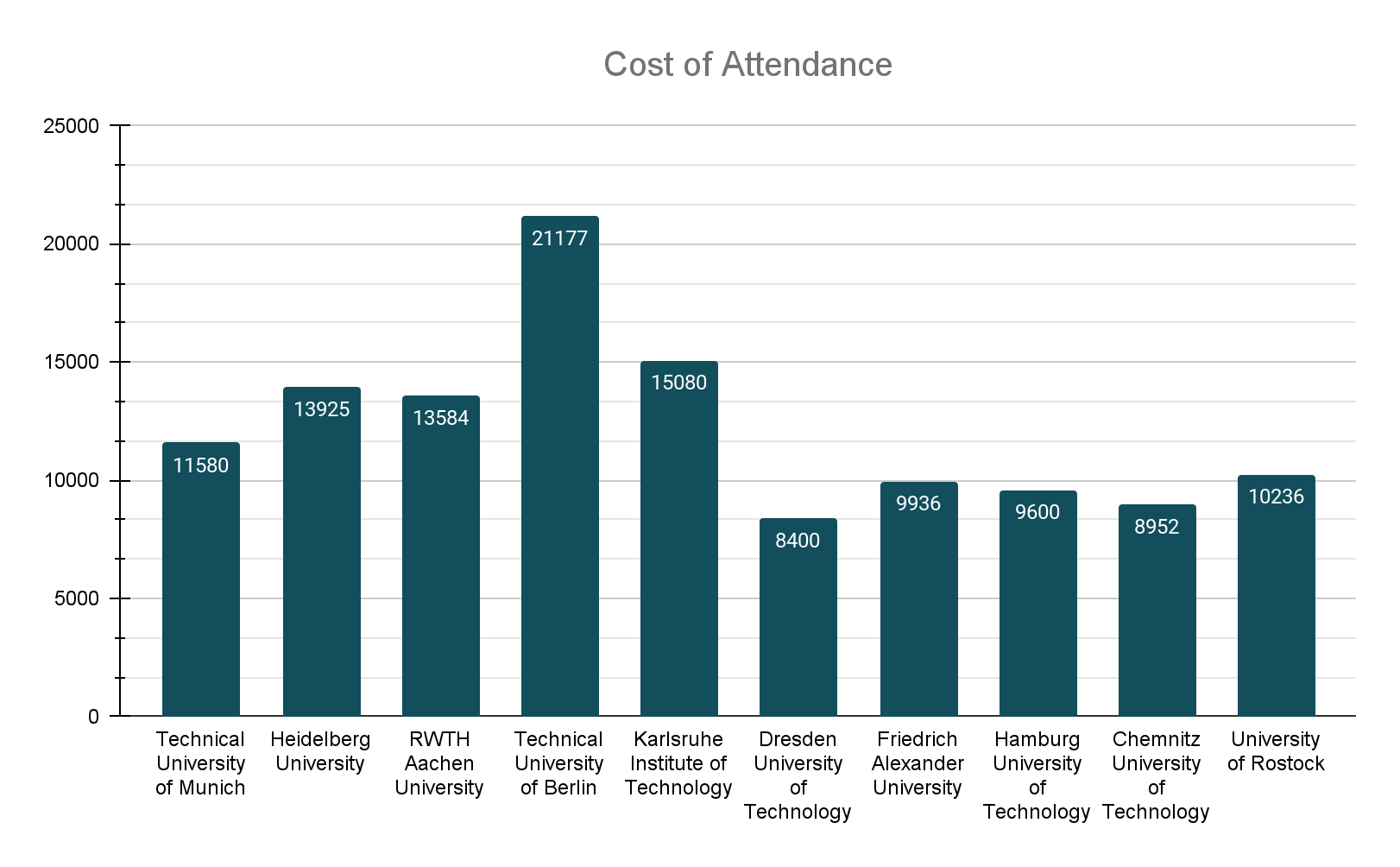
The cost of attendance in Germany includes the expenses spent on accommodation, food, books and supplies, transportation, insurance, etc. As we can notice, Technical University of Berlin charges the most which is EUR 21,177 (INR 19,13,172.53) annually from international students for studying and staying in Germany. As compared to it, Dresden University of Technology is much affordable at an annual cost rate of about EUR 8,400 (INR 7,58,872.80). The below graph shows the annual cost of living in Germany for international students in USD value:
EUR 1 = INR 90.34 as on March 26th 2024
MS in Biomedical Engineering in Germany Scholarships
For studying abroad, you can also take the help of certain scholarships in the German Universities. The scholarships in Germany for international students are mostly awarded on merit basis. Some scholarships may also cover the masters in biomedical engineering in Germany fees for international students. The table given below shows the eligibility criteria and amount of scholarships in pursuing MS in biomedical engineering in Germany:
| University | Eligibility | Amount |
| Technical University of Munich | Good academic records | EUR 500 - EUR 1,800 (INR 45,171 - INR 1,62,615.60) per semester |
| Heidelberg University | Merit Basis and Financial need | Varies |
| RWTH Aachen University | Enrolled in a full-time program Awarded to highly qualified students | 25% of the tuition fees |
| Technical University of Berlin | Must demonstrate outstanding academic excellence and scientific achievements | Varies |
| Karlsruhe Institute of Technology | Must be an international student Awarded on merit basis | Varies |
| Dresden University of Technology | Academic Excellence and good academic record | Vary upon the academic year |
| Friedrich Alexander University | Must demonstrate financial need | Up to EUR 1000 (INR 90,342) |
| Hamburg University of Technology | Must be enrolled in a full-time postgraduate program Awarded on merit basis | Maximum EUR 930 (INR 84,018.06) per month |
| Chemnitz University of Technology | Awarded on merit basis | Varies |
| University of Rostock | Highly qualified international students | EUR 300 (INR 27,102.60) per month |
EUR 1 = INR 90.34 as on March 26th 2024
Work Permit in Germany
To work in Germany, you will have to acquire a valid work permit. The types of work permit visa Germany includes general work permit, skilled work permit, EU Blue Card, etc. You must apply in the official German Immigration Authorities (Ausländerbehörde) for a work permit. The application processing time takes approximately 1-3 months by the German Consulate. The important documents required for valid work permit are:
- Valid passport
- Completed application form
- German student visa.
- Declaration on the Employment Relationship
- Work contract or offer
- Certificate of Registration must be submitted by students who immigrate to Germany for higher studies
- University degree/certificate
- Health Certificates
- Updated CV
- Source of Funds
- SOP for Work Permit Visa
Masters in Biomedical Engineering in Germany Jobs
After pursuing courses in biomedical engineering, you can get prestigious career opportunities. The jobs in Germany roles you can get are biochemist, bioinformatics, biomedical engineer, etc. The salary you receive may vary depending on the job location and profile. According to various job portals and employment sites, the average biomedical engineering salary in Germany ranges from EUR 40,000 - EUR 45,000 (INR 36,13,680 - INR 40,65,390). We have given below some popular job profiles along with the average biomedical engineering salary in Germany:
| Job Profile | Average Annual Salary |
| Biochemist | EUR 45,000 (INR 40,65,390) |
| Biomedical Scientist | EUR 72,000 (INR 65,04,624) |
| Bioinformatics | EUR 54,504 (INR 49,24,000.37) |
| Biomedical Engineer | EUR 68,400 (INR 61,79,392.80) |
EUR 1 = INR 90.34 as on March 26th 2024
Masters in Biomedical Engineering in Germany Top Recruiters
Top recruiters for biomedical engineering provide candidates with handsome salary packages. The full time or part-time jobs in Germany offered by these companies are listed on the company records. You must check the previous year placement report before applying. Given below are the top recruiters for biomedical engineering jobs in Germany:
- Quantune Technologies
- Occlutech Holding
- Cellbricks
- Springer Nature
- Procter & Gamble
The top major universities recommend all international applicants to have a pre-medical bachelors degree for studying masters in biomedical engineering. However, you must submit all the important prerequisites within the masters in biomedical engineering in Germany deadlines. The university may not consider any application after the deadline has passed.
FAQs
Ques. What is a Masters in Biomedical Engineering?
Ans. Masters in Biomedical Engineering involves the study of data acquisition, medical image processing, simulation and VR in medicine, modeling of medical systems, etc.
Ques. What is the course duration of Masters in Biomedical Engineering?
Ans. Masters in biomedical engineering in Germany takes around 2 years to complete. It may also vary according to the university.
Ques. What is the average semester fee for Masters in Biomedical Engineering?
Ans. . The top universities in Germany charge a semester fee ranging from EUR 304 (INR 27,463.97) - EUR 6,000 (INR 5,42,052).
Ques. Why study Masters in Biomedical Engineering in Germany?
Ans. The universities in Germany offer flexible options to study for international students. Some popular universities also provide the option of internship programs during the course.
Ques. What is the scope of Masters in Biomedical Engineering in Germany?
Ques. What are the admission intakes in Germany?
Ans. The top universities provide MS in biomedical engineering in Germany in summer and winter intakes. You have to apply within the admission deadline of the particular intake.
Ques. What is the eligibility required for Masters in Biomedical Engineering in Germany?
Ans. For admissions in the top universities for masters in biomedical engineering in Germany, you will require certain eligibility criteria. Past qualifications in a related discipline is recommended for international students.
Ques. Is entrance examination mandatory for Masters in Biomedical Engineering in Germany?
Ans. It is not mandatory. However, some universities may ask candidates to appear for an entrance exam.
Ques. What important documents are required for international admissions?
Ques. What exams are required for studying Masters in Biomedical Engineering in Germany?
Ans. The exams include IELTS, TOEFL, PTE, TestDaF, DSH, Goethe, etc. Along with the other eligibility criteria, the submission of these test scores is also mandatory.
Ques. What is the cost of attendance for studying in Germany?
Ans. The cost of attendance in Germany includes the expenses spent on accommodation, food, books and supplies, transportation, insurance, etc.
Ques. Are scholarships available for international students to study in Germany?
Ans. For studying abroad, you can also take the help of certain scholarships in the German Universities. The scholarships in Germany for international students are mostly awarded on merit basis.
Ques. Where can I apply for the scholarships in Germany?
Ans. You can apply for different scholarships on the official website of the university. You can also apply in your country for scholarships to study abroad.
Ques. What are the career outcomes for Masters in Biomedical Engineering in Germany?
Ans. The jobs in Germany roles you can get are biochemist, bioinformatician, biomedical engineer, etc. The salary you receive may vary depending on the job location and profile.
Ques. What is the average salary of a biomedical engineer in Germany?
Ans. According to various job portals and employment sites, the average biomedical engineering salary in Germany ranges from EUR 40,000 - EUR 45,000 (INR 36,13,680 - INR 40,65,390).
Ques. Is a work permit mandatory for working in Germany?
Ans. To work in Germany, you will have to acquire a valid work permit. The types of work permit visa Germany includes general work permit, skilled work permit, EU Blue Card, etc.
Ques. Where should I apply for a valid work permit in Germany?
Ans. You must apply in the official German Immigration Authorities (Ausländerbehörde) for a valid work permit depending upon your profile.
Ques. How long does the application process take for a work permit?
Ans. The application processing time takes approximately 1-3 months by the German Consulate. However, you must have a valid passport for the work permit application.
Ques. Is it worth doing a Masters in biomedical engineering in Germany?
Ans. Yes, it is highly valuable to study for Masters in Biomedical engineering in Germany. The country has top ranked universities for masters courses.
Ques. Is biomedical engineering free in Germany?
Ans. Germany does not charge tuition fees from any domestic or international student. But a nominal semester fee is charged from each candidate.

![Humboldt University of Berlin [HU]](https://static.zollege.in/public/college_data/images/studyabroad/logos/college_632_29-15:02_6.png?tr=w-50,h-50,c-force?tr=h-40,w-35,c-force)
![Technical University Munich [TUM]](https://static.zollege.in/public/college_data/images/studyabroad/logos/college_691_02-13:08_691.png?tr=w-50,h-50,c-force?tr=h-40,w-35,c-force)
![Ludwig Maximilian University of Munich [LMU]](https://static.zollege.in/public/college_data/images/studyabroad/logos/college_690_02-13:05_690.png?tr=w-50,h-50,c-force?tr=h-40,w-35,c-force)
![Free University of Berlin [FU]](https://static.zollege.in/public/college_data/images/studyabroad/logos/college_631_29-15:01_5.png?tr=w-50,h-50,c-force?tr=h-40,w-35,c-force)
.png?tr=w-50,h-50,c-force?tr=h-40,w-35,c-force)


