
PhD in Germany is the perfect line of study for students wanting to do research or become university professors in Germany. PhD in Germany is a 3-5 year course offered in both part time and full time. Most students complete their PhD in English and hence, English language proficiency test scores are required to study in Germany. You need a minimum of 6 in IELTS and 90 in TOEFL to be eligible. If you want to complete the PhD in German language, which is very rare for international students, you must have German language proficiency tests of DSH 2. There are no fixed deadlines for applying to top PhD universities in Germany. You can apply anytime of the year.
International students can apply for internships during and after the degree. While pursuing PhD in Germany for Indian students, you can apply for internships at the university itself as an assistant to the professor or research assistant at the lab. You can also immigrate to Germany and work as a teacher. The average stipend for PhD at Germany universities is 24,500 EUR/year (INR 19,53,189/year approximately). Besides being a PhD student, one can intern at public and private organizations with an average stipend of 500 EUR/month (INR 39,848/month approximately).
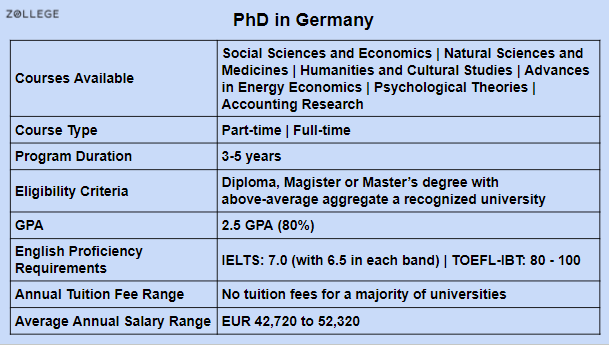
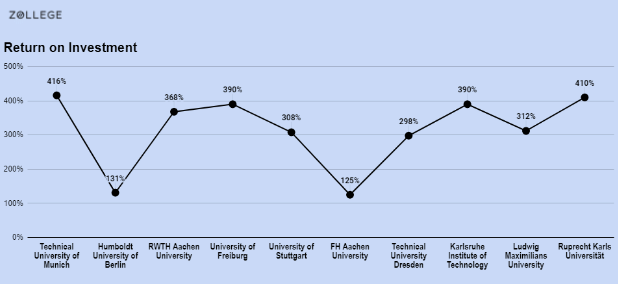
You must have a German student visa to study PhD in Germany. You can pay your fees with the stipend that you receive. Don't worry as you will also be flooded with job offers after you have completed your PhD. The salary ranges around EUR 40,000 - 60,000 for beginners. The return on investment is also high since most universities have very nominal tuition fees or semester fees. You can also opt for multiple scholarships offered for international students in Germany.
Why Study PhD in Germany
Germany is the cheapest country if we consider the cost of tuition worldwide. You also get access to gain a Blue Card which is a symbol of permanent residence in Germany. These are a few reasons why thousands of students rush to Germany university for PhD. Other reasons to pursue PhD and apply to German universities are:
- Roughly 5,800 international graduates complete their doctorates in Germany every year.
- The German Academic Exchange Service (DAAD), for example, supports more than 4,000 international doctoral students a year in Germany with scholarships.
- there are more than 500 research networks and groups for your practical part of the study
- Candidates may also apply for doctoral studies in Germany without a Master’s degree by just possessing a Bachelor’s degree in a relevant stream with an excellent academic record.
- The doctoral program is fully funded by the government of Germany. Therefore, it is free to study PhD in Germany.
Top Universities for PhD in Germany
There are more than 140 universities in Germany that offer PhD in various subjects like Architecture, Medicine, Economics, Accounting and many more. Most public universities in Germany do not charge any tuition fees for PhD courses Germany. You can check how to study free in Germany. A very nominal semester fee of EUR 200-EUR 400 is required. Listed below are the Germany top universities for PhD under various subjects.
| University Name | Annual Fees |
| Technical University of Munich | No tuition fees |
| Humboldt University of Berlin | EUR 29,099 |
| RWTH Aachen University | No tuition fees |
| University of Freiburg | EUR 1500 per semester |
| University of Stuttgart | EUR 1500 per semester |
| FH Aachen - University of Applied Sciences | EUR 31,034 per semester |
| Technical University Dresden | EUR 2,500 per semester |
| Karlsruhe Institute of Technology | EUR 1500 per semester |
| Ludwig-Maximilians-Universität München | EUR 85 semester fee |
| Ruprecht-Karls-Universität Heidelberg | EUR 151.05 semester fess |
Application Deadline and Fees for PhD in Germany
Most public universities in Germany listed below do not charge any application fees to do a PhD in Germany. You need to contact the professor under whom you want to complete your research or PhD courses in Germany. Once the university and the professor accepts your request, you can start the remaining process. Most universities do not have any specific deadlines for PhD applications. The details of the deadlines for best universities in Germany for PhD are:
| University Name | Application deadline |
| Technical University of Munich | No specific deadline |
| Humboldt University of Berlin | No fixed deadlines |
| RWTH Aachen University | Summer Semester: June 15 Winter Semester: December 15. |
| University of Freiburg | No fixed deadlines |
| University of Stuttgart | No specific deadlines. Enrollment dates will be announced on acceptance. |
| FH Aachen - University of Applied Sciences | Winter Semester: March 1 Summer Semester: September 1 |
| Technical University Dresden | One month following your online application |
| Karlsruhe Institute of Technology | Summer Semester: 15th February Winter Semester: 15th August |
| Ludwig-Maximilians-Universität München | Summer semester: 15 January Winter semester: 15 July |
| Ruprecht-Karls-Universität Heidelberg | From 16.02. for the summer semester From 16.07. for the winter semester |
PhD in Germany Score Requirement
Most PhD programs in Germany are taught in English for international students. Hence, most universities do not require any German language proficiency test scores. Also, if you are applying for PhD programs in Germany for international students it means that you have completed your master’s degree which proves you must have submitted the ELP test scores. Hence, some universities also do not ask for test scores like IELTS or TOEFL. The exams to study in Germany are:
| University Name | ELP Requirement | German Requirement |
| Technical University of Munich | No minimum IELTS or TOEFL score required. Very good written and spoken English skills is must |
NA |
| Humboldt University of Berlin | TOEFL: minimum 72 IELTS: minimum 5.5 |
NA |
| RWTH Aachen University | TOEFL iBT score of 95 IELTS score of at least 6.5 |
NA |
| University of Freiburg | IELTS Academic (5.5-6.5 points), PTE Academic (59-75 points), TOEFL iBT (72-94 | NA |
| University of Stuttgart | TOEFL IBT 80 points TOEFL IELTS band 6.5 or better (academic) |
NA |
| FH Aachen - University of Applied Sciences | TOEFL Internet-based with at least 92 points IELTS with at least 6.5 overall band-score |
"Zertifikat Deutsch" at level B1 |
| Technical University Dresden | No specific requirement | DSH 2 if written in German |
| Karlsruhe Institute of Technology | TOEFL 90 IELTS 6.5 | German not Required |
| Ludwig-Maximilians-Universität München | TOEFL 100 IELTS 6.5 | NA |
| Ruprecht-Karls-Universität Heidelberg | NA | TestDaF, if all test components were passed with minimum the result TDN 4 DSH Level 2 |
Document Required for PhD in Germany
Choosing the course and the university is just the start of the application process. You also need multiple documents to complete your fully funded PhD in Germany for international students. The documents that the university might require include:
- A valid master’s degree (recognized by the university of your choice)
- Curriculum Vitae (a Resume of sorts that mentions prior work experience, academic pursuits, etc.)
- Letter of Recommendation
- Language Proficiency: IELTS (6.5 and above) or TOEFL (80 and above)
- Statement of Purpose
- Outline of Doctoral Thesis: This must include an analysis of the topic, purpose of writing, research methodology, deadline, etc.
Cost of Living in Germany
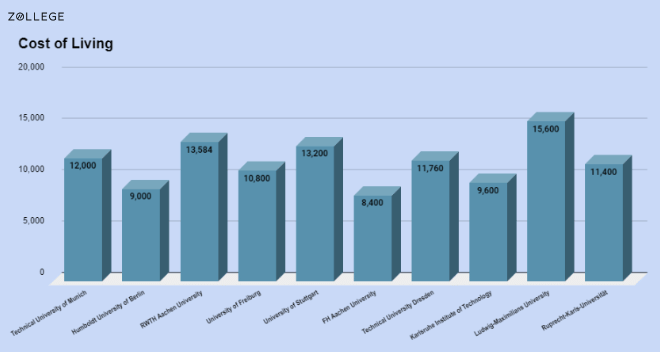
While doing a PhD in Germany, you must keep in mind the expense of staying in Germany. If you stay alone, the monthly expense will be around EUR 700 - 1000. However, if you stay with your family, the cost goes upto EUR 1500. There are multiple scholarships that cover the cost of living in Germany for you and your family. The average cost of living are:
Scholarships for PhD in Germany
Most of the scholarships provided by German universities are for living expenses of the student and the family. There are mostly three types of scholarships — University scholarship, government funded scholarship and scholarships by different institutions. These scholarships do not ask for any academic excellence or scores to be eligible. The amount varies from EUR 1000 - EUR 2000 per month. The best PhD universities in Germany and the scholarships are:
| University Name | Scholarship Name | Scholarship Eligibility | Scholarship Amount |
| Technical University of Munich | GS Bridge Financing Grant | Completion of a Master’s degree with above-average aggregate along with the intention to pursue doctoral studies | EUR 1,000 per month + EUR 150 for family and child support |
| Humboldt University of Berlin | Elsa-Neumann-Stipend for Doctoral Candidates | Proof of a completed university degree - Proof of preparation for a doctorate - Above-average academic performance - A scientific project that is expected to make an important contribution to research | 1,350 euros per month plus a lump sum for material costs of 100 euros. |
| RWTH Aachen University | RWTH Graduate Support | students with an above average degree which qualifies for doctoral studies. | 1,500 euros per month monthly allowance of 400 euros for child |
| University of Freiburg | State Graduate Funding Programme | doctoral candidates of all faculties. | 1,300 euros per month (including an allowance for material costs and travel expenses). Scholarship holders with children receive an additional amount of 300 euros per month for one child, and an additional 100 euros for every further child. |
| University of Stuttgart | DAAD Scholarship | International students pursuing doctorate degree | Fully funded |
| FH Aachen - University of Applied Sciences | Deutschlandstipendium | International students wanting to complete PhD in Germany | 300 euros per month |
| Technical University Dresden | Saxon Scholarship Program | International PhD students | 1,350 per month plus family allowance of EUR 100 for each dependent child, if applicable, and material/travel subsidy up to EUR 1,500. |
| Karlsruhe Institute of Technology | Heinrich-Böll-Stiftung | Actively involved with the values of the foundation (ecology, non-violence, solidarity, and democracy) and to have knowledge of the German language at least level B2. | EUR 1,350 plus research cost allowance of EUR 100, family allowance of EUR 155. |
| Ludwig-Maximilians-Universität München | Study Scholarship | academic excellence, demonstrable knowledge in the applicant’s field of study, and financial need. | Varies |
| Ruprecht-Karls-Universität Heidelberg | Amirana Scholarship | International medical and dental students from the low and middle income countries | Varies |
Jobs after PhD in Germany
There are many jobs in Germany which you can take up after completing a PhD. The Median salary is around € 55,492 and the average salary is € 58,164. The jobs include being a professor at the university, assistant lecturer and many others. The job profiles and the salary of the candidates pursuing PhD in Germany are:
| Job Profiles | Annual Salary |
| Computer scientist | EUR 56,917 |
| Natural scientist | EUR 51,742 |
| Engineers | EUR 53,816 |
| Humanities scientist | EUR 40,356 |
| Economist | EUR 49,423 |
| Assistant/Associate Professor | 67,000 EUR |
| Junior Professor | 62,000 EUR |
| Guest Lecturer | 60,000 EUR |
| Actuary | 68,000 EUR |
| Laboratory Researcher | 63,000 EUR |
Top Recruiters after PhD in Germany
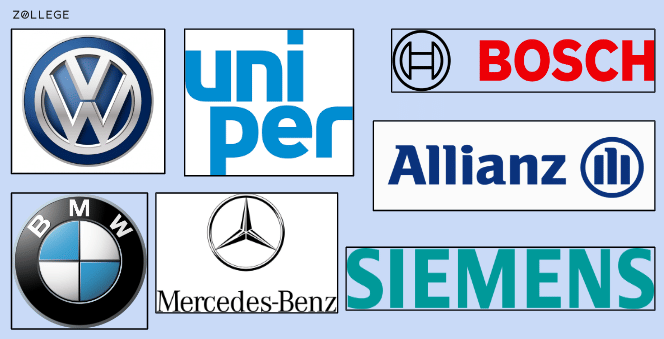
Germany is a country with multiple companies who have the latest technologies in the world. They look for students who are researching new topics and innovation. The top companies that hire PhD students include:
Work Permit after PhD in Germany
In order to work in Germany after your PhD, you will require a residence permit and a German work visa/employment permit. Following are the requirements that you need to fulfill for a permanent residency after 2 years of working, once your studies are finished: German university degree certificate (Bachelors, Masters or PhD) . Have a residency permit for at least 2 years (you get it automatically when you start working). If you have concluded an employment contract or an admission agreement with a research establishment, you may qualify for a residence title for employment or research purposes or an EU Blue Card.
PhD in Germany not only provides a good salary but also stipend during the program. Hence, if you are staying alone or with family, you do not need to worry about living expenses. The university will give monthly stipend to the student.
FAQs
Ques: What are the requirements for pursuing a PhD in Germany?
Ans:You need a Master's degree or equivalent qualification, proficiency in English or German, and a research proposal. The other requirements include documents like LOR, SOP etc.
Ques: Do I need to speak German to pursue a PhD in Germany?
Ans:No, speaking German is not necessary. It depends on the program and university. Many programs offer courses and conduct research in English, but some proficiency in German might be helpful for daily life and interaction with professors.
Ques: Are PhD programs in Germany free?
Ans: Yes, most PhD programs are free in Germany. Public universities in Germany do not charge tuition fees for PhD programs. However, there might be semester fees which are around EUR 200 - EUR 400.
Ques: How long does it take to complete a PhD in Germany?
Ans: PhD in Germany takes up to 3-5 years to complete. This is the time required for full time students. You can also complete your PhD online which might take less time.
Ques: Are there scholarships available for international students pursuing a PhD in Germany?
Ans: Yes, there are several scholarships available, such as DAAD scholarships, Erasmus+ funding, and scholarships from various foundations. Scholarships in Germany are offered by universities, government and private organizations.
Ques: Can I work part-time while pursuing a PhD in Germany?
Ans: Yes, international students with a student visa can work part-time for up to 20 hours per week during the semester and full-time during semester breaks.
Ques: What is the salary for PhD candidates in Germany?
Ans: PhD candidates in Germany are paid a stipend or salary, which can vary depending on the university, funding source, and field of study. It is usually enough to cover living expenses.
Ques: Can I bring my family with me while pursuing a PhD in Germany?
Ans: Yes, you can bring your family with you. However, you need to ensure that you have enough financial resources to support them, and you may need to fulfill certain visa requirements.
Ques: How competitive is admission to PhD programs in Germany?
Ans: Admission can be competitive, especially for programs at top universities. Strong academic background, research experience, and a well-developed research proposal are essential.
Ques: Can I apply for a PhD position directly or do I need to find a supervisor first?
Ans: It depends on the university and program. In some cases, you can apply directly for advertised positions, while in others, you may need to find a supervisor first.
Ques: Do I need to take any standardized tests like GRE or GMAT for admission to PhD programs in Germany?
Ans: No, standardized tests like GRE or GMAT are not required for admission to PhD programs in Germany. However, some programs may have specific requirements.
Ques: Can I pursue a PhD in Germany without a Master's degree?
Ans: Yes, you can pursue PhD without masters also in Germany. In some cases, exceptional candidates with a Bachelor's degree and significant research experience may be considered for direct admission to PhD programs.
Ques: Are there opportunities for interdisciplinary research in Germany?
Ans: Yes, many universities in Germany encourage interdisciplinary research and offer programs that facilitate collaboration across disciplines. You need to look for the universities that provide the opportunity.
Ques: Can international students apply for permanent residency in Germany after completing their PhD?
Ans: Yes, international students who have completed their PhD in Germany are eligible to apply for a residence permit for jobseekers or a permanent residency permit.
Ques: What is the procedure for obtaining a visa to pursue a PhD in Germany?
Ans: International students need to apply for a student visa or a student applicant visa at the German embassy or consulate in their home country. You can visit Germany for studies only with a student visa.
Ques: Are there opportunities for teaching during a PhD in Germany?
Ans: Yes, many PhD programs in Germany offer teaching opportunities, which can be beneficial for gaining experience and enhancing academic skills.
Ques: Can I apply for postdoctoral positions in Germany after completing my PhD?
Ans: Yes, Germany offers excellent opportunities for postdoctoral research in various fields.
Ques: What support services are available for international students pursuing a PhD in Germany?
Ans: Universities in Germany provide various support services for international students, including language courses, academic advising, counseling services, and assistance with accommodation.

![Humboldt University of Berlin [HU]](https://static.zollege.in/public/college_data/images/studyabroad/logos/college_632_29-15:02_6.png?tr=w-50,h-50,c-force?tr=h-40,w-35,c-force)
![Technical University Munich [TUM]](https://static.zollege.in/public/college_data/images/studyabroad/logos/college_691_02-13:08_691.png?tr=w-50,h-50,c-force?tr=h-40,w-35,c-force)
![Ludwig Maximilian University of Munich [LMU]](https://static.zollege.in/public/college_data/images/studyabroad/logos/college_690_02-13:05_690.png?tr=w-50,h-50,c-force?tr=h-40,w-35,c-force)
![Free University of Berlin [FU]](https://static.zollege.in/public/college_data/images/studyabroad/logos/college_631_29-15:01_5.png?tr=w-50,h-50,c-force?tr=h-40,w-35,c-force)
.png?tr=w-50,h-50,c-force?tr=h-40,w-35,c-force)


