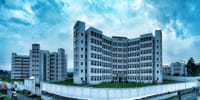
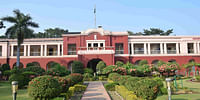
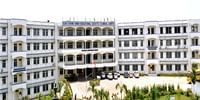
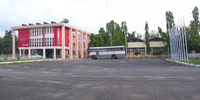
Birsa Institute of Technology (BIT) Sindri is a public engineering college founded by the Government of Jharkhand in 1949. The institute is affiliated with Jharkhand University of Technology (JUT), Ranchi, and its programmes have AICTE approval. It is among eastern India’s oldest technical institutes and is especially recognised for Mechanical, Electrical, and Mining Engineering.
BIT Sindri was placed in the 201 to 300 national band in the NIRF Engineering Rankings 2025. Its 450-acre campus stands on the eastern bank of the Damodar River in Sindri, Dhanbad district, Jharkhand. The institute provides B.Tech in 11 disciplines, M.Tech in 13 specialisations, and Ph.D. programmes in engineering and applied sciences.
- B.Tech programmes, 4 years: Students can choose Chemical Engineering, Civil Engineering, Computer Science and Engineering, Cyber Security, Electrical Engineering, Electronics and Communication Engineering, Information Technology, Mechanical Engineering, Metallurgical Engineering, Mining Engineering, or Production Engineering.
- M.Tech specialisations, 2 years: The listed options are Control System, Data Science, Environmental Engineering, Heat Power, Instrumentation and Control Engineering, Machine Design, Metallurgical and Materials Engineering, Nanotechnology, Power System Engineering, Production Technology, Soil Mechanics and Foundation Engineering, and Structural Engineering.
- Ph.D.: Research programmes are offered in Civil Engineering, Chemical Engineering, Chemistry, Computer Science and Engineering, Electrical Engineering, Electronics and Communication Engineering, Industrial and Production Engineering, Mathematics, and Mechanical Engineering.
- Lateral Entry B.Tech: Diploma holders may seek admission to any of the 11 disciplines.
The full programme fee is INR 1,17,856 for the four-year B.Tech and INR 66,578 for the two-year M.Tech. Separate hostel facilities for male and female students cost up to INR 60,400 per annum. SC, ST, OBC, and EWS students can apply for central and Jharkhand government welfare scholarships. During the 2024-25 placement season, 510 B.Tech students secured placements, more than 120 companies visited, the highest offer reached INR 16.5 LPA, and the median B.Tech package was INR 7 LPA.
BIT Sindri Admission Dates 2027
The 2027-28 B.Tech admission process is scheduled to start with JEE Main 2027. The available upcoming schedule is given below.
| Event | Date |
|---|---|
| JEE Main 2027 and start of the 2027-28 B.Tech admission cycle | January 2027 |
Subject to revision. Kindly check with the official sources to confirm
Admission routes differ by programme and seat category. The examination and counselling requirements are listed here.
| Programme | Admission Basis | Counselling Body |
|---|---|---|
| B.Tech, Central Quota | JEE Main score | JoSAA, the Joint Seat Allocation Authority |
| B.Tech, Jharkhand State Quota | JEE Main score | JCECEB, the Jharkhand Combined Entrance Competitive Examination Board |
| B.Tech Lateral Entry | Diploma aggregate marks | JCECEB |
| M.Tech | Valid GATE score | Institute-level counselling |
| Ph.D. | Entrance test and interview | Institute-level process |
BIT Sindri Courses and Fees
BIT Sindri conducts B.Tech courses in 11 engineering disciplines, M.Tech courses across 13 specialisations, and doctoral programmes. Every B.Tech branch follows the same government institute fee structure. The figures below are the total programme fees based on 2025-26 data.
| Course | Duration | Eligibility | Fee |
|---|---|---|---|
| B.Tech, all 11 disciplines | 4 years | 10+2 with PCM and a valid JEE Main score | INR 1,17,856 |
| B.Tech Lateral Entry | 3 years | Diploma in the relevant engineering field | INR 89,367 |
| M.Tech, all specialisations | 2 years | B.Tech or B.E. in a relevant field and a valid GATE score | INR 66,578 |
| Ph.D., Engineering | 3 to 5 years | M.Tech or M.Sc with 60% marks | INR 44,430 |
| Ph.D., Mathematics | 3 to 5 years | M.Sc in Mathematics with 60% marks | INR 23,000 |
Subject to revision. Kindly check with the official sources to confirm
The B.Tech selection covers the core branches of Mechanical, Electrical, Civil, Chemical, Metallurgical, Mining, and Production Engineering. Technology-focused choices include Computer Science and Engineering, Information Technology, Electronics and Communication Engineering, and Cyber Security. Boys’ and girls’ hostel charges are separate and can reach INR 60,400 per annum.
BIT Sindri Admission Process
JEE Main scores determine B.Tech admission at BIT Sindri. JoSAA allocates central quota seats, while JCECEB handles seats under the Jharkhand state quota. BIT Sindri does not hold another entrance examination for regular B.Tech admission.
B.Tech Admission
Applicants must qualify JEE Main Paper 1 and pass, or be appearing in, Class 12 with Physics, Chemistry, and Mathematics. The category-based JEE Main cutoff percentile changes with the branch and counselling round. Computer Science and Engineering usually requires a higher cutoff than core courses such as Mining and Metallurgical Engineering.
- Pass Class 12 or an equivalent examination with Physics, Chemistry, and Mathematics as core subjects. The required PCM aggregate is 75%, or 65% for SC and ST applicants. Students must also meet JoSAA’s age rules.
- Qualify JEE Main Paper 1 and register for the relevant counselling route.
- For central quota seats, enter preferred choices on the JoSAA portal, lock them, and take part in the seat-allotment rounds.
- Jharkhand domicile holders may use the same JEE Main score to compete for state quota seats through JCECEB counselling.
- After receiving a seat, complete document verification, report to BIT Sindri, and pay the required fee.
B.Tech Lateral Entry
A diploma holder from a relevant engineering branch may enter the second year of B.Tech through the JCECEB lateral-entry route. Selection depends on the applicant’s aggregate diploma percentage.
M.Tech Admission
Applicants need a valid GATE score in the relevant subject for M.Tech admission. They must hold a related B.Tech or B.E. degree with at least 60% marks; the minimum is 55% for SC and ST candidates. Those shortlisted attend institute-level counselling or an interview.
Ph.D. Admission
Ph.D. selection includes an entrance examination followed by an interview at the institute. Applicants need an M.Tech or M.Sc degree with at least 60% marks, reduced to 55% for SC and ST categories. Candidates who have qualified GATE, NET, or SET may be given relaxation in the entrance procedure.
BIT Sindri Placements
BIT Sindri’s Career Development Centre, or CDC, manages internships and campus hiring for B.Tech and M.Tech students. In 2024-25, more than 120 companies took part in recruitment. Placements were secured by 510 B.Tech students and 30 M.Tech students.
| Parameter | B.Tech 2024-25 | M.Tech 2024-25 |
|---|---|---|
| Students Placed | 510 | 30 |
| Highest Package | INR 16.5 LPA | Not separately reported |
| Median Package | INR 7 LPA | INR 6.5 LPA |
| Companies Visited | 120 plus | |
Mechanical, Electrical, and Civil Engineering students have historically entered public sector undertakings through GATE-based recruitment. These organisations include BHEL, SAIL, NTPC, ONGC, and Coal India. Information Technology, Computer Science and Engineering, and Cyber Security graduates receive opportunities from IT recruiters. Mining and Metallurgical Engineering students also find work in the coal and steel industries across the Jharkhand and Odisha belt. Training connected with electrical systems and automation is available through the campus Siemens Centre of Excellence.
BIT Sindri Rankings
In both 2025 and 2024, BIT Sindri appeared in the 201 to 300 band of the NIRF Engineering category. The college is affiliated with Jharkhand University of Technology and has AICTE approval.
| Ranking Body | Category | 2025 | 2024 |
|---|---|---|---|
| NIRF | Engineering | 201 to 300 band | 201 to 300 band |
The 201 to 300 NIRF band includes a peer group of mid-tier public and private engineering colleges from across India. BIT Sindri differs from many newer private institutions in this band because it was established in 1949 and has an extensive campus.
BIT Sindri Scholarships
Students at BIT Sindri may receive financial support under central government and Jharkhand state welfare programmes. These schemes mainly assist reserved-category students and those from economically weaker sections.
| Scholarship | Eligibility | Coverage |
|---|---|---|
| Post-Matric Scholarship for SC/ST, Central | SC or ST students whose family income is below the applicable limit | Maintenance allowance and tuition-fee reimbursement according to the central scheme |
| OBC Post-Matric Scholarship, Jharkhand State | OBC students whose family income remains below the limit specified by the state | Maintenance allowance and a partial tuition-fee waiver |
| Central Sector Scheme for EWS | EWS students above the 80th percentile in Class 12 whose annual family income is below INR 4.5 lakhs | Financial assistance according to the central scheme guidelines |
| GATE-Based M.Tech Scholarship, MHRD | M.Tech students admitted with a valid GATE score | INR 12,400 per month under AICTE and Ministry of Education norms |
BIT Sindri Campus and Infrastructure
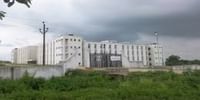
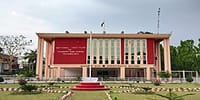
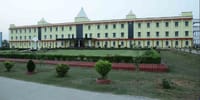
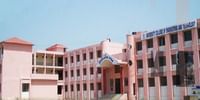
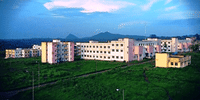
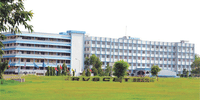
BIT Sindri has a wooded 450-acre campus beside the eastern bank of the Damodar River at Sindri in Jharkhand’s Dhanbad district. Its academic area contains the engineering departments, administrative block, central library, student services, and laboratories for practical work in engineering and applied science subjects.
Specialised facilities include the Siemens Centre of Excellence for automation and electrical training and the AICTE-IDEA Lab for prototyping and innovation. SIRTDO, expanded as the Sindri Institute of Research and Technical Development Organisation, provides testing and industry consultancy services. Students can also use the central library’s digital resources.
Male and female students have separate hostels, with annual charges of up to INR 60,400. Other facilities include a health centre, sports complex, and alumni guest house. Technical clubs, cultural societies, and other student groups remain active on campus. BITSAA, the BIT Sindri Alumni Association, connects alumni working in public service, industry, and academics.
BIT Sindri vs NIT Jamshedpur vs BIT Mesra
Students from Jharkhand and nearby states often compare BIT Sindri with NIT Jamshedpur and BIT Mesra, Ranchi. Each institution focuses on engineering and uses JEE Main scores, but their fees, admission routes, rankings, and programme choices differ.
| Parameter | BIT Sindri, Dhanbad | NIT Jamshedpur | BIT Mesra, Ranchi |
|---|---|---|---|
| Established | 1949 | 1960 | 1955 |
| Type | Government, affiliated with JUT | Government, National Institute | Private deemed university |
| NIRF Engineering 2024 | 201 to 300 band | Rank 40 | Rank 65 |
| B.Tech Fee, total | INR 1,17,856 | INR 5 to 6 lakhs | INR 12 to 13 lakhs |
| B.Tech Options | 11 disciplines | 9 disciplines | 15 plus disciplines |
| Campus | 450 acres, Dhanbad | Jamshedpur | Mesra, Ranchi |
| Admission Basis | JEE Main through JoSAA and JCECEB | JEE Main through JoSAA | JEE Main through institute counselling |
Subject to revision. Kindly check with the official sources to confirm
NIT Jamshedpur has the strongest NIRF position among the three, along with higher placement averages and wider national visibility as an NIT. BIT Mesra provides a larger selection of programmes, including niche and specialised engineering fields, but its B.Tech fee is higher. BIT Sindri stands out for its lower fees, 450-acre residential campus, and established record of core-engineering recruitment in public sector undertakings and the Jharkhand industrial region.
BIT Sindri FAQs
Ques. Where was BIT Sindri placed in the latest NIRF Engineering ranking?
Ans. BIT Sindri was listed in the 201 to 300 band of the NIRF Engineering Rankings in 2025. It held the same band in 2024 and submits information under the engineering category each year.
Ques. Is BIT Sindri owned by the government?
Ans. Yes. BIT Sindri is a government engineering institution supported by the Government of Jharkhand. Founded in 1949, it is one of eastern India’s oldest public technical institutes and is affiliated with Jharkhand University of Technology, Ranchi.
Ques. How much does the complete B.Tech programme at BIT Sindri cost?
Ans. Based on 2025-26 figures, the four-year fee for any of the 11 B.Tech disciplines is INR 1,17,856. Hostel accommodation is charged separately and can cost up to INR 60,400 per annum.
Ques. Which route is used for BIT Sindri B.Tech selection?
Ans. Selection depends on JEE Main scores. JoSAA counselling fills central quota seats, while JCECEB counselling covers the Jharkhand state quota. The institute does not conduct a separate B.Tech entrance examination.
Ques. What were the main BIT Sindri placement results for 2024-25?
Ans. The 2024-25 season resulted in placements for 510 B.Tech students and 30 M.Tech students. The highest B.Tech package was INR 16.5 LPA, while the median was INR 7 LPA. More than 120 companies joined the recruitment process.
Ques. What M.Tech options and admission requirements does BIT Sindri have?
Ans. BIT Sindri has M.Tech programmes in 13 specialisations. The listed fields include Control System, Data Science, Environmental Engineering, Heat Power, Machine Design, Nanotechnology, Power System Engineering, Structural Engineering, and Metallurgical and Materials Engineering. Applicants require a valid GATE score, and the total two-year fee is INR 66,578.
Ques. How should a student compare BIT Sindri with BIT Mesra?
Ans. BIT Mesra is a deemed university with a 2024 NIRF Engineering position of rank 65, compared with BIT Sindri’s 201 to 300 band. Its B.Tech fee is INR 12 to 13 lakhs, but it provides a wider course portfolio. BIT Sindri charges INR 1,17,856 for B.Tech, has a 450-acre campus, and has an established record of GATE-based PSU recruitment. A student’s preferred sector, budget, and rank should guide the choice.