
IELTS Academic: Exam Pattern, Question Types and Samples
- IELTS Coaching Chandigarh
- IELTS Coaching in Kerala
- IELTS Coaching in Chennai
- IELTS Coaching Hyderabad
- IELTS Coaching Bangalore
- IELTS Coaching in Kolkata
- IELTS Coaching Ahmedabad
- IELTS Institute Amritsar
- IELTS Coaching In Delhi
- IELTS Classes in Pune
- IELTS Coaching in Mumbai
- IELTS Coaching Ernakulam
- IELTS Coaching Gurgaon


Content Curator | Updated On - Mar 21, 2024
If you want to know about IELTS Academic, you must be a student aspiring to study in abroad universities. IELTS academic is designed to check your English language ability to speak, write, listen and read. The IELTS Academic test evaluates how fit you are for an academic environment in an English speaking university or college. The test is mainly taken by graduates and undergraduate students of Non-English-speaking countries. IELTS Academic test is mainly accepted in UK colleges and universities. More than 10,000 organizations in 140 countries around the world accepts IELTS acadmic scores as a requirement to study abroad.
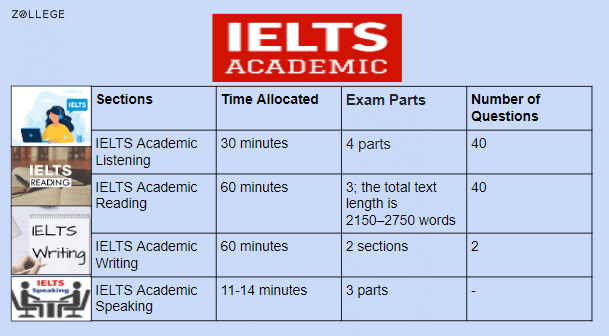
There are a total of four sections IELTS Reading, IELTS Writing, IELTS Listening and IELTS Speaking and is conducted for a duration of 2 hours and 45 minutes. You will get 60 minutes IELTS reading and writing. The IELTS Academic Listening section provides a time frame of 30 minutes. The Speaking section is the shortest, lasting from 11 to 14 minutes.
You need to pay the IELTS registration fee of INR 17,000. It is also important to know the IELTS scores since you must have a target score in mind as per the university. The IELTS band score is calculated on a scale of 0 to 9 bands overall. The IELTS Academic scores are valid for 2 years and are available within 13 business days of taking the exam. You must send the score to your desired university within 2 years or else the scores will get expired.
Who can take IELTS Academic
IELTS Academic can be taken only if you are a student who wants to study abroad at university. You do not require your academic scores or work experience to be eligible for taking the IELTS exam. The IELTS Academic test can be taken if you want to
- Study abroad at an undergraduate or postgraduate-level university in an English-speaking country
- Apply for Student Route visa (Tier 4) to study at a UK university
- Work for a professional organization in an English-speaking country
There are many differences between IELTS academics and IELTS general. The difference between IELTS Academic and General as per IELTS Eligibility are:
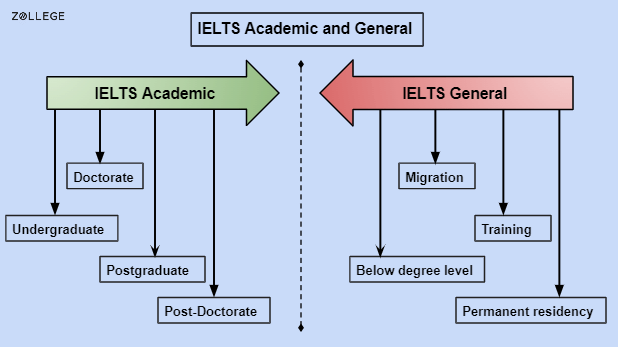
IELTS Academic Test
The IELTS Academic consists of four sections - Listening, Reading, Writing and Speaking. You will be tested on all 4 sections in the IELTS Academic exam. There are various types of questions like passages, essay writing, and summarize that you will face in the IELTS exam. The structure and format of IELTS syllabus of Academic are:
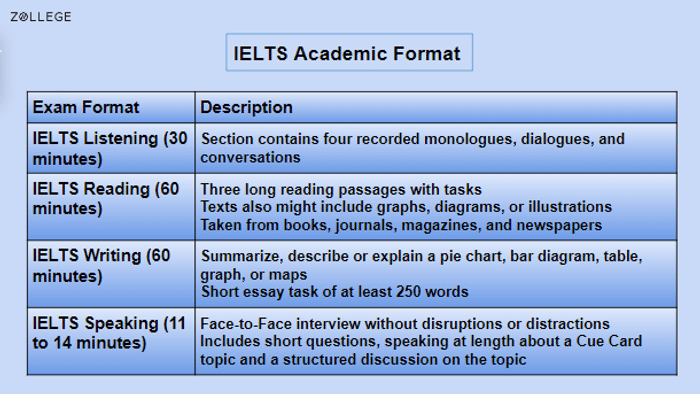
IELTS Listening
The IELTS listening checks your listening power and ability to understand the audio in English. This section analyzes how correctly and accurately you can understand the opinions of the speaker and follow the narrative. It is also very important to know that the IELTS Listening Audio clips will be played only once. Hence, you must listen with concentration and must not miss any part of the audio. The four audio clips are different from each other in IELTS Listening topics. They are also of different subjects and patterns.
| Particulars | Description |
|---|---|
| Components | Total 4 |
| Time Allocated | 30 Minutes for listening 10 minutes for transferring the answer |
| Question Format | Part 1: Conversation between two people set in a social context. |
| Part 2: Monologue set in an everyday social context, e.g. a speech about local facilities. | |
| Part 3: Conversation between up to four people in educational context, e.g. University tour | |
| Part 4: A monologue on an academic subject, like a university lecture by the professor. | |
| Topics | 5 Mind Blowing Facts About Your Smartphone IELTS Listening Answers Mastering Computer Languages IELTS Listening Answers Easylet Accommodation Agency Listening Answers |
IELTS Listening Question Types
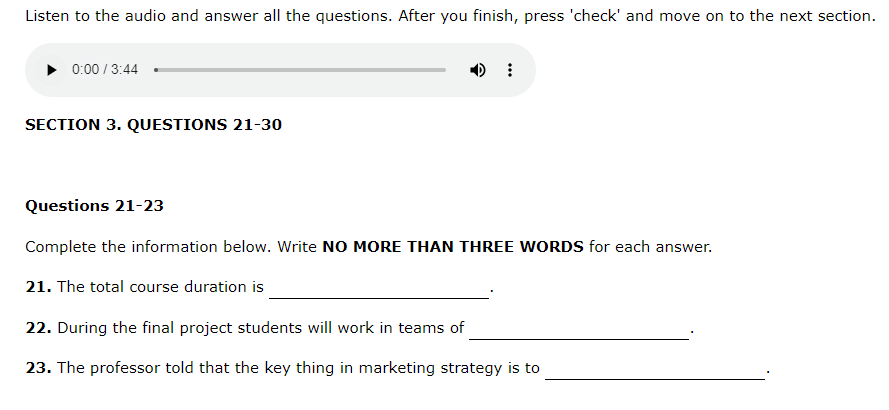
IELTS Listening Audio is played only once. The audio clip is followed by various types of questions that you need to answer. These questions are based on the audio clip played. IELTS Listening tips are available online that can help candidates ace the IELTS exam. The types of IELTS Listening questions are:
- Multiple choice
- Matching
- Plan, map, diagram labeling
- Form, note, table, flow-chart, summary completion
- Sentence completion
- Short-answer questions
IELTS Listening Samples
Sample 1
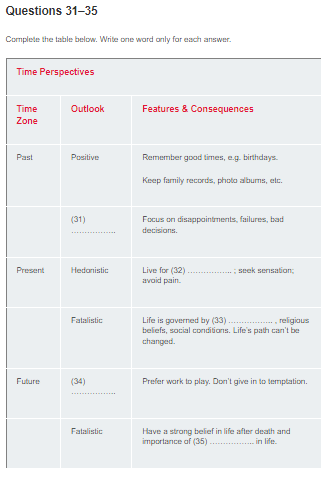
Sample 2
IELTS Reading
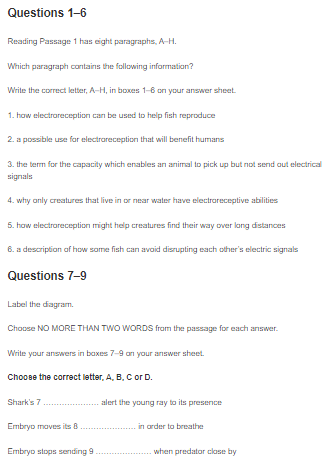
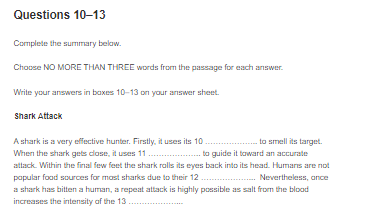
The IELTS Reading section checks your ability to read and understand a particular subject provided. This includes reading for gist, reading for main ideas, reading for detail, skimming and taking notes of important points. The IELTS Reading for Academic includes texts from various sources like books, journals, magazines, and newspapers. The topics are selected randomly keeping your qualification in mind. You will get 1 marks fpr each correct answer in IELTS Reading score. There is no negative marking for incorrect answers in IELTS academic reading score. Hence, you must try to answer as many questions as possible. There are many IELTS academic reading practice test available online.
| Particulars | Description |
|---|---|
| Components | Total 3 passages 40 questions |
| Time Allocated | 60 minutes |
| Question Types | Multiple choice questions |
| Topics | Anesthesiology IELTS Reading Answers Two Wings and a Toolkit IELTS Reading Answers The Game of Tennis IELTS Reading Answers |
IELTS Reading Samples
Sample 1
Sample 2
IELTS Writing
IELTS Academic Writing consists of 2 sections and you must complete both in a span of 60 minutes. The first is the IELTS Writing Task 1 and second is the IELTS Writing Task 2.
- IELTS Writing Task 1 - You will be asked to summarize the image, graph, chart etc in 150 words within 20 minutes. You must explain the process, or changes in the image, or any information significant to understand the gist of the provided image.
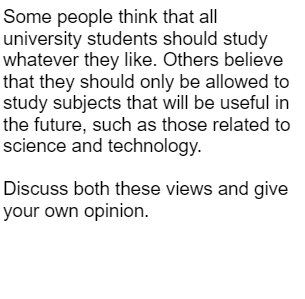
- IELTS writing task 2 - You will have 40 minutes to write an essay of 250 words. The essay will be in response to a point of view, argument, or problem. The tone of the writing should be formal and you should complete the essay within 250 words. A human examiner will evaluate your IELTS academic band scores.
| Particulars | Description |
|---|---|
| Components | 2 questions |
| Time Allocated | 60 minutes |
| Question Types | IELTS Academic Writing Task 1 - summary of a table/graph/process in at least 150 words IELTS Academic Writing Task 2 - 250-word essay |
| Question Topics | Writing task 1 - Pie Chart, Bar diagram, Map image etc. Writing Task 2 - Social Topics, educational arguments etc. |
IELTS Writing Question Types
In Task 1 of the IELTS Writing Task 1 of the Academic module, you must write a description of an image shared. You need to write a 250-word essay in task 2. This should be in response to an argument, problem, or point of view. The question types are:
| IELTS Writing Task 1 | IELTS Writing Task 2 |
|---|---|
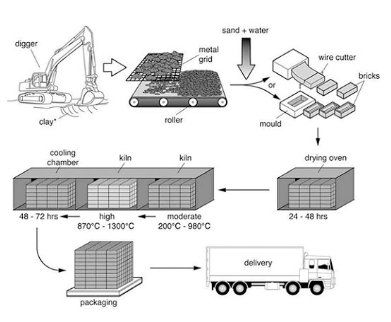 The process that is used to manufacture bricks for the building industry. |
|
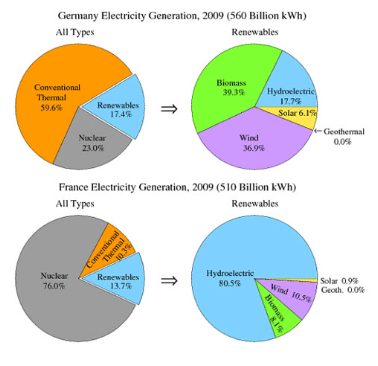 The electricity generated in Germany and France from all sources and renewables in the year 2009. |
|
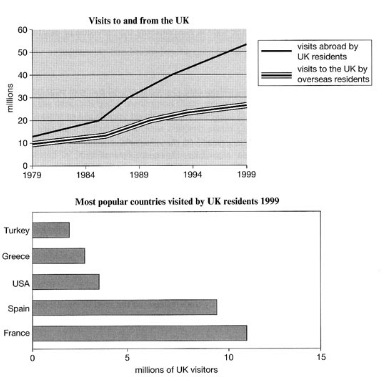 Visits to and from the UK from 1979 to 1999, and the most popular countries visited by UK residents in 1999. |
|
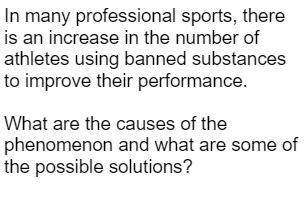
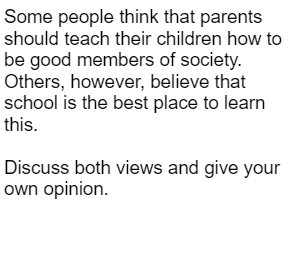
IELTS Speaking
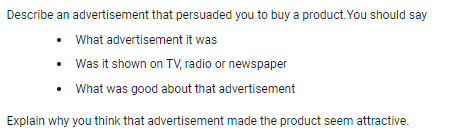
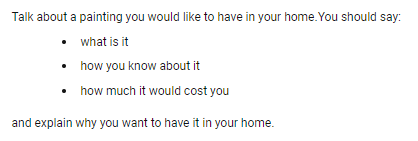
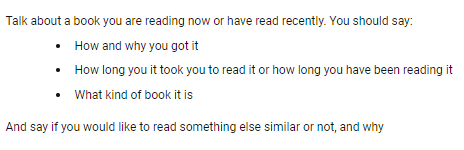
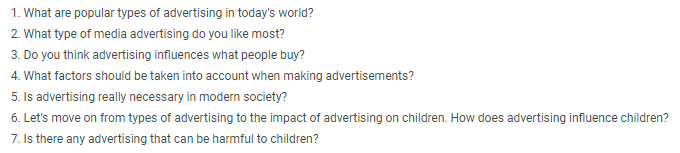
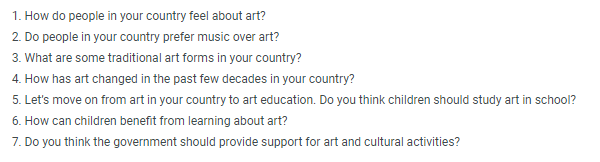
The IELTS Speaking test Speaking assesses your ability of speaking fluently in English. In this part, you will hear a recording of the examiner’s voice, and then they will record the answers, using the microphone. IELTS Speaking section is basically an interview between you and a qualified and certified examiner. The IELTS academic calculator in speaking section is not measured by computer. A human evaluator will be providing your scores. There are multiple IELTS Speaking topics that you can practice to understand the speaking section.
| Particulars | Description |
|---|---|
| Components | Total 3 sections Multiple questions |
| Time Allocated | 11–14 minutes |
| Question Types | Part 1 |
| Topics | Describe a Time when you were very Afraid IELTS Cue Card Describe an Unusual Job Cue Card Interesting Places Cue Card |
IELTS Speaking Question Types
| Part 1 | 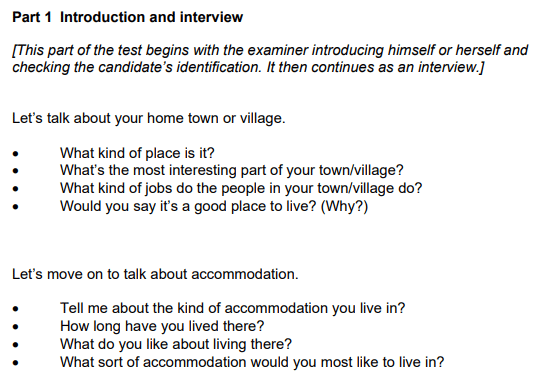 |
|---|---|
| Part 2 |
|
| Part 3 |
|

IELTS Preparation Books
Preparing for the IELTS Academic exam, there are several best books for IELTS academic that can help improve skills and familiarize with the test format. The following are a few IELTS preparation books that might aid candidates on their way to success.
- The Official Cambridge Guide to IELTS"- Check PDF
- Barron's IELTS Super pack" - Check PDF
- Target Band 7: IELTS Academic Module" - Check PDF
- Cambridge IELTS series" by Cambridge English Language Assessment
- IELTS Trainer" by Cambridge English Language Assessment-Check PDF
- IELTS Advantage: Reading Skills"
IELTS Academic Practice Tests
IELTS practice papers are required to secure good marks in the overall IELTS band score. Test takers are required to practice study materials available online other than books available. Practice IELTS exam sample papers to get an overall idea of the IELTS academic.
Candidates need to practice with official IELTS materials, such as sample tests and past papers, to prepare for IELTS. The IELTS academic cost and general cost is the same. Candidates can take up online classes and get an instructor to score better in IELTS Academic section.
FAQs
Ques: What is in IELTS academic?
Ans: The IELTS Academic test is designed to assess the English language proficiency of non-native speakers who want to study at an undergraduate or postgraduate level in an English-speaking country. It covers four skills: listening, reading, writing, and speaking.
Ques: What is the academic version of IELTS?
Ans: The academic version of IELTS is the IELTS Academic test. It is designed for students who want to study at an undergraduate or postgraduate level in an English-speaking country.
Ques: What is the IELTS academic level?
Ans: IELTS Academic is the most demanding of the two IELTS tests. It is designed to measure whether candidates have the level of English language proficiency needed for an academic, higher education environment.
Ques: What is the difference between IELTS and IELTS academic?
Ans: The Academic test contains topics suitable for anyone entering university or professional institutions. The General Training test will contain topics based on general interest. IELTS general is taken by professionals or workers, while Academic is for students.
Ques: What are the 4 types of IELTS exams?
Ans: The four types of IELTS exam are IELTS reading, IELTS Speaking, IELTS Listening and IELTS Writing. All four are parts of IELTS Academic and IELTS general.
Ques: Is Academic IELTS easier?
Ans: No, Academic IELTS is not easier than General Training IELTS. Academic IELTS is more difficult than General Training IELTS because it tests the English language skills that are needed for academic study.
Ques: Who needs IELTS academic?
Ans: IELTS Academic is required for many undergraduate and postgraduate programs in English-speaking countries. It is also required for registration with some professional bodies.
Ques: Who accepts IELTS academic?
Ans: The IELTS Academic are accepted by more than 10,000 organizations in 140 countries around the world. IELTS Academic test is conducted for a duration of 2 hours and 45 minutes. It is mandatory for admissions to universities abroad.
Ques: Is IELTS very difficult?
Ans: No, IELTS is not very difficult. IELTS is a challenging test, but it is not impossible to pass. With preparation, most students can achieve a good score.
Ques: What is IELTS exam fees?
Ans: The IELTS Exam fee is 16,500 for Indian students. Candidates need to pay this fee at the time of IELTS registration.
Ques: Is it easy to get 8 in ielts academic?
Ans: Getting 8 in IELTS academic is not easy at all. Mock test and practice papers can help in scoring 8 band in IELTS. The IELTS coaching centers can also help you improve your IELTS scores.
Ques: Who is eligible for ielts academic exam?
Ans: There is no eligibility criteria for IELTS exam. You need to be 16 years of age or older to take the IELTS exam. IELTS Academic can be taken by any student who wants to study abroad.
Ques: What is IELTS syllabus?
Ans: The IELTS Syllabus has four sections: Listening, Reading, Writing, and Speaking, which assess your Listening, Reading, Writing, and Speaking skills respectively. There are multiple sub sections under the four sections of IELTS.
Ques: What is IELTS fee?
Ans: The IELTS fees is INR 17,000. The IELTS test which is computer based will cost you INR 17,250 for UKVI. You need to pay the fees at the time of IELTS registration.
Ques: Does IELTS have age limit?
Ans: There is no upper age limit for taking IELTS exam. The minimum age limit to take the IELTS exam is 16 years. If you are below 16, a parental confirmation is also required.
Ques: How many hours is IELTS academic?
Ans: The duration of the IELTS exam has been reduced to 2 hours and 45 minutes. The Listening section is for 30 minutes. The IELTS Reading and IELTS Writing sections are for 60 minutes. The IELTS Speaking section is for 11–14 minutes.
Ques: Is 6.5 IELTS academic easy?
Ans: Yes, getting a 6.5 in IELTS Academic is easy. If you focus on practicing and learning the subjects of IELTS test, getting 6,5 will be a piece of cake for you. All you have to do is work hard and a lot of practice.
Ques: What is IELTS full score?
Ans: The full score in IELTS is 9. You will be marked on a scale of 1-9. You will be given a score for each part of the test – Listening, Reading, Writing and Speaking. The average of these scores will make up your IELTS band score.
Ques: How many attempts are there in IELTS?
Ans: You can take IELTS as many time as you want. There is no limitation of taking the IELTS test. However, you must register and pay the IELTS exam fees every time you want to take the test. hence, it is best to prepare first and then take the test.
*The article might have information for the previous academic years, please refer the official website of the exam.