
IELTS Syllabus: Exam Types, Scores, Books, and Preparation Tips
- IELTS Coaching Chandigarh
- IELTS Coaching in Kerala
- IELTS Coaching in Chennai
- IELTS Coaching Hyderabad
- IELTS Coaching Bangalore
- IELTS Coaching in Kolkata
- IELTS Coaching Ahmedabad
- IELTS Institute Amritsar
- IELTS Coaching In Delhi
- IELTS Classes in Pune
- IELTS Coaching in Mumbai
- IELTS Coaching Ernakulam
- IELTS Coaching Gurgaon


Content Curator | Updated On - Apr 30, 2024
Highlights:
- The Reading and Writing sections of IELTS syllabus are different for the Academic and General Training.
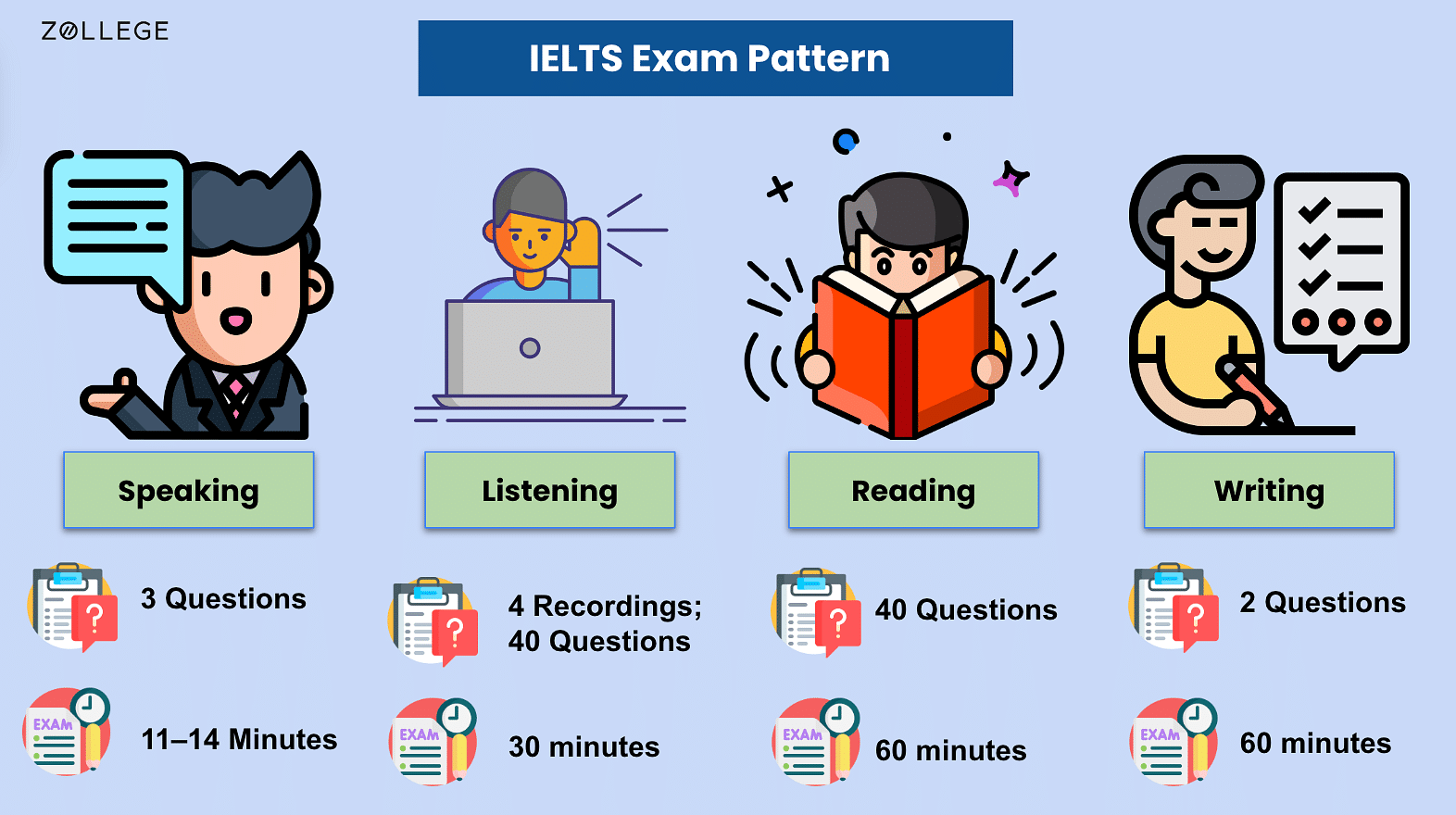
- The Reading section consists of 40 questions; you will be allocated 60 minutes to complete the test.
- You have to solve two tasks in the writing section, which is 60 minutes.
- IELTS Speaking section lasts 11 to 14 minutes, and you need to answer 3 questions.
- The listening section includes 40 questions based on the 4 recordings, and you will allocate 30 minutes.
IELTS tests your English skills in four areas: reading, writing, listening, and speaking. IELTS syllabus is specifically designed to evaluate your basic English language skills. There are two versions depending on your application purpose: Academic for study purposes and General Training for migration. You will be allocated 2 hours and 45 minutes to complete IELTS exam pattern, with most of it done in one day. The speaking part might be on a separate day, within a week of the main test. The total score ranges on a scale between 0 and 9 band. You need to remember that the Reading and Writing sections of IELTS exam syllabus are different for the Academic and General Training.
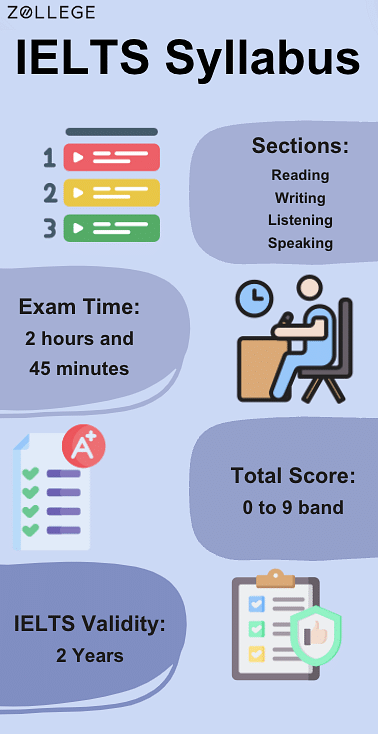
IELTS Exam Pattern
Candidates must have a clear idea about the exam pattern before doing IELTS registration. IELTS exam pattern consists of two different modes; computer-based and paper-based tests. Every section of IELTS syllabus contributes 25% to the overall score. The academic and general IELTS exam pattern is the same, but the topics vary. UKVI IELTS examination pattern for listening and speaking is different.
IELTS Exam Types
IELTS exam type varies for different purposes and individuals. Candidates can choose their convenient types of IELTS as per their requirements. Every type of test has its own IELTS syllabus, marking criteria, and requirements. IELTS Academic is designed for study purposes in English-speaking countries. The main types of IELTS exam patterns are described below:
| Exam Type | Description |
|---|---|
| IELTS Academic | Designed for candidates planning to study in an English-speaking country. |
| IELTS General Training | The general training exam is for migration to an English-speaking country for immigration or work purposes. |
| IELTS for UKVI | This test is specially designed for aspirants planning for UK visa purposes. UKVI IELTS proves the candidate’s English language abilities are required by UK visa and immigration policies. |
| IELTS Life Skills | UKVI IELTS evaluates a candidate’s speaking and listening abilities at two levels; A1 - for the family route B1 - for the settlement route |
Section-wise IELTS Exam Syllabus
IELTS syllabus consists total of four sections. Reading, speaking, writing, and reading sections are designed to evaluate the candidate's English language proficiency. The IELTS test syllabus for the reading and writing sections is different for academic and general exams. The syllabus for listening and speaking of IELTS general and academic exams consists of the same pattern.
IELTS Reading Syllabus
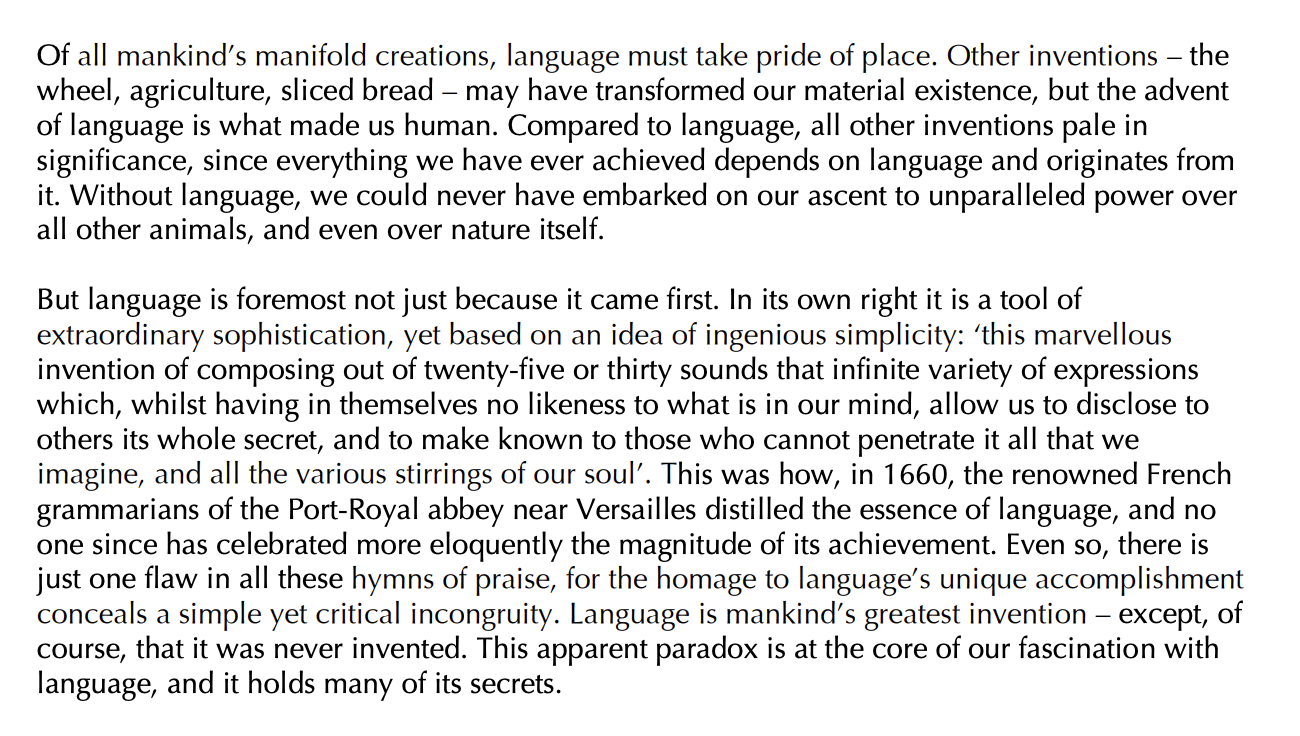
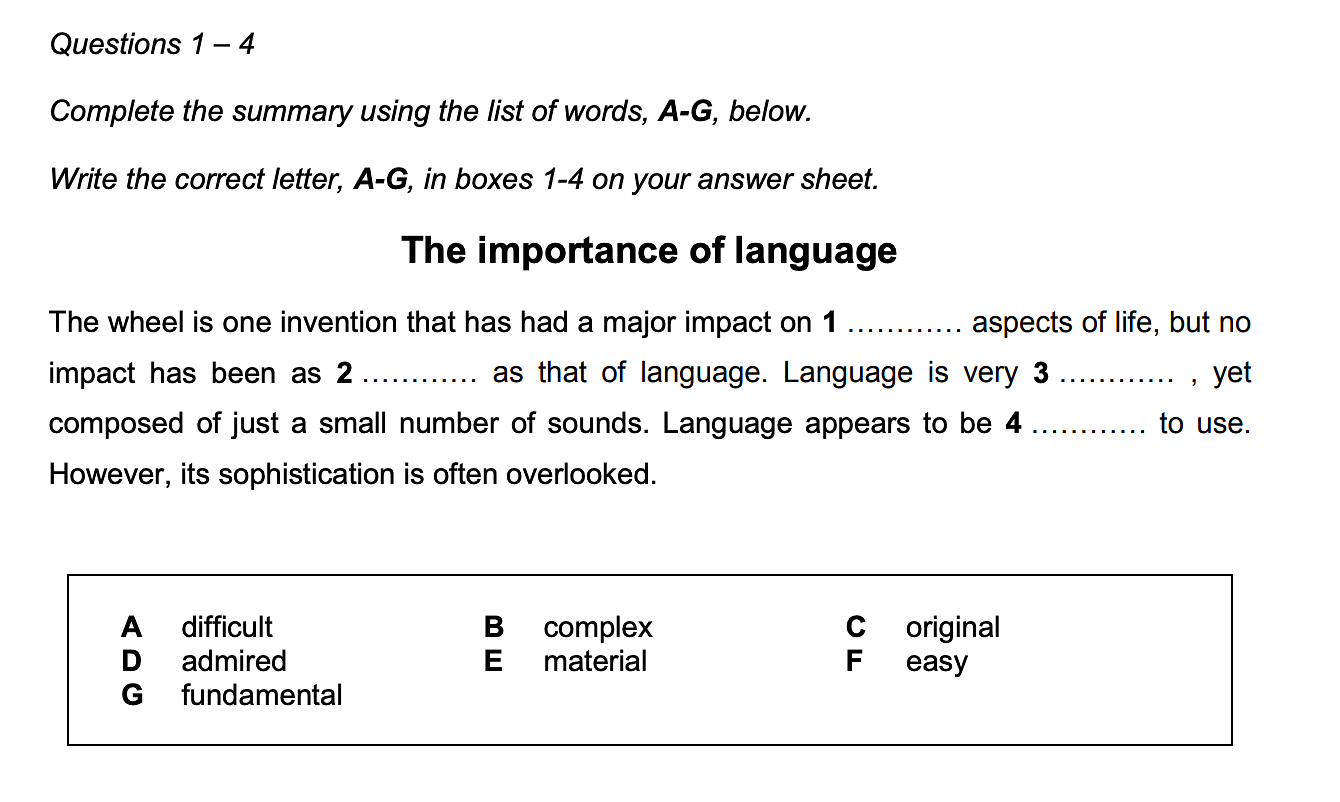
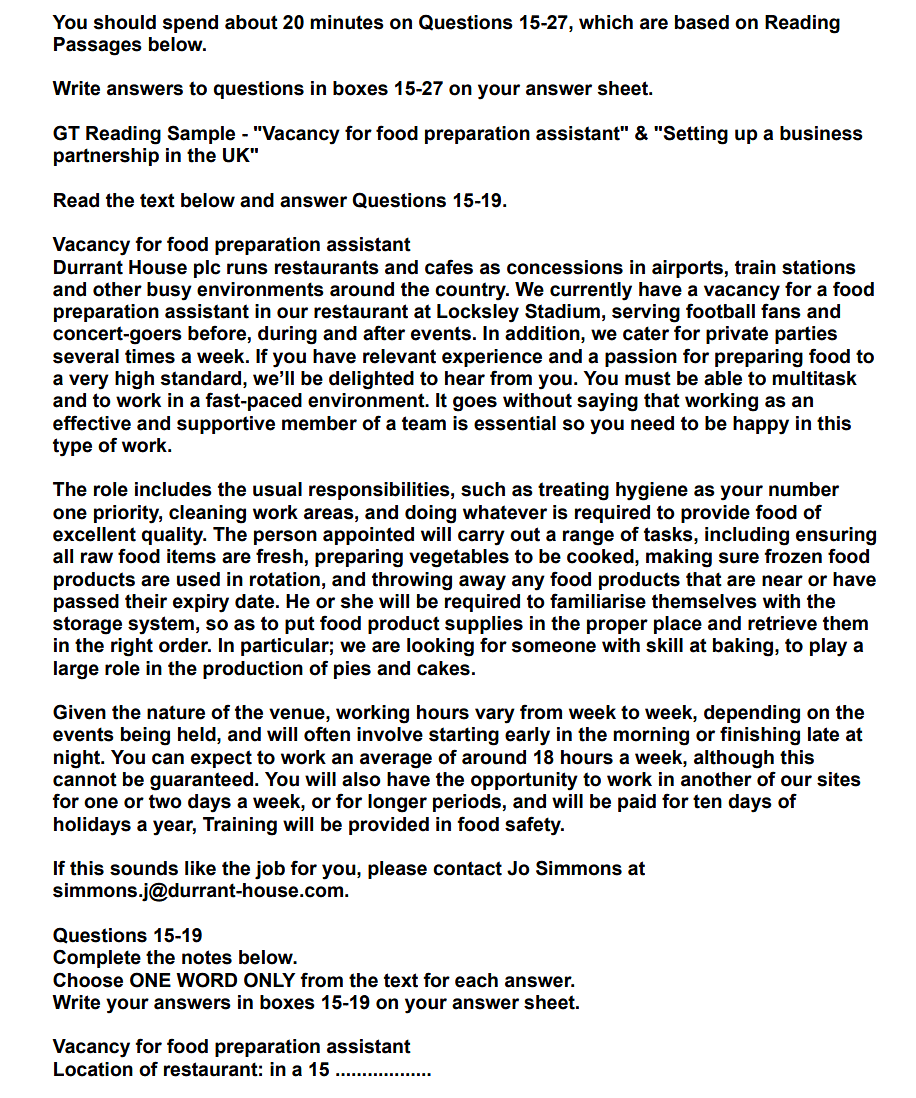
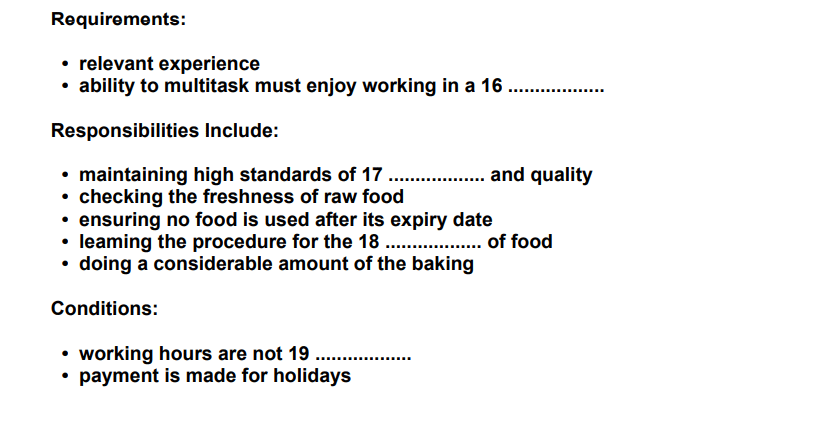
IELTS reading syllabus evaluates the candidate's text analyzing and understanding abilities. IELTS general syllabus and academic syllabus, consist of three passages with 40 questions. Candidates are allotted 60 minutes to complete IELTS reading topics.
IELTS Academic Reading Question Sample:
IELTS General Training Reading Question Sample:
IELTS Writing Syllabus
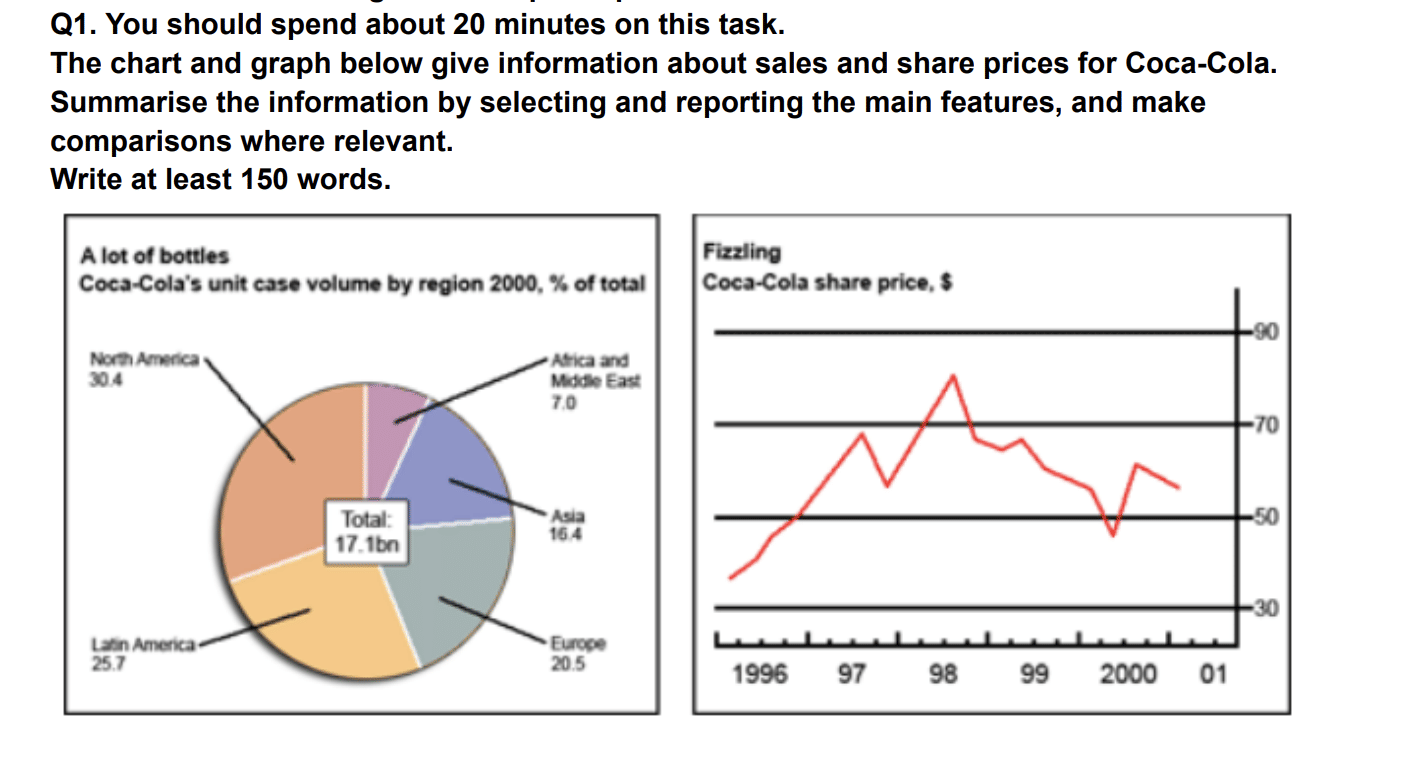
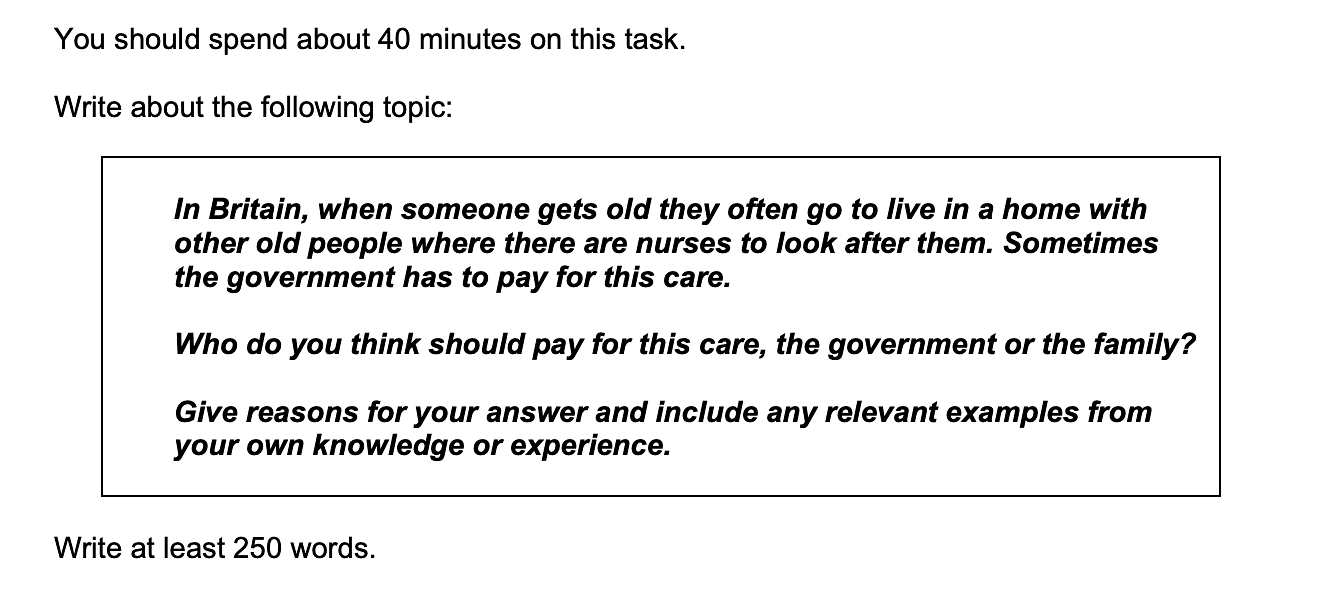
IELTS writing syllabus involves detailed, and, descriptive writing. The IELTS writing section is divided into two tasks. Candidates have to write over 150 words for task 1, and over 250 words for IELTS task 2. This writing academic and IELTS general exam pattern analyzes the candidate's grammatical skills. To complete the IELTS writing topics, candidates are given 60 minutes.
IELTS Academic Writing Question Sample:
IELTS General Training Writing Question Sample:
IELTS Speaking Syllabus
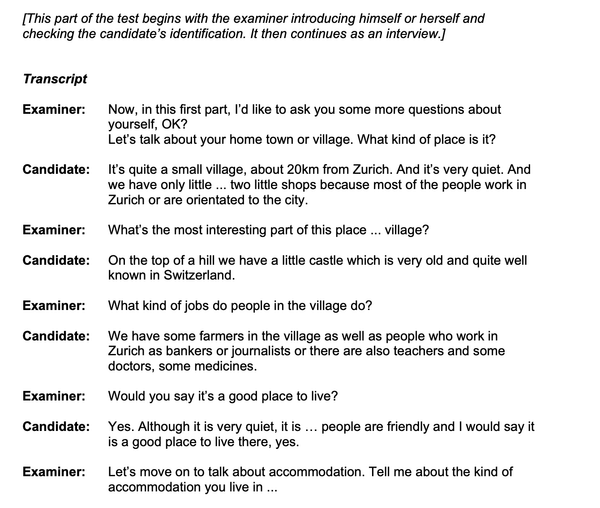
IELTS syllabus for the speaking part consists of interviews between the candidate and the examiner. It assesses the candidate's knowledge and skills to do effective communication in the English language. Candidates are given 11 to 14 minutes to answer the speaking questions. IELTS speaking consists of 3 parts – A personal Interview, a little Speech, and a discussion.
IELTS Speaking Question Sample:
IELTS Listening Syllabus
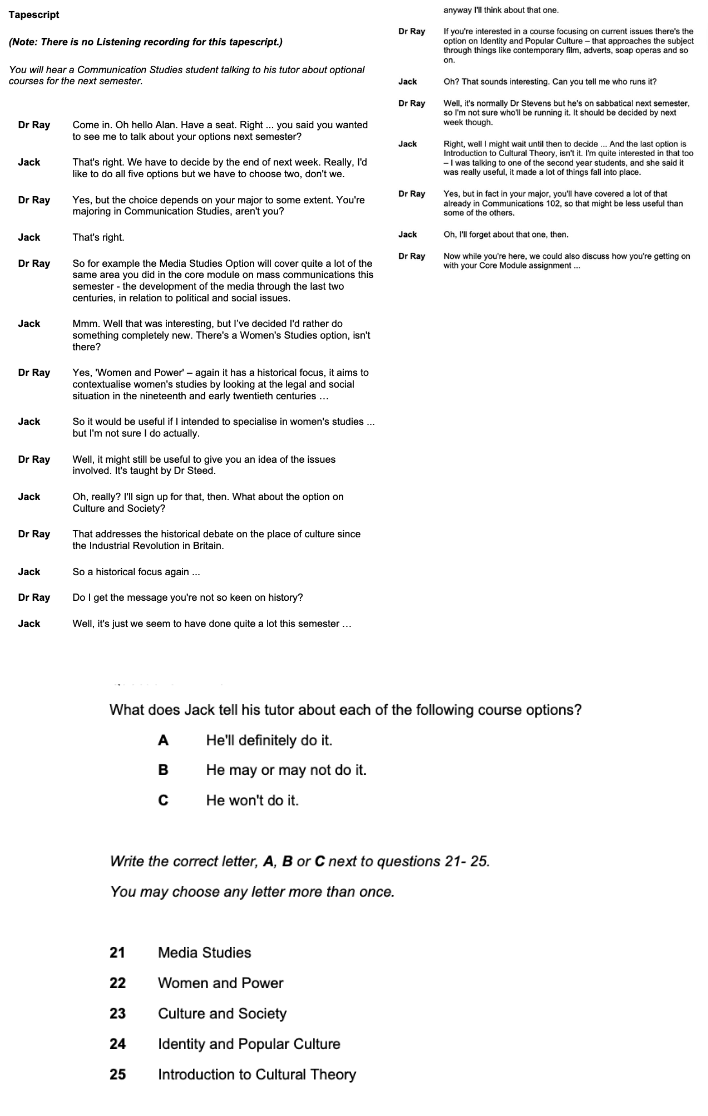
You will be given 30 minutes to complete the listening section. IELTS Listening section questions are divided into four sections. Listening exam topics include various question types; multiple-choice, short-answer questions, note completion, sentence completion, labeling a diagram, etc. The IELTS listening topics consist of a total of 40 questions.
IELTS Listening Question Sample:
IELTS Band Scores
IELTS syllabus and pattern’s scoring criteria are different for the four sections. A good IELTS score describes a candidate’s English language proficiency level. IELTS total and sectional score is calculated on a range of 0-9 band. IELTS band score depends on the test-takers reading, speaking, listening, and writing abilities. Candidates must know about the calculation of section-wise results to the overall IELTS band score.
| Reading | Writing | Listening | Speaking | Average | Overall |
|---|---|---|---|---|---|
| 7.5 | 7.0 | 6.5 | 7.5 | 28.5/4 = 7.125 | 7.0 |
| 6.0 | 5.5 | 7.0 | 5.0 | 23.5/4 = 5.875 | 6.0 |
IELTS Preparation Tips
IELTS preparation includes expert guidance, exam books, and regular practice. Candidates must develop their English speaking, reading, listening, and writing abilities during IELTS preparation. Effective preparation includes IELTS syllabus books, sample papers, and coaching. IELTS online preparation also helps the aspirants achieve a better score. Here are some tips and strategies to help candidates ace their exam preparation.
- Must examine the details of every question, graph, or image to answer perfectly.
- Don’t take long pauses, and always speak slowly, clearly, and fluently.
- Aspirants must improve their English vocabulary, grammar, and sentence structure knowledge.
- Always use active voice, and try to give relevant, and precise answers.
- Carefully understand the questions and focus on finding answers from the passage in the IELTS reading exam.
- Develop a good note-taking habit, to avoid minimal mistakes.
- Remember to revise and recheck the answer for grammar and spelling errors.
- Divide the allotted time for every section task to perform better.
IELTS Books
IELTS books provide the best study materials for preparation. You must have a better understanding of IELTS syllabus sections. These books consist of study materials and question papers for IELTS exam subjects. IELTS exam books help candidates to achieve their desired results.
- Official IELTS Practice Materials 2 with DVD- Check PDF
- Focus on IELTS Foundation Coursebook- Check PDF
- IELTS Trainer 2 Academic: Six Practice Tests- Check PDF
- Barron’s IELTS Superpack- Check PDF
- The Official Cambridge Guide to IELTS- Check PDF
IELTS Practice Papers
IELTS practice papers help candidates to do effective preparation. You can practice for IELTS exam with regular practice tests, proper time management, study materials, and expert guidance. The questioning pattern for general and IELTS academic syllabus is different for reading and writing. The speaking and listening section is the same for both academic and general exam. Preparing regularly with practice papers helps students to prepare for IELTS exam dates.
IELTS Reading Practice Papers:
IELTS Writing Practice Papers:
IELTS Listening Sample Papers:
IELTS Speaking Sample Papers:
| IELTS Speaking Sample Paper 1 | IELTS Speaking Sample Paper 2 |
| IELTS Speaking Sample Paper 3 | IELTS Speaking Sample Paper 4 |
| IELTS Speaking Sample Paper 5 | IELTS Speaking Sample Paper 6 |
The first thing for starting exam preparation is a better understanding of IELTS exam syllabus 2023 and 2024. Every section of IELTS course syllabus analyzes the aspirant’s English language skills. Candidates must know the section-wise exam pattern of the IELTS syllabus. A good IELTS exam score helps in the visa process for English-speaking countries.
FAQs
Ques - What is the syllabus of IELTS?
Ans - IELTS syllabus includes four sections; reading, writing, listening, and speaking. The reading and writing section for the general and academic exam is different.
Ques - Is IELTS hard to pass?
Ans - IELTS score proves the candidate's English language proficiency. With proper preparation, practice, and expert mentorship, candidates can easily pass IELTS exam.
Ques - Can I prepare for IELTS at home?
Ans - Preparing for IELTS from home requires a better understanding of the exam pattern. Candidates can effectively prepare with IELTS syllabus books and practice papers.
Ques - Can I crack IELTS in 3 months?
Ans - There is no time limit for IELTS preparation. With expert mentorship, customized study materials, and consistent effort, candidates can crack the IELTS in 3 months.
Ques - Which part of IELTS is difficult?
Ans - Most of the aspirants consider the writing section as the hardest part of the IELTS exam. Candidates require regular writing practice, and expert tips for better scores.
Ques - What is passing score for IELTS?
Ans - There is no specific passing score for IELTS. IELTS syllabus score ranges on a scale of 0-9. IELTS band score of 7.0 is accepted by most English language countries.
Ques - Which book is best for IELTS preparation?
Ans - The Official Cambridge Guide to IELTS., Barron's IELTS Superpack, Simone Braverman's Target Band 7, and there are many best books available for IELTS preparation.
Ques - How many hours is IELTS Reading?
Ans - Candidates are given 40 minutes to complete the IELTS reading exam. IELTS syllabus for reading is different for academic and general exams.
Ques - What is the listening format for IELTS?
Ans - In the listening format for IELTS, candidates are required to respond from 4 recordings. 40 questions are given to candidates to evaluate their IELTS listening abilities.
Ques - What are the 3 parts of IELTS speaking test?
Ans - In part 1 of IELTS speaking, candidates have to answer about themselves. Part 2 requires speaking about the given topic, and part 3 includes a longer discussion.
Ques: What is the time taken for the IELTS exam?
Ans: The IELTS exam lasts for 2 hours and 45 minutes including all the 4 sections. You can take all 4 sections in one day or the speaking part later.
Ques: What types of audio are used in IELTS Listening?
Ans: The audio types that are used in IELTS Listening includes academic lectures, conversations, discussions, monologues and many more. You need to listen to the whole audio as it is played only once.
Ques: What are the types of questions in IELTS?
Ans: The IELTS exam has diferent types of questions for different sections. These include multiple choice, matching headings, sentence correction, fill in the blanks, writing letter and many more.
Ques: How many questions are there in IELTS Reading section?
Ans: The IELTS Reading section has three passages and 40 questions in total. You need to read the passage and answer the questions within a span of 1 hour. You must read the passgae carefully to answer the questions correctly.
Ques: What are the three sections of the IELTS speaking test?
Ans: The IELTS Speaking test consist of three sections which are Introduction and interview, individual presentation, discussion. You need to talk about your personal details in first section. In the 2nd section, you need to speak about a topic and in the third section, questions will be asked on the topic.
Ques: How long is each section in IELTS Speaking?
Ans: The IELTS Speaking section total time is 11-14 minutes. Part 1 is 4-5 minutes, Part 2 consist of 1 minute preparation and 2-3 minutes speaking and Part 3 is for 4-5 minutes.
Ques: What is the passing score for IELTS Exam?
Ans: There is no passing score for the IELTS exam. You will be scored on a scale of 0-9. The score requirement will depend on the university that you are applyinmg to. Most abroad universities require an IELTS score of 6 and above.
Ques: What are the sections of the IELTS Writing?
Ans: The IELTS Writing part consist of 2 tasks: Task 1 and Task 2. In Task 1, you need to write on a topic or a letter for 150 words. In Task 2, a topic will be given. You will have to give your opinion and support that within 250 words.
Ques: What is there in the IELTS Academic Reading test?
Ans: The IELTS Academic Reading module includes 3 sections having 40 questions. It includes general interest topics. The texts can be from books, magazines, online resources, or newspapers.
Ques: What is there in the IELTS Listening Test?
Ans: IELTS Listening test has 4 parts including 10 questions in every part. Part one and two of the test includes everyday social situations whereas part three and four includes educational situations. The questions are in sequence as the information provided in the recording. You will be able to listen to the recording only once.
*The article might have information for the previous academic years, please refer the official website of the exam.