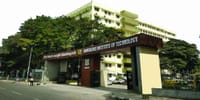
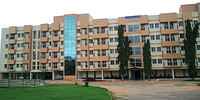
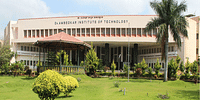
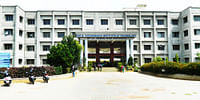
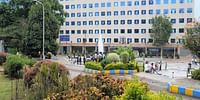
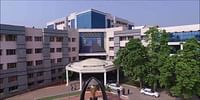
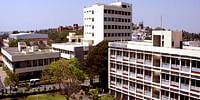
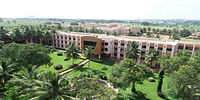
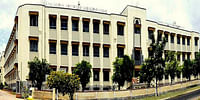
University Visvesvaraya College of Engineering (UVCE), Bangalore began in 1917 under Bharat Ratna Sir M Visvesvaraya. It is Karnataka's first engineering college and is among India's five oldest engineering institutions. After the UVCE Act 2021 came into force, the former Bangalore University constituent college became an autonomous State University. UVCE has AICTE approval and an A grade from NAAC.
UVCE was placed 22nd nationally for Architecture in the IIRF Architecture Rankings 2025. Since becoming an independent university in 2021, it has been rebuilding its NIRF ranking record under the new institutional identity. Its alumni have worked across engineering, technology and public administration for more than a century.
The university has the historic KR Circle campus in central Bangalore and the Jnanabharathi campus. Their combined area is 60 acres. UVCE is also known for its government-regulated fees and placement record. The four-year General category BE fee is INR 54,210, while the two-year M.Tech fee is INR 1,00,000. During the 2025 placements, 523 BE students secured jobs, the median CTC was INR 7.42 LPA, and the placement rate stood at 84 to 86%. More than 254 companies participated.
- BE is a four-year programme with eight branches: Civil Engineering, Computer Science and Engineering, CSE in AI and ML, CSE in Data Science, Electrical and Electronics Engineering, Electronics and Communication Engineering, Information Science and Engineering, and Mechanical Engineering. The total intake is 740 to 760 seats.
- B.Arch runs for five years, and its graduates recorded a median placement package of INR 8 LPA.
- M.Tech is offered over two years with 20 specialisations covering Civil, Mechanical, ECE, CSE, EEE and related fields.
- M.Arch is a two-year course available in Construction and Project Management and Landscape Architecture.
- Ph.D. research is available in Civil, CSE, Electrical, Electronics, Mechanical and Communication Systems.
UVCE Admission Dates 2027
KCET, conducted by the Karnataka Examinations Authority, is used for BE and B.Arch admission under the Karnataka quota. COMEDK is the route for non-Karnataka applicants and management quota seats. The expected schedule for the 2027 cycle is given below.
| Event | Date |
|---|---|
| KCET registration for the 2027 cycle | January to March 2027 |
| KCET 2027 examination | April 2027 |
| KCET 2027 result | May to June 2027 |
| KEA counselling and seat allotment for the 2027 cycle | July to September 2027 |
| Beginning of the 2027 academic session | September 2027 |
Subject to revision. Kindly check with the official sources to confirm
Entrance and counselling requirements differ by programme, as shown in the following table.
| Programme | Exam Accepted | Counselling |
|---|---|---|
| BE, Government Quota | KCET | KEA, Karnataka |
| BE, COMEDK Quota | COMEDK UGET | COMEDK |
| B.Arch | KCET or NATA | KEA, Karnataka |
| M.Tech | GATE or Karnataka PGCET | KEA or institutional counselling |
| M.Arch | GATE or institutional test | UVCE |
| Ph.D. | UVCE research entrance test or UGC NET/GATE | UVCE |
UVCE Courses and Fees
UVCE provides undergraduate, postgraduate and doctoral education in engineering and architecture. Karnataka government rules regulate the BE fee, which is one of the lowest among NAAC A accredited engineering institutions in Bangalore.
| Course | Duration | Eligibility | Total Fee, General Category |
|---|---|---|---|
| BE in Civil Engineering | 4 years | Class 12 with PCM, 45%, and KCET or COMEDK | INR 54,210 |
| BE in CSE | 4 years | Class 12 with PCM, 45%, and KCET or COMEDK | INR 54,210 |
| BE in CSE, AI and ML | 4 years | Class 12 with PCM, 45%, and KCET or COMEDK | INR 54,210 |
| BE in EEE | 4 years | Class 12 with PCM, 45%, and KCET or COMEDK | INR 54,210 |
| BE in ECE | 4 years | Class 12 with PCM, 45%, and KCET or COMEDK | INR 54,210 |
| BE in ISE | 4 years | Class 12 with PCM, 45%, and KCET or COMEDK | INR 54,210 |
| BE in Mechanical Engineering | 4 years | Class 12 with PCM, 45%, and KCET or COMEDK | INR 54,210 |
| B.Arch | 5 years | Class 12 with Mathematics, 50%, and KCET or NATA | INR 54,210 |
| M.Tech, 20 specialisations | 2 years | BE/B.Tech in a relevant discipline and GATE or PGCET | INR 1,00,000 |
| M.Arch, 2 specialisations | 2 years | B.Arch and GATE or an institutional test | INR 1,00,000 |
| Ph.D. | 3 to 5 years | Postgraduate degree and research entrance test | INR 50,353 |
Subject to revision. Kindly check with the official sources to confirm
The M.Tech options include Advanced Materials Science, Bioinformatics, Computer Network Engineering, Construction Technology, Control Systems, Earthquake Engineering, Environmental Engineering, Geotechnical Engineering, Highway Engineering, Machine Design, Manufacturing Science, Power Electronics, Power Systems, Prestressed Concrete, Software Engineering, Structural Engineering, Thermal Sciences, Water Resources Engineering and Web Technologies.
UVCE Admission Process
BE Admission at UVCE
UVCE does not hold a separate entrance test for BE admission. Government quota applicants are selected through KCET, while COMEDK UGET applies to management quota seats. The combination of government fees, a central Bangalore location and established recognition makes the university a popular KCET choice.
Students seeking BE admission must meet these conditions:
- Pass Class 12 with Physics and Mathematics along with Chemistry or Biology. Both subject combinations are accepted for the CSE and AI branches.
- Obtain at least 45% in PCM in the General category. The minimum is 40% for SC, ST and OBC students under Karnataka rules.
- Hold a valid KCET score for Karnataka domicile seats or a COMEDK score for non-Karnataka and management quota admission.
- Meet Karnataka reservation rules for SC, ST, OBC and EWS seats within the government quota.
The BE selection process follows these steps:
- Take the KCET PCM examination, which is generally conducted in April.
- After the results, complete registration for the centralised KEA counselling process.
- Enter UVCE and the preferred engineering branches through KEA's online choice-filling portal.
- Accept the allotted seat and report to UVCE for document verification before the given deadline.
Demand for UVCE seats through KCET is high, particularly for CSE and ECE. In recent admission cycles, the General category closing position for CSE has fallen within the top 200 to 500 KCET ranks in Karnataka. This places the combination among the state's most competitive government engineering options.
M.Tech Admission
Applicants can enter M.Tech through GATE or the Karnataka Post Graduate Common Entrance Test, commonly called PGCET. They need a relevant BE or B.Tech degree with at least 55%. KEA or institutional counselling handles seat allocation. The university offers 20 M.Tech specialisations, a wider selection than most government autonomous colleges in Bangalore.
UVCE Placements
NIRF reporting data for the 2025 season shows that 523 BE students were placed. BE graduates received a median CTC of INR 7.42 LPA, while the B.Arch median package was INR 8 LPA. The BE placement rate reached 84 to 86%. More than 254 companies made over 776 offers.
| Placement Metric | 2025 Season |
|---|---|
| BE students placed | 523 |
| Placement rate | 84 to 86% |
| Median CTC for BE | INR 7.42 LPA |
| Median CTC for B.Arch | INR 8 LPA |
| Total offers | 776+ |
| Companies visiting the campus | 254+ |
Recruiters include Oracle, IBM, Adobe, Cisco, SAP Labs, Dell, LinkedIn, Huawei, Wipro, Toyota, Bosch, Mercedes-Benz R&D and Volvo. The recruiter mix covers global technology businesses based in Bangalore, Indian IT companies and European automotive research and development centres. Most technology placements come from CSE, ECE and ISE, while Civil and Mechanical students also join core engineering and infrastructure employers.
UVCE Rankings
The UVCE Act 2021 separated the institution from Bangalore University and gave it autonomous State University status. This change restarted the three-to-five-year eligibility period used for its independent NIRF ranking record. UVCE took part in the NIRF 2025 Overall and 2026 categories, but it had no published engineering rank in the 2025 list. Its independent data is expected to support participation in future ranking cycles.
| Ranking Body | Category | 2025 Rank |
|---|---|---|
| IIRF | Architecture | 22 |
UVCE also holds NAAC A grade accreditation and remains Karnataka's first engineering college. Its institutional record includes more than 100 years of alumni history. Along with the university status granted under the UVCE Act 2021, these factors serve as quality indicators while a current NIRF rank is unavailable.
UVCE Campus and Infrastructure
Academic facilities are divided between two Bangalore campuses covering a combined 60 acres. The KR Circle campus in central Bangalore contains the historic 1917 main building, administrative offices, academic departments and central library. Additional classrooms and laboratories are located at the Jnanabharathi campus.
Facilities include computing laboratories, advanced electronics labs, architecture design studios and a materials testing laboratory serving Civil and Mechanical programmes. Students also have access to digital library services, seminar halls and sports facilities. Alumni support an ongoing programme for infrastructure improvements. The institution's infrastructure and teaching standards are covered by its NAAC A accreditation.
UVCE vs RV College of Engineering vs BMS College of Engineering
RV College of Engineering and BMS College of Engineering are two private autonomous Bangalore colleges commonly considered alongside UVCE. All three institutions admit students through KCET and are based in Bangalore, although they differ in ownership, fees, course capacity and placement figures.
| Parameter | UVCE Bangalore | RVCE Bangalore | BMSCE Bangalore |
|---|---|---|---|
| Established | 1917 | 1963 | 1946 |
| Type | Autonomous State University, Government | Autonomous, private aided | Autonomous, private aided |
| BE intake | 740 to 760 seats, 8 branches | 2,400 seats, 14 branches | 2,100 seats, 11 branches |
| General category BE fee for 4 years | INR 54,210 | INR 2.5 to 4 lakhs | INR 2 to 3 lakhs |
| NIRF Engineering 2025 | Not ranked after the recent university upgrade | Not in the top 50 | Not in the top 50 |
| NAAC grade | A | A+ | A+ |
| Admission route | KCET for government quota and COMEDK | KCET and COMEDK | KCET and COMEDK |
| Median placement | INR 7.42 LPA | INR 12 to 14 LPA | INR 8 to 10 LPA |
UVCE's four-year BE fee is five times lower than RVCE's stated range and four times lower than BMSCE's stated range. RVCE and BMSCE have NAAC A+ grades, more engineering branches and higher median packages. UVCE offers a government fee structure, NAAC A accreditation, more than a century of institutional history and the distinction of being Karnataka's oldest engineering college. For applicants ranked within the top 200 to 500 in KCET, its CSE and ECE branches are among Bangalore's most cost-effective government engineering choices.
UVCE FAQs
Ques. How much does the complete BE programme at UVCE Bangalore cost?
Ans. General category students pay a total of INR 54,210 for the four-year BE programme across all eight branches. Karnataka government rules regulate this amount, making it one of Bangalore's lowest fees among engineering institutions with NAAC A accreditation. Lower fees apply to SC, ST and OBC students according to state regulations.
Ques. Is UVCE Bangalore operated by the government?
Ans. Yes. UVCE is a government autonomous State University. It was founded by Bharat Ratna Sir M Visvesvaraya in 1917 and previously functioned as a constituent college of Bangalore University. The UVCE Act 2021 made it a separate autonomous university. It has AICTE approval and NAAC A accreditation.
Ques. What results did UVCE achieve in the 2025 placement season?
Ans. UVCE placed 523 BE students in 2025 and reported a median BE CTC of INR 7.42 LPA. The placement rate was 84 to 86%, with more than 776 offers from over 254 companies. Recruiters included Oracle, IBM, Adobe, Cisco, SAP Labs, Dell, Wipro, Mercedes-Benz R&D, Bosch and Volvo.
Ques. How competitive is the KCET closing rank for UVCE CSE?
Ans. CSE at UVCE is one of Bangalore's highly competitive KCET choices. In recent cycles, General category seats have closed within the top 200 to 500 KCET ranks in Karnataka. The exact position changes with applicant numbers and available seats each year. Students should check KEA's official round-wise and category-wise allotment data.
Ques. Was UVCE included in the 2025 NIRF ranked lists?
Ans. UVCE did not have a published position in the 2025 NIRF Engineering or Overall rankings. Its conversion into an autonomous State University under the UVCE Act 2021 restarted the NIRF eligibility period, which requires three to five years of independent institutional data. UVCE submitted data for NIRF in 2025 and 2026 and is expected to return to ranked lists in later cycles. It was ranked 22nd for Architecture by IIRF in 2025.
Ques. Which M.Tech fields can students study at UVCE Bangalore?
Ans. UVCE has 20 M.Tech specialisations across CSE, ECE, Civil, Mechanical and Electrical streams. Options include Advanced Materials Science, Bioinformatics, Computer Network Engineering, Earthquake Engineering, Environmental Engineering, Highway Engineering, Power Electronics, Structural Engineering, Thermal Sciences and Web Technologies. The two-year fee is INR 1,00,000, and admission is based on GATE or Karnataka PGCET.
Ques. What are the main differences between UVCE, RVCE and BMSCE?
Ans. UVCE charges INR 54,210 for the complete four-year BE programme. This is five times lower than RVCE's stated fee range and four times lower than BMSCE's stated range. RVCE and BMSCE are private autonomous colleges with NAAC A+ grades, more branch choices and higher median placement packages. UVCE has an NAAC A grade, a history extending beyond a century, government fees and a recruiter base focused strongly on the technology sector.
Ques. Which test must an applicant take for UVCE BE admission?
Ans. Karnataka domicile students use KCET for government quota admission, with seats assigned through centralised KEA counselling. COMEDK UGET is used by non-Karnataka applicants and those seeking management quota seats. UVCE does not conduct a separate college-level BE entrance examination.