- COEP B.Tech Admission 2024: The MHT CET CAP 2024 counselling registration deadline is extended till July 28, 2024, and the provisional merit list will be released on July 31, 2024. The final merit list will tentatively be released on August 8, 2024.
- COEP M.Tech Admission 2024: The last date extended for registration till July 29, 2024. The first provisional merit list will be released on August 1, 2024, and the final list will be released on August 6, 2024.
- COEP MBA Admission 2024: The MAH CET MBA counselling application deadline has been extended till July 27, 2024. The provisional merit list will be released on July 31, 2024, and the final merit list will tentatively be released on August 4, 2024.

COEP: Admission 2026, Fees, Courses, Cutoff, Ranking, Placement
Pune, Maharashtra
State UniversityPublic CollegeAICTE, NBA Approved

| Updated On - Nov 25, 2026
Important Updates for COEP} }
COEP Technological University, formerly known as College of Engineering Pune, became a government autonomous university under the COEP Technological University Act 2022. Established in 1854, it is among Asia's oldest engineering institutions. The University Grants Commission has granted it autonomy, and the Government of Maharashtra governs it.
COEP Technological University holds the #90 Engineering rank in NIRF 2025, with an overall score of 47.31. Its Graduation Outcomes score of 67.69 indicates strong results in placements and progression to higher studies. The university is based in Shivajinagar, Pune, within Maharashtra's education and information technology centre.
- B.Tech and B.Plan: The four-year options comprise Computer Science and Engineering, Artificial Intelligence and Machine Learning, Electrical Engineering, Electronics and Telecommunication Engineering, Mechanical Engineering, Civil Engineering, Instrumentation and Control Engineering, Manufacturing Science and Engineering, Metallurgical Engineering, and Bachelor of Planning. The total intake is 923 seats.
- M.Tech: Students can choose from 25 specialisations in engineering, planning, and technology. These two-year courses cost INR 2,27,000 for standard programmes, while premium AI/ML, Data Science, and Sensor Technology tracks cost INR 5,95,000.
- MBA: This two-year course offers Finance, Marketing, Business Analytics, Operations, and HRM specialisations.
- PhD: Doctoral research is available in 14 disciplines covering engineering, science, and humanities.
The four-year B.Tech fee is INR 8,40,182, consisting of INR 3,18,000 in tuition and INR 5,22,182 in other charges. Depending on the specialisation, the total MBA fee ranges from INR 6,05,830 to INR 7,23,000. The standard M.Tech fee for SC/ST students is reduced to INR 18,270. Eligible students may apply for Maharashtra government support such as the Post-Matric Scholarship for SC/ST/OBC students and the EBC Scholarship for economically backward students.
Table of Contents
COEP Courses and Fees
COEP Technological University provides B.Tech, B.Plan, M.Tech, M.Plan, MBA, PhD, and PG Diploma programmes. Its offerings include 10 undergraduate branches, 25 M.Tech specialisations, and 5 MBA specialisations. Every regular B.Tech engineering branch follows the same fee structure. The amounts below are based on the university's 2025-26 fee schedule.
| Course | Duration | Eligibility | Fee |
|---|---|---|---|
| B.Tech, all 9 engineering branches | 4 years | 10+2 with Physics, Chemistry, and Mathematics, at least 45% aggregate, and a valid MHT-CET or JEE Main score | INR 8,40,182 |
| B.Plan | 4 years | 10+2 with Mathematics and a valid MHT-CET or NATA score | INR 8,40,182 |
| B.Tech Lateral Entry in Civil, Electrical, E and TC, Instrumentation, Mechanical, or Metallurgical Engineering | 3 years | A diploma in the relevant engineering field | INR 4,57,392 |
| B.Tech Lateral Entry in AI/ML, CSE, or Manufacturing | 3 years | A diploma in the relevant engineering field | INR 8,05,300 |
| MBA in Finance, Business Analytics, Marketing, or Operations | 2 years | A bachelor's degree with at least 50% aggregate and a valid MAH-MBA-CET score | INR 6,05,830 |
| MBA in HRM | 2 years | A bachelor's degree with at least 50% aggregate and a valid MAH-MBA-CET score | INR 7,23,000 |
| Premium M.Tech in AI/ML, Data Science, or Sensor Technology | 2 years | B.Tech or B.E. in a related field and a valid GATE score | INR 5,94,830 |
| Standard M.Tech, 22 specialisations | 2 years | B.Tech or B.E. in a related field and a valid GATE score | INR 2,26,530 |
| Standard M.Tech for SC/ST students | 2 years | B.Tech or B.E. in a related field, a valid GATE score, and SC/ST category status | INR 18,270 |
| PhD in any of 14 disciplines | Minimum 3 years | A master's degree or an equivalent qualification | INR 1,28,370 |
Subject to revision. Kindly check with the official sources to confirm
First-year B.Tech students pay INR 2,38,790, which includes INR 87,000 as tuition and INR 1,51,790 as other charges. The annual amount from the second year onward is INR 2,00,464. The nine engineering branches are CSE, AI/ML, Electrical, E and TC, Mechanical, Civil, Instrumentation and Control, Manufacturing Science, and Metallurgical Engineering.
COEP Admission Process
COEP Technological University fills its B.Tech, MBA, and M.Tech seats only through the Maharashtra State Centralised Admission Process, commonly called CAP. The State CET Cell of the Government of Maharashtra manages this process. There are no management quota, direct admission, or institute-level seats.
B.Tech Admission
The university allocates 80% of B.Tech seats through the Maharashtra state quota and the remaining 20% through the All India quota. State-quota applicants use their MHT-CET PCM scores, while candidates competing for All India seats use JEE Main scores.
- Students must pass 10+2 with Physics, Chemistry, and Mathematics. The minimum aggregate is 45%, or 40% for SC, ST, and PwD applicants.
- For the 80% state quota, students need a valid MHT-CET PCM score. They must either hold Maharashtra domicile or have completed Class 12 through a Maharashtra board.
- Applicants from any Indian state can compete for the 20% All India quota with a valid JEE Main score.
- Eligible students must take part in Maharashtra CAP, submit their choices, and complete seat acceptance and reporting according to the official CAP procedure.
B.Tech Lateral Entry Admission
Lateral-entry applicants may use the MHT-CET diploma route or the MHT-CET B.Sc. PCM route. Admission follows the applicable Maharashtra CAP process.
MBA Admission
Admission to every MBA specialisation depends on the MAH-MBA-CET score and Maharashtra MBA CAP. Applicants need a bachelor's degree from a recognised university with at least 50% aggregate marks. The requirement is 45% for reserved-category students.
M.Tech Admission
Students seeking an M.Tech seat must have a valid GATE score and apply through Maharashtra M.Tech CAP, which centrally manages admissions across the state. For standard M.Tech specialisations, eligible SC/ST students pay the reduced total fee of INR 18,270.
PhD Admission
PhD selection uses a GATE or NET score, or the university's institute test, followed by an interview.
COEP Cutoffs
Computer Science and Engineering has the highest state-quota closing percentile among COEP branches. AI/ML and Mechanical Engineering are the next most competitive options. The State CET Cell publishes the exact closing percentiles after each CAP round.
| Course | Admission Quota | Year | Closing Cutoff |
|---|---|---|---|
| Computer Science and Engineering | Maharashtra state quota | 2025 | 99.7+ percentile in MHT-CET |
COEP Rankings
In the NIRF 2025 Engineering category, COEP Technological University stands at #90 with a score of 47.31. Graduation Outcomes is its highest-scoring NIRF component at 67.69, showing consistent graduate placement and higher-study results.
| Ranking Body | Category | 2025 Rank | 2024 Rank |
|---|---|---|---|
| NIRF | Engineering | 90 (Score: 47.31) | 77 (Overall) |
The university received 61.16 for Teaching and Learning Resources, reflecting its established faculty and laboratory facilities. Its Research score was 24.82, indicating lower research output than the IITs and leading NITs in the same engineering category.
COEP Scholarships
Eligible COEP students can use scholarship and financial-support schemes offered by the Maharashtra and central governments. The university does not provide a separate institution-level merit scholarship. Eligibility, family income, academic performance, and category rules differ across the available schemes.
| Scholarship | Eligibility | Coverage |
|---|---|---|
| Government of Maharashtra Post-Matric Scholarship | Students from Maharashtra belonging to SC, ST, OBC, SBC, or VJNT categories | Support depends on family income and marks. Applications are submitted through mahadbt.maharashtra.gov.in. |
| EBC Scholarship, Maharashtra Government | Economically Backward Class students whose annual family income is below INR 1,00,000 | Benefits follow the applicable state notification. |
| Raja Shiv Chhatrapati Scholarship | Maharashtra students who earned distinction in 10+2 | Support is provided according to the Maharashtra government notification. |
| NSP Central Scholarship | Minority-community students who meet merit-cum-means conditions | Applications are made through scholarships.gov.in. |
| Pradhan Mantri Vidyalakshmi Scheme | Admitted students seeking help with an education loan | The scheme facilitates loans through empanelled banks. |
State fee-concession rules reduce the standard M.Tech fee for SC/ST students to INR 18,270, compared with INR 2,26,530 for general-category students.
COEP Campus and Infrastructure
COEP Technological University operates from an urban, non-residential campus in Shivajinagar, Pune. It is within walking distance of Pune Junction and is connected to the rest of the city by public transport. Students generally use private PG accommodation, rented apartments, or hostels in Shivajinagar, Kothrud, Deccan, and Parvati because there is no on-campus hostel.
Facilities include department-specific engineering laboratories, computing centres, a central library, and an incubation centre for student startups. The central Pune location also provides access to technology and manufacturing employers. Nearby employment centres and organisations include the IT areas of Hinjewadi and Baner, defence establishments such as DRDO and DRL, and automotive companies including Bajaj Auto, Tata Motors, and Mercedes-Benz R and D. This location has supported recruiter participation from information technology and core engineering industries.
The COEP Charitable Trust runs the university's active alumni network and contributes to scholarships and campus infrastructure. Mindspark, COEP's yearly technical festival, is among India's oldest engineering festivals. Cultural and technical clubs remain active during the academic year.
COEP vs VJTI Mumbai vs MIT Pune
COEP Pune, VJTI Mumbai, and MIT Pune are commonly considered by students seeking leading engineering colleges in Maharashtra. COEP and VJTI are government autonomous institutions, whereas MIT Pune is a private autonomous institution. All three use Maharashtra CAP for B.Tech admission.
| Parameter | COEP, Pune | VJTI, Mumbai | MIT Pune |
|---|---|---|---|
| Established | 1854 | 1887 | 1983 |
| Type | Government Autonomous University | Government Autonomous Institute | Private Autonomous Institute |
| Location | Shivajinagar, Pune | Matunga, Mumbai | Kothrud, Pune |
| B.Tech Admission | MHT-CET for 80% of seats and JEE Main for 20% | MHT-CET for 80% of seats and JEE Main for 20% | MHT-CET for 80% of seats and JEE Main for 20% |
| Total B.Tech Fees | INR 8,40,182 for 4 years | Comparable government rate | Higher private-sector rate |
| University Status | COEP Technological University since 2022 | Not a university | Not a university |
Only COEP has full university status among these three institutions, allowing it to award degrees in its own name and maintain a broader PhD portfolio. VJTI's Mumbai location places it closer to finance, banking, and major information technology employers. MIT Pune charges higher private-institution fees but provides a wider selection of engineering programmes. Since each institution admits students through Maharashtra CAP, an applicant's CAP rank is a major factor when choosing among them.
COEP FAQs
Ques. Which test scores can students use for B.Tech admission at COEP?
Ans. For the Maharashtra state quota, which covers 80% of seats, applicants need a valid MHT-CET PCM score. A valid JEE Main score is used for the 20% All India quota. Admission under both quotas is completed through Maharashtra CAP. COEP offers neither direct admission nor a management quota.
Ques. What is COEP's sanctioned intake for its B.Tech programmes?
Ans. The university has 923 seats across 10 programmes. Computer Science and Engineering, Mechanical Engineering, and Electronics and Telecommunication Engineering have 150 seats each. Civil, Electrical, AI/ML, Metallurgical, and Manufacturing are among the branches with 75 seats each.
Ques. How much does the complete four-year B.Tech course at COEP cost?
Ans. COEP Technological University charges INR 8,40,182 for the entire four-year B.Tech course. The amount includes INR 3,18,000 in tuition and INR 5,22,182 in development and other charges. The same fee applies to all nine B.Tech engineering branches.
Ques. How competitive is the MHT-CET cutoff for COEP CSE?
Ans. CSE has the highest state-quota cutoff at COEP. In the 2025 admission cycle, its Maharashtra state-quota closing level was 99.7+ percentile in MHT-CET. AI/ML and Mechanical Engineering were the next most competitive branches. The State CET Cell releases the precise closing percentiles after every CAP round.
Ques. Where did COEP rank in the 2025 NIRF Engineering list?
Ans. NIRF 2025 placed COEP Technological University at #90 in Engineering in India, with an overall score of 47.31. Graduation Outcomes was its strongest component, carrying a score of 67.69 for graduate placement and further-study results.
Ques. Is student accommodation available inside the COEP campus?
Ans. COEP Technological University has no on-campus hostel. Its campus is in urban Shivajinagar, Pune, so students commonly arrange rooms in private PG facilities, rented apartments, or hostels located in Shivajinagar, Kothrud, Deccan, and Parvati.
Ques. Which financial-support schemes can COEP students apply for?
Ans. Available options include the Maharashtra Post-Matric Scholarship for SC, ST, OBC, SBC, and VJNT students, the EBC Scholarship for students with annual family income below INR 1,00,000, and central government schemes offered through scholarships.gov.in. Post-Matric Scholarship applications are made through mahadbt.maharashtra.gov.in. Under state fee-concession rules, SC/ST students in standard M.Tech programmes pay a total fee of INR 18,270.
COEP Popular Courses
Full Time Courses
Top Courses | Total Fees | Eligibility | Ranking | Application Dates | Cutoff |
|---|---|---|---|---|---|
B.Tech (Mechanical Engineering) +8 More B.Tech Courses | ₹6.23 Lakhs | 10+2 + MHTCET | 17 out of 308 by India Today View More | 17 July - 25 Jul 2026 | 79.99MHT-CETCheck Details |
M.Tech (Construction Engineering And Management) +26 More M.Tech Courses | ₹2.27 Lakhs | Graduation + GATE | 17 out of 308 by India Today View More | 15 Mar - 15 Apr 2026 | - |
B.Tech {Lateral} (Mechanical Engineering) +8 More B.Tech {Lateral} Courses | ₹4.57 Lakhs | 10+3 + CET | 17 out of 308 by India Today View More | 10 Sept 2026 | - |
Ph.D (Computer Science) +13 More Ph.D Courses | ₹1.28 Lakhs | Post Graduation + RPET | - | 20 Apr - 15 May 2026 | - |
PG Diploma (Production Management) +1 More PG Diploma Courses | ₹1.94 Lakhs | Graduation | - | 2 July - 19 Jul 2026 | - |
Top Courses, Fees & Eligibility
Select degree :
B.TechM.TechB.Tech {Lateral}B.PlanPh.DPG DiplomaMBA
View 2 MoreSelect stream :
EngineeringScienceManagementArchitectureDesign
View 1 More- All
- Lateral
- Part Time
- Full Time
Total Fees
₹ 6,23,182Total Fees
₹ 2,26,530Duration2 Year(s)
Exams accepted
Application Date15 Mar
-
15 Apr 2026
EligibilityGraduation + GATE
Cut off-Ranking# 17 by India Today
Total Fees
₹ 4,57,392Duration3 Year(s)
Exams accepted
Exams accepted
No Exams Found
Application Date10 Sept 2026
Eligibility10+3 + CET
Cut off-Ranking# 17 by India Today
Total Fees
₹ 6,23,182Total Fees
₹ 1,28,370Duration3 Year(s)
Exams accepted
Application Date20 Apr
-
15 May 2026
EligibilityPost Graduation + RPET
Cut off-RankingNo Ranking Found
Total Fees
₹ 1,94,000Total Fees
₹ 5,94,830Duration2 Year(s)
Exams accepted
Application Date15 Mar
-
15 Apr 2026
Eligibility-
Cut off-Ranking# 17 by India Today
COEP Admission 2026 Dates
Important Events
| Event | Date |
|---|---|
| CAT Admit Card | Nov 06, 2026 - Nov 29, 2026 |
| CAT Exam Date | Nov 29, 2026 |
| JEE Main 2027 Form Correction | Nov 27, 2026 - Nov 29, 2026 |
| XAT Registration Timeline | Jul 15, 2026 - Dec 06, 2026 |
| Examination - Session 1 JEE Main 2027 [B.Planning] | Jan 22, 2027 - Jan 30, 2027 (Tentative) |
| CMAT Registration Timeline | Nov 23, 2026 - Dec 20, 2026 |
| XAT Admit card Availability | Dec 20, 2026 (Tentative) |
| MHT CET (PCB) Admit Card Date | Jan 01, 2027 (Tentative) |
| XAT Exam Date | Jan 03, 2027 |
| GATE 2027 Admit Card Date | Jan 04, 2027 |
College Compared
Popular Colleges Compared With College of Engineering - [COEP] , Pune
Ranking
# 151 by NIRF Innovation
Avg Fees/Year
₹ 84275
Ranking
# 1201 by THE
Avg Fees/Year
₹ 139513
- Stream
- Course Tag
- Course
- Batch
Engineering (54)
Architecture (1)
Reviews found (55)
Course Curriculum Overview:
Curriculum is more focused on theory than practical, like there are not enough labs, and whatever there is its not working so labs are not worth it, because of this curriculum highly focuses on theory.
Placement Experience:
For circuit branches it's pretty good but for core branches like Mechanical, metallurgy, manufacturing and civil its pretty hard to get a job through canpus as there are less companies in the placement drive.
Read Full ReviewReviewed on March 8, 2025|
Course Curriculum Overview:
I choose this course because I am interested in robotics and I love playing with robots from my childhood. My course is robotics and AI which is further discontinued from this year due to some issue ie new branch is introduced this year instead of robotics and AI. but course curriculum is very perfectly balanced and nicely introduced to us and works correctly, while faculties re also top notch for our branch and also for all other branches, faculties are very well intelligent and well educated but their teaching skill still lacks as compare to their knowledge. the faculties have completed PhD IN various courses. their are mainly 2 exams per sem ie midsem and end-sem exams misd sem happens within 1.5 months of start of semester and end sem happens after. 1.5 months of mid sem and end sem is much difficult
Placement Experience:
there is 7.5 cgpa eligibility criteria for placements the some famous recruiters are DESHAW, TEXAS INSTRUMENTS, PHONE PE etc the total no. of offers were made are 583 the highest package is 87 lpa and the average package is 12 lpa the 78.13% of students got placed i will choose for higher studie
Read Full ReviewReviewed on February 15, 2025|
Course Curriculum Overview:
I chose CSE because of placement purpose there are most opportunities, Facullty of my college is well qualified with phd form international univercities, All teachings is in english and some are good at it while some are not There are 2 exam in each semester namely midsem and endsem, which have moderate to high difficulty level
Placement Experience:
Placement for my branch is good neary 85 90 percent but for other branches its 60 to 80. Average Package for cse is 17lpa, for entc its 12, for mech its 9, for other branches it 3 to 7, If i dont get placement after 4th year I will have go for higher studies.
Read Full ReviewReviewed on February 15, 2025|
Course Curriculum Overview:
Coep has good curriculum if we compare with other colleges. As we know that IIT having the best curriculum of engineering so if we scale on this line then we have 3.8/5 rated curriculum. Faculty are good and interactive with students . They help during our projects and academic doubts. Only one bad thing is that most of teachers are unable to complete their syllabus till the semester ends so we need to prepare by our own. There are two types of exams in a semester, one is mid semester exam of 30 marks and second is end semester exam of 60 marks and remaining 10 marks are on the internal basis pattern.
Placement Experience:
Coep has one of the best alumni network in whole world . If we are talking about placement then college has best placement statistics . There are 95% students get place every year . Highest package is around 52 lakhs given by DeShaw and average package is around 11.5 lakhs so it is good compares to other colleges . I got placement through college in NPCI company with 16.2 LPA and most of students from my batch having plans of further higher studies .
Read Full ReviewReviewed on February 7, 2025|
Course Curriculum Overview:
Faculties are good for a government college but most of the time to solve your doubts youtube is the only option and some teachers are very old you cant even understand what they saying in the lecture so you have rely on youtube or course material
Placement Experience:
Internship and placement is easy to get but to get a package above 6 lacks is hard and you have to maintain your cgpa at-least 7.5 cgpa us required to go for placement and most of the time companies don’t provide a high package for core branches
Read Full ReviewReviewed on February 3, 2025|
Course Curriculum Overview:
The professors of our college are tremendous and friendly,the way they are teaching is enormous. I'm a civil engineering student I took this civil course because I like a structure . The exam schedule is mid term and end term Total 100 marks 30 mid term 60 end term and 10 marks assignment.
Placement Experience:
Computer Entc Electrical Mechanical civil students are getting placement 75-80% students are getting campus placement. In this year 35 students from civil branch have got placed in big companies like godrej,Lnt,Capacite.
Read Full ReviewReviewed on February 1, 2025|
Course Curriculum Overview:
I choose this course because I have always have a keen interest in problem solving and electronics. There here are highly experienced and qualified like most of the faculties are PHD holders . Difficulty level of exam is moderate as it is an autonomous college and we have two exams Mid sem and end sem . after the start of semester we have our mid sem after month's and after 45-50 days after the.mid sem we have to sit for End sem.
Placement Experience:
Placements here is excellent excluding civil engineering. Eligibility criteria for placement is like at the time of placement students shouldn't have any current backlog that is it. Companies like De shaw, Reliance industries, Tata motors, schlumberger, Wells Fargo are the famous recruiters. Average package is 7lpa and highest is 52 lpa My plan is to go through placement.
Read Full ReviewReviewed on January 30, 2025|
Course Curriculum Overview:
The qualification of professors is really nice and they have abandoned of knowledge to share it with the students. Some professors are not good but with right guidance we are able to understand what he wants to say. It is really nice to have PHD holder teachers, gold medalists teachers in our institute.
Internships Opportunities:
College give you opportunity for internships. Companies came and students apply for it.. but your cgpa must be above 6.5 for that... which is not that hrd to acheive. Coz you have good teachers with you
Read Full ReviewReviewed on January 19, 2025|
Course Curriculum Overview:
Course curriculum is good.The faculties are so good .The exams are moderately difficult .The faculties are well qualified and have nice experience of teaching and most of the faculties are from IITS so they are intelligent.
Placement Experience:
Placement of COEP is good .Many companies come here for placements .The eligibility criteria varies from 6 to 7 cgpa .The avg package is around 10 lpa and many it companies,finance companies and automobile companies come here.
Read Full ReviewReviewed on January 12, 2025|
Course Curriculum Overview:
NEP is being followed and it's quite amazing to learn many new things. Subjects like biology, sanskrit, economics and entrepreneurship are being taught. Exams are based on course outcomes . Faculty are excellent and helpful with great teaching methods which helps a lot.
Placement Experience:
The basic criteria is having a CGPA more than 7.5 which is a basic for all recruiting companies. There is decent placements for all branches . Tata , deshaw bank , bajaj , Bajaj finance , FiniIQ, Nvdia and many other recreuiters are there. Highest of this year was 87 lakhs per annum and average is around 7-8 lakhs depends on different branches. Around 88-94 %from all branches gets placement however the rest opts for masters . Surely will be trying for campus placement and also will be studying for masters after a good start.
Read Full ReviewReviewed on January 7, 2025|
College Faculty
Basic Information About Faculty
Dr. Kavita Shirish Suranje
Assistant Professor , Department of Applied Science
Dr. Mahesh Ravindra Shindikar
Assistant Professor , Department of Applied Science
Mrs. Shubhangi Karadakar
Faculty Member , Department of Applied Science
Prof. Arun D. Mudbidri
Faculty Member , Department of Management
Dr. Anand.K. Mohan
Faculty Member , Department of Management
Dr. Shalini.M.Swamy
Faculty Member , Department of Management
Dr. Arati Siddharth Petkar
Assistant Professor , Department of Planning
Mr. Yogesh M. Keskar
Assistant Professor , Department of Planning
Mr.Sunil Ghunage
Assistant Professor , Department of Production & Industrial Management

College Facilities
Basic Information About Facilities
Comp Labs
Sports
Medical
Cafeteria
Laboratory
Library
Auditorium
Classrooms
Transport
Placement
Find Placement Details about College of Engineering - [COEP] here.
 Cadence Design Systems
 Oracle
 Bosch Limited
College Ranking
Ranking of College of Engineering - [COEP]
In News
Catch All Media Coverage Of This College
SPPU Admission Open For Executive MBA 2025
Savitribai Phule Pune University (SPPU) has announced admissions to its Executive MBA program for 2025. Eligible candidates must hold a graduate degree with at least 50% marks and possess 2 years of professional work experience.
SPPU Executive MBA Application Form 2025
SPPU Announces OEE for Admission 2025
Savitribai Phule Pune University released a notification for UG / PG / Integrated and Interdisciplinary Programmes Admission 2025. Candidates can apply for the Online Entrance Examination (OEE) through the SPPU admission portal before March 3, 2025, for admission to multiple programmes.
SPPU Announces PhD Admission Shortlisted Candidates List
Savitribai Phule Pune University announces interview schedule for admission to PhD in Education Programme 2025. Shortlisted candidates must appear for the interview on January 28-29, 2025 at the SPPU campus.
Check the SPPU PhD Education Shortlisted Candidates List Here
SPPU Announces Interview Schedule for PhD Admission 2025
Savitribai Phule Pune University released the Shortlisted Candidates List for PhD Interviews in multiple specializations. Shortlisted Candidates must appear for the Interview at the SPPU Campus one hour before the scheduled time.
Check the PhD Sociology Interview Schedule Here
Che


Contact details & location
Get contact details of College of Engineering - [COEP]
Wellesley Road, Shivajinagar, Pune India - 411005
Get Email ContactGet SMS Contact
Ask your question
Similar Colleges You Might Be Interested In
- Similar Colleges
- Near By

MIT World Peace University - [MIT-WPU]
Pune, Maharashtra7.6/10(153 Reviews)
Follow

Sinhgad College of Engineering - [SCOE] Vadgaon Ambegaon
Pune, Maharashtra7.3/10(42 Reviews)
Follow

Government College of Engineering and Research
Pune, Maharashtra6.7/10(21 Reviews)
Follow

Vishwakarma Institute of Technology
Pune, Maharashtra7.8/10(112 Reviews)
Follow

Walchand College of Engineering - [WCE]
Sangli, Maharashtra8/10(26 Reviews)
Follow

7.4/10(22 Reviews)
Follow

Vishwakarma Institute of Information Technology - [VIIT]
Pune, Maharashtra7.9/10(69 Reviews)
Follow

Pimpri Chinchwad College of Engineering - [PCCOE]
Pune, Maharashtra7.6/10(40 Reviews)
Follow

7.2/10(21 Reviews)
Follow

8.2/10(92 Reviews)
Follow

Visvesvaraya National Institute of Technology - [VNIT]
Nagpur, Maharashtra7.8/10(102 Reviews)
Follow

Pune Institute of Computer Technology- [PICT]
Pune, Maharashtra8/10(50 Reviews)
Follow

Veermata Jijabai Technological Institute - [VJTI]
Mumbai, Maharashtra7.7/10(58 Reviews)
Follow

Indian Institute of Information Technology - [IIIT]
Pune, Maharashtra6.9/10(15 Reviews)
Follow
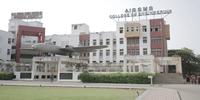
AISSMS College of Engineering - [AISSMSCOE]
Pune, Maharashtra7.4/10(13 Reviews)
Follow

Defence Institute of Advanced Technology - [DIAT]
Pune, Maharashtra7.6/10(2 Reviews)
Follow