
If you are looking to build your future in Civil Engineering, Germany is one of the best choices. The universities in Germany are renowned for their quality, innovation, and education for engineering degrees. Masters in Civil Engineering in Germany is a 2-year course for full-time international students. You can also get the option for online study in Germany provided by very few universities. One of the biggest reasons to select MS in civil engineering in Germany is that most public universities in Germany do not accept tuition fees. You need to spend only on your living expenses which is around EUR 1000 per month. Not only that, you are also very likely to land a job within 6 months of completing MSc Civil Engineering in Germany with an average salary of EUR 37,100 to 50,000. This also helps to improve the return on investment since the investment is very low.
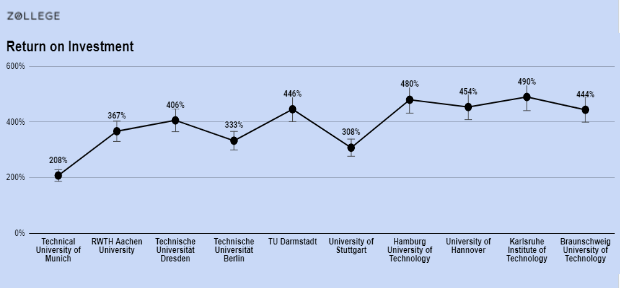
To be eligible for MS in Civil Engineering in Germany, you must have completed a bachelor’s in Engineering or a relevant stream with at least a 2.8 GPA out of 4 or 70% aggregate. While looking for the course, you might see that some universities offer an MSc degree and some offer an MEng degree. Do not get confused since both degrees are the same and the value is also the same. If you are studying English in Germany, you need to have a minimum IELTS and TOEFL score of 6.5 and 90 respectively. If you want to immigrate to Germany for studies, you must take German language proficiency scores. A DHS-2,3 should suffice for admission.
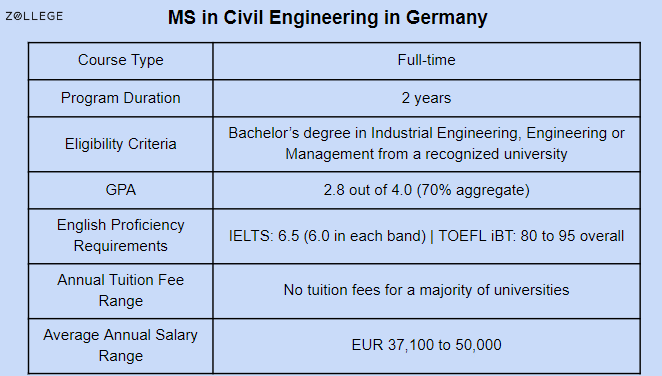
There are more than 34 best universities in Germany for ms in Civil Engineering for international students. There are three ways to apply for the course which are the DAAD portal, the Uni-assist Germany portal, and the direct university portal. You must apply at least 6 months before the deadline or intake in Germany for Civil Engineering master Germany. This will provide enough time for the admission team to review the details. Do not forget to apply for scholarships at the time of admission.
Why Study MS in Civil Engineering in Germany
You must be aware of the future and job prospects while choosing MS in Civil engineering in Germany. There are multiple benefits of studying in Germany which you should be aware of. These include the unemployment rate, which can help you understand the job industry. The benefits also include revenue for the specific course. A few other reasons to apply to German universities and study cyber security in Germany are:
- As per the Times Higher Education, Germany is the most affordable country for higher education in Europe for International students.
- Revenue from German civil engineering is expected to reach €60.7 billion by 2026, up from €51.4 billion in 2021.
- Among all the European countries, Germany has the lowest graduate unemployment rate of 2.3%
- STEM courses are among the most demanding courses in Germany and offer a bright future.
- The cost of MS in Germany is lower than most countries
Top Universities for Masters in Civil Engineering in Germany
Once you have decided to study Civil Engineering master in Germany, you must look for the university that is best for you. Civil Engineering master courses in Germany are offered in multiple universities, and the good part is that some of them do not charge tuition fees. You can study for free in top public universities in Germany. You can check how to study for free in Germany. The table contains universities that dominate engineering degrees in Civil engineering offering the best MS courses in Germany for Civil Engineering and research opportunities.
| University Name | Course Fees |
| Technical University of Munich | EUR 6,000 per semester EUR 12,000 annually |
| RWTH Aachen University | No Tuition Fees |
| Technische Universität Dresden | No Tuition fees €270 per term (including a ticket for public transport) |
| Technische Universität Berlin | No tuition fees €290 semester fee with the semester ticket |
| TU Darmstadt | No Tuition fees |
| University of Stuttgart | EUR 1500 per semester |
| Hamburg University of Technology | No Tuition fees Semester fee of € 337 per semester |
| University of Hannover | No tuition fees |
| Karlsruhe Institute of Technology | No tuition fees |
| Braunschweig University of Technology | No tuition fees |
Application Process for MS in Civil Engineering in Germany
The application process for MS in Civil Engineering can be usually done via two ways - the University portal and UniAssist. If you are applying via UniAssist, they will review your documents before the university so that there are no mistakes. If you apply via the German university, the admissions team will directly review the documents. The application fees and admission requirements are different for different universities.
Application Fees and Deadlines
The most important aspect of taking admission is checking the application deadline. If the deadline is over, you might not be able to apply to your dream university. Hence, you must review all the intakes in Germany and the dates before applying. Also, there are application fees involved with very few universities in Germany. You must check the official website before applying.
| University Name | Application Fee | Application Deadline |
| Technical University of Munich | No fees | Winter semester: 31st May, 2024 Summer semester: 15th January, 2024 |
| RWTH Aachen University | No fees | Winter Semester: March 1 Summer Semester: September 1 |
| Technische Universität Dresden | No fees | 31st May, 2024 |
| Technische Universität Berlin | EUR 75 | Winter Semester: June 1, 2024 Summer semester: December 1, 2024 |
| TU Darmstadt | No fees | 15th March, 2024 |
| University of Stuttgart | No fees | Winter Semester: January 15 Summer semester: July 15 |
| Hamburg University of Technology | EUR 75 | March 1, 2024 |
| University of Hannover | UniAssist: EUR 75 No fees for the University website | July 15th of the year for the winter semester January 15th of the year for the summer semester |
| Karlsruhe Institute of Technology | No Application Fees | Winter term: July 15 Summer term: January 15 |
| Braunschweig University of Technology | EUR 75 | Winter term: July 15 Summer term: January 15 |
Score Required for Admission
After checking the deadlines, you need to understand the exams that you need to take for admission. Some universities require German language proficiency as a mandatory requirement for admission. On the other hand, most of the universities require German language scores only if the subject is taught in German. If it is taught in English, you need ELP scores like IELTS, TOEFL. The exams to study in Germany score requirements are:
| University Name | German Language Requirement | English Language Requirement |
| Technical University of Munich | DSH passed with an overall result of at least DSH-2 TESTDAF Level 4 |
TOEFL: 88 IELTS Academic with a minimum overall band score of 6.5 PTE: 65 |
| RWTH Aachen University | TestDaF (in all four sections at level 4 minimum) | TOEFL of at least 90 points IELTS test with a score of at least 5.5 |
| Technische Universität Dresden | NA | IELTS score level 6.0 TOEFL 79 points |
| Technische Universität Berlin | DSH passed with an overall result of at least DSH-2 TESTDAF Level 4 |
NA |
| TU Darmstadt | TestDaF: TDN 16 Deutsches Sprachdiplom der Kultusministerkonferenz – Zweite Stufe” (DSD-II) – Level C1 | IELTS 7.0 PTE Academic 76 TOEFL (includes Special Home Edition) 95 |
| University of Stuttgart | TestDaF level 4 or better | TOEFL IBT 80 points IELTS band 6.5 or better |
| Hamburg University of Technology | NA | IELTS with a minimum score of 6.5 TOEFL score minimum 90 |
| University of Hannover | DSH with a result of at least DSH 2 TestDaF with a result of at least 4 x TDN 4 |
TOEFL with a result of at least 95 points IELTS with a result of at least 7.0 PTE score of at least 76 points |
| Karlsruhe Institute of Technology | DSH2 certificate or an accepted equivalent | TOEFL IBT 80 points IELTS band 6.5 or better |
| Braunschweig University of Technology | TestDaF 4x3 (3 points or more in each sections of the test) DSH 1 (57% or more overall) |
TOEFL 79 points or more IELTS 6.5 or higher |
Documents Required for MS in Civil Engineering in Germany
This is the last and the final step of admission. You need to submit copies of your documents so that the university can verify your eligibility. The MS in Civil Engineering in Germany requirements include previous degree certificates, resumes, language score results, German student visa and many more. This will help the admission department to validate your claims and run the admission process smoothly. Please note that student accommodation in Germany must be applied separately. The documents required for admission are:
- Bachelor's degree certificate
- Academic transcripts
- Proof of English language proficiency
- Secondary School Certificate
- Curriculum vitae or resume
- LOR for Germany
- Letter of motivation
- Copy of your passport/ID
- Proof of German language
- Receipt for payment of your assessment fee (if applicable)
- Statement of Purpose
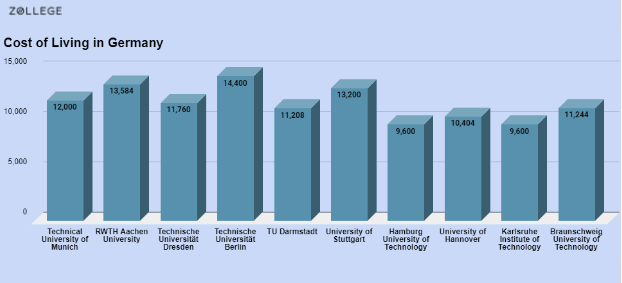
Cost of Living in Germany for Masters
The cost of living in Germany is higher than in India. In major cities like Berlin, Munich, or Hamburg, renting an apartment can be a bit pricey, especially in the more central areas. Hence, you can stay in university campus hostels and dormitories. The food prices in Germany are pretty reasonable if you shop at local markets or discount supermarkets like Aldi. The university website also provides an estimated cost of living for that specific area. The MS in Civil Engineering in Germany cost of living will include your accommodation which covers more than 60% of the expense. The other expenses while studying at public universities in Germany are travel, groceries, food and drinks, utilities, and personal expenses.
Scholarships in Germany
Not only do German universities provide free tuition but they also provide multiple scholarships for international students in Germany options. These scholarships cover your accommodation, travel fare, research expenses, living costs and many more. The DAAD (German Academic Exchange Service) offers a range of scholarships for international students, including those pursuing degrees in cyber security. Then there's the DeutschlandStipendium and other scholarships to help you lower the cost.
| University Name | Scholarship Name | Scholarship Eligibility | Scholarship Amount |
| Technical University of Munich | Scholarships for International Students | As of 2nd semester in their master’s studies Good Academic records | one-time financial aid between €500 and €1,800 per semester |
| RWTH Aachen University | High Potential Student Grant | High-qualified students enrolled in master's programs are eligible to apply | 25% tuition fee discount |
| Technische Universität Dresden | Global Tiers Scholarship | must be an International student | Varies |
| Technische Universität Berlin | Heinrich Böll scholarship | Candidates with outstanding academic records. | Varies |
| TU Darmstadt | Graduation Scholarship for international students | Students can apply for the performance-based scholarship if they are in the final phase of their studies | Varies |
| University of Stuttgart | Beihilfe | Students currently enrolled in at least their third or fourth semester (Bachelor's or Master’s degree) find themselves in a temporary situation of financial emergency | Varies on a case-by-case study |
| Hamburg University of Technology | Qualification scholarship for Master’s students within the Cluster of Excellence „CUI: Advanced Imaging of Matter” | Master’s degree Academic merit | €934 per month |
| University of Hannover | Degree Completion Grant ("Studienabschlussbeihilfe") | Register for the final examination or submit a subsequent registration for the final examination within one month of the application deadline. | Decided by awarding commission |
| Karlsruhe Institute of Technology | Baden-Württemberg-Scholarship for Overseas-Incomings | International students | Varies |
| Braunschweig University of Technology | Carolo Wilhelmina Scholarship | Students in financial needs | Varies |
Jobs after MS in Civil Engineering in Germany
Once you are done with your education, now it's time to look for jobs in Germany. With the high employment rate in Germany, graduate students are expected to get a job within 6 months of completing their graduation. Engineering is one of the top subjects taught in Germany and hence, the job opportunities are also higher. Germany is constantly upgrading their old roads, bridges, and public transportation systems. Also, the pressing need for additional housing options contributes to a greater job market for Germany MS Civil Engineering professionals. The country also produces approximately 40,000 engineering graduates annually, ensuring a steady supply of qualified professionals. The job and their salary are:
| Experience Level | Average Annual Salary Range (EUR) |
| Entry-Level (0-2 years) | €45,000 - €55,000 |
| Mid-Level (3-5 years) | €55,000 - €75,000 |
| Experienced (6+ years) | €75,000 and above |
The job profiles after MS in Civil engineering in Germany are:
| Structural Engineer | Urban Planner | Coastal Engineer |
| Transportation Engineer | Construction Manager | Risk Analyst |
| Environmental Engineer | Project Manager | Geotechnical Engineer |
| Energy and Utility Engineer | Water Resources Engineer | Research and Development Engineer |
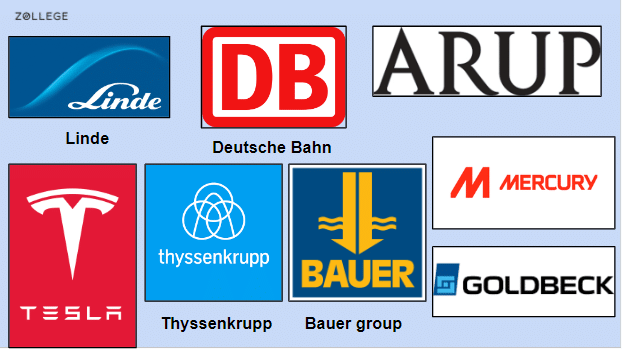
Top Recruiters for MS in Civil Engineering in Germany
Germany is blessed with some of the top companies of the world that hire civil engineers. They also pay a good annual salary to improve the confidence of the newly graduated students. The average salary is around EUR 60,000 for fresh graduates joining any company. Some companies like Tesla and Goldbeck GmbH provide salaries of up to EUR 80,000 annually. You can also try part-time jobs in Germany while looking for civil engineering jobs. Some of the top companies and their average annual salary are:
Work Permit after MS in Germany
Germany has a shortage of skilled professionals due to which the government has relaxed the immigration laws. After you graduate, you have the right to stay in Germany for 1.5 years. You can stay in Germany and find work and become employed. You need a German work visa to work and stay in Germany. After working for two years, you will also be eligible to apply for a settlement permit (permanent residence). The documents required for applying to work in Germany are:
- Passport
- University Degree
- Financial Proofs
- Health Insurance
MS in Civil Engineering in Germany not only provides a good return on investment but also provides huge job opportunities for graduates. You can save a lot of money by applying for multiple scholarships available for international students.
FAQ
Ques: What is the salary of an MS in Civil Engineering in Germany?
Ans: According to Glassdoor Civil Engineers salaries in Germany, MS in Civil Engineer graduates can earn between EUR 53,000 to EUR 68,000 per year. The average salary of a Project Manager/ Civil Engineer is EUR 64,000.
Ques: Which country is best for an MS in Civil Engineering?
Ans: The best countries for MS in Civil engineering in Germany are Canada, New Zealand, Switzerland, Germany and the United Kingdom. There are other countries like the US which also provide degrees in Civil Engineering.
Ques: Does Civil Engineering have scope in Germany?
Ans: Yes, civil engineering is in demand in Germany due to infrastructure modernization, urban development, environmental initiatives, and the need for housing and transportation projects. You also need proficiency in the German language.
Ques: Can I complete MS in 1 year in Germany?
Ans: Yes, you can complete MS in Germany in 1 year for some universities. The universities like Technical University of Munich offer 1 year master's courses. You must check the validity of the course before applying.
Ques: Is MS in Germany expensive?
Ans: No, MS in Germany is not expensive since most universities do not charge any tuition fees. You need to pay a semester fee which is within EUR 500 for 6 months. Hence, it is cheaper to study in Germany if compared to other countries.
Ques: Can I get a job after MS in Germany?
Ans: Job market in Germany is abundant with demand for skilled workers. Due to the advanced MS degrees, Germany's job market is prominent for MS degree holders with in-demand jobs in various sectors such as IT, Engineering, Data Science, and other specializations.
Ques: Can an Indian civil engineer work in Germany?
Ans: The demand for civil engineers is predicted to increase by 10% over the next few years. Therefore, now is the perfect time for Indians to apply for jobs visas in Germany and settle there permanently.
Ques: Which engineer is most in demand in Germany?
Ans: Engineers are highly in demand in Germany, especially electrical, mechanical and civil engineers. The high demand for engineers is due to the flourishing automobile and machinery industry.
Ques: Which German city is best for civil engineers?
Ans: The largest numbers of job vacancies in engineering are the Hamburg and Stuttgart areas as well as in the cities of Berlin and Munich. Work Permit requirements have been relaxed by the German government.
Ques: Who is eligible for MS in Germany?
Ans: Students with an average score of 70% and above are eligible for MS in Germany.You also need to have the minimum requirements for English language proficiency test scores like IELTS and TOEFL.
Ques: Is Germany or the UK better for MS?
Ans: The UK has more universities compared to Germany. Regarding the quality of education, the UK and Germany stand in a similar position. It will depend on you if you want to study in Germany or the UK.
Ques: Is ielts required for Germany?
Ans: Yes, IELTS is required for Germany if you want to take the course in English. If your course is in German language, then, you will need to take German language proficiency tests.
Ques: Which country is best for Indian Civil Engineering?
Ans: The countries that offer the best and most widely respected civil engineering degrees include the US, UK and Singapore. These countries all offer some of the world's most highly ranked programs and are popular destinations for international students.
Ques: Which country is good for Indian civil engineers?
Ans: Countries like the United Arab Emirates, Qatar, Singapore, Canada, and Australia are known for their robust infrastructure projects and career prospects for civil engineers. These nations often have large-scale construction and development initiatives.
Ques: Is German Masters valid in India?
Ans: Yes, German masters is valid in India. The Association of Indian Universities (AIU) recognizes international degrees, making them valuable and recognized in India. If AIU recognizes your degree, you will receive an Equivalence Certificate
Ques: Which country is no 1 in civil engineering?
Ans: The top 5 countries for pursuing a Master's in Civil Engineering are the USA, UK, Canada, Australia, and Germany. These nations host globally acclaimed programs, making them popular choices for international students.

![Humboldt University of Berlin [HU]](https://static.zollege.in/public/college_data/images/studyabroad/logos/college_632_29-15:02_6.png?tr=w-50,h-50,c-force?tr=h-40,w-35,c-force)
![Technical University Munich [TUM]](https://static.zollege.in/public/college_data/images/studyabroad/logos/college_691_02-13:08_691.png?tr=w-50,h-50,c-force?tr=h-40,w-35,c-force)
![Ludwig Maximilian University of Munich [LMU]](https://static.zollege.in/public/college_data/images/studyabroad/logos/college_690_02-13:05_690.png?tr=w-50,h-50,c-force?tr=h-40,w-35,c-force)
![Free University of Berlin [FU]](https://static.zollege.in/public/college_data/images/studyabroad/logos/college_631_29-15:01_5.png?tr=w-50,h-50,c-force?tr=h-40,w-35,c-force)
.png?tr=w-50,h-50,c-force?tr=h-40,w-35,c-force)


