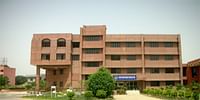
Ambedkar University Delhi (AUD) focuses on liberal arts, humanities and social sciences, with courses that connect subjects such as public policy, design and applied social sciences. The Government of Delhi established this state university in 2007 through the Ambedkar University Delhi Act, 2007. AUD has UGC recognition and NAAC Grade A accreditation.
Its 14 schools teach subjects that are less common at traditional Indian universities. Examples include Global Studies, Sustainable Urbanism, Urban Studies, Criminology, Development Studies and Social Design. In the NIRF University Rankings 2025, AUD placed 96th nationally.
AUD has three campuses: Kashmere Gate, Lodhi Road and Karampura. The Kashmere Gate campus in North Delhi is near ISBT Kashmere Gate and Old Delhi Railway Station. Research schools and doctoral programmes operate from the Lodhi Road campus in South Delhi. Students can choose from the following programme groups:
- Arts and interdisciplinary undergraduate courses include BA {Hons.} in Economics, English, Hindi, History, Political Science, Psychology, Sociology, Social Science and Mathematics. Other choices are BA in Global Studies, Law and Politics, Museology and Sustainable Urbanism, along with BVA, or Bachelor of Visual Arts.
- Professional and vocational undergraduate options comprise BBA, BBA {Hons.} in Entrepreneurship and Innovation, and B.Voc tracks in Accounting, Entrepreneurship, Retail Management, and Tourism and Hospitality. Integrated BA+B.Ed programmes are also available.
- Postgraduate arts and social science choices include MA programmes in English, Hindi, History, Economics, Sociology, Political Science, Psychology, Gender Studies, Global Studies, Public Policy, Development Studies, Urban Studies, Education, Criminology, Environment and Development, Child Care and Education, and Creative Writing.
- Professional postgraduate study includes MBA, MBA in Innovation and Entrepreneurship, M.Des in Social Design, MPA in Theatre Arts, MPH in Public Health, M.Voc in Travel and Tourism, and MAHM in Archaeology and Heritage Management.
- Doctoral study covers 20+ disciplines across humanities, social sciences, management and design.
AUD Important Dates
The National Testing Agency (NTA) has included CUET PG 2027 in its tentative examination calendar. CUET PG is the Common University Entrance Test for postgraduate admission. The proposed examination dates appear in the official NTA examination calendar.
| Event | Date |
|---|---|
| CUET PG 2027 examination, tentative | March 1-5, 8, 12-20 and 24-25, 2027 |
| CUET PG 2027 buffer dates, tentative reserve days | March 30-31, 2027 |
Subject to revision. Kindly check with the official sources to confirm
AUD Courses and Fees
Teaching across AUD's 14 schools brings together liberal arts, social sciences and related disciplines. Its undergraduate academic framework follows the four-year Honours with Research model under the National Education Policy (NEP) 2020. Course-specific durations, entry requirements and total fees are listed below.
| Course | Duration | Eligibility | Fee |
|---|---|---|---|
| BA {Hons.}: Economics, English, Hindi, History, Political Science, Psychology, Sociology, Social Science or Mathematics | 4 years | Class 12 with 50% | INR 2,82,800 |
| BA: Global Studies, Law and Politics, Museology or Sustainable Urbanism | 4 years | Class 12 with 50% | INR 2,82,800 to INR 3,12,800 |
| BVA in Visual Arts | 4 years | Class 12 with 50% | INR 3,06,800 |
| BBA | 4 years | Class 12 with 50% | INR 3,75,600 |
| BBA {Hons.} in Entrepreneurship and Innovation | 4 years | Class 12 with 50% | INR 4,98,800 |
| B.Voc: Accounting, Entrepreneurship, Retail, or Tourism | 3 years | Class 12 with 50% | INR 3,06,800 |
| Integrated BA+B.Ed | 4 years | Class 12 with 50% | INR 3,06,800 |
| MA in Social Sciences or Humanities | 2 years | Bachelor's degree with 45-50% | INR 1,72,400 |
| MA: Public Policy, Development Studies, Urban Studies, Criminology or Environment | 2 years | Bachelor's degree with 45-50% | INR 1,84,400 |
| MBA | 2 years | Bachelor's degree with 50% | INR 4,60,000 |
| MBA in Innovation and Entrepreneurship | 2 years | Bachelor's degree with 50% | INR 3,84,000 |
| M.Des in Social Design | 2 years | Bachelor's degree with 50% | INR 2,40,400 |
| MPH, MPA in Theatre or MAHM | 2 years | Relevant bachelor's degree with 50% | INR 1,84,400 to INR 1,72,400 |
| Ph.D in multiple disciplines | 3 to 5 years | Postgraduate degree with 55%, plus NET or the AUD entrance test | INR 1,86,600 to INR 3,21,000 |
Subject to revision. Kindly check with the official sources to confirm
Students interested in policy, civil society and research that draws on several subjects often choose MA programmes in Gender Studies, Urban Studies, Criminology and Development Studies, or M.Des in Social Design. Across MA programmes, total fees range from INR 1,72,400 to INR 1,84,400. The MBA in Innovation and Entrepreneurship costs INR 3,84,000, while the regular MBA costs INR 4,60,000.
AUD Admission Process
CUET scores form the main basis for admission to AUD's undergraduate and postgraduate taught courses, without a separate AUD entrance examination for these CUET-based programmes. Integrated teacher education courses use NCET instead. Undergraduate applicants generally need 50% in Class 12; the minimum for reserved categories is 45%.
| Programme Group | Selection Route |
|---|---|
| Four-year BA {Hons.}, B.Sc {Hons.} and BVA | CUET UG score |
| BBA and BBA {Hons.} | CUET UG score |
| All B.Voc tracks | CUET UG score |
| Integrated BA+B.Ed | NCET score |
| Postgraduate courses, including MA, MBA, M.Des, MPH and MPA | CUET PG score |
| Ph.D | UGC NET/JRF or the AUD Research Entrance Test |
Applying for Undergraduate Courses
For CUET-based undergraduate admission, applicants register through NTA and take CUET UG. AUD then prepares separate merit lists for each course and category using the entrance scores.
- Complete registration on the NTA CUET portal and choose AUD among your preferred universities.
- Take CUET UG on the date announced by NTA.
- Check the AUD merit list for your programme and category after it is published.
- Accept the offered seat and pay the required fees before the admission window ends.
Applying for Postgraduate Courses
CUET PG scores are accepted for MA, MBA, M.Des, MPH, MPA and other postgraduate programmes. Admission requirements and the score needed for selection depend on the course and category.
Entry to Integrated BA+B.Ed Courses
NTA conducts the National Common Entrance Test for Teacher Education (NCET), which is used for the four-year integrated BA+B.Ed and BA+B.Ed in Special Education. Applicants need 50% in Class 12.
Entry to Ph.D Programmes
A postgraduate degree with at least 55% is required for doctoral admission. Applicants must also hold a valid UGC NET/JRF score or qualify through the AUD Research Entrance Test. Each academic year, the university website announces available seats separately for each discipline.
AUD Cutoffs
AUD's CUET cutoffs differ across courses and categories. For 2025, undergraduate scores ranged from 196 to 780, while the postgraduate range was 43 to 277. Available seats and the distribution of CUET scores affect the cutoff each year.
| Admission Test | Year | Cutoff Range | Course-wise Pattern |
|---|---|---|---|
| CUET UG | 2025 | 196 to 780 | BA {Hons.} in Psychology recorded the highest cutoff. Humanities and vocational tracks had lower cutoffs. |
| CUET PG | 2025 | 43 to 277 | MA in Hindi had lower cutoffs, while MA in Psychology and MBA required higher scores. |
AUD Placements
The Career Services unit helps AUD students find internships and jobs and plan their careers. With the university's focus on humanities and social sciences, many graduates choose further study, including MA, Ph.D, public policy and law programmes. Others prepare for competitive examinations or enter civil society and public policy work.
NIRF 2025 placement data records 48 students placed. The median annual package was INR 3.5 LPA for undergraduate students and INR 4 LPA for postgraduate students; LPA means lakh per annum. These figures relate to students entering campus recruitment rather than the entire graduating batch. MBA, M.Des in Social Design and applied social science students are among those most active in placements.
| Placement Measure | NIRF 2025 Figure |
|---|---|
| Students placed | 48 |
| Median undergraduate package | INR 3.5 LPA |
| Median postgraduate package | INR 4 LPA |
| Leading recruiters | Swiggy, ITC, Paytm and JLL |
| Career Direction | Associated Programmes | Common Destinations |
|---|---|---|
| Jobs through campus recruitment | MBA, BBA, M.Des and B.Voc | Swiggy, ITC, Paytm, JLL, non-governmental organisations (NGOs) and design studios |
| Further study and examination preparation | BA {Hons.} and all MA programmes | Ph.D, LLB, civil services preparation and policy institutes |
| Policy and development work | MA in Public Policy, Development Studies and Urban Studies | Think tanks, government agencies and international organisations |
| Creative and cultural work | BVA, MPA and MA in English Creative Writing | Cultural institutions, media, publishing and arts organisations |
Delhi gives students access to NGOs, policy research institutes, media organisations and government bodies. These employers regularly recruit graduates from AUD's social science and public policy courses.
AUD Rankings
AUD's position of 96 in the NIRF University category for 2025 places it among India's top 100 universities. The ranking covers its academic work as a state university focused on liberal arts.
| Ranking Organisation | Category | 2025 Position |
|---|---|---|
| NIRF | University | 96 |
Teaching and research contribute to AUD's NIRF standing. Faculty research often connects several disciplines and examines public policy issues. The university does not currently take part in international rankings.
AUD Campus and Infrastructure
Most taught courses and undergraduate teaching take place at Kashmere Gate, AUD's main academic campus in North Delhi. Students can reach it using the Delhi Metro's Yellow and Red lines. Lodhi Road in South Delhi accommodates several research schools and doctoral programmes, while Karampura in West Delhi offers vocational and B.Ed courses.
Facilities at Kashmere Gate include classrooms, seminar rooms, computer laboratories, a library with digital access, a cafeteria and sports spaces. Wi-Fi and digital learning facilities are available across all three campuses. The on-campus Girls Hostel charges INR 51,000 per year. Boys hostel accommodation is limited, so students often rent rooms near their campus.
Small student groups support discussion, seminars and regular contact with teachers. Campus activities include a student association, cultural programmes and academic meetings that bring together different subjects throughout the year.
AUD Scholarships
Eligible AUD students can access central government and Delhi government scholarships. Support covers SC, ST, OBC and minority students, alongside university fee waivers and financial assistance based on need.
| Scholarship or Assistance | Who Can Apply | Support Available |
|---|---|---|
| Central SC/ST Post-Matric Scholarship | SC/ST students with family income below INR 2.5 Lakhs | Full tuition fee waiver and a maintenance grant |
| Central OBC Post-Matric Scholarship | OBC students with family income below INR 1 Lakh | Partial fee waiver and a maintenance grant |
| Delhi Government SC Scholarship | SC students with Delhi domicile | A maintenance allowance in addition to the central scheme |
| National Scholarship Portal (NSP) | Minority students with at least 50% in Class 12 and family income below INR 2 Lakhs | INR 10,000 to INR 25,000 per annum |
| AUD Need-Based Financial Assistance | Economically weaker students studying at AUD | Partial fee waiver under university policy |
| UGC-JRF for Ph.D students | Research scholars who have qualified NET | Monthly fellowship of INR 31,000 to INR 35,000 |
Applications for central and Delhi government schemes should be submitted through the NSP portal before the applicable deadline at the beginning of each academic year. Students planning accommodation should also budget INR 51,000 annually for the AUD Girls Hostel.
Comparing AUD, JNU and Jamia Millia Islamia
For humanities, social sciences, public policy and interdisciplinary liberal arts in Delhi NCR, students often consider AUD alongside Jawaharlal Nehru University (JNU) and Jamia Millia Islamia. All three are based in Delhi and offer established programmes in these areas.
| Comparison Factor | Ambedkar University Delhi | Jawaharlal Nehru University | Jamia Millia Islamia |
|---|---|---|---|
| Year founded | 2007 | 1969 | 1920; became a central university in 1988 |
| University status | State university established by the Delhi Government | Central university | Central university |
| NAAC accreditation | A | A++, with a score of 3.91 | A+ |
| NIRF 2025 University ranking | 96 | Top 5 | Top 20 |
| Admission examination | CUET | CUET | CUET |
| Four-year BA {Hons.} fees | INR 2,82,800 | Very low, following central university rates | Low, following central university rates |
| Distinctive subject choices | Sustainable Urbanism, Social Design and Criminology | International Relations and Life Sciences | Engineering, Architecture and Law |
| Hostel provision | Girls hostel on campus | Available | Available |
Subject to revision. Kindly check with the official sources to confirm
As central universities, JNU and Jamia have lower fees and substantially higher NIRF positions. AUD offers small student groups and distinctive courses that are not available at JNU or Jamia, including MA in Criminology, BA in Sustainable Urbanism, M.Des in Social Design and MA in Urban Studies.
AUD FAQs
Ques. Which entrance route should an applicant follow to join AUD?
Ans. NTA's Common University Entrance Test is the route for AUD's CUET-based undergraduate and postgraduate courses. Undergraduate applicants register through the NTA CUET portal, choose AUD as a preferred university and take CUET UG. Postgraduate applicants follow the corresponding CUET PG process. These courses do not require a separate AUD entrance test. For undergraduate entry, the Class 12 minimum is 50%, reduced to 45% for reserved categories. Integrated BA+B.Ed courses use NCET.
Ques. Where does AUD stand in national rankings, and what is its accreditation?
Ans. AUD secured 96th place among Indian universities in NIRF 2025. Its NAAC accreditation is Grade A from the 2024 assessment cycle.
Ques. How much should students budget for a complete BA degree at AUD?
Ans. A four-year BA {Hons.} in Economics, English, Hindi, History, Political Science, Psychology or Sociology costs INR 2,82,800 in total. For BA in Global Studies and BA in Social Science, fees range from INR 3,06,800 to INR 3,12,800. These amounts cover the full four-year course under NEP 2020.
Ques. How did AUD's undergraduate and postgraduate CUET cutoffs compare in 2025?
Ans. Across undergraduate courses and categories, the CUET UG range in 2025 was 196 to 780. BA {Hons.} in Psychology had the highest cutoff. MA admission through CUET PG had cutoffs between 43 and 277. The number of available seats and the spread of entrance scores cause these requirements to change each year.
Ques. What accommodation options can students expect at AUD?
Ans. Kashmere Gate has a Girls Hostel with an annual charge of INR 51,000. Places in boys hostels are limited. Many students arriving from outside Delhi rent accommodation near Kashmere Gate or their other campus. Hostel places are assigned during admission on a first-come basis.
Ques. Which AUD courses suit students looking for less common subject combinations?
Ans. Choices include MA in Urban Studies, Criminology, Development Studies, Environment and Development, and Gender Studies. Other distinctive options are M.Des in Social Design, BA in Sustainable Urbanism, BA in Global Studies and MPA in Theatre Arts. These courses appeal to students planning careers that combine social science subjects or involve public policy.
Ques. What do AUD's placement figures show about graduate outcomes?
Ans. NIRF 2025 placement data lists 48 students placed, with median annual salaries of INR 3.5 LPA for undergraduate students and INR 4 LPA for postgraduate students. Many graduates instead continue their education, prepare for civil services or enter public policy and civil society roles, reflecting AUD's liberal arts focus.