
GRE Study Plan: Step by Step Guide to Ace the Exam Preparation
- Preparation
- GRE Grammar Preparation
- GRE Coaching In Hyderabad
- GRE Coaching In Kolkata
- GRE Online Coaching
- GRE Classes In Pune
- GRE Coaching In Delhi
- GRE Coaching In Bangalore
- Best GRE Coaching India
- Best Book For GRE Verbal
- GRE Preparation Books
- GRE Prep
- GRE Preparation Time
- GRE Verbal Tips
- GRE Self Preparation
- GRE AWA Books


Content Curator | Updated On - Oct 13, 2026
GRE study plan is structured to keep you focused and on track. The exact time of GRE test study plan varies and mainly depends on your academic performance and your targeted score. Most of the top universities worldwide require a 320+ GRE score for their top MS programs. On average, most candidates require a 3 month GRE prep schedule. Many resources are available to schedule your GRE study plan effectively; official ETS materials, prep books, online courses, and practice tests.
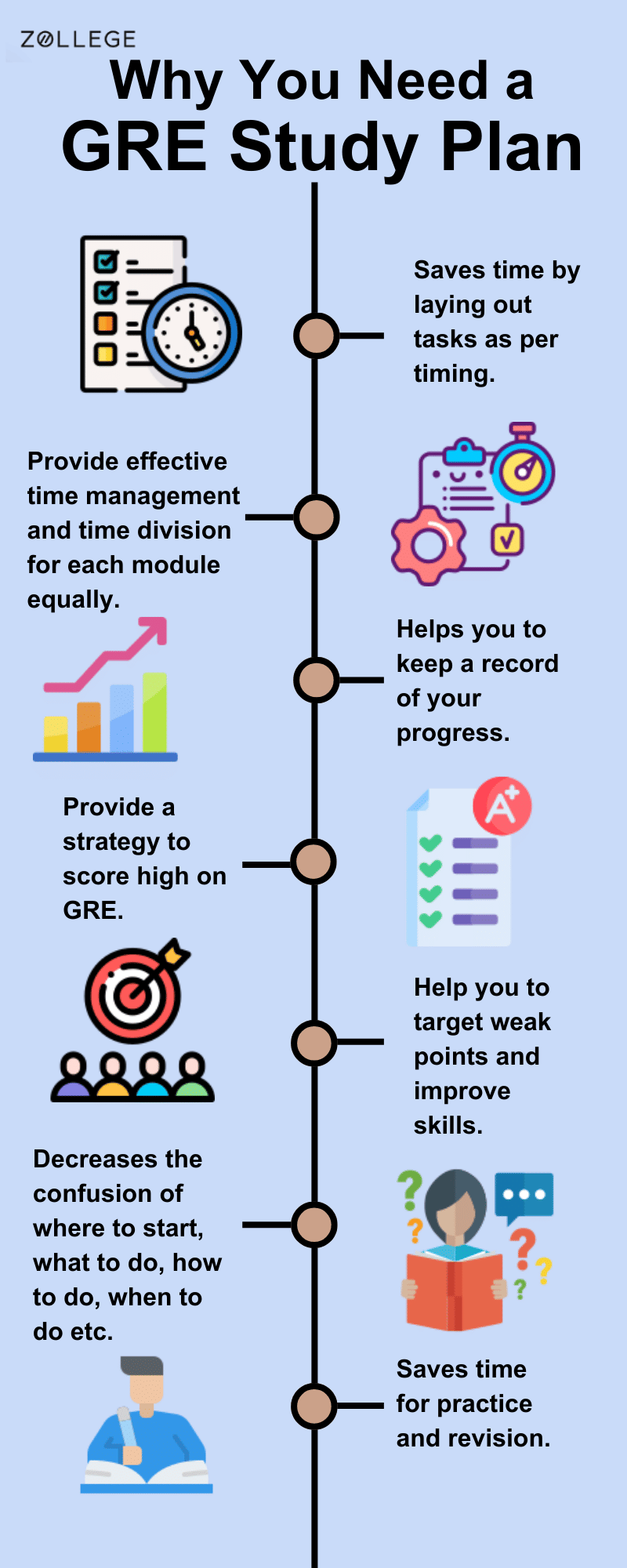
Students without a proper GRE study plan waste most of their time trying to figure out what to do, and where to start, and lose most of their time thinking. GRE test study plan acts like a guide to prepare you for the exam. GRE preparation plan focuses on a schedule that includes timing for different tasks. GRE 1 month study plan targets covering the full syllabus, learning new vocabulary, and taking practice tests. There are several GRE study plans based on the preparation time like GRE 2 month study plan, 3 months, and more for in-depth learning.
GRE Study Plan can help you to score more than 300 GRE scores on a scale of 340. GRE verbal study plan focuses on reading new vocabulary and improving your reading comprehension skills. The quantitative GRE preparation timeline requires you to practice math regularly. Taking GRE practice tests regularly is an essential part of your study plan, that helps you to identify and improve your weak areas.
How to Choose a Suitable GRE Study plan?
There are different individual requirements and needs for preparation. GRE study plan for each individual is different and targets a candidate's personal goals. Students might face difficulty while selecting a particular GRE Study plan or creating a study plan. The following considerations must be kept in mind while selecting a study plan for GRE:
- Select a study plan according to the preparation time left before the GRE Exam. There are gyre one-month study plan, two months, three months and more.
- Differentiate between important and weak sections and strong general sections. There are three sections of verbal reasoning, quantitative reasoning and analytical writing.
- Select a study plan based on the target GRE score card.
- A study plan must not interfere with other day-to-day activities and tasks.
- Choose a study plan as per the study resources available.
GRE One Month Study Plan
Students preparing for GRE one month left can follow GRE one-month preparation strategy to score high marks. One-month study plan targets the important sections, learning concepts and focusing on practice. The following table lays out the plan for one-month preparation for GRE:
| Weeks | Study Plan |
|---|---|
| Week 1 |
|
| Week 2 |
|
| Week 3 |
|
| Week 4 |
|
GRE 2 Month Study Plan
A time duration of 2 months is sufficient to study for GRE. The study plan of 2 months focuses the first month on solving doubts and clearing concepts. The second month is focused on practicing and solving mistakes. The following table provides the GRE study plan for 2 months:
| Week | Study Plan |
|---|---|
| Week 1 |
|
| Week 2 |
|
| Week 3 |
|
| Week 4 |
|
| Week 5 |
|
| Week 6 |
|
| Week 7 |
|
| Week 8 |
|
GRE 3 Month Study Plan
Students can achieve more than 300 GRE score while following a proper study plan of 3 months. GRE 3 months study plan concentrates on different modules of GRE with deep understanding and practice. The following table provides 3-month study plan for GRE:
| Month | Study Plan |
|---|---|
| Month 1 | Week 1: Learn Math formulas and solve questions Week 2: Learn Grammar rules and principles Week 3: Learn effective techniques to write argumentative and issue-based articles Week 4: Take mock tests and practice tests |
| Month 2 | Week 1: Learn 150-200 new vocabulary and sentence formation using them Week 2: Solve area, surface volume, and distance questions in mathematics Week 3: Write 4-5 essays on different issues and arguments Week 4: Solve per day one mock test and solve the mistakes |
| Month 3: | Week 1: Revise all concepts of mathematics and English grammar Week 2: Practice tests and mock tests More than 10 Week 3: Review the mistakes and practice mistakes Week 4: Solve each day 3 mock tests and record time |
GRE Preparation Plan for 6 Months
GRE preparation plan mainly depends on your academic skills and your starting point. GRE prep schedule for 6 months includes reading comprehensive books and solving sample papers regularly. You can refer to the following table, for GRE preparation plan for 6 months:
| Month | Study Plan |
| Month 1 | Week 1: Focus on reading and vocabulary recognition |
| Month 2 | Week 1: Focus on reading abilities |
| Month 3 | Week 1: Take regular practice tests |
| Month 4 | Week 1: Practice more challenging math and verbal content |
| Month 5 | Week 1: Focus on your targeted score |
| Month 6 | Week 1: Revise the syllabus |
How to Create a Self Study Plan for GRE?
Students can create their own self-study plan for GRE with individual target goals and target scores. There are numerous Magoosh GRE plans available online which can be followed to create your own study plan. The following steps help students to create a self study plan for GRE easily and to achieve good score:
Step 1: Set a Target score to achieve
Step 2: Solve a practice test and highlight weak points and strong points
Step 3: Based on the weak points, set a particular time duration for each day to study.
Step 4: Look for the available study resources and materials
Step 5: Plan out the study time and reschedule other activities of the day
Step 6: Lay out the plan as per the preparation time left before the GRE Exam.
Step 7: Follow the study plan.
Students can follow Magoosh study plan for weekly plans, one month, two months, three plans for GRE Preparation. The study plan becomes easy to follow if students have more study materials and resources. There are numerous mock tests and practice tests available online for free for GRE. There are several courses and books which help students to prepare for GRE and score high marks.
FAQs
Ques: How long should you study for the GRE?
Ans: On average, most of the candidates require a 2 to 3 months of GRE study plan to achieve a higher score. GRE preparation time mainly depends on your academic background and prep strategies.
Ques: Is 2 months sufficient for GRE?
Ans: With effective preparation with updated study materials, expert mentorship, and regular practice tests, you can easily achieve a good GRE score within 2 months.
Ques: Is 3 months enough to study for GRE?
Ans: Most of the candidates require a 3-month GRE study plan to achieve their targeted score. The first two months focus on learning the syllabus, exam strategies, and question types. In the 3rd month take regular practice tests, and focus on your weak areas.
Ques: How do I write a study plan for the GRE?
Ans: While making a study plan, make sure you have a clear goal to work toward. Your study plan must include reading updated and comprehensive books, taking guidance from expert mentors, and solving sample papers regularly.
Ques: Can I study for GRE on my own?
Ans: You can study GRE on your own by reading comprehensive books, and by solving sample papers regularly. Preparing for GRE under expert guidance can help you to prepare for the exam in a structured way.
Ques: When should I start studying for the GRE?
Ans: The ideal start time depends on your current score and desired score improvement. Aim for 3–6 months of dedicated preparation for better improvement.
Ques: How much time should I study for GRE each day?
Ans: Aim for daily practice of at least one hour to two hours. Focus on increasing your preparation time as you get comfortable.
Ques: How important are official practice tests for GRE study plan?
Ans: Official practice tests from ETS provide the most realistic format and difficulty level of the actual exam. Your GRE study plan must include solving practice tests on a regular basis.
Ques: How can I improve my reading comprehension for the GRE?
Ans: Practice academic reading passages regularly. Actively engage with the text by summarizing key points and identifying arguments to achieve a higher GRE verbal score.
Ques: Should I take a GRE prep course?
Ans: GRE Prep courses can be helpful for structured learning and expert guidance. Consider your budget, learning style, and targeted score before choosing a GRE preparation course.
Ques: Can I improve my GRE score significantly in a short time?
Ans: GRE preparation time depends on your starting point and how efficiently you study. Focus on taking regular mock tests, that will help you to track your progress and identify weak areas.
Ques: Should I focus on improving my weaker GRE section first?
Ans: If you are getting a lower score on the practice tests, focus on addressing your weaker section. Maintaining a balance between learning new concepts and revising previous sections can also be beneficial.
*The article might have information for the previous academic years, please refer the official website of the exam.