
IIT JAM 2024 Biotechnology Question Paper Pdf - Check Solutions with Answer Key Pdf


Content Strategist | Updated On - Jan 18, 2025
IIT JAM 2024 Biotechnology Question Paper is available for download. The exam was successfully conducted by IIT Madras on February 11, 2024, from 2:30 PM to 5:30 PM. As per the students’ initial reactions, the Biotechnology paper was reported as Moderate to Tough. A few questions were direct and easy to answer, with Molecular Biology and Cell Biology having the maximum number of questions.
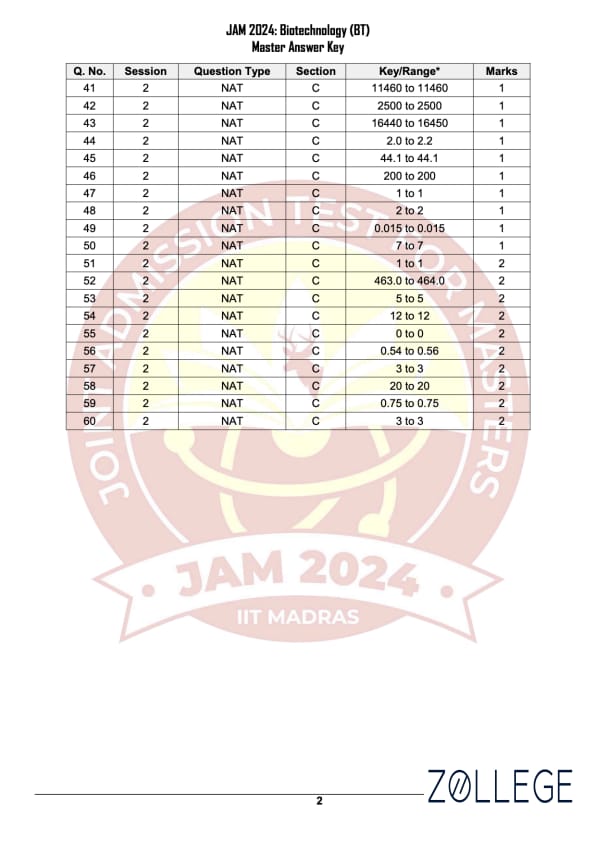
IIT JAM 2024 Biotechnology Question Paper with Answer Key PDF
Candidates can download the IIT JAM 2024 Biotechnology Question Paper with Solution and Answer Key PDFs using the link below.
| IIT JAM 2024 Biotechnology Question Paper PDF |  Download Download |
Check Solution |
IIT JAM 2024 Biotechnology Question Paper with Solutions
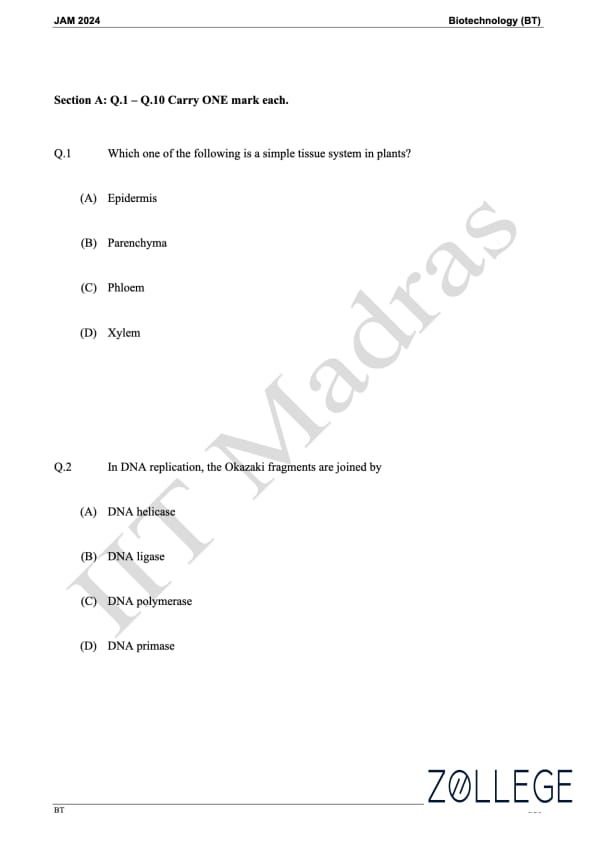
Question 1:
Which one of the following is a simple tissue system in plants?
View Solution
Simple tissues consist of one type of cell. Parenchyma is a simple tissue that forms the outer protective covering of plants, helping prevent water loss and providing protection against mechanical injury. Complex tissues like xylem and phloem, however, are composed of more than one type of cell.
Question 2:
In DNA replication, the Okazaki fragments are joined by:
View Solution
Okazaki fragments are short DNA segments synthesized on the lagging strand during replication. DNA ligase plays a critical role by sealing nicks between these fragments to form a continuous DNA strand. Other enzymes like helicase and primase have distinct roles, such as unwinding DNA and synthesizing primers, respectively.
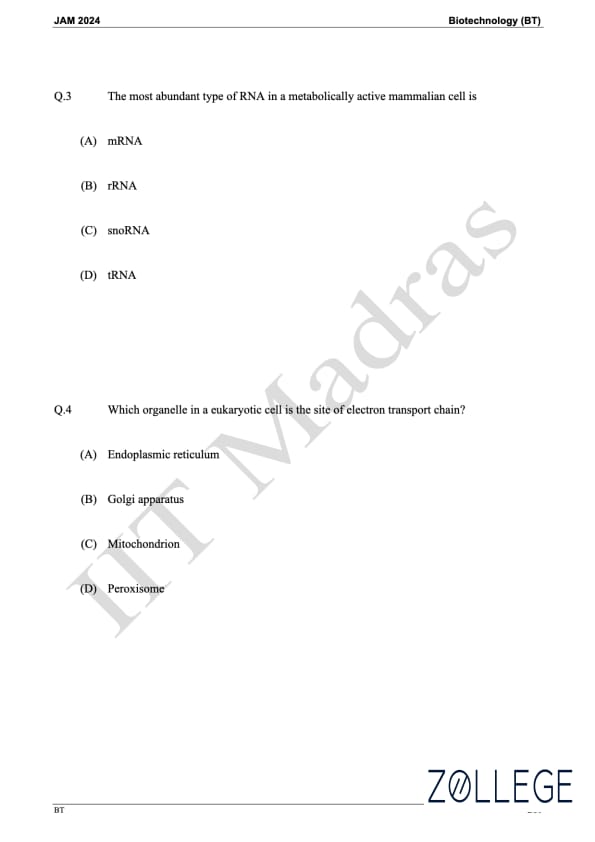
Question 3:
The most abundant type of RNA in a metabolically active mammalian cell is:
View Solution
Ribosomal RNA (rRNA) constitutes about 80% of the total RNA in a cell. It is a key component of ribosomes, where protein synthesis occurs. In contrast, messenger RNA (mRNA) and transfer RNA (tRNA) make up smaller proportions and serve as intermediaries in protein synthesis.
Question 4:
Which organelle in a eukaryotic cell is the site of the electron transport chain?
View Solution
The electron transport chain is a series of protein complexes embedded in the inner mitochondrial membrane. These complexes transfer electrons and pump protons to create an electrochemical gradient, driving ATP synthesis. Other organelles, like the Golgi apparatus or peroxisomes, are not involved in this process.
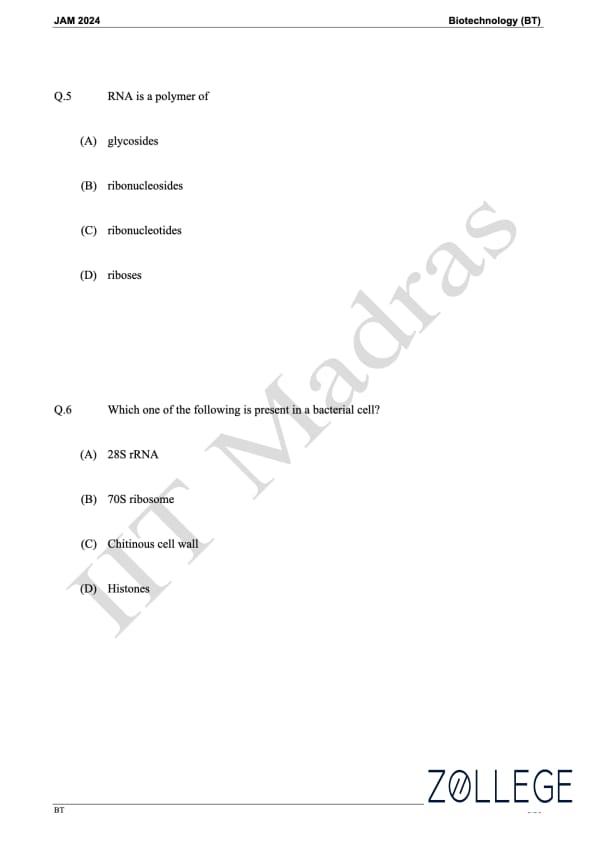
Question 5:
RNA is a polymer of:
View Solution
RNA is composed of ribonucleotides, each containing a ribose sugar, a phosphate group, and a nitrogenous base (adenine, uracil, cytosine, or guanine). This structure forms the backbone of RNA, enabling its various functions in cells, including protein synthesis.
Question 6:
Which one of the following is present in a bacterial cell?
View Solution
Bacteria possess 70S ribosomes, which are smaller than the 80S ribosomes found in eukaryotes. They lack chitinous cell walls (characteristic of fungi) and histones (associated with eukaryotic chromatin).
Question 7:
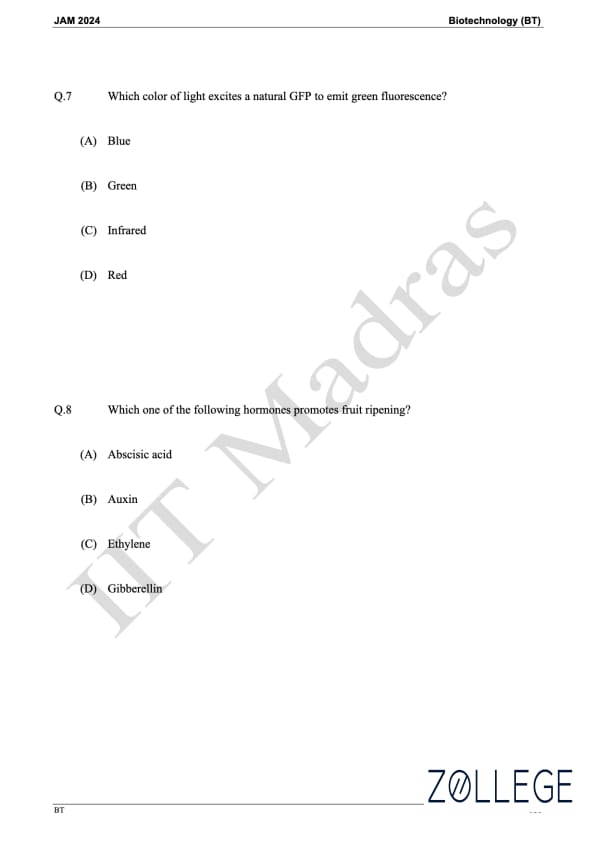
Which color of light excites a natural GFP to emit green fluorescence?
View Solution
Green fluorescent protein (GFP) absorbs blue light and emits green fluorescence due to its specific chromophore structure. GFP is widely used in molecular biology as a reporter gene to visualize protein localization and expression.
Question 8:
Which one of the following hormones promotes fruit ripening?
View Solution
Ethylene is a plant hormone that promotes fruit ripening by triggering enzymes involved in cell wall degradation, starch-to-sugar conversion, and pigment synthesis. It is also commercially used in agriculture to ripen fruits like bananas and tomatoes.
Question 9:
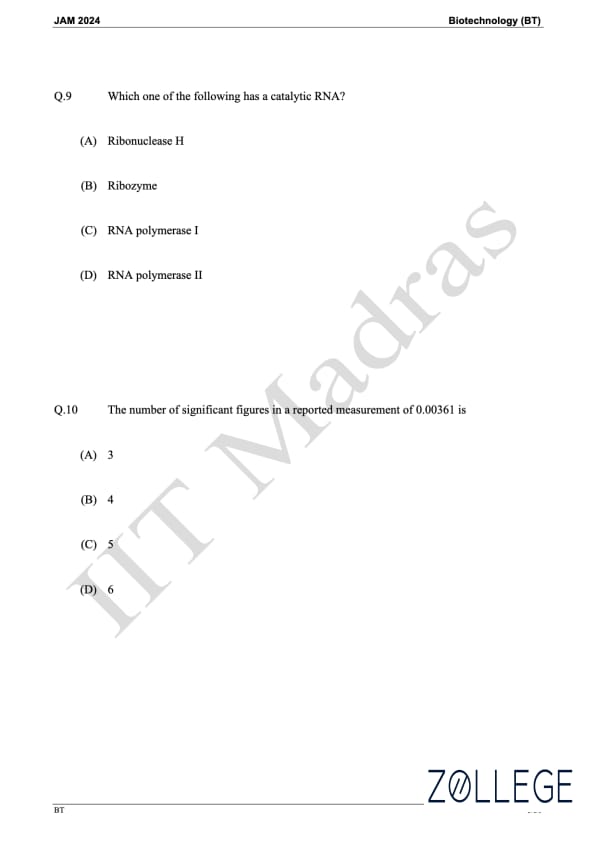
Which one of the following has a catalytic RNA?
View Solution
Ribozymes are RNA molecules with catalytic activity, capable of cleaving RNA and participating in RNA splicing. They are distinct from protein enzymes. One example is the self-splicing intron in Tetrahymena thermophila.
Question 10:
The number of significant figures in a reported measurement of 0.00361 is:
View Solution
Significant figures include all the digits that are known accurately, plus one uncertain digit. The leading zeros in 0.00361 are placeholders and do not count as significant. Thus, the digits “3,” “6,” and “1” are the three significant figures.
Question 11:
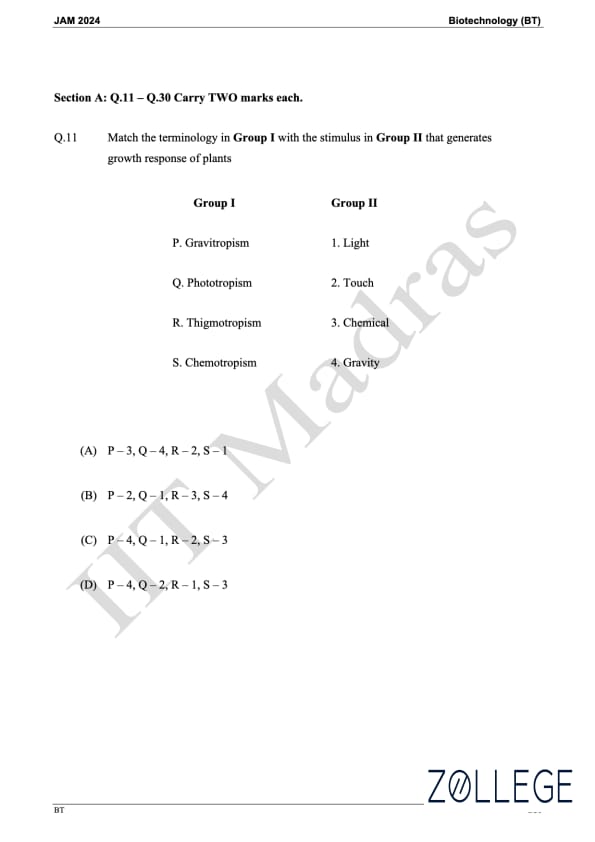
Match the terminology in Group I with the stimulus in Group II that generates growth response of plants.
| Group I | Group II |
|---|---|
| P. Gravitropism | 1. Light |
| Q. Phototropism | 2. Touch |
| R. Thigmotropism | 3. Chemical |
| S. Chemotropism | 4. Gravity |
View Solution
Gravitropism refers to growth towards or away from gravity (P – 4). Phototropism involves a response to light (Q – 1). Thigmotropism is a response to touch (R – 2). Chemotropism is a response to chemical stimuli (S – 3).
Question 12:
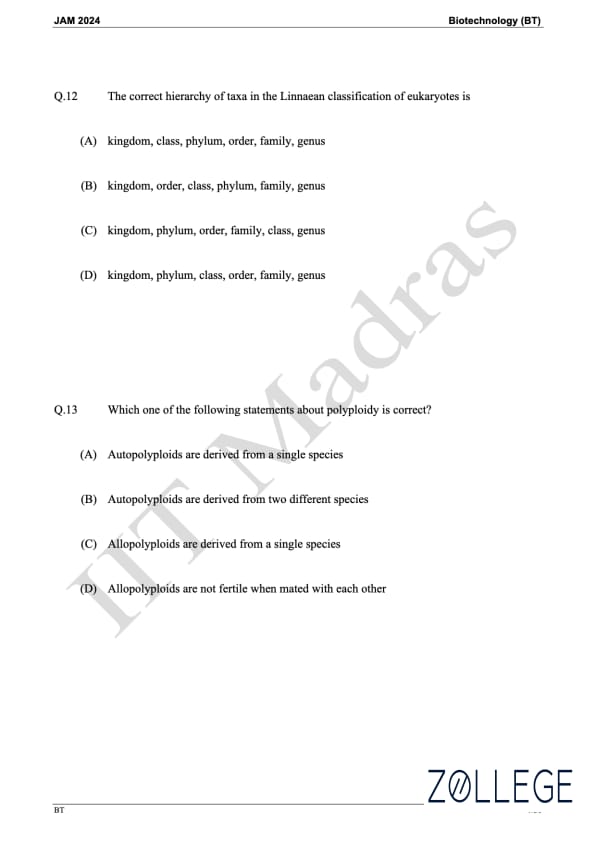
The correct hierarchy of taxa in the Linnaean classification of eukaryotes is:
View Solution
The Linnaean system classifies organisms into: Kingdom > Phylum > Class > Order > Family > Genus > Species. This taxonomy reflects increasing specificity.
Question 13:
Which one of the following statements about polyploidy is correct?
View Solution
Polyploidy involves organisms having multiple sets of chromosomes. Autopolyploids arise from chromosome duplication within a single species, whereas allopolyploids result from hybridization between two different species.
Question 14:
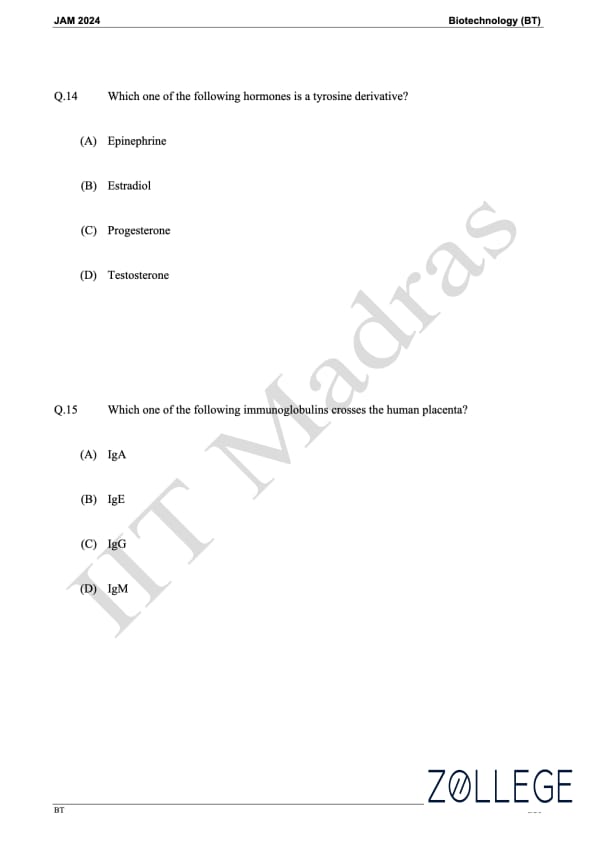
Which one of the following hormones is a tyrosine derivative?
View Solution
Epinephrine (adrenaline) is synthesized from the amino acid tyrosine. Estradiol, progesterone, and testosterone are steroid hormones derived from cholesterol.
Question 15:
Which one of the following immunoglobulins crosses the human placenta?
View Solution
IgG is the only immunoglobulin that can cross the placenta, providing passive immunity to the fetus. Other types like IgA or IgM cannot cross the placenta.
Question 16:
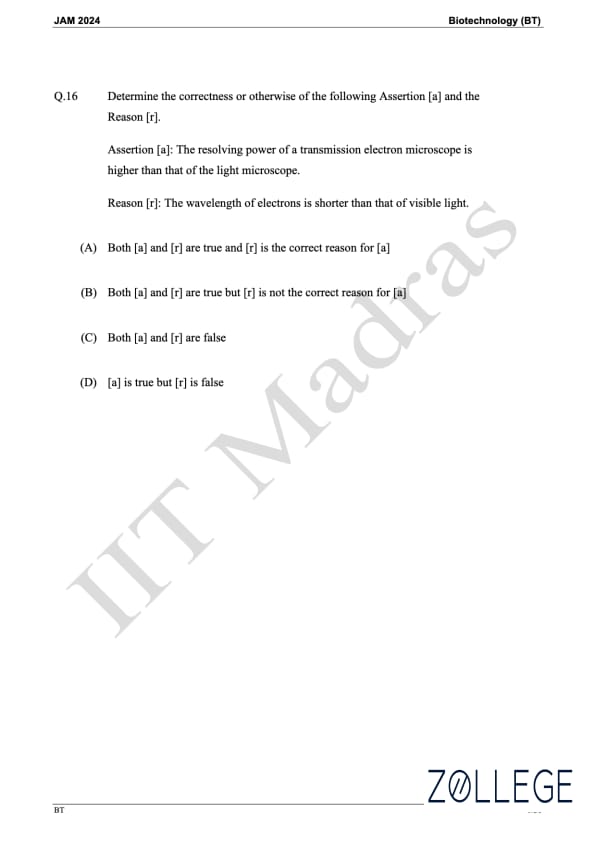
Determine the correctness or otherwise of the following Assertion (A) and the Reason (R).
Assertion (A): The resolving power of a transmission electron microscope is higher than that of the light microscope.
Reason (R): The wavelength of electrons is shorter than that of visible light.
View Solution
The resolving power of a microscope depends on the wavelength of the source used. Electron microscopes use electrons with much shorter wavelengths compared to visible light, thereby achieving higher resolution.
Question 17:
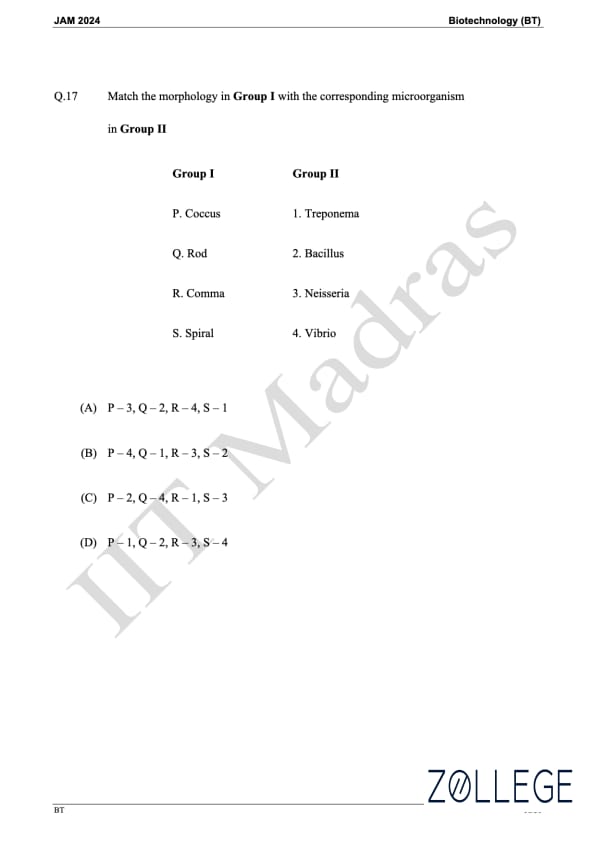
Match the morphology in Group I with the corresponding microorganism in Group II.
| Group I | Group II |
|---|---|
| P. Coccus | 1. Treponema |
| Q. Rod | 2. Bacillus |
| R. Comma | 3. Neisseria |
| S. Spiral | 4. Vibrio |
View Solution
Coccus (P) refers to spherical bacteria, exemplified by Neisseria (3). Rod-shaped bacteria (Q) include Bacillus (2). Comma-shaped bacteria (R) are Vibrio (4). Spiral bacteria (S) are typified by Treponema (1).
Question 18:
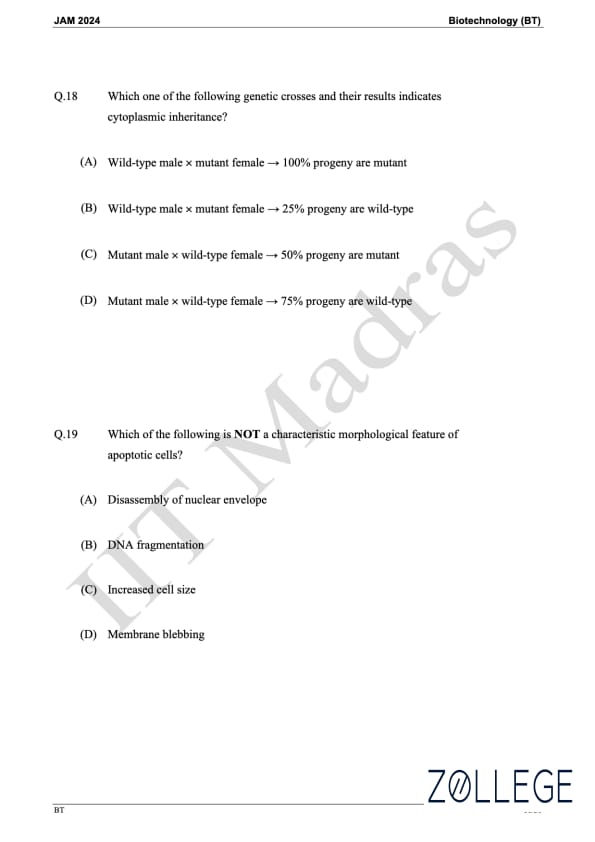
Which one of the following genetic crosses and their results indicates cytoplasmic inheritance?
View Solution
Cytoplasmic inheritance involves genes in organelles (e.g., mitochondria) that are passed on from the mother only. Therefore, if the mother is mutant, all progeny inherit the mutant trait.
Question 19:
Which of the following is NOT a characteristic morphological feature of apoptotic cells?
View Solution
During apoptosis, cells typically undergo shrinkage rather than enlargement. DNA fragmentation, nuclear envelope disassembly, and membrane blebbing are characteristic of apoptotic cell death.
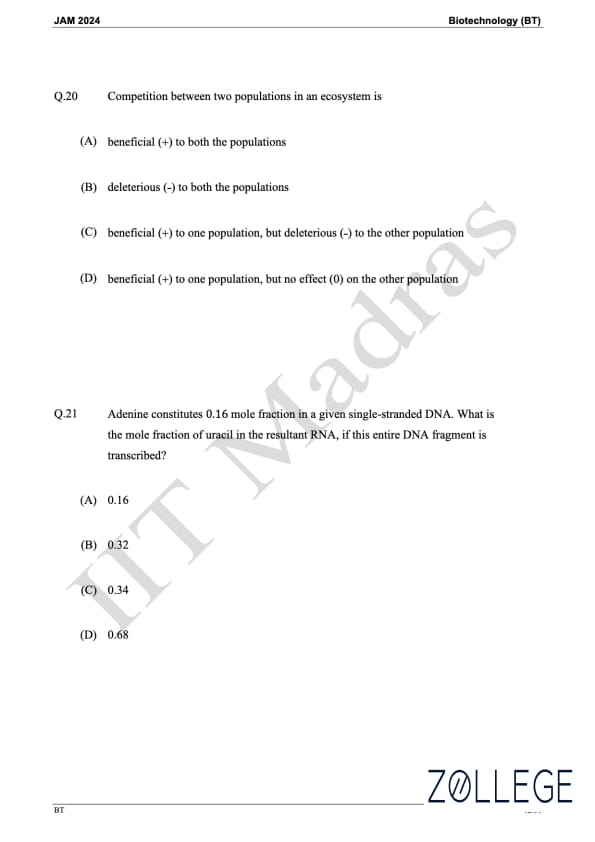
Question 20:
Competition between two populations in an ecosystem is:
View Solution
Competition arises when two populations share a limited resource. Both populations are negatively impacted since the resource must be divided among them.
Question 21:
Adenine constitutes 0.16 mole fraction in a given single-stranded DNA. What is the mole fraction of uracil in the resultant RNA, if this entire DNA fragment is transcribed?
View Solution
In transcription, adenine in the DNA template pairs with uracil in RNA. Since adenine’s mole fraction in DNA is 0.16, uracil’s mole fraction in RNA will also be 0.16.
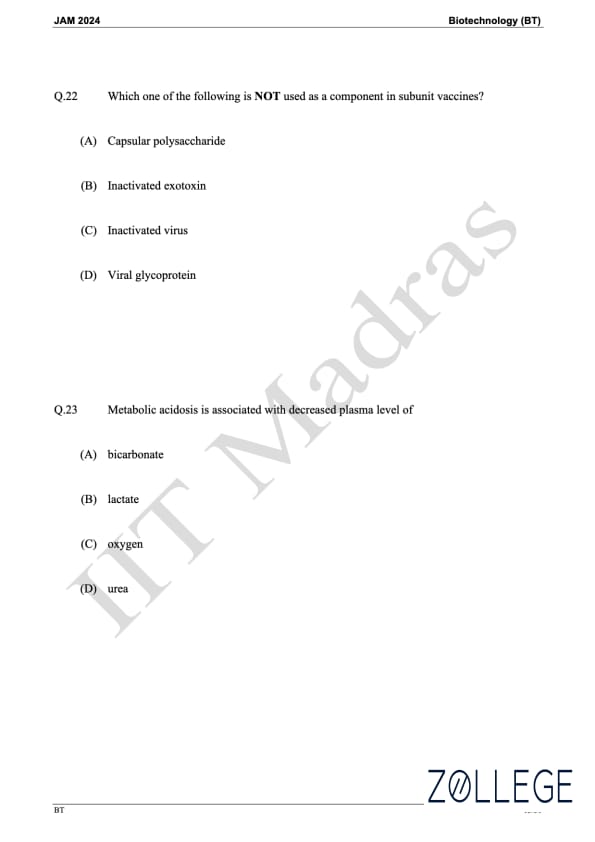
Question 22:
Which one of the following is NOT used as a component in subunit vaccines?
View Solution
Subunit vaccines include only specific parts of the pathogen, such as capsular polysaccharides, inactivated exotoxins, or viral glycoproteins. They do not use the entire inactivated virus.
Question 23:
Metabolic acidosis is associated with decreased plasma level of:
View Solution
Metabolic acidosis is caused by the accumulation of acids or loss of bicarbonate, resulting in decreased plasma bicarbonate levels and a drop in blood pH.
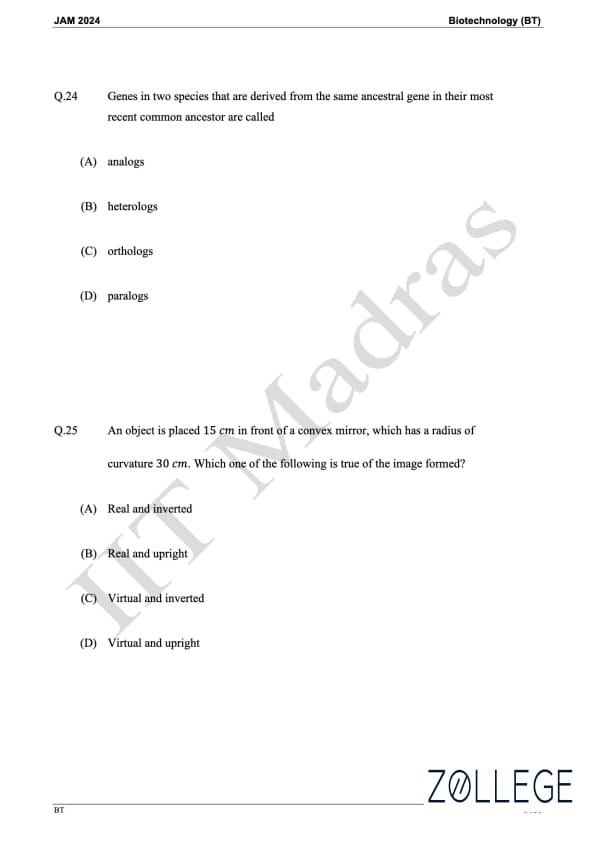
Question 24:
Genes in two species that are derived from the same ancestral gene in their most recent common ancestor are called:
View Solution
Orthologs are genes in different species that arose from a common ancestral gene. They usually retain the same function across species. Paralogs, on the other hand, result from gene duplications within the same species.
Question 25:
An object is placed 15 cm in front of a convex mirror, which has a radius of curvature 30 cm. Which one of the following is true of the image formed?
View Solution
Convex mirrors always produce virtual, upright, and diminished images, regardless of the object’s position. The mirror equation confirms this outcome.
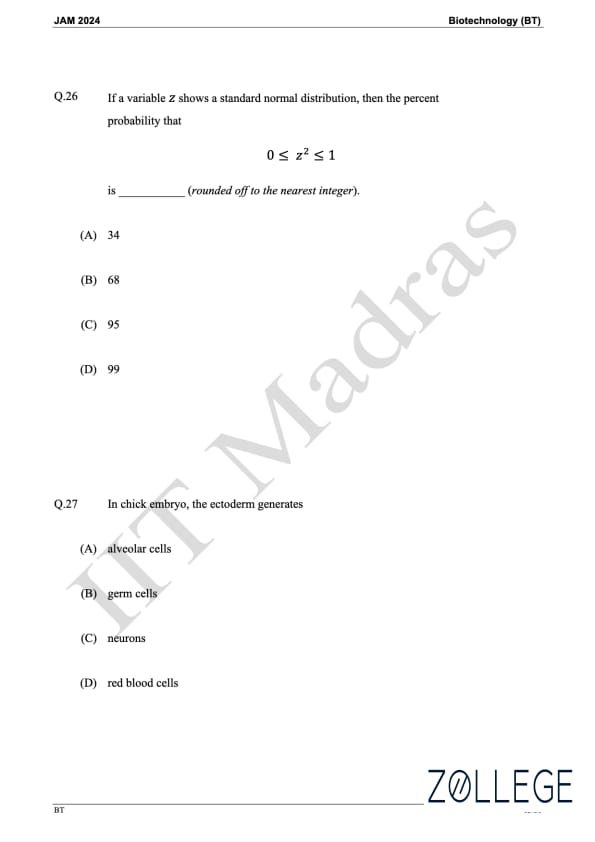
Question 26:
If a variable z shows a standard normal distribution, then the percent probability that 0 ≤ z² ≤ 1 is:
View Solution
The standard normal distribution has 68% of its probability within one standard deviation of the mean. Since z² is bounded between 0 and 1, the percentage probability is 68%.
Question 27:
In the chick embryo, the ectoderm generates:
View Solution
The ectoderm layer gives rise to the nervous system, including neurons, and also forms the epidermis of the skin.
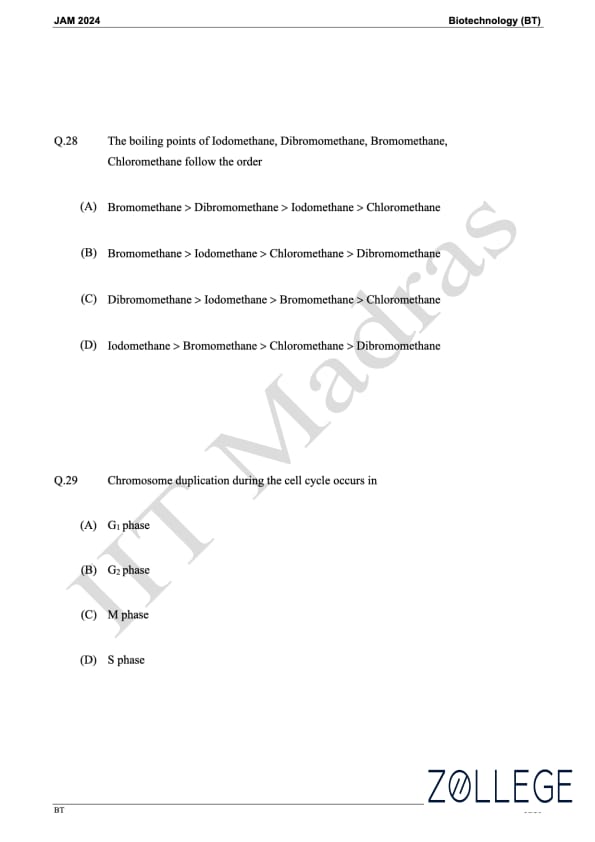
Question 28:
The boiling points of Iodomethane, Dibromomethane, Bromomethane, Chloromethane follow the order:
View Solution
Boiling points depend on molecular weight and intermolecular forces. Dibromomethane has the highest boiling point due to its greater molecular weight and polarity compared to the others.
Question 29:
Chromosome duplication during the cell cycle occurs in:
View Solution
DNA replication occurs in the S (synthesis) phase of the cell cycle, ensuring each daughter cell receives an identical set of chromosomes.
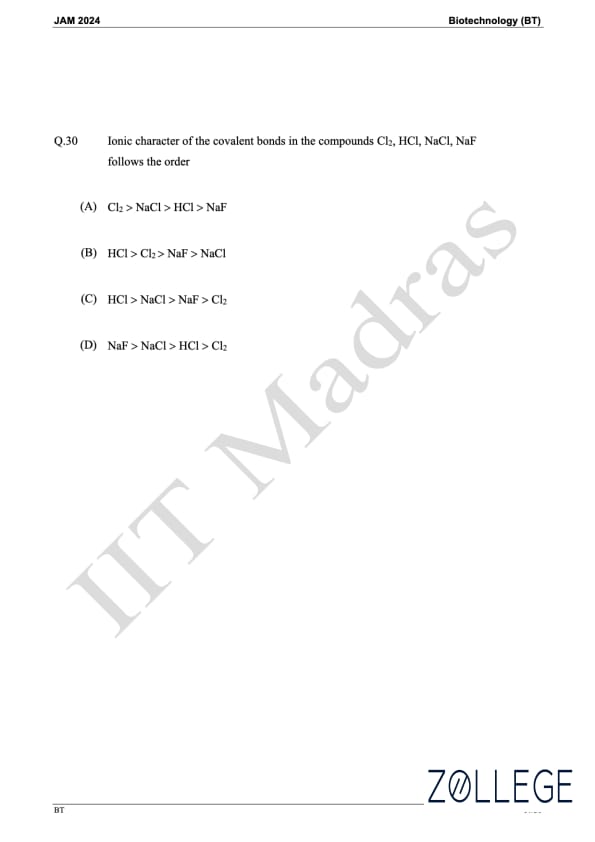
Question 30:
Ionic character of the covalent bonds in the compounds Cl2, HCl, NaCl, NaF follows the order:
View Solution
Ionic character depends on the electronegativity difference between the bonded atoms. NaF has the highest ionic character due to the large difference between sodium and fluorine.
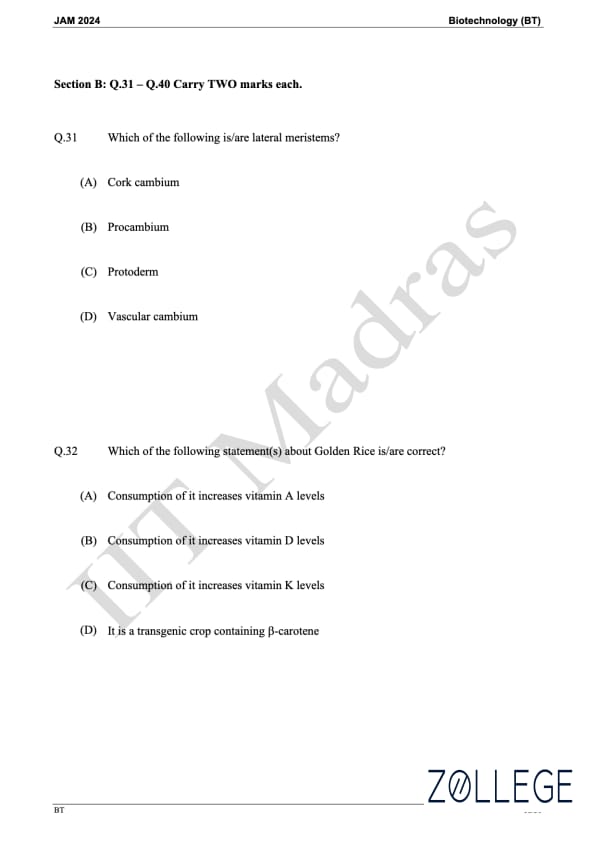
Question 31:
Which of the following is/are lateral meristems?
View Solution
Lateral meristems, such as cork cambium and vascular cambium, are responsible for secondary growth in plants, increasing the girth. Procambium and protoderm are primary meristems involved in elongation.
Question 32:
Which of the following statement(s) about Golden Rice is/are correct?
View Solution
Golden Rice is genetically engineered to contain beta-carotene, a precursor to vitamin A, helping address vitamin A deficiency. It does not affect vitamin D or K levels.
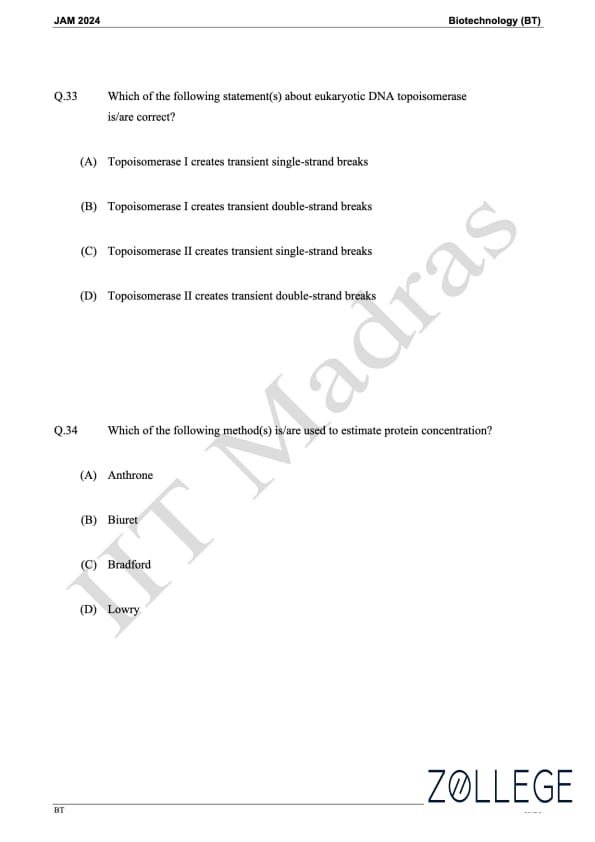
Question 33:
Which of the following statement(s) about eukaryotic DNA topoisomerase is/are correct?
View Solution
Topoisomerase I relaxes supercoils by creating single-strand breaks, while Topoisomerase II creates double-strand breaks to untangle DNA during replication.
Question 34:
Which of the following method(s) is/are used to estimate protein concentration?
View Solution
The Biuret, Bradford, and Lowry methods are colorimetric techniques for estimating protein concentration. Anthrone is used for carbohydrate estimation.
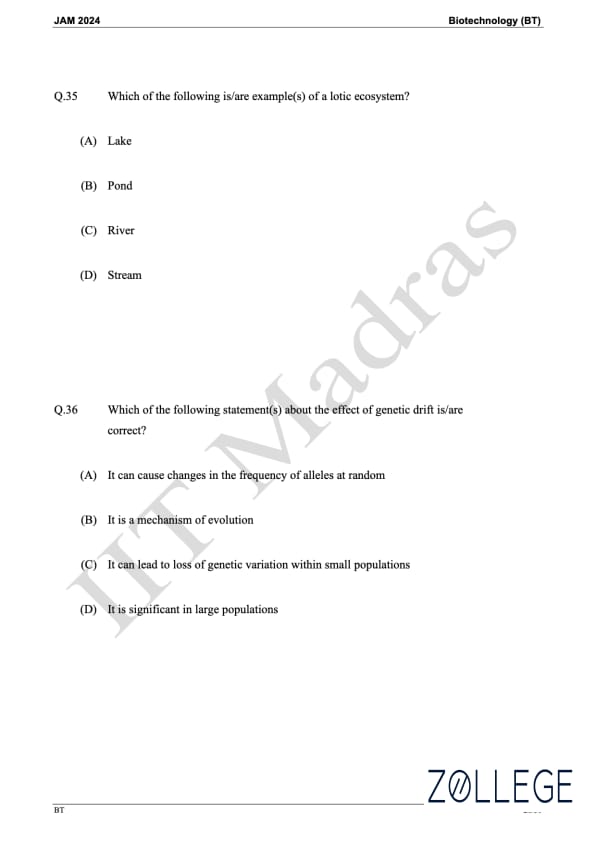
Question 35:
Which of the following is/are example(s) of a lotic ecosystem?
View Solution
Lotic ecosystems are characterized by flowing water, such as rivers and streams. Lakes and ponds represent lentic (still water) ecosystems.
Question 36:
Which of the following statement(s) about the effect of genetic drift is/are correct?
View Solution
Genetic drift is a random process that can cause unpredictable changes in allele frequencies, particularly in small populations. It is one of the mechanisms of evolution and can lead to a loss of genetic variation over time. However, its effects are not significant in large populations due to the stabilizing impact of larger gene pools.
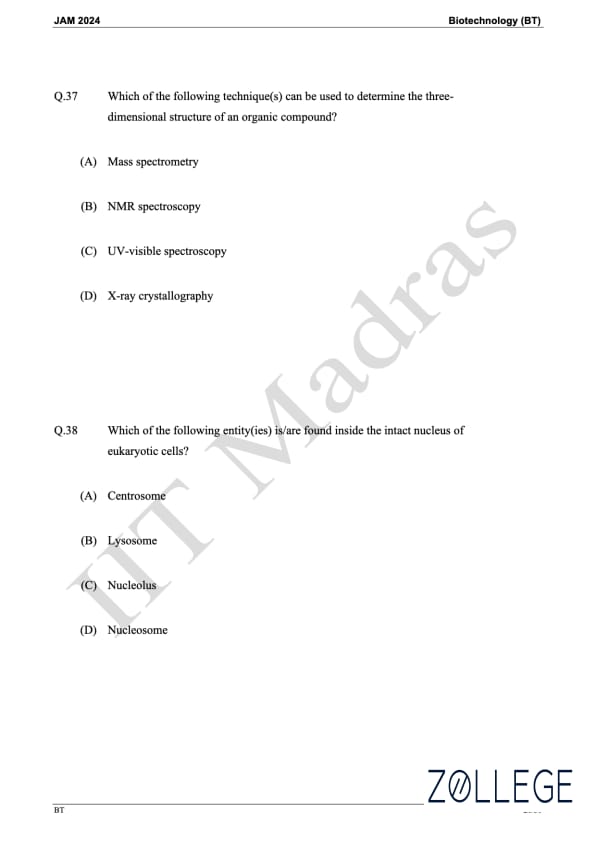
Question 37:
Which of the following technique(s) can be used to determine the three-dimensional structure of an organic compound?
View Solution
NMR spectroscopy and X-ray crystallography are widely used for determining the three-dimensional structure of organic compounds. NMR provides information about molecular structure through nuclear spin interactions, while X-ray crystallography directly visualizes the molecular arrangement via crystal diffraction.
Question 38:
Which of the following entity(ies) is/are found inside the intact nucleus of eukaryotic cells?
View Solution
Inside the nucleus, the nucleolus is responsible for ribosomal RNA synthesis, while nucleosomes are the fundamental structural units of chromatin (DNA wrapped around histones). Centrosomes and lysosomes are present in the cytoplasm.
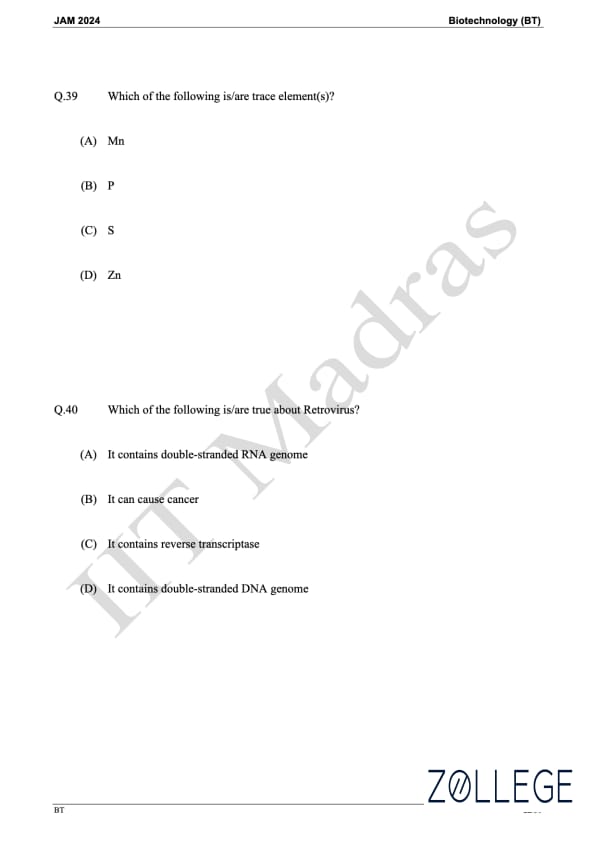
Question 39:
Which of the following is/are trace element(s)?
View Solution
Trace elements, such as manganese (Mn) and zinc (Zn), are required in small quantities for enzymatic and metabolic functions. Phosphorus (P) and sulfur (S) are macronutrients needed in larger amounts for cellular processes.
Question 40:
Which of the following is/are true about Retrovirus?
View Solution
Retroviruses, such as HIV, carry reverse transcriptase that converts their single-stranded RNA into DNA. They can sometimes integrate into the host genome, leading to oncogenesis. They do not have a double-stranded RNA or DNA genome.
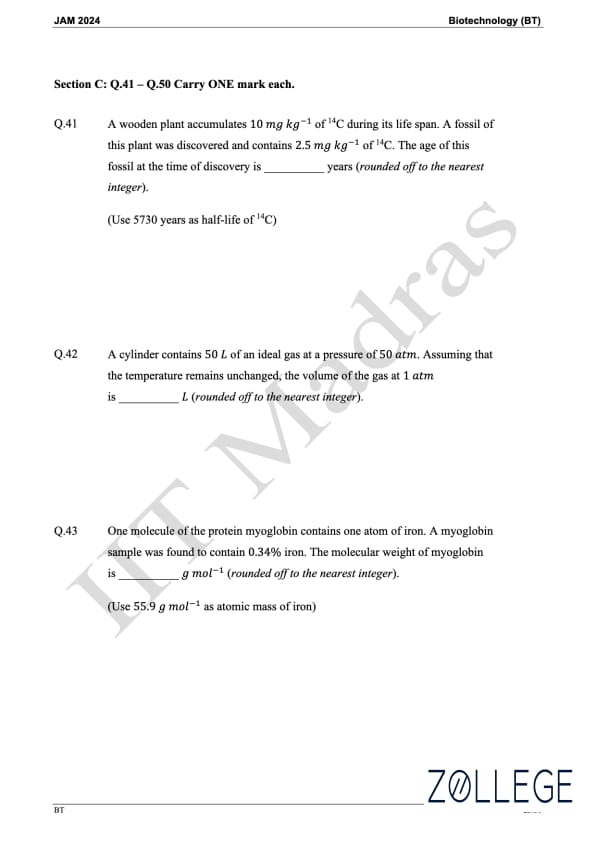
Question 41:
A wooden plant accumulates 10 mg/kg of 14C during its life span. A fossil of this plant was discovered and contains 2.5 mg/kg of 14C. The age of this fossil at the time of discovery is (use 5730 years as the half-life of 14C):
View Solution
Using the half-life formula:
t = [ln(N0 / N) / ln(2)] × T1/2
Here, N0 = 10 mg/kg, N = 2.5 mg/kg, T1/2 = 5730 years. Substituting:
t = [ln(10 / 2.5) / ln(2)] × 5730 = 11460 years.
Question 42:
A cylinder contains 50 L of an ideal gas at a pressure of 50 atm. Assuming that the temperature remains unchanged, the volume of the gas at 1 atm is:
View Solution
Using Boyle's law: P1 × V1 = P2 × V2
Where P1 = 50 atm, V1 = 50 L, and P2 = 1 atm. Thus:
V2 = (P1 × V1) / P2 = (50 × 50) / 1 = 2500 L.
Question 43:
One molecule of the protein myoglobin contains one atom of iron. A myoglobin sample was found to contain 0.34% iron. The molecular weight of myoglobin is (use atomic mass of iron = 55.9 g/mol):
View Solution
The molecular weight of myoglobin can be calculated by:
Molecular weight = (Mass of Fe × 100) / % of Fe
Substituting Mass of Fe = 55.9 g/mol and % of Fe = 0.34:
Molecular weight = (55.9 × 100) / 0.34 = 16441.18 g/mol.
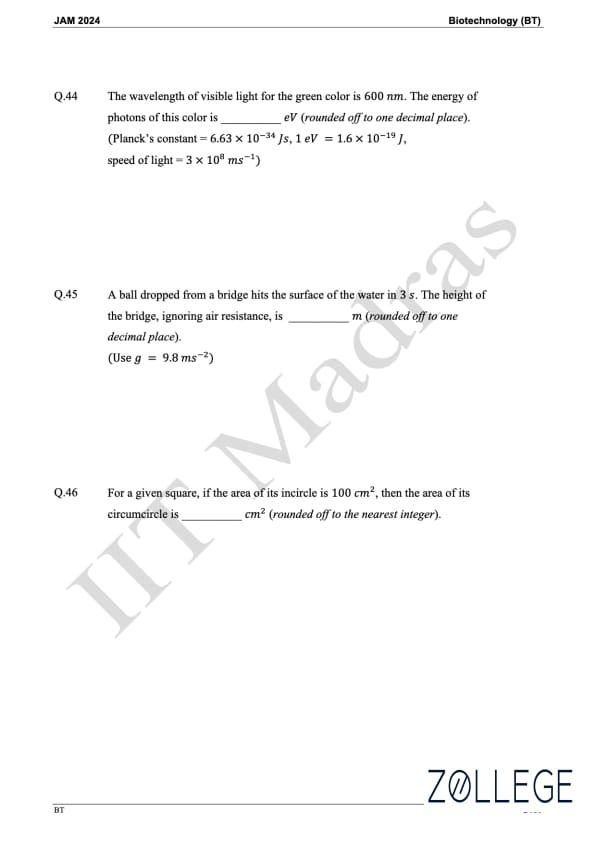
Question 44:
The wavelength of visible light for the green color is 600 nm. The energy of photons of this color is (Planck's constant h = 6.63 × 10^-34 J·s, 1 eV = 1.6 × 10^-19 J, speed of light c = 3 × 10^8 m/s):
View Solution
Using E = (h × c) / λ
Substitute h = 6.63 × 10^-34 J·s, c = 3 × 10^8 m/s, and λ = 600 nm = 600 × 10^-9 m:
E = (6.63 × 10^-34 × 3 × 10^8) / (600 × 10^-9) = 3.315 × 10^-19 J.
Converting to eV: E = (3.315 × 10^-19 J) / (1.6 × 10^-19 J/eV) ≈ 2.07 eV.
Question 45:
A ball dropped from a bridge hits the surface of the water in 3 s. The height of the bridge, ignoring air resistance, is (use g = 9.8 m/s^2):
View Solution
Using s = 0.5 × g × t^2
Substitute g = 9.8 m/s^2 and t = 3 s:
s = 0.5 × 9.8 × (3)^2 = 44.1 m.
Question 46:
For a given square, if the area of its incircle is 100 cm2, then the area of its circumcircle is:
View Solution
Let the area of the incircle be 100 cm2. The radius of the incircle (r) is given by r = √(Area of incircle / π) = √(100 / π).
For a square, the radius of the circumcircle (R) is √2 times the incircle radius: R = √2 × r = √2 × √(100 / π).
The area of the circumcircle is then π × R2, which simplifies to 200 cm2.
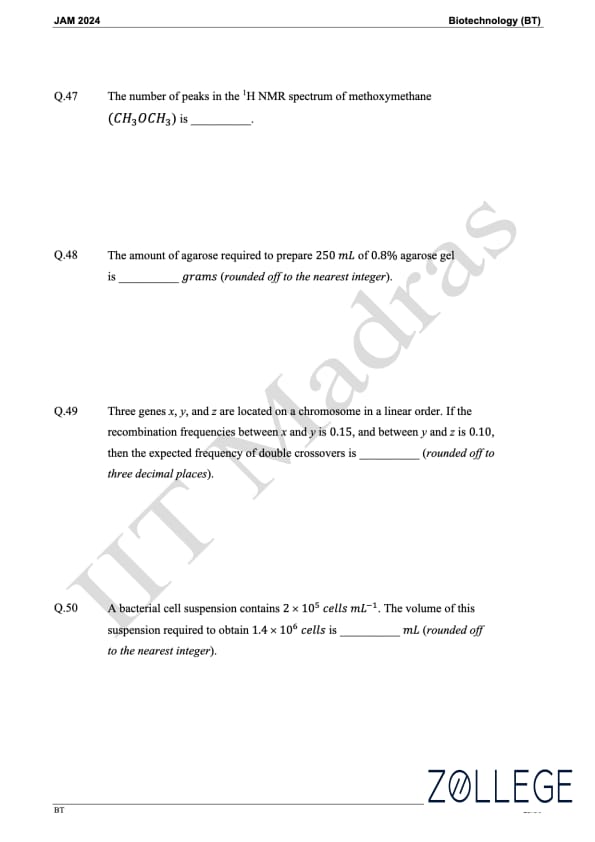
Question 47:
The number of peaks in the 1H NMR spectrum of methoxymethane (CH3OCH3) is:
View Solution
Methoxymethane (dimethyl ether) has two methyl groups attached to the same oxygen atom. Both methyl groups are chemically equivalent, so all the hydrogen atoms are in the same environment. Consequently, there is only one NMR peak.
Question 48:
The amount of agarose required to prepare 250 mL of 0.8% agarose gel is:
View Solution
For a 0.8% solution, there are 0.8 g of agarose per 100 mL. To make 250 mL of this solution:
Weight = 0.8 g/100 mL × 250 mL = 2 g.
Question 49:
Three genes x, y, and z are located on a chromosome in a linear order. If the recombination frequency between x and y is 0.15, and between y and z is 0.10, the expected frequency of double crossovers is:
View Solution
The frequency of a double crossover is the product of the two single-crossover frequencies:
0.15 × 0.10 = 0.015.
Question 50:
A bacterial cell suspension contains 2 × 10⁵ cells/mL. The volume of this suspension required to obtain 1.4 × 10⁶ cells is:
View Solution
The required volume is found by dividing the total cells needed by the cell concentration per mL:
Volume = (1.4 × 10⁶ cells) / (2 × 10⁵ cells/mL) = 7 mL.
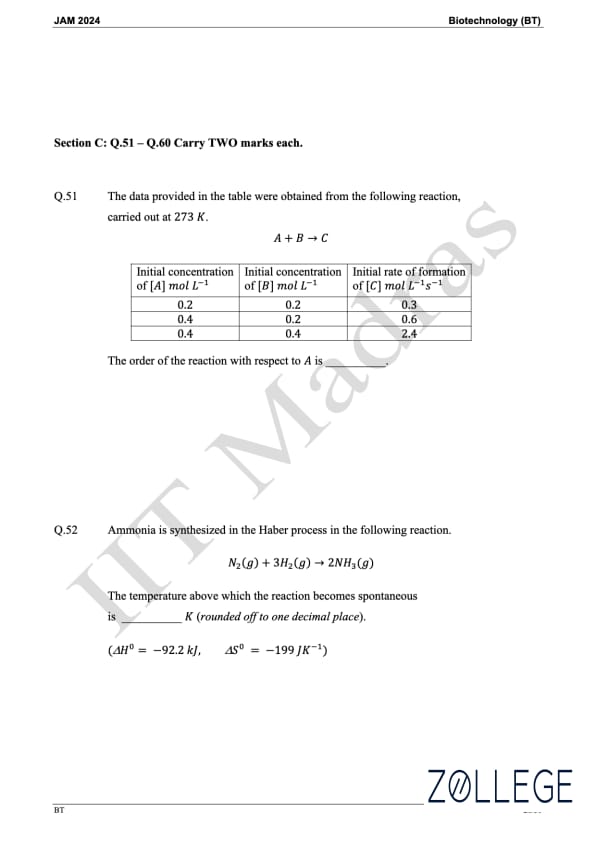
Question 51:
The data provided in the table were obtained from the following reaction, carried out at 273 K:
A + B → C
| Initial [A] (mol/L) | Initial [B] (mol/L) | Initial Rate of Formation of C (mol/L/s) |
|---|---|---|
| 0.2 | 0.2 | 0.3 |
| 0.4 | 0.2 | 0.6 |
| 0.4 | 0.4 | 2.4 |
The order of the reaction with respect to [A] is:
View Solution
To determine the order with respect to A, compare the initial rates for the same concentration of B. The rate doubles (from 0.3 to 0.6) when [A] doubles (from 0.2 to 0.4), indicating the reaction is first order with respect to A.
Question 52:
Ammonia is synthesized in the Haber process in the following reaction:
N2(g) + 3H2(g) → 2NH3(g)
The temperature above which the reaction becomes spontaneous is:
View Solution
For spontaneity, ΔG = 0. Using ΔG = ΔH − TΔS and rearranging:
0 = −92.2 × 10³ J/mol − T × (−199 J/K·mol)
Solving for T:
T = (92.2 × 10³ J/mol) / (199 J/K·mol) = 463.0 K.
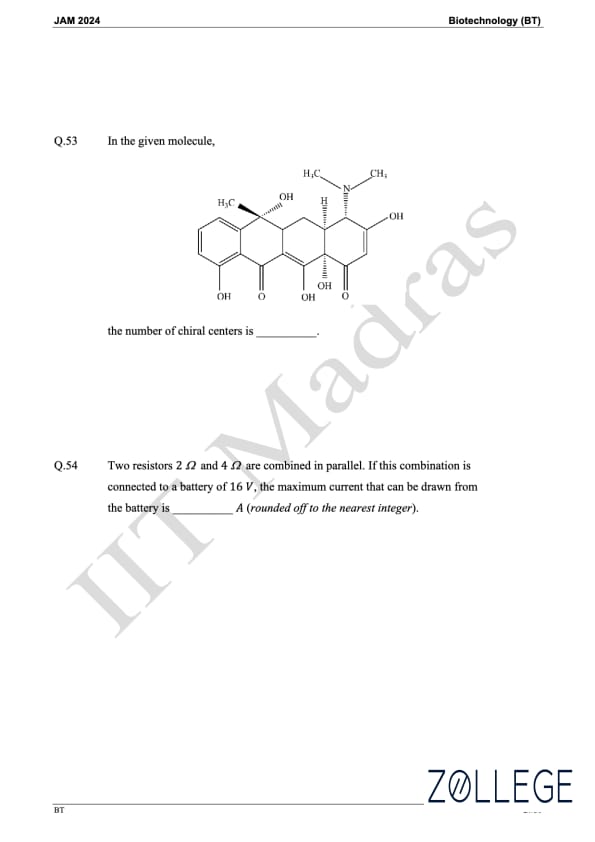
Question 53:
In the given molecule, the number of chiral centers is:
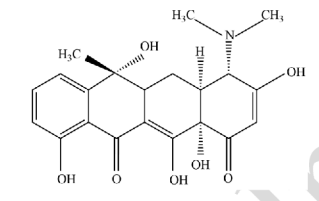
View Solution
A chiral center is a carbon atom bonded to four different groups. By examining the structure, there are 5 carbons each bonded to four distinct substituents.
Question 54:
Two resistors of 2 Ω and 4 Ω are combined in parallel. If this combination is connected to a battery of 16 V, the maximum current that can be drawn from the battery is:
View Solution
The total resistance Rtotal of the parallel combination is given by:
1 / Rtotal = 1/2 + 1/4 = 3/4, so Rtotal = 4/3 Ω.
Using Ohm's law (I = V / R):
I = 16 V / (4/3 Ω) = 12 A.
Question 55:
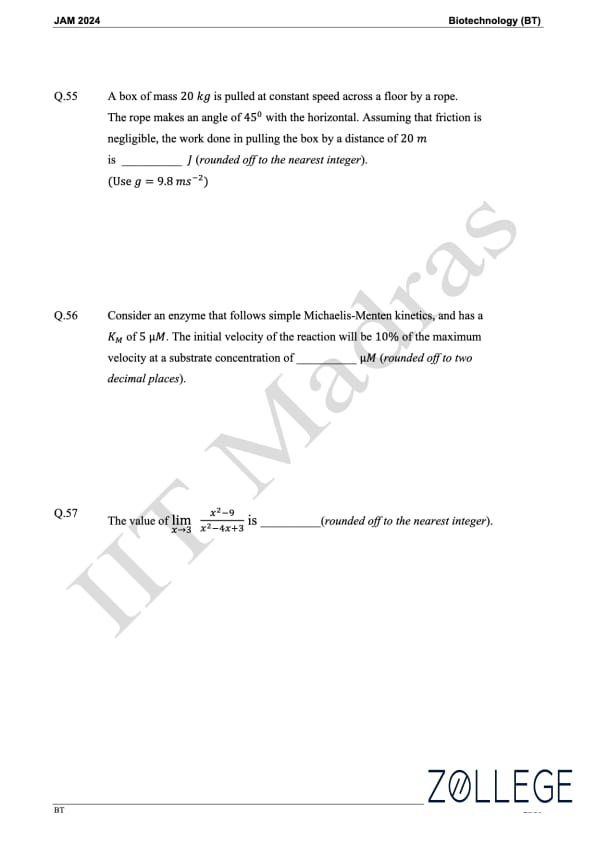
A box of mass 20 kg is pulled at constant speed across a floor by a rope. The rope makes an angle of 45° with the horizontal. Assuming that friction is negligible, the work done in pulling the box by a distance of 20 m is:
View Solution
The force needed to pull the box at constant speed is equal to its weight because friction is negligible:
F = m × g = 20 kg × 9.8 m/s2 = 196 N.
The work done is W = F × d × cos(θ). Substituting F = 196 N, d = 20 m, and θ = 45°:
W = 196 × 20 × cos(45°) ≈ 2740 J.
Question 56:
Consider an enzyme that follows simple Michaelis-Menten kinetics, and has a KM of 5 μM. The initial velocity of the reaction will be 10% of the maximum velocity at a substrate concentration of:
View Solution
For Michaelis-Menten kinetics, when the velocity is 10% of Vmax, we have v0 = 0.1 × Vmax.
The equation is v0 = (Vmax × [S]) / (KM + [S]). Substituting v0 = 0.1 Vmax and KM = 5:
0.1 = [S] / (5 + [S]). Multiplying both sides by (5 + [S]) gives 0.1(5 + [S]) = [S].
0.5 + 0.1[S] = [S]. Hence, 0.5 = 0.9[S], and [S] = 0.5 / 0.9 = 0.54 μM.
Question 57:
The value of the limit as x approaches 3 of (x2 − 9) / (x2 − 4x + 3) is:
View Solution
Factorize numerator and denominator:
x2 − 9 = (x − 3)(x + 3),
x2 − 4x + 3 = (x − 3)(x − 1).
The expression becomes [(x − 3)(x + 3)] / [(x − 3)(x − 1)]. Canceling (x − 3), we get (x + 3) / (x − 1). Substituting x = 3 gives (3 + 3) / (3 − 1) = 6/2 = 3.
Question 58:
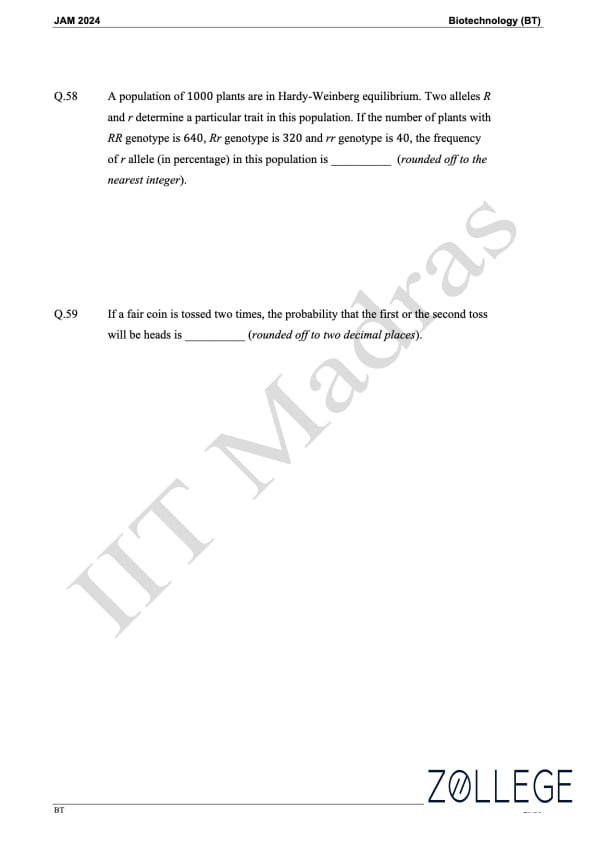
A population of 1000 plants are in Hardy-Weinberg equilibrium. Two alleles R and r determine a particular trait in this population. If the number of plants with RR genotype is 640, Rr genotype is 320, and rr genotype is 40, the frequency of the r allele (in percentage) in this population is:
View Solution
The genotype frequencies are RR = 640/1000 = 0.64, Rr = 320/1000 = 0.32, rr = 40/1000 = 0.04. For the recessive genotype rr, the frequency of r is q, so q2 = 0.04 and q = 0.2. In percentage, q is 20%.
Question 59:
If a fair coin is tossed two times, the probability that the first or the second toss will be heads is:
View Solution
Let H1 be the event that the first toss is heads, and H2 be the event that the second toss is heads. P(H1) = 1/2, P(H2) = 1/2. The probability of both heads (H1 & H2) is 1/4.
Using the inclusion-exclusion principle:
P(H1 ∪ H2) = P(H1) + P(H2) − P(H1 ∩ H2) = 1/2 + 1/2 − 1/4 = 3/4 = 0.75.
Question 60:
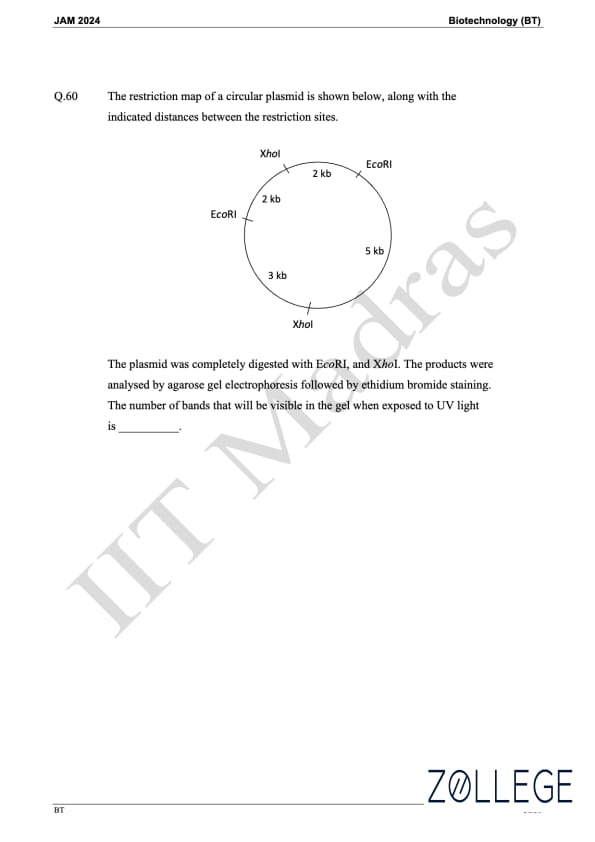
The number of bands that will be visible in the gel when exposed to UV light after complete digestion of a circular plasmid with EcoRI and XhoI is:
View Solution
Suppose EcoRI cuts the plasmid into two fragments (2 kb and 3 kb), and XhoI cuts it into two fragments (2 kb and 5 kb). The restriction map indicates two EcoRI sites and two XhoI sites, leading to three distinct bands on the gel under UV light after complete digestion.
*The article might have information for the previous academic years, please refer the official website of the exam.