
JEE Main 2023 Question Paper with Solution Pdf (April 10 - Shift 1)

.jpg?tr=h-55,w-55,c-force)
Content Strategist|Tech-innovator|National Hackathon Winner | Updated On - Apr 1, 2026
The JEE Main 2023 Chemistry Question Paper with Solution PDF is available here for download. The exam was successfully conducted by NTA on April 10, 2023, in the first shift.
Students can download JEE Main previous year question papers PDFs with detailed solutions to practice and improve their performance. Solving these papers helps aspirants understand the JEE Main exam pattern, analyze the difficulty level, and prepare according to the latest JEE Main syllabus.
Related Links:
Download JEE Main 2026 Session 1 Question Paper with Solution PDF
Download JEE Main 2025 Question Paper with Solution PDF
JEE Main 2023 Chemistry Question Paper Apr 10 Shift 1 with Solution Pdf
| JEE Main 2023 Chemistry Question Paper |  Download Download |
Check Solution |

Question 1:
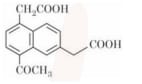
The major product 'P' formed in the given reaction is:




View Solution
Step 1: Oxidation of the side chains
Alkaline KMnO4 oxidizes alkyl groups attached to aromatic rings to carboxylic acid groups.
Step 2: Formation of the product
The given reaction produces naphthalene-1,2,4-tricarboxylic acid.
Question 2:
Prolonged heating is avoided during the preparation of ferrous ammonium sulphate to:
View Solution
Step 1: Avoid oxidation of Fe2+
Prolonged heating can oxidize Fe2+ to Fe3+, introducing impurities.
Step 2: Reaction equation
4Fe2+ + O2 + 4H+ → 4Fe3+ + 2H2O.
Question 3:
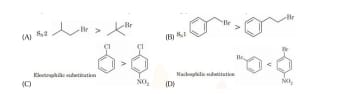
Identify the correct order of reactivity for the following pairs towards the respective mechanism:
View Solution
Step 1: Evaluate each reaction
(A) SN2: Less substituted carbons are more reactive.
(B) SN1: Stability of the carbocation determines reactivity.
(C) Electrophilic substitution: Electron-donating groups enhance reactivity.
(D) Nucleophilic substitution: Electron-withdrawing groups enhance reactivity.
Question 4:
The ∆H° for the reaction C(graphite) + 1/2 O2(g) → CO(g) is:
View Solution
Step 1: Use Hess's law
Reverse and divide equation (1) by 2, add to equation (2), and solve for ∆H°.
Step 2: Solve for ∆H°
∆H° = (x/2) - y = (x − 2y)/2.
Question 5:
Using column chromatography, a mixture of two compounds 'A' and 'B' was separated. 'A' eluted first. This indicates 'B' has:
View Solution
Step 1: Retention factor
B's lower Rf indicates stronger adsorption to the stationary phase.
Question 6:
Lime reacts exothermally with water to give 'A' which has low solubility in water. Aqueous solution of 'A' is often used for the test of CO2, where insoluble 'B' is formed. If 'B' is further reacted with CO2, a soluble compound is formed. 'A' is:
View Solution
Step 1: Reaction of lime with water
CaO(s) + H2O(l) → Ca(OH)2(aq). 'A' is calcium hydroxide, commonly known as slaked lime.
Step 2: Reaction with CO2
Ca(OH)2(aq) + CO2(g) → CaCO3(s) + H2O(l). 'B' is calcium carbonate (CaCO3).
Step 3: Further reaction with CO2
CaCO3(s) + H2O(l) + CO2(g) → Ca(HCO3)2(aq), which is soluble.
Question 7:
Match List I with List II:
List I: Industry
List II: Waste Generated
View Solution
Step 1: Analyze waste products
(A) Steel plants produce slag, a byproduct of iron and steel making.
(B) Thermal power plants generate fly ash from burning coal.
(C) Fertilizer industries produce gypsum as a byproduct of phosphoric acid production.
(D) Paper mills produce bio-degradable wastes from organic materials.
Question 8:
Suitable reaction condition for preparation of Methyl phenyl ether is:
View Solution
Step 1: Use Williamson ether synthesis
This reaction involves the reaction of an alkoxide ion (PhO-) with a primary alkyl halide (MeBr).
Step 2: Reaction mechanism
PhO-Na+ + MeBr → Ph-O-Me + NaBr.
The phenoxide ion acts as a nucleophile, attacking methyl bromide via an SN2 mechanism to form methyl phenyl ether (anisole).
Question 9:
The one that does not stabilize 2° and 3° structures of proteins is:
View Solution
Step 1: Stabilizing forces in protein structures
The secondary and tertiary structures of proteins are stabilized by hydrogen bonding, disulfide bridges (–S–S–), van der Waals forces, and electrostatic attractions. Peroxide linkages (–O–O–) do not play a role in protein stabilization.
Question 10:
The compound which does not exist is:
View Solution
Step 1: Analyze compound stability
Sodium superoxide (NaO2) is highly reactive and tends to disproportionate, making it unstable. Other listed compounds are known and stable.
Question 11:
Given below are two reactions, involved in the commercial production of dihydrogen (H2). The two reactions are carried out at temperature T1 and T2, respectively:
C(s) + H2O(g) → CO(g) + H2 (T1)
CO(g) + H2O(g) → CO2(g) + H2 (T2)
The temperatures T1 and T2 are correctly related as:
View Solution
Step 1: Analyze the two reactions
The first reaction, the water-gas reaction, requires a higher temperature (around 1270 K).
The second reaction, the water-gas shift reaction, occurs at lower temperatures (around 673 K) with a catalyst.
Question 12:
The enthalpy change for the adsorption process and micelle formation respectively are:
View Solution
Step 1: Analyze the processes
Adsorption is exothermic (∆Hads < 0) as energy is released when molecules adhere to a surface.
Micelle formation is endothermic (∆Hmic > 0) due to energy required to overcome hydrophobic repulsion between surfactant molecules.
Question 13:
The pair from the following pairs having both compounds with net non-zero dipole moment is:
View Solution
Step 1: Evaluate each pair
Both CH2Cl2 and CHCl3 have non-zero dipole moments due to differences in electronegativity and asymmetric molecular structures.
Other pairs have at least one compound with zero dipole moment due to symmetry.
Question 14:
Which of the following is used as a stabilizer during the concentration of sulphide ores?
View Solution
Step 1: Role of stabilizers
Cresols are used in froth flotation to stabilize the froth during the concentration of sulphide ores.
Question 15:
Which of the following statements are correct?
(A) The M3+/M2+ reduction potential for iron is greater than manganese.
(B) The higher oxidation states of first-row d-block elements get stabilized by oxide ion.
(C) Aqueous solution of Cr2+ can liberate hydrogen from dilute acid.
(D) Magnetic moment of V2+ is observed between 4.4-5.2 BM.
View Solution
Step 1: Evaluate the statements
(A) Incorrect: Reduction potential for Mn is greater than Fe.
(B) Correct: Higher oxidation states are stabilized by oxide ions.
(C) Correct: Cr2+ reduces H+ to H2.
(D) Incorrect: Magnetic moment of V2+ is approximately 3.87 BM, not 4.4-5.2 BM.
Question 16:
Given below are two statements:
Statement I: Aqueous solution of K2Cr2O7 is preferred as a primary standard in volumetric analysis over Na2Cr2O7 aqueous solution.
Statement II: K2Cr2O7 has a higher solubility in water than Na2Cr2O7.
In the light of the above statements, choose the correct answer:
View Solution
Step 1: Analyze the properties
K2Cr2O7 is more stable in aqueous solution compared to Na2Cr2O7, making it a preferred primary standard.
K2Cr2O7 is less soluble in water than Na2Cr2O7.
Question 17:
The octahedral diamagnetic low spin complex among the following is:
View Solution
Step 1: Analyze the coordination complex
[Co(NH3)6]3+ has Co3+ with an electronic configuration of 3d6. NH3 is a strong field ligand, causing electron pairing in the lower energy t2g orbitals.
The configuration becomes t62g, e0g, making it diamagnetic and low spin.
Question 18:
Isomeric amines with molecular formula C8H11N give the following tests:
(P) Can be prepared by Gabriel phthalimide synthesis.
(Q) Reacts with Hinsberg’s reagent to give a solid insoluble in NaOH.
(R) Reacts with HONO followed by β-naphthol in NaOH to give a red dye.
Isomer (P), (Q), and (R), respectively, are:



View Solution
Step 1: Analyze the reactions
(P): Gabriel synthesis produces primary amines.
(Q): Hinsberg’s reagent forms a solid with secondary amines.
(R): The formation of a red dye indicates an aromatic primary amine.
Question 19:
The number of molecules and moles in 2.8375 litres of O2 at STP are respectively:
View Solution
Step 1: Calculate moles
At STP, 1 mole of gas occupies 22.7 L. Moles = Volume/22.7 = 2.8375/22.7 = 0.125 moles.
Step 2: Calculate molecules
Molecules = Moles × Avogadro’s number = 0.125 × 6.022 × 1023 = 7.527 × 10²².
Question 20:
Match List I with List II:
List I: Polymer
List II: Classification
(A) Nylon-2-Nylon-6 - Biodegradable polymer
(B) Buna-N - Synthetic rubber
(C) Urea-formaldehyde resin - Thermosetting polymer
(D) Dacron - Polyester
View Solution
Step 1: Match polymers with classifications
(A): Nylon-2-Nylon-6 is biodegradable.
(B): Buna-N is synthetic rubber.
(C): Urea-formaldehyde resin is thermosetting.
(D): Dacron is a polyester.
Question 21:
If the degree of dissociation of an aqueous solution of weak monobasic acid is determined to be 0.3, then the observed freezing point will be % higher than the expected/theoretical freezing point. (Nearest integer)
View Solution
Step 1: Determine the Van’t Hoff Factor
For a weak monobasic acid, the van’t Hoff factor (i) is calculated using the formula:
i = 1 + (n - 1) * α, where n = 2 (for complete dissociation) and α = 0.3.
i = 1 + (2 - 1) * 0.3 = 1.3.
Step 2: Calculate the Percentage Increase
The percentage increase in freezing point depression is given by:
% increase = (i - 1⁄1) * 100 = (1.3 - 1⁄1) * 100 = 30%.
Question 22:
In the following reactions, the total number of oxygen atoms in X and Y is:
Na2O + H2O → 2X
Cl2O7 + H2O → 2Y
View Solution
Step 1: Determine Products of the Reactions
Reaction 1: Na2O + H2O → 2NaOH. Here, X is NaOH, which contains 1 oxygen atom per molecule.
Reaction 2: Cl2O7 + H2O → 2HClO4. Here, Y is HClO4, which contains 4 oxygen atoms per molecule.
Step 2: Add the Oxygen Atoms
Each molecule of NaOH contributes 1 oxygen atom, and HClO4 contributes 4 oxygen atoms.
Total oxygen atoms = 1 (from X) + 4 (from Y) = 5.
Question 23:
The sum of lone pairs present on the central atom of the interhalogens IF5 and IF7 is:
View Solution
Step 1: Calculate Lone Pairs for IF5
Iodine (I) in IF5 has 7 valence electrons. Five are used for bonding, leaving 2 electrons (1 lone pair).
Step 2: Calculate Lone Pairs for IF7
Iodine (I) in IF7 uses all 7 valence electrons for bonding, leaving no lone pairs.
Step 3: Add the Lone Pairs
Lone pairs on IF5: 1. Lone pairs on IF7: 0.
Total = 1 + 0 = 1.
Question 24:
The number of bent-shaped molecule(s) from the following is:
N3−, NO2−, I3−, O3, SO2
View Solution
Step 1: Analyze the Molecular Shapes
- N3−: Linear.
- NO2−: Bent (lone pairs on nitrogen).
- I3−: Linear.
- O3: Bent (lone pairs on central oxygen).
- SO2: Bent (lone pairs on sulfur).
Step 2: Count the Bent Molecules
Bent molecules: NO2−, O3, and SO2.
Total = 3.
Question 25:
The number of correct statement(s) involving equilibria in physical form from the following is:
(1) Equilibrium is possible only in a closed system at a given temperature.
(2) Both the opposing processes occur at the same rate.
(3) When equilibrium is attained at a given temperature, the value of all its parameters becomes constant.
(4) For dissolution of solids in liquids, the solubility is constant at a given temperature.
View Solution
Step 1: Evaluate Each Statement
- (1): Correct. Equilibrium requires a closed system to prevent loss of matter.
- (2): Correct. At equilibrium, the forward and reverse processes occur at the same rate.
- (3): Incorrect. The equilibrium values of parameters remain constant but may not be equal.
- (4): Correct. Solubility depends on temperature.
Step 2: Count the Correct Statements
Correct statements: (1), (2), and (4).
Total = 3.
Question 26:
At constant temperature, a gas is at a pressure of 940.3 mm Hg. The pressure at which its volume decreases by 40% is:
View Solution
Step 1: Write the Given Data
Initial pressure, Pinitial = 940.3 mm Hg.
Initial volume, Vinitial = 100 units (assume).
Final volume, Vfinal = 100 - 40% = 60 units.
Final pressure, Pfinal = ?
Step 2: Apply Boyle’s Law
Boyle’s Law states: PinitialVinitial = PfinalVfinal
Substitute the values:
940.3 × 100 = Pfinal × 60.
Step 3: Solve for Pfinal
Pfinal = (940.3 × 100) / 60 = 1567 mm Hg.
Round to the nearest integer:
Pfinal = 1567 mm Hg.
Question 27:
FeO42− + 2.2V → Fe3+, Fe3+ + 0.7V → Fe2+, Fe2+ -0.45V → Fe°. E°FeO42−/Fe2+ is x × 10−3V. The value of x is:
View Solution
Step 1: Combine the Half-Cell Reactions
The reduction steps are:
FeO42− + 3e− → Fe3+, ΔG1
Fe3+ + e− → Fe2+, ΔG2
FeO42− + 4e− → Fe2+, ΔG3
Step 2: Use Gibbs Free Energy Relationships
ΔG3 = ΔG1 + ΔG2.
Substituting ΔG = −nFE°:
−4FE°3 = −3F(2.2) + (−1F)(0.7).
Step 3: Simplify
4E°3 = 6.6 + 0.7 = 7.3.
E°3 = 7.3 / 4 = 1.825 V.
E°3 = 1.825 × 10⁻³ V.
Question 28:
A molecule undergoes two independent first-order reactions whose respective half-lives are 12 min and 3 min. If both reactions are occurring, the time taken for 50% consumption of the reactant is:
View Solution
Step 1: Relationship Between Rate Constants and Effective Half-Life
For independent first-order reactions:
keff = k1 + k2.
The effective half-life is given by:
ln 2 / teff = ln 2 / t1 + ln 2 / t2.
Simplify:
1 / teff = 1 / t1 + 1 / t2.
Step 2: Substitute the Given Half-Lives
t1 = 12 min, t2 = 3 min.
1 / teff = 1 / 12 + 1 / 3 = 5 / 12.
Step 3: Calculate teff
teff = 12 / 5 = 2.4 min.
Round to the nearest integer:
teff = 2 min.
Question 29:
The number of incorrect statement(s) about the black body from the following is:
(1) Emits or absorbs energy in the form of electromagnetic radiation.
(2) Frequency distribution of the emitted radiation depends on temperature.
(3) At a given temperature, intensity vs frequency curve passes through a maximum value.
(4) The maximum of the intensity vs frequency curve is at a higher frequency at higher temperature compared to that at lower temperature.
View Solution
Step 1: Analyze the Given Statements
(1) Correct: Black bodies emit/absorb electromagnetic radiation.
(2) Correct: Frequency distribution depends on temperature (Planck’s law).
(3) Correct: Intensity vs frequency curve has a maximum value.
(4) Correct: The peak shifts to higher frequency with temperature (Wien’s law).
Step 2: Count the Incorrect Statements
All the statements are correct.
Number of incorrect statements = 0.
Question 30:
In potassium ferrocyanide, there are pairs of electrons in the t2g set of orbitals:
View Solution
Step 1: Analyze the Electronic Configuration of Fe2+
Potassium ferrocyanide is K4[Fe(CN)6].
In this complex, Fe is in the +2 oxidation state: Fe2+.
Electronic configuration: Fe2+ = [Ar] 3d6.
Step 2: Effect of Strong Field Ligand (CN−)
CN− is a strong field ligand, causing pairing of electrons in the d-orbitals.
The t2g set of orbitals (lower energy) gets fully filled with 6 electrons, forming 3 pairs.
Step 3: Diagrammatic Representation
t2g6 eg0: The t2g set contains 6 electrons, forming 3 pairs.
*The article might have information for the previous academic years, please refer the official website of the exam.