
JEE Main 2024 Question Paper with Answer Key PDF for Chemistry (January 27 - Shift 2)

.jpg?tr=h-55,w-55,c-force)
Content Strategist|Tech-innovator|National Hackathon Winner | Updated On - Jan 6, 2025
JEE Main Question Papers are the most important study material for effective exam preparation. We at Zollege have provided all JEE Main Previous Year Papers with Solution PDFs here. JEE Main 2024 Chemistry exam was conducted successfully on January 27 by NTA.
Students can freely download the JEE Main previous year's question paper PDFs along with their solutions here. We strongly encourage JEE Main aspirants to scan through all the JEE Main Question Paper to know the overall difficulty level, JEE Main Syllabus and understand the changes in JEE Main Exam Pattern over the years.
JEE Main 2024 Chemistry Question Paper with Answer Key PDF
| JEE Main 2024 Question Paper Download |  Download Download |
Check Solution |
JEE Main 2024 Jan 27 Shift 2 Chemistry Questions with Solution
Question 1:
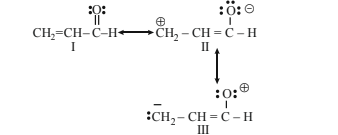
The order of relative stability of the contributing structures is:
View Solution
The correct order of relative stability is I > II > III.
Explanation:
- Structure I is the most stable because it is a neutral resonating structure.
- Structure II is less stable due to a positive charge on a less electronegative atom.
- Structure III is the least stable as it has a negative charge on a carbon atom.
Question 2:
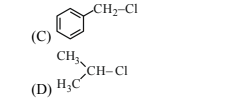
Which among the following halide(s) will not show SN1 reaction:
(A) H2C = CH - CH2Cl
(B) CH3 - CH = CH - Cl
View Solution
The SN1 mechanism proceeds through carbocation formation, favoring stable intermediates:
- Halide (A): Forms a stabilized allylic carbocation.
- Halide (B): Does not form a stable carbocation.
- Halide (C): Forms a stabilized benzylic carbocation.
- Halide (D): Forms a tertiary carbocation.
Only halide (B) fails to undergo SN1 due to the lack of a stable intermediate.
Question 3:
Which of the following statements is not correct about rusting of iron?
View Solution
When the tin coating is peeled off, iron is exposed and rusts more quickly due to galvanic action. Tin, being less reactive, acts as a cathode, accelerating the rusting of the iron anode.
Question 4:
Question 4: Given below are two statements:
Statement (I): In the Lanthanides, the formation of Ce4+ is favored by its noble gas
configuration.
Statement (II): Ce4+ is a strong oxidant reverting to the common +3 state.
Choose the correct option:
(1) Statement I is false but Statement II is true
(2) Both Statement I and Statement II are true
(3) Statement I is true but Statement II is false
(4) Both Statement I and Statement II are false
Correct Answer:
(2) Both Statement I and Statement II are true
View Solution
Ce4+ has a noble gas electronic configuration, which makes Statement (I) true. Thisstable configuration contributes to the high stability of Ce4+.
Furthermore, due to its high reduction potential, the Ce4+/Ce3+ couple acts as a strong
oxidizing agent, as Ce4+ readily accepts electrons to achieve the Ce3+ state. This property
confirms that Statement (II) is also true
Question 5:
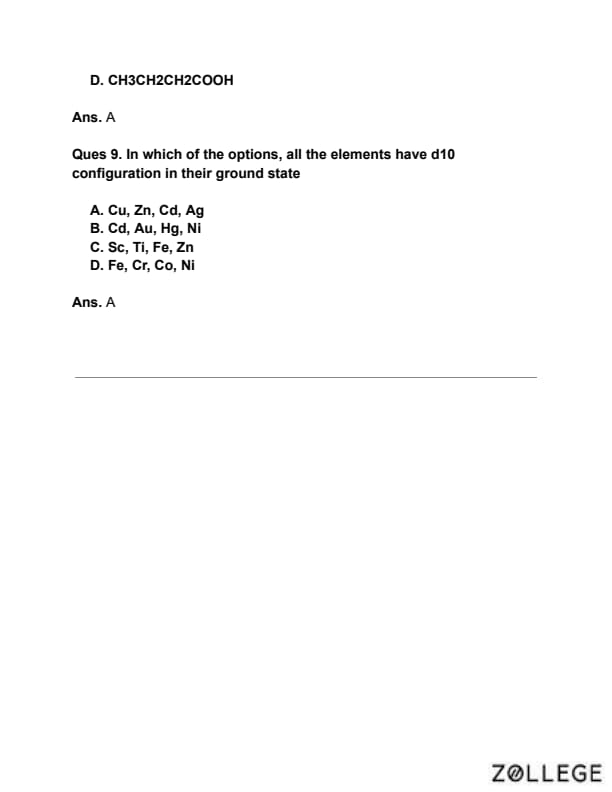
Choose the correct option having all the elements with d10 electronic configuration from the following:
View Solution
Elements with d10 configuration:
- Cu: [Ar] 3d10 4s1
- Zn: [Ar] 3d10 4s2
- Ag: [Kr] 4d10 5s1
- Cd: [Kr] 4d10 5s2
These elements have fully filled d-orbitals, ensuring stability.
Question 6:
Phenolic group can be identified by a positive:
View Solution
Explanation:
- Phthalein dye test: Identifies phenols via color formation.
- Lucas test: Differentiates alcohols (1°, 2°, 3°).
- Tollen's test: Identifies aldehydes.
- Carbylamine test: Identifies primary amines.
Phenols specifically give positive results in the Phthalein dye test.
Question 7:
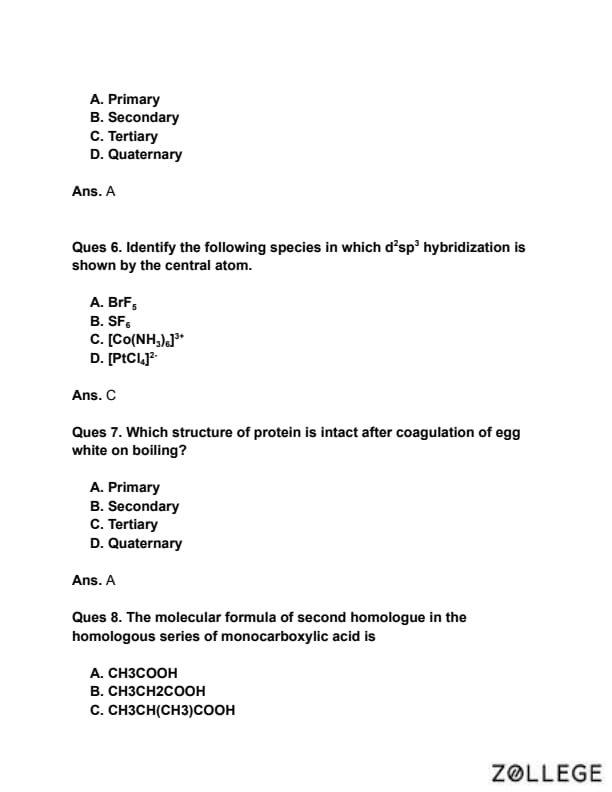
The molecular formula of the second homologue in the homologous series of mono carboxylic acids is:
View Solution
The first member of the series is formic acid (HCOOH). The second member, acetic acid (CH3COOH), has the molecular formula C2H4O2.
Question 8:
The technique used for purification of steam volatile water immiscible substances is:
View Solution
Steam distillation is ideal for separating volatile components that are immiscible in water. It is commonly used for essential oil extraction and purification of similar substances.
Question 9:
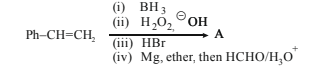
The final product A, formed in the following reaction sequence, is:
View Solution
The reaction sequence involves:
- Step (i): Hydroboration-oxidation (anti-Markovnikov addition) forms Ph-CH2-CH2OH.
- Step (ii): Alcohol converted to alkyl halide (Ph-CH2-CH2Br).
- Step (iii): Grignard reagent formed (Ph-CH2-CH2MgBr).
- Step (iv): Reaction with formaldehyde gives Ph-CH2-CH2-CH2-OH.
Final product: Ph - CH2 - CH2 - CH2 - OH.
Question 10:
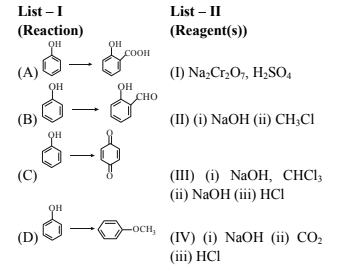
Match List-I with List-II:
View Solution
Explanation:
- (A): Oxidation of phenol to benzoquinone uses Na2Cr2O7 and H2SO4 as oxidizing agents.
- (B): Kolbe's reaction involves carboxylation of phenol using NaOH and CO2, followed by acidification with HCl.
- (C): Reimer-Tiemann reaction introduces an aldehyde group on the phenol ring using NaOH and CHCl3.
- (D): Williamson's synthesis prepares ethers by reacting phenoxide with CH3Cl in the presence of NaOH.
Thus, the correct matching is:
(A)-(IV), (B)-(III), (C)-(I), (D)-(II)
Question 11:
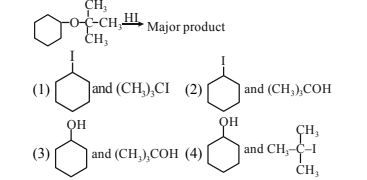
Major product formed in the following reaction is a mixture of:
View Solution
The given reaction involves cleavage of the ether bond using HI. The steps are:
- Protonation of the ether oxygen atom by HI forms an oxonium ion intermediate.
- Cleavage of the C--O bond yields cyclohexanol and a tertiary carbocation, (CH3)3C+.
- The tertiary carbocation reacts rapidly with I- to form (CH3)3C--I as the final product.
Thus, the major products are cyclohexanol and (CH3)3C--I.
Question 12:
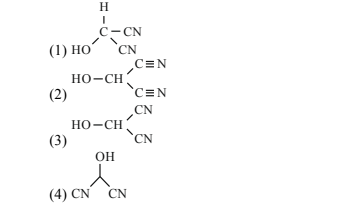
The bond-line formula of HOCH(CN)2 is:
View Solution
The structure of HOCH(CN)2 consists of:
- A central carbon atom bonded to one hydroxyl group (OH).
- Two cyano groups (CN).
Option (4) accurately represents this structure.
Question 13:
Given below are two statements:
- Statement (I): Oxygen being the first member of group 16 exhibits only -2 oxidation state.
- Statement (II): Down group 16, stability of +4 oxidation state decreases and +6 oxidation state increases.
Choose the most appropriate answer from the options below:
View Solution
Statement I: Oxygen exhibits other oxidation states such as 0 in O2 and +1 or +2 in OF2. Hence, it does not solely exhibit -2 oxidation state.
Statement II: Stability of +4 oxidation state increases down the group due to the inert pair effect, contrary to the claim.
Therefore, both statements are incorrect.
Question 14:
Identify from the following species in which d2sp3 hybridization is shown by the central atom:
View Solution
[Co(NH3)6]3+ exhibits d2sp3 hybridization, forming an octahedral geometry. Other examples include:
- BrF5: sp3d2, square pyramidal.
- [PtCl4]2-: dsp2, square planar.
- SF6: sp3d2, octahedral.
Thus, only [Co(NH3)6]3+ demonstrates d2sp3 hybridization.
Question 15:
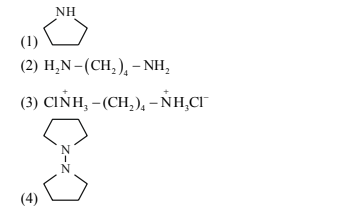
Identify B formed in the reaction:
Cl-(CH2)4-Cl →excess NH3 A →NaOH B + H2O + NaCl
View Solution
The intermediate formed with excess NH3 is a diammonium salt, NH3-(CH2)4-NH3+Cl-. On reaction with NaOH, it deprotonates to yield 1,4-diaminobutane (H2N-(CH2)4-NH2).
Question 16:
The quantity which changes with temperature is:
View Solution
Explanation:
Molarity is defined as the number of moles of solute per liter of solution. Since the volume of the solution changes with temperature due to thermal expansion or contraction, molarity also changes. Other quantities like mass percentage, molality, and mole fraction are independent of temperature as they depend solely on the ratio of masses or moles.
Question 17:
Which structure of protein remains intact after coagulation of egg white on boiling?
View Solution
Explanation:
When egg white is boiled, the protein undergoes denaturation, resulting in the loss of secondary, tertiary, and quaternary structures. However, the primary structure, which is the sequence of amino acids linked by peptide bonds, remains unaffected because these covalent bonds are not broken during denaturation.
Question 18:
Which of the following cannot function as an oxidizing agent?
View Solution
Explanation:
Nitrogen in N3- is in its lowest oxidation state and cannot gain more electrons, so it cannot function as an oxidizing agent. Other species listed can accept electrons and undergo reduction, thus acting as oxidizing agents.
Question 19:
The incorrect statement regarding conformations of ethane is:
View Solution
Explanation:
The eclipsed conformation is the least stable due to maximum repulsion between C-H bond electron clouds on adjacent carbons. The staggered conformation is more stable as it minimizes repulsion by keeping bonds as far apart as possible.
Question 20:
Identify the incorrect pair from the following:
View Solution
Explanation:
The Wacker process uses PdCl2 as a catalyst, not PtCl2. The other pairs correctly represent the respective processes or applications.
Question 21:
Total number of ions from the following with noble gas configuration is:
Sr2+ (Z = 38), Cs+ (Z = 55), La3+ (Z = 57), Pb2+ (Z = 82), Yb2+ (Z = 70), and Fe2+ (Z = 26).
View Solution
Explanation:
- Sr2+ (Z = 38): Loses two electrons to match [Kr] (krypton).
- Cs+ (Z = 55): Loses one electron to match [Xe] (xenon).
- La3+ (Z = 57): Loses three electrons to match [Xe].
- Yb2+ (Z = 70): Loses two electrons to match [Xe].
Pb2+ and Fe2+ do not have noble gas configurations. Therefore, the total is 4 ions.
Question 22:
The number of non-polar molecules from the following is:
HF, H2O, SO2, H2, CO2, CH4, NH3, HCl, CHCl3, BF3.
View Solution
Explanation:
- Non-polar molecules: CO2 (linear), H2 (diatomic), CH4 (tetrahedral), and BF3 (trigonal planar).
- Other molecules are polar due to asymmetry or electronegativity differences.
Total non-polar molecules: 4.
Question 23:
Time required for completion of 99.9% of a first-order reaction is ______ times the half-life (t1/2) of the reaction.
View Solution
Explanation:
Using the formula for a first-order reaction:
t = (2.303 / k) log ([A]0 / [A])
For 99.9% completion, [A] = 0.001[A]0:
t = (2.303 / k) × 3 = 10 × t1/2.
Thus, the time required is 10 times the half-life.
Question 24:
The spin-only magnetic moment value of square planar complex [Pt(NH3)2Cl(NH2CH3)]Cl is ______ B.M. (Nearest integer).
View Solution
Explanation:
The complex contains Pt2+ in square planar geometry. With a (d8) configuration, all d-electrons pair up, leaving no unpaired electrons.
The magnetic moment is 0 B.M., making it diamagnetic.
Question 25:
For a thermochemical reaction M → N at T = 400 K, ΔHo = 77.2 kJ mol-1, ΔSo = 122 JK-1, log equilibrium constant (log K) is ______ × 10-1.
View Solution
Explanation:
ΔGo = ΔHo - TΔSo
Substituting values: ΔGo = 77.2 × 10³ - (400 × 122) = -28400 J.
Using ΔGo = -2.303RT log K:
( log K = -28400/-2.303 × 8.314 × 400} ≈ 37.08 ≈ 37 × 10-1 ).
Question 26:
Volume of 3 M NaOH (formula weight 40 g mol-1) which can be prepared from 84 g of NaOH is ______ × 10-1 dm3.
View Solution
Explanation:
Molarity (M) is calculated using the formula:
M = n / V, where n is the number of moles and V is the volume in liters.
- Moles of NaOH = mass / molar mass = 84 / 40 = 2.1 moles.
- Volume of solution = n / M = 2.1 / 3 = 0.7 L = 7 × 10⁻¹ dm3.
Question 27:
1 mole of PbS is oxidized by “X” moles of O3 to get “Y” moles of O2. X + Y = ______.
View Solution
Explanation:
The balanced equation for oxidation is:
PbS + 4O3 → PbSO4 + 4O2
Here, 1 mole of PbS reacts with 4 moles of O3 (X = 4), producing 4 moles of O2 (Y = 4).
Therefore, X + Y = 4 + 4 = 8.
Question 28:
The hydrogen electrode is dipped in a solution of pH = 3 at 25°C. The potential of the electrode will be - ______ × 10-2 V.
View Solution
Explanation:
Using the Nernst equation:
E = E° - (0.059 / n) log (1 / [H+])
- E° = 0 (standard hydrogen electrode).
- [H+] = 10-3 M, so log(10-3) = -3.
- E = -0.059 × (-3) = 0.177 V.
The potential is 0.177 V, or 18 × 10-2 V.
Question 29:
9.3 g of aniline is subjected to reaction with excess of acetic anhydride to prepare acetanilide. The mass of acetanilide produced if the reaction is 100% completed is ______ × 10-1 g. (Given molar mass in g mol-1: N = 14, O = 16, C = 12, H = 1).
View Solution
Explanation:
The reaction is:
C6H5NH2 + CH3COOCOCH3 → C6H5NHCOCH3 + CH3COOH
- Molar mass of aniline = 93 g/mol.
- Moles of aniline = 9.3 / 93 = 0.1 moles.
- Molar mass of acetanilide = 135 g/mol.
- Mass of acetanilide = 0.1 × 135 = 13.5 g = 135 × 10-1 g.
Question 30:
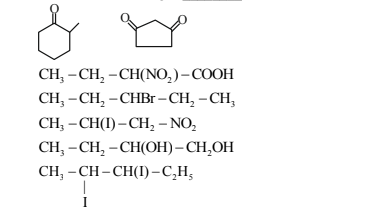
Total number of compounds with chiral carbon atoms from the following is ______.
View Solution
Explanation:
To identify chiral carbons, look for carbon atoms bonded to four different substituents:
- Compound 1: Second carbon is chiral.
- Compound 2: Third carbon is chiral.
- Compound 3: Second carbon is chiral.
- Compound 4: Third carbon is chiral.
- Compound 5: Second carbon is chiral.
Total chiral compounds: 5.


Previous Year JEE Main Question Papers
*The article might have information for the previous academic years, please refer the official website of the exam.