
CBSE Class 12 Biology Question Paper 2024 (Set 2- 57/1/2) Available- Download Solution PDF with Answer Key


Content Writer | Updated On - Feb 17, 2025
CBSE Class 12 Biology Set 2 Question Paper PDF (57/1/2) is now available for download. CBSE conducted the Class 12 Biology examination on March 19, 2024, from 10:30 AM to 1:30 PM. The question paper consists of 33 questions carrying a total of 70 marks. Section A includes 16 MCQs for 1 mark each, Section B contains 5 very short-answer questions for 2 marks each, Section C comprises 7 short-answer questions for 3 marks each, Section D comprises 2 Case-based questions carries 4 marks each and Section E comprises 3 long-answer questions carries 5 marks each.
Candidates can use the link below to download the CBSE Class 12 Biology Set 2 Question Paper with detailed solutions.
CBSE Class 12 Biology Question Paper 2024 (Set 2- 57/1/2) with Answer Key
| CBSE Class 12 2024 Biology Question Paper with Answer Key |  Download Download |
Check Solution |
CBSE Class 12 2024 Biology Questions with Solutions
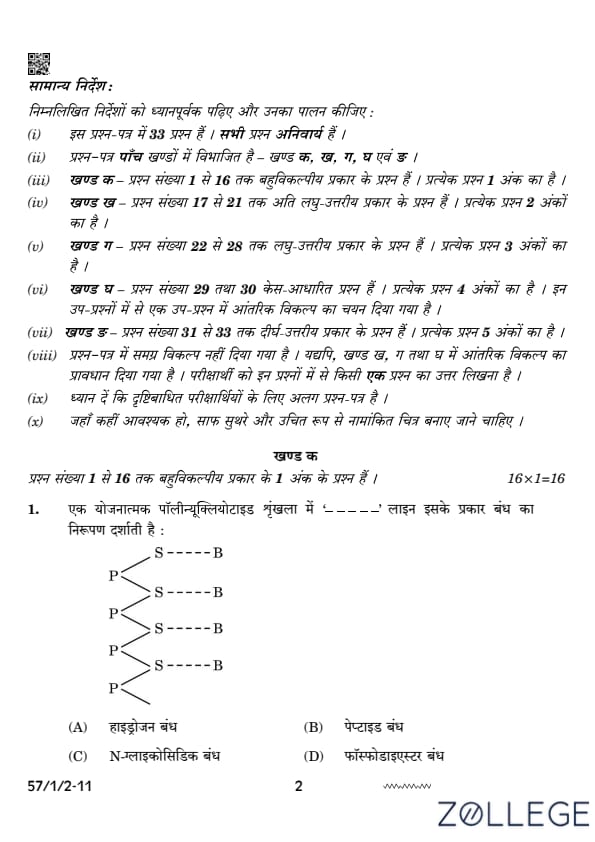
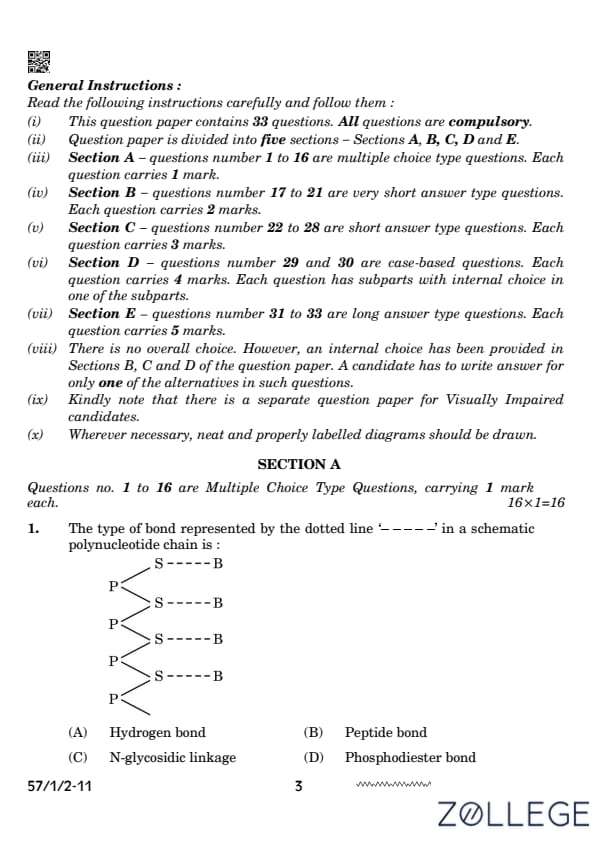
The type of bond represented by the dotted line ‘-----’ in a schematic polynucleotide chain is:

View Solution
In a polynucleotide chain, the dotted line (‘-----’) indicates the bond between the nitrogenous base (B) and the sugar (S). This bond is referred to as an N-glycosidic linkage. It connects the nitrogen atom of the nitrogenous base to the 1' carbon of the pentose sugar, linking the two components.
Other bonds present in the structure of a polynucleotide include:
Phosphodiester bond: This bond links the sugar molecules of adjacent nucleotides, forming the backbone of the polynucleotide chain.
Hydrogen bond: This bond forms between complementary nitrogenous bases in double-stranded DNA, holding the two strands together.
Peptide bond: Found in proteins, not in polynucleotides, peptide bonds join amino acids to form polypeptides. Quick Tip: Identify bonds in biomolecules:
N-glycosidic linkage: Connects sugar and base in nucleotides.
Phosphodiester bond: Forms the backbone of DNA/RNA.
Hydrogen bond: Holds the strands of DNA together.
Peptide bond: Found in proteins.
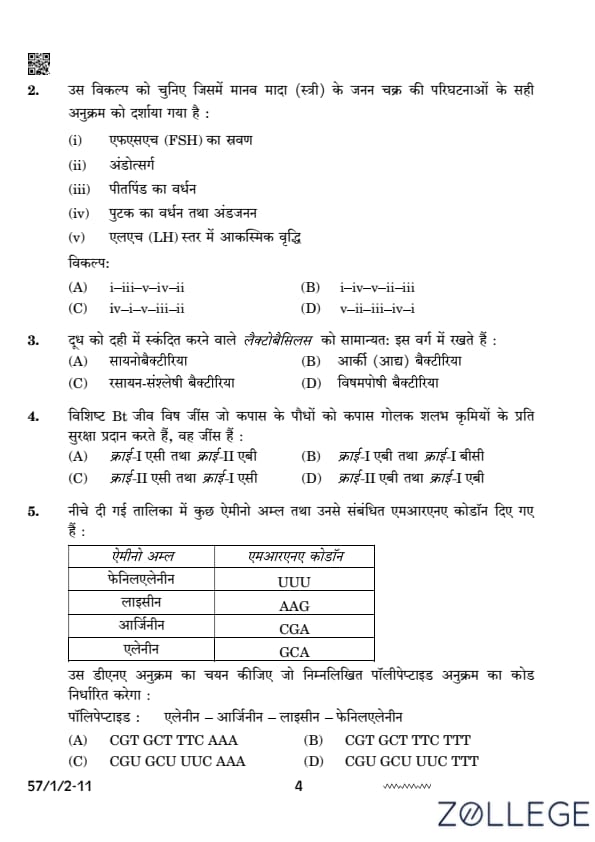
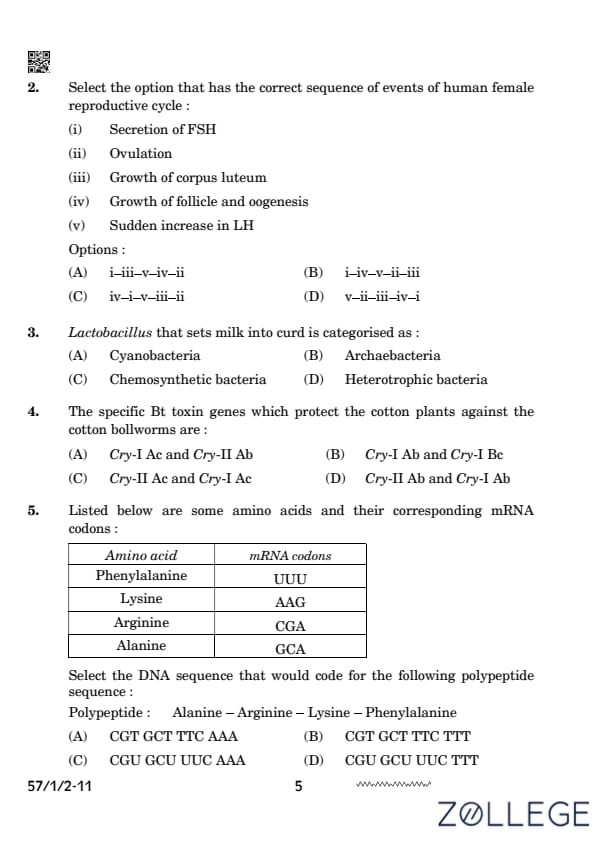
Select the option that has the correct sequence of events of the human female reproductive cycle:
1. Secretion of FSH
2. Ovulation
3. Growth of corpus luteum
4. Growth of follicle and oogenesis
5.Sudden increase in LH
View Solution
The human female reproductive cycle is regulated by a series of hormonal events. The correct sequence of events is as follows:
1. Secretion of FSH (Follicle-Stimulating Hormone):
- The cycle begins with the secretion of FSH by the anterior pituitary gland. FSH promotes the growth and maturation of ovarian follicles, marking the first step of the cycle.
2. Follicular growth and oogenesis:
- As FSH is released, the ovarian follicles begin to grow, and oogenesis occurs. During this process, the primary oocyte undergoes maturation, transforming into a secondary oocyte within the developing follicle.
3. Surge in LH (Luteinizing Hormone):
- Just before ovulation, a surge in LH occurs, triggered by elevated estrogen levels from the growing follicles. This LH surge is the critical signal for ovulation.
4. Ovulation:
- The sharp increase in LH causes the mature follicle to rupture, releasing the secondary oocyte. This event, known as ovulation, typically occurs in the middle of the menstrual cycle.
5. Formation of corpus luteum:
- After ovulation, the ruptured follicle changes into the corpus luteum, which secretes progesterone. This hormone prepares the uterine lining for the possibility of pregnancy.
The correct order of events is:
Secretion of FSH (i)
Follicular growth and oogenesis (iv)
Surge in LH (v)
Ovulation (ii)
Formation of corpus luteum (iii)
Therefore, the correct sequence is \( i \to iv \to v \to ii \to iii \), corresponding to option (B). Quick Tip: The cycle begins with FSH secretion, which stimulates follicular growth and oogenesis. The LH surge triggers ovulation, followed by the formation of the corpus luteum.
Lactobacillus that sets milk into curd is categorized as:
View Solution
Lactobacillus is a type of heterotrophic bacterium that ferments lactose present in milk to produce lactic acid.
This fermentation process causes the milk to coagulate, transforming it into curd.
Heterotrophic bacteria obtain their energy by consuming organic substances. Quick Tip: Recall the classification of bacteria:
Cyanobacteria: Capable of photosynthesis.
Chemosynthetic bacteria: Use inorganic substances for energy.
Heterotrophic bacteria: Rely on organic matter for energy.
The specific Bt toxin genes which protect the cotton plants against the cotton bollworms are:
View Solution
Bt toxin genes (Cry-I Ac and Cry-II Ab) are sourced from the bacterium \textit{Bacillus thuringiensis.
These genes are incorporated into cotton plants, enabling them to produce insecticidal proteins that defend against bollworm infestations. Quick Tip: Learn key Bt genes:
Cry-I Ac: Specifically targets bollworms.
Cry-II Ab: Effective against cotton pests.
Listed below are some amino acids and their corresponding mRNA codons:
| Amino acid | mRNA codons |
|---|---|
| Phenylalanine | UUU |
| Lysine | AAG |
| Arginine | CGA |
| Alanine | GCA |
Select the DNA sequence that would code for the following polypeptide sequence:
Polypeptide: Alanine – Arginine – Lysine – Phenylalanine
View Solution
To determine the DNA sequence that encodes the specified polypeptide, follow these steps:
The mRNA codon for Alanine is \( GCA \), so the corresponding DNA coding strand will have \( CGT \).
The mRNA codon for Arginine is \( CGA \), which corresponds to the DNA codon \( GCT \).
The mRNA codon for Lysine is \( AAG \), and its matching DNA codon is \( TTC \).
The mRNA codon for Phenylalanine is \( UUU \), which corresponds to the DNA codon \( AAA \).
Therefore, the correct DNA sequence is \( CGT GCT TTC AAA \). Quick Tip: To solve DNA coding problems, follow these simple guidelines: DNA coding strand sequences mirror mRNA sequences, with T replacing U. The complementary DNA strand follows the base-pairing rules (A-T, G-C). Carefully check each codon to ensure correct pairing with the amino acids.
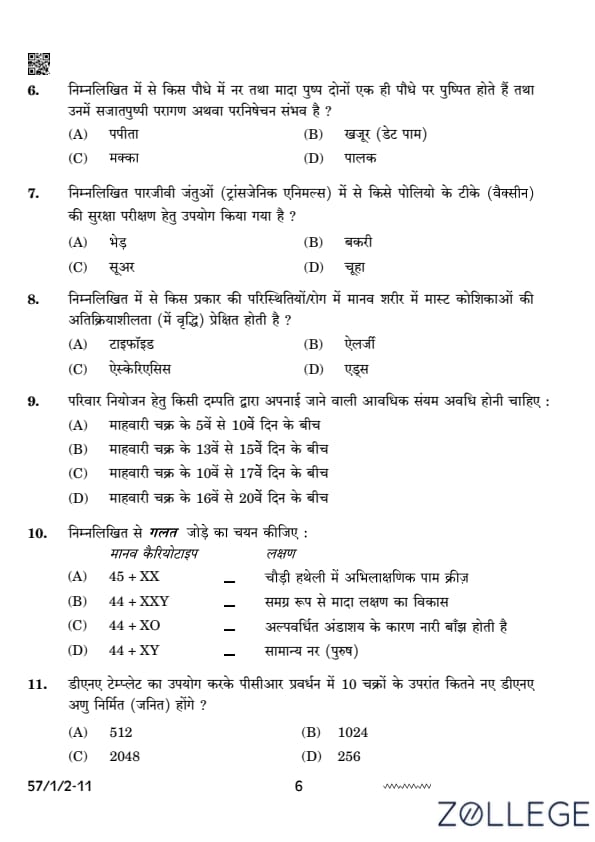
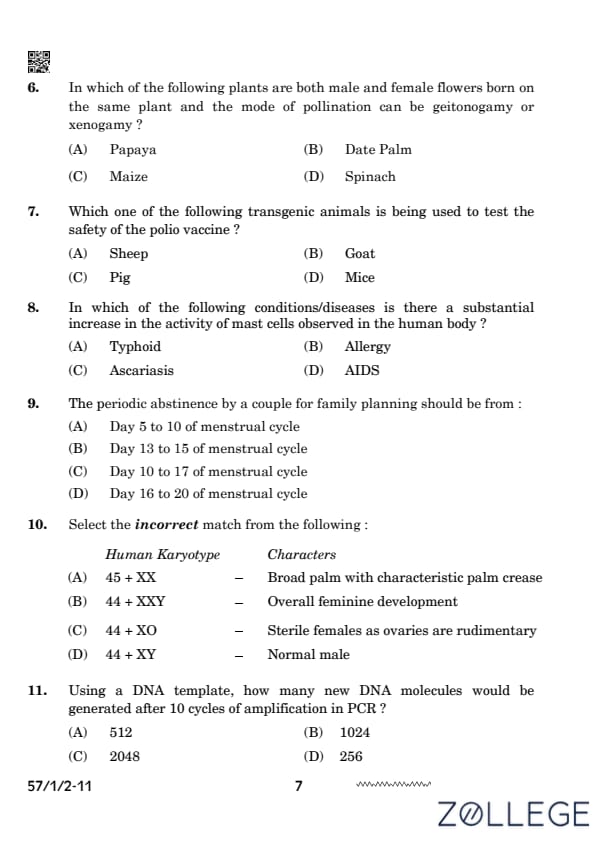
In which of the following plants are both male and female flowers born on the same plant and the mode of pollination can be geitonogamy or xenogamy?
View Solution
Maize is a monoecious plant, meaning it has both male and female flowers on the same plant.
Geitonogamy occurs when pollination takes place between flowers on the same plant, while xenogamy happens between flowers from different plants.
Papaya and Date Palm are dioecious plants, meaning their male and female flowers are on separate plants. Spinach does not fit into this context. Quick Tip: Remember:
Monoecious plants have male and female flowers on the same plant.
Dioecious plants have male and female flowers on different plants.
Which one of the following transgenic animals is being used to test the safety of the polio vaccine?
View Solution
Transgenic mice are genetically modified to carry human genes that make them vulnerable to polio infection.
These mice are utilized to evaluate the safety and efficacy of the polio vaccine prior to human clinical trials. Quick Tip: Transgenic animals play a crucial role in research:
Mice: Used for vaccine testing and genetic studies.
Sheep and Goats: Engineered to produce therapeutic proteins.
In which of the following conditions/diseases is there a substantial increase in the activity of mast cells observed in the human body?
View Solution
Mast cells play a crucial role in allergic reactions by releasing histamines when exposed to allergens.
Histamines cause symptoms like inflammation, itching, and increased vascular permeability. Quick Tip: Key points:
Mast cells release histamine in allergic reactions.
Allergy: Caused by hypersensitivity to specific antigens.
The periodic abstinence by a couple for family planning should be from:
View Solution
Periodic abstinence involves avoiding intercourse during the fertile window.
In a 28-day cycle, ovulation usually occurs around day 14. The fertile window is days 10 to 17 when conception chances are high. Quick Tip: Remember:
Fertile window: Days 10–17 in a 28-day cycle.
Ovulation occurs around day 14.
Select the incorrect match from the following:
| Human Karyotype | Characters |
|---|---|
| 45 + XX | Broad palm with characteristic palm crease |
| 44 + XXY | Overall feminine development |
| 44 + XO | Sterile females as ovaries are rudimentary |
| 44 + XY | Normal male |
View Solution
The karyotype 45 + XX does not exist. The correct condition for a broad palm with characteristic palm crease is 47 + XXY (Klinefelter syndrome) or other related conditions. Quick Tip: Focus on karyotypes:
Turner Syndrome: 45 + XO.
Klinefelter Syndrome: 47 + XXY.
Using a DNA template, how many new DNA molecules would be generated after 10 cycles of amplification in PCR?
View Solution
In Polymerase Chain Reaction (PCR), the DNA amplification follows a process of exponential growth. In each cycle, the amount of DNA doubles. Therefore, after each cycle, the number of DNA molecules increases by a factor of 2.
If we start with one DNA molecule, the number of DNA molecules after \( n \) cycles of amplification can be calculated using the formula:
\[ Number of DNA molecules = 2^n \]
where \( n \) is the number of cycles.
Given that the question asks about 10 cycles:
\[ Number of DNA molecules after 10 cycles = 2^{10} = 1024 \]
Therefore, after 10 cycles of PCR amplification, the number of DNA molecules generated will be 1024.
Option (A): 512 is incorrect. It represents the number of DNA molecules after 9 cycles (\(2^9 = 512\)).
Option (B): 1024 is the correct answer. After 10 cycles, \( 2^{10} = 1024 \) DNA molecules are generated.
Option (C): 2048 is incorrect. It represents the number of DNA molecules after 11 cycles (\(2^{11} = 2048\)).
Option (D): 256 is incorrect. It represents the number of DNA molecules after 8 cycles (\(2^8 = 256\)). Quick Tip: In PCR, the number of DNA molecules increases exponentially, and after each cycle, the DNA count doubles. The formula \( 2^n \) gives the total number of DNA molecules after \( n \) cycles.
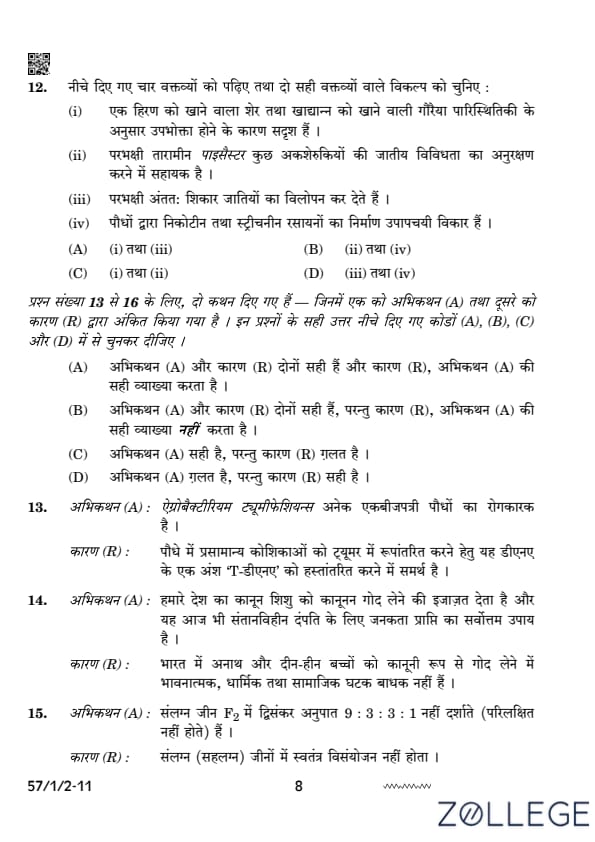
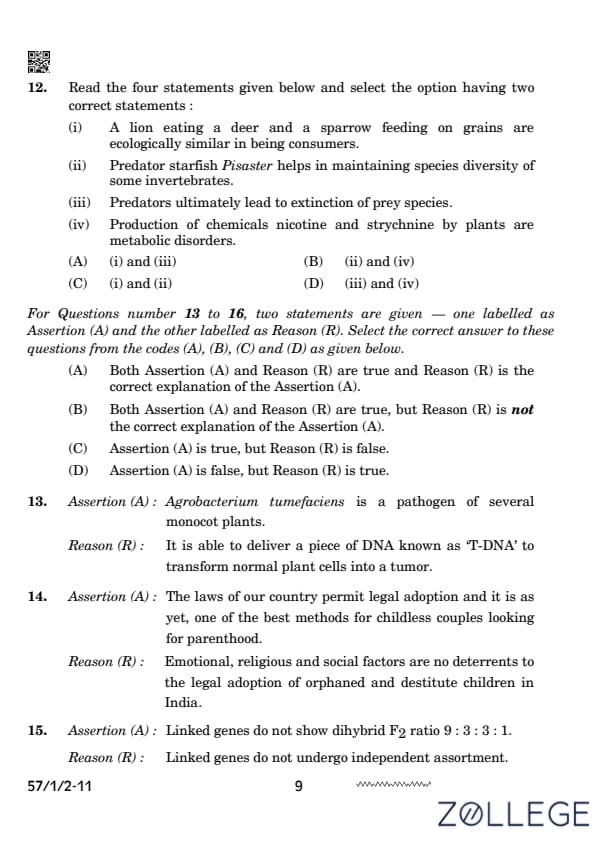
Read the four statements given below and select the option having two correct statements:
(A) A lion eating a deer and a sparrow feeding on grains are ecologically similar in being consumers.
(B) Predator starfish \textit{Pisaster helps in maintaining species diversity of some invertebrates.
(C) Predators ultimately lead to extinction of prey species.
(D) Production of chemicals nicotine and strychnine by plants are metabolic disorders.
View Solution
Statement (i) is correct because both the lion (a carnivore) and the sparrow (a herbivore) are consumers in the ecological food chain.
Statement (ii) is correct as the starfish \textit{Pisaster acts as a keystone predator, preventing the dominance of certain species and thus maintaining species diversity.
Statement (iii) is incorrect because predators usually regulate prey populations rather than leading to their extinction.
Statement (iv) is incorrect as the production of secondary metabolites like nicotine and strychnine in plants are defensive mechanisms, not metabolic disorders. Quick Tip: When answering ecological questions, consider: Consumers can include both herbivores and carnivores. Keystone species play a critical role in maintaining ecosystem balance. Predators regulate rather than eliminate prey populations. Secondary metabolites in plants serve protective functions.
Assertion (A): \textit{Agrobacterium tumefaciens is a pathogen of several monocot plants.
Reason (R): It is able to deliver a piece of DNA known as ‘T-DNA’ to transform normal plant cells into a tumor.
View Solution
Agrobacterium tumefaciens is primarily a pathogen of dicot plants, not monocots. However, the statement about T-DNA is correct, as this bacterium transfers T-DNA into plant cells, causing crown gall disease. Quick Tip: \textit{Agrobacterium tumefaciens is widely used in genetic engineering for dicot plants due to its natural ability to transfer genes.
Assertion (A): The laws of our country permit legal adoption and it is one of the best methods for childless couples looking for parenthood.
Reason (R): Emotional, religious, and social factors are deterrents to the legal adoption of orphaned and destitute children in India.
- Both Assertion (A) and Reason (R) are true and Reason (R) is the correct explanation of Assertion (A).
- Both Assertion (A) and Reason (R) are true, but Reason (R) is not the correct explanation of Assertion (A).
- Assertion (A) is true, but Reason (R) is false.
- Assertion (A) is false, but Reason (R) is true.
View Solution
Legal adoption is indeed permitted by Indian law and encouraged for childless couples. However, emotional and social factors are not absolute deterrents to adoption, as awareness and government initiatives have addressed these concerns. Quick Tip: Understanding the legal framework of adoption can help eliminate misconceptions regarding social and emotional barriers.
Assertion (A): Linked genes do not show dihybrid \( F_2 \) ratio 9:3:3:1.
Reason (R): Linked genes do not undergo independent assortment.
- Both Assertion (A) and Reason (R) are true and Reason (R) is the correct explanation of Assertion (A).
- Both Assertion (A) and Reason (R) are true, but Reason (R) is not the correct explanation of Assertion (A).
- Assertion (A) is true, but Reason (R) is false.
- Assertion (A) is false, but Reason (R) is true.
View Solution
Linked genes are present on the same chromosome and tend to be inherited together. As a result, they do not assort independently according to Mendel’s law of independent assortment, and thus, the expected dihybrid ratio of 9:3:3:1 is not observed. Quick Tip: Remember, genes located close to each other on the same chromosome tend to be inherited together, leading to deviations from expected Mendelian ratios.
Assertion (A): Functional ADA cDNA genes must be inserted in the lymphocytes at the early embryonic stage in gene therapy for ADA deficiency.
Reason (R): Cells in the embryonic stage are immortal, differentiated, and easy to manipulate.
View Solution
Adenosine deaminase (ADA) deficiency is treated by introducing functional ADA genes into the lymphocytes of the patient. However, this does not necessarily have to be done at the early embryonic stage; it can also be done later.
The statement that embryonic cells are immortal, differentiated, and easy to manipulate is incorrect. Embryonic cells are actually undifferentiated and have the potential to develop into various cell types, but they are not necessarily easy to manipulate. Quick Tip: Gene therapy for ADA deficiency typically involves introducing the gene into lymphocytes or bone marrow cells, not necessarily at the embryonic stage.
Do you think apomixis can be compared to asexual reproduction? Justify your answer. State the benefits of apomixis to the farmers.
View Solution
Apomixis can be compared to asexual reproduction because it leads to the formation of offspring without fertilization. In apomixis, seeds are produced without the fusion of gametes, resulting in progeny that are genetically identical to the parent plant.
Benefits of apomixis to farmers:
Ensures the production of hybrid seeds without segregation of traits.
Reduces the cost of hybrid seed production.
Provides disease-resistant and high-yielding crops. Quick Tip: Apomixis helps in maintaining hybrid vigor for successive generations, benefiting farmers economically and ensuring uniform crop traits.
Question 18(a):
A farmer while working on his farm was bitten by a poisonous snake. He was rushed to a nearby health centre where the doctor gave him an injection to save his life.
1. What did the doctor inject and why?
2. Name the kind of immunity provided by this injection.
View Solution
Solution:
1. The doctor injected antivenom to neutralize the snake venom and prevent its harmful effects.
2. The immunity provided is passive immunity, as pre-formed antibodies are administered.
Question 18(b):
Why do organic farmers not recommend complete eradication of insect pests? Explain giving reason.
View Solution
Solution: Organic farmers do not recommend complete eradication of insect pests because:
• Insects play a vital role in maintaining ecological balance.
• Some insects act as natural predators and control pest populations naturally.
• Eradication can disrupt the food chain and lead to the emergence of more resistant pest species.
Observe the picture given below. Name the naturalist and write the explanation given by him that evolution of life forms had occurred on the basis of this example.

View Solution
The naturalist who provided the explanation for this example is Jean-Baptiste Lamarck.
According to Lamarck's theory of evolution, the long necks of giraffes evolved over generations due to the following explanation:
Giraffes originally had shorter necks and fed on lower vegetation.
Due to competition and environmental changes, they stretched their necks to reach higher leaves.
This continuous use of neck muscles led to gradual elongation over generations.
The acquired trait of a longer neck was passed on to the offspring.
This idea is known as the Theory of Inheritance of Acquired Characteristics. Quick Tip: Lamarck's theory suggested that characteristics acquired during an organism's lifetime could be inherited, but modern genetics has shown that traits are passed through genes, not by use or disuse.
Write the basic steps followed in the Assisted Reproductive Technologies (ART) programme to help childless couples. Why is it also known as the test tube baby programme?
View Solution
The basic steps followed in the Assisted Reproductive Technologies (ART) programme are:
Step 1: Hormonal stimulation is provided to the female to induce the production of multiple ova.
Step 2: The eggs (ova) are retrieved from the ovaries and fertilized with sperm in a laboratory setting.
Step 3: The fertilized egg (zygote) undergoes early embryonic development in vitro (outside the body).
Step 4: The resulting embryo is then implanted into the uterus for further development.
It is known as the test tube baby programme because fertilization and early embryonic development occur outside the female body in a laboratory setting, commonly in a petri dish or test tube. Quick Tip: Assisted Reproductive Technology (ART) techniques like IVF help couples conceive by fertilizing the egg outside the body, and successful embryos are transferred back into the uterus.
Question 21:
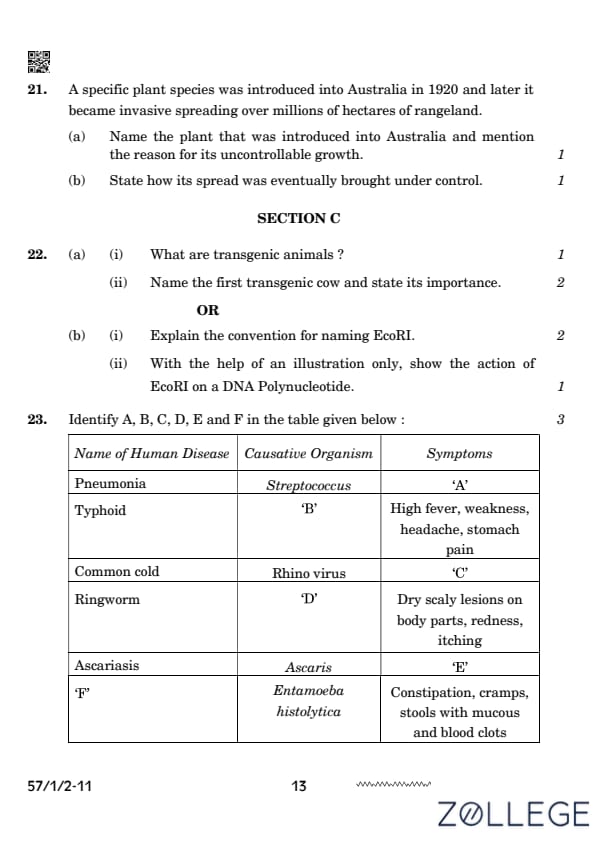
A specific plant species was introduced into Australia in 1920 and later it became invasive, spreading over millions of hectares of rangeland.
(a) Name the plant that was introduced into Australia and mention the reason for its uncontrollable growth.
(b) State how its spread was eventually brought under control.
View Solution
Solution:
(a) The plant introduced into Australia was Opuntia (commonly known as Prickly Pear Cactus). Its uncontrollable growth was due to the absence of natural predators or pathogens in the Australian ecosystem, leading to its rapid and unchecked spread.
(b) The spread of Opuntia was eventually controlled by introducing a biological control agent, the Cactoblastis cactorum moth, whose larvae feed on the cactus and significantly reduced its population.
(i) What are transgenic animals?
View Solution
Transgenic animals are those that have had foreign genes deliberately inserted
into their genome. These genes are introduced to study gene functions, improve livestock
traits, or produce biologically important substances.
(ii) Name the first transgenic cow and state its importance.
View Solution
The first transgenic cow is Rosie.
Importance: Rosie produced milk enriched with the human protein alpha-lactalbumin, making it nutritionally more balanced for infants. Quick Tip: Remember: - Transgenic animals = Genetic modification for improved traits or study. - Rosie = First transgenic cow producing enriched milk.
(i) Explain the convention for naming EcoRI.
View Solution
EcoRI: 1. ”E” = Genus (Escherichia).
2. ”co” = Species (coli).
3. ”R” = Strain (RY13).
4. ”I” = First identified enzyme from this strain.
(ii) With the help of an illustration only, show the action of EcoRI on a DNA polynucleotide.
View Solution

\[ 5'-GAATTC-3' \quad (Cleavage Site) \]
EcoRI cuts between G/AATTC, resulting in sticky ends. Quick Tip: Learn enzyme conventions: - Genus + Species + Strain + Number (e.g., EcoRI = Escherichia coli RY13, 1st enzyme). - Remember: EcoRI creates sticky ends.
Identify A, B, C, D, E, and F in the table given below:

View Solution
Pneumonia symptoms: \( A \) include breathing difficulty, cough, and chest pain.
Typhoid causative organism: \( B \) is \textit{Salmonella typhi.
Common cold symptoms: \( C \) include nasal congestion, sore throat, and cough.
Ringworm causative organism: \( D \) is \textit{Trichophyton.
Ascariasis symptoms: \( E \) include internal bleeding, muscular pain, and anemia.
\( F \): Disease caused by \textit{Entamoeba histolytica is Amoebiasis.
Quick Tip: For disease tables:
Learn causative agents and symptoms.
Focus on common examples like typhoid, pneumonia, and ringworm.
Explain the mode of action of contraceptive pills taken by human females. Mention the schedule to be followed for an effective outcome.
View Solution
Mode of Action
1. Contraceptive pills contain synthetic hormones (estrogen and progesterone) that prevent ovulation by inhibiting the secretion of FSH and LH from the pituitary gland.
2. They thicken cervical mucus, making it difficult for sperm to enter the uterus.
3. They alter the endometrial lining, preventing implantation of a fertilized egg.
Schedule for Effective Outcome:
Pills should be taken daily for 21 days starting from the 5th day of the menstrual cycle, followed by a 7-day gap during which withdrawal bleeding occurs.
Quick Tip: Key to effectiveness: - Start pills on the 5th day of the cycle. - Maintain daily intake for 21 days without missing a dose.
Name and write two characteristics of the type of DNA that forms the basis of DNA fingerprinting technique.
View Solution
Type of DNA: Short Tandem Repeats (STRs) or Variable Number Tandem Repeats (VNTRs).
Characteristics:
1. They are non-coding, repetitive sequences of DNA.
2. They show high polymorphism, making them unique to each individual (except identical twins).
Quick Tip: Focus on VNTRs:
Found in non-coding regions.
Highly variable among individuals, forming the basis for unique identification.
Mention any two applications of this technique.
View Solution
1. Forensic Science: Used for identification in criminal investigations.
2. Paternity Testing: Determines biological relationships.
Quick Tip: DNA fingerprinting:
Solve crimes (forensics).
Establish paternity or ancestry.
Question 26(a):
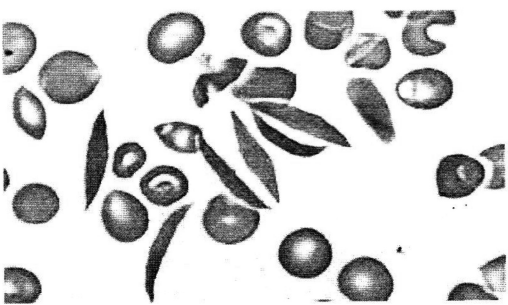
Name the disease the blood smear is indicative of. Write the symptoms of the disease and its cause.
View Solution
Solution: The blood smear is indicative of Sickle Cell Anemia. It is caused by a mutation in the gene that codes for the beta chain of hemoglobin, leading to the production of abnormal hemoglobin S (HbS).
Symptoms:
• Severe anemia and fatigue
• Pain episodes (sickle cell crisis)
• Swelling in hands and feet
• Frequent infections
• Delayed growth and vision problems
Question 26(b):
Explain the inheritance pattern of the disease with the help of a suitable cross.
View Solution
Solution: Sickle cell anemia follows an autosomal recessive inheritance pattern. Individuals with one defective allele (HbA/HbS) are carriers, while those with two defective alleles (HbS/HbS) suffer from the disease.
Genetic cross:
Parent 1 (Carrier): HbA/HbS X Parent 2 (Carrier): HbA/HbS
Gametes: HbA, HbS and HbA, HbS
Offspring: HbA/HbA (Normal), HbA/HbS (Carrier), HbS/HbS (Affected)
The ratio of offspring will be:
• 25% Normal (HbA/HbA)
• 50% Carriers (HbA/HbS)
• 25% Affected (HbS/HbS)
Explain the significance of the experiment carried out by S.L. Miller. Name the scientists whose hypothesis prompted him to carry out this experiment.
View Solution
Significance of Miller’s Experiment:
Demonstrated that organic molecules like amino acids could be synthesized abiotically under conditions resembling early Earth's atmosphere.
Supported the theory that life originated from simple organic compounds.
Scientists: The experiment was based on the hypothesis of Alexander Oparin and J.B.S. Haldane. Quick Tip: Remember: - Miller simulated early Earth conditions. - Key outcome: Abiotic synthesis of amino acids.
How does meteorite analysis favour this hypothesis?
View Solution
Meteorite analysis revealed the presence of simple organic compounds, such as amino acids, on extraterrestrial objects. This suggests that organic molecules can form naturally, supporting the idea of abiotic synthesis. Quick Tip: Meteorite evidence:
Presence of amino acids supports the theory of abiotic synthesis and the origin of life from organic molecules.
Question 28(a):
State what is primary productivity and mention its units.
View Solution
Solution: Primary productivity refers to the rate at which organic matter is produced by plants (producers) through photosynthesis in an ecosystem. It is expressed in terms of energy or biomass.
Units: Primary productivity is measured in kcal/m²/year (energy) or g/m²/year (biomass).
Question 28(b):
Some ecologists observed that primary productivity of a place in Rajasthan was low as compared to a particular place in Kerala. Explain why.
View Solution
Solution: The primary productivity in Rajasthan is lower than in Kerala due to differences in climatic and environmental conditions:
• Rajasthan: Being a desert region, it has limited water availability, high temperatures, and low vegetation cover, all of which reduce primary productivity.
• Kerala: It has a tropical climate with abundant rainfall, fertile soil, and dense vegetation, which enhance primary productivity.
SECTION D
Question 29:
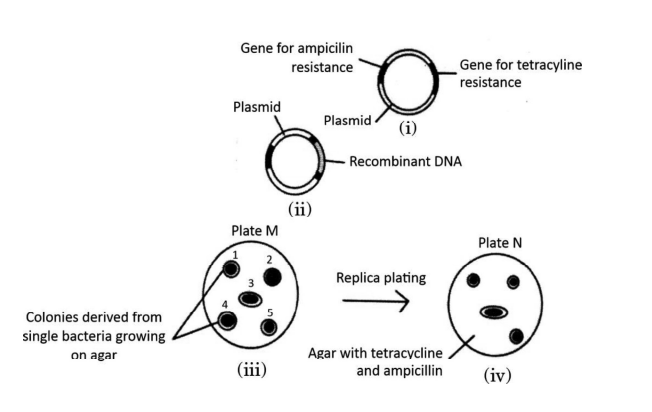
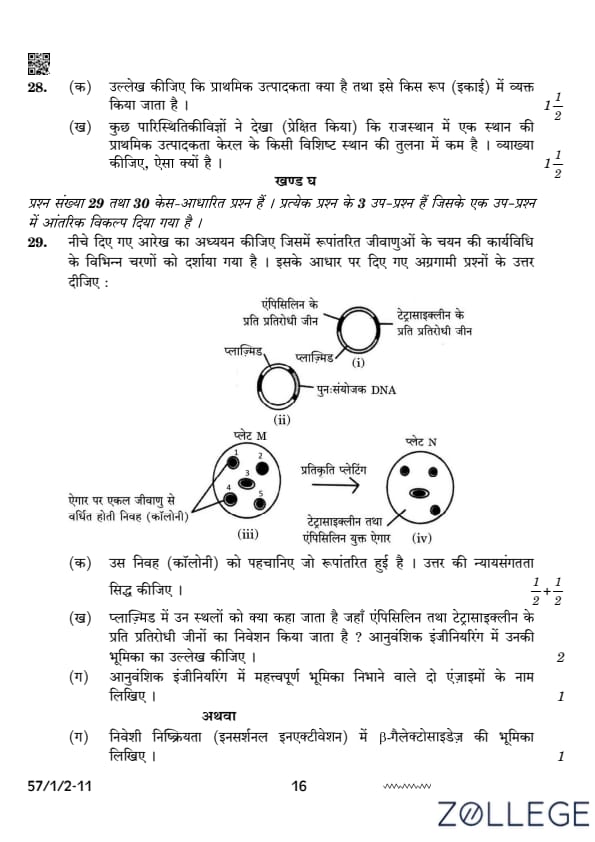
Study the diagram given below that shows the steps involved in the procedure of selecting transformed bacteria and answer the questions that follow:
(a) Identify the colony that has got transformed. Justify your answer.
(b) What are the sites in a plasmid called where ampicillin and tetracycline resistance genes are inserted? State their role in genetic engineering.
(c) Name two enzymes playing an important role in genetic engineering.
OR
(c) State the role of β-galactosidase in insertional inactivation.
View Solution
Solution:
(a) The transformed colony is the one that grows on Plate M (with ampicillin) but does not grow on Plate N (with both ampicillin and tetracycline). Justification: The recombinant DNA disrupts the tetracycline resistance gene, making the bacteria sensitive to tetracycline, but retains ampicillin resistance, allowing growth on Plate M.
(b) The sites are called selectable marker sites. Role: These genes help in identifying and selecting transformed cells: Ampicillin resistance gene ensures growth on ampicillin-containing media. Tetracycline resistance gene helps distinguish recombinant bacteria (tetracycline-sensitive) from non-recombinant ones.
(c) 1. Restriction endonucleases: Cut DNA at specific sequences. 2. DNA ligase: Joins DNA fragments to form recombinant DNA.
OR
(c) Insertional inactivation of the β-galactosidase gene prevents the production of the enzyme, resulting in white colonies (instead of blue) on media with X-gal. This helps identify recombinant bacteria.
Question 30:
Read the following passage and answer the questions that follow.
Isn't it incredible that India's land area is only 2.4 percent of the world's total land area whereas its share of the global species diversity is an impressive 8-1 percent! However, in these estimates of species, prokaryotes do not figure anywhere.
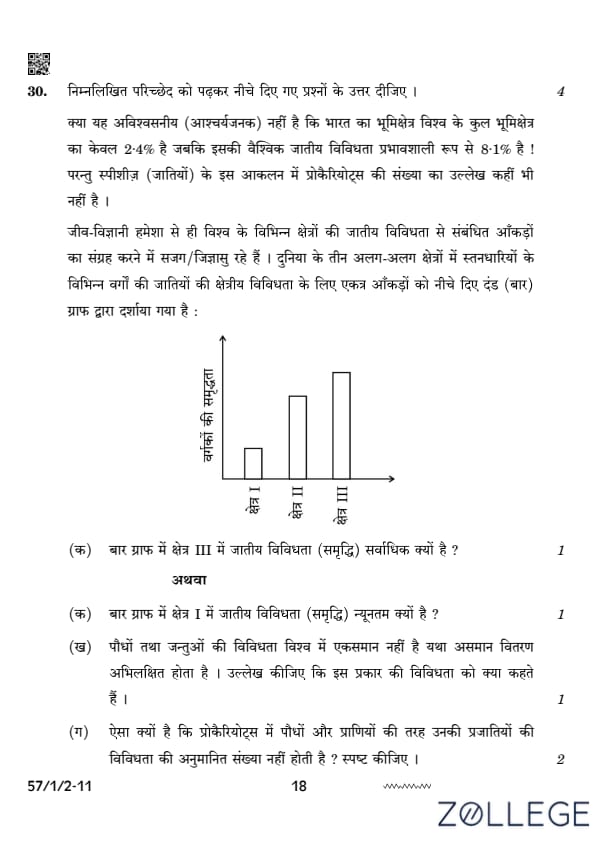
Biologists are always keen on collecting data with respect to species diversity observed in different regions of the world. The data collected based on the survey conducted for species richness of groups of mammals in three different regions of the world is shown in the bar graph below.
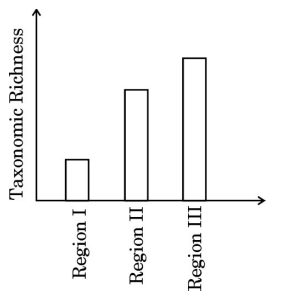
(a) Why is the species richness maximum in Region III in the bar graph?
(b) Why is the species richness minimum in Region I in the bar graph?
(c) Plants and animals do not have uniform diversity in the world but show rather uneven distribution. Mention what this kind of diversity is referred to as.
(d) Why is it that prokaryotes do not have an estimated number of their species diversity as seen in plants and animals? Explain.
View Solution
Solution:
(a) Region III has maximum species richness due to:
1. Favourable climatic conditions such as tropical climate with high rainfall and temperature.
2. High resource availability and ecological niches supporting a large number of species.
(b) Region I has minimum species richness because:
1. It likely represents a cold or arid climate, which is less suitable for supporting diverse life forms.
2. Limited resource availability and harsh environmental conditions restrict the number of species.
(c) This uneven distribution of species diversity is referred to as Beta Diversity. It reflects the variation in species composition between different ecosystems or regions.
(d) 1. Prokaryotes lack morphological diversity, making species identification challenging.
2. Many prokaryotic species cannot be cultured in laboratories, limiting data collection.
3. Molecular techniques like DNA sequencing are required to identify them, which is time-consuming and resource-intensive.
SECTION E
Question 31(a)(i):
Name and explain the property present in normal cells but lost in cancer cells.
View Solution
Solution: The property present in normal cells but lost in cancer cells is contact inhibition.
Contact inhibition refers to the process where normal cells stop dividing when they come into contact with neighboring cells. This mechanism ensures that cells grow in an organized manner and maintain proper tissue structure. It prevents overgrowth and helps to regulate tissue size. In cancer cells, this property is lost, and they continue to divide uncontrollably, even when they come into contact with other cells. This uncontrolled division results in tumor formation and cancer progression.
Question 31(a)(ii):
All normal human cells have genes that may become cancerous under certain conditions. Name them and explain how.
View Solution
Solution: The genes that may become cancerous under certain conditions are oncogenes and tumor suppressor genes.
1. Oncogenes: Oncogenes are mutated forms of normal genes called proto-oncogenes. Proto-oncogenes normally promote cell growth and division. However, when mutated or overexpressed, they become oncogenes, leading to uncontrolled cell division and potentially causing cancer. Example: The Ras gene, when mutated, continuously signals the cell to divide, even when not needed, leading to uncontrolled cell proliferation.
2. Tumor Suppressor Genes: Tumor suppressor genes are responsible for inhibiting cell growth and promoting the repair of damaged DNA or apoptosis (programmed cell death). If these genes are mutated or inactivated, cells can bypass growth control mechanisms and continue to divide. Example: The p53 gene is a critical tumor suppressor gene. When it is mutated, it fails to prevent the division of cells with damaged DNA, which can lead to cancer development.
Question 31(a)(iii):
State the role of the following techniques in the detection and diagnosis of cancer:
1. Biopsy and Histopathology
2. Magnetic Resonance Imaging (MRI)
View Solution
Solution:
1.Biopsy and Histopathology:
A biopsy involves removing a small sample of tissue from a suspected tumor or abnormal growth. The tissue is then examined under a microscope through histopathology. The role of biopsy and histopathology is essential for diagnosing cancer. They help identify the presence of cancerous cells, determine the type of cancer, and assess its stage and grade. This also provides critical information on the malignancy of the tumor and helps plan appropriate treatment options.
2.Magnetic Resonance Imaging (MRI):
MRI is a non-invasive imaging technique that uses magnetic fields and radio waves to produce detailed images of the inside of the body. It is especially useful in detecting soft tissue abnormalities such as brain, spinal cord, and breast cancers. The role of MRI in cancer diagnosis includes identifying and locating tumors, determining their size, and assessing whether cancer has spread to other parts of the body (metastasis). It is also used to monitor treatment progress and plan surgeries or radiation therapy.
Question 31(b):
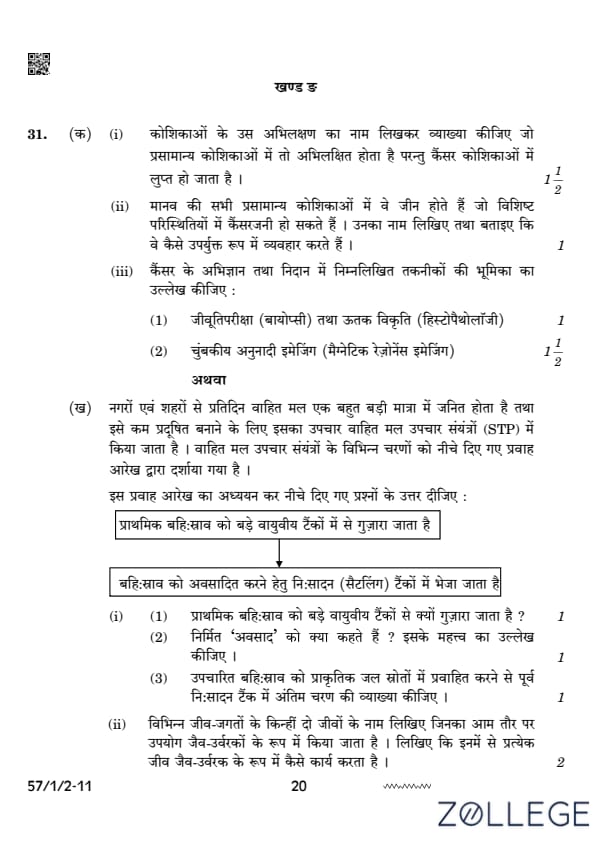
Large quantities of sewage are generated every day in cities as well as in towns and are treated in Sewage Treatment Plants (STPs) to make them less polluting. Given below is the flow diagram of stages of STP.
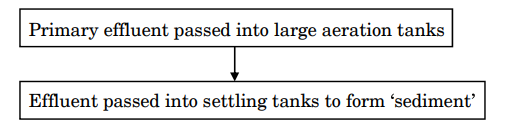
Study the flow diagram and answer the questions that follow:
(i) 1. Why is primary effluent passed into large aeration tanks?
2. What is the ‘sediment’ formed referred to? Mention its significance.
3. Explain the final step in the settling tank before the treated effluent is released into water bodies.
(ii) Name any two organisms commonly used as biofertilizers, belonging to different kingdoms. Write how each one acts as a biofertilizer.
View Solution
Solution:
(i) 1. Primary effluent is passed into large aeration tanks to increase the oxygen supply to the effluent. This helps in the growth of aerobic microorganisms that break down the organic matter in the sewage, converting it into simpler substances. The process of aeration encourages the growth of these microorganisms, which helps in reducing the biochemical oxygen demand (BOD) of the water, making it less polluting.
2. The sediment formed is called sludge. It consists of organic and inorganic matter that settles at the bottom of the settling tank. The significance of sludge is that it contains a high concentration of organic matter, which can be further processed to extract biogas or treated for use as fertilizer. Proper disposal of sludge is crucial for preventing environmental pollution.
3. The final step involves the treatment of the effluent in the settling tank, where the remaining suspended particles, including microorganisms, are allowed to settle down. This is followed by the removal of the clear water (supernatant), which is relatively free from pollutants. This treated water is then released into water bodies. Further treatment may be performed, depending on the quality of the effluent.
(ii) • Rhizobium (Kingdom: Bacteria): Rhizobium is a nitrogen-fixing bacterium that forms a symbiotic relationship with leguminous plants. It helps in fixing atmospheric nitrogen into a form that the plants can use for growth, thereby acting as a natural fertilizer.
• Azotobacter (Kingdom: Bacteria): Azotobacter is a free-living nitrogen-fixing bacterium found in soil. It helps in fixing nitrogen from the atmosphere and making it available to plants, improving soil fertility. Unlike Rhizobium, Azotobacter does not form symbiotic relationships with plants but independently fixes nitrogen.
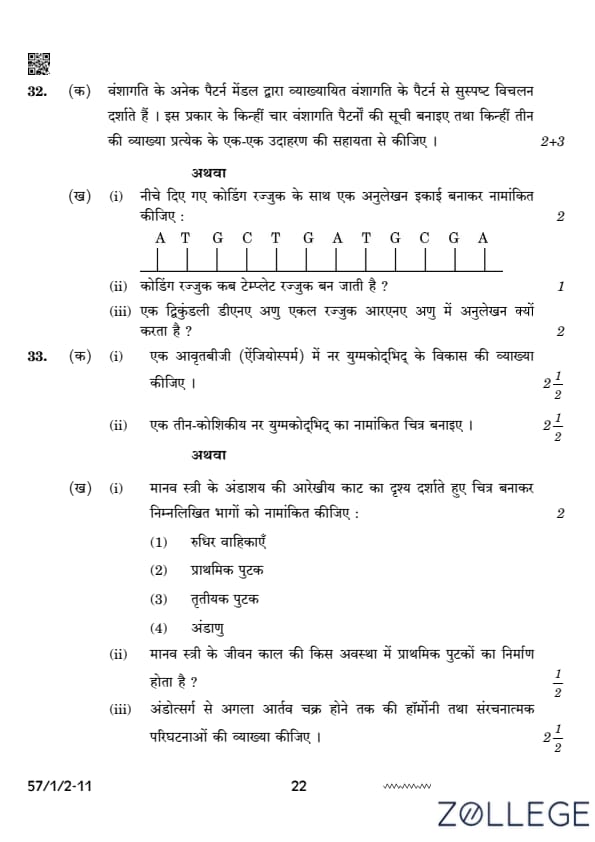
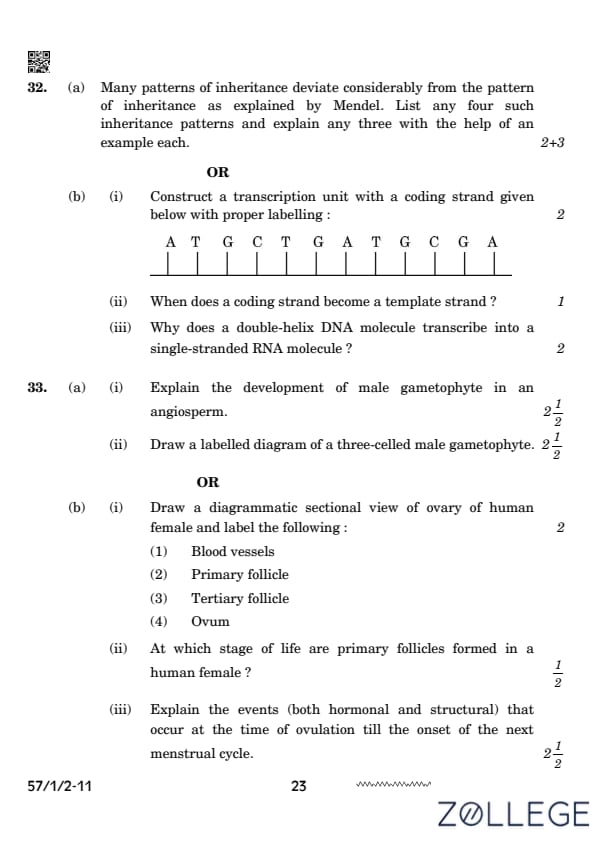
Many patterns of inheritance deviate considerably from the pattern of inheritance as explained by Mendel. List any four such inheritance patterns and explain any three with the help of an example each.
View Solution
Four patterns of inheritance that deviate from Mendelian genetics are:
Incomplete dominance: Neither allele is completely dominant, resulting in an intermediate phenotype. Example: In snapdragons, red (\(RR\)) and white (\(rr\)) flowers produce pink (\(Rr\)) flowers in the heterozygous condition.
Codominance: Both alleles are equally expressed in the heterozygous condition. Example: Blood group AB in humans, where both \(IA\) and \(IB\) alleles are expressed.
Multiple alleles: A gene has more than two alleles. Example: ABO blood group in humans, controlled by three alleles (\(IA, IB, i\)).
Polygenic inheritance: Traits are controlled by multiple genes. Example: Human skin color, which is determined by several gene pairs.
Explanation:
Incomplete dominance: The pink color in snapdragons arises as the red allele cannot completely mask the effect of the white allele.
Codominance: In blood group AB, both \(IA\) and \(IB\) alleles are expressed, showing traits of both A and B blood groups.
Multiple alleles: The ABO blood group system shows that more than two alleles can govern a trait, where \(IA\) and \(IB\) are codominant, and \(i\) is recessive. Quick Tip: Mendelian inheritance explains basic patterns, but deviations like incomplete dominance and codominance occur due to variations in allele interactions.
Construct a transcription unit with a coding strand given below with proper labelling:
View Solution
The transcription unit includes:
• Promoter: Located upstream of the transcription start site.
• Coding region: Contains the sequence to be transcribed.
• Terminator: Signals the end of transcription.

When does a coding strand become a template strand?
View Solution
The coding strand does not become the template strand. Instead, the
complementary strand (non-coding strand) acts as the template strand during transcription.
Why does a double-helix DNA molecule transcribe into a single-stranded RNA molecule?
View Solution
Transcription produces a single-stranded RNA because:
RNA polymerase synthesizes RNA complementary to only one strand (the template strand).
The resulting RNA strand does not pair with the DNA template, ensuring a single-stranded molecule for translation. Quick Tip: Transcription involves RNA polymerase reading only the template strand, leading to the formation of single-stranded RNA.
Explain the development of male gametophyte in an angiosperm.
View Solution
The formation of the male gametophyte in an angiosperm occurs through the following steps:
The male gametophyte is represented by the pollen grain, also known as the microspore.
Inside the pollen grain, the nucleus undergoes mitotic division to form two distinct cells:
A larger vegetative cell (also called the tube cell) that is responsible for guiding the growth of the pollen tube.
A smaller generative cell that divides mitotically to produce two male gametes.
Once the pollen grain reaches the three-celled stage, it is fully prepared for fertilization. Quick Tip: Key points in male gametophyte development:
Pollen grain = Male gametophyte.
Vegetative cell: Controls pollen tube growth.
Generative cell: Forms two male gametes.
Draw a labelled diagram of a three-celled male gametophyte.
View Solution
The diagram should include the following components:
The vegetative cell (tube cell) along with its nucleus.
Two male gametes produced by the generative cell.
The outer structure of the pollen grain.
 Quick Tip: The male gametophyte develops inside the pollen grain and matures into a three-celled structure consisting of one vegetative cell and two male gametes.
Draw a diagrammatic sectional view of the ovary of a human female and label the following:
1. Blood vessels
2. Primary follicle
3. Tertiary follicle
4. Ovum
View Solution
The diagram should depict the following elements:
The outer ovarian wall.
Several follicles in various stages of development, such as primary and tertiary follicles.
The ovum located within the mature Graafian follicle.
Blood vessels that supply the ovary.
 Quick Tip: When illustrating the ovary, remember to include follicles at different stages and show the mature Graafian follicle containing the ovum.
At which stage of life are primary follicles formed in a human female?
View Solution
Primary follicles are formed during the fetal stage in the ovary of a developing female fetus. Quick Tip: Primary follicles are the earliest stage of follicular development and are formed during fetal development. After birth, they remain dormant until puberty.
Explain the events (both hormonal and structural) that occur at the time of ovulation till the onset of the next menstrual cycle.
View Solution
The events include:
Ovulation:
Triggered by a surge in luteinizing hormone (LH) around the 14th day of the menstrual cycle.
The mature Graafian follicle ruptures, releasing the ovum.
Post-ovulation:
The ruptured follicle transforms into the corpus luteum, secreting progesterone.
Progesterone maintains the uterine lining for potential implantation.
If fertilization does not occur:
The corpus luteum degenerates, leading to a drop in progesterone levels.
The uterine lining is shed, resulting in menstruation. Quick Tip: The menstrual cycle is regulated by hormonal interplay (FSH, LH, estrogen, and progesterone). Ovulation marks the midpoint of the cycle, driven by an LH surge.








*The article might have information for the previous academic years, please refer the official website of the exam.