
CBSE Class 12 Biology set 2 Question Paper Pdf - Check Solutions with Answer Key Pdf

.jpg?tr=h-55,w-55,c-force)
Content Strategist|Tech-innovator|National Hackathon Winner | Updated On - Jan 25, 2025
CBSE Class 12 2024 Biology Set 2 Question Paper (Paper Code: 57/5/2) is available for download. The exam was successfully conducted by CBSE on March 19 in the morning session from 10:30 AM to 1:30 PM. As per the student’s initial reactions, the CBSE Class 12 2024 Biology Set 2 Question Paper was reported as Moderate. The Ecology section was reported as Easy to Moderate, the Genetics and Evolution section as Challenging, and the Human Physiology section as Moderate.
CBSE Class 12 2024 Biology Set 2 57/5/2 Question Paper with Answer Key PDF
Candidates can download the CBSE Class 12 Biology Question Paper with Solution and Answer Key PDFs for Set 2 Question Paper (Code: 57/5/2) using the link below.
| CBSE Class 12 2024 Biology Question Paper with Answer Key |  Download Download |
Check Solution |
CBSE Class 12 2024 Biology Questions with Solutions
SECTION - A
Question 1:
If the sequence of nitrogen bases of the coding strand in a transcription unit is 5’–ATGAATG–3’, the sequence of bases in its RNA transcript would be:
(A) 5’–AUGAAUG–3’
(B) 5’–UACUUAC–3’
(C) 5’–CAUUCAU–3’
(D) 5’–GUAAUGA–3’
View Solution
- In transcription, the sequence of the coding strand determines the mRNA sequence. Uracil (U) replaces thymine (T).
- Given coding strand: 5’–ATGAATG–3’
- mRNA transcript: 5’–AUGAAUG–3’
Question 2:
How many base pairs will be there in 20 nucleosomes in a DNA double helix?
(A) 4000
(B) 40
(C) 20
(D) 2000
View Solution
- Each nucleosome contains approximately 200 base pairs of DNA.
- For 20 nucleosomes: 20 × 200 = 4000 base pairs.
Question 3:
A person with trisomy of the 21st chromosome shows:
(i) Furrowed tongue
(ii) Characteristic palm crease
(iii) Rudimentary ovaries
(iv) Gynaecomastia
(A) (ii) and (iv)
(B) (i), (ii), and (iv)
(C) (ii) and (iii)
(D) (i) and (ii)
View Solution
- Trisomy of chromosome 21 causes Down syndrome.
- Common features include furrowed tongue (i) and characteristic palm crease (ii).
- Other physical and developmental traits may vary among individuals.
Question 4:
Single step large mutation leading to speciation is also called:
(A) Founder effect
(B) Saltation
(C) Branching descent
(D) Natural selection
View Solution
- Saltation refers to a sudden, large-scale mutation causing significant evolutionary changes.
- It leads to speciation, bypassing the gradual evolutionary process.
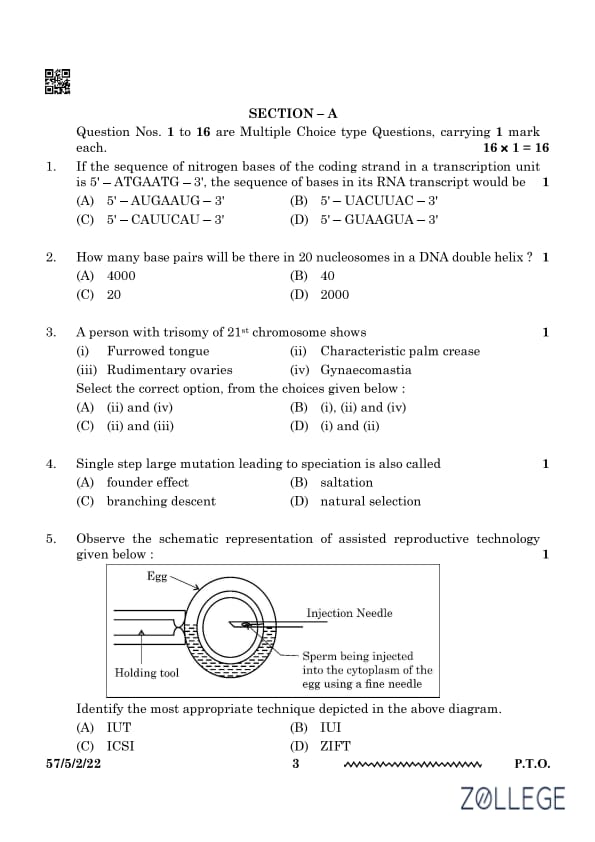
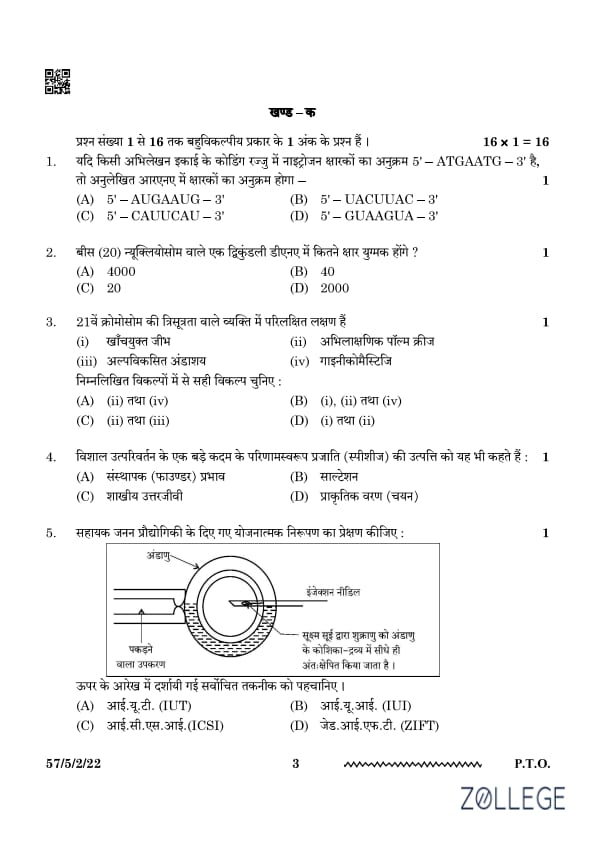
Question 5:
Identify the most appropriate technique depicted in the above diagram:

(A) IUT
(B) IUI
(C) ICSI
(D) ZIFT
View Solution
- The diagram shows Intracytoplasmic Sperm Injection (ICSI).
- A single sperm is injected into the egg’s cytoplasm using a fine needle.
- This technique is used in cases of male infertility or low sperm motility.
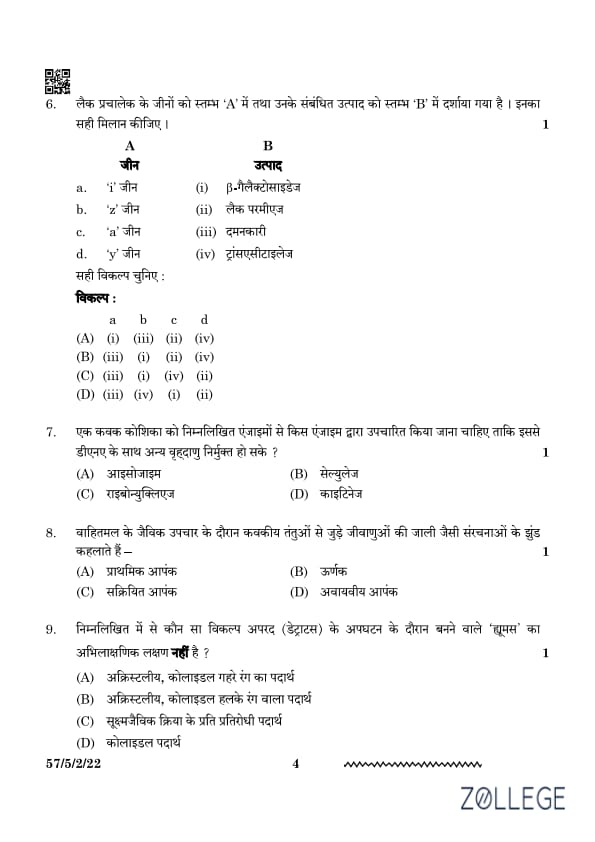
Question 6:
Match the following genes of the lac operon listed in column ‘A’ with their respective products listed in column ‘B’:
| A: Gene | B: Products |
|---|---|
| a. ‘i’ gene | (i) β-galactosidase |
| b. ‘z’ gene | (ii) lac permease |
| c. ‘a’ gene | (iii) Repressor |
| d. ‘y’ gene | (iv) Transacetylase |
(A) (i), (iii), (ii), (iv)
(B) (iii), (i), (ii), (iv)
(C) (iii), (i), (iv), (ii)
(D) (iii), (iv), (i), (ii)
View Solution
- ‘i’ gene: Produces the repressor protein (iii).
- ‘z’ gene: Produces β-galactosidase (i), which breaks down lactose.
- ‘a’ gene: Produces transacetylase (iv).
- ‘y’ gene: Produces lac permease (ii), which facilitates lactose entry into the cell.
Question 7:
Which one of the following enzymes should be used to release DNA along with other macromolecules from a fungal cell?
(A) Isozymes
(B) Cellulase
(C) Ribonuclease
(D) Chitinase
View Solution
- Fungal cells have a cell wall composed of chitin.
- Chitinase is an enzyme that breaks down chitin, enabling the release of DNA and other macromolecules.
Question 8:
During biological treatment of sewage, the masses of bacteria held together by fungal filaments to form mesh-like structures are called:
(A) Primary sludge
(B) Flocs
(C) Activated sludge
(D) Anaerobic sludge
View Solution
- Flocs are aggregates of bacteria and fungal filaments formed during the secondary treatment of sewage.
- They play a crucial role in breaking down organic matter, thereby reducing the Biochemical Oxygen Demand (BOD) in wastewater.
Question 9:
Which one of the following is not a characteristic feature of “humus” that is formed during decomposition of detritus?
(A) Amorphous, colloidal, dark-coloured substance
(B) Amorphous, colloidal, light-coloured substance
(C) High resistance to microbial action
(D) Colloidal substance
View Solution
- Humus is an amorphous, colloidal, and dark-coloured substance formed during the final stages of detritus decomposition.
- It has high resistance to microbial action and plays a significant role in soil fertility by improving its water and nutrient retention capacity.
- Light-coloured humus is not a characteristic feature.
Question 10:
Interferons are proteins secreted by:
(A) RBC
(B) WBC
(C) Bacteria-infected cell
(D) Virus-infected cell
View Solution
- Interferons are proteins produced by virus-infected cells as part of the innate immune response.
- They inhibit viral replication and activate immune cells such as macrophages and natural killer cells.
- Interferons also signal neighboring cells to enhance their antiviral defense mechanisms.
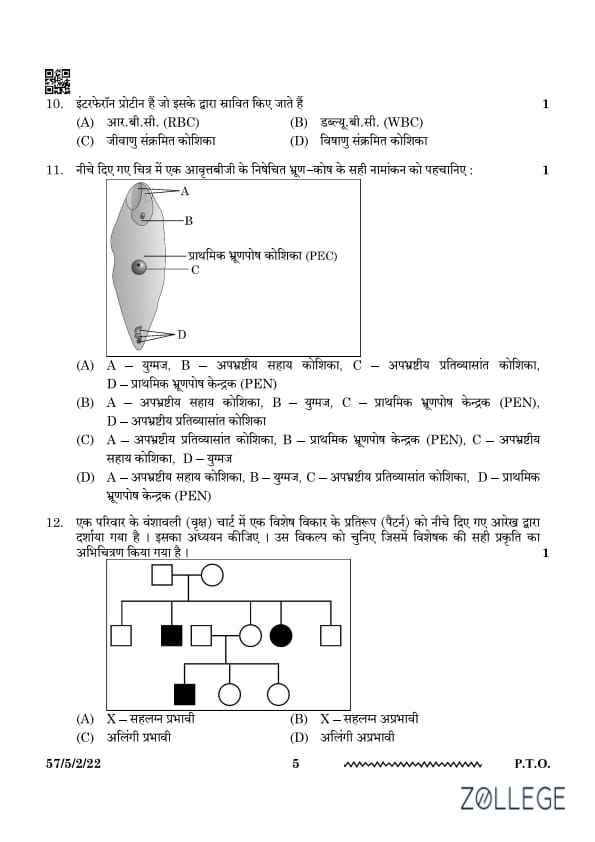
Question 11:
Identify the correct labellings in the figure of a fertilised embryo sac of an angiosperm given below:

(A) A – zygote, B – degenerating synergids, C – degenerating antipodals, D – PEN
(B) A – degenerating synergids, B – zygote, C – PEN, D – degenerating antipodals
(C) A – degenerating antipodals, B – PEN, C – degenerating synergids, D – zygote
(D) A – degenerating synergids, B – zygote, C – degenerating antipodals, D – PEN
View Solution
- In the fertilised embryo sac:
- A represents degenerating synergids, which are no longer needed post-fertilization.
- B is the zygote, formed by the fusion of male and female gametes.
- C is the Primary Endosperm Nucleus (PEN), which divides to form the endosperm, a nutritive tissue.
- D shows degenerating antipodal cells that have no role after fertilization.
Question 12:
Study the pedigree chart of a family showing the inheritance pattern of a certain disorder. Select the option that correctly identifies the nature of the trait depicted in the pedigree chart:

(A) Dominant X-linked
(B) Recessive X-linked
(C) Autosomal dominant
(D) Autosomal recessive
View Solution
- The disorder is autosomal recessive based on:
- The trait skips generations, as unaffected parents can pass the recessive allele to offspring.
- Both males and females are equally affected, indicating autosomal inheritance.
- The condition appears only in individuals inheriting two recessive alleles, one from each parent.
Question 13:
Assertion (A): Communities that comprise more species tend to be more stable.
Reason (R): A higher number of species results in less year-to-year variation in total biomass.
(A) Both (A) and (R) are true and (R) is the correct explanation of (A).
(B) Both (A) and (R) are true, but (R) is not the correct explanation of (A).
(C) (A) is true, but (R) is false.
(D) (A) is false, but (R) is true.
View Solution
- Communities with higher species diversity are more stable due to greater ecological balance and resource utilization efficiency.
- Reason (R) explains Assertion (A) as higher diversity reduces biomass variation, providing stability against environmental changes.
Question 14:
Assertion (A): The sugar-phosphate backbone of two chains in DNA double helix shows anti-parallel polarity.
Reason (R): The phosphor-diester bonds in one strand go from a 3’ carbon of one nucleotide to a 5’ carbon of an adjacent nucleotide, whereas those in the complementary strand go vice versa.
(A) Both (A) and (R) are true and (R) is the correct explanation of (A).
(B) Both (A) and (R) are true, but (R) is not the correct explanation of (A).
(C) (A) is true, but (R) is false.
(D) (A) is false, but (R) is true.
View Solution
- DNA strands are anti-parallel, meaning one strand runs in a 5’ to 3’ direction while the complementary strand runs in a 3’ to 5’ direction.
- Reason (R) explains this anti-parallel arrangement, as the phosphor-diester bonds in the strands have opposite orientations.
Question 15:
Assertion (A): In molecular diagnosis, single-stranded DNA or RNA tagged with radioactive molecule is called a probe.
Reason (R): A probe always searches and hybridizes with its complementary DNA in a clone of cells.
(A) Both (A) and (R) are true and (R) is the correct explanation of (A).
(B) Both (A) and (R) are true, but (R) is not the correct explanation of (A).
(C) (A) is true, but (R) is false.
(D) (A) is false, but (R) is true.
View Solution
- A probe is a labeled DNA or RNA strand used in molecular diagnosis to identify specific sequences.
- It hybridizes with its complementary DNA, confirming the explanation of Assertion (A) by Reason (R).
Question 16:
Assertion (A): AIDS is a syndrome caused by HIV.
Reason (R): HIV is a virus that damages the immune system with AIDS as its genetic material.
(A) Both (A) and (R) are true and (R) is the correct explanation of (A).
(B) Both (A) and (R) are true, but (R) is not the correct explanation of (A).
(C) (A) is true, but (R) is false.
(D) (A) is false, but (R) is true.
View Solution
- Assertion (A) is true as AIDS (Acquired Immunodeficiency Syndrome) is caused by HIV (Human Immunodeficiency Virus).
- Reason (R) is false because AIDS is not genetic material; it is a condition caused by HIV, which contains RNA as its genetic material.
SECTION B
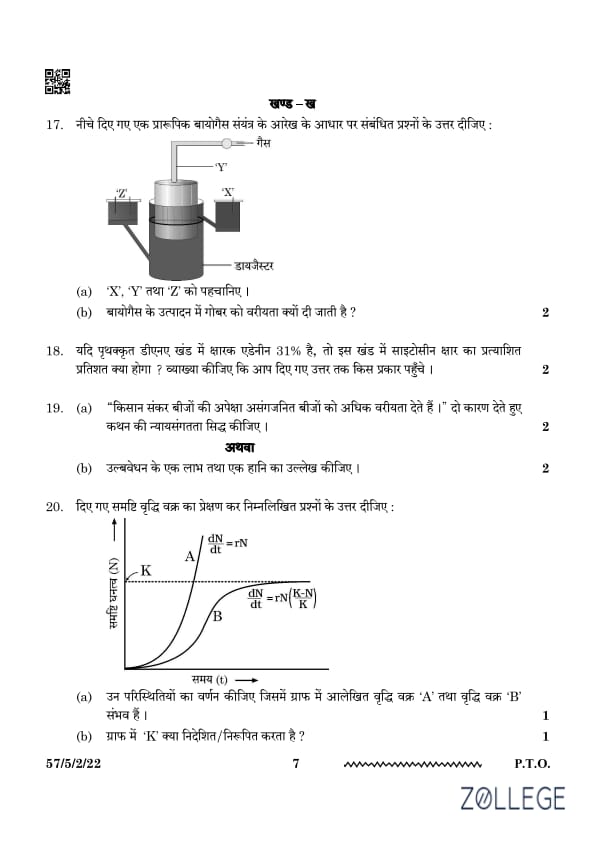
Question 17:
Answer the questions based on the typical biogas plant diagram given below:

(a) Identify ‘X’, ‘Y’, and ‘Z’:
View Solution
Correct Answer:
• X: Slurry tank, which stores organic waste mixed with water.
• Y: Gas outlet, releasing methane-rich biogas.
• Z: Digester, where anaerobic bacteria decompose organic material to produce biogas and nutrient-rich slurry.
- Explanation: The digester is the central component of a biogas plant, enabling biogas production and recycling of organic waste into agricultural manure.
(b) Why is dung preferred for the production of biogas?
View Solution
Correct Answer:
Dung is rich in organic matter and cellulose, which are ideal for methanogenic bacteria. It is affordable, abundant, and sustainable, producing renewable energy and nutrient-rich slurry for agriculture.
- Explanation: Dung not only serves as a raw material for biogas but also minimizes methane emissions, contributing to sustainable waste management and climate change mitigation.
Question 18:
If adenine constitutes 31% in DNA, calculate the percentage of cytosine. Explain briefly:
View Solution
Correct Answer:
• Adenine pairs with thymine, so A + T = 31% + 31% = 62%.
• Cytosine pairs with guanine, and C + G = 100% - (A + T) = 38%.
• Therefore, cytosine is 19%.
- Explanation: DNA follows Chargaff’s rule, where A pairs with T and C pairs with G in equal proportions. This complementary base-pairing ensures the sum of bases equals 100%.
Question 19:
(a) Why do farmers prefer apomictic seeds to hybrid seeds?
View Solution
Correct Answer:
• Apomictic seeds are genetically identical to the parent plant, ensuring trait stability.
• They eliminate the need for farmers to purchase new seeds annually, reducing costs.
- Explanation: Apomictic seeds guarantee uniformity and preservation of desirable traits across generations without the variability seen in hybrid seeds.
(b) Mention one advantage and disadvantage of amniocentesis:
View Solution
Correct Answer:
• Advantage: Early detection of genetic or chromosomal disorders during pregnancy.
• Disadvantage: Misuse for sex determination increases the risk of female feticide, raising ethical concerns.
- Explanation: While amniocentesis is a valuable diagnostic tool, it must be regulated to prevent unethical practices such as gender-biased abortions.
Question 20:
Refer to the population growth curves shown below and answer:

(a) State the conditions under which growth curve ‘A’ and growth curve ‘B’ are possible:
View Solution
Correct Answer:
• Growth curve ‘A’ (Exponential growth): Occurs under ideal conditions with unlimited resources.
• Growth curve ‘B’ (Logistic growth): Occurs when resources are limited, and environmental resistance impacts growth.
- Explanation: Exponential growth represents idealized scenarios, while logistic growth accounts for real-world resource constraints and carrying capacity.
(b) What does ‘K’ represent in the graph?
View Solution
Correct Answer:
‘K’ represents the carrying capacity of the environment, the maximum population size that available resources can sustain.
- Explanation: Carrying capacity depends on factors like food, habitat space, and environmental conditions, which limit population growth.
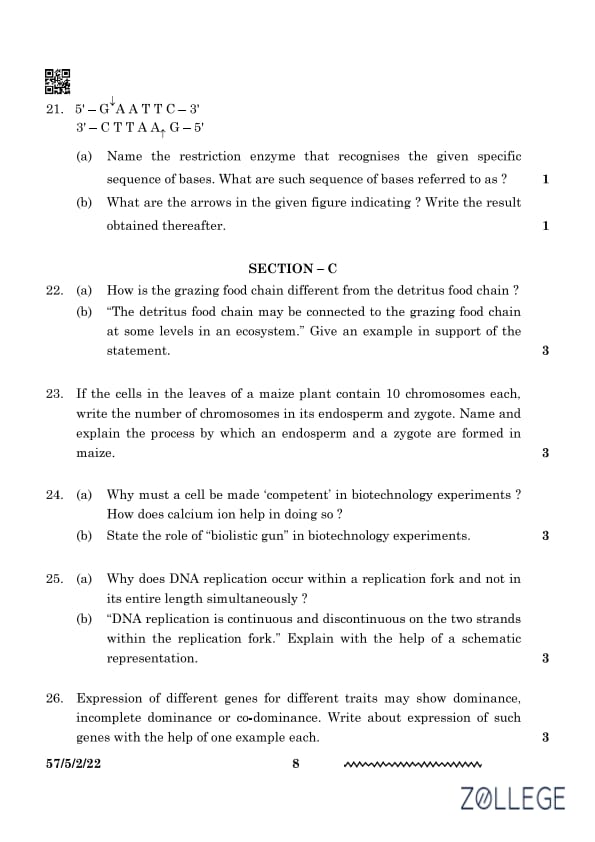
Question 21:
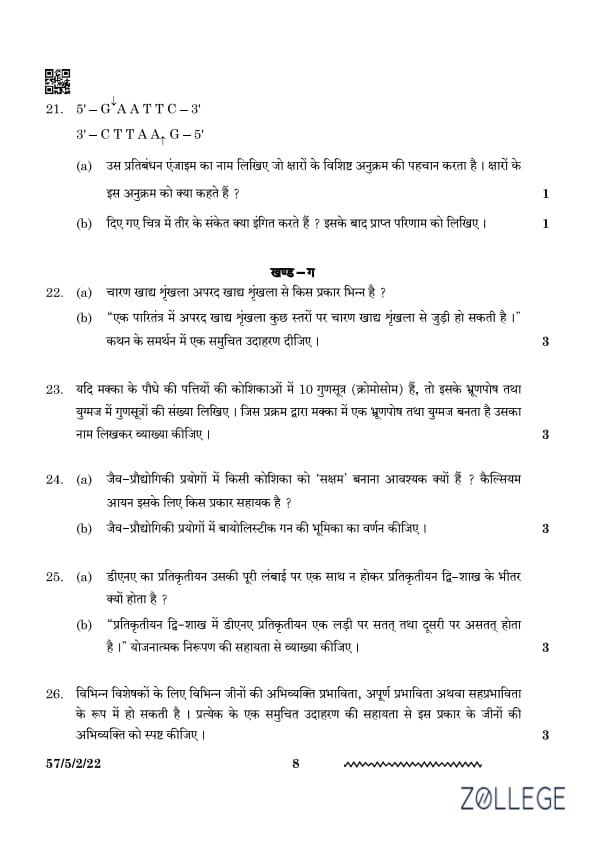
If the base adenine constitutes 31% of an isolated DNA fragment, calculate the percentage of the base cytosine. Explain how you arrived at the answer:
View Solution
Correct Answer:
• Adenine (A) pairs with Thymine (T), so A + T = 31% + 31% = 62%.
• Cytosine (C) pairs with Guanine (G), and C + G = 100% - (A + T) = 38%.
• Cytosine is therefore 19%.
- Explanation: DNA follows Chargaff’s rule, ensuring A pairs with T and C pairs with G in a 1:1 ratio. This complementary base-pairing maintains the double-helix structure.
SECTION C
Question 22:
(a) How is the grazing food chain different from the detritus food chain?
View Solution
Correct Answer:
• Grazing food chain: Starts with living producers like plants, transferring energy to herbivores and carnivores.
• Detritus food chain: Begins with decomposed organic matter, transferring energy to detritivores (e.g., earthworms) and decomposers (e.g., fungi).
- Explanation: The grazing food chain depends on photosynthesis, while the detritus food chain utilizes organic waste for energy transfer and nutrient recycling.
(b) “The detritus food chain may be connected to the grazing food chain at some levels in an ecosystem.” Give an example in support of the statement:
View Solution
Correct Answer:
Dead plants and organic detritus are decomposed by microorganisms, releasing nutrients absorbed by plants (producers in the grazing food chain). Organisms like earthworms feed on detritus and are eaten by higher trophic-level organisms, linking the two chains.
- Explanation: The connection between the detritus and grazing food chains ensures efficient energy flow and nutrient recycling within ecosystems.
Question 23:
If the cells in the leaves of a maize plant contain 10 chromosomes each, write the number of chromosomes in its endosperm and zygote. Name and explain the process by which an endosperm and a zygote are formed in maize:
View Solution
Correct Answer:
• Endosperm: 30 chromosomes (3n, triploid).
• Zygote: 20 chromosomes (2n, diploid).
- Explanation: Double fertilization in angiosperms ensures simultaneous embryo and endosperm formation:
- One sperm nucleus fertilizes the egg cell, forming the diploid zygote.
- Another sperm nucleus fuses with two polar nuclei, forming the triploid endosperm, which provides nutrients to the developing embryo.
Question 24:
(a) Why must a cell be made ‘competent’ in biotechnology experiments? How does calcium ion help in doing so?
View Solution
Correct Answer:
• Competency is necessary to enable cells to take up foreign DNA during transformation.
• Calcium ions neutralize the negative charges of DNA and the cell membrane, reducing repulsion and facilitating DNA entry into the cell.
- Explanation: Competent cells are critical for successful genetic engineering, allowing the introduction of recombinant DNA for cloning and gene expression studies.
(b) State the role of “biolistic gun” in biotechnology experiments:
View Solution
Correct Answer:
• The biolistic gun delivers DNA into plant cells by bombarding them with high-velocity microprojectiles coated with DNA.
• This tool is widely used in genetic engineering to create transgenic plants, particularly in species with thick cell walls.
- Explanation: The biolistic gun is a vital tool in agricultural and biotechnological research for gene transfer, crop improvement, and transgenic studies.
Question 25:
(a) Why does DNA replication occur within a replication fork and not in its entire length simultaneously?
View Solution
Correct Answer:
• DNA polymerase synthesizes DNA in the 5’ to 3’ direction.
• At the replication fork:
- The leading strand is synthesized continuously in the direction of fork movement.
- The lagging strand is synthesized discontinuously using Okazaki fragments, which are later joined by DNA ligase.
- Explanation: Replication forks optimize accuracy and efficiency, ensuring proper sequence matching and error correction.
(b) “DNA replication is continuous and discontinuous on the two strands within the replication fork.” Explain with the help of a schematic representation:
View Solution
Correct Answer:•Leading strand:
Synthesized continuously in the 5’ to 3’ direction.
•Lagging strand:
Synthesized discontinuously in Okazaki fragments, later joined by DNA ligase.
- Explanation: The antiparallel nature of DNA and the unidirectional activity of DNA polymerase result in this semi-discontinuous mechanism.
![DNA replication showing the continuous synthesis of the leading strand and the discontinuous synthesis of the lagging strand with Okazaki fragments.]()

Question 26:
Expression of different genes for different traits may show dominance, incomplete dominance, or co-dominance. Write about the expression of such genes with examples for one of the above modes:
View Solution
Correct Answer:
• Dominance: A dominant allele masks the expression of a recessive allele. Example: In pea plants, the allele for tallness (T) dominates over dwarfness (t); a heterozygous plant (Tt) is tall.• Incomplete dominance: The heterozygous phenotype is an intermediate. Example: In snapdragons, crossing a red flower (RR) with a white flower (rr) produces pink flowers (Rr).
• Co-dominance: Both alleles are equally expressed. Example: In humans, IA and IB alleles are co-dominant, resulting in blood group AB.
- Explanation: These modes of gene expression highlight variations in inheritance patterns, demonstrating the diversity of phenotypic traits in organisms.
Question 27:
(a) Tropical regions harbour more species than temperate regions. How have biologists explained this in their own ways?
View Solution
Correct Answer:
• Tropical regions have experienced stable climates over millions of years, allowing uninterrupted evolution and speciation.• High solar energy enhances productivity, providing abundant resources.
• Constant temperatures and longer growing seasons reduce extinction risks and accelerate evolution.
• The absence of glaciation in the tropics prevented mass extinctions.
- Explanation: These factors collectively make tropical regions biodiversity hotspots, supporting the greatest variety of species on Earth.
(b) (i) What does an ecological pyramid represent?
View Solution
Correct Answer:
• An ecological pyramid graphically represents energy, biomass, or organism numbers at each trophic level in an ecosystem.• Producers form the pyramid’s base, supporting consumers above them.
- Explanation: Energy pyramids are always upright, while biomass and number pyramids vary based on ecosystem type, providing insights into energy flow and ecosystem structure.
(ii) The ecological pyramids may have an ‘upright’ or an ‘inverted’ shape. Justify with suitable examples:
View Solution
Correct Answer:
• Upright pyramids: Found in terrestrial ecosystems where energy flows from a large producer base (e.g., grasslands) to fewer herbivores and carnivores.• Inverted pyramids: Found in aquatic ecosystems where producers like phytoplankton have lower biomass but support larger biomass consumers like fish.
- Explanation: The shape of the ecological pyramid depends on the ecosystem’s structure and the flow of energy or biomass.
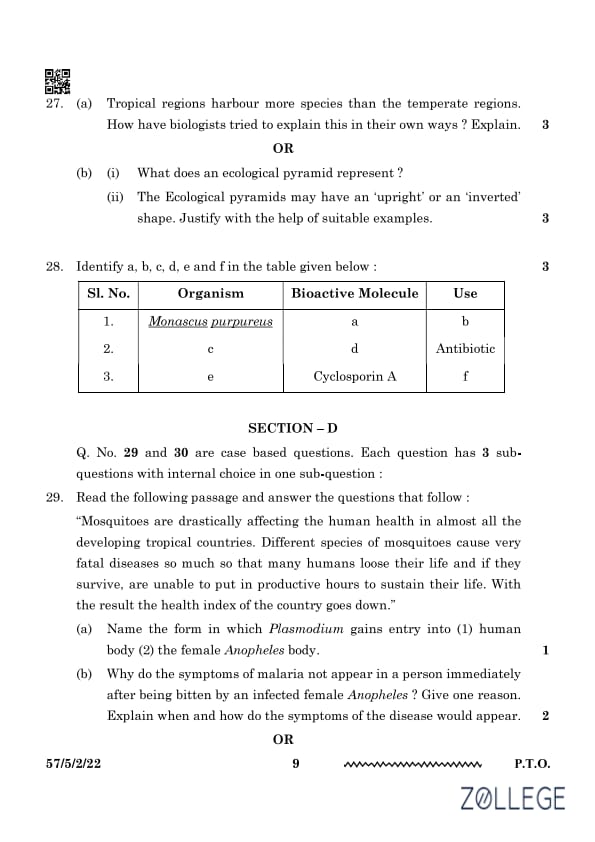
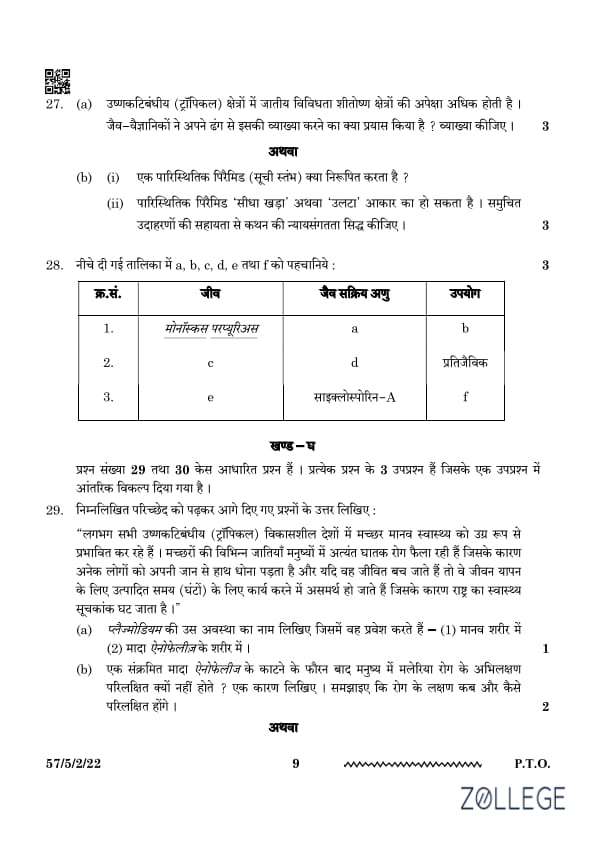
Question 28:
Identify a, b, c, d, e, and f in the table given below:
| Sl. No. | Organism | Bioactive Molecule | Use |
|---|---|---|---|
| 1 | Monascus purpureus | Statins | Lowers blood cholesterol |
| 2 | Streptomyces | Antibiotic | Treats infections |
| 3 | Trichoderma polysporum | Cyclosporin A | Immunosuppressant |
| 4 | Penicillium notatum | Penicillin | Kills bacteria |
| 5 | Aspergillus niger | Citric acid | Food additive |
| 6 | Lactobacillus | Lactic acid | Used in food preservation |
View Solution
- Explanation: These microorganisms and their bioactive molecules are significant in medicine, agriculture, and industry, contributing to human welfare and sustainable development.
SECTION D
Question 29:
Read the following passage and answer the questions that follow:
“Mosquitoes are drastically affecting human health in almost all developing tropical countries. Different species of mosquitoes cause fatal diseases, leading to loss of life or reduced productivity. Consequently, the health index of these countries suffers.”
(a) Name the form in which Plasmodium gains entry into (1) human body and (2) the female Anopheles body:
View Solution
Correct Answer:
• (1) Sporozoite – The infective stage that enters the human body.
• (2) Gametocytes – The stage that enters the mosquito during a blood meal.
- Explanation: The sporozoite stage infects humans, while gametocytes ensure parasite transmission to mosquitoes.
(b) Why do the symptoms of malaria not appear in a person immediately after being bitten by an infected female Anopheles? Explain:
View Solution
Correct Answer:
• The sporozoites take time to multiply in liver cells and then infect red blood cells, leading to symptoms.
• Symptoms like fever, chills, and sweating appear after the parasites rupture red blood cells.
- Explanation: The incubation period allows the parasites to develop within the liver before causing symptoms.
OR
(b) Explain the events which occur within a female Anopheles mosquito after it has sucked blood from a malaria patient:
View Solution
Correct Answer:
• Gametocytes of Plasmodium enter the mosquito’s gut with the blood meal.
• In the gut, gametocytes develop into gametes, fuse to form zygotes, and subsequently develop into sporozoites.
• Sporozoites migrate to the mosquito’s salivary glands, preparing it to infect another host.
- Explanation: Plasmodium undergoes sexual reproduction inside the mosquito to complete its life cycle.
(c) Name a species of mosquito other than female Anopheles and the disease for which it carries the pathogen:
View Solution
Correct Answer:
• Mosquito: Aedes aegypti.
• Disease: Dengue or Zika virus.
- Explanation: Aedes aegypti is a vector for several diseases, including Dengue, Zika, and Chikungunya.
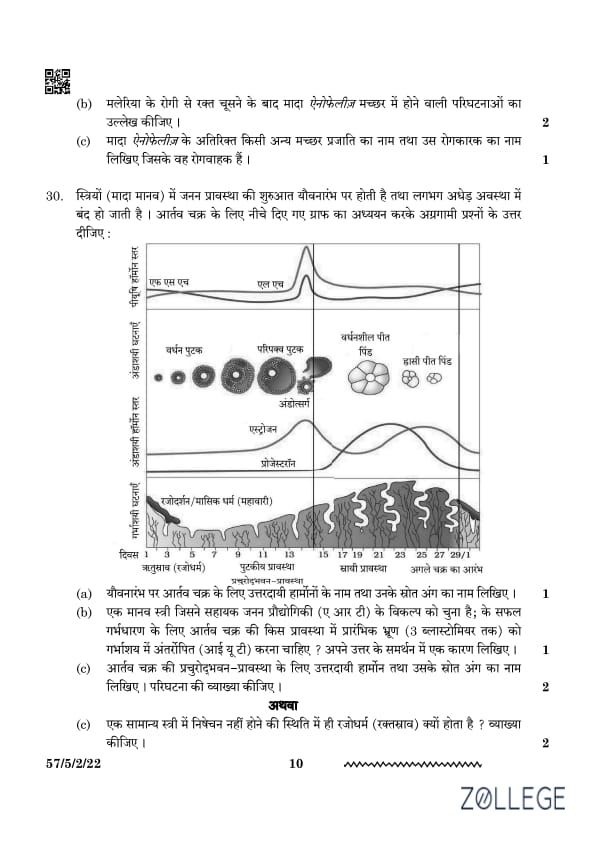
Question 30:
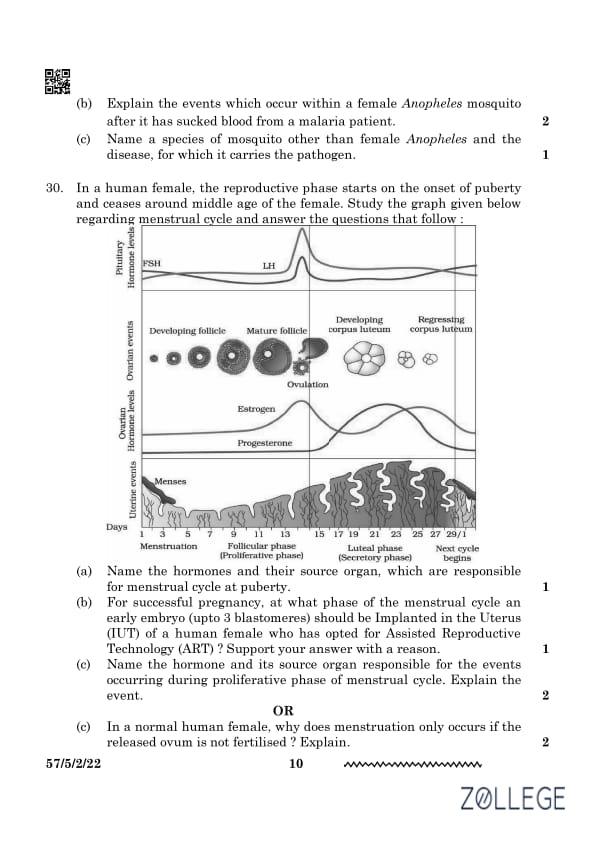
In a human female, the reproductive phase starts at puberty and ceases around middle age. Study the graph given below regarding the menstrual cycle and answer the questions that follow:

(a) Name the hormones and their source organ, which are responsible for the menstrual cycle at puberty:
View Solution
Correct Answer:
• Hormones: Follicle Stimulating Hormone (FSH) and Luteinising Hormone (LH).
• Source organ: Pituitary gland.
- Explanation: FSH and LH regulate ovarian follicle development and ovulation during the menstrual cycle.
(b) For successful pregnancy, at what phase of the menstrual cycle should an early embryo (up to 3 blastomeres) be implanted in the uterus? Support your answer with a reason:
View Solution
Correct Answer:
• Phase: Luteal phase (Day 15–28).
• Reason: During this phase, the endometrium is thick and rich in blood supply, making it ideal for implantation and embryo nourishment.
- Explanation: The luteal phase ensures optimal uterine conditions for embryo implantation due to high progesterone levels.
(c) Name the hormone and its source organ responsible for the events occurring during the proliferative phase of the menstrual cycle. Explain the event:
View Solution
Correct Answer:
• Hormone: Estrogen.
• Source organ: Ovaries (developing follicles).
• Event: Estrogen repairs and thickens the uterine lining, preparing it for potential implantation.
- Explanation: Estrogen is essential for regenerating the uterine lining during the proliferative phase of the menstrual cycle.
OR
Why does menstruation only occur if the released ovum is not fertilised? Explain:
View Solution
Correct Answer:
• If the ovum is not fertilised, the corpus luteum degenerates, leading to a drop in progesterone levels.
• This hormonal change causes the breakdown and shedding of the uterine lining as menstrual blood.
- Explanation: Menstruation is triggered by the absence of fertilisation, causing hormonal changes that lead to the shedding of the uterine lining.
SECTION E
Question 31:
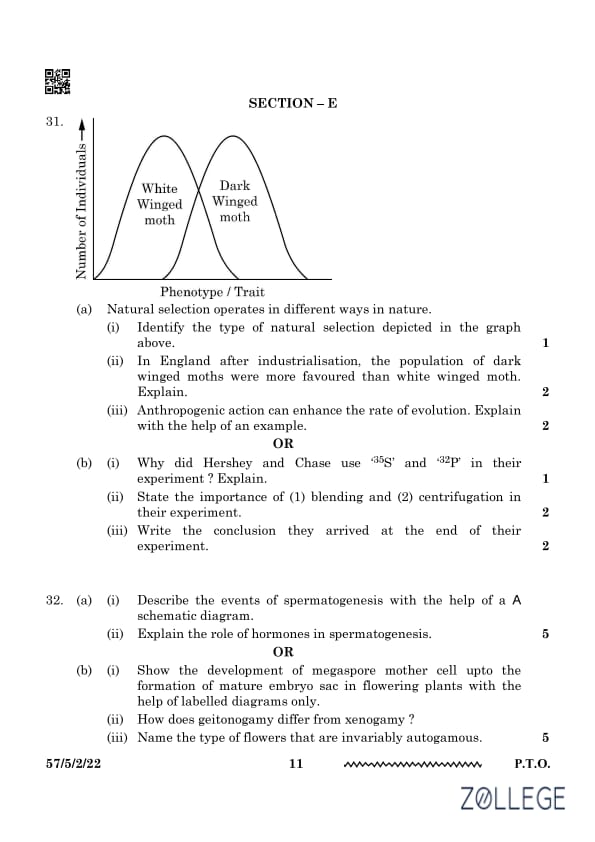
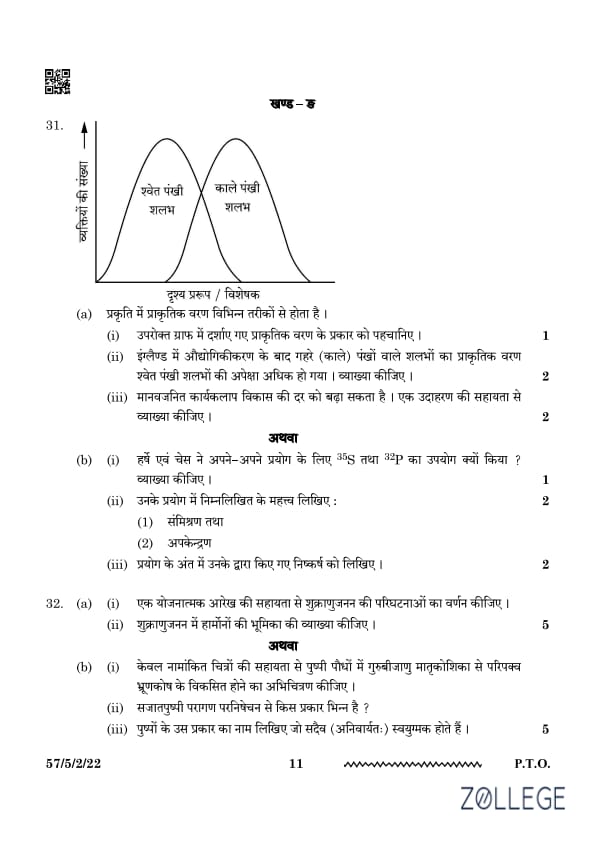
Natural selection operates in different ways in nature. Refer to the graph given below:

(a) (i) Identify the type of natural selection depicted in the graph above:
View Solution
Correct Answer:
• The graph depicts Directional Selection, which occurs when one extreme phenotype is favored over others due to environmental pressures.
- Explanation: Directional selection shifts population traits toward one extreme, favoring individuals with advantageous traits, as seen during industrial melanism in moths.
(ii) In England after industrialisation, the population of dark-winged moths was more favoured than white-winged moths. Explain:
View Solution
Correct Answer:
• Pre-industrialization: White-winged moths blended with light-colored tree barks, avoiding predation.
• Post-industrialization: Pollution darkened tree barks, making white moths visible and vulnerable, while dark-winged moths became camouflaged and had higher survival rates.
- Explanation: This phenomenon, called Industrial Melanism, is a classic example of directional selection caused by environmental changes.
(iii) Anthropogenic action can enhance the rate of evolution. Explain with the help of an example:
View Solution
Correct Answer:
• Human activities create strong selective pressures that accelerate evolution, such as:
• Antibiotic resistance: Overuse of antibiotics leads to the survival of resistant bacterial strains.
• Pesticide resistance: Pests evolve resistance to pesticides.
• Industrial melanism: Pollution favored darker phenotypes in species like the peppered moth.
- Explanation: Anthropogenic actions drive evolution by altering environmental pressures, emphasizing the need for sustainable practices.
Question 32:
(a) (i) Describe the events of spermatogenesis with the help of a schematic diagram:
View Solution
Correct Answer:

Multiplication Phase: Spermatogonia divide mitotically, increasing in number.
Growth Phase: Primary spermatocytes grow and prepare for meiosis.
• Maturation Phase: Meiosis I forms secondary spermatocytes; Meiosis II forms spermatids, which mature into spermatozoa (spermiogenesis).
- Explanation: Sertoli cells provide structural and nutritional support, ensuring sperm maturation over 64–74 days in humans.
(ii) Explain the role of hormones in spermatogenesis:
View Solution
Correct Answer:
• GnRH: Stimulates the anterior pituitary to release FSH and LH.• FSH: Acts on Sertoli cells to promote spermatogenesis.
• LH: Stimulates Leydig cells to produce testosterone.
• Testosterone: Essential for sperm maturation.
• Inhibin: Regulates FSH secretion for hormonal balance.
- Explanation: Hormonal coordination is crucial for initiating and maintaining spermatogenesis.
(b) OR
(i) Show the development of a megaspore mother cell up to the formation of a mature embryo sac in flowering plants with labelled diagrams:
View Solution
Correct Answer:
The diploid megaspore mother cell undergoes meiosis to form four haploid megaspores, of which only one survives. The surviving megaspore undergoes three mitotic divisions, forming an eight-nucleate, seven-celled embryo sac.
- Explanation: The mature embryo sac includes three antipodal cells, two synergids, one egg cell, and a central cell with two polar nuclei.
(ii) How does geitonogamy differ from xenogamy?
View Solution
Correct Answer:
• Geitonogamy: Transfer of pollen between flowers of the same plant; genetically identical to self-pollination.• Xenogamy: Transfer of pollen between flowers of different plants of the same species; promotes genetic diversity.
- Explanation: Geitonogamy is functionally cross-pollination but involves the same genotype, unlike xenogamy.
(iii) Name the type of flowers that are invariably autogamous:
View Solution
Correct Answer:
Cleistogamous flowers are invariably autogamous. These flowers do not open, ensuring self-pollination and reproductive success under unfavorable conditions.
- Explanation: Cleistogamy guarantees seed production even in the absence of pollinators.
Question 33:
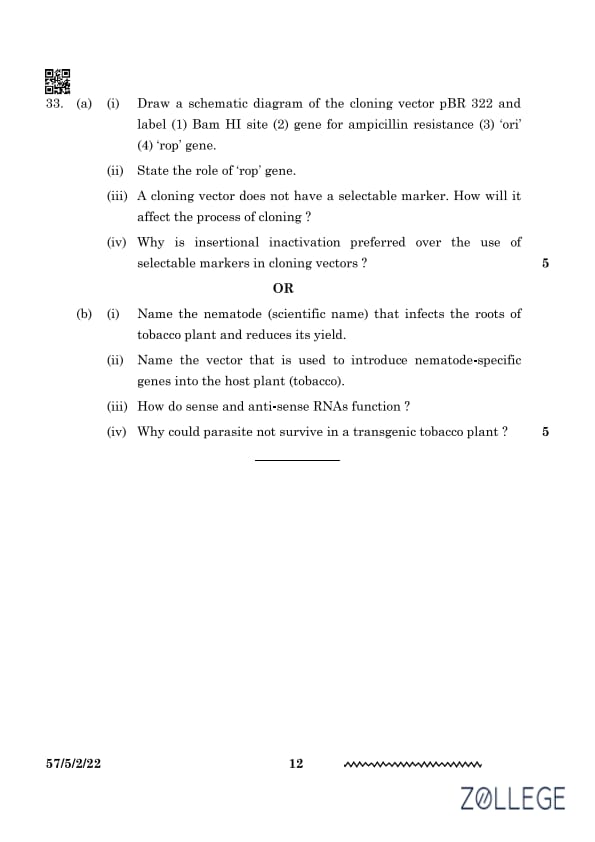
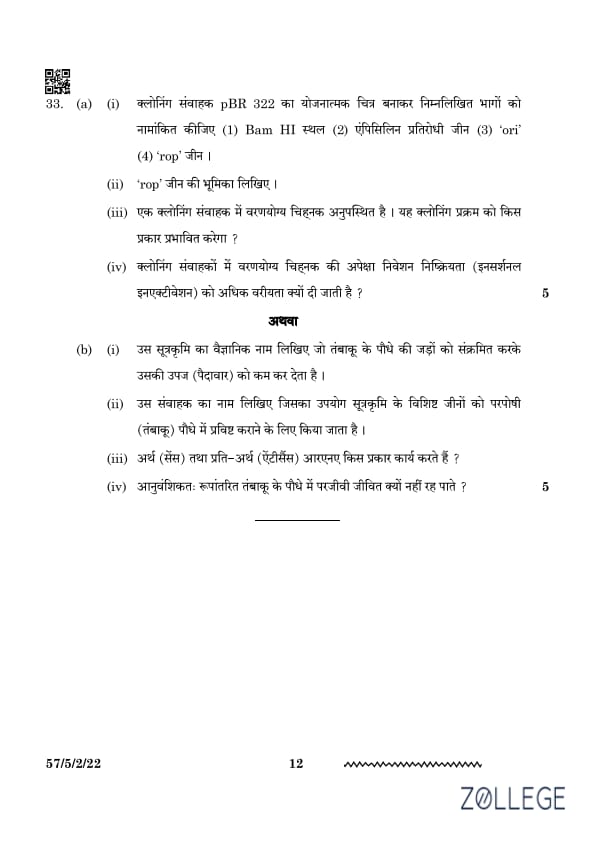
(a) (i) Draw a schematic diagram of the cloning vector pBR322 and label the following:
• BamHI site
• Gene for ampicillin resistance
• Ori
• Rop gene
View Solution
Correct Answer: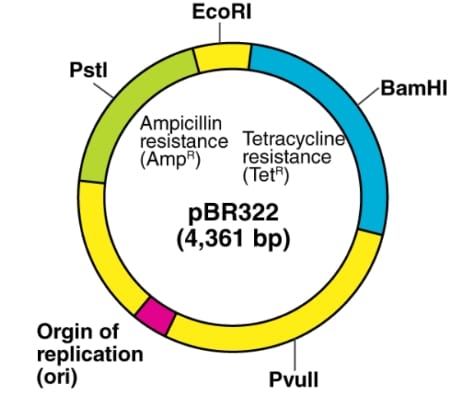
The diagram of pBR322 includes the following features:
•BamHI site:
Restriction site for inserting foreign DNA.
•Ampicillin resistance gene:
Enables selection of transformed cells.
•Ori:
Origin of replication ensures plasmid duplication in host cells.
•Rop gene:
Regulates plasmid copy number.
- Explanation: pBR322 is a widely used vector for molecular cloning due to its efficiency and multiple selection markers.
(ii) State the role of the ‘rop’ gene:
View Solution
Correct Answer:
The rop gene regulates plasmid replication, maintaining a low copy number and preventing stress on host cells.
- Explanation: By modulating plasmid replication, the rop gene ensures stability and successful cloning experiments.
(iii) A cloning vector does not have a selectable marker. How will it affect the cloning process?
View Solution
Correct Answer:
• Without a selectable marker:- Non-recombinant cells may outgrow recombinant ones, complicating identification.
- Alternative methods like PCR or sequencing are required, increasing cost and time.
- Explanation: Selectable markers simplify identification by allowing only transformed cells to grow under specific conditions, such as antibiotic resistance.
(iv) Why is insertional inactivation preferred over the use of selectable markers in cloning vectors?
View Solution
Correct Answer:
Insertional inactivation involves disrupting a functional gene by inserting foreign DNA, providing a visual distinction between recombinant and non-recombinant colonies.
- Advantages:
- Biosafety: Avoids the use of antibiotic resistance genes, reducing environmental risks.
- Simple identification: Recombinant colonies are visually identifiable (e.g., loss of color in the disrupted gene).
- Cost-effective: Reduces the need for antibiotics and additional screening.
- Explanation: Insertional inactivation is a safe and efficient method for identifying recombinant DNA in host cells.
(b) OR
(i) Name the nematode (scientific name) that infects the roots of tobacco plants and reduces its yield:
View Solution
Correct Answer:
• Nematode: Meloidogyne incognita (root-knot nematode).
- Explanation: This nematode infects tobacco plant roots, causing galls that disrupt nutrient and water absorption, leading to stunted growth and reduced yield.
(ii) Name the vector that is used to introduce nematode-specific genes into the host plant (tobacco):
View Solution
Correct Answer:
• Vector: Agrobacterium tumefaciens
- Explanation: Agrobacterium tumefaciens contains a modified Ti plasmid, used to transfer nematode-specific genes into tobacco plants. This process triggers RNA interference (RNAi), silencing critical nematode genes and preventing infestation.
(iii) How do sense and anti-sense RNAs function?
View Solution
Correct Answer:
• Sense RNA: Corresponds to the coding sequence of a gene and acts as a template for protein synthesis.• Anti-sense RNA: Complementary to the sense RNA and binds to it, forming double-stranded RNA that blocks translation.
- Explanation: This mechanism, called RNA interference (RNAi), silences specific genes and is widely used to control pests and pathogens in transgenic plants.
(iv) Why could the parasite not survive in a transgenic tobacco plant?
View Solution
Correct Answer:
• Transgenic tobacco plants produce double-stranded RNA (dsRNA) that targets essential genes in nematodes.
• RNA interference (RNAi) silences critical genes, preventing the parasite from surviving or reproducing.
- Explanation: RNAi technology provides an eco-friendly and specific approach to pest control, protecting crops without harming beneficial organisms.
*The article might have information for the previous academic years, please refer the official website of the exam.