
CBSE Class 12 Biology set 3 Question Paper Pdf - Check Solutions with Answer Key Pdf

.jpg?tr=h-55,w-55,c-force)
Content Strategist|Tech-innovator|National Hackathon Winner | Updated On - Jan 23, 2025
CBSE Class 12 2024 Biology Set 3 Question Paper (Paper Code: 57/3/3) is available for download. The exam was successfully conducted by CBSE on March 19 in the morning session from 10:30 AM to 1:30 PM. As per the student’s initial reactions, the CBSE Class 12 2024 Biology Set 3 Question Paper was reported as Moderate. The Ecology section was reported as Easy to Moderate, the Genetics and Evolution section as Challenging, and the Human Physiology section as Moderate.
CBSE Class 12 2024 Biology (Set 3- 57/3/3) 2024 Answer Key With Solution
Candidates can download the CBSE Class 12 Biology Question Paper with Solution and Answer Key PDFs for Set 3 Question Paper (Code: 57/3/3) using the link below.
| CBSE Class 12 2024 Biology Question Paper with Answer Key |  Download Download |
Check Solution |
CBSE Class 12 2024 Biology Questions with Solutions
SECTION - A
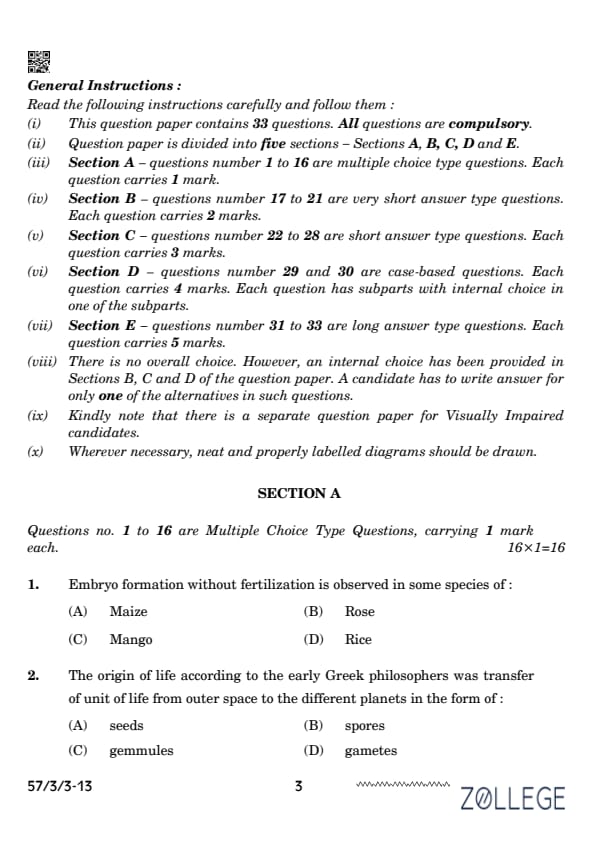
Question 1:
Embryo formation without fertilization is observed in some species of:
View Solution
Embryo formation without fertilization is a phenomenon known as apomixis. It is observed in some species of plants like Mango, where seeds can develop without the process of fertilization.
Question 2:
The origin of life according to the early Greek philosophers was transfer of unit of life from outer space to the different planets in the form of:
View Solution
The hypothesis of the origin of life according to early Greek philosophers is referred to as Panspermia. It suggests that life arrived on Earth in the form of spores or microscopic life forms from outer space.
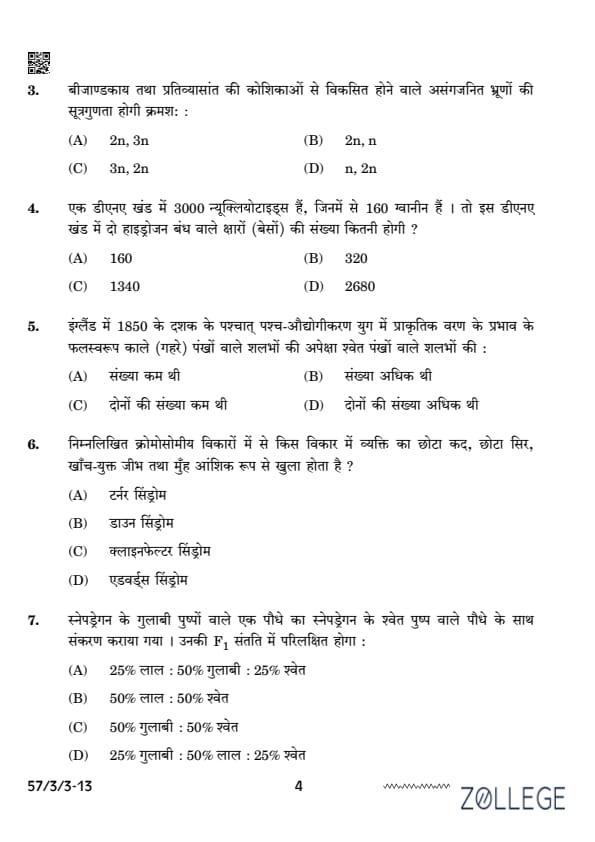
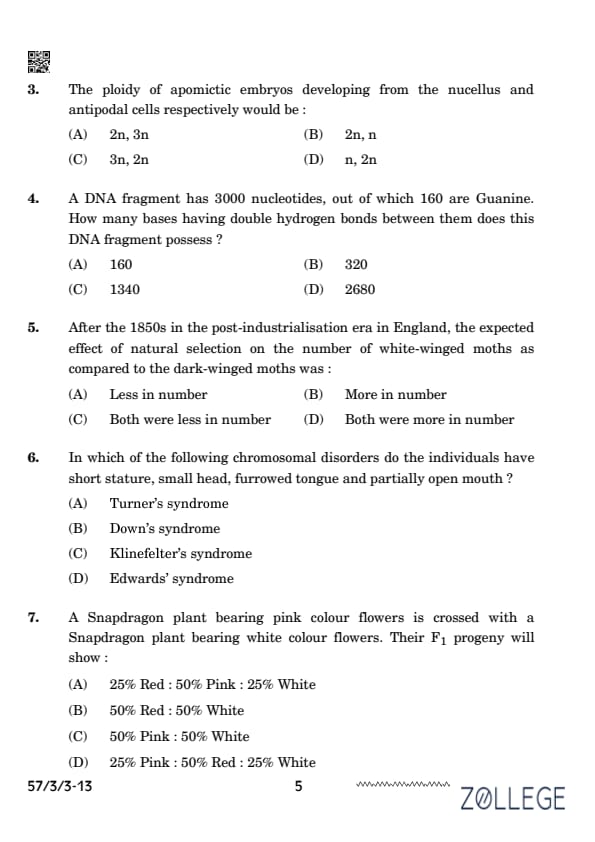
Question 3:
The ploidy of apomictic embryos developing from the nucellus and antipodal cells respectively would be:
View Solution
- Apomictic embryos from the nucellus are diploid (2n), as nucellus cells are somatic in origin.
- Antipodal cells, being part of the gametophyte, are haploid (n).
Question 4:
A DNA fragment has 3000 nucleotides, out of which 160 are Guanine. How many bases having double hydrogen bonds between them does this DNA fragment possess?
View Solution
- DNA bases forming double hydrogen bonds are Adenine (A) and Thymine (T).
- Bases forming triple hydrogen bonds are Guanine (G) and Cytosine (C).
Given:
- Total nucleotides = 3000.
- Guanine (G) count = 160.
- Cytosine (C) count = 160 (G pairs with C).
- Therefore, A + T = Total nucleotides - (G + C) = 3000 - (160 + 160) = 2680.
Question 5:
After the 1850s in the post-industrialization era in England, the expected effect of natural selection on the number of white-winged moths as compared to the dark-winged moths was:
View Solution
- During industrialization, dark-colored moths camouflaged better against soot-covered trees, leading to an increased survival rate.
- White-winged moths were more visible to predators, reducing their population.
Question 6:
In which of the following chromosomal disorders do the individuals have short stature, small head, furrowed tongue, and partially open mouth?
View Solution
- Down’s syndrome is caused by trisomy of chromosome 21.
- It is characterized by distinct physical features such as short stature, small head, furrowed tongue, and cognitive impairment.
Question 7:
A Snapdragon plant bearing pink-colored flowers is crossed with a Snapdragon plant bearing white-colored flowers. Their F1 progeny will show:
View Solution
- Snapdragon plants exhibit incomplete dominance.
- Crossing a pink (Rr) plant with a white (rr) plant gives:
Rr × rr → 50%Rr(Pink) + 50%rr(White)
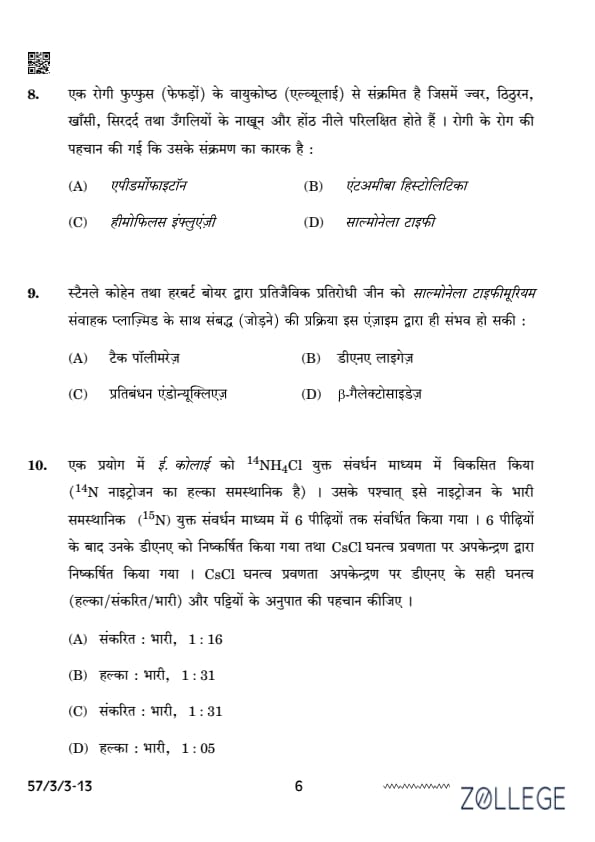
Question 8:
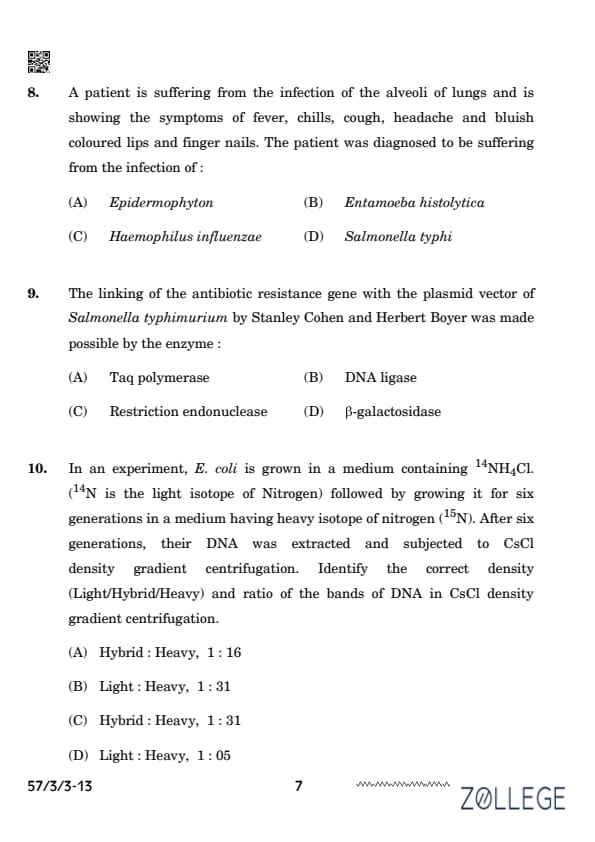
A patient is suffering from the infection of the alveoli of lungs and is showing the symptoms of fever, chills, cough, headache, and bluish-colored lips and fingernails. The patient was diagnosed to be suffering from the infection of:
View Solution
- Haemophilus influenzae causes pneumonia, an infection of the alveoli of the lungs.
- Symptoms include fever, chills, cough, and cyanosis (bluish lips and nails).
Question 9:
The linking of the antibiotic resistance gene with the plasmid vector of Salmonella typhimurium by Stanley Cohen and Herbert Boyer was made possible by the enzyme:
View Solution
- DNA ligase is used to join the antibiotic resistance gene with the plasmid vector.
- This technique was a pioneering step in recombinant DNA technology.
Question 10:
In an experiment, E. coli is grown in a medium containing 14NH4Cl (14N is the light isotope of Nitrogen) followed by growing it for six generations in a medium having the heavy isotope of nitrogen (15N). After six generations, their DNA was extracted and subjected to CsCl density gradient centrifugation. Identify the correct density (Light/Hybrid/Heavy) and ratio of the bands of DNA in CsCl density gradient centrifugation:
View Solution
- After six generations in a medium with heavy nitrogen (15N), most DNA will incorporate 15N, resulting in heavy DNA.
- The ratio of hybrid to heavy DNA will be 1:31 after centrifugation.
Question 11:
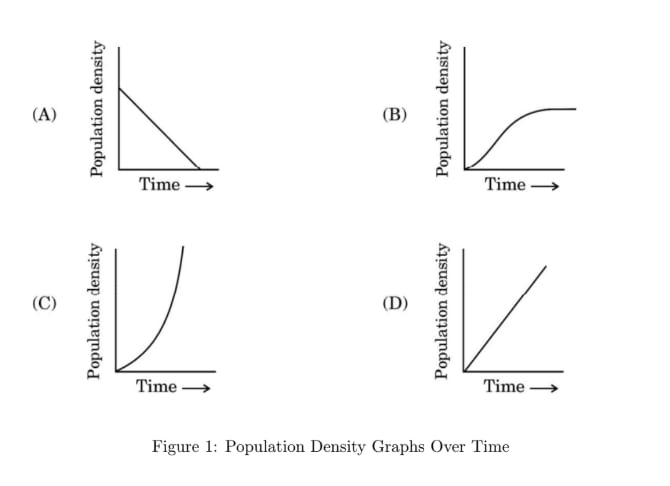
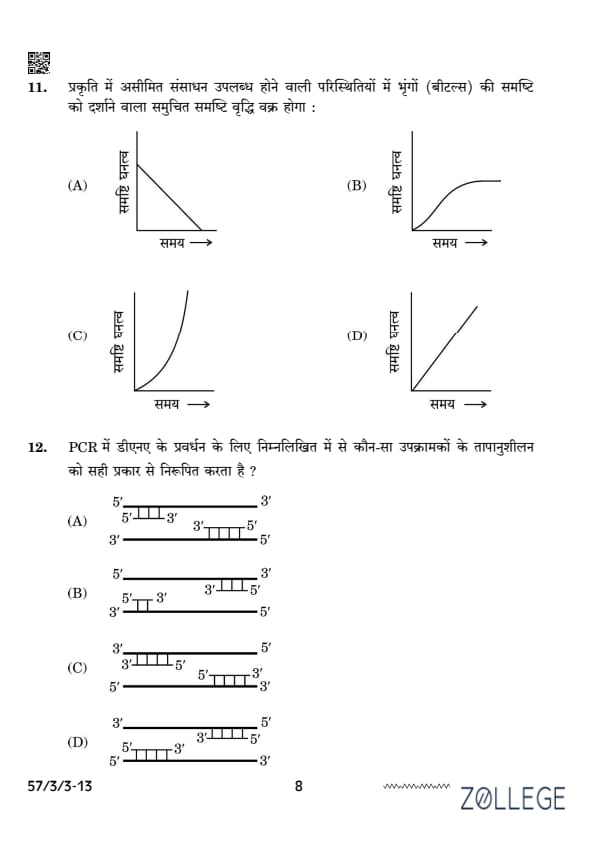
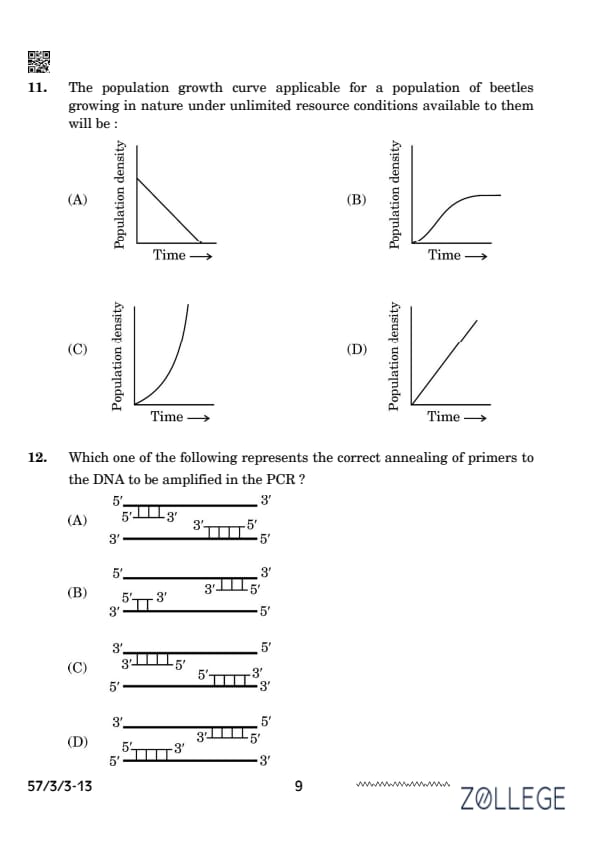
The population growth curve applicable for a population of beetles growing in nature under unlimited resource conditions available to them will be:
View Solution
- Under unlimited resource conditions, the population growth curve exhibits exponential growth, represented by a J-shaped curve.
- The population size increases at a constant rate due to the absence of limiting factors.
Question 12:
Which one of the following represents the correct annealing of primers to the DNA to be amplified in the PCR?

View Solution
• In PCR, primers must bind to opposite strands of the DNA template in a complementary manner.
• This ensures the amplification of the region of interest between the primers.
Question 13:
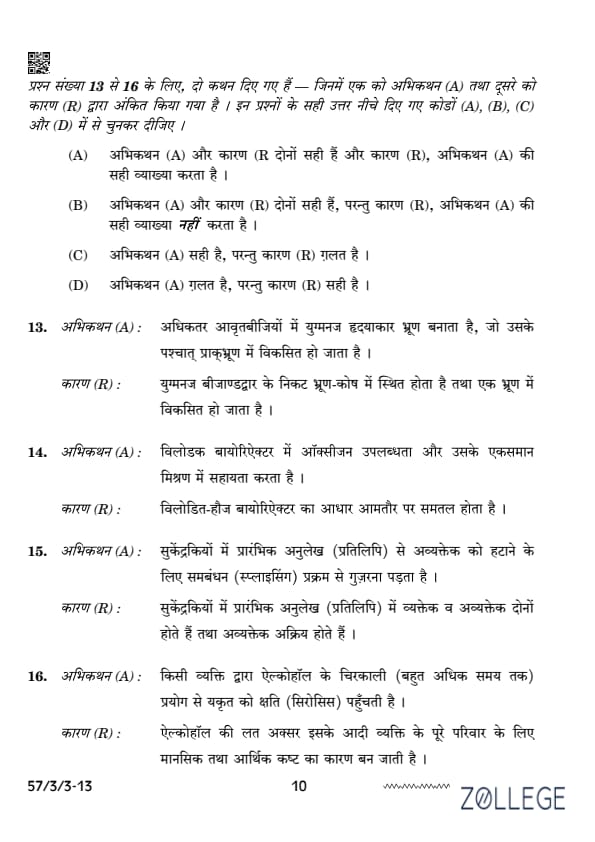
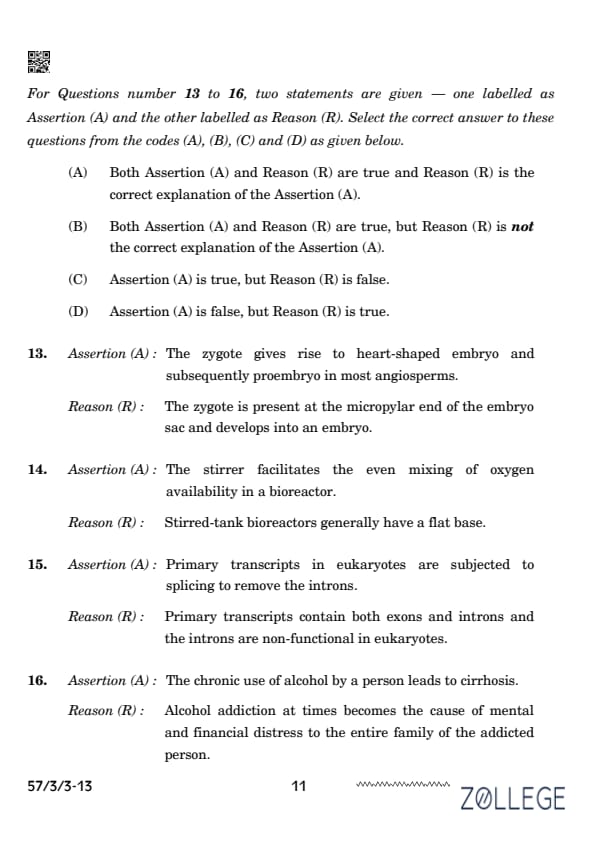
Assertion (A): The zygote gives rise to heart-shaped embryo and subsequently proembryo in most angiosperms.
Reason (R): The zygote is present at the micropylar end of the embryo sac and develops into an embryo.
View Solution
- The zygote does give rise to a heart-shaped embryo, which subsequently develops into the proembryo in angiosperms.
- The micropylar end of the embryo sac is where the zygote is located, facilitating nutrient absorption necessary for its development.
- However, the micropylar location (R) is not the reason for the formation of the heart-shaped embryo stage (A). Instead, the heart-shaped stage results from differentiation during embryogenesis.
Question 14:
Assertion (A): The stirrer facilitates the even mixing of oxygen availability in a bioreactor.
Reason (R): Stirred-tank bioreactors generally have a flat base.
View Solution
- The stirrer ensures uniform oxygen and nutrient mixing, promoting optimal growth conditions.
- The flat base is unrelated to oxygen mixing; it provides stability to the bioreactor.
Question 15:
Assertion (A): Primary transcripts in eukaryotes are subjected to splicing to remove the introns.
Reason (R): Primary transcripts contain both exons and introns, and the introns are non-functional in eukaryotes.
View Solution
- Introns are non-functional regions removed through splicing, leaving only functional exons for protein synthesis.
- The reason correctly explains the assertion.
Question 16:
Assertion (A): The chronic use of alcohol by a person leads to cirrhosis.
Reason (R): Alcohol addiction at times becomes the cause of mental and financial distress to the entire family of the addicted person.
View Solution
- Cirrhosis is caused by liver damage due to chronic alcohol consumption.
- While addiction impacts family well-being, it does not directly cause cirrhosis.
SECTION B
Question 17:
Amniocentesis is a very useful and important technique, but due to some reason there is a statutory ban on amniocentesis. Justify this statement.
View Solution
Amniocentesis is banned to prevent its misuse for:
• Determining the sex of the fetus, which may lead to female feticide.
• Ethical concerns regarding prenatal diagnostics.
• Protecting gender equality and addressing declining female sex ratios.
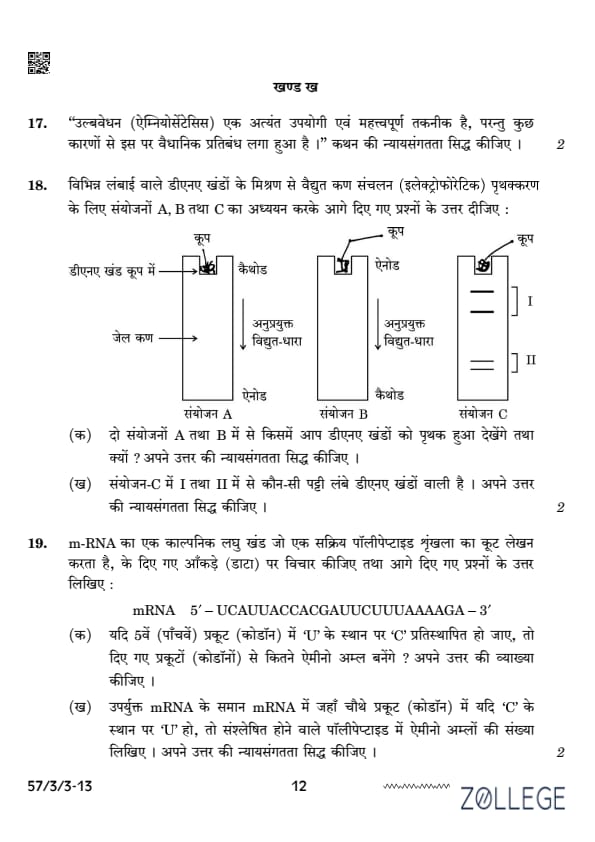
Question 18:
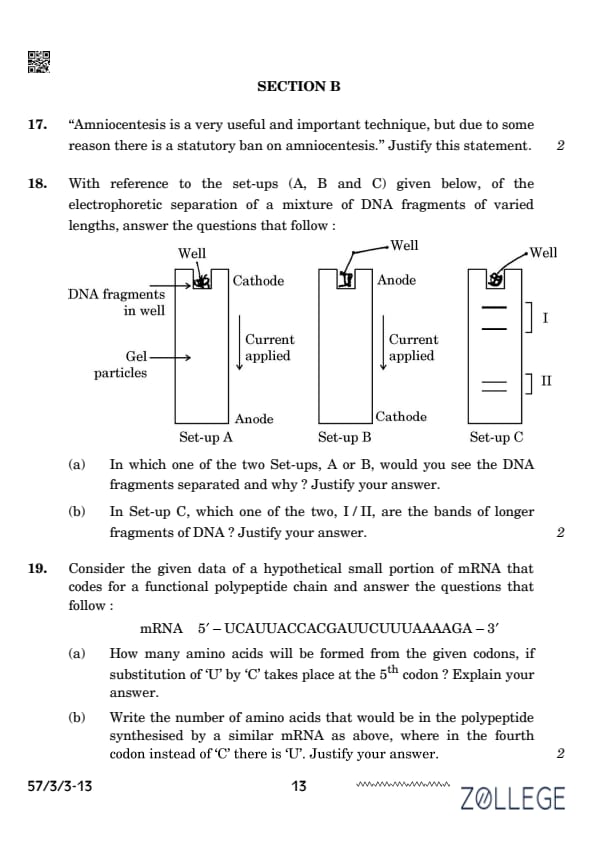
With reference to the set-ups (A, B, and C) given below, of the electrophoretic separation of a mixture of DNA fragments of varied lengths, answer the questions that follow:

(a) In which one of the two Set-ups, A or B, would you see the DNA fragments separated and why?
View Solution
Set-up B. The DNA fragments are negatively charged and move toward the anode in an electric field.
(b) In Set-up C, which one of the two, I/II, are the bands of longer fragments of DNA? Justify your answer.
View Solution
Band II contains longer DNA fragments as larger molecules move more slowly through the gel matrix compared to smaller fragments.
Question 19:
Consider the given data of a hypothetical small portion of mRNA that codes for a functional polypeptide chain and answer the questions that follow:
mRNA Sequence: 5’– UCAUUAACCCAGAUCUUCUUAAAAGGA –3’
(a) How many amino acids will be formed from the given codons, if substitution of ‘U’ by ‘C’ takes place at the 5th codon? Explain your answer.
View Solution
The sequence changes to 5’- UCAUUAACCCAGACCUUCUUAAAAGGA-3’. The 5th codon changes from UCU to CCU, coding for Proline instead of Serine. Amino acids = Total codons – Stop codon = 8.
(b) Write the number of amino acids that would be in the polypeptide synthesised by a similar mRNA as above, where in the fourth codon instead of ‘C’ there is ‘U’. Justify your answer.
View Solution
The sequence changes, causing the appearance of a premature stop codon. Translation halts earlier, producing a shorter polypeptide chain.
Question 20:
Write important features of ‘humus’ formed during the decomposition cycle in a terrestrial ecosystem.
View Solution
Features of humus:
• Dark, organic material resulting from decomposed plants and animals.
• Improves soil fertility and water retention.
• Provides nutrients to plants over time.
OR
(b) (i) Graphically represent the relationship between species richness and area on a log-log scale for bats and fishes.
View Solution
The graph shows a logarithmic relationship, with species richness increasing with area.

(ii) Write the equation for the relationship as on a logarithmic scale.
View Solution
S = cAz, where:
• S = Species richness.
• A = Area.
• c = Constant.
• z = Slope of the line (logarithmic).
Question 21:
What is a vaccine? Write the basis on which it acts when administered in the body.
View Solution
A vaccine is a biological preparation that provides active acquired immunity to a particular disease.
• Contains inactivated or weakened pathogens/antigens.
• Stimulates the immune system to produce memory cells for future protection.
SECTION C
Question 22:
Draw a T.S. of a mature anther of an angiosperm. Label its any three wall layers and mention their functions.
View Solution

The transverse section (T.S.) of a mature anther includes the following wall layers:
• Epidermis: Protective outermost layer.
• Endothecium: Helps in the dehiscence of the anther to release pollen.
• Tapetum: Provides nourishment to the developing pollen grains.
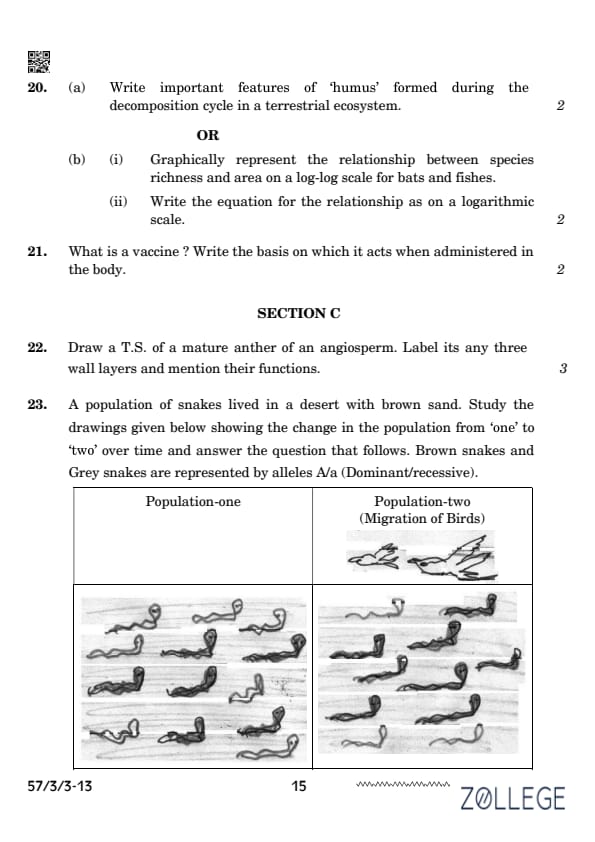
Question 23:
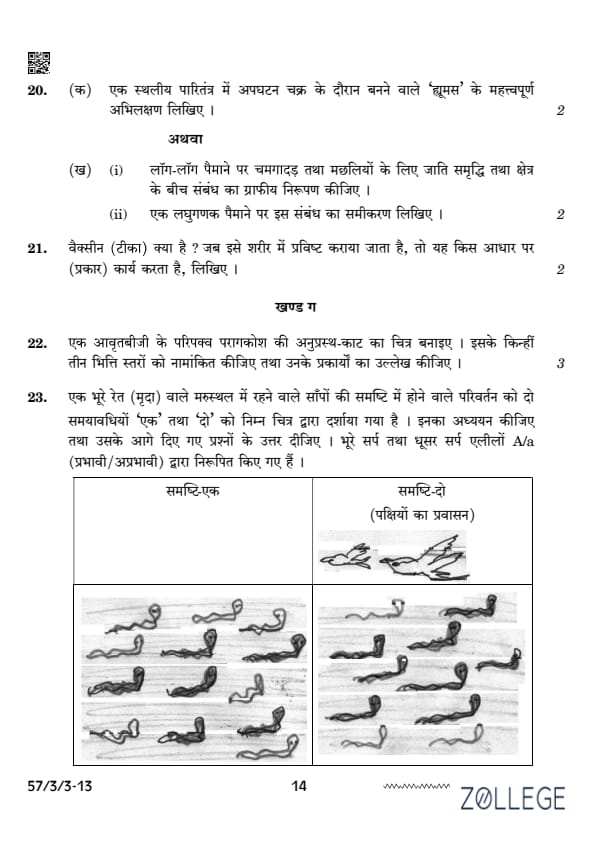
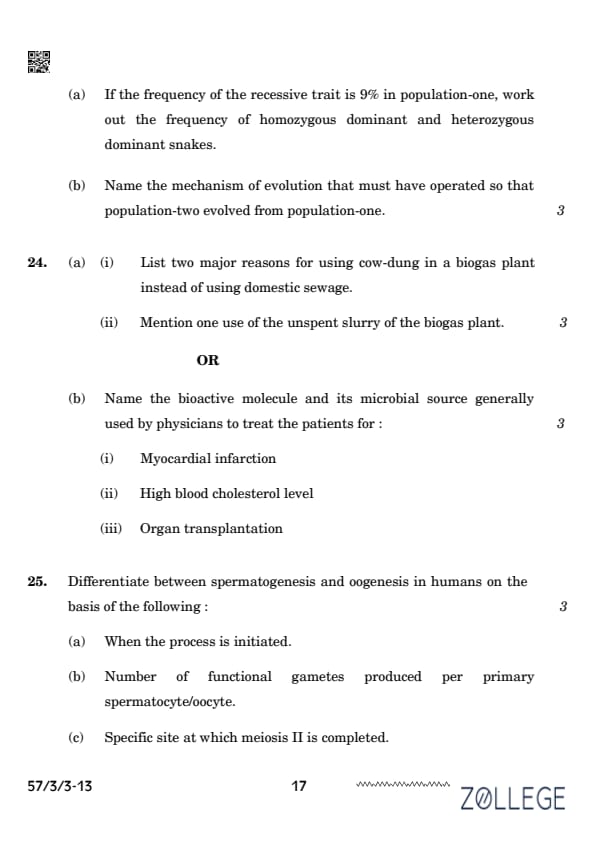
A population of snakes lived in a desert with brown sand. Study the drawings given below showing the change in the population from ‘one’ to ‘two’ over time and answer the question that follows. Brown snakes and Grey snakes are represented by alleles A/a (Dominant/recessive).

(a) If the frequency of the recessive trait is 9% in population-one, work out the frequency of homozygous dominant and heterozygous dominant snakes.
View Solution
Given: Recessive trait frequency (aa) = 9% = 0.09.
q2 = 0.09 ⇒ q = √0.09 = 0.3.
p + q = 1 ⇒ p = 1 − 0.3 = 0.7.
Homozygous dominant (AA) frequency: p2 = (0.7)2 = 0.49 = 49%.
Heterozygous dominant (Aa) frequency: 2pq = 2(0.7)(0.3) = 0.42 = 42%.
(b) Name the mechanism of evolution that must have operated so that population-two evolved from population-one.
View Solution
The mechanism is Natural Selection. Over time, brown snakes, being better camouflaged in the desert, had a survival advantage over grey snakes.
Question 24:
(a) (i) List two major reasons for using cow-dung in a biogas plant instead of using domestic sewage.
View Solution
• Cow-dung contains methanogenic bacteria that efficiently produce biogas.
• It is readily available and environmentally sustainable.
(ii) Mention one use of the unspent slurry of the biogas plant.
View Solution
Unspent slurry is used as a nutrient-rich organic fertilizer.
OR
(b) Name the bioactive molecule and its microbial source generally used by physicians to treat the patients for:
• (i) Myocardial infarction:
View Solution
Streptokinase (source: Streptococcus).
• (ii) High blood cholesterol level:
View Solution
Statins (source: Monascus purpureus).
• (iii) Organ transplantation:
View Solution
Cyclosporine A (source: Trichoderma polysporum).
Question 25:
Differentiate between spermatogenesis and oogenesis in humans on the basis of the following:
(a) When the process is initiated.
View Solution
• Spermatogenesis: Begins at puberty.
• Oogenesis: Begins during fetal development.
(b) Number of functional gametes produced per primary spermatocyte/oocyte.
View Solution
• Spermatogenesis: Produces four functional sperm.
• Oogenesis: Produces one ovum and two/three polar bodies.
(c) Specific site at which meiosis II is completed.
View Solution
• Spermatogenesis: Completed in the seminiferous tubules.
• Oogenesis: Completed in the fallopian tubes after fertilization.
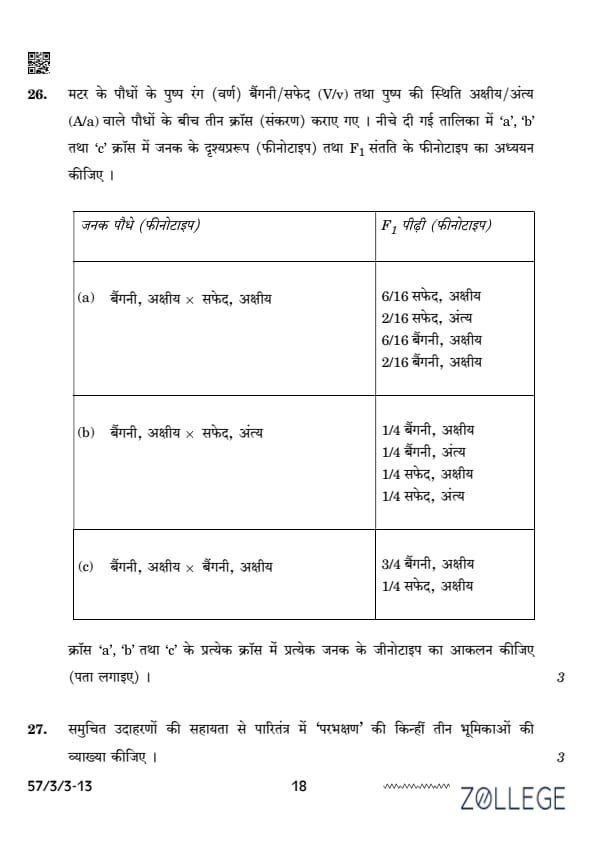
Question 26:
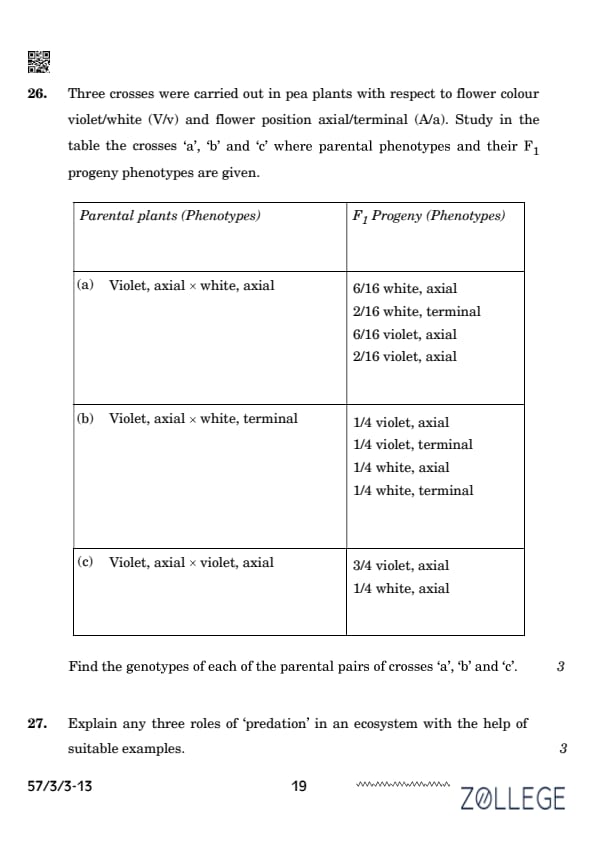
Three crosses were carried out in pea plants with respect to flower colour violet/white (V/v) and flower position axial/terminal (A/a). Study in the table the crosses ‘a’, ‘b’ and ‘c’ where parental phenotypes and their F1 progeny phenotypes are given. Find the genotypes of each of the parental pairs of crosses ‘a’, ‘b’ and ‘c’.

View Solution
(a) Cross: Violet, axial × White, axial
Genotype of parents: VvAa × vvAa
(b) Cross: Violet, axial × White, terminal
Genotype of parents: VvAa × vvaa
(c) Cross: Violet, axial × Violet, axial
Genotype of parents: VvAa × VvAa
Question 27:
Explain any three roles of ‘predation’ in an ecosystem with the help of suitable examples.
View Solution
Roles of predation:
• Maintains species diversity: Predators control the population of prey, preventing any single species from dominating. Example: Lions preying on zebras in savannahs.
• Regulates ecosystem balance: Predators ensure a balance between herbivores and plants. Example: Wolves controlling deer populations.
• Promotes natural selection: Predation exerts pressure on prey to evolve defensive mechanisms. Example: Camouflage in stick insects.
Question 28:
(a) Give the scientific name of the bacteria widely used in biotechnology to create a GM cotton crop resistant to bollworm attacks.
View Solution
Bacillus thuringiensis (Bt).
Question 28:
(b) Explain how GM cotton crop is able to resist insect attacks.
View Solution
GM cotton expresses a gene from Bacillus thuringiensis that produces a toxic protein:
• The Bt toxin is ingested by bollworms.
• The toxin binds to receptors in the insect gut, causing cell lysis and death.
SECTION D
Question 29:
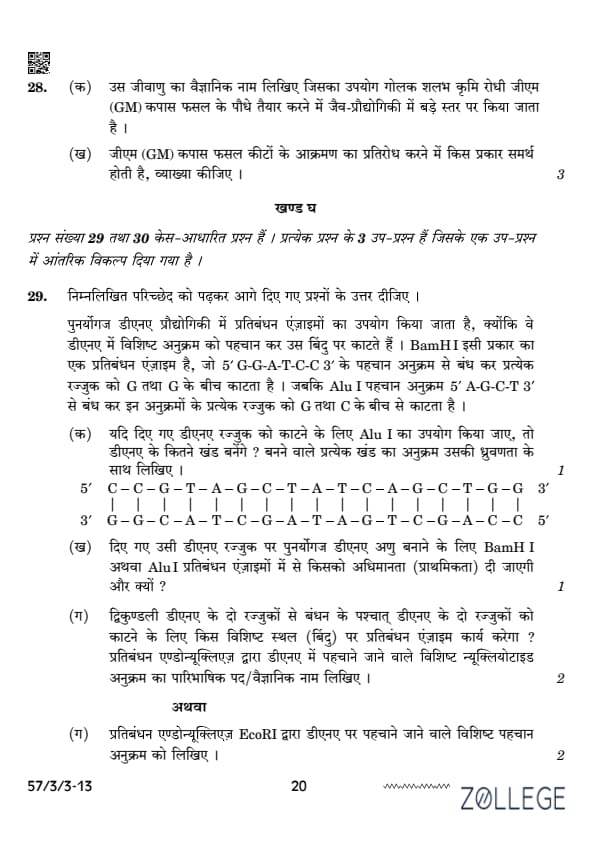
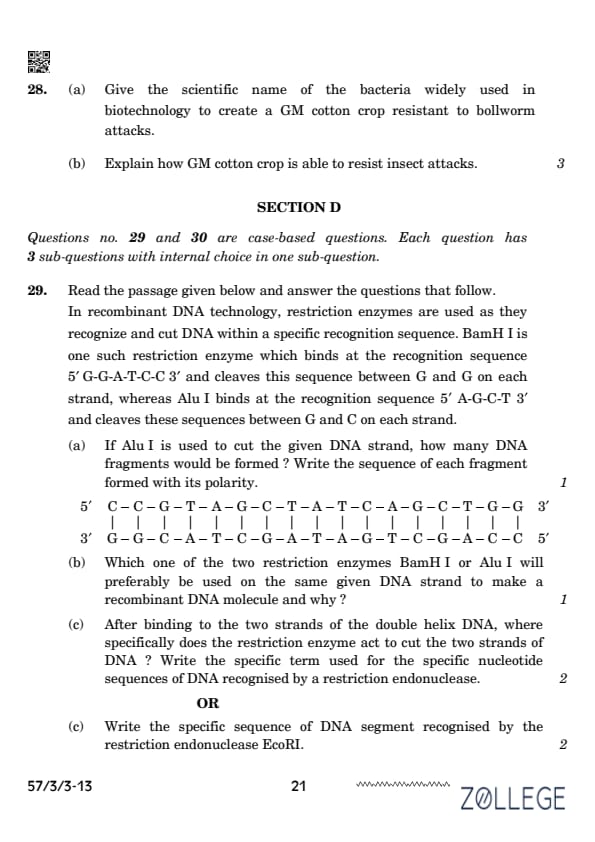
In recombinant DNA technology, restriction enzymes are used as they recognize and cut DNA within a specific recognition sequence. BamHI is one such restriction enzyme which binds at the recognition sequence 5’-G↓GATCC-3’ and cleaves this sequence between G and G on each strand, whereas AluI binds at the recognition sequence 5’-AG↓CT-3’ and cleaves these sequences between G and C on each strand.
(a) If AluI is used to cut the given DNA strand, how many DNA fragments would be formed? Write the sequence of each fragment formed with its polarity.

View Solution
The sequence contains three AluI recognition sites. Fragments formed:
• 5’– CCGG–3’
• 5’– ATCCTG–3’
• 5’– CGAT–3’
(b) Which one of the two restriction enzymes BamHI or AluI will preferably be used on the same given DNA strand to make a recombinant DNA molecule and why?
View Solution
BamHI is preferred as it produces sticky ends, facilitating the formation of recombinant DNA.
(c) After binding to the two strands of the double helix DNA, where specifically does the restriction enzyme act to cut the two strands of DNA? Write the specific term used for the specific nucleotide sequences of DNA recognised by a restriction endonuclease.
View Solution
Restriction enzymes act at specific recognition sites or sequences on the double-stranded DNA. These sites are typically palindromic sequences, where the enzyme cuts the DNA to generate sticky or blunt ends.
• The specific term used for the nucleotide sequences recognised by a restriction endonuclease is recognition sequence.
OR
(c) Write the specific sequence of DNA segment recognised by the restriction endonuclease EcoRI.
View Solution
EcoRI recognises the sequence 5’-GAATTC-3’ and cuts between G and A.
Question 30:
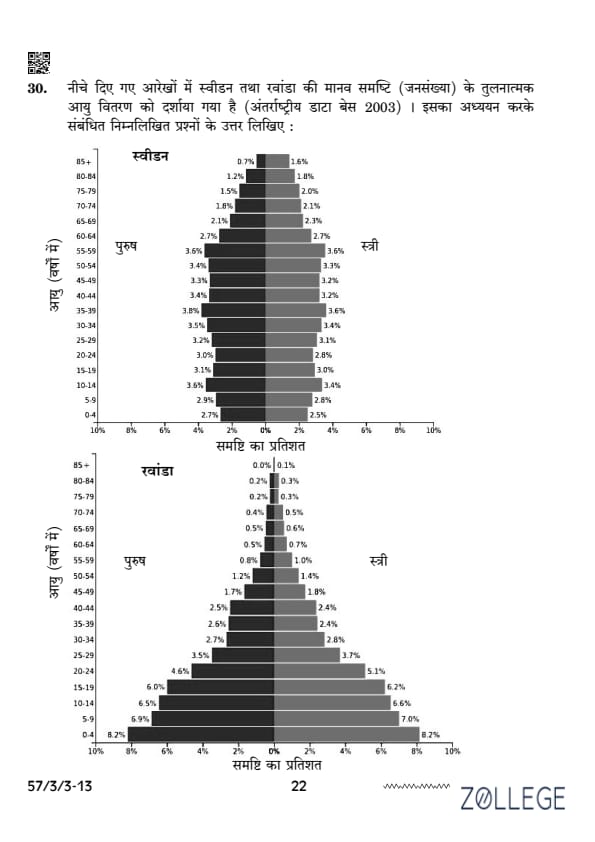
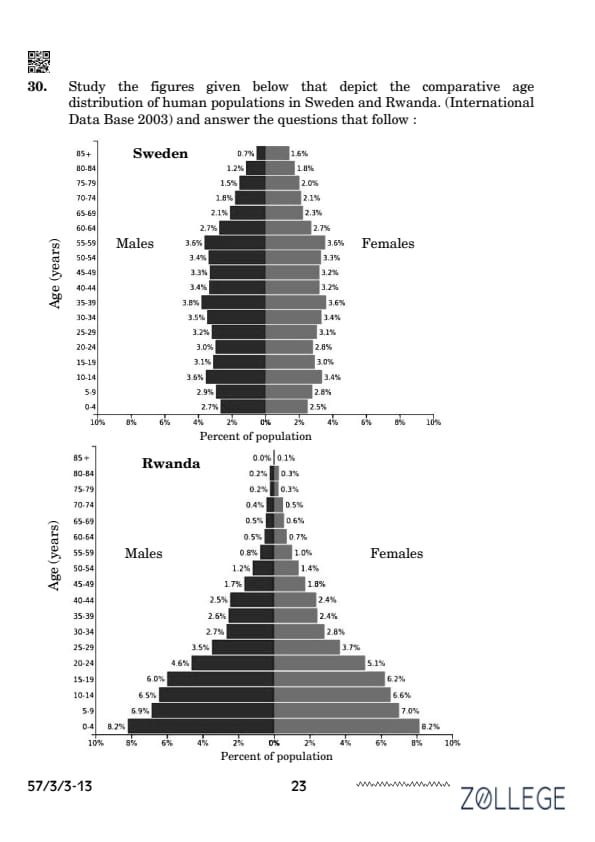
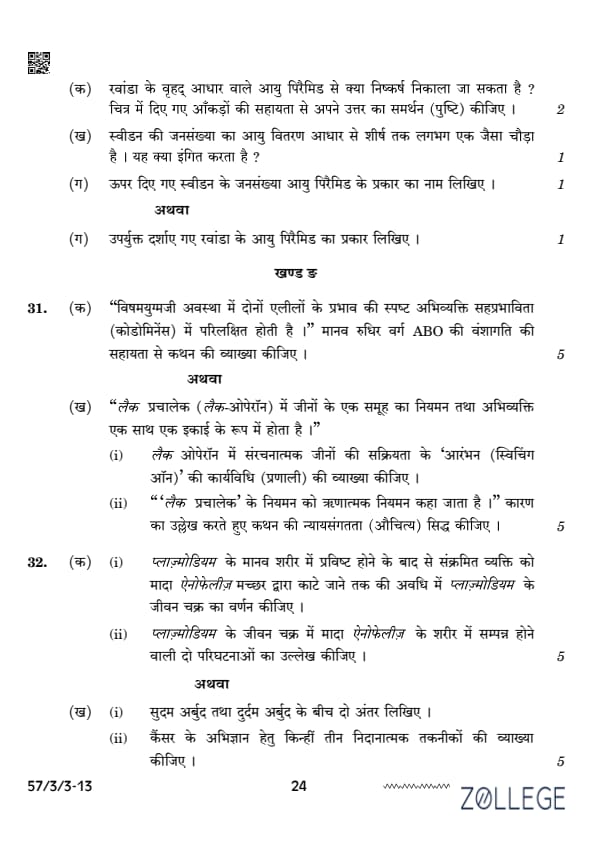
Study the figures given below that depict the comparative age distribution of human populations in Sweden and Rwanda (International Data Base 2003) and answer the questions that follow:
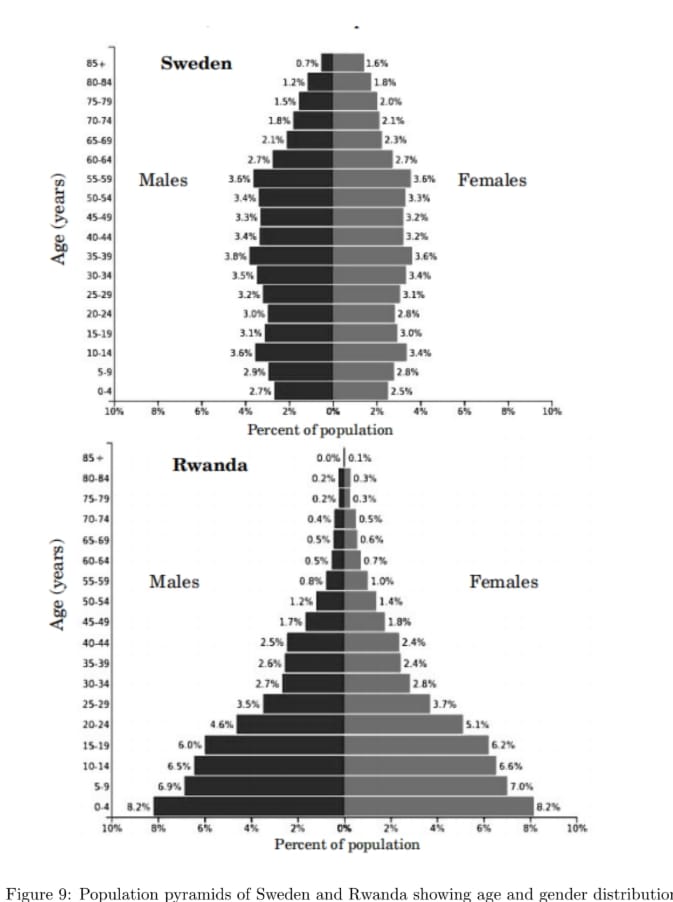
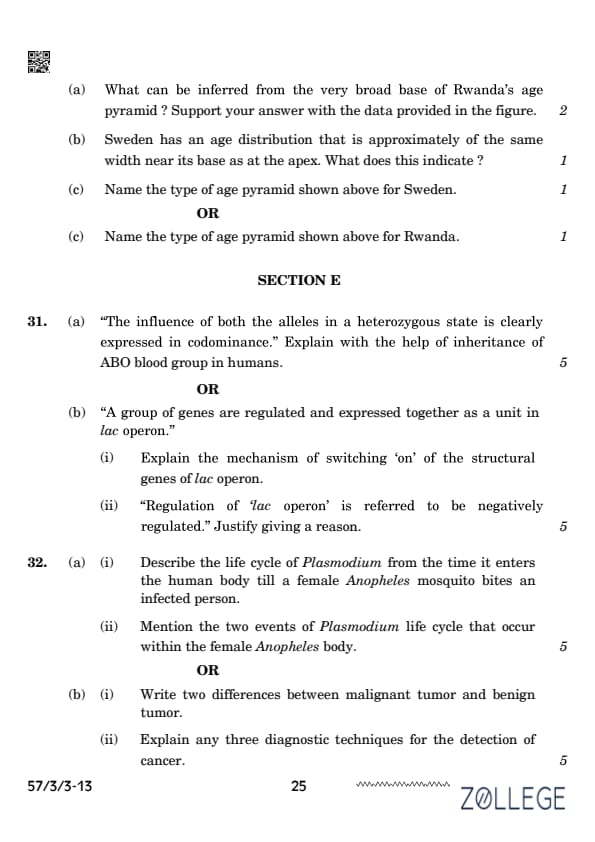
(a) What can be inferred from the very broad base of Rwanda’s age pyramid? Support your answer with the data provided in the figure.
View Solution
The broad base of Rwanda’s age pyramid indicates:
• A high birth rate and rapid population growth.
• A large percentage of the population consists of younger individuals, as shown by the higher proportions in the 0-14 age group.
(b) Sweden has an age distribution that is approximately of the same width near its base as at the apex. What does this indicate?
View Solution
Sweden’s age pyramid indicates:
• A stable population with low birth and death rates.
• The percentage of individuals in all age groups is nearly uniform, suggesting a balanced demographic.
(c) Name the type of age pyramid shown above for Sweden.
View Solution
Stationary age pyramid.
(d) Name the type of age pyramid shown above for Rwanda.
View Solution
Expanding age pyramid.
Question 31:
(a) “The influence of both the alleles in a heterozygous state is clearly expressed in codominance.” Explain with the help of inheritance of ABO blood group in humans.
View Solution
Codominance is observed when both alleles in a heterozygous state express equally.
• Example: ABO blood group inheritance.
• IA and IB alleles: These are codominant, while the i allele is recessive.
• A person with the IAIB genotype has an AB blood group because both IA and IB are expressed.
OR
(b) (i) Explain the mechanism of switching ‘on’ of the structural genes of lac operon.
View Solution
In the presence of lactose:
• Lactose binds to the repressor protein, inactivating it.
• The repressor can no longer bind to the operator region.
• RNA polymerase transcribes the structural genes, producing enzymes for lactose metabolism.
(ii) “Regulation of lac operon is referred to be negatively regulated.” Justify giving a reason.
View Solution
The lac operon is negatively regulated because:
• The repressor protein inhibits gene expression by binding to the operator region in the absence of lactose.
• Gene transcription is only initiated when lactose is available to inactivate the repressor.
Question 32:
(a) Describe the life cycle of Plasmodium from the time it enters the human body till a female Anopheles mosquito bites an infected person.
View Solution
The life cycle of Plasmodium:
• Sporozoites enter the human bloodstream via a mosquito bite and infect liver cells.
• They multiply in liver cells to form merozoites, which are released into the bloodstream.
• Merozoites infect red blood cells, multiply, and cause cell rupture.
• Gametocytes are formed and circulate in the blood.
• When a mosquito bites, gametocytes are taken up, continuing the cycle.
Question 32:
(b) Mention the two events of Plasmodium life cycle that occur within the female Anopheles body.
View Solution
• Gametocytes develop into male and female gametes.
• Zygote formation occurs, followed by the development of sporozoites, which migrate to the salivary glands of the mosquito.
OR
(b) (i) Write two differences between malignant tumor and benign tumor.
View Solution
• Malignant Tumor:
– These are cancerous tumors that invade and destroy surrounding tissues.
– They can metastasize, meaning they spread to distant parts of the body through blood or lymph.
• Benign Tumor:
– These are non-cancerous tumors that grow slowly and remain localized.
– They do not invade surrounding tissues or spread to other parts of the body.
(ii) Explain any three diagnostic techniques for the detection of cancer.
View Solution
Three diagnostic techniques for the detection of cancer are:
• Biopsy: A small tissue sample is removed from the suspected area and examined under a microscope to detect cancerous cells.
• Imaging Techniques:
– X-rays: Used to detect abnormalities in bones or organs.
– MRI (Magnetic Resonance Imaging): Provides detailed images of soft tissues to detect tumors.
• Blood Tests: Detect tumor markers (specific proteins or substances) produced by cancer cells.
Question 33:
(a) (i) Explain any four devices that flowering plants have developed to encourage cross-pollination.
View Solution
Flowering plants have developed the following devices to encourage cross-pollination:
• Dichogamy: Temporal separation of male and female reproductive organ maturity (e.g., protandry in sunflower).
• Self-incompatibility: Genetic mechanism that prevents self-pollen germination (e.g., Brassica).
• Herkogamy: Physical barrier between male and female organs to prevent self-pollination (e.g., hibiscus).
• Monoecy and Dioecy: Separation of male and female flowers on the same or different plants (e.g., maize and papaya).
(ii) Why do plants discourage self-pollination? State any one reason.
View Solution
Self-pollination is discouraged as it leads to inbreeding depression, reducing genetic variability and adaptability in plants.
OR
(b) Explain the ovarian and uterine events taking place along with the role of pituitary and ovarian hormones, during menstrual cycle in a normal human female under the following phases:
(i) Follicular phase/proliferative phase
View Solution
• Ovarian events: Development of primary follicle into a mature Graafian follicle.
• Uterine events: Regeneration of the endometrium.
• Hormones: Secretion of FSH and estrogen stimulates follicular growth and endometrial repair.
(ii) Luteal phase/secretory phase
View Solution
• Ovarian events: Formation of corpus luteum from the ruptured follicle.
• Uterine events: Thickening of the endometrium for implantation.
• Hormones: Progesterone secretion by the corpus luteum prepares the uterus for implantation.
(iii) Menstrual phase
View Solution
• Ovarian events: Degeneration of corpus luteum if fertilization does not occur.
• Uterine events: Shedding of the endometrial lining and bleeding.
• Hormones: Decrease in progesterone and estrogen levels triggers menstruation.
*The article might have information for the previous academic years, please refer the official website of the exam.