
CBSE Class 12 Biology set 2 Question Paper Pdf - Check Solutions with Answer Key Pdf

.jpg?tr=h-55,w-55,c-force)
Content Strategist|Tech-innovator|National Hackathon Winner | Updated On - Jan 24, 2025
CBSE Class 12 2024 Biology Set 3 Question Paper (Paper Code: 57/4/3) is available for download. The exam was successfully conducted by CBSE on March 19 in the morning session from 10:30 AM to 1:30 PM. As per the student’s initial reactions, the CBSE Class 12 2024 Biology Set 3 Question Paper was reported as Moderate. The Ecology section in the CBSE Class 12 2024 Biology Set 3 Question Paper was reported as Easy to Moderate, Genetics and Evolution as Challenging, and Human Physiology as Moderate.
CBSE Class 12 2024 Biology Set 3 57/4/3 Question Paper with Answer Key PDF
Candidates can download the CBSE Class 12 Biology Question Paper with Solution and Answer Key PDFs for Set 3 Question Paper (Code: 57/4/3) using the link below.
| CBSE Class 12 2024 Biology Question Paper with Answer Key |  Download Download |
Check Solution |
CBSE Class 12 2024 Biology Questions with Solutions
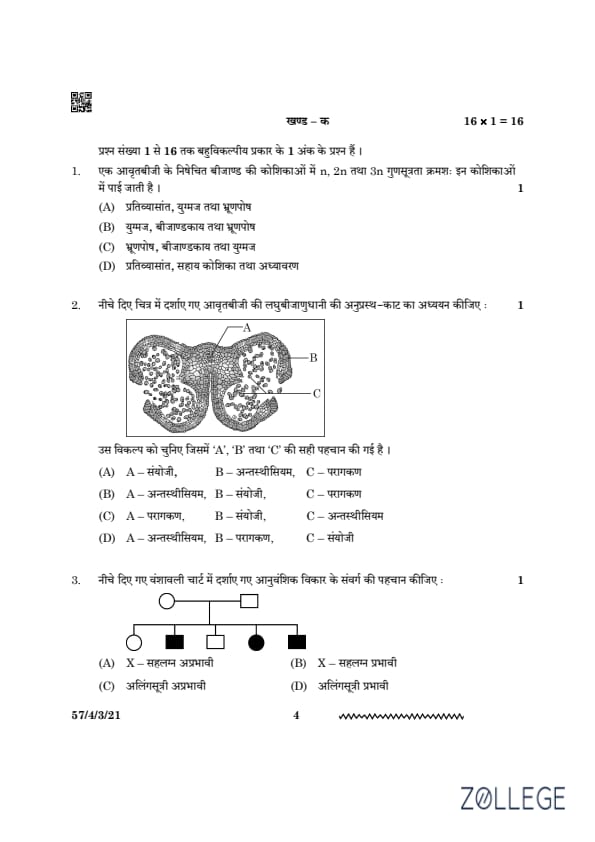
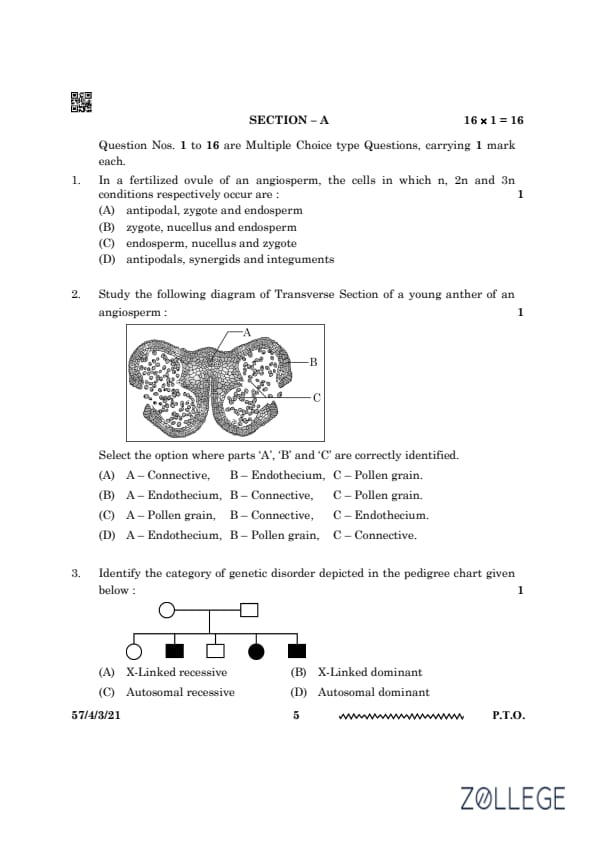
SECTION - A
Question 1:
In a fertilized ovule of an angiosperm, the cells in which n, 2n, and 3n conditions respectively occur are:
View Solution
- n (haploid): Found in antipodal cells.
- 2n (diploid): Found in the zygote formed by fertilization.
- 3n (triploid): Found in the endosperm formed by double fertilization.
This distribution of ploidy levels is a characteristic feature of angiosperm reproduction.
Question 2:
Study the following diagram of the transverse section of a young anther of an angiosperm. Identify the correctly labeled parts:

View Solution
- A – Connective: Tissue joining the two lobes of the anther.
- B – Endothecium: The outer layer of the pollen sac that provides mechanical support.
- C – Pollen grain: The male gametophyte formed within the pollen sac.
The anther is a bilobed structure that contains microsporangia, which develop into pollen sacs housing pollen grains.
Question 3:
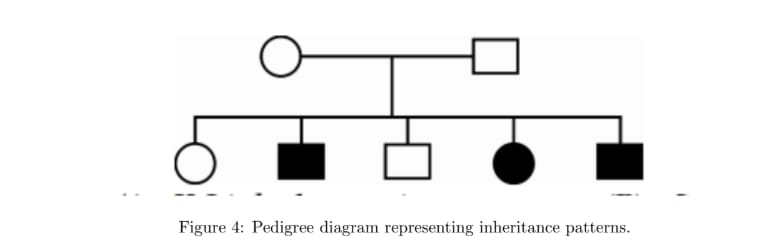
Identify the category of genetic disorder depicted in the pedigree chart below:
View Solution
- The disorder is seen in both males and females, indicating autosomal inheritance.
- It skips generations, suggesting recessive inheritance.
- Affected offspring have parents who are carriers of the recessive allele.
Autosomal recessive disorders often require both parents to contribute the recessive allele for the disorder to manifest in offspring.
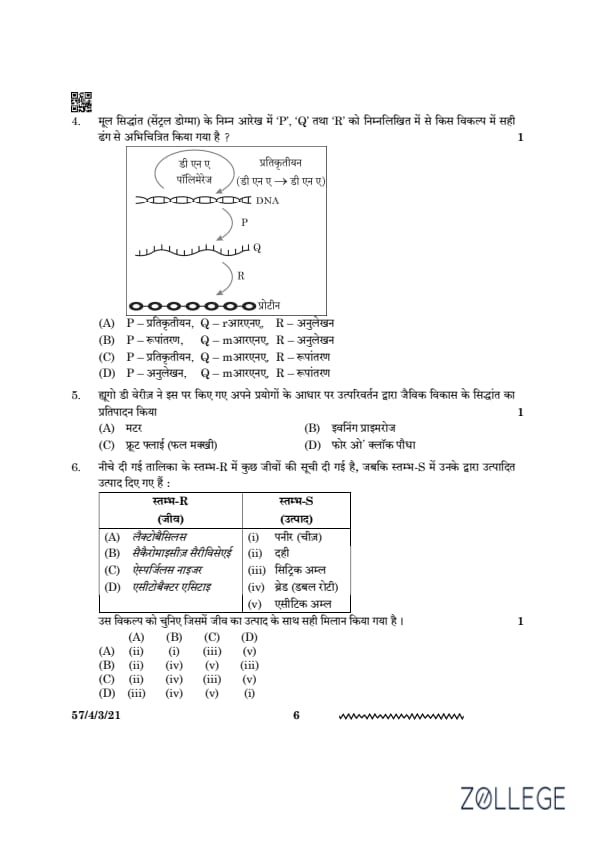
Question 4:
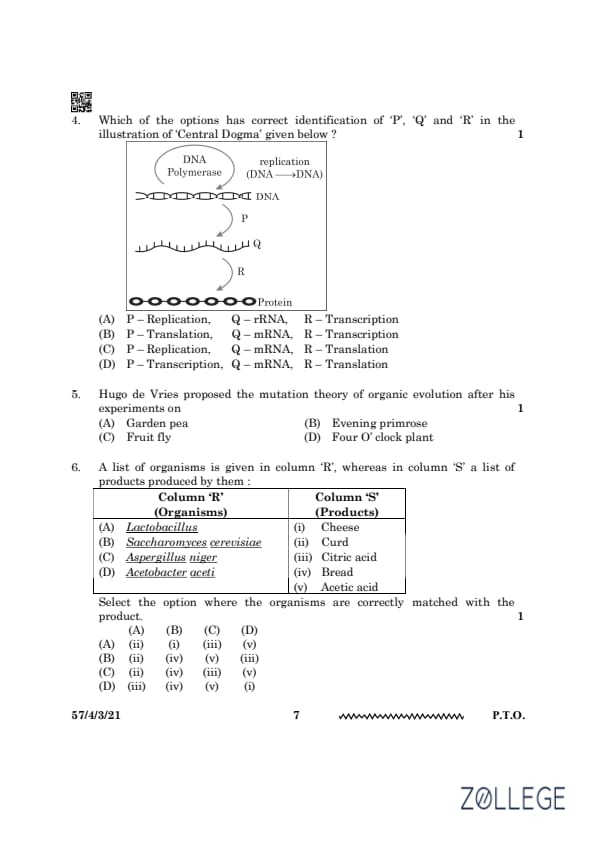
Which of the options has correct identification of ‘P’, ‘Q’, and ‘R’ in the illustration of ‘Central Dogma’?

View Solution
- P – Transcription: The process of synthesizing mRNA from DNA.
- Q – mRNA: Serves as a template for protein synthesis.
- R – Translation: The process where the mRNA sequence is decoded to synthesize a protein.
The Central Dogma describes the flow of genetic information from DNA to RNA to Protein.
Question 5:
Hugo de Vries proposed the mutation theory of organic evolution after his experiments on:
(A) Garden pea
(B) Evening primrose
(C) Fruit fly
(D) Four O’clock plant
View Solution
- Correct Answer: (B) Evening primrose
- Solution: Hugo de Vries observed sudden heritable changes (mutations) while working with the evening primrose plant (Oenothera lamarckiana). His mutation theory proposed that these sudden changes serve as the basis for evolution, introducing new traits into populations.
Question 6:
A list of organisms is given in column ‘R’, whereas in column ‘S’ a list of products produced by them:
| Column ‘R’ (Organisms) | Column ‘S’ (Products) |
|---|---|
| Lactobacillus | Cheese |
| Saccharomyces cerevisiae | Curd |
| Aspergillus niger | Citric acid |
| Acetobacter aceti | Acetic acid |
Select the option where the organisms are correctly matched with the product:
(A) (ii) (iii) (iv) (i)
(B) (ii) (iv) (iii) (i)
(C) (iii) (ii) (iv) (i)
(D) (iii) (iv) (i) (ii)
View Solution
- Correct Answer: (C) (iii) (ii) (iv) (i)
- Solution: The correct matches between the organisms and the products they produce are:
- Lactobacillus – Cheese
- Saccharomyces cerevisiae – Curd
- Aspergillus niger – Citric acid
- Acetobacter aceti – Acetic acid
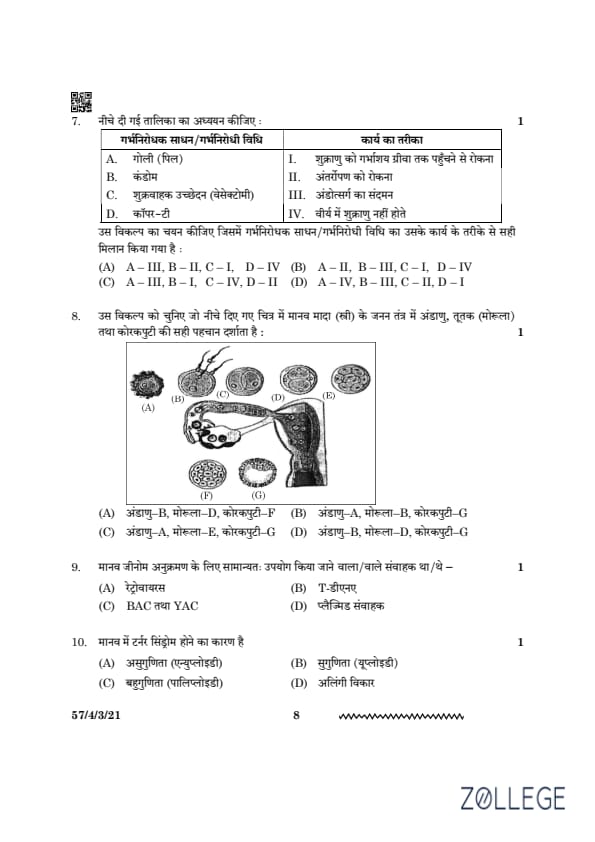
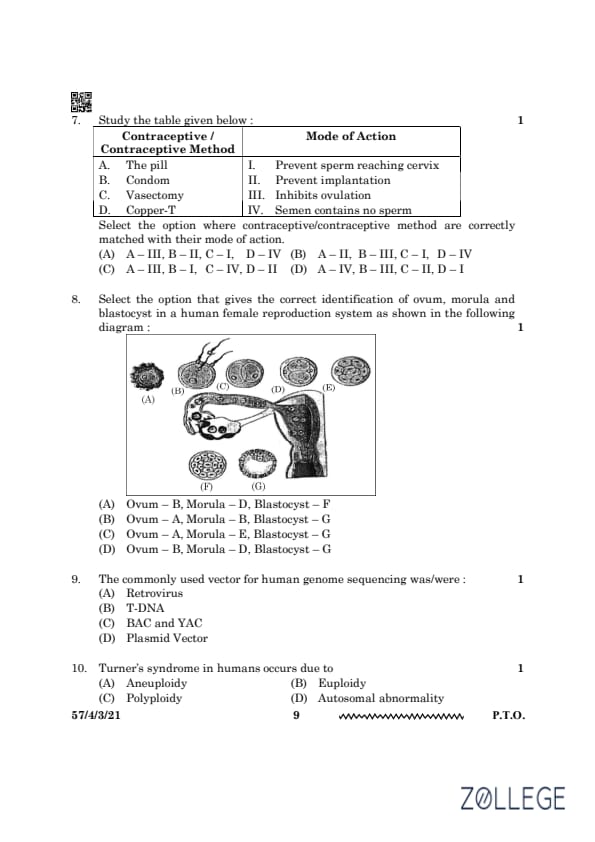
Question 7:
Study the table given below:
| Contraceptive | Mode of Action |
|---|---|
| A. The pill | I. Prevent sperm reaching cervix |
| B. Condom | II. Prevent implantation |
| C. Vasectomy | III. Inhibits ovulation |
| D. Copper-T | IV. Semen contains no sperm |
Select the option where contraceptive/contraceptive method are correctly matched with their mode of action:
(A) A – III, B – I, C – I, D – IV
(B) A – III, B – I, C – IV, D – II
(C) A – III, B – I, C – IV, D – III
(D) A – IV, B – III, C – II, D – I
View Solution
- Correct Answer: (B) A – III, B – I, C – IV, D – II
- Solution:
- A. The pill – III. Inhibits ovulation
- B. Condom – I. Prevent sperm reaching cervix
- C. Vasectomy – IV. Semen contains no sperm
- D. Copper-T – II. Prevent implantation
Question 8:
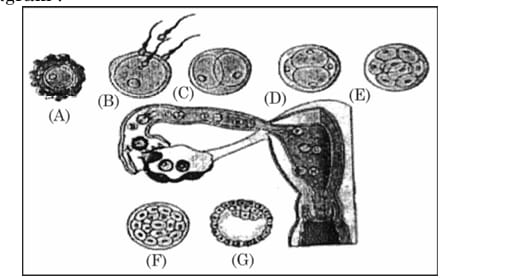
Select the option that gives the correct identification of ovum, morula, and blastocyst in a human female reproduction system as shown in the following diagram:
(A) Ovum – B, Morula – D, Blastocyst – F
(B) Ovum – A, Morula – B, Blastocyst – G
(C) Ovum – A, Morula – E, Blastocyst – G
(D) Ovum – B, Morula – D, Blastocyst – G
View Solution
- Correct Answer: (C) Ovum – A, Morula – E, Blastocyst – G
- Solution: Based on the stages of development in the female reproductive system:
- Ovum (A): The unfertilized egg
- Morula (E): The solid mass of cells resulting from cleavage of the fertilized egg
- Blastocyst (G): The structure that implants into the uterine wall for further development
Question 9:
The commonly used vector for human genome sequencing was/were:
(A) Retrovirus
(B) T-DNA
(C) BAC and YAC
(D) Plasmid Vector
View Solution
- Correct Answer: (C) BAC and YAC
- Solution: BAC (Bacterial Artificial Chromosome) and YAC (Yeast Artificial Chromosome) were used as vectors in the Human Genome Project due to their capacity to clone large fragments of DNA efficiently.
Question 10:
Turner’s syndrome in humans occurs due to:
(A) Aneuploidy
(B) Euploidy
(C) Polyploidy
(D) Autosomal abnormality
View Solution
- Correct Answer: (A) Aneuploidy
- Solution: Turner’s syndrome is a chromosomal disorder caused by the presence of only one X chromosome in females (45, X). This is an example of aneuploidy, which refers to the presence of an abnormal number of chromosomes.
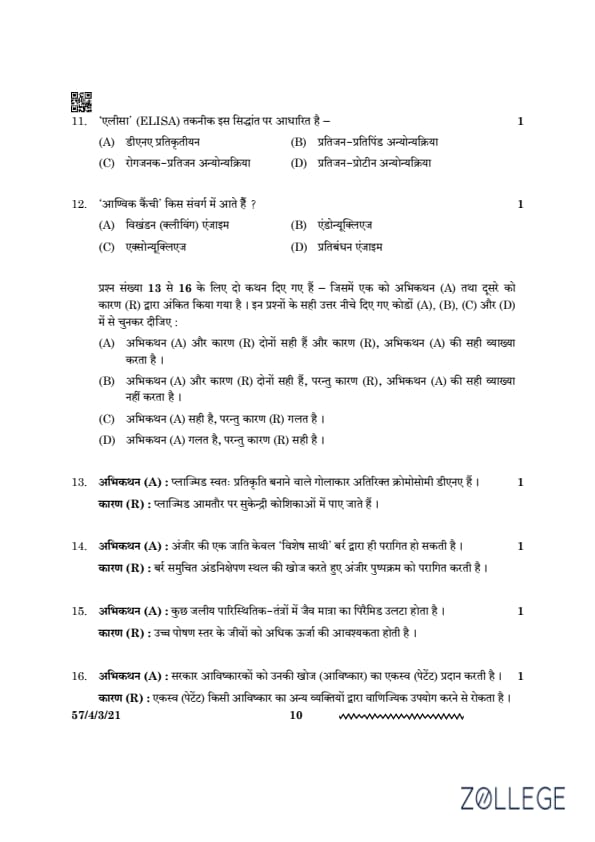
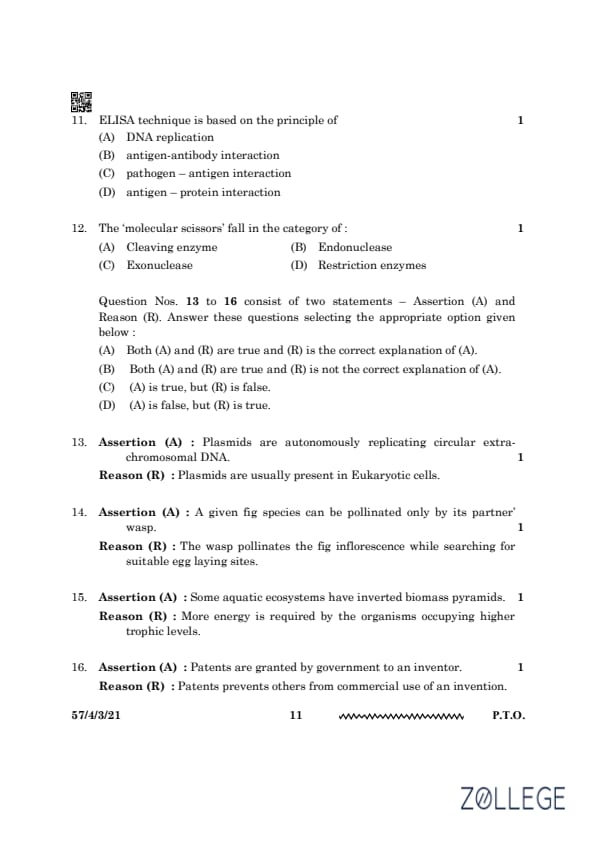
Question 11:
ELISA technique is based on the principle of:
(A) DNA replication
(B) Antigen-antibody interaction
(C) Pathogen-antigen interaction
(D) Antigen-protein interaction
View Solution
- Correct Answer: (B) Antigen-antibody interaction
- Solution: ELISA (Enzyme-Linked Immunosorbent Assay) detects and quantifies antigens or antibodies using the principle of antigen-antibody interaction. This method is widely used for diagnostic purposes in medical and research fields.
Question 12:
The ‘molecular scissors’ fall in the category of:
(A) Cleaving enzyme
(B) Endonuclease
(C) Exonuclease
(D) Restriction enzymes
View Solution
- Correct Answer: (D) Restriction enzymes
- Solution: Restriction enzymes, also known as molecular scissors, cut DNA at specific sequences called recognition sites. These enzymes are essential tools in genetic engineering and molecular biology.
Question 13:
Assertion (A): Plasmids are autonomously replicating circular extra-chromosomal DNA.
Reason (R): Plasmids are usually present in eukaryotic cells.
Select the appropriate option:
(A) Both (A) and (R) are true and (R) is the correct explanation of (A).
(B) Both (A) and (R) are true and (R) is not the correct explanation of (A).
(C) (A) is true, but (R) is false.
(D) (A) is false, but (R) is true.
View Solution
- Correct Answer: (C) (A) is true, but (R) is false
- Solution: Plasmids are autonomously replicating circular DNA molecules found in prokaryotic cells, not eukaryotic cells. These plasmids are widely used as vectors in genetic engineering.
Question 14:
Assertion (A): A given fig species can be pollinated only by its partner wasp.
Reason (R): The wasp pollinates the fig inflorescence while searching for suitable egg-laying sites.
Select the appropriate option:
(A) Both (A) and (R) are true and (R) is the correct explanation of (A).
(B) Both (A) and (R) are true and (R) is not the correct explanation of (A).
(C) (A) is true, but (R) is false.
(D) (A) is false, but (R) is true.
View Solution
- Correct Answer: (A) Both (A) and (R) are true and (R) is the correct explanation of (A)
- Solution: The mutualistic relationship between figs and fig wasps involves the wasp pollinating the fig flowers while depositing eggs. This ensures species-specific pollination.
Question 15:
Assertion (A): Some aquatic ecosystems have inverted biomass pyramids.
Reason (R): More energy is required by the organisms occupying higher trophic levels.
Select the appropriate option:
(A) Both (A) and (R) are true and (R) is the correct explanation of (A).
(B) Both (A) and (R) are true and (R) is not the correct explanation of (A).
(C) (A) is true, but (R) is false.
(D) (A) is false, but (R) is true.
View Solution
- Correct Answer: (B) Both (A) and (R) are true and (R) is not the correct explanation of (A)
- Solution: Inverted biomass pyramids occur in aquatic ecosystems because the biomass of primary producers (phytoplankton) is smaller but reproduces rapidly, supporting higher trophic levels. The reason provided is true, but it is not the correct explanation for inverted biomass pyramids. Energy typically decreases with increasing trophic levels, but rapid reproduction of primary producers compensates for their low biomass.
Question 16:
Assertion (A): Patents are granted by the government to an inventor.
Reason (R): Patents prevent others from commercial use of an invention.
Select the appropriate option:
(A) Both (A) and (R) are true and (R) is the correct explanation of (A).
(B) Both (A) and (R) are true and (R) is not the correct explanation of (A).
(C) (A) is true, but (R) is false.
(D) (A) is false, but (R) is true.
View Solution
- Correct Answer: (A) Both (A) and (R) are true and (R) is the correct explanation of (A).
- Solution: Patents are legal rights granted to inventors to protect their innovations, preventing unauthorized commercial use by others. The reason correctly explains the assertion.
SECTION B
Question 17:
(a) Name the first developed transgenic cow:
View Solution
- Correct Answer: Rosie
- Solution: Rosie was the first transgenic cow developed in 1997. It produced milk enriched with human protein (alpha-lactalbumin), making it more nutritionally suitable for infants.
(b) Explain the improvement in the quality of the milk produced by it:
View Solution
- Correct Answer: The milk contained human alpha-lactalbumin.
- Solution: Rosie’s milk was enriched with human alpha-lactalbumin, making it nutritionally superior. This milk provided essential proteins required for infant growth and development.
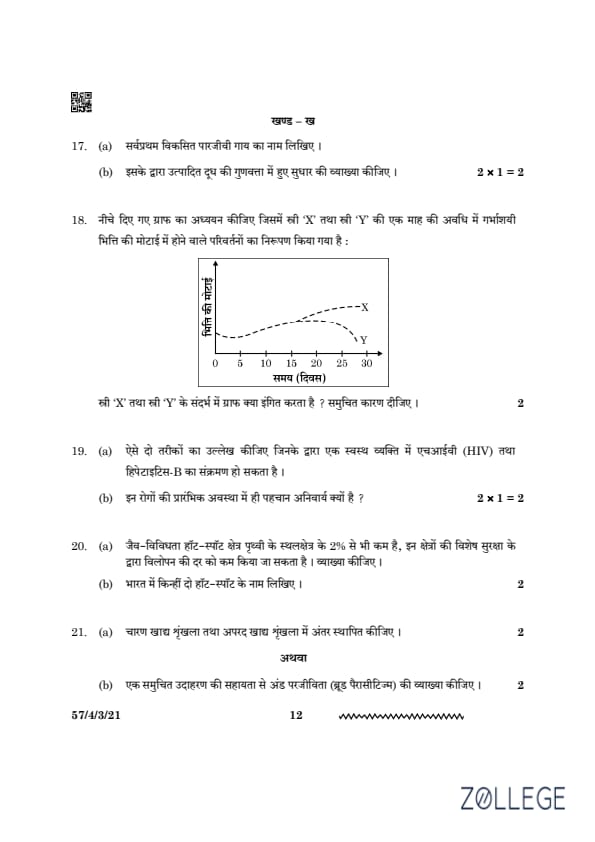
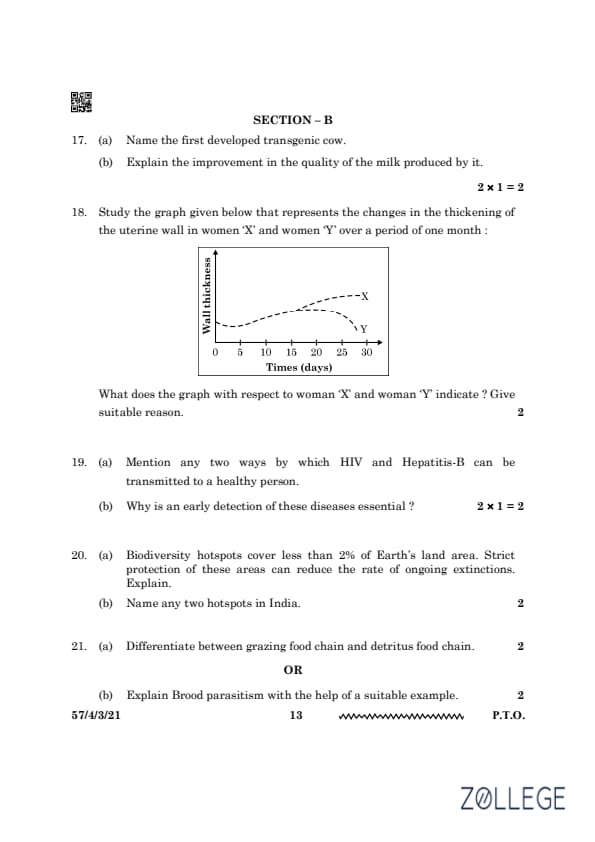
Question 18:
Study the graph given below that represents the changes in the thickening of the uterine wall in women ‘X’ and women ‘Y’ over a period of one month:

What does the graph with respect to woman ‘X’ and woman ‘Y’ indicate? Give a suitable reason:
View Solution
- Correct Answer: Woman ‘X’ indicates pregnancy; Woman ‘Y’ indicates no pregnancy.
- Solution:
- In woman ‘X,’ the uterine wall continues to thicken after ovulation, indicating successful implantation and pregnancy.
- In woman ‘Y,’ the uterine wall thickness reduces after ovulation, indicating no fertilization, leading to menstruation.
Question 19:
(a) Mention any two ways by which HIV and Hepatitis-B can be transmitted to a healthy person:
View Solution
- Correct Answer:
- Unprotected sexual contact.
- Sharing of contaminated needles.
(b) Why is an early detection of these diseases essential?
View Solution
- Correct Answer: Early detection helps in timely treatment and prevents disease progression.
- Solution:
- HIV and Hepatitis-B can spread through unprotected sexual contact, blood transfusion, or contaminated syringes.
- Early detection helps in timely management, reduces transmission risk, and improves patient outcomes.
Question 20:
(a) Biodiversity hotspots cover less than 2% of Earth’s land area. Strict protection of these areas can reduce the rate of ongoing extinctions. Explain:
View Solution
- Correct Answer: Biodiversity hotspots have high species richness and endemic species. Protecting these areas prevents habitat destruction and species extinction.
- Solution:
- Biodiversity hotspots are regions with a high level of species richness and endemic species under threat due to human activities.
- Protection efforts such as habitat restoration, creating reserves, and sustainable practices help in preserving these species.
(b) Name any two hotspots in India:
View Solution
- Correct Answer:
- Western Ghats
- Indo-Burma region
Question 21:
(a) Differentiate between grazing food chain and detritus food chain:
View Solution
- Correct Answer:
- Grazing food chain:
- Starts with living plants (producers) that are consumed by herbivores (primary consumers).
- Example: Grass → Grasshopper → Frog → Snake.
- Detritus food chain:
- Begins with dead organic matter (detritus) that is consumed by decomposers (detritivores) like fungi and bacteria.
- Example: Dead leaves → Earthworm → Bird.
- Grazing food chain:
OR
(b) Explain brood parasitism with the help of a suitable example:
View Solution
- Correct Answer: Brood parasitism is when a bird lays its eggs in the nest of another bird species, letting the host bird incubate and raise its young. Example: Cuckoo lays eggs in the crow’s nest.
- Solution: Brood parasitism involves one species, like the cuckoo, exploiting another species (e.g., crow) to raise its offspring. The parasitic bird’s eggs mimic the host’s eggs to avoid detection.
SECTION C
Question 22:
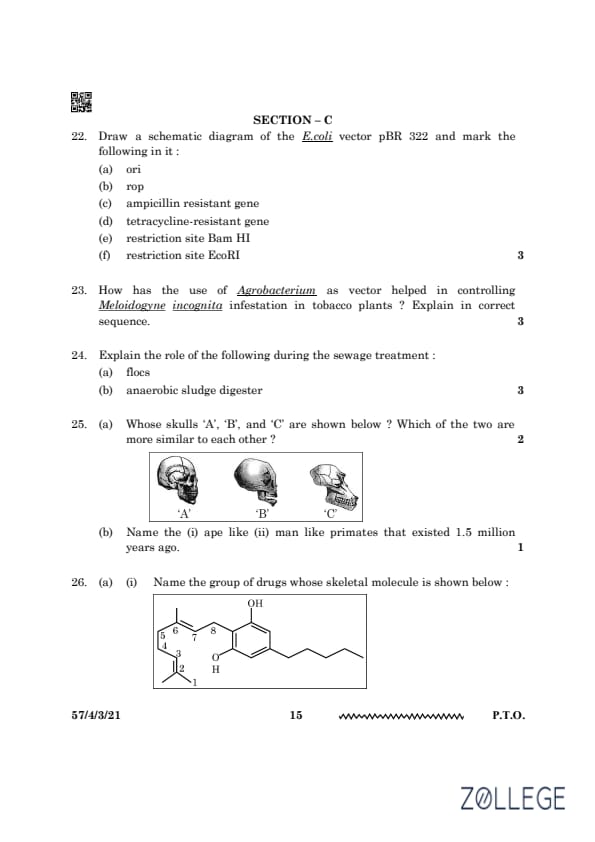
Draw a schematic diagram of the E.coli vector pBR322 and mark the following in it:
- (a) ori
- (b) rop
- (c) ampicillin-resistant gene
- (d) tetracycline-resistant gene
- (e) restriction site BamHI
- (f) restriction site EcoRI
View Solution
Figure 1: Schematic diagram of the E.coli vector pBR322 with marked features.
- ori: Origin of replication.
- rop: Codes for proteins to regulate plasmid replication.
- Ampicillin-resistant gene: Labeled as 'ampR'.
- Tetracycline-resistant gene: Labeled as 'tetR'.
- Restriction site BamHI: Located at a specific position on the vector.
- Restriction site EcoRI: Located at a specific position on the vector.

Question 23:
How has the use of Agrobacterium as a vector helped in controlling Meloidogyne incognita infestation in tobacco plants? Explain in correct sequence:
View Solution
- Correct Answer: Agrobacterium tumefaciens is used to transfer nematode-specific genes into tobacco plants, producing RNA interference (RNAi) that silences the gene responsible for infestation.
- Solution:
- A nematode-specific gene is introduced into the tobacco plant using Agrobacterium tumefaciens.
- The plant produces double-stranded RNA (dsRNA), initiating RNA interference (RNAi).
- RNAi silences the vital genes of Meloidogyne incognita, reducing infestation and damage.
Question 24:
Explain the role of the following during sewage treatment:
(a) Flocs:
View Solution
- Correct Answer: Flocs: Aggregates of bacteria and fungi that degrade organic matter during the secondary treatment of sewage.
- Solution:
- Flocs are masses of aerobic bacteria and fungi that degrade organic matter, reducing Biochemical Oxygen Demand (BOD) in sewage water.
(b) Anaerobic sludge digester:
View Solution
- Correct Answer: Anaerobic sludge digester: Breaks down organic matter in sludge into biogas and stabilizes waste.
- Solution:
- The anaerobic sludge digester processes the settled sludge from the primary treatment under anaerobic conditions, producing biogas (methane, carbon dioxide) as a by-product.
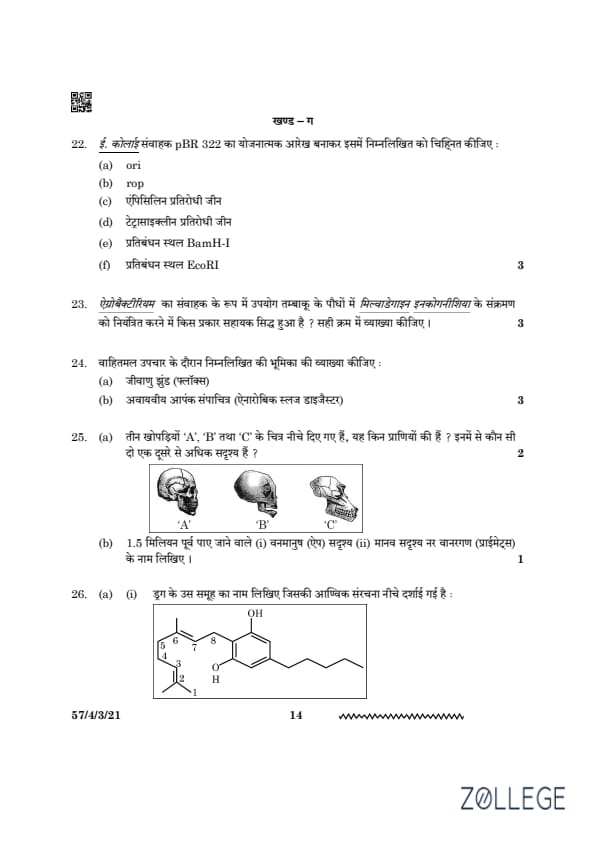
Question 25:
(a) Whose skulls ‘A’, ‘B’, and ‘C’ are shown below? Which of the two are more similar to each other?

View Solution
- Correct Answer:
- (A) Ape-like.
- (B) Man-like.
- (C) Similar to humans.
- Skulls (B) and (C) are more similar to each other.
(b) Name the (i) ape-like (ii) man-like primates that existed 1.5 million years ago:
View Solution
- Correct Answer:
- (i) Ape-like: Australopithecus.
- (ii) Man-like: Homo erectus.
Question 26:
(a) Name the group of drugs whose skeletal molecule is shown below:

View Solution
- Correct Answer: Steroids.
- Solution: Steroids are a group of lipophilic compounds with a characteristic four-ring structure, widely used in medicine as anti-inflammatory and hormonal drugs.
(ii) How are such drugs consumed?
View Solution
- Correct Answer: Steroids are usually consumed orally, injected, or applied topically, depending on their type and purpose.
(iii) Name the human body organ affected by the consumption of these drugs:
View Solution
- Correct Answer: Liver.
- Solution: The liver metabolizes steroids. Long-term or excessive use can damage the liver and other organs.
OR
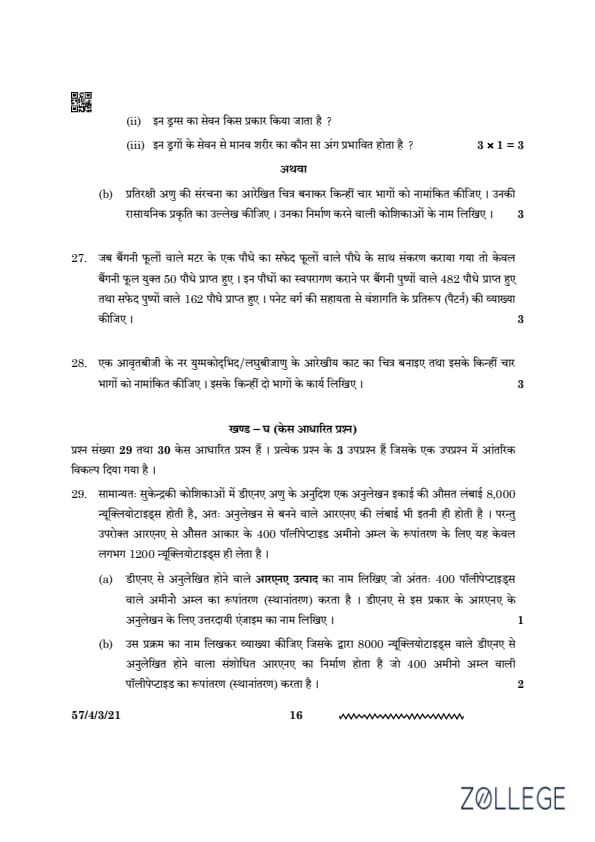
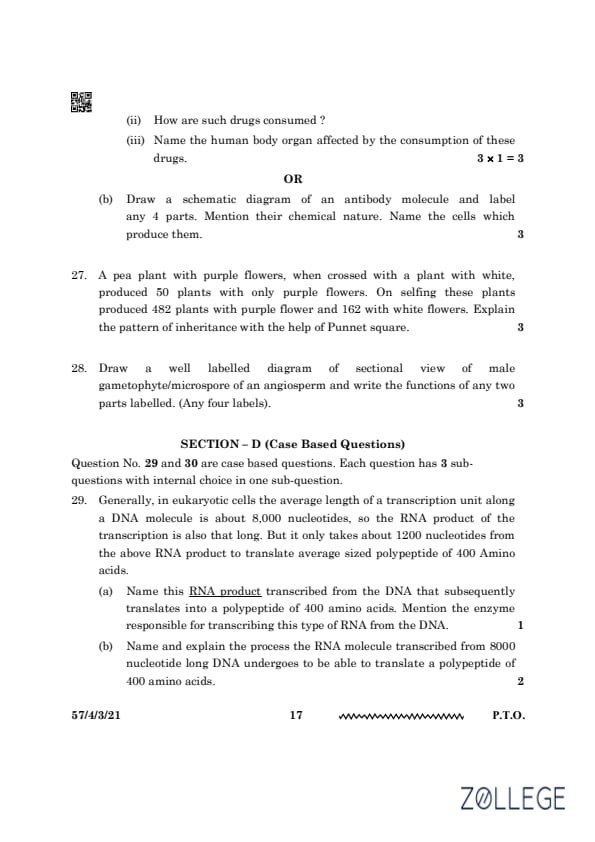
Draw a schematic diagram of an antibody molecule and label any 4 parts. Mention their chemical nature. Name the cells which produce them:
View Solution

- Correct Answer:
- Diagram: Antibody structure with labeled parts (e.g., heavy chain, light chain, antigen-binding site, disulfide bonds).
- Chemical nature: Antibodies are glycoproteins.
- Produced by: B-lymphocytes.
Question 27:
A pea plant with purple flowers, when crossed with a plant with white, produced 50 plants with only purple flowers. On selfing these plants, it produced 482 plants with purple flowers and 162 with white flowers. Explain the pattern of inheritance with the help of a Punnett square:
View Solution
- Correct Answer: This represents a monohybrid cross, where the purple flower trait is dominant over the white flower trait.
- Solution:
- The first generation (F1) produced only purple-flowered plants because purple is dominant.
- In the second generation (F2), the ratio of purple to white flowers is approximately 3:1.
		P: PP (purple) × pp (white)
		F1: All Pp (purple)

		F2 generation cross:
		P p × P p gives: PP, Pp, Pp, pp.

		Phenotypic ratio: 3 (purple):1 (white).
Question 28:
Draw a well-labeled diagram of a sectional view of the male gametophyte/microspore of an angiosperm and write the functions of any two parts labeled. (Any four labels):
View Solution

- Correct Answer:
- Diagram: Microspore with labeled parts (e.g., vegetative nucleus, generative nucleus, exine, intine).
- Functions:
- Vegetative nucleus: Controls pollen tube growth.
- Generative nucleus: Divides to form two male gametes for fertilization.
SECTION D
Question 29:
Read the following passage:
Generally, in eukaryotic cells, the average length of a transcription unit along a DNA molecule is about 8,000 nucleotides, so the RNA product of the transcription is also that long. But it only takes about 1200 nucleotides from the above RNA product to translate an average-sized polypeptide of 400 amino acids.
(a) Name this RNA product transcribed from the DNA that subsequently translates into a polypeptide of 400 amino acids. Mention the enzyme responsible for transcribing this type of RNA from the DNA:
View Solution
- Correct Answer:
- RNA product: mRNA.
- Enzyme: RNA polymerase II.
- Explanation: mRNA is transcribed from DNA and carries the genetic information for protein synthesis. RNA polymerase II is responsible for transcribing protein-coding genes in eukaryotes.
(b) Name and explain the process the RNA molecule transcribed from 8,000 nucleotides long DNA undergoes to be able to translate a polypeptide of 400 amino acids:
View Solution
- Correct Answer: RNA splicing.
- Solution:
- Introns (non-coding regions) are removed, and exons (coding regions) are joined to form a mature mRNA strand.
- This process reduces the RNA length to 1200 nucleotides, ready for translation.
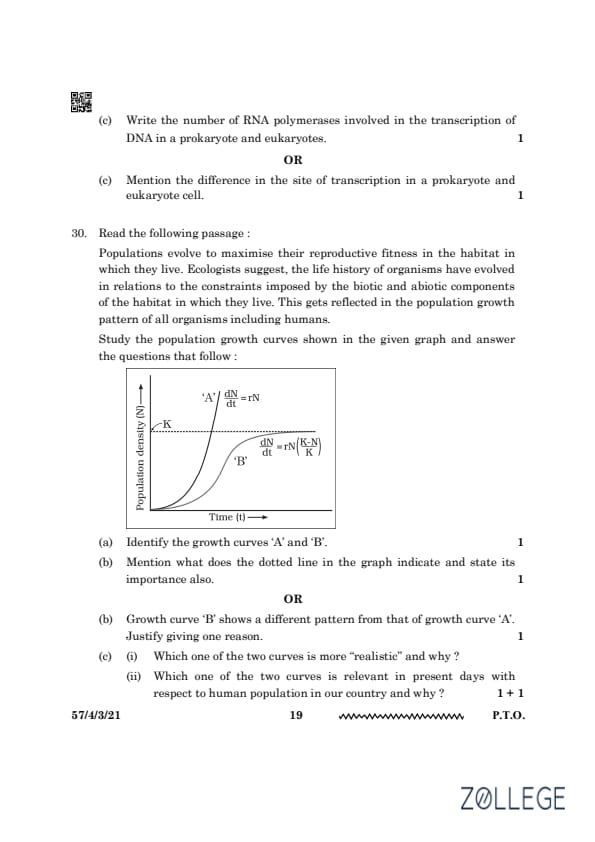
(c) Write the number of RNA polymerases involved in the transcription of DNA in a prokaryote and eukaryotes:
View Solution
- Correct Answer:
- Prokaryotes: One RNA polymerase.
- Eukaryotes: Three RNA polymerases (RNA polymerase I, II, and III).
OR
(c) Mention the difference in the site of transcription in a prokaryote and eukaryote cell:
View Solution
- Correct Answer:
- Prokaryotes: Transcription occurs in the cytoplasm.
- Eukaryotes: Transcription occurs in the nucleus.
- Explanation: The separation of transcription and translation in eukaryotes allows for RNA processing, which is absent in prokaryotes.
Question 30:
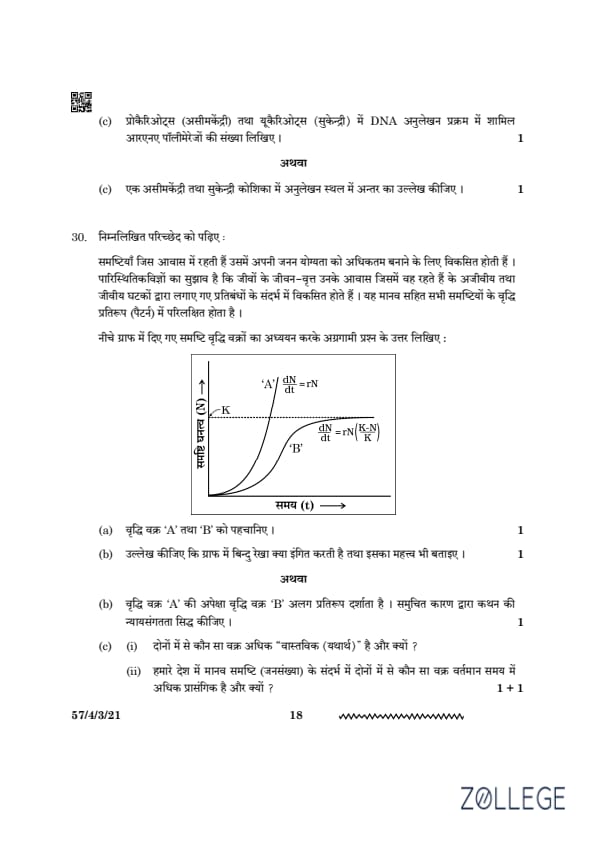
Read the passage: Populations evolve to maximise their reproductive fitness in the habitat in which they live. Ecologists suggest the life history of organisms evolves in relation to the constraints imposed by the biotic and abiotic components of the habitat. This is reflected in the population growth patterns of all organisms, including humans.

(a) Identify the growth curves ‘A’ and ‘B’ from the given graph:
View Solution
- Curve ‘A’: Exponential growth curve.
- Curve ‘B’: Logistic growth curve.
(b) What does the dotted line in the graph indicate? Explain its importance:
View Solution
- The dotted line indicates the carrying capacity (K).
- Importance: Carrying capacity represents the maximum population size that an environment can sustain indefinitely. It depends on resource availability and environmental constraints.
(c)(i) Growth curve ‘B’ shows a different pattern from that of growth curve ‘A’. Justify giving one reason:
View Solution
- Correct Answer: Growth curve ‘B’ considers environmental resistance (e.g., resource availability, competition), which limits population growth, unlike curve ‘A’.
(c)(ii) How does growth curve ‘B’ differ from curve ‘A’? Justify:
View Solution
- Curve ‘B’ (Logistic Growth): Accounts for environmental resistance, stabilizing population size as it approaches the carrying capacity.
- Curve ‘A’ (Exponential Growth): Assumes unlimited resources, which is unrealistic in natural environments.
(d) Which curve is more realistic and why?
View Solution
- Curve ‘B’ (Logistic Growth): It reflects real-world conditions where resources are limited, and competition regulates population size.
(e) Which curve is relevant to human population trends in our country and why?
View Solution
- Exponential growth curve (Curve ‘A’): Relevant because human populations continue to grow rapidly due to advancements in healthcare and technology.
- However, environmental challenges may enforce a shift to a logistic growth model over time.
SECTION E
Question 31:
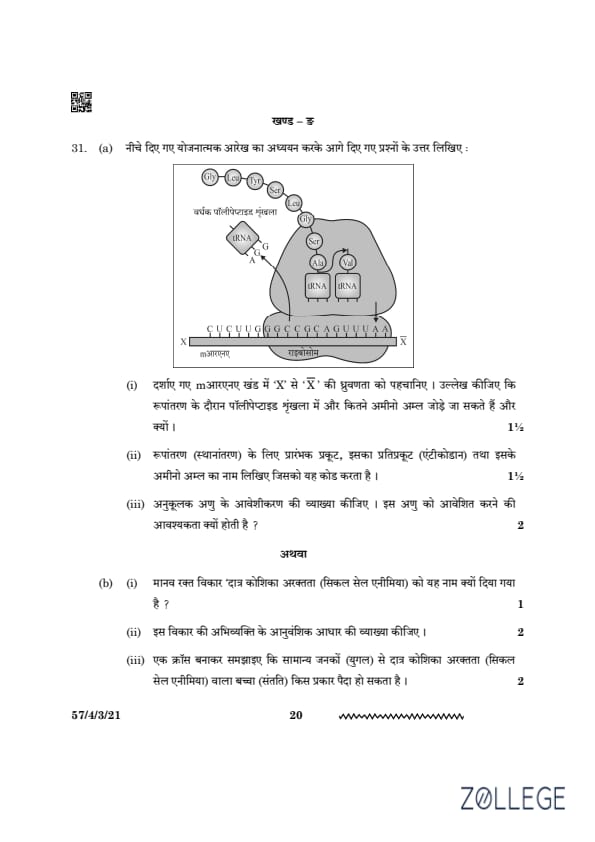
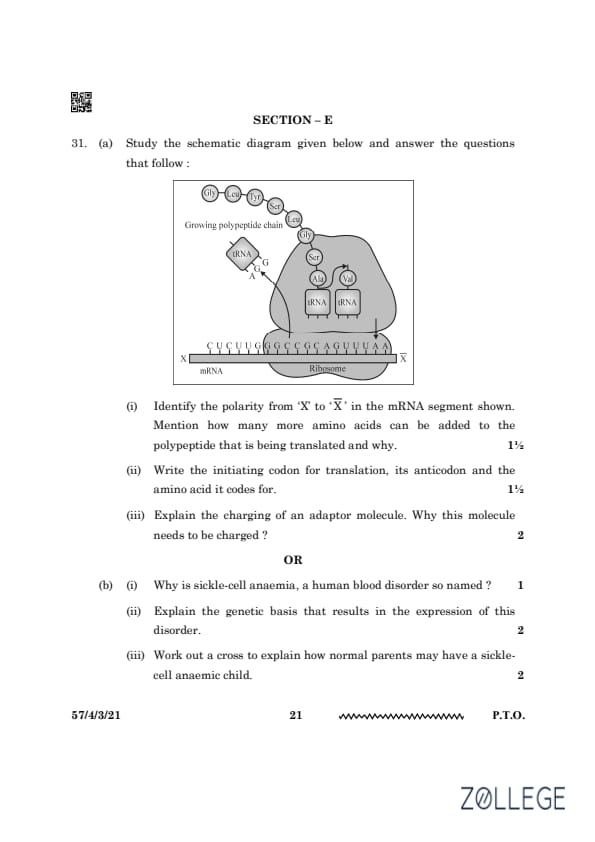
(a) Study the schematic diagram given below and answer the questions that follow:

(i) Identify the polarity from ‘X’ to ‘X′’ in the mRNA segment shown. Mention how many more amino acids can be added to the polypeptide that is being translated and why:
View Solution
- Correct Answer:
- Polarity: 5′ to 3′.
- Number of amino acids: 4 amino acids.
- Reason: Translation proceeds in the 5′ to 3′ direction, and the remaining codons in the segment can accommodate 4 amino acids.
(ii) Write the initiating codon for translation, its anticodon, and the amino acid it codes for:
View Solution
- Correct Answer:
- Initiating codon: AUG.
- Anticodon: UAC (on tRNA).
- Amino acid: Methionine.
(iii) Explain the charging of an adaptor molecule. Why does this molecule need to be charged?
View Solution
- Correct Answer:
- Charging of tRNA (adaptor molecule): The process involves attaching a specific amino acid to its corresponding tRNA with the help of the enzyme aminoacyl-tRNA synthetase and ATP.
- Need for charging: Charged tRNA delivers the correct amino acid to the ribosome during protein synthesis.
- Explanation: Charged tRNA ensures the fidelity of translation by accurately matching amino acids to their corresponding codons on the mRNA strand.
OR
(i) Why is sickle-cell anaemia, a human blood disorder, so named?
View Solution
- Correct Answer: Sickle-cell anaemia is named after the sickle-shaped red blood cells observed in affected individuals, caused by abnormal haemoglobin.
(ii) Explain the genetic basis that results in the expression of this disorder:
View Solution
- Correct Answer: The disorder is caused by a point mutation in the β-globin gene, resulting in the substitution of glutamic acid with valine at the sixth position of the haemoglobin molecule.
- Explanation: This mutation causes haemoglobin molecules to polymerize under low oxygen conditions, leading to the characteristic sickle shape of red blood cells.
(iii) Work out a cross to explain how normal parents may have a sickle-cell anaemic child:
View Solution
- Correct Answer:
		Parental Genotype: Both parents are carriers (HbA HbS).

		Punnett Square:

		      HbA     HbS
		HbA   HbAHbA  HbAHbS
		HbS   HbAHbS  HbSHbS

		Results:
		• 25% normal (HbAHbA).
		• 50% carriers (HbAHbS).
		• 25% sickle-cell anaemic (HbSHbS).
Question 32:
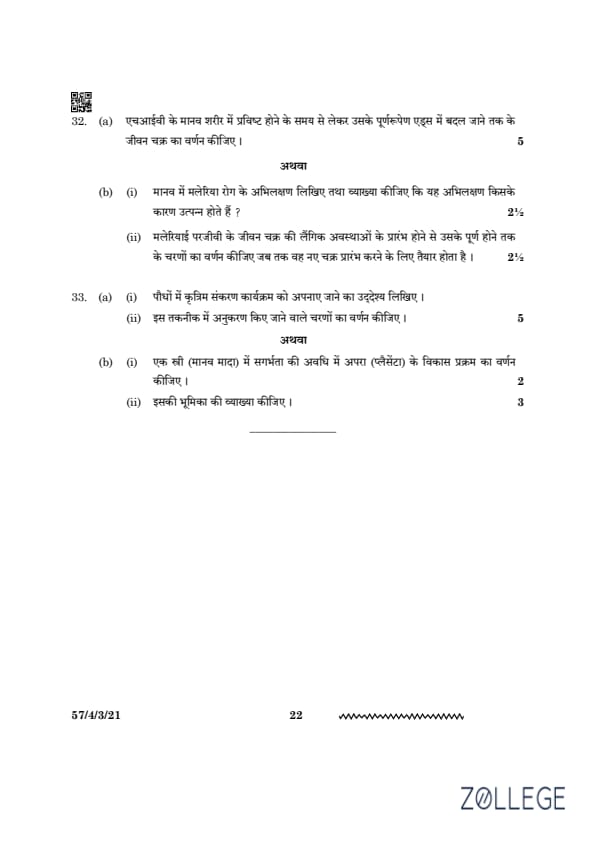
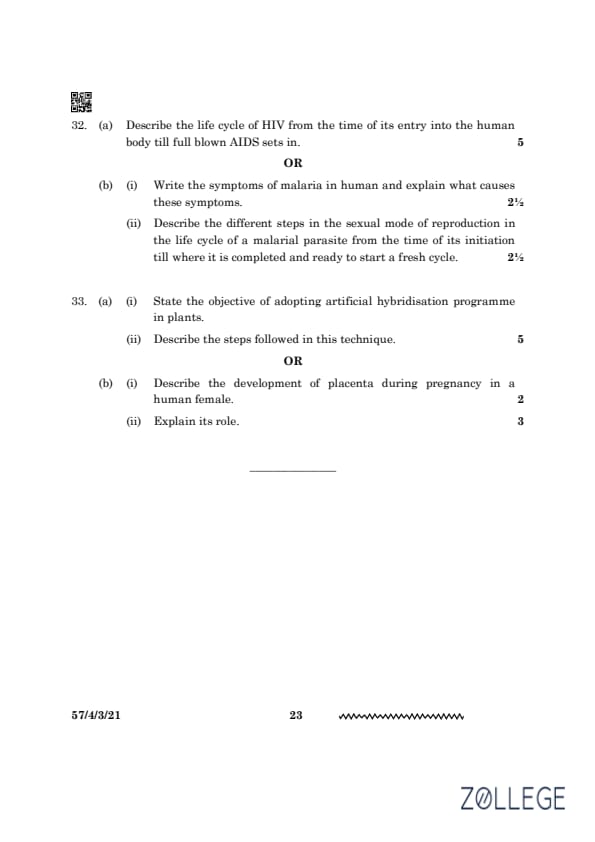
(a) Describe the life cycle of HIV from the time of its entry into the human body till full-blown AIDS sets in:
View Solution
- Entry and Integration: The virus enters the host body and attaches to CD4 receptors on helper T-cells. It injects its RNA and viral enzymes into the host cell.
- Reverse Transcription: Viral RNA is converted into DNA by reverse transcriptase.
- Integration: The viral DNA integrates into the host genome with the help of integrase enzyme.
- Replication and Assembly: The host cell machinery is used to produce viral RNA and proteins. New viruses are assembled.
- Release and Maturation: Newly formed viruses bud off from the host cell, ready to infect other cells. Over time, the number of helper T-cells decreases, leading to immune system failure (AIDS).
OR
(i) Write the symptoms of malaria in humans and explain what causes these symptoms:
View Solution
- Symptoms: Fever, chills, sweating, headache, muscle pain, and fatigue.
- Cause: Malaria is caused by Plasmodium parasites. These parasites infect red blood cells, causing their rupture and the release of toxins into the bloodstream.
(ii) Describe the different steps in the sexual mode of reproduction in the life cycle of a malarial parasite from the time of its initiation till where it is completed and ready to start a fresh cycle:
View Solution
- Gametocytes: Male and female gametocytes are ingested by a mosquito during a blood meal.
- Fertilization: Gametocytes fuse in the mosquito’s gut to form a zygote.
- Development: The zygote develops into an ookinete, which penetrates the gut wall and forms an oocyst.
- Sporozoites: The oocyst releases sporozoites that migrate to the mosquito’s salivary glands, ready to infect a new host.
Question 33:
(a)(i) State the objective of adopting artificial hybridisation programme in plants:
View Solution
- Objective: To obtain desired traits such as disease resistance, higher yield, or improved quality in plants by crossing two genetically different plants.
(ii) Describe the steps followed in this technique:
View Solution
- Emasculation: Removal of stamens from the bisexual flowers of the female parent to prevent self-pollination.
- Bagging: Covering the emasculated flower with a bag to prevent contamination from unwanted pollen.
- Pollination: Dusting pollen from the male parent onto the stigma of the female parent.
- Re-bagging: Re-covering the flower to ensure fertilization occurs without external interference.
OR
(i) Describe the development of placenta during pregnancy in a human female:
View Solution
- Development: The placenta develops from the chorionic villi of the embryo and the uterine tissue of the mother. It establishes a structural and functional connection between the fetus and the mother.
(ii) Explain its role:
View Solution
- Functions:
- Facilitates exchange of nutrients, gases, and waste products between the mother and fetus.
- Produces hormones such as hCG, progesterone, and estrogens to maintain pregnancy.
- Acts as a barrier to certain harmful substances while allowing essential nutrients to pass through.

*The article might have information for the previous academic years, please refer the official website of the exam.