
CBSE Class 12 Biology Set 2 Question Paper 2026 with Solution Pdf


| Updated On - Mar 27, 2026
CBSE Class 12 Biology Set 2 (57/5/2) Question Paper 2026 with Solution Pdf is available here for download.CBSE Board Class 12 Biology Paper 2026 was held on March 27, 2026. CBSE Board Class 12 question paper followed the latest syllabus and exam pattern prescribed by CBSE. CBSE Board Class 12 the examination was held in the first half from 10:30 AM to 1:30 PM. Students can download the official paper in PDF format for reference.
CBSE Class 12 Biology Question Paper 2026 with Solution Pdf Set 2 (57/5/2)
| CBSE Class 12 Biology Question Paper 2026 | Download PDF | Check Solutions |
In a human female, menstrual cycle of 28 days is represented by the diagram given below..

View Solution
Step 1: Understanding the Concept:
The diagram depicts the 28-day menstrual cycle. Phase I (Days 1-5) is the menstrual phase. Phase II (Days 6-13) is the follicular (proliferative) phase. Phase III (Days 15-28) is the luteal (secretory) phase following ovulation.
Step 2: Key Formula or Approach:
Identify the physiological changes and hormone dominances specific to each of the three phases to evaluate the options.
Step 3: Detailed Explanation:
Statement (A) is correct because during the follicular phase (Phase II), the primary follicle matures into a fully formed Graafian follicle.
Statement (B) is also correct because during the luteal phase (Phase III), the corpus luteum secretes a large amount of progesterone, which is essential to maintain the endometrium for pregnancy.
Statement (C) is incorrect because the corpus luteum is active in Phase III, not Phase I.
Step 4: Final Answer:
Since both statements (A) and (B) accurately describe their respective phases, the correct option is (D).
Quick Tip: Associate Phase II with Follicle Stimulating Hormone (FSH) and estrogen, and Phase III with Luteinizing Hormone (LH) and progesterone.
The cells of endosperm have 24 chromosomes. What will be the number of chromosomes in the gametes ?
View Solution
Step 1: Understanding the Concept:
In angiosperms, the endosperm is a product of triple fusion (fusion of a haploid male gamete with a diploid secondary nucleus) and is therefore triploid (\(3n\)). Gametes are always haploid (\(n\)).
Step 2: Key Formula or Approach:
Use the relation: \( 3n = Chromosomes in Endosperm \). From this, find the haploid number \(n\).
Step 3: Detailed Explanation:
Given the number of chromosomes in the endosperm is 24, we write:
\[ 3n = 24 \]
Solving for \(n\):
\[ n = \frac{24}{3} \]
\[ n = 8 \]
Since gametes are haploid, they will have 8 chromosomes.
Step 4: Final Answer:
The number of chromosomes in the gametes is 8. Option (A) is correct.
Quick Tip: Remember the standard ploidy levels: Gametes = \(n\), Somatic cells = \(2n\), Endosperm = \(3n\) (in angiosperms).
Select the odd option in the context of convergent evolution.
View Solution
Step 1: Understanding the Concept:
Convergent evolution results in analogous structures, which have different anatomical origins but perform similar functions. Divergent evolution results in homologous structures, which have a common origin but different functions.
Step 2: Key Formula or Approach:
Identify which option represents homologous structures (divergent evolution) rather than analogous structures (convergent evolution).
Step 3: Detailed Explanation:
Options (A), (B), and (C) are classic examples of convergent evolution. Their structures are anatomically different but adapted for the same functions (vision, swimming, gliding).
Option (D), thorns of Bougainvillea and tendrils of \textit{Cucurbita, both originate from axillary buds (same anatomical origin) but serve different functions (protection and climbing). This is divergent evolution.
Step 4: Final Answer:
Option (D) is the odd one out as it represents divergent evolution.
Quick Tip: Use the mnemonic HD-AC: \textbf{Homologous = \textbf{D}ivergent, \textbf{A}nalogous = \textbf{C}onvergent.
Monascus purpureus is a yeast used commercially in the production of which one of the following ?
View Solution
Step 1: Understanding the Concept:
Certain microbes are utilized industrially to produce bioactive molecules used in medicine and commercial applications.
Step 2: Key Formula or Approach:
Match the given microbe, \textit{Monascus purpureus, to its specific metabolic product based on standard textbook examples.
Step 3: Detailed Explanation:
Ethanol is produced by \textit{Saccharomyces cerevisiae.
Streptokinase is produced by the bacterium \textit{Streptococcus.
Citric acid is produced by the fungus \textit{Aspergillus niger.
Statins are produced by the yeast \textit{Monascus purpureus. They act as blood-cholesterol lowering agents.
Step 4: Final Answer:
\textit{Monascus purpureus produces Statins, making (D) the correct choice.
Quick Tip: Statins lower cholesterol by competitively inhibiting the enzyme responsible for cholesterol synthesis.
Given below is the restriction site of a restriction endonuclease Pst I and the cleavage sites on a DNA molecule.
5' C -- T -- G -- C -- A G 3'
3' G A -- C -- G -- T -- C 5'
Choose the option that gives the correct resultant fragments.
View Solution
Step 1: Understanding the Concept:
Restriction endonucleases cut DNA strands slightly away from the center of the palindromic sites, but between the same two bases on the opposite strands. This produces overhanging "sticky ends".
Step 2: Key Formula or Approach:
Trace the specified cuts (arrows) to mentally split the double-stranded sequence into two distinct left and right pieces.
Step 3: Detailed Explanation:
The enzyme cuts between A and G on the 5' \(\rightarrow\) 3' strand, and between G and A on the 3' \(\rightarrow\) 5' strand.
The left fragment gets the sequence up to 'A' on the top and just 'G' on the bottom:
5' C -- T -- G -- C -- A 3'
3' G 5'
The right fragment gets the remaining 'G' on the top and the sequence from 'A' to the end on the bottom:
5' G 3'
3' A -- C -- G -- T -- C 5'
Step 4: Final Answer:
Option (D) correctly shows these exact separated fragments.
Quick Tip: Sticky ends are created by staggered cuts and facilitate the joining of recombinant DNA using DNA ligase.
Which of the following ecosystem is most productive in terms of net primary productivity ?
View Solution
Step 1: Understanding the Concept:
Net primary productivity (NPP) is the rate of production of organic matter during photosynthesis minus the respiration losses.
Step 2: Key Formula or Approach:
Compare the ecosystems based on the availability of sunlight, moisture, and nutrients, which are primary drivers of productivity.
Step 3: Detailed Explanation:
Tropical rainforests have year-round high temperatures, abundant sunlight, and heavy rainfall. These optimal conditions support dense vegetation, leading to the highest NPP per unit area among major terrestrial ecosystems.
Oceans have huge area but low productivity per unit area due to nutrient limits. Deserts lack water. Estuaries are highly productive but occupy a smaller global area and usually fall just below tropical forests in standard textbook rankings.
Step 4: Final Answer:
Tropical rainforests are the most productive ecosystem listed.
Quick Tip: The annual net primary productivity of the whole biosphere is approximately 170 billion tons (dry weight) of organic matter, with oceans contributing only 55 billion tons.
Bt-toxin genes have been expressed in plants in order to provide resistance against :
(i) lepidopterans and fungi
(ii) animals and bacteria
(iii) coleopterans and dipterans
(iv) lepidopterans
Options :
View Solution
Step 1: Understanding the Concept:
Bacillus thuringiensis (Bt) produces insecticidal proteins (Cry proteins) that are toxic to specific groups of insects but harmless to mammals, plants, and other organisms.
Step 2: Key Formula or Approach:
Identify the specific insect orders that are targeted by Bt toxins according to standard biological classification.
Step 3: Detailed Explanation:
Bt toxins specifically target insects belonging to three main orders:
1. Lepidopterans (tobacco budworm, armyworm)
2. Coleopterans (beetles)
3. Dipterans (flies, mosquitoes)
They do not provide resistance against fungi or bacteria. Therefore, statements (iii) and (iv) correctly list the target pests.
Step 4: Final Answer:
The correct combination is (iii) and (iv), matching option (C).
Quick Tip: Remember the acronym LCD for targeted insects: \textbf{Lepidopterans, \textbf{C}oleopterans, \textbf{D}ipterans.
According to IUCN, some of the extinctions include :
(i) Dodo
(ii) Indian gazelle
(iii) Thylacine
(iv) Steller's Sea Cow
Options :
View Solution
Step 1: Understanding the Concept:
The IUCN Red List documents species that have gone extinct recently due to human activities, habitat destruction, and over-exploitation.
Step 2: Key Formula or Approach:
Filter the given list to separate recently extinct species from currently extant (living) species.
Step 3: Detailed Explanation:
The Dodo (Mauritius), Thylacine (Australia), and Steller's Sea Cow (Russia) are well-known examples of recent extinctions documented by the IUCN.
The Indian gazelle (Chinkara) is currently an extant species and is not extinct.
Therefore, only (i), (iii), and (iv) are correct.
Step 4: Final Answer:
The correct option is (C).
Quick Tip: Other recent extinctions to remember include the Quagga (Africa) and three subspecies of tigers (Bali, Javan, Caspian).
Assertion (A) : Genetically modified microbes help in crop protection.
Reason (R) : Bacillus thuringiensis (Bt) bacteria control insects by producing prototoxins.
View Solution
Step 1: Understanding the Concept:
Biotechnology allows microbes to be genetically modified for crop protection. Natural microbes also provide biocontrol.
Step 2: Key Formula or Approach:
Evaluate the truth value of both statements independently, then check if the Reason conceptually explains why the Assertion happens.
Step 3: Detailed Explanation:
Assertion (A) is true: Genetically modified microbes (like engineered Pseudomonas) can be used in crop protection.
Reason (R) is true: \textit{Bacillus thuringiensis natively controls insects by producing inactive prototoxins that become active in the insect gut.
However, the natural production of prototoxins by Bt bacteria is not the explanation for why "genetically modified microbes" help. Bt itself as a spray is not a GM microbe; rather, its genes are used to make GM crops. Thus, R is true but does not explain A.
Step 4: Final Answer:
Both are true, but R does not correctly explain A.
Quick Tip: Always read carefully: \textit{Bt crops are genetically modified, whereas Bt bacteria used as biopesticide sprays are natural, non-modified strains.
Assertion (A) : Trichoderma species are free living fungi that are very common in the root ecosystems.
Reason (R) : They are effective bio-control agents of several plant pathogens.
View Solution
Step 1: Understanding the Concept:
Trichoderma is a genus of fungi present in soil and root ecosystems utilized extensively in agriculture as a biocontrol agent.
Step 2: Key Formula or Approach:
Determine if the reason explains the origin or mechanism of the assertion.
Step 3: Detailed Explanation:
Assertion (A) is a true statement; \textit{Trichoderma are indeed free-living fungi prevalent in root ecosystems.
Reason (R) is also a true statement; they act as effective biocontrol agents against plant pathogens.
However, being an effective biocontrol agent does not explain why they are free-living or common in root ecosystems. Their ecological niche is independent of their human-assigned utility as biocontrol agents.
Step 4: Final Answer:
Both statements are true independently, but R is not the explanation of A.
Quick Tip: \textit{Trichoderma is also famous for producing Cyclosporin A (used as an immunosuppressant), specifically Trichoderma polysporum.
Assertion (A) : The endometrium undergoes cyclic changes during the menstrual cycle.
Reason (R) : Perimetrium contracts strongly during delivery of the baby.
View Solution
Step 1: Understanding the Concept:
The human uterus wall has three layers: perimetrium (outer), myometrium (middle, muscular), and endometrium (inner, glandular).
Step 2: Key Formula or Approach:
Check the physiological role assigned to each layer in the statements.
Step 3: Detailed Explanation:
Assertion (A) is true: The endometrium, under the influence of ovarian hormones, undergoes cyclic proliferation, secretion, and shedding during the menstrual cycle.
Reason (R) is false: It is the middle layer, the myometrium (composed of smooth muscle), that undergoes strong contractions during parturition (delivery) under the influence of oxytocin. The perimetrium is just an outer thin covering.
Step 4: Final Answer:
Assertion is true, but Reason is false, leading to choice (C).
Quick Tip: Myo = muscle. Myometrium is responsible for uterine contractions. Endo = inside. Endometrium is where implantation occurs.
Assertion (A) : Repetitive sequences make up a very large portion of human genome.
Reason (R) : Repetitive sequences do not have direct coding functions in the genome.
View Solution
Step 1: Understanding the Concept:
The Human Genome Project revealed that the majority of human DNA consists of repetitive sequences (often called junk DNA), which do not code for proteins but shed light on chromosome structure and evolution.
Step 2: Key Formula or Approach:
Evaluate if the lack of coding function explains the high abundance of these sequences.
Step 3: Detailed Explanation:
Assertion (A) is true: A huge portion (over 50%) of the human genome consists of repeated sequences.
Reason (R) is also true: These sequences do not generally code for proteins or possess direct coding functions.
However, the fact that they don't code for proteins does not explain why they make up a large portion of the genome. They are abundant due to evolutionary duplication and insertion events over millions of years.
Step 4: Final Answer:
Both are true, but R is not the explanation for A.
Quick Tip: Less than 2% of the human genome actually codes for functional proteins. The rest is mostly repetitive sequences and introns.
Draw a labelled diagram of the embryonic stage that gets implanted in the human uterus. State the functions of two labelled parts.
View Solution
Step 1: Understanding the Concept:
Implantation in humans occurs at the blastocyst stage, which is a hollow ball of cells characterized by an outer layer and an inner mass.
Step 2: Key Formula or Approach:
Identify the necessary diagram components: Outer cell layer (Trophoblast), inner cell group (Inner cell mass), and the fluid-filled cavity (Blastocoel).
Step 3: Detailed Explanation:
1. Diagram: Draw a spherical structure. Outline the outer border with a continuous layer of flat cells. Label this as Trophoblast. Inside, attached to one pole, draw a cluster of rounded cells. Label this as the Inner Cell Mass. The empty space within the sphere should be labeled as the Blastocoel.
2. Functions:
- Trophoblast: This outer layer helps in the attachment of the blastocyst to the endometrium of the uterus. Later, it contributes to the formation of the placenta.
- Inner Cell Mass: These cells differentiate to form the actual embryo proper.
Step 4: Final Answer:
The blastocyst is the implanting stage, defined by its trophoblast (for attachment) and inner cell mass (for embryo formation).
Quick Tip: Implantation occurs approximately 7 days after fertilization when the blastocyst hatches from the zona pellucida.
Mention the functions of each of the following :
(i) Tassels of Corn Cob
(ii) Scutellum
View Solution
Step 1: Understanding the Concept:
Both structures pertain to the reproductive biology of monocotyledonous plants, specifically grasses/cereals like maize.
Step 2: Key Formula or Approach:
Recall the anatomical role of tassels in pollination and the scutellum in seed germination.
Step 3: Detailed Explanation:
(i) Tassels of Corn Cob: These are the prominent, long styles and stigmas that protrude from the maize ear. They wave in the wind to effectively trap airborne pollen grains, facilitating wind pollination (anemophily).
(ii) Scutellum: It is the single, large, shield-shaped cotyledon found in the seeds of monocots (like grasses). Its primary function is to absorb nutrients from the adjacent endosperm and transfer them to the growing embryo during seed germination.
Step 4: Final Answer:
Tassels trap wind-borne pollen. Scutellum absorbs nutrients for the embryo.
Quick Tip: Wind pollinated flowers generally have large, feathery stigmas to catch pollen and produce enormous amounts of light, non-sticky pollen.
Farmers prefer apomictic seeds over hybrid seeds. Give any two reasons.
View Solution
Step 1: Understanding the Concept:
Apomixis is a form of asexual reproduction that mimics sexual reproduction, producing seeds without fertilization.
Step 2: Key Formula or Approach:
Compare the agronomic and economic properties of hybrid seeds with those formed via apomixis.
Step 3: Detailed Explanation:
1. Maintenance of Hybrid Vigor: When hybrid seeds are sown, the resulting plants undergo segregation of characters in the next generation due to meiosis. Apomictic seeds, bypassing meiosis, produce exact genetic clones. Therefore, hybrid characters are maintained indefinitely without segregation.
2. Economic Benefit: Because hybrid traits segregate, farmers must purchase new hybrid seeds every year, which is very expensive. If hybrids are made into apomicts, farmers can save and use seeds from their own crops year after year, saving money.
Step 4: Final Answer:
Apomictic seeds prevent trait segregation and eliminate the recurring cost of buying new hybrid seeds annually.
Quick Tip: Apomixis is essentially vegetative reproduction disguised as seed formation.
Suggest how a virus-free healthy plant can be obtained from a diseased sugarcane plant.
View Solution
Step 1: Understanding the Concept:
Even when a plant is heavily infected by a systemic virus, certain tissues remain virus-free due to rapid cell division and hormonal gradients.
Step 2: Key Formula or Approach:
Identify the virus-free tissue and the tissue culture technique used to propagate it.
Step 3: Detailed Explanation:
To obtain a healthy plant from a diseased sugarcane plant, meristem culture is utilized. The apical and axillary meristems of the infected plant are excised.
These meristematic regions are generally free from viruses because the rate of cell division in the meristem is faster than the rate of viral multiplication, and high concentrations of auxins in these regions inhibit viral growth.
The extracted meristems are then cultured in vitro on an artificial nutrient medium to regenerate new, entirely virus-free plantlets.
Step 4: Final Answer:
By using meristem culture (apical or axillary), virus-free plants can be successfully regenerated.
Quick Tip: Meristem culture has been successfully used commercially to recover healthy plants of banana, sugarcane, and potato.
In order to force bacteria to take up the recombinant DNA, they must be made competent. Explain how it can be achieved.
View Solution
Step 1: Understanding the Concept:
DNA is a hydrophilic molecule and cannot naturally pass through the hydrophobic lipid bilayer of the bacterial cell membrane.
Step 2: Key Formula or Approach:
Describe the chemical and thermal steps required to temporarily alter membrane permeability.
Step 3: Detailed Explanation:
Making bacteria 'competent' involves the following sequential steps:
1. Chemical Treatment: The bacterial cells are treated with a specific concentration of a divalent cation, such as Calcium (\(Ca^{2+}\)). This increases the efficiency with which DNA enters the bacterium through pores in its cell wall.
2. Heat Shock Treatment: The recombinant DNA and the competent bacteria are first incubated together on ice.
3. They are then subjected to a brief 'heat shock' by suddenly placing them in a water bath at \(42^{\circ}C\).
4. Finally, they are immediately placed back on ice. This sudden temperature fluctuation forces the recombinant DNA into the bacterial cell.
Step 4: Final Answer:
Competence is achieved by divalent cation (Calcium) treatment followed by a heat shock protocol (ice \(\rightarrow\) \(42^{\circ}C\) \(\rightarrow\) ice).
Quick Tip: Other methods of introducing alien DNA include micro-injection (for animal cells) and biolistics/gene gun (for plant cells).
Differentiate between grazing food chain and detritus food chain.
View Solution
Step 1: Understanding the Concept:
Food chains map the flow of energy through an ecosystem. They differ based on their initial energy source and primary trophic level.
Step 2: Key Formula or Approach:
Contrast the starting point, energy source, and dominant ecosystem types for both food chains.
Step 3: Detailed Explanation:
1. Starting Point:
- \textit{Grazing Food Chain (GFC): Begins with living green plants (producers) at the first trophic level.
- \textit{Detritus Food Chain (DFC): Begins with dead organic matter (detritus) and decomposers (detritivores/saprotrophs).
2. Energy Source:
- \textit{GFC: Derives its primary energy directly from solar radiation via photosynthesis.
- \textit{DFC: Derives its energy from the breakdown of dead, decaying organic material.
3. Major Energy Flow:
- \textit{GFC: It is the major conduit of energy flow in aquatic ecosystems.
- \textit{DFC: It is the major conduit of energy flow in terrestrial ecosystems, where a large fraction of NPP dies and enters the detritus chain.
Step 4: Final Answer:
GFC starts with living plants using solar energy, while DFC starts with dead matter relying on decomposition.
Quick Tip: In a natural ecosystem, GFC and DFC are not completely isolated; some organisms of DFC may become prey to animals of the GFC.
Ecological pyramids are widely accepted but they still have some limitations. Write any two limitations.
View Solution
Step 1: Understanding the Concept:
Ecological pyramids are graphical representations of trophic structures in an ecosystem, but they simplify natural complexities.
Step 2: Key Formula or Approach:
Recall the assumptions made by ecological pyramids that fail to reflect real-world ecology.
Step 3: Detailed Explanation:
Two major limitations of ecological pyramids are:
1. No Place for Food Webs: Ecological pyramids assume a simple, linear, and isolated food chain, which almost never exists in nature. They cannot easily accommodate complex food webs.
2. Positioning of Species: They do not take into account that a single species may occupy two or more trophic levels simultaneously (e.g., a sparrow eating seeds acts as a primary consumer, but when eating insects, it acts as a secondary consumer).
3. (Additional limitation) Exclusion of Saprophytes: Saprophytes (decomposers) play a crucial role in ecosystems but are not given any place in ecological pyramids.
Step 4: Final Answer:
They assume linear food chains and exclude decomposers, ignoring the complexity of food webs.
Quick Tip: Whenever asked for limitations of ecological models, look for missing real-world variables like decomposers and omnivores.
One of the salient features of the genetic code is that it is nearly universal from bacteria to humans. Mention two exceptions to this rule. Why are some codes said to be degenerates ?
View Solution
Step 1: Understanding the Concept:
The genetic code outlines how mRNA codons translate to amino acids. Universality means the same codon codes for the same amino acid in almost all organisms, with a few evolutionary exceptions.
Step 2: Key Formula or Approach:
Identify the biological domains where code universality breaks down, and define "degeneracy".
Step 3: Detailed Explanation:
1. Exceptions to Universality: While the genetic code is remarkably consistent, there are exceptions found in:
- \textit{Mitochondrial codons: Mammalian mitochondria have slight variations in their codon translations (e.g., UGA codes for Tryptophan instead of acting as a stop codon).
- \textit{Some Protozoans: Certain ciliated protozoans read conventional stop codons as functional amino acids.
2. Degeneracy: The genetic code is termed 'degenerate' because there are 64 possible codons but only 20 standard amino acids. Consequently, most amino acids can be coded by more than one codon (e.g., Leucine and Arginine are each coded by 6 different codons). This redundancy helps protect against the harmful effects of minor point mutations.
Step 4: Final Answer:
Exceptions are found in mitochondria and some protozoans. Degeneracy means one amino acid is coded by multiple codons.
Quick Tip: Remember that only two amino acids are coded by a single, unique codon: Methionine (AUG) and Tryptophan (UGG).
Draw a sectional view of seminiferous tubule of a human. Label the following cells in the seminiferous tubule :
(i) Cells that divide by mitosis to increase their number
(ii) Cells that undergo meiosis I
(iii) Cells that undergo meiosis II
(iv) Cells that help in the process of spermiogenesis
View Solution
Step 1: Understanding the Concept:
Seminiferous tubules are the site of spermatogenesis in the testes. They contain germ cells at various developmental stages and supportive cells.
Step 2: Key Formula or Approach:
Map the functional descriptions to the specific cell types in the spermatogenesis pathway.
Step 3: Detailed Explanation:
To construct the diagram, draw a large semi-circular cross-section.
1. Identify the requested cells to label:
- (i) Cells dividing by mitosis are the outermost layer of germ cells: Spermatogonia (2n).
- (ii) Cells undergoing meiosis I are the enlarged cells derived from spermatogonia: Primary Spermatocytes (2n).
- (iii) Cells undergoing meiosis II are the haploid products of meiosis I: Secondary Spermatocytes (n).
- (iv) Cells helping in spermiogenesis (nourishing the developing sperm) are the large, tall, columnar cells extending towards the lumen: Sertoli cells.
2. (In the drawing, sequence them from the basement membrane towards the central lumen: Spermatogonium \(\rightarrow\) Primary spermatocyte \(\rightarrow\) Secondary spermatocyte \(\rightarrow\) Spermatids/Spermatozoa, with Sertoli cells interspersed).
Step 4: Final Answer:
Labels respectively correspond to Spermatogonia, Primary Spermatocytes, Secondary Spermatocytes, and Sertoli cells.
Quick Tip: Spermatogonia (mitosis) \(\rightarrow\) 1° Spermatocyte (Meiosis I) \(\rightarrow\) 2° Spermatocyte (Meiosis II) \(\rightarrow\) Spermatids.
Mention the role of Leydig cells.
View Solution
Step 1: Understanding the Concept:
Leydig cells, also known as interstitial cells, are located in the connective tissue spaces outside the seminiferous tubules.
Step 2: Key Formula or Approach:
Identify the endocrine function of these cells.
Step 3: Detailed Explanation:
Under the stimulatory influence of Luteinizing Hormone (LH) from the anterior pituitary, Leydig cells synthesize and secrete testicular hormones called androgens (primarily testosterone). These androgens are crucial for initiating and maintaining the process of spermatogenesis and for the development of male secondary sexual characteristics.
Step 4: Final Answer:
Leydig cells secrete androgens (testosterone) which regulate spermatogenesis.
Quick Tip: L = L. Leydig cells are stimulated by LH. Sertoli cells are stimulated by FSH.
Explain the polygenic inheritance pattern with the help of a suitable example.
View Solution
Step 1: Understanding the Concept:
Polygenic inheritance is a pattern where a single phenotypic trait is controlled by three or more independent genes.
Step 2: Key Formula or Approach:
Define the additive effect of alleles and use a classic human trait as the example.
Step 3: Detailed Explanation:
In polygenic inheritance, the trait is not characterized by clear-cut alternate states (like tall or dwarf), but shows a continuous variation across a gradient in the population. The inheritance pattern relies on an 'additive effect', meaning every dominant allele contributes a distinct, equal amount to the final phenotype, while recessive alleles contribute nothing.
Example: Human Skin Color.
Human skin color is controlled by at least three separate genes, let's call them A, B, and C.
- A person with the genotype AABBCC (all dominant alleles) has the maximum amount of melanin and expresses the darkest skin color.
- A person with the genotype aabbcc (all recessive alleles) produces the least melanin and expresses the lightest skin color.
- Intermediate genotypes (e.g., AaBbCc with 3 dominant and 3 recessive alleles) produce an intermediate skin shade. The total number of dominant alleles strictly determines the intensity of the pigmentation.
Step 4: Final Answer:
Polygenic traits are controlled by multiple genes via an additive effect, best exemplified by the continuous spectrum of human skin color.
Quick Tip: Polygenic inheritance graphs always form a bell-shaped (normal distribution) curve representing continuous variation.
Mention a product of human welfare obtained with the help of each one of the following :
(a) Saccharomyces cerevisiae
(b) Propionibacterium shermanni
(c) Aspergillus niger
(d) Trichoderma polysporum
(e) Acetobacter aceti
(f) Streptococcus
View Solution
Step 1: Understanding the Concept:
Microbes are exploited for their natural metabolic pathways to yield organic acids, enzymes, and specialized foods/medicines.
Step 2: Key Formula or Approach:
Match each specific microorganism to its globally recognized commercial or medical product.
Step 3: Detailed Explanation:
(a) Saccharomyces cerevisiae: Used extensively as Baker's yeast for making bread and Brewer's yeast for fermenting malted cereals to produce ethanol (alcoholic beverages).
(b) Propionibacterium shermanni: Utilized in the dairy industry to produce Swiss cheese, creating its characteristic large holes due to massive \(CO_2\) production.
(c) Aspergillus niger: A fungus used for the industrial production of Citric acid.
(d) Trichoderma polysporum: A fungus used to produce Cyclosporin A, a highly valuable immunosuppressive agent used in organ transplant patients.
(e) Acetobacter aceti: A bacterium responsible for the conversion of ethanol into Acetic acid (vinegar).
(f) Streptococcus: Bacteria genetically modified to yield Streptokinase, an enzyme acting as a 'clot buster' to remove intravascular blood clots in myocardial infarction patients.
Step 4: Final Answer:
Matches: (a) Ethanol/Bread, (b) Swiss cheese, (c) Citric acid, (d) Cyclosporin A, (e) Acetic acid, (f) Streptokinase.
Quick Tip: Create flashcards for microbe-product pairs. They are high-yield guaranteed marks in biology exams.
Study the given chart showing evolution of plants. Answer the following questions :

(a) Identify the plant which acts as an immediate ancestor of both ferns and conifers.
(b) Name the nearest ancestors of flowering plants.
(c) Name the most primitive group of plants.
(d) Psilophyton provides common ancestry to which classes ?
(e) Name the common ancestor of psilophyton and seed ferns.
(f) Name the common ancestor of mosses and tracheophytes.
View Solution
Step 1: Understanding the Concept:
The given flowchart represents the evolutionary lineage of major plant groups originating from primitive algae.
Step 2: Key Formula or Approach:
Trace the arrows systematically backward (for ancestors) or forward (for descendants) in the chart to answer each part.
Step 3: Detailed Explanation:
(a) Looking at the chart, arrows pointing to 'Ferns' and 'Conifers' originate simultaneously from the box labeled Psilophyton. Thus, it is their immediate ancestor.
(b) The box directly beneath and pointing to 'Flowering plants' is Seed ferns.
(c) The starting point at the very bottom of the entire chart is Chlorophyte ancestors.
(d) Arrows extending upwards from 'Psilophyton' lead directly to Ferns, Conifers, and Seed ferns.
(e) Tracing down from both 'Psilophyton' and 'Seed ferns' (wait, Seed ferns evolve from Psilophyton, but if looking for a deeper common link below Psilophyton, it is Tracheophyte ancestors). Actually, tracing down from Psilophyton gives Tracheophyte ancestors.
(f) The chart shows two primary divergences from the bottom box. One path goes to 'Mosses', and the other goes to 'Tracheophyte ancestors'. The common origin point for both is Chlorophyte ancestors.
Step 4: Final Answer:
(a) Psilophyton
(b) Seed ferns
(c) Chlorophyte ancestors
(d) Ferns, Conifers, and Seed ferns
(e) Tracheophyte ancestors
(f) Chlorophyte ancestors
Quick Tip: Always read cladograms and evolutionary charts from the root (bottom/oldest) to the branches (top/newest). Arrows dictate the flow of time and descent.
Write the scientific name of the nematode that infects tobacco plants. Also name the part of the plant that it infects.
View Solution
Step 1: Understanding the Concept:
A specific parasitic nematode causes significant yield reduction in tobacco crops by damaging its underground structures.
Step 2: Key Formula or Approach:
Recall the specific scientific name and target tissue mentioned in the Biotechnology applications chapter.
Step 3: Detailed Explanation:
The pathogenic nematode responsible for devastating tobacco plants is named Meloidogyne incognita.
This nematode specifically targets and infects the roots of the tobacco plant, forming root-knots that impair water and nutrient absorption, severely reducing crop yield.
Step 4: Final Answer:
Scientific name: Meloidogyne incognita. Infected part: Roots.
Quick Tip: Always underline scientific names when handwriting, or use italics when typing (\textit{Genus species).
How is Agrobacterium used to protect tobacco plants from attack by this pest ?
View Solution
Step 1: Understanding the Concept:
Protection against the nematode is achieved through a genetic engineering strategy called RNA interference (RNAi), which silences specific mRNA of the parasite.
Step 2: Key Formula or Approach:
Describe the role of \textit{Agrobacterium as a delivery vector and the subsequent RNAi mechanism inside the host plant.
Step 3: Detailed Explanation:
\textit{Agrobacterium tumefaciens acts as a natural genetic engineer. Its Ti (tumor-inducing) plasmid is modified to carry nematode-specific genes and is used as a vector to infect the tobacco plant.
Once integrated into the host plant's genome, this foreign DNA is transcribed in such a way that it produces both sense and anti-sense RNA strands.
Because these two RNA strands are complementary, they immediately pair up to form a double-stranded RNA (dsRNA).
The presence of this dsRNA triggers the plant's RNA interference (RNAi) mechanism. The dsRNA is cleaved and binds to the specific complementary mRNA produced by the nematode when it feeds on the root.
This binding prevents translation (silences the mRNA), meaning the nematode cannot synthesize essential proteins and eventually dies, protecting the plant.
Step 4: Final Answer:
\textit{Agrobacterium delivers genes that produce dsRNA, initiating RNAi to silence essential nematode mRNA, killing the pest.
Quick Tip: RNA interference (RNAi) is a natural cellular defense mechanism found in all eukaryotic organisms against viral infections.
Explain the level of biodiversity at genetic, species and ecological levels with the help of one example each.
View Solution
Step 1: Understanding the Concept:
Biodiversity is not just species count; it exists at all levels of biological organization, primarily categorized into genetic, species, and ecological diversity.
Step 2: Key Formula or Approach:
Define each level and provide the exact NCERT textbook examples to secure full marks.
Step 3: Detailed Explanation:
1. Genetic Diversity: This refers to the variation of genes within a single species over its distributional range.
\textit{Example: The medicinal plant \textit{Rauwolfia vomitoria growing in different Himalayan ranges shows high genetic variation in the potency and concentration of its active chemical, reserpine. Another example is India having over 50,000 genetically different strains of rice and 1,000 varieties of mango.
2. Species Diversity: This refers to the variety of different species present in a specific region or ecosystem.
\textit{Example: The Western Ghats in India have a significantly greater diversity of amphibian species compared to the Eastern Ghats.
3. Ecological (Ecosystem) Diversity: This refers to the diversity of different ecosystems or habitats across a large geographical area.
\textit{Example: India, with its vast varied landscapes, has deserts, rainforests, mangroves, coral reefs, wetlands, and alpine meadows, exhibiting much higher ecological diversity than a small Scandinavian country like Norway.
Step 4: Final Answer:
Genetic diversity (e.g., \textit{Rauwolfia reserpine levels), Species diversity (e.g., Western Ghats amphibians), Ecological diversity (e.g., India's various biomes vs. Norway).
Quick Tip: The term 'Biodiversity' was popularized by the sociobiologist Edward Wilson to describe combined diversity at all organizational levels.
Explain Gause's 'Competitive Exclusion Principle' with the help of a suitable example.
View Solution
Step 1: Understanding the Concept:
Competition arises when different species require the same limited resources. Gause's principle dictates the ultimate outcome of severe interspecific competition.
Step 2: Key Formula or Approach:
State the theoretical principle clearly and back it up with a real-world ecological observation.
Step 3: Detailed Explanation:
Principle: Gause's Competitive Exclusion Principle states that two closely related species competing for the exact same, limiting resources cannot co-exist indefinitely. Eventually, the species that is competitively inferior will be eliminated from that environment by the superior species.
Example: A classic example occurred on the Galapagos Islands. The native Abingdon tortoise population became extinct within a decade after goats were introduced to the island. Because both were herbivores, they competed for the same vegetation. The goats were far more efficient browsers (superior competitor), outcompeting the slow-moving tortoises for food, leading to the tortoise's exclusion (extinction).
Step 4: Final Answer:
Two species competing for the exact same limited resource cannot coexist permanently; e.g., goats outcompeting Abingdon tortoises.
Quick Tip: Species can avoid competitive exclusion through 'resource partitioning' (e.g., foraging at different times or specializing on different parts of the resource), as shown by MacArthur's warblers.
Question 29:
Read the following passage and answer the questions that follow :
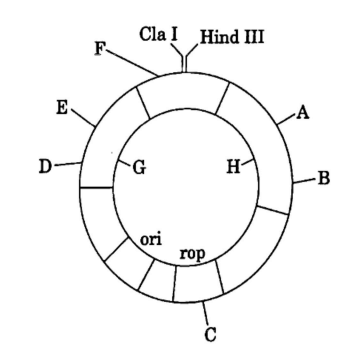
We know that plasmids and bacteriophages are the most commonly used vectors in biotechnology experiments. If we can link an alien piece of DNA to the plasmid DNA, the alien DNA can be multiplied equal to the copy number of the plasmid. Engineered vectors are used these days. Study the diagram of the E. coli cloning vector pBR322 and answer the questions that follow :
Question 29(a):
Why are plasmids and bacteriophages used as cloning vectors ?
View Solution
Step 1: Understanding the Concept:
Vectors act as transport vehicles to carry foreign DNA into a host cell for cloning.
Step 2: Key Formula or Approach:
Identify the specific biological property of plasmids and phages that allows them to function autonomously.
Step 3: Detailed Explanation:
Plasmids and bacteriophages are used as vectors because they possess the inherent ability to replicate within bacterial host cells independent of the control of chromosomal DNA. If an alien piece of DNA is linked to their sequence, it gets replicated along with the vector, multiplying to match the high copy number of the plasmid or phage inside the host.
Step 4: Final Answer:
They can replicate autonomously in host cells independently of chromosomal DNA.
Quick Tip: Vectors must have an 'ori' (origin of replication) to ensure independent multiplication.
Identify :
(I) The gene in the cloning vector that controls the copy number of the vector.
(II) The restriction site - C in the 'rop' gene.
View Solution
Step 1: Understanding the Concept:
The cloning vector pBR322 is extensively mapped, and specific regions have dedicated functions for replication and selection.
Step 2: Key Formula or Approach:
Recall the standard pBR322 map from NCERT to identify the unlabeled regions.
Step 3: Detailed Explanation:
(I) The sequence responsible for initiating replication and controlling the copy number of the vector is the origin of replication, denoted as ori.
(II) The 'rop' gene codes for proteins involved in the replication of the plasmid. The specific restriction endonuclease recognition site located within the 'rop' sequence (labeled as C on standard diagrams) is Pvu II.
Step 4: Final Answer:
(I) ori (II) \textit{Pvu II.
Quick Tip: To clone a gene in high numbers, the vector must be chosen whose \textit{ori supports a high copy number.
Identify and name two selectable markers shown in the diagram.
View Solution
Step 1: Understanding the Concept:
Selectable markers help identify and eliminate non-transformants while permitting the growth of transformants.
Step 2: Key Formula or Approach:
Look for the antibiotic resistance genes conventionally engineered into pBR322.
Step 3: Detailed Explanation:
In the pBR322 vector, the standard selectable markers are two antibiotic resistance genes. These are:
1. Ampicillin resistance gene (\(amp^R\))
2. Tetracycline resistance gene (\(tet^R\))
These allow biologists to use antibiotic-containing media to selectively grow only the bacteria that have successfully taken up the plasmid.
Step 4: Final Answer:
Ampicillin resistance gene (\(amp^R\)) and Tetracycline resistance gene (\(tet^R\)).
Quick Tip: Insertional inactivation of one of these genes allows for the differentiation between recombinants and non-recombinants.
Name the two restriction sites each in the two genes you have identified as selectable markers.
View Solution
Step 1: Understanding the Concept:
For insertional inactivation to work, foreign DNA must be inserted right into the antibiotic resistance gene at specific restriction sites.
Step 2: Key Formula or Approach:
Recall the restriction sites residing inside the \(amp^R\) and \(tet^R\) regions on the pBR322 map.
Step 3: Detailed Explanation:
- Inside the ampicillin resistance gene (\(amp^R\)), the unique restriction sites are Pst I and Pvu I.
- Inside the tetracycline resistance gene (\(tet^R\)), the unique restriction sites are BamH I and Sal I.
Step 4: Final Answer:
In \(amp^R\): Pst I and \textit{Pvu I. In \(tet^R\): \textit{BamH I and \textit{Sal I.
Quick Tip: A trick to remember: \textbf{Bam and \textbf{Sal} sit together in the Tetracycline gene.
Question 30:
Read the following passage and answer the questions that follow :
The process of copying genetic information from template strand of DNA into RNA is called transcription. It is mediated by RNA polymerase. Transcription takes place in the nucleus of eukaryotic cells. In transcription, only a segment of DNA and only one of the strands is copied into RNA
Question 30(a):
Why is the strand of DNA with 3' \(\rightarrow\) 5' polarity transcribed and not the other strand of 5' \(\rightarrow\) 3' polarity ?
View Solution
Step 1: Understanding the Concept:
Transcription is catalyzed by a specific enzyme that works in only one strict chemical direction.
Step 2: Key Formula or Approach:
Identify the operational polarity of RNA polymerase.
Step 3: Detailed Explanation:
The DNA-dependent RNA polymerase is the main enzyme involved in transcription. This enzyme can catalyze the polymerization of RNA nucleotides strictly in one single direction, which is 5' \(\rightarrow\) 3'. Because the new RNA chain must grow in the 5' to 3' direction, it must read a template that runs anti-parallel to it. Therefore, only the DNA strand possessing the 3' \(\rightarrow\) 5' polarity can act as the template.
Step 4: Final Answer:
RNA polymerase catalyzes synthesis only in the 5' \(\rightarrow\) 3' direction, so it requires the 3' \(\rightarrow\) 5' DNA strand as a template.
Quick Tip: The non-transcribed 5' \(\rightarrow\) 3' strand is paradoxically called the 'coding strand' because its sequence is identical to the newly synthesized RNA (except T is replaced by U).
Why is hnRNA required to undergo splicing ?
View Solution
Step 1: Understanding the Concept:
In eukaryotes, genes are split. The primary transcript contains both necessary and unnecessary segments for protein synthesis.
Step 2: Key Formula or Approach:
Define exons and introns and their role in mRNA functionality.
Step 3: Detailed Explanation:
The primary transcript synthesized in eukaryotes is called heterogeneous nuclear RNA (hnRNA). It contains both exons (coding or expressed sequences) and introns (non-coding intervening sequences). Introns do not carry code for amino acids. If they are translated, the resulting protein would be entirely non-functional. Therefore, hnRNA undergoes splicing, a crucial process where the non-coding introns are physically removed and the functional exons are joined together in a defined order.
Step 4: Final Answer:
hnRNA contains non-coding introns that must be removed through splicing to create a functional coding sequence.
Quick Tip: Splicing is unique to eukaryotes. Prokaryotic genes are contiguous (no introns).
Mention the two additional processes which hnRNA needs to undergo after splicing to become functional.
View Solution
Step 1: Understanding the Concept:
Beyond splicing, eukaryotic hnRNA requires protective chemical modifications at both ends before exiting the nucleus as mature mRNA.
Step 2: Key Formula or Approach:
Identify the post-transcriptional modifications occurring at the 5' and 3' ends.
Step 3: Detailed Explanation:
1. Capping: An unusual nucleotide, methyl guanosine triphosphate, is chemically added to the 5' end of the hnRNA. This protects the transcript from degradation by exonucleases.
2. Tailing (Polyadenylation): A long chain of adenylate residues (roughly 200-300 poly-A tail) is added to the 3' end in a template-independent manner. This provides stability and aids in nuclear export.
Step 4: Final Answer:
The two processes are Capping (at the 5' end) and Tailing (at the 3' end).
Quick Tip: Only after all three modifications (Capping, Splicing, and Tailing) are completed is the RNA officially called mature mRNA.
Why is only one strand of the DNA transcribed ? Give two reasons.
View Solution
Step 1: Understanding the Concept:
If transcription copied both DNA strands simultaneously, it would cause severe mechanical and chemical conflicts inside the cell.
Step 2: Key Formula or Approach:
Explain the consequences regarding protein variation and RNA-RNA pairing.
Step 3: Detailed Explanation:
Only one strand is transcribed due to two main reasons:
1. Coding Conflict: The two DNA strands have complementary, not identical, sequences. If both acted as templates, they would produce two entirely different RNA molecules, which would in turn code for two different proteins. This would unnecessarily complicate the genetic information transfer machinery of the cell.
2. Formation of Double-Stranded RNA: If both strands were transcribed simultaneously, the two resulting RNA molecules would be complementary to each other. They would immediately pair up to form double-stranded RNA (dsRNA). This dsRNA structure cannot be read by ribosomes, completely preventing the translation of the RNA into proteins.
Step 4: Final Answer:
Transcribing both would create conflicting proteins and produce dsRNA, which physically blocks translation.
Quick Tip: The generation of dsRNA is actually exploited deliberately in biotechnology to silence genes (RNA interference).
Work out separate monohybrid crosses up to F\(_2\) generation between two pea plants and two \textit{Antirrhinum plants, both having contrasting traits with respect to the colour of the flower. Comment on the patterns of inheritance in the crosses carried out in such two cases.
View Solution
Step 1: Understanding the Concept:
Pea plants exhibit strict Mendelian dominance, while Antirrhinum (snapdragon) exhibits incomplete dominance.
Step 2: Key Formula or Approach:
Trace the cross from Parental (P) to \(F_1\), then self-pollinate \(F_1\) to find the phenotypic and genotypic ratios of \(F_2\).
Step 3: Detailed Explanation:
Case 1: Pea Plant (\textit{Pisum sativum)
- Traits: Violet flowers (Dominant, \(VV\)) and White flowers (Recessive, \(vv\)).
- P Generation cross: \(VV \times vv\)
- \(F_1\) Generation: All \(Vv\) (Phenotype: All Violet).
- Selfing \(F_1\): \(Vv \times Vv\)
- \(F_2\) Generation: 1 \(VV\) : 2 \(Vv\) : 1 \(vv\).
- Pattern of Inheritance: Complete Dominance. The dominant allele \(V\) completely masks the recessive allele \(v\). The \(F_2\) phenotypic ratio is 3:1 (Violet:White), and genotypic ratio is 1:2:1.
Case 2: Snapdragon Plant (\textit{Antirrhinum majus)
- Traits: Red flowers (\(RR\)) and White flowers (\(rr\)).
- P Generation cross: \(RR \times rr\)
- \(F_1\) Generation: All \(Rr\) (Phenotype: All Pink).
- Selfing \(F_1\): \(Rr \times Rr\)
- \(F_2\) Generation: 1 \(RR\) : 2 \(Rr\) : 1 \(rr\).
- \textit{Pattern of Inheritance: Incomplete Dominance. The dominant allele \(R\) is not completely dominant over \(r\). A blended, intermediate phenotype (Pink) appears in heterozygotes. The \(F_2\) phenotypic ratio is 1:2:1 (Red:Pink:White), identically matching the genotypic ratio 1:2:1.
Step 4: Final Answer:
Pea plants show Complete Dominance (3:1 phenotype), while \textit{Antirrhinum shows Incomplete Dominance (1:2:1 phenotype).
Quick Tip: In incomplete dominance, the phenotypic ratio always equals the genotypic ratio.
How does a chromosomal disorder differ from a Mendelian disorder ? Write one example for each.
View Solution
Step 1: Understanding the Concept:
Genetic disorders are broadly classified based on whether they affect a single gene sequence or the large-scale physical structure/number of whole chromosomes.
Step 2: Key Formula or Approach:
Define the scale of mutation for each category and how they are inherited.
Step 3: Detailed Explanation:
1. Mendelian Disorders: These are disorders primarily caused by alteration or mutation in a single gene. They are transmitted to offspring strictly following classical Mendelian principles of inheritance (which can be traced in a family through pedigree analysis).
\textit{Example: Haemophilia, Sickle-cell anaemia, Cystic fibrosis.
2. Chromosomal Disorders: These disorders are caused by the absence, excess, or abnormal arrangement of one or more whole chromosomes. They occur due to physical errors during cell division (like non-disjunction) and usually do not follow Mendelian inheritance patterns in pedigrees because affected individuals are often sterile.
\textit{Example: Down's syndrome (Trisomy 21), Turner's syndrome, Klinefelter's syndrome.
Step 4: Final Answer:
Mendelian affects single genes (e.g., Haemophilia), whereas Chromosomal affects entire chromosomes (e.g., Down's syndrome).
Quick Tip: Mendelian = Point mutations / Gene level. Chromosomal = Aneuploidy / Genome level.
Question 31(b)(ii):
Name the phenomenon that leads to situations like 'XO' abnormality in humans. Also name this genetic disorder. How are individuals affected ? Write its symptoms as well as karyotype.
View Solution
Step 1: Understanding the Concept:
The 'XO' condition implies the loss of one entire sex chromosome, resulting in an individual with 45 chromosomes instead of 46.
Step 2: Key Formula or Approach:
Identify the cellular error, the clinical syndrome, and its phenotypic manifestations.
Step 3: Detailed Explanation:
- Phenomenon: The error during gametogenesis is called Non-disjunction. It is the failure of homologous chromosomes or sister chromatids to segregate properly during meiosis, resulting in gametes with abnormal chromosome numbers.
- Genetic Disorder: This condition is known as Turner's Syndrome.
- Karyotype: The chromosomal complement is written as 45, XO (presence of only one X chromosome in a female).
- Symptoms/Effects: Individuals affected are biologically female but present with underdeveloped sexual features. Key symptoms include:
1. They are sterile because their ovaries are rudimentary.
2. Lack of secondary sexual characteristics (e.g., poor breast development).
3. Short physical stature.
Step 4: Final Answer:
Caused by non-disjunction, resulting in Turner's Syndrome (45, XO), characterized by sterile females with rudimentary ovaries and short stature.
Quick Tip: XXY = Klinefelter's (Male with female traits). XO = Turner's (Female with underdeveloped traits).
Draw the structure of an antibody molecule and label any four of its parts.
View Solution
Step 1: Understanding the Concept:
An antibody (immunoglobulin) is a Y-shaped protein synthesized by B-lymphocytes in response to pathogens.
Step 2: Key Formula or Approach:
Identify the \(H_2L_2\) structural model and place structural bonds correctly.
Step 3: Detailed Explanation:
1. Diagram: Draw a distinct "Y" shaped structure consisting of four polypeptide chains. The two longer, inner parallel chains form the stem and inner arms of the Y; these are the Heavy Chains. The two shorter chains flank the outer upper arms of the Y; these are the Light Chains.
2. Connect the chains using small lines representing Disulfide bonds (S-S linkages) between heavy-heavy and heavy-light chains.
3. The very tips of the two upper arms of the 'Y' should be marked with distinct pockets. Label these regions as the Antigen-binding sites (variable region).
Step 4: Final Answer:
Labels must include: Light chain, Heavy chain, Disulfide bonds, and Antigen binding site.
Quick Tip: Always represent an antibody as \(H_2L_2\) because it contains Two Heavy and Two Light chains.
Differentiate between active and passive immunity. Write any three differences.
View Solution
Step 1: Understanding the Concept:
Immunity can be acquired by the body working to produce its own defenses (active) or by directly receiving pre-made defenses (passive).
Step 2: Key Formula or Approach:
Contrast the source of antibodies, time taken for action, and formation of memory.
Step 3: Detailed Explanation:
1. Source of Antibodies:
- \textit{Active Immunity: The host organism's own immune system actively produces antibodies in response to encountering an antigen (living or dead).
- \textit{Passive Immunity: Pre-formed, ready-made antibodies are directly injected into the body from an external source.
2. Speed and Duration of Response:
- \textit{Active Immunity: It is a slow process taking days to develop a full response, but the protection it provides is long-lasting.
- \textit{Passive Immunity: It provides immediate relief and fast response, but the protection is temporary and short-lived.
3. Immunological Memory:
- \textit{Active Immunity: Generates robust immunological memory (Memory B and T cells) for future encounters.
- \textit{Passive Immunity: Does not generate any immunological memory.
(Examples for context: Active = Vaccination/Natural infection; Passive = Colostrum IgA from mother/Anti-tetanus serum).
Step 4: Final Answer:
Active immunity is self-produced, slow, and forms memory. Passive immunity is externally acquired, fast, and lacks memory.
Quick Tip: Think of Active immunity as "teaching" the body to fish, and Passive immunity as "giving" the body a fish.
(I) Write the scientific names of the two species of filarial worms causing filariasis.
(II) How do they affect the body of infected persons ?
(III) How does the disease spread ?
View Solution
Step 1: Understanding the Concept:
Filariasis (elephantiasis) is a helminthic disease that impacts the human lymphatic system.
Step 2: Key Formula or Approach:
Provide specific pathogenic names, anatomical targets, and the vector responsible for transmission.
Step 3: Detailed Explanation:
(I) The two pathogenic species of filarial worms are Wuchereria bancrofti and Wuchereria malayi.
(II) Pathological Effect: These worms lodge themselves in the lymphatic vessels, particularly of the lower limbs. Over a period of many years, they cause a slowly developing chronic inflammation of the organs they live in. This results in massive swelling and gross deformities of the legs (a condition known as elephantiasis). They can also severely affect the genital organs, causing major deformities.
(III) Transmission: The disease spreads from an infected person to a healthy individual through the bite of insect vectors, primarily female Culex mosquitoes.
Step 4: Final Answer:
Caused by W. bancrofti & \textit{W. malayi, creates chronic lymphatic inflammation (elephantiasis), and spreads via \textit{Culex mosquitoes.
Quick Tip: Remember vector matchings: Malaria \(\rightarrow\) Female \textit{Anopheles, Dengue/Chikungunya \(\rightarrow\) Aedes, Filariasis \(\rightarrow\) Female Culex.
Mention the source and the role of the following in providing defence against infection in the human body :
(I) Histamine
(II) Interferons
View Solution
Step 1: Understanding the Concept:
Both histamine and interferons are vital chemical messengers in the innate immune system, mediating inflammation and viral resistance, respectively.
Step 2: Key Formula or Approach:
Identify the specific cells that secrete them and the physiological outcome of their release.
Step 3: Detailed Explanation:
(I) Histamine:
- Source: It is primarily secreted by Mast cells present in connective tissues and Basophils in the blood.
- \textit{Role: It acts as a powerful vasodilator. It initiates the inflammatory response during allergic reactions, increasing blood vessel permeability to allow white blood cells and plasma proteins to reach the site of infection rapidly.
(II) Interferons:
- \textit{Source: They are a class of cytokine proteins specifically secreted by virus-infected cells.
- \textit{Role: They act as a localized warning system. They bind to adjacent healthy, non-infected cells and trigger them to synthesize antiviral proteins, thus protecting them from further viral infection and spread.
Step 4: Final Answer:
Histamine (from mast cells) drives inflammation/allergy. Interferons (from virus-infected cells) protect neighboring cells from viral entry.
Quick Tip: Interferons constitute the \textit{cytokine barrier of innate immunity. They do not save the infected cell that produces them; they act as a sacrifice to save surrounding healthy cells.
Briefly explain the events of fertilisation and implantation in an adult human female.
View Solution
Step 1: Understanding the Concept:
Fertilisation is the biological process of fusion of a sperm with an ovum, leading to the formation of a diploid zygote. Implantation is the subsequent attachment and embedding of the developing embryo (blastocyst) into the uterine wall.
Step 2: Key Formula or Approach:
Detail the sequential pathway from the entry of sperm and syngamy (fertilisation) to cleavage, blastocyst formation, and uterine attachment (implantation).
Step 3: Detailed Explanation:
Events of Fertilisation:
1. Insemination and Transport: During copulation, semen is released into the vagina. Motile sperms swim rapidly through the cervix, enter the uterus, and finally reach the ampullary region of the fallopian tube.
2. Acrosomal Reaction: An ovum is simultaneously released by the ovary into the ampulla. When a sperm comes in contact with the \textit{zona pellucida layer of the ovum, it induces changes in the membrane that block the entry of additional sperms (preventing polyspermy). The secretions of the acrosome help the sperm enter into the cytoplasm of the ovum through the zona pellucida and the plasma membrane.
3. Syngamy: This entry induces the completion of the meiotic division (Meiosis II) of the secondary oocyte, forming a second polar body and a haploid ovum (ootid). Finally, the haploid nucleus of the sperm and that of the ovum fuse together to form a diploid zygote.
Events of Implantation:
1. Cleavage: The zygote moves through the isthmus of the oviduct towards the uterus and undergoes mitotic divisions called cleavage, forming 2, 4, 8, and 16 daughter cells called blastomeres. The embryo with 8 to 16 blastomeres is called a morula.
2. Blastocyst Formation: The morula continues to divide and transforms into a blastocyst as it moves further into the uterus. The blastomeres in the blastocyst arrange into an outer layer called the trophoblast and an inner group of cells attached to the trophoblast called the inner cell mass.
3. Attachment: The trophoblast layer gets attached to the endometrium, and the inner cell mass differentiates as the embryo.
4. Embedding: After attachment, the uterine cells divide rapidly and cover the blastocyst. As a result, the blastocyst becomes deeply embedded in the endometrium of the uterus. This marks the completion of implantation and initiates pregnancy.
Step 4: Final Answer:
Fertilisation occurs in the ampulla involving acrosomal reaction and syngamy, followed by cleavage leading to a blastocyst, which attaches via its trophoblast to the endometrium during implantation.
Quick Tip: Remember the developmental sequence: Zygote \(\rightarrow\) Blastomeres \(\rightarrow\) Morula (8-16 cells) \(\rightarrow\) Blastocyst (implants) \(\rightarrow\) Gastrula.
Fertilisation only occurs if the ovum and sperms are transported simultaneously to the ampullary region.
Arrange the following hormones in sequence of their secretion in a pregnant woman :
hCG; LH; FSH; Relaxin.
View Solution
Step 1: Understanding the Concept:
The reproductive cycle and subsequent pregnancy are orchestrated by a strict chronological sequence of hormones originating from the pituitary, ovaries, and later the placenta.
Step 2: Key Formula or Approach:
Analyze the reproductive timeline: Follicular development \(\rightarrow\) Ovulation \(\rightarrow\) Post-implantation \(\rightarrow\) Late pregnancy.
Step 3: Detailed Explanation:
1. FSH (Follicle Stimulating Hormone): Secretion increases during the early part of the menstrual cycle (follicular phase) to stimulate the growth and maturation of the ovarian follicles.
2. LH (Luteinizing Hormone): Secretion peaks mid-cycle (around day 14). This LH surge is responsible for triggering ovulation (release of the ovum) and the subsequent formation of the corpus luteum.
3. hCG (Human Chorionic Gonadotropin): Once fertilisation and implantation occur, the developing placenta (specifically the trophoblast cells) begins to secrete hCG. This hormone appears early in pregnancy and maintains the corpus luteum.
4. Relaxin: This hormone is secreted by the ovary and the placenta in the later phases of pregnancy to prepare the mother's body for childbirth (parturition).
Therefore, the correct chronological sequence of their appearance and peak action leading to and during pregnancy is: FSH \(\rightarrow\) LH \(\rightarrow\) hCG \(\rightarrow\) Relaxin.
Step 4: Final Answer:
The correct sequence is: FSH \(\rightarrow\) LH \(\rightarrow\) hCG \(\rightarrow\) Relaxin.
Quick Tip: hCG, hPL (human placental lactogen), and Relaxin are the three hormones that are produced in a woman \textbf{only} during pregnancy.
Mention the source and the functions of the above mentioned hormones.
View Solution
Step 1: Understanding the Concept:
Each reproductive hormone is secreted by a specific endocrine gland or temporary endocrine tissue (like the placenta) and has targeted physiological roles.
Step 2: Key Formula or Approach:
Systematically list each hormone, its specific anatomical source, and its primary function in reproduction or pregnancy.
Step 3: Detailed Explanation:
1. FSH (Follicle Stimulating Hormone)
- Source: Anterior lobe of the pituitary gland (Pars distalis).
- Function: It stimulates the growth, development, and maturation of ovarian follicles. It also stimulates the growing follicles to secrete estrogens.
2. LH (Luteinizing Hormone)
- Source: Anterior lobe of the pituitary gland (Pars distalis).
- Function: A rapid increase in LH (LH surge) induces the rupture of the fully mature Graafian follicle, causing the release of the ovum (ovulation). It also stimulates the remains of the ruptured follicle to transform into the corpus luteum.
3. hCG (Human Chorionic Gonadotropin)
- Source: Placenta (specifically, the trophoblast cells of the developing embryo).
- Function: It rescues and maintains the corpus luteum during early pregnancy, stimulating it to continuously secrete progesterone and estrogen, which are essential to maintain the thick endometrial lining and prevent menstruation.
4. Relaxin
- Source: Ovary (corpus luteum of pregnancy) and later the placenta.
- Function: Secreted in the later stages of pregnancy, it acts to relax the pelvic ligaments (like the pubic symphysis) and soften/widen the cervix. This facilitates the smooth passage of the baby during parturition (childbirth).
Step 4: Final Answer:
Sources and functions are detailed above: FSH (Pituitary/Follicle growth), LH (Pituitary/Ovulation), hCG (Placenta/Maintains corpus luteum), Relaxin (Ovary \& Placenta/Relaxes pelvic ligaments).
Quick Tip: The presence of \textbf{hCG} in maternal urine is the basis for standard over-the-counter pregnancy test kits, as it is uniquely produced by the implanted embryo's tissues.
CBSE Class 12 Biology Paper Analysis 2026
*The article might have information for the previous academic years, please refer the official website of the exam.