
NEET 2024 Question Paper Pdf - Check Solutions With Answer Key PDF (S5)
- Answer Key
- Merit List
- Seat Inkate
- Tripura Counselling
- Nagaland Counselling
- Kerala Counselling
- UP Counselling
- Assam Counselling
- West Bengal Counselling
- MP Counselling
- Haryana Counselling
- Chhattisgarh Counselling
- Gujarat Counselling
- Participating Colleges
- AP Counselling
- Manipur Counselling
- Mark Vs Rank
- Mizoram NEET Counselling
- Ayush Counselling
- TN NEET Counselling
- Andhra Pradesh Counsellin
- Karnataka NEET Counsellin
- Jharkhand NEET Counsellin
- MH NEET Counselling
- Bihar NEET Counselling
- Counselling
- Seat Allotment


Content Writer | Updated On - Mar 2, 2025
NEET 2024 S5 Question Paper with Solution PDF is available for download. NTA conducted the exam successfully on May 5, 2024, from 2:00 PM to 5:20 PM in pen-paper mode. As per the students’ initial reaction, NEET 2024 Question Paper for S5 was reported as moderate. The Zoology section in NEET 2024 S5 Question Paper was reported as easy, Botany as easy, Physics as moderate, and Chemistry as moderate.
NEET 2024 S5 Question Paper with Answer Key PDF
Candidates can download the official NEET 2024 Question Paper with Solution and Answer Key PDFs for S5 using the link below.
| NEET 2024 Question Paper with Answer Key (S5) |  Download Download |
Check Solution |

NEET 2024 Question Paper with Solutions (S5)
In the above diagram, a strong bar magnet is moving towards solenoid-2 from solenoid-1. The direction of induced current in solenoid-1 and that in solenoid-2, respectively, are through the directions:

View Solution
Step 1: Understanding Lenz’s Law
Lenz’s law states that the induced current opposes the change in flux. When a magnet moves towards a solenoid, an induced current is generated to oppose the approaching magnetic field.
Step 2: Determining Current in Solenoid-1
- The North pole of the magnet is moving away from solenoid-1.
- To oppose this, solenoid-1 induces a current that tries to retain the North pole near it.
- This means the left end of solenoid-1 should act as a North pole, implying current flows from A to B (AB).
Step 3: Determining Current in Solenoid-2
- The North pole of the magnet is approaching solenoid-2.
- To oppose this, solenoid-2 induces a current that tries to repel the North pole.
- This means the left end of solenoid-2 should act as a North pole, implying current flows from D to C (DC).
% Conclusion
Thus, the correct answer is (B) AB and DC. Quick Tip: According to Lenz’s Law, an induced current will always flow in a direction that opposes the change in magnetic flux causing it.
In the nuclear emission stated below, the mass number and atomic number of the product \( Q \) respectively, are:
\[ ^{290}_{82}X \xrightarrow{\alpha} Y \xrightarrow{e^+} Z \xrightarrow{\beta^-} P \xrightarrow{e^-} Q \]
View Solution
Step 1: Effect of Alpha Decay (\( \alpha \))
Alpha decay reduces:
- Mass number by 4.
- Atomic number by 2.
\[ ^{290}_{82}X \xrightarrow{\alpha} ^{286}_{80}Y \]
Step 2: Effect of Positron Emission (\( e^+ \))
Positron emission decreases the atomic number by 1:
\[ ^{286}_{80}Y \xrightarrow{e^+} ^{286}_{79}Z \]
Step 3: Effect of Beta Minus Decay (\( \beta^- \))
Beta minus decay increases the atomic number by 1:
\[ ^{286}_{79}Z \xrightarrow{\beta^-} ^{286}_{80}P \]
Step 4: Effect of Electron Capture (\( e^- \))
Electron capture decreases the atomic number by 1:
\[ ^{286}_{80}P \xrightarrow{e^-} ^{286}_{81}Q \]
% Conclusion
Thus, the correct answer is (A) \( 286, 81 \). Quick Tip: - Alpha decay: \( A \to A-4, Z \to Z-2 \)
- Positron emission: \( Z \to Z-1 \)
- Beta decay: \( Z \to Z+1 \)
- Electron capture: \( Z \to Z-1 \)
In a vernier calipers, \( (N+1) \) divisions of the vernier scale coincide with \( N \) divisions of the main scale. If 1 MSD represents 0.1 mm, the vernier constant (in cm) is:
View Solution
Step 1: Understanding the Vernier Constant
The Vernier constant (VC) is given by: \[ VC = Least Count = Value of 1 Main Scale Division - Value of 1 Vernier Scale Division \]
Since:
- \( 1 \) Main Scale Division (MSD) \( = 0.1 \) mm \( = 0.01 \) cm.
- \( N \) MSDs match with \( (N+1) \) Vernier Scale Divisions.
Thus, the value of one Vernier scale division is:
\[ \frac{N \times 0.01}{N+1} cm \]
Step 2: Calculating Vernier Constant
\[ VC = 0.01 - \frac{N \times 0.01}{N+1} \]
Factorizing:
\[ VC = \frac{0.01(N+1) - 0.01N}{N+1} \]
\[ VC = \frac{0.01}{N+1} \]
Since \( 0.01 = \frac{1}{100} \), we get:
\[ VC = \frac{1}{100(N+1)} \]
% Conclusion
Thus, the correct answer is (C) \( \frac{1}{100(N+1)} \). Quick Tip: The Vernier constant (VC) is calculated as: \[ VC = Value of 1 MSD - Value of 1 Vernier Scale Division \] Use this formula to derive the least count for any vernier caliper.
A thin spherical shell is charged by some source. The potential difference between the two points \( C \) and \( P \) (in V) shown in the figure is:

(Take \( \frac{1}{4\pi\varepsilon_0} = 9 \times 10^9 \) SI units)
View Solution
Step 1: Understanding Potential in a Spherical Shell
For a thin conducting spherical shell, the potential at any point inside and on the surface is the same and is given by:
\[ V = \frac{1}{4\pi\varepsilon_0} \frac{q}{R} \]
Step 2: Finding the Potential Difference
Since both \( C \) and \( P \) are inside or on the surface, the potential at both points is equal. Thus:
\[ V_C = V_P \]
The potential difference is:
\[ V_C - V_P = 0 \]
% Conclusion
Thus, the correct answer is (A) Zero. Quick Tip: For a charged spherical shell, the potential inside the shell is constant and equal to the potential at the surface. So, potential difference inside the shell is always zero.
In an ideal transformer, the turns ratio is \( \frac{N_p}{N_s} = \frac{1}{2} \). The ratio \( V_S : V_P \) is equal to (the symbols carry their usual meaning):
View Solution
Step 1: Understanding Transformer Voltage Ratio
The voltage ratio in an ideal transformer is given by:
\[ \frac{V_S}{V_P} = \frac{N_S}{N_P} \]
Given \( \frac{N_P}{N_S} = \frac{1}{2} \), we take the reciprocal:
\[ \frac{N_S}{N_P} = 2 \]
Step 2: Calculating Voltage Ratio
\[ V_S : V_P = 2:1 \]
% Conclusion
Thus, the correct answer is (C) \( 2:1 \). Quick Tip: For an ideal transformer, the voltage ratio is: \[ \frac{V_S}{V_P} = \frac{N_S}{N_P} \] where \( N_P \) and \( N_S \) are the number of turns in the primary and secondary coils.
The output (Y) of the given logic gate is similar to the output of an/a

View Solution
Step 1: Identifying the Logic Gates Used
The given circuit consists of:
- A NAND gate receiving inputs \( A \) and \( B \).
- A NOT gate inverting the output of the NAND gate.
- The final gate is an OR gate, which processes the inverted NAND output and an additional input.
Step 2: Deriving the Boolean Expression
1. The NAND gate outputs:
\[ NAND output = \overline{A \cdot B} \]
2. The NOT gate inverts this output:
\[ NOT output = A \cdot B \]
3. The OR gate takes this as one input and another signal. However, analyzing the circuit, it simplifies to:
\[ Y = A \cdot B \]
% Conclusion
Thus, the given circuit functions as an AND gate, making the correct answer (A) AND gate. Quick Tip: To analyze logic gate circuits, break them into individual gates, write their Boolean expressions, and simplify step by step.
The moment of inertia of a thin rod about an axis passing through its midpoint and perpendicular to the rod is \( 2400 \, cm^2 \). The length of the 400 g rod is nearly:
View Solution
Step 1: Moment of Inertia of a Rod
The moment of inertia of a thin rod about its midpoint is:
\[ I = \frac{1}{12} M L^2 \]
Given \( I = 2400 \) cm² and mass \( M = 400 \) g = \( 0.4 \) kg.
Step 2: Solving for \( L \)
\[ 2400 = \frac{400}{12} \times L^2 \]
\[ L^2 = \frac{2400 \times 12}{400} \]
\[ L^2 = 72 \]
\[ L = \sqrt{72} \approx 8.5 cm \]
% Conclusion
Thus, the correct answer is (B) 8.5 cm. Quick Tip: For a thin rod, moment of inertia about its midpoint is given by: \[ I = \frac{1}{12} M L^2 \] where \( M \) is mass and \( L \) is length.
If the monochromatic source in Young’s double slit experiment is replaced by white light, then:
View Solution
Step 1: Understanding the Effect of White Light
In Young’s double-slit experiment, if white light is used instead of monochromatic light, all wavelengths interfere simultaneously.
Step 2: Central Fringe Characteristics
- The central fringe remains white because all wavelengths constructively interfere at the center.
- The fringes away from the center become coloured, as different wavelengths have different fringe positions due to varying interference conditions.
Step 3: Evaluating Given Options
- Option A is incorrect because fringe width varies for different wavelengths.
- Option B is incorrect because interference still occurs.
- Option C is incorrect because the central fringe is bright white, not dark.
% Conclusion
Thus, the correct answer is (D) There will be a central bright white fringe surrounded by a few coloured fringes. Quick Tip: In Young’s double-slit experiment, when white light is used: - The central fringe is white due to constructive interference. - The side fringes are coloured because different wavelengths interfere at different positions.
The quantities which have the same dimensions as those of solid angle are:
View Solution
Step 1: Understanding the Dimensions of Solid Angle
Solid angle (\(\Omega\)) is a dimensionless quantity, meaning its dimensions are: \[ [\Omega] = M^0L^0T^0 \]
Step 2: Checking the Given Quantities
- Strain: Defined as the ratio of two similar physical quantities (change in length/original length). It is dimensionless.
- Angle: Defined as the arc length to radius ratio, which is also dimensionless.
- Stress: Defined as force per unit area. It has dimensions \([ML^{-1}T^{-2}]\) and is not dimensionless.
- Arc: Has dimensions of length and is not dimensionless.
% Conclusion
Thus, the correct answer is (B) strain and angle. Quick Tip: Any dimensionless quantity (like strain and angle) has the same dimensions as solid angle (\(\Omega\)).
In a uniform magnetic field of \(0.049 \, T\), a magnetic needle performs 20 complete oscillations in 5 seconds. The moment of inertia of the needle is \( 9.8 \times 10^{-6} \, kg \cdot m^2 \). If the magnitude of the magnetic moment of the needle is \( x \times 10^{-5} \, Am^2 \), then the value of \( x \) is:

View Solution
Step 1: Understanding Magnetic Oscillations
The time period \(T\) of a magnetic needle oscillating in a uniform magnetic field is given by:
\[ T = 2\pi \sqrt{\frac{I}{MB}} \]
where:
- \( I \) is the moment of inertia,
- \( M \) is the magnetic moment,
- \( B \) is the magnetic field.
Step 2: Finding the Magnetic Moment
Given that the needle completes 20 oscillations in 5 seconds:
\[ T = \frac{5}{20} = 0.25 sec \]
Squaring both sides:
\[ T^2 = 4\pi^2 \frac{I}{MB} \]
Rearrange for \( M \):
\[ M = \frac{4\pi^2 I}{B T^2} \]
Substituting values:
\[ M = \frac{4\pi^2 (9.8 \times 10^{-6})}{(0.049)(0.25^2)} \]
Simplifying:
\[ M = 1280\pi^2 \times 10^{-5} \, Am^2 \]
Thus, \( x = 1280\pi^2 \). Quick Tip: For magnetic oscillation problems, remember the equation \( T = 2\pi \sqrt{\frac{I}{MB}} \) and rearrange it to solve for the required quantity.
Two bodies \( A \) and \( B \) of same mass undergo completely inelastic one-dimensional collision. The body \( A \) moves with velocity \( v_1 \) while body \( B \) is at rest before collision. The velocity of the system after collision is \( v_2 \). The ratio \( v_1 : v_2 \) is:
View Solution
Step 1: Applying Momentum Conservation
In a completely inelastic collision, both bodies stick together after the collision. The momentum before and after the collision must be equal:
\[ m v_1 + m(0) = (m + m) v_2 \]
Step 2: Solving for \( v_2 \)
\[ m v_1 = 2m v_2 \]
\[ v_2 = \frac{v_1}{2} \]
Step 3: Finding the Ratio
\[ v_1 : v_2 = 2:1 \]
% Conclusion
Thus, the correct answer is (C) \( 2:1 \). Quick Tip: For a completely inelastic collision, the final velocity is given by: \[ v_2 = \frac{m_1 v_1 + m_2 v_2}{m_1 + m_2} \] where \( m_1 = m_2 \), simplifies to \( v_2 = \frac{v_1}{2} \).
A horizontal force 10 N is applied to a block \( A \) as shown in the figure. The mass of blocks \( A \) and \( B \) are 2 kg and 3 kg respectively. The blocks slide over a frictionless surface. The force exerted by block \( A \) on block \( B \) is:

View Solution
Step 1: Find the Acceleration of the System
The total mass of the system is:
\[ M_{total} = m_A + m_B = 2 + 3 = 5 kg \]
Using Newton’s Second Law:
\[ a = \frac{F}{M_{total}} = \frac{10}{5} = 2 m/s^2 \]
Step 2: Force Exerted by Block \( A \) on Block \( B \)
Since block \( B \) moves with acceleration \( a \), the force exerted on \( B \) is:
\[ F_B = m_B a = 3 \times 2 = 6 N \]
% Conclusion
Thus, the correct answer is (D) \( 6 \) N. Quick Tip: For a system of blocks, find the total acceleration first and then use \( F = ma \) to determine the internal forces.
A logic circuit provides the output \( Y \) as per the following truth table:
\begin{tabular{|c|c|c|
\hline \( A \) & \( B \) & \( Y \)
\hline
0 & 0 & 1
0 & 1 & 0
1 & 0 & 0
1 & 1 & 0
\hline
\end{tabular
View Solution
Step 1: Identifying the Logic Expression from the Truth Table
From the given truth table:
- When \( B = 0 \), \( Y = 1 \).
- When \( B = 1 \), \( Y = 0 \).
This directly matches the NOT gate output:
\[ Y = \overline{B} \]
% Conclusion
Thus, the correct answer is (D) \( \overline{B} \). Quick Tip: For Boolean expression derivation, analyze the truth table row-wise and identify patterns that match basic logic gates.
A bob is whirled in a horizontal plane by means of a string with an initial speed of \( \omega \) rpm. The tension in the string is \( T \). If speed becomes \( 2\omega \) while keeping the same radius, the tension in the string becomes:
View Solution
Step 1: Tension in Circular Motion
The tension in the string provides the required centripetal force:
\[ T = m\omega^2 r \]
Step 2: Effect of Doubling Speed
If the speed is increased to \( 2\omega \), the new tension becomes:
\[ T' = m(2\omega)^2 r \]
\[ T' = 4 m\omega^2 r = 4T \]
% Conclusion
Thus, the correct answer is (C) \( 4T \). Quick Tip: Tension in circular motion is proportional to \( \omega^2 \), so when speed doubles, the tension becomes four times.
The mass of a planet is \( \frac{1}{10} \)th that of the earth and its diameter is half that of the earth. The acceleration due to gravity on that planet is:
View Solution
Step 1: Formula for Acceleration Due to Gravity
The acceleration due to gravity on a planet is given by:
\[ g = \frac{GM}{R^2} \]
where:
- \( M \) is the planet’s mass,
- \( R \) is the planet’s radius,
- \( G \) is the gravitational constant.
Step 2: Expressing Planet’s Mass and Radius in Terms of Earth’s Values
- Given that the mass of the planet is \( \frac{1}{10} \)th that of Earth:
\[ M' = \frac{M}{10} \]
- The diameter is half that of Earth, so the radius is:
\[ R' = \frac{R}{2} \]
Step 3: Finding Gravity on the New Planet
Since \( g' \) is proportional to \( \frac{M}{R^2} \), we substitute the new values:
\[ g' = \frac{G \times (M/10)}{(R/2)^2} \]
\[ g' = \frac{(GM/10)}{R^2/4} \]
\[ g' = \frac{GM}{R^2} \times \frac{4}{10} \]
\[ g' = g \times \frac{4}{10} \]
\[ g' = 9.8 \times 0.4 = 3.92 m/s^2 \]
% Conclusion
Thus, the correct answer is (A) 3.92 m/s\(^2\). Quick Tip: The acceleration due to gravity is proportional to \( \frac{M}{R^2} \). If the mass changes to \( \frac{M}{10} \) and the radius changes to \( \frac{R}{2} \), then: \[ g' = g \times \frac{4}{10} = 3.92 m/s^2. \]
Given below are two statements:
Statement I: Atoms are electrically neutral as they contain equal number of positive and negative charges.
\smallskip
Statement II: Atoms of each element are stable and emit their characteristic spectrum.
In the light of the above statements, choose the most appropriate answer from the options given below:
View Solution
Step 1: Analyzing Statement I
Atoms contain equal numbers of protons (positive charge) and electrons (negative charge), making them electrically neutral.
Thus, Statement I is correct.
Step 2: Analyzing Statement II
Atoms of each element emit characteristic spectra, but not all atoms are stable. Many elements contain radioactive isotopes, which are unstable and decay over time.
Thus, Statement II is incorrect.
% Conclusion
Thus, the correct answer is (D) Statement I is correct but Statement II is incorrect. Quick Tip: - Neutral atoms contain equal numbers of protons and electrons. - Not all atoms are stable; some elements have radioactive isotopes that undergo decay.
The maximum elongation of a steel wire of 1 m length if the elastic limit of steel and its Young’s modulus, respectively, are \( 8 \times 10^8 \) N m\(^{-2}\) and \( 2 \times 10^{11} \) N m\(^{-2}\), is:
View Solution
Step 1: Using Young’s Modulus Formula
The elongation \( \Delta L \) in a wire under stress is given by:
\[ \Delta L = \frac{\sigma L}{Y} \]
where:
- \( \sigma \) = Stress = \( 8 \times 10^8 \) N/m\(^2\),
- \( L = 1 \) m,
- \( Y = 2 \times 10^{11} \) N/m\(^2\).
Step 2: Substituting Values
\[ \Delta L = \frac{(8 \times 10^8) \times 1}{2 \times 10^{11}} \]
\[ \Delta L = \frac{8 \times 10^8}{2 \times 10^{11}} \]
\[ \Delta L = 4 \times 10^{-3} m = 4 mm \]
% Conclusion
Thus, the correct answer is (B) \( 4 \) mm. Quick Tip: To find elongation in a wire under stress, use: \[ \Delta L = \frac{\sigma L}{Y} \] where \( \sigma \) is stress, \( L \) is length, and \( Y \) is Young’s modulus.
The terminal voltage of the battery, whose emf is 10 V and internal resistance 1 \( \Omega \), when connected through an external resistance of 4 \( \Omega \) as shown in the figure is:

View Solution
Step 1: Understanding Terminal Voltage
The terminal voltage (\( V \)) of a battery is given by:
\[ V = E - I r \]
where:
- \( E = 10 \) V (emf of the battery),
- \( r = 1 \Omega \) (internal resistance),
- \( R = 4 \Omega \) (external resistance).
Step 2: Finding the Current
Using Ohm's law, the current in the circuit is:
\[ I = \frac{E}{R + r} = \frac{10}{4 + 1} = \frac{10}{5} = 2 A \]
Step 3: Calculating Terminal Voltage
\[ V = 10 - (2 \times 1) \]
\[ V = 10 - 2 = 8 V \]
% Conclusion
Thus, the correct answer is (D) 8 V. Quick Tip: For a battery with internal resistance, terminal voltage is given by: \[ V = E - I r \] Always consider the total resistance in the circuit when calculating the current.
A thermodynamic system is taken through the cycle \( abcd \). The work done by the gas along the path \( bc \) is:

View Solution
Step 1: Work Done in an Isobaric Process
The work done by the gas in a thermodynamic process is given by:
\[ W = P \Delta V \]
where:
- \( P \) is pressure,
- \( \Delta V \) is the change in volume.
Step 2: Identifying Path \( bc \)
From the given PV diagram, the path \( bc \) is a horizontal line, meaning:
\[ P = constant \]
Since volume remains constant along \( bc \), we have:
\[ \Delta V = 0 \]
Step 3: Calculating Work Done
Since work done depends on volume change:
\[ W = P \times 0 = 0 \]
% Conclusion
Thus, the correct answer is (B) Zero. Quick Tip: For an isochoric process (constant volume), no work is done because: \[ W = P \Delta V = 0 \]
Consider the following statements A and B and identify the correct answer:

(A) For a solar cell, the I-V characteristics lie in the IV quadrant of the given graph.
(B) In a reverse biased \( pn \) junction diode, the current measured in (\(\mu A\)) is due to majority charge carriers.
View Solution
Step 1: Understanding I-V Characteristics of a Solar Cell
The I-V characteristics of a solar cell lie in the IV quadrant, because a solar cell acts as a power generator, supplying power to an external circuit.
Step 2: Reverse Bias in a \( pn \) Junction Diode
In a reverse biased \( pn \) junction diode, the current is due to minority charge carriers, not majority carriers. The reverse current is very small (in microamperes) and remains almost constant.
% Conclusion
Thus, the correct answer is option (B). Quick Tip: - The solar cell operates in the IV quadrant because it supplies power. - In a reverse biased diode, current flows due to minority carriers, not majority carriers.
Match List I with List II.

View Solution
Step 1: Understanding Magnetic Susceptibility
Magnetic susceptibility (\(\chi\)) determines a material's response to an external magnetic field:
- Diamagnetic materials have negative susceptibility (\(0 > \chi \geq -1\)).
- Ferromagnetic materials have very high susceptibility (\(\chi \gg 1\)).
- Paramagnetic materials have small positive susceptibility (\(0 < \chi < \varepsilon\)).
- Non-magnetic materials have \(\chi = 0\).
% Conclusion
Thus, the correct matching is:
\[ \begin{aligned} A &\to II
B &\to III
C &\to IV
D &\to I \end{aligned} \] Quick Tip: Diamagnetic substances are repelled by a magnetic field, paramagnetic substances are weakly attracted, and ferromagnetic substances retain magnetization even after the external field is removed.
Match List I with List II.

View Solution
Step 1: Understanding Hydrogen Spectral Lines
The spectral lines of hydrogen correspond to electron transitions between energy levels. The Balmer series involves transitions to \( n_1 = 2 \) from higher energy levels (\( n_2 = 3, 4, 5, 6, \) etc.).
Step 2: Identifying Wavelengths
From standard hydrogen spectral data:
- \( n_2 = 3 \to n_1 = 2 \) corresponds to \( \lambda = 656.3 \) nm.
- \( n_2 = 4 \to n_1 = 2 \) corresponds to \( \lambda = 486.1 \) nm.
- \( n_2 = 5 \to n_1 = 2 \) corresponds to \( \lambda = 434.1 \) nm.
- \( n_2 = 6 \to n_1 = 2 \) corresponds to \( \lambda = 410.2 \) nm.
% Conclusion
Thus, the correct matching is:
\[ \begin{aligned} A &\to III \quad (656.3 nm)
B &\to IV \quad (486.1 nm)
C &\to II \quad (434.1 nm)
D &\to I \quad (410.2 nm) \end{aligned} \] Quick Tip: The Balmer series of the hydrogen spectrum consists of transitions to \( n_1 = 2 \). The longest wavelength (red) corresponds to \( n_2 = 3 \), while the shortest wavelength (violet) corresponds to \( n_2 = 6 \).
At any instant of time \( t \), the displacement of any particle is given by \( 2t - 1 \) (SI unit) under the influence of force of 5 N. The value of instantaneous power is (in SI unit):
View Solution
Step 1: Finding Velocity
Given displacement:
\[ x = 2t - 1 \]
Velocity is the derivative of displacement:
\[ v = \frac{dx}{dt} = 2 \]
Step 2: Instantaneous Power Formula
Instantaneous power is given by:
\[ P = F \cdot v \]
Substituting given values:
\[ P = 5 \times 2 = 10 W \]
% Conclusion
Thus, the correct answer is (B) 10 W. Quick Tip: The formula for instantaneous power is: \[ P = F \cdot v \] where \( F \) is force and \( v \) is instantaneous velocity.
In the following circuit, the equivalent capacitance between terminal \( A \) and terminal \( B \) is:

View Solution
Step 1: Identify Series and Parallel Combinations
- The two \( 2 \,\mu F \) capacitors in series give:
\[ C_{series} = \frac{2 \times 2}{2 + 2} = 1 \,\mu F \]
- The resulting \( 1 \,\mu F \) capacitor is in parallel with another \( 2 \,\mu F \), so:
\[ C_{parallel} = 1 + 1 = 2 \,\mu F \]
% Conclusion
Thus, the correct answer is (B) \( 2 \,\mu F \). Quick Tip: For series capacitors: \[ \frac{1}{C_{eq}} = \frac{1}{C_1} + \frac{1}{C_2} \] For parallel capacitors: \[ C_{eq} = C_1 + C_2 \]
A wire of length \( l \) and resistance \( 100 \Omega \) is divided into 10 equal parts. The first 5 parts are connected in series while the next 5 parts are connected in parallel. The two combinations are again connected in series. The resistance of this final combination is:
View Solution
Step 1: Resistance of Each Part
The total resistance of the wire is 100 \(\Omega\). Since it is divided into 10 equal parts, each part has a resistance:
\[ R_{part} = \frac{100}{10} = 10 \Omega \]
Step 2: First 5 Parts in Series
\[ R_{series} = 10 + 10 + 10 + 10 + 10 = 50 \Omega \]
Step 3: Next 5 Parts in Parallel
\[ \frac{1}{R_{parallel}} = \frac{1}{10} + \frac{1}{10} + \frac{1}{10} + \frac{1}{10} + \frac{1}{10} = \frac{5}{10} = \frac{1}{2} \]
\[ R_{parallel} = 2 \Omega \]
Step 4: Final Combination in Series
\[ R_{final} = R_{series} + R_{parallel} = 50 + 2 = 52 \Omega \]
% Conclusion
Thus, the correct answer is (C) \( 52 \Omega \). Quick Tip: For series connection, total resistance is the sum of individual resistances: \( R_{eq} = R_1 + R_2 + \dots \) For parallel connection, use the formula: \( \frac{1}{R_{eq}} = \frac{1}{R_1} + \frac{1}{R_2} + \dots \)
Given below are two statements: one is labelled as \textbf{Assertion A} and the other is labelled as \textbf{Reason R}.
Assertion A: The potential (\(V\)) at any axial point, at 2 m distance (\(r\)) from the centre of the dipole of dipole moment vector \( P \) of magnitude, \( 4 \times 10^{-6} \) C m, is \( \pm 9 \times 10^3 \) V.
(Take \( \frac{1}{4\pi\varepsilon_0} = 9 \times 10^9 \) SI units)
Reason R: The potential at an axial point of a dipole is given by:
\[ V = \pm \frac{2P}{4\pi\varepsilon_0 r^2} \]
where \( r \) is the distance of any axial point, situated at 2 m from the centre of the dipole.
In the light of the above statements, choose the correct answer from the options given below:
View Solution
Step 1: Formula for Potential at an Axial Point
The correct formula for the potential due to an electric dipole at an axial point is:
\[ V = \frac{KpCos \theta}{r^2} \]
at axis (\theta = 0^\circ \text{ or 180^\circ)
Substituting:
\[ V = \pm \left( 9 \times 10^9 \right) \times \frac{4 \times 10^{-6}{(2)^2} \]
\[ V = \pm 9 \times 10^9 \times \frac{4 \times 10^{-6}}{4} \]
\[ V = \pm 9 \times 10^9 \times 10^{-6} \]
\[ V = \pm 9 \times 10^3 \]
\[ V = \pm 9 \times 10^3 V \]
Since the assertion matches this value, A is true.
Step 2: Checking the Given Reason R
The provided reason states:
\[ V = \frac{2P}{4\pi\varepsilon_0 r^2} \]
which is incorrect because the correct expression is:
\[ V = \frac{1}{4\pi\varepsilon_0} \frac{2P}{r^2} \]
% Conclusion
Thus, the correct answer is (D) A is true but R is false. Quick Tip: For a dipole, the potential at an axial point is: \[ V = \frac{1}{4\pi\varepsilon_0} \frac{2P}{r^2} \] and at an equatorial point, it is zero.
If \( c \) is the velocity of light in free space, the correct statements about photon among the following are:
(A) The energy of a photon is \( E = h\nu \).
(B) The velocity of a photon is \( c \).
(C) The momentum of a photon, \( p = \frac{h\nu}{c} \).
(D) In a photon-electron collision, both total energy and total momentum are conserved.
(E) Photon possesses positive charge.
Choose the correct answer from the options given below:
View Solution
Step 1: Evaluating the Given Statements
- Statement A (Energy of a photon):
The energy of a photon is given by Planck's equation:
\[ E = h\nu \]
Correct
- Statement B (Velocity of a photon):
In vacuum, photons always travel at the speed of light:
\[ v = c \]
Correct
- Statement C (Momentum of a photon):
The momentum of a photon is given by:
\[ p = \frac{E}{c} = \frac{h\nu}{c} \]
Correct
- Statement D (Photon-electron collision conservation laws):
In Compton scattering and photoelectric effect, both energy and momentum are conserved.
Correct
- Statement E (Photon has charge):
Photons are neutral and have zero charge.
Incorrect
% Conclusion
Thus, the correct answer is (C) A, B, C and D only. Quick Tip: - A photon has energy (\( E = h\nu \)), momentum (\( p = h\nu/c \)), and always travels at speed \( c \) in vacuum. - Photons are neutral (have no charge). - In photon-electron interactions, both energy and momentum are conserved.
A tightly wound 100 turns coil of radius 10 cm carries a current of 7 A. The magnitude of the magnetic field at the centre of the coil is (Take permeability of free space as \( 4\pi \times 10^{-7} \) SI units):
View Solution
Step 1: Formula for Magnetic Field at the Centre of a Circular Coil
The magnetic field at the centre of a circular coil with \( N \) turns is given by:
\[ B = \frac{\mu_0 N I}{2R} \]
where:
- \( \mu_0 = 4\pi \times 10^{-7} \) Tm/A (permeability of free space),
- \( N = 100 \) turns,
- \( I = 7 \) A,
- \( R = 10 \) cm = \( 0.1 \) m.
Step 2: Substituting Values
\[ B = \frac{(4\pi \times 10^{-7}) \times 100 \times 7}{2 \times 0.1} \]
\[ B = \frac{(4\pi \times 10^{-7} \times 700)}{0.2} \]
\[ B = \frac{8.8 \times 10^{-4}}{0.2} \]
\[ B = 4.4 \times 10^{-3} T = 4.4 mT \]
% Conclusion
Thus, the correct answer is (D) \( 4.4 \) mT. Quick Tip: For a circular coil, the magnetic field at the centre is given by: \[ B = \frac{\mu_0 N I}{2R} \] where \( N \) is the number of turns and \( R \) is the radius of the coil.
A thin flat circular disc of radius 4.5 cm is placed gently over the surface of water. If surface tension of water is \( 0.07 \) N m\(^{-1}\), then the excess force required to take it away from the surface is:
View Solution
Step 1: Surface Tension and Excess Force Formula
The excess force required to detach a thin circular disc from the surface of water is given by:
\[ F = T \times 2\pi R \]
where:
- \( T = 0.07 \) N/m (surface tension),
- \( R = 4.5 \) cm \( = \frac{4.5}{100} \) m.
Step 2: Substituting Values
\[ F = \frac{7}{100} \times 2 \times 3.14 \times \frac{4.5}{100} \]
\[ F = \frac{7 \times 2 \times 3.14 \times 4.5}{100 \times 100} \]
\[ F = \frac{197.82}{10000} \]
\[ F = 19.8 \times 10^{-3} N \]
\[ F = 19.8 mN \]
% Conclusion
Thus, the correct answer is (B) 19.8 mN. Quick Tip: For problems involving surface tension, use: \[ F = T \times 2\pi R \] where \( T \) is the surface tension and \( R \) is the radius of contact.
An unpolarised light beam strikes a glass surface at Brewster's angle. Then:
View Solution
Step 1: Understanding Brewster's Angle
When unpolarised light strikes a surface at Brewster's angle, the reflected light becomes completely polarised, whereas the refracted light remains partially polarised.
Step 2: Brewster’s Law
Brewster’s angle (\(\theta_B\)) is given by:
\[ \tan \theta_B = \frac{n_2}{n_1} \]
where \( n_1 \) and \( n_2 \) are the refractive indices of the two media.
% Conclusion
Thus, the correct answer is option (A). Quick Tip: Brewster’s law states that reflected light at Brewster’s angle is completely polarised in a plane perpendicular to the incident light.
The graph which shows the variation of \( \frac{1}{\lambda^2} \) and its kinetic energy, \( E \) (where \( \lambda \) is de Broglie wavelength of a free particle):
- (A)
![]()
- (B)
![]()
- (C)
![]()
- (D)
![]()


View Solution
Step 1: Understanding de Broglie Wavelength
The de Broglie wavelength is given by:
\[ \lambda = \frac{h}{p} \]
Since kinetic energy \( E \) is related to momentum \( p \) by:
\[ p = \sqrt{2mE} \]
Substituting this in the de Broglie equation:
\[ \lambda = \frac{h}{\sqrt{2mE}} \]
Squaring both sides:
\[ \frac{1}{\lambda^2} \propto E \]
% Conclusion
Thus, the correct graph is (A), a straight line showing direct proportionality. Quick Tip: For a free particle, \( \frac{1}{\lambda^2} \) is directly proportional to kinetic energy \( E \), giving a linear relationship.
A wheel of a bullock cart is rolling on a level road as shown in the figure below. If its linear speed is \( v \) in the direction shown, which one of the following options is correct (P and Q are the highest and lowest points on the wheel, respectively)?

View Solution
Step 1: Understanding Rolling Motion
In pure rolling motion, a wheel moves forward without slipping. The velocity of a point on the wheel depends on:
\[ v_{point} = v_{cm} + v_{rotation} \]
where \( v_{cm} \) is the center of mass velocity, and \( v_{rotation} \) is the rotational velocity.
Step 2: Velocity at Different Points
- Lowest point (\( Q \)):
Since it is in contact with the ground, its velocity is:
\[ v_Q = v_{cm} - v_{rotation} = 0 \]
- Highest point (\( P \)):
The speed here is double the center of mass velocity:
\[ v_P = v_{cm} + v_{rotation} = 2v \]
% Conclusion
Thus, the correct answer is (C) Point \( P \) moves faster than point \( Q \). Quick Tip: For rolling motion:
- The lowest point has zero velocity (relative to ground).
- The highest point has twice the velocity of the center of mass.
If \( x = 5 \sin \left( \pi t + \frac{\pi}{3} \right) \) m represents the motion of a particle executing simple harmonic motion, the amplitude and time period of motion, respectively, are:
View Solution
Step 1: Identifying Amplitude
The general equation of SHM is:
\[ x = A \sin(\omega t + \phi) \]
Comparing with:
\[ x = 5 \sin \left( \pi t + \frac{\pi}{3} \right) \]
we see that amplitude \( A = 5 \) m.
Step 2: Finding the Time Period
The angular frequency \( \omega \) is:
\[ \omega = \pi rad/s \]
Time period \( T \) is given by:
\[ T = \frac{2\pi}{\omega} = \frac{2\pi}{\pi} = 2 s \]
% Conclusion
Thus, the correct answer is (C) \( 5 \) m, \( 2 \) s. Quick Tip: For SHM, use: \[ T = \frac{2\pi}{\omega} \] where \( \omega \) is the angular frequency.
A particle moving with uniform speed in a circular path maintains:
View Solution
Understanding Circular Motion
- A particle moving in a circular path at uniform speed has a constant magnitude of velocity, but the direction of velocity keeps changing.
- Since velocity is a vector, changing direction means the velocity is not constant.
- The acceleration also changes because the centripetal acceleration depends on velocity direction.
% Conclusion
Thus, the correct answer is option (A) Varying velocity and varying acceleration. Quick Tip: In uniform circular motion, speed remains constant, but velocity and acceleration keep changing due to the continuous change in direction.
A light ray enters through a right-angled prism at point \( P \) with the angle of incidence \( 30^\circ \) as shown in the figure. It travels through the prism parallel to its base \( BC \) and emerges along the face \( AC \). The refractive index of the prism is:

View Solution
Step 1: Defining the Angles
From the prism geometry, we have:
\[ r_1 + c = A \]
Since \( A = 90^\circ \), this gives:
\[ r_1 = 90^\circ - c \]
Step 2: Applying Snell’s Law at Point \( P \)
Using Snell's law at the first surface:
\[ n_1 \sin i = n_2 \sin r_1 \]
For air (\( n_1 = 1 \)) and prism (\( n_2 = \mu \)):
\[ \sin 30^\circ = \mu \sin r_1 \]
\[ \frac{1}{2} = \mu \sin (90^\circ - c) \]
Since \( \sin (90^\circ - c) = \cos c \), we substitute:
\[ \frac{1}{2} = \mu \times \frac{\sqrt{\mu^2 - 1}}{\mu} \]
Step 3: Solving for \( \mu \)
Rearrange:
\[ \frac{1}{2} = \sqrt{\mu^2 - 1} \]
Squaring both sides:
\[ \frac{1}{4} = \mu^2 - 1 \]
\[ \mu^2 = \frac{5}{4} \]
\[ \mu = \frac{\sqrt{5}}{2} \]
% Conclusion
Thus, the correct answer is option (C) \( \frac{\sqrt{5}}{2} \). Quick Tip: For light traveling through a prism, use Snell’s law at the point of incidence and check for total internal reflection conditions if needed.
The minimum energy required to launch a satellite of mass \( m \) from the surface of earth of mass \( M \) and radius \( R \) in a circular orbit at an altitude of \( 2R \) from the surface of the earth is:
View Solution
Step 1: Energy Required to Launch a Satellite
The energy required is given by:
\[ E = U_{initial} - U_{final} \]
where the initial potential energy at Earth's surface is:
\[ U_i = - \frac{GmM}{R} \]
and the final potential energy at altitude \( 2R \) (i.e., total radius \( 6R \)) is:
\[ U_f = - \frac{GmM}{6R} \]
Step 2: Finding Total Energy Needed
\[ E = \frac{1}{2} m v^2 + (U_f - U_i) \]
\[ E = \frac{GmM}{R} - \frac{GmM}{6R} \]
\[ E = \frac{5GmM}{6R} \]
% Conclusion
Thus, the correct answer is (B) \( \frac{5GmM}{6R} \). Quick Tip: The total energy for launching a satellite depends on gravitational potential energy and orbital velocity energy.
The property which is \textbf{not} of an electromagnetic wave travelling in free space is:
View Solution
- Electromagnetic waves are generated by accelerating charges, not by charges moving uniformly.
- They are transverse waves.
- Their energy densities are equal.
% Conclusion
Thus, the correct answer is (A) They originate from charges moving with uniform speed. Quick Tip: Electromagnetic waves originate from accelerating charges, not from uniform motion.
A force defined by \( F = \alpha t + \beta t \) acts on a particle at a given time \( t \). The factor which is dimensionless, if \( \alpha \) and \( \beta \) are constants, is:
View Solution
To check if a term is dimensionless, we verify its units.
- Force unit: \( [F] = MLT^{-2} \).
- Since \( F = \alpha t + \beta t \), both terms must have the same dimension.
Step 2: Finding the Dimensionless Ratio
\[ \frac{\alpha t}{\beta} \]
has no dimensions, making it the correct answer.
% Conclusion
Thus, the correct answer is (C) \( \frac{\alpha t}{\beta} \). Quick Tip: For a term to be dimensionless, the numerator and denominator must have identical units.
If the mass of the bob in a simple pendulum is increased to thrice its original mass and its length is made half its original length, then the new time period of oscillation is \( \frac{x}{2} \) times its original time period. Then the value of \( x \) is:
View Solution
Step 1: Time Period of a Simple Pendulum
The time period of a simple pendulum is given by:
\[ T = 2\pi \sqrt{\frac{L}{g}} \]
where:
- \( L \) is the length of the pendulum,
- \( g \) is acceleration due to gravity.
Step 2: Effect of Changing Mass and Length
- The time period is independent of mass.
- Given that the length is halved:
\[ L' = \frac{L}{2} \]
\[ T' = 2\pi \sqrt{\frac{L'}{g}} = 2\pi \sqrt{\frac{L/2}{g}} \]
\[ T' = 2\pi \times \frac{1}{\sqrt{2}} \sqrt{\frac{L}{g}} \]
\[ T' = \frac{T}{\sqrt{2}} \]
Step 3: Finding \( x \)
Since the new time period is given as:
\[ T' = \frac{x}{2} T \]
Comparing:
\[ \frac{x}{2} = \frac{1}{\sqrt{2}} \]
Solving for \( x \):
\[ x = \sqrt{2} \]
% Conclusion
Thus, the correct answer is (C) \( \sqrt{2} \). Quick Tip: The time period of a simple pendulum is: \[ T = 2\pi \sqrt{\frac{L}{g}} \] - It is independent of mass.
- If the length is halved, the new time period is: \[ T' = \frac{T}{\sqrt{2}} \]
A metallic bar of Young’s modulus, \( 0.5 \times 10^{11} \) N m\(^{-2}\) and coefficient of linear thermal expansion \( 10^{-5} \)°C\(^{-1}\), length 1 m and area of cross-section \( 10^{-3} \) m\(^2\) is heated from \( 0^\circ C \) to \( 100^\circ C \) without expansion or bending. The compressive force developed in it is:
View Solution
Step 1: Formula for Thermal Stress
The force developed due to thermal expansion when expansion is restricted is:
\[ F = Y A \alpha \Delta T \]
where:
- \( Y = 0.5 \times 10^{11} \) N/m\(^2\) (Young’s modulus),
- \( A = 10^{-3} \) m\(^2\) (cross-sectional area),
- \( \alpha = 10^{-5} \) °C\(^{-1}\) (coefficient of linear expansion),
- \( \Delta T = 100 \) °C.
Step 2: Substituting Values
\[ F = (0.5 \times 10^{11}) \times (10^{-3}) \times (10^{-5}) \times (100) \]
\[ F = 50 \times 10^3 N \]
% Conclusion
Thus, the correct answer is (C) \( 50 \times 10^3 \) N. Quick Tip: For thermal stress, use: \[ F = Y A \alpha \Delta T \] when expansion is restricted.
A 10 \(\mu\)F capacitor is connected to a 210 V, 50 Hz source as shown in figure. The peak current in the circuit is nearly (\(\pi = 3.14\)):

View Solution
Step 1: Reactance of a Capacitor
The capacitive reactance is:
\[ X_C = \frac{1}{\omega C} = \frac{1}{2\pi f C} \]
where:
- \( f = 50 \) Hz,
- \( C = 10 \) \(\mu\)F = \( 10 \times 10^{-6} \) F,
- \( \pi = 3.14 \).
Step 2: Substituting Values
\[ X_C = \frac{1}{2 \times 3.14 \times 50 \times 10 \times 10^{-6}} \]
\[ X_C = \frac{1}{3.14 \times 10^{-2}} \]
\[ X_C \approx 3.18 \, \Omega \]
Step 3: Finding the RMS Current
\[ I_{rms} = \frac{V_{rms}}{X_C} = \frac{210}{3.18} \approx 66 A \]
Step 4: Finding Peak Current
\[ I_{peak} = I_{rms} \times \sqrt{2} \]
\[ I_{peak} = 0.66 \times 1.414 \]
\[ I_{peak} \approx 0.93 A \]
% Conclusion
Thus, the correct answer is (C) \( 0.93 \) A. Quick Tip: For a capacitor in AC circuits, the peak current is: \[ I_{peak} = \frac{V_{rms}}{X_C} \times \sqrt{2} \] where \( X_C = \frac{1}{2\pi f C} \).
A small telescope has an objective of focal length 140 cm and an eye piece of focal length 5.0 cm. The magnifying power of telescope for viewing a distant object is:
View Solution
Step 1: Formula for Magnifying Power of a Telescope
For a telescope focused at infinity, the magnifying power is given by:
\[ M = \frac{f_o}{f_e} \]
where:
- \( f_o = 140 \) cm (focal length of objective),
- \( f_e = 5.0 \) cm (focal length of eyepiece).
Step 2: Substituting Values
\[ M = \frac{140}{5} = 28 \]
% Conclusion
Thus, the correct answer is (C) 28. Quick Tip: For a telescope at infinity, use: \[ M = \frac{f_o}{f_e} \] where \( f_o \) is the objective focal length and \( f_e \) is the eyepiece focal length.
The following graph represents the \( T-V \) curves of an ideal gas (where \( T \) is the temperature and \( V \) the volume) at three pressures \( P_1, P_2 \) and \( P_3 \) compared with those of Charles’s law represented as dotted lines.

View Solution
According to Charles’s Law:
\[ V \propto T \quad (for constant pressure) \]
Higher pressure curves are steeper.
% Conclusion
Thus, the correct answer is (A) \( P_1 > P_2 > P_3 \). Quick Tip: For an ideal gas, higher pressure means steeper \( T-V \) curves.
An iron bar of length \( L \) has magnetic moment \( M \). It is bent at the middle of its length such that the two arms make an angle \( 60^\circ \) with each other. The magnetic moment of this new magnet is:
View Solution
Step 1: Understanding the Effect of Bending on Magnetic Moment
Magnetic moment is a vector quantity, and when bent, its effective magnetic moment is given by:
\[ M' = M \cos \frac{\theta}{2} \]
where angle between the vectors would be \( \theta = 120^\circ \).
Step 2: Substituting Values
\[ M' = M \cos \frac{120^\circ}{2} = M \cos 60^\circ \]
\[ M' = M \times \frac{1}{2} = \frac{M}{2} \]
% Conclusion
Thus, the correct answer is (C) \( \frac{M}{2} \). Quick Tip: For a bent magnetic material, the new magnetic moment is: \[ M' = M \cos \frac{\theta}{2} \]
The velocity (\( v \)– time (\( t \)) plot of the motion of a body is shown below:

The acceleration (\( a \) – time (\( t \)) graph that best suits this motion is:
- (A)
![]()
- (B)
![]()
- (C)
![]()
- (D)
![]()


View Solution
Step 1: Understanding Velocity-Time Graph
- The velocity graph shows uniform acceleration, followed by constant velocity, then uniform deceleration.
Step 2: Identifying the Correct Acceleration-Time Graph
- The acceleration graph should have positive acceleration, then zero acceleration, then negative acceleration, which matches Option 4.
% Conclusion
Thus, the correct answer is (D) Option 4. Quick Tip: The slope of a velocity-time graph gives the acceleration-time graph.
A parallel plate capacitor is charged by connecting it to a battery through a resistor. If \( I \) is the current in the circuit, then in the gap between the plates:
View Solution
- Displacement current exists in the gap of a capacitor.
- Maxwell’s equation ensures \( I_{displacement} = I_{conduction} \).
- The displacement current flows in same direction.
% Conclusion
Thus, the correct answer is (C) Displacement current of magnitude equal to \( I \) flows in the same direction as \( I \). Quick Tip: Displacement current in a capacitor equals conduction current in the circuit.
A sheet is placed on a horizontal surface in front of a strong magnetic pole. A force is needed to:
(A) Hold the sheet there if it is magnetic.
(B) Hold the sheet there if it is non-magnetic.
(C) Move the sheet away from the pole with uniform velocity if it is conducting.
(D) Move the sheet away from the pole with uniform velocity if it is both, non-conducting and non-polar.
Choose the correct statement(s) from the options given below:
View Solution
- Magnetic sheets are attracted and held by strong poles.
- Conducting sheets experience eddy current forces, pushing them away.
- Non-magnetic, non-conducting sheets do not experience significant force.
% Conclusion
Thus, the correct answer is (C) A and C only. Quick Tip: Eddy currents cause repulsion in moving conductors near magnets.
Two heaters \( A \) and \( B \) have power ratings of 1 kW and 2 kW, respectively. Those two are first connected in series and then in parallel to a fixed power source. The ratio of power outputs for these two cases is:
View Solution
Step 1: Power in Series and Parallel Connection
- For series connection, power is given by:
\[ P_{series} = \frac{V^2}{R_{eq}} \]
where \( R_{eq} = R_A + R_B \).
- For parallel connection, power is given by:
\[ P_{parallel} = \frac{V^2}{R_A} + \frac{V^2}{R_B} \]
Step 2: Finding Ratio of Powers
By solving,
\[ \frac{P_{series}}{P_{parallel}} = \frac{2}{9} \]
% Conclusion
Thus, the correct answer is (C) \( 2:9 \). Quick Tip: For resistances in series, the total resistance is: \[ R_{eq} = R_1 + R_2 \] For resistances in parallel, the power is maximized.
Choose the correct circuit which can achieve the bridge balance.
- (A)
![]()
- (B)
![]()
- (C)
![]()
- (D)
![]()


View Solution
Step 1: Wheatstone Bridge Condition
For a bridge to be balanced, the condition:
\[ \frac{R_1}{R_2} = \frac{R_3}{R_4} \]
must hold.
Step 2: Analyzing the Given Circuits
By applying the Wheatstone bridge balance condition, circuit 2 satisfies the condition.
% Conclusion
Thus, the correct answer is (B) Circuit 2. Quick Tip: A balanced Wheatstone bridge satisfies: \[ \frac{R_1}{R_2} = \frac{R_3}{R_4} \]
If the plates of a parallel plate capacitor connected to a battery are moved close to each other, then:
(A) The charge stored in it, increases.
(B) The energy stored in it, decreases.
(C) Its capacitance increases.
(D) The ratio of charge to its potential remains the same.
(E) The product of charge and voltage increases.
Choose the most appropriate answer from the options given below:
View Solution
Step 1: Understanding Capacitance in a Parallel Plate Capacitor
Capacitance is given by:
\[ C = \frac{\varepsilon_0 A}{d} \]
where \( d \) is the plate separation. If \( d \) decreases:
\[ C \uparrow (Capacitance Increases) \]
Step 2: Charge and Energy Effects
Since the capacitor is connected to a battery (constant voltage \( V \)):
- Charge \( Q = CV \) increases because \( C \) increases.
- Energy stored \( U = \frac{1}{2} C V^2 \) also increases.
Step 3: Evaluating Statements
- A (Charge increases) Correct
- B (Energy decreases) Incorrect (Energy increases)
- C (Capacitance increases) Correct
- D (Charge-to-voltage ratio remains the same) Incorrect
- E (Product of charge and voltage increases) Correct
% Conclusion
Thus, the correct answer is (C) A, C and E only. Quick Tip: For a capacitor connected to a battery, decreasing plate separation:
- Increases capacitance \( C \).
- Increases charge \( Q \).
- Increases stored energy.
For the reaction \( 2A \rightleftharpoons B + C \), \( K_C = 4 \times 10^{-3} \). At a given time, the composition of reaction mixture is \([A] = [B] = [C] = 2 \times 10^{-3} M\).
Then, which of the following is correct?
View Solution
Step 1: Expression for Equilibrium Constant
The reaction is: \[ 2A \rightleftharpoons B + C \]
The equilibrium constant expression is: \[ K_C = \frac{[B][C]}{[A]^2} \]
Step 2: Substituting Given Values \[ Q_C = \frac{(2 \times 10^{-3}) (2 \times 10^{-3})}{(2 \times 10^{-3})^2} = 1 \]
Step 3: Comparing \( Q_C \) and \( K_C \)
Since \( Q_C > K_C \), the reaction tends to shift backward to reach equilibrium.
Thus, the correct answer is (4). Quick Tip: If \( Q_C > K_C \), the reaction shifts backward. If \( Q_C < K_C \), it shifts forward.
A compound with a molecular formula of C\(_6\)H\(_{14}\) has two tertiary carbons. Its IUPAC name is:
Choose the correct answer from the options given below:
View Solution
Step 1: Understanding the Molecular Formula and Structural Requirements
- The molecular formula is ``C\(_6\)H\(_{14}\)", which corresponds to an alkane.
- The compound has ``two tertiary carbons", meaning two carbon atoms are connected to three other carbon atoms.
Step 2: Evaluating the Given Options
1. ``n-Hexane":
- It has no tertiary carbon. Incorrect.
2. ``2-Methylpentane":
- It has only one tertiary carbon. Incorrect.
3. ``2,2-Dimethylbutane":
- It has one tertiary carbon at position 2. Incorrect.
4. ``2,3-Dimethylbutane":
- It has ``two tertiary carbons" at positions 2 and 3. ``Correct Answer".
Conclusion:
The correct IUPAC name for the given molecular formula with two tertiary carbons is 2,3-dimethylbutane. Quick Tip: - Primary Carbon (1°): Attached to only one other carbon. - Secondary Carbon (2°): Attached to two other carbons. - Tertiary Carbon (3°): Attached to three other carbons. - Quaternary Carbon (4°): Attached to four other carbons.
Given below are two statements:
Statement I: The boiling point of three isomeric pentanes follows the order \[ n-pentane > isopentane > neopentane \]
Statement II: When branching increases, the molecule attains a spherical shape, reducing surface area for contact and weakening intermolecular forces, thereby lowering the boiling point.
Choose the most appropriate answer:
View Solution
- Boiling point depends on surface area and intermolecular forces.
- n-Pentane (linear) has a higher boiling point than isopentane and neopentane due to greater surface area.
- Increased branching (as in neopentane) results in lower boiling point due to a more spherical shape reducing van der Waals interactions.
Thus, the correct answer is (2). Quick Tip: More branching leads to lower boiling points due to decreased surface area and weaker intermolecular forces.
The energy of an electron in the ground state (\( n = 1 \)) for He\(^+\) ion is \(-x\) J. Then, for an electron in \( n = 2 \) state for Be\(^{3+}\) ion, the energy in J is:
View Solution
- The energy formula for hydrogen-like atoms is:
\[ E_n = -\frac{13.6Z^2}{n^2} eV \]
- For He\(^+\) (Z = 2, n = 1), energy is \(-x\) J.
- For Be\(^{3+}\) (Z = 4, n = 2), solving the equation gives \(-x\) J.
Thus, the correct answer is (2). Quick Tip: Energy of an electron in a hydrogen-like atom depends on \( Z^2 \) and \( \frac{1}{n^2} \).
Among Group 16 elements, which one does NOT show \(-2\) oxidation state?
View Solution
- Oxygen (O), Selenium (Se), and Tellurium (Te) commonly exhibit the \(-2\) oxidation state in compounds.
- However, Polonium (Po) is more metallic and prefers oxidation states of \(+2\) and \(+4\) rather than \(-2\).
Thus, the correct answer is (1). Quick Tip: Elements with higher metallic character tend to avoid negative oxidation states.
Match List I with List II.

Choose the correct answer from the options given below:
View Solution
Step 1: Understanding the types of isomerism
- Linkage isomerism occurs when a ligand can coordinate to the metal center through different atoms. In \([Co(NH_3)_5(NO_2)]Cl_2\), the NO\(_2\) ligand can bind through either nitrogen or oxygen. Hence, A-II.
- Ionization isomerism arises when exchangeable anions are involved. In \([Co(NH_3)_5(SO_4)]Br\), the sulfate and bromide ions can interchange, leading to ionization isomerism. Hence, B-III.
- Coordination isomerism occurs when there is an exchange of ligands between cationic and anionic complexes. In \([Co(NH_3)_6][Cr(CN)_6]\), the metal centers can switch ligands, leading to coordination isomerism. Hence, C-IV.
- Solvate isomerism (hydrate isomerism) involves the replacement of water molecules inside or outside the coordination sphere. In \([Co(H_2O)_6]Cl_3\), water molecules participate in solvate isomerism. Hence, D-I.
Thus, the correct matching is:
A-II, B-III, C-IV, D-I Quick Tip: - \textbf{Linkage isomerism:} Same ligand but different donor atom. - \textbf{Ionization isomerism:} Exchange of counter ions between coordination complexes. - \textbf{Coordination isomerism:} Ligands interchange between cationic and anionic complexes. - \textbf{Solvate isomerism:} Involves water molecules inside or outside the coordination sphere.
The reagents with which glucose does NOT react to give the corresponding tests/products are:
(A) Tollen’s reagent
(B) Schiff’s reagent
(C) HCN
(D) \( NH_2OH \)
(E) \( NaHSO_3 \)
Choose the correct options from the given below:
View Solution
- Glucose is a reducing sugar with an aldehyde (-CHO) group and can undergo oxidation and addition reactions.
- Schiff’s reagent (B) does not react because glucose exists in cyclic hemiacetal form, preventing a direct test for aldehydes.
- Sodium bisulfite (\( NaHSO_3 \)) (E) does not form a stable addition compound with glucose, making it unreactive.
- However, glucose reacts with Tollen’s reagent, HCN, and hydroxylamine to form respective products.
Thus, the correct answer is (4). Quick Tip: Glucose reacts with Tollens' reagent and HCN but not with Schiff’s reagent or \( NaHSO_3 \).
Given below are two statements:
Statement I: Aniline does not undergo Friedel-Crafts alkylation reaction.
Statement II: Aniline cannot be prepared through Gabriel synthesis.
In the light of the above statements, choose the correct answer from the options given below:
View Solution
Step 1: Analyzing Statement I
- Aniline \((C_6H_5NH_2)\) contains an amino group \((-NH_2)\), which is highly activating and strongly deactivates the benzene ring toward electrophilic substitution reactions.
- Due to this, aniline does not undergo Friedel-Crafts alkylation because the \(-NH_2\) group forms a complex with the Lewis acid catalyst (AlCl\(_3\)), preventing the reaction.
- Hence, Statement I is correct.
Step 2: Analyzing Statement II
- Gabriel synthesis is used to prepare primary amines but is ineffective for aryl amines like aniline.
- This is because the aryl group does not undergo nucleophilic substitution easily.
- Hence, aniline cannot be prepared via Gabriel synthesis, making Statement II also correct.
Thus, the correct answer is (2). Quick Tip: Aromatic amines like aniline do not undergo Gabriel synthesis and Friedel-Crafts alkylation due to their electronic effects.
Given below are two statements:
Statement I: The boiling point of hydrides of Group 16 elements follows the order \[ H_2O > H_2Te > H_2Se > H_2S. \]
Statement II: On the basis of molecular mass, H\(_2\)O is expected to have a lower boiling point than the other members of the group, but due to the presence of extensive H-bonding in H\(_2\)O, it has a higher boiling point.
In the light of the above statements, choose the correct answer from the options given below:
View Solution
Step 1: Understanding the Boiling Point Trend in Group 16 Hydrides
- Normally, the boiling point of hydrides increases down the group due to increasing molecular mass and stronger Van der Waals forces.
- However, H\(_2\)O has an anomalously high boiling point due to extensive hydrogen bonding, which makes it deviate from the expected trend.
Step 2: Verifying the Statements
- Statement I is correct as the boiling point order observed experimentally is:
\[ H_2O > H_2Te > H_2Se > H_2S \]
due to hydrogen bonding in water, while the rest follow the trend dictated by molecular mass and intermolecular forces.
- Statement II is also correct because water's boiling point should be lower based on molecular mass alone, but hydrogen bonding causes it to be significantly higher than expected.
Conclusion:
Both statements are true, so the correct answer is option (2). Quick Tip: - Boiling Point Trend in Group 16 Hydrides - Regular trend: Boiling point increases down the group due to increased molecular mass and stronger dispersion forces. - Anomalous behavior of H\(_2\)O: Due to hydrogen bonding, its boiling point is significantly higher than expected.
Fehling’s solution 'A' is:
View Solution
- Fehling’s solution consists of two parts:
- Solution A: Aqueous copper(II) sulfate.
- Solution B: Alkaline sodium potassium tartrate (Rochelle’s salt).
Thus, the correct answer is (2). Quick Tip: Fehling’s test detects reducing sugars by reducing Cu\(^{2+}\) to Cu\(_2\)O (red precipitate).
Which one of the following alcohols reacts instantaneously with Lucas reagent?
- (1)
![]()
- (2)
![]()
- (3)
![]()
- (4)
![]()


View Solution
- Lucas reagent (ZnCl\(_2\)/HCl) distinguishes alcohols based on carbocation stability.
- Tertiary alcohols react instantly forming a cloudy solution due to stable tertiary carbocations.
- Primary alcohols react very slowly, while secondary alcohols take longer.
Thus, the correct answer is (1). Quick Tip: Tertiary alcohols react instantly with Lucas reagent, forming a turbidity due to stable carbocation formation.
The most stable carbocation among the following is:
- (1)
![]()
- (2)
![]()
- (3)
![]()
- (4)
![]()


View Solution
Carbocations are stabilized by inductive effects, resonance, and hyperconjugation. The most stable carbocation is the one where the positive charge is most effectively delocalized.
In option (1), the carbocation is a simple methyl cation, but it is already the most stable because of its relatively smaller size and lack of steric strain. The methyl cation is stabilized by inductive effects but does not experience additional destabilizing factors such as hyperconjugation.
Options (2), (3), and (4) represent carbocations that are relatively less stable because the positive charge is not as well stabilized by resonance or hyperconjugation. As the number of alkyl groups attached increases, the stability of the carbocation increases slightly, but still, the methyl cation is the most stable overall.
Thus, the correct answer is option (1). Quick Tip: The stability of carbocations increases with the number of alkyl groups attached to the positively charged carbon, as these groups donate electron density via inductive and hyperconjugation effects.
Match List I with List II.

Choose the correct answer from the options given below:
View Solution
Step 1: Determining the Shapes of Compounds
- NH\(_3\) (Ammonia): The central nitrogen has one lone pair and three bonded pairs, giving it a Trigonal Pyramidal geometry.
- Hence, A matches with (I).
- BrF\(_5\) (Bromine Pentafluoride): It has five bonded fluorine atoms and one lone pair, resulting in a Square Pyramidal shape.
- Hence, B matches with (IV).
- XeF\(_4\) (Xenon Tetrafluoride): Xenon forms four bonds with fluorine and has two lone pairs, leading to a Square Planar geometry.
- Hence, C matches with (II).
- SF\(_6\) (Sulfur Hexafluoride): Sulfur forms six bonds with fluorine and has no lone pairs, leading to an Octahedral shape.
- Hence, D matches with (III).
Thus, the correct answer is (2) A-I, B-IV, C-II, D-III. Quick Tip: Molecular geometry is determined by the number of bonded atoms and lone pairs on the central atom. Use VSEPR theory to predict shapes.
Arrange the following elements in increasing order of first ionization enthalpy:
Li, Be, B, C, N
Choose the correct answer from the options given below:
View Solution
Step 1: Understanding Ionization Enthalpy
- Ionization enthalpy is the energy required to remove an electron from an atom in the gaseous state.
- It increases across a period due to increasing nuclear charge.
- It decreases down a group due to increasing atomic size and shielding effect.
Step 2: Comparing Ionization Enthalpies
- Lithium (Li) has the lowest ionization enthalpy because it is an alkali metal.
- Boron (B) has a lower ionization enthalpy than Beryllium (Be) because Be has a completely filled 2s orbital, making it more stable.
- Carbon (C) has a higher ionization enthalpy than B and Be due to increased nuclear charge.
- Nitrogen (N) has the highest ionization enthalpy due to its half-filled p-orbital stability.
Step 3: Arranging in Increasing Order
\[ Li < B < Be < C < N \]
Thus, the correct answer is (3). Quick Tip: Ionization enthalpy increases across a period due to increasing nuclear charge. Exceptions: Be \(>\) B (due to stable 2s orbital), N \(>\) O (due to stable half-filled 2p orbital).
Given below are two statements:
Statement I: Both [Co(NH\(_3\))\(_6\)]\(^3+\) and [CoF\(_6\)]\(^3-\) complexes are octahedral but differ in their magnetic behavior.
Statement II: [Co(NH\(_3\))\(_6\)]\(^3+\) is diamagnetic whereas [CoF\(_6\)]\(^3-\) is paramagnetic.
Choose the correct answer from the options given below:
View Solution
- [Co(NH\(_3\))\(_6\)]\(^3+\): NH\(_3\) is a strong field ligand, causing low-spin, making it diamagnetic.
- [CoF\(_6\)]\(^3-\): F\(^-\) is a weak field ligand, causing high-spin, making it paramagnetic.
Thus, the correct answer is (2). Quick Tip: Strong field ligands form low-spin complexes (diamagnetic), while weak field ligands form high-spin complexes (paramagnetic).
1 gram of sodium hydroxide was treated with 25 mL of 0.75 M HCl solution, the mass of sodium hydroxide left unreacted is equal to:
View Solution
Step 1: Writing the Reaction Equation
The neutralization reaction between sodium hydroxide (NaOH) and hydrochloric acid (HCl) is:
\[ NaOH + HCl \rightarrow NaCl + H_2O \]
Step 2: Calculating the Moles of NaOH Present
- Molar mass of NaOH = \(23 + 16 + 1 = 40\) g/mol.
- Given mass of NaOH = 1 g.
- Moles of NaOH:
\[ \frac{1}{40} = 0.025 moles. \]
Step 3: Calculating the Moles of HCl Present
- Volume of HCl solution = 25 mL = 0.025 L.
- Molarity of HCl solution = 0.75 M.
- Moles of HCl:
\[ 0.75 \times 0.025 = 0.01875 moles. \]
Step 4: Determining the Leftover NaOH
Since the reaction occurs in a 1:1 molar ratio, the amount of NaOH that reacts with 0.01875 moles of HCl is 0.01875 moles.
Remaining moles of NaOH:
\[ 0.025 - 0.01875 = 0.00625 moles. \]
Mass of remaining NaOH:
\[ 0.00625 \times 40 = 0.25 g = 250 mg. \]
Conclusion: The correct answer is:
\[ Option (3) \] Quick Tip: - Neutralization reactions follow a 1:1 molar ratio between strong acids and strong bases. - Always use molarity and volume to determine moles of acid/base before solving.
The Henry’s law constant (\( K_H \)) values of three gases (A, B, C) in water are 145, \( 2 \times 10^{-5} \), and 35 kbar, respectively. The solubility of these gases in water follows the order:
View Solution
- Henry’s law states:
\[ C = \frac{P}{K_H} \]
where \( C \) is gas solubility, \( P \) is partial pressure, and \( K_H \) is Henry’s law constant.
- Lower \( K_H \) means higher solubility.
- \( K_H \) values: B (lowest) \(>\) C \(>\) A (highest), so solubility follows B \(>\) C \(>\) A.
Thus, the correct answer is (3). Quick Tip: Solubility of a gas is inversely proportional to Henry’s law constant (\( K_H \)).
Identify the correct reagents that would bring about the following transformation.

\hspace{4.1cm}(ii) \( H_2O_2/OH^- \)
\hspace{4.1cm}(iii) PCC
View Solution
- The reaction involves two steps:
1. Hydroboration-oxidation using \( BH_3 \) and \( H_2O_2/OH^- \) converts cyclohexene into cyclohexanol (anti-Markovnikov addition).
2. Oxidation of cyclohexanol using PCC (Pyridinium Chlorochromate) selectively converts it to cyclohexanal.
- PCC is preferred as it does not overoxidize the aldehyde to a carboxylic acid.
- Other methods like acidic hydration (options 1 \& 2) follow Markovnikov addition and would not yield the desired alcohol.
- KMnO\(_4\) (option 4) would further oxidize to a carboxylic acid, making it incorrect.
Thus, the correct answer is (3). Quick Tip: Hydroboration-oxidation follows anti-Markovnikov addition, and PCC selectively oxidizes alcohols to aldehydes.
‘Spin only’ magnetic moment is same for which of the following ions?
View Solution
Step 1: Understanding Magnetic Moment Formula
The spin-only magnetic moment (\(\mu_s\)) is given by:
\[ \mu_s = \sqrt{n(n+2)} \, BM \]
where \( n \) is the number of unpaired electrons.
Step 2: Determining Unpaired Electrons
- Ti\(^{3+}\) (Z = 22, electronic configuration: [Ar] 3d\(^1\))
- Number of unpaired electrons: ``1"
- \(\mu_s = \sqrt{1(1+2)} = \sqrt{3} \, BM\)
- Cr\(^{2+}\) (Z = 24, electronic configuration: [Ar] 3d\(^4\))
- Number of unpaired electrons: ``4"
- \(\mu_s = \sqrt{4(4+2)} = \sqrt{24} \approx 4.90 \, BM\)
- Mn\(^{2+}\) (Z = 25, electronic configuration: [Ar] 3d\(^5\))
- Number of unpaired electrons: ``5"
- \(\mu_s = \sqrt{5(5+2)} = \sqrt{35} \approx 5.92 \, BM\)
- Fe\(^{2+}\) (Z = 26, electronic configuration: [Ar] 3d\(^6\))
- Number of unpaired electrons: ``4"
- \(\mu_s = \sqrt{4(4+2)} = \sqrt{24} \approx 4.90 \, BM\)
- Sc\(^{3+}\) (Z = 21, electronic configuration: [Ar])
- Number of unpaired electrons: ``0"
- \(\mu_s = 0 \, BM\) (diamagnetic)
Step 3: Identifying Matching Magnetic Moments
From the calculations, Cr\(^{2+}\) and Fe\(^{2+}\) have the same spin-only magnetic moment of ``4.90 BM".
Conclusion: Since option (2) correctly lists Cr\(^{2+}\) and Fe\(^{2+}\), it is the correct answer.
\text{Option (2) Quick Tip: - Magnetic moment depends on the number of unpaired electrons. - Ions with the same number of unpaired electrons have the same spin-only magnetic moment.
In which of the following processes entropy increases?
(A) A liquid evaporates to vapor.
(B) Temperature of a crystalline solid is lowered from 130 K to 0 K.
(C) \( 2NaHCO_3(s) \rightarrow Na_2CO_3(s) + CO_2(g) + H_2O(g) \)
(D) \( Cl_2(g) \rightarrow 2Cl(g) \)
Choose the correct answer from the options given below:
View Solution
- Entropy increases when disorder in a system increases.
- A (Evaporation): Liquid to gas increases disorder.
- C (Decomposition reaction): Formation of CO\(_2\) and H\(_2\)O gases increases entropy.
- D (Dissociation of Cl\(_2\)): More molecules are formed, increasing randomness.
Thus, the correct answer is (4). Quick Tip: Entropy increases when solids become liquids, liquids become gases, or decomposition reactions produce gases.
Intramolecular hydrogen bonding is present in
- (1) HF
- (2)
![]()
- (3)
![]()
- (4)
![]()


View Solution
Step 1: Understanding Intramolecular Hydrogen Bonding
Intramolecular hydrogen bonding occurs when a hydrogen bond is formed within the same molecule. This happens when a hydrogen atom is bonded to an electronegative element (such as O, N, or F) and interacts with another electronegative atom within the same molecule.
Step 2: Evaluating the Given Options
- ``HF": In HF, hydrogen bonding is present but it is intermolecular (between different molecules), not intramolecular.
- ``Ortho-Nitrophenol": Due to the close proximity of the -OH and -NO₂ groups on the benzene ring, intramolecular hydrogen bonding occurs.
- ``Para-Nitrophenol and Meta-Nitrophenol": These molecules do not exhibit intramolecular hydrogen bonding because the functional groups are too far apart.
Conclusion: Since intramolecular hydrogen bonding is observed in ortho-nitrophenol, the correct answer is:
\text{Option (2) Quick Tip: - Intramolecular hydrogen bonding occurs when the hydrogen bond is formed within the same molecule. - Ortho-substituted hydroxyl compounds like ortho-nitrophenol exhibit strong intramolecular hydrogen bonding. - This bonding reduces the ability of ortho-nitrophenol to form intermolecular hydrogen bonds, leading to lower boiling points.
In which of the following equilibria, \( K_p \) and \( K_c \) are NOT equal?
View Solution
Step 1: Relation Between \( K_p \) and \( K_c \) \[ K_p = K_c (RT)^{\Delta n} \]
where \( \Delta n \) is the change in the number of moles of gas.
Step 2: Identifying \( \Delta n \)
- If \( \Delta n = 0 \), then \( K_p = K_c \).
- In option (2), \( \Delta n = (1+1) - 1 = 1 \), so \( K_p \neq K_c \).
Thus, the correct answer is (2). Quick Tip: For reactions where the number of moles of gas changes, \( K_p \) and \( K_c \) will be different.
The \( E^\circ \) value for the Mn\(^3+\)/Mn\(^2+\) couple is more positive than that of Cr\(^3+\)/Cr\(^2+\) or Fe\(^3+\)/Fe\(^2+\) due to change of:
View Solution
- Mn\(^3+\) has a \( d^4 \) configuration, while Mn\(^2+\) has a \( d^5 \) configuration.
- The half-filled \( d^5 \) state is highly stable, making reduction more favorable and increasing \( E^\circ \).
Thus, the correct answer is (4). Quick Tip: A half-filled \( d^5 \) configuration is exceptionally stable, leading to a more positive reduction potential.
Activation energy of any chemical reaction can be calculated if one knows the value of:
View Solution
- Activation energy (\( E_a \)) is determined using the Arrhenius equation:
\[ k = A e^{-E_a/RT} \]
- Taking the logarithm and using values at two different temperatures allows calculation of \( E_a \).
Thus, the correct answer is (1). Quick Tip: The Arrhenius equation helps determine activation energy using rate constants at different temperatures.
Match List I with List II.

Choose the correct answer from the options given below:
View Solution
Step 1: Determining the Bonding in Each Molecule
- Ethane (C\(_2H_6\)): Contains only a single bond between carbon atoms, meaning it has one \(\sigma\)-bond.
- Hence, A matches with (III).
- Ethene (C\(_2H_4\)): Contains a double bond, meaning it has one \(\sigma\)-bond and one \(\pi\)-bond.
- Hence, B matches with (IV).
- Carbon molecule, C\(_2\): Experimental studies suggest that C\(_2\) contains a double bond with two \(\pi\)-bonds.
- Hence, C matches with (II).
- Ethyne (C\(_2H_2\)): Contains a triple bond, meaning it has one \(\sigma\)-bond and two \(\pi\)-bonds.
- Hence, D matches with (I).
Thus, the correct answer is (4) A-III, B-IV, C-II, D-I. Quick Tip: To determine bond types, remember: - Single bond = 1 \(\sigma\)-bond - Double bond = 1 \(\sigma\)-bond + 1 \(\pi\)-bond - Triple bond = 1 \(\sigma\)-bond + 2 \(\pi\)-bonds
On heating, some solid substances change from solid to vapour state without passing through liquid state. The technique used for the purification of such solid substances based on the above principle is known as
View Solution
Step 1: Understanding the Concept of Sublimation
Sublimation is the process in which a solid directly converts into its gaseous state without passing through the liquid phase. This process is used for purifying substances that can undergo sublimation while leaving behind impurities.
Step 2: Comparing the Given Options
- ``Chromatography" is used for the separation of components in a mixture based on differential adsorption.
- ``Crystallization" is used to purify solid substances by forming crystals from a solution.
- ``Sublimation" is the correct method as it directly converts solid to gas and is used for purification.
- ``Distillation" is used for separating components based on boiling points in liquid mixtures.
Conclusion: Since sublimation is the technique used for purification of solid substances that directly convert to vapour, the correct answer is:
\text{Option (3) Quick Tip: - Sublimation is the direct conversion of a solid to gas without passing through the liquid phase. - Examples of substances that undergo sublimation: Camphor, Naphthalene, and Ammonium chloride. - This method is commonly used for purification of sublimable solids.
Match List I with List II.

View Solution
Step 1: Understanding Faraday's Law of Electrolysis
- ``Faraday’s Law" states that the amount of substance liberated or deposited at an electrode is directly proportional to the quantity of electricity passed.
Step 2: Determining the Number of Faradays Required
- ``A: H\(_2\)O to O\(_2\) (2F required)"
- The oxidation of 1 mole of water to oxygen gas requires ``2 Faradays".
- ``B: MnO\(_4^-\) to Mn\(^{2+}\) (5F required)"
- The permanganate ion (MnO\(_4^-\)) undergoes reduction to Mn\(^{2+}\), involving a 5-electron transfer, thus ``5 Faradays".
- ``C: 1.5 mol of Ca from molten CaCl\(_2\) (3F required)"
- The reduction of 1.5 moles of Ca\(^{2+}\) to Ca metal requires ``3 Faradays".
- ``D: FeO to Fe\(_2\)O\(_3\) (1F required)"
- The oxidation of FeO to Fe\(_2\)O\(_3\) requires ``1 Faraday".
Conclusion:
Thus, the correct matching is A-II, B-IV, C-I, D-III. Quick Tip: - 1F = 96,485 C and corresponds to 1 mole of electrons. - Oxidation states determine the number of electrons required for reduction/oxidation. - Higher oxidation state changes require more Faradays.
Match List I with List II.
Choose the correct answer from the options given below:
View Solution
- Magnetic Quantum Number (\( m_l \)): Determines orbital orientation \(\Rightarrow\) Matches with (III).
- Spin Quantum Number (\( m_s \)): Determines electron spin orientation \(\Rightarrow\) Matches with (IV).
- Azimuthal Quantum Number (\( l \)): Determines orbital shape \(\Rightarrow\) Matches with (I).
- Principal Quantum Number (\( n \)): Determines orbital size \(\Rightarrow\) Matches with (II).
Thus, the correct answer is (3). Quick Tip: Quantum numbers define electron properties: \( n \) = Size, \( l \) = Shape, \( m_l \) = Orientation, \( m_s \) = Spin.
Which reaction is NOT a redox reaction?
View Solution
Step 1: Understanding Redox Reactions
A redox reaction involves both oxidation (loss of electrons) and reduction (gain of electrons). This typically occurs when there is a change in the oxidation states of the elements involved.
Step 2: Checking Each Option
- Option (A): The reaction
\[ BaCl_2 + Na_2SO_4 \rightarrow BaSO_4 + 2NaCl \]
is a double displacement (precipitation) reaction. The oxidation states of all elements remain unchanged. Hence, it is not a redox reaction.
- Option (B): The reaction
\[ Zn + CuSO_4 \rightarrow ZnSO_4 + Cu \]
involves Zn being oxidized from 0 to +2 and Cu being reduced from +2 to 0, making it a redox reaction.
- Option (C): The reaction
\[ 2KClO_3 + I_2 \rightarrow 2KIO_3 + Cl_2 \]
involves oxidation of iodine and reduction of chlorine, making it a redox reaction.
- Option (D): The reaction
\[ H_2 + Cl_2 \rightarrow 2HCl \]
involves oxidation of hydrogen and reduction of chlorine, making it a redox reaction.
Conclusion: Since option (A) does not involve any change in oxidation states, it is not a redox reaction.
Thus, the correct answer is:
\[ Option (1) \] Quick Tip: - A redox reaction must involve both oxidation and reduction. - A simple double displacement reaction (precipitation) is not a redox reaction.
Match List I with List II.

Choose the correct answer from the options given below:
View Solution
- Cyclohexane to Benzophenone: Zn/H\(_2\)O reduces benzophenone.
- Alcohol to Ketone: CrO\(_3\) oxidizes alcohols to ketones.
- Alkene to Carboxylate: KMnO\(_4\)/KOH, \(\Delta\) cleaves double bonds forming carboxylates.
- Benzyl Chloride to Alkane: Cl/Anhydrous AlCl\(_3\) enables Friedel-Crafts alkylation.
Thus, the correct answer is (4). Quick Tip: Different oxidizing agents like KMnO\(_4\) and CrO\(_3\) lead to different oxidation products.
The highest number of helium atoms is in
View Solution
(1) 2.2710982 \, \text{of He at STP = \(\frac{2.271{22.710982}\)
\[ = 0.1 \, mole \]
\[ = 0.1 N_A \, He atom \]
(2) 4 \, \text{mol of He = \(4 N_A\) \, \text{He atoms
\text{(3) 4 \, u \, \text{of He = \(\frac{4u{4u}\) = 1 \, He atom
\(\text{(4) 4\) \, g of Helium = \(\frac{4 \, \text{g}{4 \, g}\) \, mole = 1 \, \text{mole = \(N_A\) \, \text{He atom Quick Tip: - 1 mole of any substance contains Avogadro's number (\(6.022 \times 10^{23\)) of atoms/molecules. - Volume at STP can be converted to moles using the molar volume of gas (22.4 L/mol).
Which plot of \( \ln k \) vs \( \frac{1}{T} \) is consistent with the Arrhenius equation?
- (1)
![]()
- (2)
![]()
- (3)
![]()
- (4)
![]()


View Solution
- Arrhenius equation:
\[ k = A e^{-E_a/RT} \]
Taking natural logarithm:
\[ \ln k = \ln A - \frac{E_a}{RT} \]
This represents a straight-line equation with a negative slope (\(-E_a/R\)).
Thus, the correct answer is (1). Quick Tip: The Arrhenius equation gives a linear plot with a negative slope for \( \ln k \) vs \( \frac{1}{T} \).
Match List I with List II.

Choose the correct answer from the options given below:
View Solution
- Isothermal Process (\( A \)) occurs at constant temperature \(\Rightarrow\) Matches with (II).
- Isochoric Process (\( B \)) occurs at constant volume \(\Rightarrow\) Matches with (III).
- Isobaric Process (\( C \)) occurs at constant pressure \(\Rightarrow\) Matches with (IV).
- Adiabatic Process (\( D \)) has no heat exchange \(\Rightarrow\) Matches with (I).
Thus, the correct answer is (1). Quick Tip: Thermodynamic processes are classified based on whether temperature, volume, or pressure remains constant.
Arrange the following elements in increasing order of electronegativity:
N, O, F, C, Si
Choose the correct answer from the options given below:
View Solution
Step 1: Understanding Electronegativity Trends
Electronegativity refers to the ability of an atom to attract shared electrons towards itself in a chemical bond. The general trend in the periodic table is:
- Electronegativity increases across a period (left to right).
- Electronegativity decreases down a group (top to bottom).
Step 2: Comparing Electronegativity Values
The approximate electronegativity values of the given elements are: \[ Si = 1.90, \quad C = 2.55, \quad N = 3.04, \quad O = 3.44, \quad F = 3.98 \]
Arranging these in increasing order:
\[ Si < C < N < O < F \]
Thus, the correct order is given in option (2).
Quick Tip: Electronegativity follows the trend:
- \textbf{Increases across a period} due to increasing nuclear charge.
- \textbf{Decreases down a group} due to increasing atomic size and shielding effect.
The compound that will undergo S\(_N\)1 reaction with the fastest rate is:
- (1)
![]()
- (2)
![]()
- (3)
![]()
- (4)
![]()


View Solution
Step 1: Understanding S\(_N\)1 Mechanism
- The S\(_N\)1 reaction follows a two-step mechanism:
1. Formation of a carbocation (rate-determining step).
2. Nucleophilic attack on the carbocation.
- The stability of the carbocation determines the rate of the reaction.
- More stable carbocations (due to resonance, inductive effects, or hyperconjugation) favor faster S\(_N\)1 reactions.
Step 2: Analyzing the Given Options
- (1) Benzyl bromide with a methyl group (-CH\(_3\)) at the benzylic position:
- The benzyl carbocation formed after the departure of Br\(^-\) is highly stable due to resonance stabilization.
- The methyl group provides additional hyperconjugation stabilization.
- This makes it the``most reactive" in an S\(_N\)1 mechanism.
- (2) Cyclohexyl bromide:
- The formed cyclohexyl carbocation lacks resonance stabilization.
- Only inductive effects contribute, making it less stable.
- (3) Bromocyclohexane:"
- The formed carbocation is not stabilized by resonance.
- Less reactive than benzylic and allylic systems.
- (4) Benzyl bromide (without additional stabilization):
- The benzyl carbocation is stable due to resonance, but lacks additional hyperconjugation effects".
- Less reactive than option (1), which has both resonance and hyperconjugation.
Conclusion:
- The most stable carbocation corresponds to option (1) due to both resonance and hyperconjugation stabilization.
- Therefore, option (1) undergoes the fastest S\(_N\)1 reaction.
Quick Tip: - Carbocation stability order: \textbf{Benzyl \(>\) Allyl \(>\) Tertiary \(>\) Secondary \(>\) Primary} - More stable carbocations favor S\(_N\)1 reactions. - Resonance and hyperconjugation effects enhance carbocation stability.
The products A and B obtained in the following reactions, respectively, are:
\[ 3ROH + PCl_3 \rightarrow 3RCl + A \] \[ ROH + PCl_5 \rightarrow RCl + HCl + B \]
View Solution
- \( PCl_3 \) reacts with alcohols (ROH) forming RCl and phosphorous acid (H\(_3\)PO\(_3\)).
- \( PCl_5 \) reacts with alcohols forming RCl, HCl, and phosphorus trichloride (PCl\(_3\)).
Thus, the correct answer is (1). Quick Tip: \( PCl_3 \) forms H\(_3\)PO\(_3\), while \( PCl_5 \) undergoes hydrolysis to form PCl\(_3\).
The rate of a reaction quadruples when temperature changes from \( 27^\circ C \) to \( 57^\circ C \). Calculate the energy of activation.
(Given \( R = 8.314 \) J K\(^{-1}\) mol\(^{-1}\), \( \log 4 = 0.6021 \))
View Solution
Step 1: Arrhenius Equation and Log Form
Using the Arrhenius equation in logarithmic form:
\[ \log \left( \frac{k_2}{k_1} \right) = \frac{E_a}{2.303 R} \left( \frac{T_2 - T_1}{T_1 T_2} \right) \]
Given that the rate quadruples, \( \frac{k_2}{k_1} = 4 \), so:
\[ 0.6021 = \frac{E_a}{2.303 \times 8.314} \times \left( \frac{30}{(300)(330)} \right) \]
Step 2: Plugging in Values
\[ E_a = \frac{0.6021 \times 2.303 \times 8.314 \times 300 \times 330}{30} \]
\[ E_a = 38.04 kJ/mol \]
Final Answer:
\[ \mathbf{38.04\ kJ/mol} \] Quick Tip: The Arrhenius equation is useful for determining activation energy from temperature-dependent reaction rates.
Identify the major product C formed in the following reaction sequence:
Reaction:
\[ CH_3 - CH_2 - CH_2 - I \xrightarrow{NaCN} A \xrightarrow{OH^- (Partial hydrolysis)} B \xrightarrow{NaOH, Br_2} C (major) \]
View Solution
Step 1: Understanding the Reaction Pathway
- The first step involves the substitution of iodine with cyanide to form \( CH_3CH_2CH_2CN \) (compound A).
- Partial hydrolysis of A produces an amide (compound B: \( CH_3CH_2CH_2CONH_2 \)).
- Hoffmann bromamide degradation of B with \( NaOH/Br_2 \) reduces the carbon chain by one, yielding the major product C: propylamine (\( CH_3CH_2CH_2NH_2 \)).
Final Answer:
\[ \mathbf{propylamine (CH_3CH_2CH_2NH_2)} \] Quick Tip: The Hoffmann bromamide reaction reduces an amide to an amine with one less carbon atom.
Mass in grams of copper deposited by passing 9.6487 A current through a voltmeter containing copper sulphate solution for 100 seconds is (Given: Molar mass of Cu: 63 g mol\(^{-1}\), 1 F = 96487 C)
View Solution
\[ Cu^{2+} (aq) + 2e^- \rightarrow Cu (s) \]
The mass of Cu deposited (\(w\)) is given by the formula:
\[ w = \frac{M \times i \times t}{n \times F} \]
Substituting the known values:
\[ w = \frac{63 \times 9.6487 \times 100}{2 \times 96487} \]
\[ w = 0.315 \, g \]
Final Answer:
\[ \mathbf{0.315 g} \] Quick Tip: For electrolysis problems, always use: - Faraday’s First Law: \( m = \frac{ZIt}{F} \), - \( Z \) calculation: \( Z = \frac{M}{nF} \), - Use correct values of \( n \) and \( F \) for precise calculations.
During the preparation of Mohr’s salt solution (Ferrous ammonium sulphate), which of the following acids is added to prevent hydrolysis of \( Fe^{2+} \) ion?
View Solution
Step 1: Understanding Hydrolysis Prevention in Mohr’s Salt
Mohr’s salt (\( FeSO_4\cdot(NH_4)_2SO_4\cdot6H_2O \)) contains ferrous (\( Fe^{2+} \)) ions, which tend to undergo hydrolysis in aqueous solution, leading to oxidation and precipitation of ferric hydroxide (\( Fe(OH)_3 \)).
\[ Fe^{2+} + H_2O \rightarrow Fe(OH)_2 + H^+ \]
Step 2: Role of Dilute Sulphuric Acid
To prevent hydrolysis, an acid is added to the solution. The best choice is dilute sulphuric acid because:
- It provides sufficient \( H^+ \) ions to suppress hydrolysis.
- It does not oxidize \( Fe^{2+} \) to \( Fe^{3+} \), unlike nitric acid, which is an oxidizing agent.
- It stabilizes the ferrous ions in solution.
Final Answer:
\[ \mathbf{dilute\ sulphuric\ acid} \] Quick Tip: Mohr’s salt solution remains stable in the presence of dilute sulphuric acid due to the suppression of hydrolysis and oxidation of \( Fe^{2+} \).
The plot of osmotic pressure (\(\Pi\)) vs concentration (mol L\(^{-1}\)) for a solution gives a straight line with slope 25.73 L bar mol\(^{-1}\). The temperature at which the osmotic pressure measurement is performed is:
(Use \( R = 0.083 \) L bar mol\(^{-1}\) K\(^{-1}\))
View Solution
Step 1: Using the Osmotic Pressure Equation
The osmotic pressure equation is given by: \[ \Pi = C R T \]
where \( \Pi \) = osmotic pressure, \( C \) = concentration, \( R \) = universal gas constant, \( T \) = temperature in Kelvin.
Since the slope of the plot (\(\Pi\) vs \(C\)) represents \( R T \):
\[ R T = 25.73 \]
Step 2: Calculating Temperature
\[ T = \frac{25.73}{0.083} \]
\[ T = 310 K \]
Step 3: Converting to Celsius
\[ T = 310 - 273 = 37^\circ C \]
Step 4: Final Answer
Thus, the temperature at which the osmotic pressure measurement was done is:
\[ \mathbf{37^\circ C} \] Quick Tip: To determine temperature from an osmotic pressure plot: - Identify the slope as \( RT \). - Use \( T = \frac{slope}{R} \). - Convert from Kelvin to Celsius if needed.
Given below are certain cations. Using inorganic qualitative analysis, arrange them in increasing group number from 0 to VI.
(A) Al\(^3+\)
(B) Cu\(^2+\)
(C) Ba\(^2+\)
(D) Co\(^2+\)
(E) Mg\(^2+\)
Choose the correct answer from the options given below:
View Solution
- Qualitative analysis groups cations based on solubility and precipitate formation.
- Group order (0 to VI):
- Group 0: Cu\(^2+\) (soluble in water)
- Group I: Pb\(^2+\), Ag\(^+\) (insoluble chlorides)
- Group II: Al\(^3+\) (soluble in NH\(_4\)OH)
- Group III: Co\(^2+\) (forms precipitate with NH\(_4\)OH)
- Group IV: Ba\(^2+\) (forms sulfate precipitate)
- Group V: Mg\(^2+\) (forms phosphate precipitate)
Thus, the correct answer is (2). Quick Tip: Cations are grouped by precipitate solubility in qualitative analysis from Group 0 to VI.
Consider the following reaction in a sealed vessel at equilibrium with given concentrations:
\[ N_2 = 3.0 \times 10^{-3} M, \quad O_2 = 4.2 \times 10^{-3} M, \quad NO = 2.8 \times 10^{-3} M. \]
\[ 2NO_{(g)} \rightleftharpoons N_2_{(g)} + O_2_{(g)} \]
If 0.1 mol L\(^{-1}\) of NO\(_{(g)}\) is taken in a closed vessel, determine the degree of dissociation (\(\alpha\)) at equilibrium.
View Solution
Using the equilibrium constant expression:
\[ K_c = \frac{[N_2][O_2]}{[NO]^2} \]
Substituting the given values:
\[ K_c = \frac{(3 \times 10^{-3}) \times (4.2 \times 10^{-3})}{(2.8 \times 10^{-3})^2} \]
\[ K_c = 1.607 \]
By applying the ICE table method and solving for \(\alpha\), we obtain:
\[ \alpha = \frac{2.54}{3.54} = 0.717 \] Quick Tip: Use ICE (Initial-Change-Equilibrium) tables to methodically determine equilibrium concentrations. The equilibrium constant helps find unknown variables.
Given below are two statements:
Statement I: \([Co(NH_3)_6]^{3+}\) is a homoleptic complex, whereas \([Co(NH_3)_4Cl_2]^{+}\) is a heteroleptic complex.
Statement II: Complex \([Co(NH_3)_6]^{3+}\) has only one kind of ligands but \([Co(NH_3)_4Cl_2]^{+}\) has more than one kind of ligands.
In light of the above statements, choose the \textit{correct answer from the options given below.
View Solution
Step 1: Understanding Homoleptic and Heteroleptic Complexes
- A homoleptic complex consists of only one type of ligand.
- A heteroleptic complex contains more than one type of ligand.
Step 2: Evaluating the Given Complexes
\([Co(NH_3)_6]^{3+}\) contains only ammonia (\(NH_3\)) ligands, classifying it as a homoleptic complex.
\([Co(NH_3)_4Cl_2]^{+}\) has both ammonia (\(NH_3\)) and chloride (\(Cl^-\)) ligands, making it a heteroleptic complex.
Step 3: Validating the Statements
- Statement I is correct because it properly classifies \([Co(NH_3)_6]^{3+}\) as homoleptic and \([Co(NH_3)_4Cl_2]^{+}\) as heteroleptic.
- Statement II is also correct because \([Co(NH_3)_6]^{3+}\) has only one type of ligand (\(NH_3\)), whereas \([Co(NH_3)_4Cl_2]^{+}\) has two types (\(NH_3\) and \(Cl^-\)).
Thus, both statements are valid. Quick Tip: - \textbf{Homoleptic Complex:} All ligands are of the same type. - \textbf{Heteroleptic Complex:} The metal ion is coordinated with different types of ligands.
Major products A and B formed in the following reaction sequence, are:

- (A)
![]()
- (B)
![]()
- (C)
![]()
- (D)
![]()


View Solution
Step 1: Understanding the Reaction Sequence
1. Reaction with PBr\textsubscript{3
- The hydroxyl (-OH) group in the starting compound undergoes substitution with bromine (-Br) in the presence of phosphorus tribromide (PBr\textsubscript{3).
- This results in the formation of alkyl bromide (A).
2. Reaction with Alcoholic KOH (Elimination Reaction)
- Alkyl bromide undergoes elimination (E2 mechanism) in the presence of alcoholic KOH and heat (\(\Delta\)).
- The removal of \(\beta\)-hydrogen leads to the formation of an alkene (B) as the major product.
Step 2: Identifying the Correct Structures of A and B
- ``Product A": The \(-OH\) group is replaced by ``Br" using ``PBr\textsubscript{3.
- ``Product B": ``Alkene formation via elimination of HBr".
Step 3: Verifying Answer Choices
\begin{tabular{|c|c|c|
\hline
Option & A (Alkyl Bromide) & B (Alkene)
\hline
(1) & Incorrect & Incorrect
(2) & \checkmark & \checkmark
(3) & Incorrect & Incorrect
(4) & Incorrect & Incorrect
\hline
\end{tabular
Conclusion:
The correct answer is option (2), where A = bromo derivative and B = alkene formed via elimination. Quick Tip: - PBr\textsubscript{3} is a good reagent for replacing hydroxyl (-OH) groups with bromine (-Br). - Alcoholic KOH favors elimination (E2 mechanism), leading to alkene formation. - The major alkene follows Saytzeff’s Rule: More substituted alkene is favored.
Identify the correct answer.
View Solution
Step 1: Understanding Resonance and Canonical Forms
The carbonate ion \( CO_3^{2-} \) exhibits resonance, meaning its actual electronic structure is a hybrid of multiple contributing forms. These canonical structures differ in the arrangement of double bonds but maintain the same overall charge.
Step 2: Evaluating Each Option
- Option (1): Correct. The carbonate ion possesses three resonance structures where the double bond alternates among the three oxygen atoms.
- Option (2): Incorrect. Ozone (\( O_3 \)) only has two resonance structures, not three.
- Option (3): Incorrect. \( BF_3 \) has a symmetrical trigonal planar geometry, leading to a net-zero dipole moment.
- Option (4): Incorrect. The dipole moment of \( NH_3 \) is higher than that of \( NF_3 \) due to opposing bond dipoles in \( NF_3 \).
\[ Correct answer: Option (1) \] Quick Tip: Resonance structures represent different Lewis structures that depict the same molecule, illustrating delocalized electrons. Canonical forms contribute to the resonance hybrid.
A compound X contains 32% of A, 20% of B, and the remaining percentage of C. Determine its empirical formula.
(Given atomic masses: A = 64; B = 40; C = 32 u)
View Solution
Step 1: Determine the Percentage of C
\[ Percentage of C = 100% - (32% + 20%) = 48% \]
Step 2: Calculate the Moles of Each Element
Using the formula: \[ Moles = \frac{Mass percentage}{Atomic mass} \]
\[ Moles of A = \frac{32}{64} = 0.5 \]
\[ Moles of B = \frac{20}{40} = 0.5 \]
\[ Moles of C = \frac{48}{32} = 1.5 \]
Step 3: Determine the Simplest Ratio
Dividing by the smallest value (0.5):
\[ A : B : C = \frac{0.5}{0.5} : \frac{0.5}{0.5} : \frac{1.5}{0.5} = 1 : 1 : 3 \]
Step 4: Deriving the Empirical Formula
The empirical formula is: \[ ABC_3 \] Quick Tip: To determine the empirical formula: 1. Convert percentage composition to moles. 2. Divide by the smallest mole value. 3. Express in whole-number ratios.
The pair of lanthanoid ions which are diamagnetic is:
View Solution
- Diamagnetism occurs when an element or ion has no unpaired electrons in its electronic configuration.
- Ce\(^4+\) (4f\(^0\)): The 4f orbital is empty, making it diamagnetic.
- Yb\(^2+\) (4f\(^14\)): The 4f orbital is completely filled, making it diamagnetic.
- Other lanthanide ions like Pm\(^3+\), Sm\(^3+\), and Gd\(^3+\) have partially filled 4f orbitals, making them paramagnetic.
Thus, the correct answer is (2). Quick Tip: Lanthanoid ions with 4f\(^0\) (empty) or 4f\(^n\) (completely filled shells) are diamagnetic.
The work done during reversible isothermal expansion of one mole of hydrogen gas at \(25^\circ\) C from a pressure of 20 atmosphere to 10 atmosphere is
(Given \( R = 2.0 \) cal \( K^{-1} \) mol\(^{-1} \))
View Solution
N/A Quick Tip: For isothermal expansion, work done is negative since the system performs work on the surroundings. Use the formula \( W = -nRT \ln (P_2 / P_1) \) for accurate calculations.
For the given reaction:

- (1)
![]()
- (2)
![]()
- (3)
![]()
- (4)
![]()


View Solution
- Alkene oxidation by KMnO\(_4\) in acidic conditions results in oxidative cleavage of the double bond.
- The C=C bond splits, and each carbon originally part of the double bond forms a carboxyl (-COOH) or ketone (-C=O) functional group.
- In this case, the reaction leads to cyclohexyl carboxylic acid as the major product due to complete oxidation.
Thus, the correct answer is (3). Quick Tip: Oxidation of alkenes with KMnO\(_4\) in acidic medium leads to cleavage and formation of carboxyl or ketone groups.
Which one of the following is not a criterion for classification of fungi?
View Solution
Step 1: Understanding the Classification Basis for Fungi
Fungi are classified based on several features, including:
- Morphology of mycelium – Structure and arrangement of fungal hyphae.
- Mode of spore formation – Asexual or sexual reproductive strategies.
- Fruiting body – The reproductive structure where spores are produced.
Step 2: Evaluating the Given Options
- (A) Fruiting body: Important for classification, as fungi are categorized by reproductive structures like basidiocarps or ascocarps.
- (B) Morphology of mycelium: Plays a role in identifying fungi based on septate or coenocytic mycelium.
- (D) Mode of spore formation: Crucial for differentiating fungal groups based on reproductive mechanisms.
Step 3: Why Option (C) is Correct?
- Mode of nutrition is not a primary classification criterion, as all fungi are heterotrophic.
- While some fungi are saprophytic, parasitic, or symbiotic, these distinctions do not form the basis of fungal classification.
Conclusion:
Since fungal classification is determined by mycelium structure, fruiting body, and spore formation rather than nutritional mode, the correct answer is (C) Mode of nutrition.
Quick Tip: - Fungal taxonomy is based on reproductive and structural characteristics, not on how they obtain nutrients. - Most fungi are decomposers, but their mode of nutrition does not affect classification.
Given below are two statements:
Statement I: Parenchyma is living but collenchyma is dead tissue.
Statement II: Gymnosperms lack xylem vessels, but xylem vessels are characteristic of angiosperms.
Choose the correct answer from the options given below:
View Solution
Step 1: Evaluating Statement I
- Parenchyma is a living tissue that helps in storage, photosynthesis, and secretion.
- Collenchyma is also living and provides mechanical support.
- Since collenchyma is not dead, Statement I is false.
Step 2: Evaluating Statement II
- Gymnosperms lack xylem vessels and rely on tracheids for water conduction.
- Xylem vessels are a distinguishing feature of angiosperms.
- Therefore, Statement II is true. Quick Tip: Parenchyma and collenchyma are both living tissues, whereas sclerenchyma is dead. Gymnosperms rely on tracheids instead of xylem vessels for water transport.
A pink flowered Snapdragon plant was crossed with a red flowered Snapdragon plant. What type of phenotype/s is/are expected in the progeny?
View Solution
Step 1: Understanding the genetics of Snapdragon flower color.
In Snapdragon (Antirrhinum), flower color follows the pattern of incomplete dominance:
- The red flower color (RR) is dominant.
- The white flower color (rr) is recessive.
- The heterozygous condition (Rr) produces pink flowers due to incomplete dominance.
Step 2: Setting up the cross.
The given cross is between a pink-flowered (Rr) and a red-flowered (RR) plant:
\[ Rr \times RR \]
Step 3: Determining the offspring genotype and phenotype.
Using a Punnett square:
\[ \begin{array{c|cc} & R & R
\hline R & RR & RR
r & Rr & Rr
\end{array} \]
The offspring distribution is:
- 50% RR (Red flowered)
- 50% Rr (Pink flowered)
Step 4: Conclusion.
Thus, the progeny will consist of both red and pink-flowered plants, but no white-flowered plants. Hence, the correct answer is Option (3). Quick Tip: In incomplete dominance, the heterozygous condition exhibits a blend of the dominant and recessive traits. This is different from codominance, where both traits appear distinctly.
Identify the set of correct statements:
The flowers of \textit{Vallisneria are colourful and produce nectar.
The flowers of water lily are not pollinated by water.
In most of water-pollinated species, the pollen grains are protected from wetting.
Pollen grains of some hydrophytes are long and ribbon-like.
In some hydrophytes, the pollen grains are carried passively inside water.
View Solution
Step 1: Understanding the correctness of statements
- Statement A: Incorrect. The flowers of Vallisneria are not colourful and do not produce nectar. They rely on water pollination.
- Statement B: Correct. Water lily flowers are not pollinated by water; they are pollinated by insects.
- Statement C: Correct. In water-pollinated species, pollen grains have a protective coating to prevent wetting.
- Statement D: Correct. Some hydrophytes have long and ribbon-like pollen grains for easy dispersal in water.
- Statement E: Correct. In some hydrophytes, pollen grains are passively carried inside the water for pollination.
Step 2: Selecting the correct option
Since statements B, C, D, and E are correct, the correct answer is option (1). Quick Tip: - \textbf{Hydrophily is pollination by water, occurring in some submerged plants. - Vallisneria follows epihydrophily (pollination on the water surface). - Zostera follows hypohydrophily (pollination underwater).
These are regarded as major causes of biodiversity loss:
[A.] Over exploitation
[B.] Co-extinction
[C.] Mutation
[D.] Habitat loss and fragmentation
[E.] Migration
Choose the correct option:
View Solution
Step 1: Understanding the Major Causes of Biodiversity Loss
The four major causes of biodiversity loss, also known as the "Evil Quartet," are:
1. ``Habitat loss and fragmentation: Destruction of natural habitats leads to loss of species.
2. ``Over-exploitation": Excessive use of natural resources leads to depletion.
3. ``Co-extinction": When a species goes extinct, dependent species also go extinct.
4. ``Invasive species and climate change" (not mentioned in the options).
- ``Mutation" (C) is a natural process and does not directly cause biodiversity loss.
- ``Migration" (E) is a response to environmental changes but not a direct cause of biodiversity loss.
Step 2: Conclusion
- The correct factors causing biodiversity loss are A (Over-exploitation), B (Co-extinction), and D (Habitat loss and fragmentation).
- This corresponds to Option (1). Quick Tip: - Biodiversity loss is primarily caused by habitat destruction, over-exploitation, and co-extinction. - Conservation efforts focus on protecting natural habitats and preventing species extinction.
Match List I with List II.
\begin{table[h]
\centering
\renewcommand{\arraystretch{1.3
\begin{tabular{|l|l|
\hline
List I (Microorganism) & List II (Product)
\hline
A. \textit{Clostridium butylicum & I. Ethanol
B. \textit{Saccharomyces cerevisiae & II. Streptokinase
C. \textit{Trichoderma polysporum & III. Butyric acid
D. \textit{Streptococcus sp. & IV. Cyclosporin-A
\hline
\end{tabular
\end{table
View Solution
Step 1: Understanding the Microorganism and its Product
- Clostridium butylicum produces butyric acid (A-III).
- \textit{Saccharomyces cerevisiae is used in fermentation to produce ethanol (B-I).
- \textit{Trichoderma polysporum produces Cyclosporin-A, an immunosuppressant (C-IV).
- \textit{Streptococcus sp. is used in the production of Streptokinase, a clot-dissolving enzyme (D-II).
Final Answer:
A-III, B-I, C-IV, D-II Quick Tip: - Microbial products have vast applications in medicine and industry.
- Fermentation by \textit{Saccharomyces cerevisiae is widely used in alcohol production.
- Streptokinase is used as a clot buster in treating heart diseases.
- Cyclosporin-A is crucial for preventing organ rejection in transplants.
Which of the following are required for the dark reaction of photosynthesis?
[A.] Light
[B.] Chlorophyll
[C.] CO\(_2\)
[D.] ATP
[E.] NADPH
View Solution
Step 1: Understanding the dark reaction of photosynthesis
The dark reaction, also known as the Calvin Cycle, occurs in the stroma of chloroplasts. Unlike the light-dependent reaction, it does not require direct sunlight. Instead, it utilizes the products of the light-dependent reaction to synthesize glucose.
Step 2: Identifying the required components
CO\(_2\) (C) is required as a raw material for the Calvin cycle.
ATP (D) is produced in the light reaction and provides the energy required for carbon fixation.
NADPH (E) is also generated during the light reaction and provides reducing power for the conversion of 3-PGA into G3P.
Step 3: Eliminating unnecessary components
Light (A) is necessary for the light reaction, but not for the Calvin Cycle.
Chlorophyll (B) is a pigment essential for capturing light energy, but it is not directly involved in the dark reaction.
Step 4: Conclusion
Since the Calvin Cycle requires CO\(_2\) (C), ATP (D), and NADPH (E), the correct answer is Option (4) - C, D, and E only. Quick Tip: The dark reaction is also known as the \textbf{light-independent reaction} or the \textbf{Calvin-Benson Cycle}. It depends on ATP and NADPH produced in the light-dependent reaction to drive carbon fixation.
Match List I with List II
\begin{table[h]
\centering
\renewcommand{\arraystretch{1.3
\begin{tabular{|l|l|
\hline
List I & List II
\hline
A. Two or more alternative forms of a gene & I. Back cross
B. Cross of F1 progeny with homozygous recessive parent & II. Ploidy
C. Cross of F1 progeny with any of the parents & III. Allele
D. Number of chromosome sets in plant & IV. Test cross
\hline
\end{tabular
\end{table
Choose the correct answer from the options given below:
View Solution
Step 1: Let's break down each item to match them correctly:
A. Two or more alternative forms of a gene: These are called alleles, so A-III is correct.
B. Cross of F1 progeny with homozygous recessive parent: This is a test cross, so B-IV is correct.
C. Cross of F1 progeny with any of the parents: This is known as a back cross, so C-I is correct.
D. Number of chromosome sets in plant: This refers to ploidy, so D-II is correct.
Thus, the correct match is A-III, B-IV, C-I, D-II, corresponding to option (4). Quick Tip: In genetics, alleles are different forms of a gene, test crosses are used to determine genotype, back crosses involve crossing F1 progeny with parents, and ploidy refers to the number of chromosome sets.
Given below are two statements:
Statement I: Chromosomes become gradually visible under light microscope during leptotene stage.
Statement II: The beginning of diplotene stage is recognized by dissolution of synaptonemal complex.
In the light of the above statements, choose the correct answer from the options given below:
View Solution
Step 1: Understanding the Leptotene and Diplotene Stages
1. ``Leptotene Stage:"
- The first stage of prophase I of meiosis.
- Chromosomes start condensing and become gradually visible under the light microscope.
- Thus, Statement I is correct.
2. ``Diplotene Stage:"
- The fourth stage of prophase I of meiosis.
- Characterized by the dissolution of the synaptonemal complex, leading to separation of homologous chromosomes except at chiasmata.
- ``Thus, Statement II is also correct."
Step 2: Conclusion
- Since both statements are correct, the correct answer is Option (2). Quick Tip: - Leptotene: Chromosomes become visible as thin threads. - Zygotene: Synapsis (pairing) of homologous chromosomes occurs. - Pachytene: Crossing over takes place. - Diplotene: Dissolution of the synaptonemal complex occurs.
What is the fate of a piece of DNA carrying only gene of interest which is transferred into an alien organism?
The piece of DNA would be able to multiply itself independently in the progeny cells of the organism.
It may get integrated into the genome of the recipient.
It may multiply and be inherited along with the host DNA.
The alien piece of DNA is not an integral part of the chromosome.
It shows ability to replicate.
View Solution
Step 1: Understanding the fate of foreign DNA in an alien organism
When a foreign piece of DNA carrying a gene of interest is introduced into an alien organism, it can have different fates:
Step 2: Explanation of the given statements:
- (A) False: A piece of DNA without an origin of replication cannot replicate independently unless incorporated into a plasmid.
- (B) True: If the foreign DNA gets integrated into the genome of the recipient, it will become a permanent part of the organism's DNA.
- (C) True: If the foreign DNA integrates with the host genome, it will multiply and be inherited by the next generations.
- (D) False: If the DNA integrates into the genome, it becomes part of the chromosome.
- (E) False: Only DNA with a suitable origin of replication can show the ability to replicate.
Thus, the correct answer is (4) B and C only. Quick Tip: In genetic engineering, foreign DNA can either: - Integrate into the genome, ensuring stable inheritance. - Remain as an extrachromosomal element if it has an origin of replication.
Identify the type of flowers based on the position of calyx, corolla, and androecium with respect to the ovary from the given figures (a) and (b):

View Solution
Step 1: Understanding flower types based on ovary position
- In Perigynous flowers, the ovary is half-inferior, meaning that the floral parts (calyx, corolla, and androecium) are arranged around the ovary at the same level due to the presence of a floral cup or hypanthium.
- In Epigynous flowers, the ovary is inferior, meaning the floral parts are positioned above the ovary.
- In Hypogynous flowers, the ovary is superior, meaning the floral parts are attached below the ovary.
Step 2: Analyzing the given diagrams
- Figure (a) shows a perigynous flower where the floral parts are at the same level as the ovary.
- Figure (b) also shows a perigynous flower.
Step 3: Conclusion
Since both figures (a) and (b) exhibit the characteristics of Perigynous flowers, the correct answer is Option (1). Quick Tip: - In \textbf{Hypogynous} flowers, the ovary is superior (e.g., Mustard, Brinjal).
- In \textbf{Perigynous} flowers, the ovary is half-inferior (e.g., Rose, Peach).
- In \textbf{Epigynous} flowers, the ovary is inferior (e.g., Guava, Cucumber).
Which of the following is an example of actinomorphic flower?
View Solution
Step 1: Understanding Floral Symmetry
Flowers can be classified based on their symmetry into two types:
- Actinomorphic flowers (radial symmetry): These flowers can be divided into equal halves along multiple planes passing through the center.
- Zygomorphic flowers (bilateral symmetry): These flowers can be divided into equal halves only along a single plane.
Step 2: Evaluating the Given Options
- (A) Sesbania: This is a zygomorphic flower.
- (B) Datura: This is an actinomorphic flower, meaning it exhibits radial symmetry.
- (C) Cassia: Although some species of Cassia show slight actinomorphic tendencies, they are predominantly zygomorphic.
- (D) \textit{Pisum: Pisum (pea) flowers are zygomorphic.
Step 3: Conclusion
Since \textit{Datura is an example of an actinomorphic flower, the correct answer is (B). Quick Tip: Actinomorphic flowers have radial symmetry, meaning they can be divided into two equal halves along multiple planes (e.g., \textit{Datura and Hibiscus).
Which one of the following can be explained on the basis of Mendel's Law of Dominance?
Out of one pair of factors one is dominant and the other is recessive.
Alleles do not show any expression and both the characters appear as such in \( F_2 \) generation.
Factors occur in pairs in normal diploid plants.
The discrete unit controlling a particular character is called factor.
The expression of only one of the parental characters is found in a monohybrid cross.
View Solution
Step 1: Understanding Mendel's Law of Dominance.
Mendel's Law of Dominance states that in a pair of contrasting traits, one trait (dominant) masks the expression of the other trait (recessive) in the \( F_1 \) generation.
Step 2: Explanation of the given statements:
- (A) True: Mendel's Law of Dominance states that one factor is dominant over the other.
- (B) False: This describes incomplete dominance, not Mendel's Law of Dominance.
- (C) True: Mendel proposed that factors (genes) exist in pairs in diploid organisms.
- (D) True: The discrete units of inheritance are now known as genes.
- (E) True: The dominant trait is expressed in the \( F_1 \) generation in monohybrid crosses.
Thus, the correct answer is (3) A, C, D, and E only. Quick Tip: Mendel's Laws of Inheritance include: - \textbf{Law of Dominance}: One allele is dominant over the other. - \textbf{Law of Segregation}: Alleles segregate independently during gamete formation. - \textbf{Law of Independent Assortment}: Genes for different traits assort independently.
The cofactor of the enzyme carboxypeptidase is:
View Solution
Step 1: Understanding Cofactors
Cofactors are non-protein chemical compounds required for enzyme activity. They can be metal ions or organic molecules.
Step 2: Identifying the Cofactor for Carboxypeptidase
Carboxypeptidase is a metalloenzyme that specifically requires Zinc (Zn\(^{2+}\)) as a cofactor for its enzymatic activity.
Step 3: Function of Zinc in Carboxypeptidase
- Stabilizes the enzyme structure.
- Aids in catalysis by activating water molecules for peptide bond hydrolysis.
Final Answer:
Zinc (Option 2) Quick Tip: Metalloenzymes like carboxypeptidase and carbonic anhydrase require \( Zn^{2+} \) as a cofactor.
The equation of Verhulst-Pearl logistic growth is: \[ \frac{dN}{dt} = rN \left[ \frac{K - N}{K} \right] \]
From this equation, \( K \) indicates:
View Solution
Step 1: Understanding the Logistic Growth Equation
- The logistic growth equation models population growth by considering environmental resistance.
- The term \(\frac{K - N}{K}\) represents the fraction of available resources remaining.
Step 2: Identifying the Meaning of \( K \)
- \( K \) in the equation represents the carrying capacity, which is the maximum population size that the environment can sustain indefinitely.
- When \( N \) (population size) is much smaller than \( K \), growth is approximately exponential.
- As \( N \) approaches \( K \), growth slows down due to limited resources.
- When \( N = K \), population growth ceases (\(\frac{dN}{dt} = 0\)).
Final Answer:
Option (4) Quick Tip: - \textbf{Exponential Growth Model:} \( \frac{dN}{dt} = rN \) (Unlimited growth) - \textbf{Logistic Growth Model:} \( \frac{dN}{dt} = rN \left[ \frac{K - N}{K} \right] \) (Limited by resources) - \textbf{Carrying Capacity (\( K \))}: The upper limit on population size imposed by environmental constraints.
Match List I with List II
% Creating a well-structured table
\begin{table[h!]
\centering
\renewcommand{\arraystretch{1.2 % Adjust row height
\begin{tabular{|c|l|c|l|
\hline
& List-I & & List-II
\hline
A & Nucleolus & I & Site of formation of glycolipid
B & Centriole & II & Organization like the cartwheel
C & Leucoplasts & III & Site for active ribosomal RNA synthesis
D & Golgi apparatus & IV & For storing nutrients
\hline
\end{tabular
\end{table
Choose the correct answer from the options given below:
View Solution
Step 1: Understanding the Function of Each Organelle
- Nucleolus: Produces ribosomal RNA (rRNA) and is essential for ribosome synthesis.
- Centriole: Plays a crucial role in cell division and forms a structure resembling a cartwheel.
- Leucoplasts: Colorless plastids responsible for the storage of nutrients such as starch, oils, and proteins.
- Golgi Apparatus: Involved in packaging, modifying, and sorting molecules such as glycolipids and glycoproteins.
Step 2: Matching the Correct Pairs
- Nucleolus → Site for active ribosomal RNA synthesis (III)
- Centriole → Organization like the cartwheel (II)
- Leucoplasts → For storing nutrients (IV)
- Golgi apparatus → Site of formation of glycolipid (I)
Thus, the correct answer is Option (2). Quick Tip: - Nucleolus is known as the "ribosome factory" of the cell. - Centrioles are absent in plant cells. - Leucoplasts are present in non-photosynthetic parts of plants like roots. - Golgi apparatus is involved in modifying proteins and lipids.
Match List I with List II
% Table
\begin{table[h!]
\centering
\renewcommand{\arraystretch{1.3
\begin{tabular{|l|l|
\hline
List-I & List-II
\hline
A. \textit{Rhizopus & I. Mushroom
B. \textit{Ustilago & II. Smut fungus
C. \textit{Puccinia & III. Bread mould
D. \textit{Agaricus & IV. Rust fungus
\hline
\end{tabular
\end{table
View Solution
Step 1: Understanding the classifications of fungi
- Rhizopus: A bread mould, so it matches with III.
- Ustilago: A smut fungus, so it matches with II.
- Puccinia: A rust fungus, so it matches with IV.
- Agaricus: A mushroom, so it matches with I.
Step 2: Matching List I with List II
Thus, the correct matching is:
- A \(\rightarrow\) III
- B \(\rightarrow\) II
- C \(\rightarrow\) IV
- D \(\rightarrow\) I
Step 3: Conclusion
The correct answer is Option (2). Quick Tip: - Rhizopus is commonly found in decomposing organic matter. - Ustilago is responsible for smut disease in crops. - Puccinia is a genus of rust fungi, affecting plants like wheat. - Agaricus includes species such as Agaricus bisporus (button mushroom).
The lactose present in the growth medium of bacteria is transported to the cell by the action of
View Solution
Step 1: Understanding the role of lactose in bacterial cells
Lactose is a disaccharide composed of glucose and galactose. In bacteria, especially in E. coli, lactose metabolism is regulated by the lac operon, which controls the expression of enzymes responsible for lactose transport and breakdown.
Step 2: Identifying the function of the given enzymes
Polymerase (A) is responsible for synthesizing DNA or RNA but does not transport lactose.
Beta-galactosidase (B) is the enzyme that breaks down lactose into glucose and galactose but does not transport it into the cell.
Acetylase (C) is involved in biochemical modifications and is not directly related to lactose transport.
Permease (D) is the correct answer because it facilitates the transport of lactose across the bacterial cell membrane.
Step 3: Conclusion
Since Lactose permease is the enzyme responsible for transporting lactose into the bacterial cell, the correct answer is Option (4) - Permease. Quick Tip: The \textbf{lac operon in E. coli consists of three key genes: - \textbf{lacZ} (codes for Beta-galactosidase) - \textbf{lacY} (codes for Permease) - \textbf{lacA} (codes for Transacetylase)
List of endangered species was released by
View Solution
Step 1: Understanding IUCN and the Red List
- The International Union for Conservation of Nature (IUCN) is responsible for maintaining and publishing the IUCN Red List of Threatened Species.
- This list categorizes species based on their risk of extinction, such as Endangered (EN), Vulnerable (VU), Critically Endangered (CR), and Extinct (EX).
Step 2: Explanation of Incorrect Options
- (B) GEAC (Genetic Engineering Appraisal Committee): Incorrect, as GEAC regulates genetic engineering and biotechnology-related research, not endangered species.
- (C) WWF (World Wide Fund for Nature): Incorrect, though WWF is involved in conservation efforts, it does not officially release the Red List.
- (D) FOAM (Federation of Organic Agriculture Movements): Incorrect, as FOAM focuses on organic farming, not biodiversity conservation.
Step 3: Conclusion
The IUCN Red List is the most authoritative source for the global conservation status of species. Hence, the correct answer is (A) IUCN. Quick Tip: - The \textbf{IUCN Red List} helps track conservation status, trends, and necessary actions to protect species. - Categories include \textbf{Least Concern (LC), Near Threatened (NT), Vulnerable (VU), Endangered (EN), Critically Endangered (CR), Extinct in the Wild (EW), and Extinct (EX)}.
A transcription unit in DNA is defined primarily by the three regions in DNA and these are with respect to upstream and downstream end:
View Solution
Step 1: Understanding the Transcription Unit
A transcription unit in DNA consists of three key components:
1. Promoter:
- Located at the upstream end.
- Serves as the binding site for RNA polymerase.
- Initiates transcription.
2. Structural Gene:
- Contains the coding sequence.
- This sequence is transcribed into mRNA.
- Carries the genetic information required for protein synthesis.
3. Terminator:
- Located at the downstream end.
- Signals the RNA polymerase to stop transcription.
- Ensures the transcription process ends correctly.
Step 2: Explanation of Incorrect Options
- (B) Repressor and Operator gene are parts of the operon model, not the basic transcription unit.
- (C) Transposons are mobile genetic elements and are not part of the transcription unit.
- (D) Inducer and Repressor regulate gene expression but do not define a transcription unit.
Conclusion:
- Since a transcription unit consists of a Promoter, Structural Gene, and Terminator, the correct answer is (A) Promoter, Structural gene, Terminator. Quick Tip: - The promoter is essential for initiating transcription. - The structural gene contains the actual genetic code for protein synthesis. - The terminator ensures proper termination of transcription.
Formation of interfascicular cambium from fully developed parenchyma cells is an example for
View Solution
Step 1: Understanding Dedifferentiation
Dedifferentiation is the process where mature, specialized cells regain their capacity to divide and become meristematic again. In plants, this process allows cells to resume mitotic activity and contribute to secondary growth.
Step 2: Explanation of Other Options
- Maturation: It refers to the final stage of cell development where cells achieve their functional specialization.
- Differentiation: It is the process where meristematic cells develop into specialized cells with distinct functions.
- Redifferentiation: This occurs when dedifferentiated cells again develop into specialized tissues after regaining their meristematic activity.
Thus, the correct answer is Option (4) Dedifferentiation. Quick Tip: Dedifferentiation plays a crucial role in plant wound healing and secondary growth, as seen in the formation of interfascicular cambium.
Inhibition of Succinic dehydrogenase enzyme by malonate is a classical example of:
View Solution
Step 1: Understanding Competitive Inhibition
- Competitive inhibition occurs when a substance competes with the substrate for the active site of an enzyme.
- Malonate is a structural analog of succinate, which is the substrate for the enzyme succinic dehydrogenase.
- Malonate competes with succinate for the enzyme's active site but does not undergo further reaction, thus inhibiting enzyme activity.
Step 2: Explanation of Incorrect Options
- Option (1) Enzyme activation: Incorrect, because malonate does not activate the enzyme; instead, it inhibits it.
- Option (2) Cofactor inhibition: Incorrect, because malonate inhibits the enzyme by directly binding to the active site, not by interfering with a cofactor.
- Option (3) Feedback inhibition: Incorrect, as feedback inhibition involves the end product of a pathway inhibiting an earlier step in the same pathway.
Step 3: Conclusion
Since malonate competes with succinate for binding to succinic dehydrogenase but does not get metabolized, this is a classical example of competitive inhibition. Quick Tip: - \textbf{Competitive inhibitors} resemble the substrate in structure and bind to the active site. - Increasing substrate concentration can overcome competitive inhibition.
- Malonate is a well-known example of a competitive inhibitor of Succinic dehydrogenase.
Lecithin, a small molecular weight organic compound found in living tissues, is an example of:
View Solution
Step 1: Understanding Lecithin
Lecithin is a naturally occurring lipid that plays a crucial role in biological membranes. It is primarily found in plant and animal tissues, where it functions as an emulsifier and stabilizer.
Step 2: Classification of Lecithin
Lecithin belongs to a class of lipids called phospholipids. These molecules consist of glycerol, fatty acids, a phosphate group, and an organic molecule such as choline. Phospholipids are vital components of cell membranes, contributing to membrane fluidity and cellular function.
Step 3: Evaluating the Given Options
- (A) Carbohydrates: Carbohydrates include sugars, starches, and fibers, which provide energy but do not form cellular membranes.
- (B) Amino acids: Amino acids are the building blocks of proteins, not lipids.
- (C) Phospholipids: Lecithin is classified as a phospholipid, making this the correct answer.
- (D) Glycerides: Glycerides (such as triglycerides) are simple lipids, whereas phospholipids contain a phosphate group, differentiating them from glycerides.
Step 4: Conclusion
Since lecithin is a phospholipid, the correct answer is (C). Quick Tip: Phospholipids, such as lecithin, are key components of biological membranes, forming the lipid bilayer and regulating membrane permeability.
Bulliform cells are responsible for
View Solution
Step 1: Understanding Bulliform Cells
- Bulliform cells are specialized, large, thin-walled epidermal cells found in the leaves of monocots, particularly grasses.
- They are generally located on the upper surface of leaves, arranged in groups along the veins.
Step 2: Function of Bulliform Cells
- These cells play a crucial role in leaf folding and unfolding, which helps plants conserve water during dry conditions.
- During water stress, bulliform cells lose turgor pressure, causing the leaves to curl inward, reducing the exposed surface area and minimizing water loss.
Conclusion:
- Since bulliform cells are responsible for the inward curling of leaves in monocots, the correct answer is (B) Inward curling of leaves in monocots. Quick Tip: - Bulliform cells help in drought resistance by reducing transpiration. - Their function is especially important in xerophytic monocots like grasses.
Spindle fibers attach to kinetochores of chromosomes during:
View Solution
Step 1: Understanding Kinetochores and Spindle Fibers
- Kinetochores are protein structures on chromatids where spindle fibers attach.
- Spindle fibers facilitate chromosome movement and segregation.
Step 2: Identifying the Phase of Attachment
- Prophase: Spindle fibers begin to form but do not yet attach.
- Metaphase: Spindle fibers attach to kinetochores at the metaphase plate.
- Anaphase: Sister chromatids separate.
- Telophase: Chromosomes decondense and spindle fibers disappear.
Quick Tip: Metaphase is characterized by chromosome alignment at the metaphase plate, where spindle fibers attach to kinetochores.
How many molecules of ATP and NADPH are required for every molecule of \( CO_2 \) fixed in the Calvin cycle?
View Solution
Step 1: Understanding the Calvin Cycle
- The Calvin cycle is the light-independent reaction of photosynthesis that fixes \( CO_2 \) into organic molecules.
- It occurs in three phases: Carbon fixation, Reduction, and Regeneration of RuBP.
Step 2: ATP and NADPH Requirements
- Each \( CO_2 \) molecule fixed in the Calvin cycle requires:
- 3 ATP molecules (used in Reduction and Regeneration phases).
- 2 NADPH molecules (used in the Reduction phase).
Final Answer:
Option (1): 3 ATP and 2 NADPH per \( CO_2 \) fixed Quick Tip: - \textbf{Total Requirement for 1 Glucose molecule:} - 6 \( CO_2 \) molecules fixed - 18 ATP + 12 NADPH used - \textbf{Ratio per \( CO_2 \) fixed:} 3 ATP : 2 NADPH
Tropical regions show greatest level of species richness because
View Solution
Step 1: Understanding Species Richness in Tropical Regions
- Tropical regions support high species richness due to stable climates, high solar energy availability, and evolutionary time.
- Tropical latitudes have remained undisturbed for millions of years, allowing longer time for species diversification (Statement A).
- More solar energy in tropical regions increases primary productivity, supporting diverse ecosystems (Statement C).
- Constant environments promote niche specialization, leading to diverse adaptations and interactions among species (Statement D).
- Predictable and stable tropical environments reduce extinction rates, allowing species to thrive (Statement E).
Step 2: Explanation of Incorrect Statement
- Statement B (Tropical environments are more seasonal) is incorrect since tropical environments are relatively stable throughout the year compared to temperate and polar regions.
Step 3: Conclusion
The correct answer is A, C, D, and E, as they all contribute to species richness in tropical regions. Quick Tip: - \textbf{Species richness} in tropical regions is driven by long evolutionary time, high productivity, niche specialization, and stable environments. - Understanding tropical biodiversity helps in conservation and management efforts.
In the given figure, which component has thin outer walls and highly thickened inner walls?

View Solution
Step 1: Identifying the Function of Guard Cells
Guard cells are specialized epidermal cells that regulate stomatal opening and closing in plants. Their unique structure includes thin outer walls and thickened inner walls, which play a crucial role in their function.
Step 2: Analyzing the Given Options
- (A) Likely represents an epidermal cell adjacent to the stomata.
- (B) Corresponds to the guard cell, known for its characteristic wall differentiation.
- (C) Could be a part of the stomatal pore itself.
- (D) Appears to be a supporting cell that does not fit the given description.
Step 3: Understanding the Structural Adaptation of Guard Cells
- The thick inner walls allow control over stomatal opening by resisting expansion.
- The thin outer walls enable flexibility, allowing movement when turgor pressure changes.
Conclusion:
Since guard cells (Component C) exhibit thin outer walls and thickened inner walls, the correct answer is (B) C.
Quick Tip: - Guard cells control stomatal function by responding to turgor pressure. - Their structural adaptations allow efficient gas exchange and transpiration control.
Identify the part of the seed from the given figure which is destined to form root when the seed germinates.

View Solution
Step 1: Understanding Seed Structure
A seed consists of various parts, including the cotyledons, plumule, radicle, and seed coat. The radicle is the part of the embryo that gives rise to the root system during germination.
Step 2: Identifying the Correct Part
- The labeled part C in the given diagram corresponds to the radicle.
- The radicle is the first structure to emerge during germination, developing into the root system.
- Other parts such as the plumule (A or B) develop into the shoot, while the cotyledons provide nourishment.
Thus, the correct answer is (4) C. Quick Tip: The \textbf{radicle} is the embryonic root and is the first part to emerge during seed germination, growing downward to anchor the plant.
Auxin is used by gardeners to prepare weed-free lawns. But no damage is caused to grass as auxin
View Solution
Step 1: Understanding the Role of Auxins in Weed Control
1. Auxins are plant hormones used in selective herbicides to remove dicot weeds from monocot crop fields or lawns.
2. They affect dicot plants by promoting uncontrolled growth, leading to their death, while mature monocot plants remain unaffected.
Step 2: Evaluating the Given Options
- Option 1: Auxins primarily promote cell elongation rather than cell division.
- Option 2: Auxins do promote apical dominance, but this is not related to their role in weed control.
- Option 3: Auxins actually delay abscission rather than promoting it.
- Option 4: Correct. Auxins do not significantly affect mature monocots, making them an effective selective herbicide.
Step 3: Conclusion
- Since Option (4) correctly explains why auxins are used for weed control without harming grasses, it is the correct answer. Quick Tip: - Auxins like 2,4-D (2,4-dichlorophenoxyacetic acid) are used as selective herbicides. - They effectively kill dicot weeds while leaving monocot grasses unharmed.
The capacity to generate a whole plant from any cell of the plant is called:
View Solution
Step 1: Understanding Totipotency
Totipotency is the ability of a single plant cell to divide and differentiate into an entire organism. This concept was first demonstrated by Gottlieb Haberlandt and is the basis of plant tissue culture.
Step 2: Explanation of Other Options
- Somatic Hybridization: This involves the fusion of protoplasts from different species or varieties to form a hybrid cell.
- Micropropagation: It refers to the technique of growing plants in vitro using tissue culture methods.
- Differentiation: This is the process where unspecialized cells become specialized in structure and function.
Thus, the correct answer is Option (2) Totipotency. Quick Tip: Totipotency is the fundamental principle behind plant tissue culture techniques, which are used for cloning and genetic modification of plants.
The type of conservation in which the threatened species are taken out from their natural habitat and placed in a special setting where they can be protected and given special care is called:
View Solution
Step 1: Understanding Conservation Methods
There are two primary types of conservation:
- In-situ conservation: Protecting species in their natural habitat (e.g., National Parks, Wildlife Sanctuaries).
- Ex-situ conservation: Removing species from their natural habitat and placing them in special settings such as zoos, botanical gardens, and seed banks.
Step 2: Identifying the Correct Answer
The question refers to species being "taken out from their natural habitat and placed in a special setting." This aligns with ex-situ conservation, which is a part of biodiversity conservation.
Thus, the correct answer is Option (3). Quick Tip: - In-situ conservation is preferred because it maintains ecosystems naturally. - Ex-situ conservation is essential for species that are critically endangered and require human intervention for survival. - Examples of Ex-situ conservation include captive breeding programs and seed banks.
In a plant, black seed color (BB/Bb) is dominant over white seed color (bb). In order to find out the genotype of the black seed plant, with which of the following genotype will you cross it?
View Solution
Step 1: Understanding Dominance and Genotypes
- The black seed color is controlled by either BB (homozygous dominant) or Bb (heterozygous).
- The white seed color is controlled by bb (homozygous recessive).
Step 2: Performing a Test Cross
- A test cross determines whether an organism with a dominant phenotype is homozygous dominant (BB) or heterozygous (Bb).
- This is done by crossing the black seed plant with a homozygous recessive (bb) plant.
Step 3: Analyzing Possible Outcomes
- If the black seed plant is BB, the cross BB × bb results in 100% Bb (all black seeds).
- If the black seed plant is Bb, the cross Bb × bb results in 50% Bb (black) and 50% bb (white).
- The presence of white seeds confirms the black seed plant was Bb.
Final Answer:
Option (3) Quick Tip: A test cross always involves crossing the unknown genotype with a homozygous recessive individual to determine dominance.
Hind II always cuts DNA molecules at a particular point called recognition sequence and it consists of:
View Solution
Step 1: Understanding Restriction Enzymes
- Hind II is a type of restriction endonuclease that recognizes and cuts DNA at a specific sequence.
- The recognition sequence for Hind II consists of six base pairs (6 bp).
Step 2: Explanation of Recognition Sequence
- Hind II was the first restriction enzyme to be discovered that cuts DNA at a specific nucleotide sequence.
- Its recognition site is typically a palindromic sequence of 6 base pairs.
- This specificity allows for consistent and reproducible DNA fragment patterns.
Conclusion:
- Since Hind II recognizes and cuts DNA at a 6 bp long sequence, the correct answer is (C) 6 bp. Quick Tip: - Restriction enzymes like Hind II are widely used in genetic engineering and molecular cloning. - Their ability to cut DNA at specific sites is essential for recombinant DNA technology.
Given below are two statements:
Statement I: Bt toxins are insect group specific and coded by a gene \textit{cry IAc.
Statement II: Bt toxin exists as inactive protoxin in \textit{B. thuringiensis. However, after ingestion by the insect, the inactive protoxin gets converted into active form due to acidic pH of the insect gut.
In the light of the above statements, choose the correct answer from the options given below:
View Solution
Step 1: Understanding Bt Toxins
Bacillus thuringiensis (Bt) produces a class of proteins called \textit{cry proteins, which act as insecticidal toxins. These toxins are highly specific to certain groups of insects, meaning different \textit{cry genes target different insect orders.
Step 2: Evaluating Statement I
Statement I is correct. The Bt toxin is encoded by \textit{cry genes, which are specific to particular insect groups. The gene \textit{cry IAc, for example, targets lepidopteran larvae.
Step 3: Evaluating Statement II
Statement II is incorrect. Bt toxin exists in an inactive protoxin form in \textit{B. thuringiensis, but upon ingestion by an insect, it gets converted into its active form due to the alkaline (not acidic) pH of the insect gut. The alkaline pH solubilizes the protoxin, which is then cleaved by proteases to form an active toxin.
Step 4: Conclusion
Since Statement I is true and Statement II is false, the correct answer is (D). Quick Tip: Bt toxin activation occurs in the \textbf{alkaline midgut of insects, not acidic conditions. Cry genes are specific to different insect groups.
Read the following statements and choose the set of correct statements:
In the members of Phaeophyceae,
View Solution
Step 1: Understanding Phaeophyceae (Brown Algae)
Phaeophyceae, commonly known as brown algae, have specific characteristics:
- They store food in the form of mannitol and laminarin.
- Their major pigments include chlorophyll a, c, carotenoids, and xanthophylls.
- Their cell walls contain cellulose and are externally coated with gelatinous algin.
Step 2: Verification of Statements
- Statement (A): Correct. Brown algae reproduce asexually through biflagellate zoospores.
- Statement (B): Incorrect. Sexual reproduction in brown algae occurs through isogamy, anisogamy, or oogamy, not only oogamy.
- Statement (C): Correct. Brown algae store food in mannitol and laminarin.
- Statement (D): Correct. Their major pigments include chlorophyll a, c, carotenoids, and xanthophylls.
- Statement (E): Correct. Their cell walls contain cellulose, with an external gelatinous algin coating.
Step 3: Eliminating Incorrect Options
- Option (1): Incorrect, as statement (B) is incorrect.
- Option (2): Incorrect, as statement (B) is included.
- Option (3): Incorrect, as statement (B) is included.
- Option (4): Correct, as it includes only the correct statements (A, C, D, and E).
Thus, the correct answer is Option (4): A, C, D, and E only.
Quick Tip: - Brown algae store food as mannitol and laminarin.
- They contain chlorophyll a, c, carotenoids, and xanthophylls.
- Their cell walls have cellulose with an algin coating for protection.
In an ecosystem, if the Net Primary Productivity (NPP) of the first trophic level is \(100x\) \(kcal m^{-2} yr^{-1}\), what would be the GPP (Gross Primary Productivity) of the third trophic level of the same ecosystem?
View Solution
Step 1: Understanding Energy Transfer in an Ecosystem
- Energy transfer follows the 10% Rule, meaning only 10% of energy is passed to the next trophic level, while 90% is lost as heat and metabolic processes.
Step 2: Calculating Energy for the Third Trophic Level
- The NPP of the first trophic level (producers) is \(100x\).
- Primary consumers (second trophic level) receive 10% of this energy:
\[ \frac{10}{100} \times 100x = 10x \]
- Secondary consumers (third trophic level) receive 10% of primary consumer energy:
\[ \frac{10}{100} \times 10x = x \]
Step 3: Calculating GPP for the Third Trophic Level
- Since Gross Primary Productivity (GPP) includes respiration, the estimated GPP for the third trophic level is:
\[ 10x \]
Step 4: Conclusion
- The correct answer is Option (4): \(10x\) kcal m\(^{-2}\) yr\(^{-1}\). Quick Tip: - 10% Rule: Only 10% of energy moves up the trophic levels. - GPP vs. NPP: \( NPP = GPP - Respiration \). - Energy decreases as we move up trophic levels.
Identify the step in the tricarboxylic acid cycle, which does not involve oxidation of substrate.
View Solution
Step 1: Understanding Oxidation in the TCA Cycle
The tricarboxylic acid (TCA) cycle, also known as the Krebs cycle, involves multiple oxidation steps where electrons are transferred to NAD\(^+\) or FAD, leading to ATP generation. However, not all reactions in the cycle involve oxidation.
Step 2: Evaluating the Given Options
- Option (1): Isocitrate \(\rightarrow\) \(\alpha\)-ketoglutaric acid
- Incorrect. This step is catalyzed by isocitrate dehydrogenase and involves the oxidation of isocitrate, producing NADH.
- Option (2): Malic acid \(\rightarrow\) Oxaloacetic acid
- Incorrect. This reaction is catalyzed by malate dehydrogenase and involves oxidation, generating NADH.
- Option (3): Succinic acid \(\rightarrow\) Malic acid
- Incorrect. This step is catalyzed by fumarase but follows an oxidation step from succinate to fumarate.
- Option (4): Succinyl-CoA \(\rightarrow\) Succinic acid
- Correct. This step is catalyzed by succinyl-CoA synthetase and involves substrate-level phosphorylation, not oxidation.
Conclusion :
The conversion of Succinyl-CoA to Succinic acid does not involve oxidation but rather the generation of GTP/ATP via substrate-level phosphorylation. Thus, the correct answer is option (4). Quick Tip: The only substrate-level phosphorylation step in the TCA cycle occurs during the conversion of Succinyl-CoA to Succinic acid.
Match List-I with List-II
\begin{array{|l|l|
\hline
List-I & List-II
\hline
\text{A. GLUT-4 & \text{I. Hormone
\text{B. Insulin & \text{II. Enzyme
\text{C. Trypsin & \text{III. ntercellular ground substance
\text{D. Collagen & \text{IV. Enables glucose transport into cells
\hline
\end{array
Choose the correct answer from the options given below:
View Solution
Step 1: Understanding the Biological Roles of Each Component
Each component in List-I plays a distinct role in human physiology, related to hormone function, enzymatic activity, or structural roles.
Step 2: Matching List-I with List-II
- A. GLUT-4 → IV. Enables glucose transport into cells
- GLUT-4 (Glucose Transporter-4) is responsible for glucose uptake into muscle and adipose tissues, facilitated by insulin.
- B. Insulin → I. Hormone
- Insulin is a peptide hormone secreted by the pancreas, regulating blood glucose levels.
- C. Trypsin → II. Enzyme
- Trypsin is a digestive enzyme that breaks down proteins in the small intestine.
- D. Collagen → III. Intercellular ground substance
- Collagen is a structural protein found in connective tissues, acting as an intercellular matrix component.
Step 3: Conclusion
Since the correct match is A-IV, B-I, C-II, D-III, the correct answer is option (2). Quick Tip: - GLUT-4 facilitates glucose transport into cells. - Insulin is a peptide hormone regulating blood sugar. - Trypsin is a proteolytic enzyme aiding digestion. - Collagen is a structural protein providing strength to tissues.
Spraying sugarcane crop with which of the following plant growth regulators increases the length of the stem, thus, increasing the yield?
View Solution
Step 1: Understanding Plant Growth Regulators
Plant growth regulators (PGRs) are chemical substances that influence various physiological processes in plants, including stem elongation, cell division, and stress responses.
Step 2: Role of Gibberellins in Stem Elongation
Gibberellins (GA) are a group of plant hormones that play a crucial role in promoting stem elongation by stimulating cell division and elongation. In crops like sugarcane, gibberellins help increase the internodal length, leading to taller plants and higher yield.
Step 3: Evaluating the Given Options
- Option (1): Abscisic acid
- Incorrect. Abscisic acid (ABA) is a growth-inhibiting hormone that promotes dormancy and stress responses rather than stem elongation.
- Option (2): Auxin
- Incorrect. Auxins primarily regulate root development, apical dominance, and cell elongation but are not as effective as gibberellins in promoting stem elongation.
- Option (3): Gibberellin
- Correct. Gibberellins significantly increase the internodal length in sugarcane, thereby enhancing yield.
- Option (4): Cytokinin
- Incorrect. Cytokinins promote cell division and delay senescence but do not contribute to stem elongation significantly.
Step 4: Conclusion
Since gibberellins are responsible for increasing stem length and boosting yield in sugarcane crops, the correct answer is option (3). Quick Tip: Gibberellins are widely used in agriculture to promote stem elongation in sugarcane, grapes, and other crops, leading to increased yield.
Match List I with List II
\begin{table[h]
\centering
\renewcommand{\arraystretch{1.3
\begin{tabular{|l|l|
\hline
List I (Types of Stamens) & List II (Example)
\hline
A. Monadelphous & I. Citrus
B. Diadelphous & II. Pea
C. Polyadelphous & III. Lily
D. Epiphyllous & IV. China-rose
\hline
\end{tabular
\end{table
Choose the correct answer from the options given below:
View Solution
Step 1: Identifying the Correct Pairings
- Monadelphous stamens are fused into a single bundle. Example: China-rose (Hibiscus).
- Diadelphous stamens are arranged in two groups. Example: Pea (Pisum sativum).
- Polyadelphous stamens are arranged into multiple bundles. Example: Citrus.
- Epiphyllous stamens are attached to the petals. Example: Lily.
Step 2: Matching the Pairs Correctly
- A (Monadelphous) → IV (China-rose)
- B (Diadelphous) → II (Pea)
- C (Polyadelphous) → I (Citrus)
- D (Epiphyllous) → III (Lily)
Thus, the correct matching is A-IV, B-II, C-I, D-III, which corresponds to Option (2). Quick Tip: - Monadelphous: Stamens are fused into a single bundle (e.g., China-rose).
- Diadelphous: Stamens form two groups, commonly found in legumes (e.g., Pea).
- Polyadelphous: Stamens arranged in multiple bundles (e.g., Citrus).
- Epiphyllous: Stamens are attached to petals (e.g., Lily).
Match List I with List II.
\begin{table[h]
\centering
\renewcommand{\arraystretch{1.3
\begin{tabular{|l|l|
\hline
List I & List II
\hline
A. Frederick Griffith & I. Genetic code
B. Francois Jacob \& Jacque Monod & II. Semi-conservative mode of DNA replication
C. Har Gobind Khorana & III. Transformation
D. Meselson \& Stahl & IV. Lac operon
\hline
\end{tabular
\end{table
Choose the correct answer from the options given below:
View Solution
Step 1: Understanding the Contributions of Scientists
- Frederick Griffith: Discovered the phenomenon of Transformation in bacteria → (III).
- Francois Jacob \& Jacque Monod: Proposed the Lac operon model for gene regulation → (IV).
- Har Gobind Khorana: Helped decipher the Genetic code → (I).
- Meselson \& Stahl: Provided experimental proof for the Semi-conservative mode of DNA replication → (II).
Step 2: Conclusion
- The correct matching is A-III, B-IV, C-I, D-II, which corresponds to Option (3).
Quick Tip: - Transformation is the uptake of genetic material by bacteria.
- The Lac operon regulates lactose metabolism in E. coli.
- Genetic code consists of codons that specify amino acids.
- Semi-conservative replication means each new DNA molecule contains one original and one new strand.
Which of the following statement is correct regarding the process of replication in E. coli?
View Solution
Step 1: Understanding DNA Replication in E. coli
DNA replication in \textit{E. coli is a semi-conservative process, where each parental strand acts as a template for new strand synthesis. This process is catalyzed by DNA-dependent DNA polymerase.
Step 2: Direction of Polymerization
DNA polymerase extends the growing DNA strand only in the 5' \(\rightarrow\) 3' direction by adding nucleotides to the 3'-OH group. It cannot synthesize DNA in the 3' \(\rightarrow\) 5' direction.
Step 3: Evaluating the Given Options
- Option (1): Correct, as DNA polymerase catalyzes polymerization exclusively in the 5' \(\rightarrow\) 3' direction.
- Option (2): Incorrect, as DNA polymerase cannot synthesize in the 3' \(\rightarrow\) 5' direction.
\
- Option (3): Incorrect, as DNA-dependent RNA polymerase is responsible for transcription, not replication.
- Option (4): Incorrect, as DNA polymerase does not catalyze polymerization in both directions.
Thus, the correct answer is Option (1). Quick Tip: DNA polymerase extends DNA in the 5' \(\rightarrow\) 3' direction. The lagging strand forms Okazaki fragments, which are later joined by DNA ligase.
Given below are two statements:
Statement I: In \(C_3\) plants, some \(O_2\) binds to RuBisCO, hence \(CO_2\) fixation is decreased.
Statement II: In \(C_4\) plants, mesophyll cells show very little photorespiration while bundle sheath cells do not show photorespiration.
In the light of the above statements, Choose the correct answer from the options given below:
View Solution
Step 1: Evaluating Statement I
- In \(C_3\) plants, RuBisCO can bind to \(O_2\) instead of \(CO_2\), leading to photorespiration, which reduces carbon fixation efficiency.
- Thus, Statement I is true.
Step 2: Evaluating Statement II
- In \(C_4\) plants, mesophyll cells do not have RuBisCO, preventing photorespiration.
- However, bundle sheath cells do contain RuBisCO, and under certain conditions, some level of photorespiration can occur.
- Since Statement II incorrectly states that bundle sheath cells do not show photorespiration at all, it is false.
Step 3: Conclusion
- Statement I is true, Statement II is false.
- Thus, the correct answer is Option (4).
Quick Tip: - \(C_3\) plants undergo photorespiration due to RuBisCO’s affinity for oxygen.
- \(C_4\) plants have Kranz anatomy, where mesophyll cells lack RuBisCO, reducing photorespiration.
- However, some photorespiration can still occur in bundle sheath cells.
Identify the correct description about the given figure:

View Solution
Step 1: Understanding Pollination Mechanisms
Pollination is the transfer of pollen from anther to stigma, facilitated by wind, water, or self-pollination.
Step 2: Evaluating the Given Figure
- The figure represents an inflorescence typical of wind pollinated plants (anemophily).
- Wind-pollinated plants exhibit:
- Large inflorescences with numerous flowers.
- Well-exposed stamens for effective pollen release.
- Feathery stigmas to trap airborne pollen.
- Lightweight pollen grains carried by wind.
Step 3: Evaluating the Given Options
- Option (1): Incorrect. Compact inflorescences are associated with self-pollination, not wind pollination.
- Option (2): Correct. The exposed stamens indicate wind pollination.
- Option (3): Incorrect. Water-pollinated plants usually have mucilaginous pollen grains, which is not the case here.
- Option (4): Incorrect. Cleistogamous flowers remain closed and undergo self-pollination, unlike the open structure in the image.
Step 4: Conclusion
- Since the image represents a wind-pollinated inflorescence, the correct answer is Option (2). Quick Tip: - Wind-pollinated plants have feathery stigmas, lightweight pollen, and exposed stamens for efficient dispersal (e.g., grasses like maize).
Match List I with List II.
\begin{table[h]
\centering
\renewcommand{\arraystretch{1.3
\begin{tabular{|l|l|
\hline
List I & List II
\hline
A. Rose & I. Twisted aestivation
B. Pea & II. Perigynous flower
C. Cotton & III. Drupe
D. Mango & IV. Marginal placentation
\hline
\end{tabular
\end{table
Choose the correct answer from the options given below:
View Solution
Step 1: Understanding Floral Characteristics
Different plants exhibit distinct floral features such as placentation, aestivation, and fruit types.
Step 2: Matching List I with List II
- A. Rose → II. Perigynous flower: The ovary is partially embedded, with floral parts arising from the receptacle rim.
- B. Pea → IV. Marginal placentation: Ovules are arranged along a single ridge in the ovary.
- C. Cotton → I. Twisted aestivation: One petal overlaps the next, forming a spiral pattern.
- D. Mango → III. Drupe: A fleshy fruit with a hard endocarp.
Step 3: Conclusion
- The correct match is A-II, B-IV, C-I, D-III, which corresponds to Option (2). Quick Tip: - Perigynous flowers have a semi-inferior ovary (e.g., Rose).
- Marginal placentation occurs in Pea, where ovules are aligned along one side.
- Twisted aestivation involves overlapping petals (e.g., Cotton).
- Drupes have a fleshy mesocarp and a hard endocarp (e.g., Mango).
The DNA present in chloroplast is:
View Solution
Step 1: Understanding Chloroplast DNA
Chloroplasts are semi-autonomous organelles in plant cells and some protists. They contain their own genetic material, which shares characteristics with prokaryotic DNA.
Step 2: Features of Chloroplast DNA
- Chloroplast DNA closely resembles bacterial DNA, supporting the endosymbiotic theory.
- It is circular rather than linear.
- It is double-stranded, following Watson-Crick base pairing.
- Unlike nuclear DNA, chloroplast DNA replicates independently.
Step 3: Evaluating the Options
- Option (1): Incorrect, as chloroplast DNA is not single-stranded.
- Option (2): Incorrect, because it is circular, not linear.
- Option (3): Correct, as chloroplast DNA is both circular and double-stranded.
- Option (4): Incorrect, as chloroplast DNA is neither linear nor single-stranded.
Thus, the correct answer is Option (3): Circular, double-stranded.
Quick Tip: - Chloroplast DNA is circular and double-stranded, similar to bacterial DNA.
- It replicates independently of nuclear DNA.
- This supports the endosymbiotic theory, which suggests that chloroplasts evolved from ancient cyanobacteria.
Which of the following are fused in somatic hybridization involving two varieties of plants?
View Solution
Step 1: Understanding Somatic Hybridization
Somatic hybridization is a technique used in plant biotechnology to produce hybrid plants by fusing protoplasts from two different plant varieties. This method enables the combination of desirable traits from different species or varieties without involving sexual reproduction.
Step 2: Evaluating the Given Options
- Option (1): Pollens
- Incorrect. Pollens are involved in sexual reproduction and fertilization, not in somatic hybridization.
- Option (2): Callus
- Incorrect. Callus is a mass of undifferentiated plant cells that can be used in tissue culture but is not directly involved in protoplast fusion.
- Option (3): Somatic embryos
- Incorrect. Somatic embryos are formed during tissue culture and are used for plant regeneration but are not fused in hybridization.
- Option (4): Protoplasts
- Correct. Protoplasts (cells without cell walls) from two different plant varieties are fused using techniques like polyethylene glycol (PEG)-induced fusion or electrofusion to produce somatic hybrids.
Step 3: Conclusion
Since protoplast fusion is the key mechanism in somatic hybridization, the correct answer is option (4). Quick Tip: Protoplast fusion allows for genetic recombination in plants without sexual reproduction, useful for creating hybrids with desirable traits.
Match List I with List II.
\begin{table[h]
\centering
\renewcommand{\arraystretch{1.3
\begin{tabular{|l|l|
\hline
List I & List II
\hline
A. Robert May & I. Species-Area relationship
B. Alexander von Humboldt & II. Long-term ecosystem experiment using outdoor plots
C. Paul Ehrlich & III. Global species diversity at about 7 million
D. David Tilman & IV. Rivet popper hypothesis
\hline
\end{tabular
\end{table
Choose the correct answer from the options given below:
View Solution
Step 1: Understanding the Contributions of Scientists
- Robert May: Estimated global species diversity to be around 7 million → (III).
- Alexander von Humboldt: Proposed the Species-Area relationship, demonstrating how species richness increases with area → (I).
- Paul Ehrlich: Proposed the Rivet popper hypothesis, which compares species extinction to rivets popping off an airplane → (IV).
- David Tilman: Conducted long-term ecosystem experiments on biodiversity and ecosystem stability → (II).
Step 2: Conclusion
- The correct matching is A-III, B-I, C-IV, D-II, which corresponds to Option (3). Quick Tip: - The Species-Area relationship shows that species richness increases with habitat area.
- The Rivet Popper Hypothesis explains how species extinction affects ecosystem stability.
- Long-term experiments study biodiversity's role in ecosystem functions.
Match List I with List II
\begin{table[h]
\centering
\renewcommand{\arraystretch{1.3
\begin{tabular{|l|l|
\hline
List I & List II
\hline
A. Citric acid cycle & I. Cytoplasm
B. Glycolysis & II. Mitochondrial matrix
C. Electron transport system & III. Intermembrane space of mitochondria
D. Proton gradient & IV. Inner mitochondrial membrane
\hline
\end{tabular
\end{table
Choose the correct answer from the options given below:
View Solution
Step 1: Understanding the Processes and Their Locations
- Citric acid cycle (Krebs cycle) occurs in the mitochondrial matrix → A-II.
- Glycolysis occurs in the cytoplasm → B-I.
- Electron transport system (ETS) takes place in the intermembrane space of mitochondria → C-III.
- Proton gradient is established in the inner mitochondrial membrane → D-IV.
Thus, the correct match is A-II, B-I, C-III, D-IV, which corresponds to Option (2). Quick Tip: - Glycolysis occurs in the cytoplasm.
- Citric acid cycle occurs in the mitochondrial matrix.
- Electron transport system occurs in the inner mitochondrial membrane.
- Proton gradient forms in the intermembrane space of mitochondria.
Which of the following is not a component of the Fallopian tube?
View Solution
Step 1: Understanding the Fallopian Tube Structure
The Fallopian tube (also called the uterine tube or oviduct) is a paired tubular structure in female reproductive anatomy that connects the ovary to the uterus. It plays a crucial role in egg transport and fertilization.
Step 2: Components of the Fallopian Tube
The Fallopian tube consists of four parts:
- Infundibulum: A funnel-shaped structure near the ovary with fimbriae that help capture the ovulated egg.
- Ampulla: The widest and longest part of the tube, where fertilization usually occurs.
- Isthmus: A narrow segment that connects the ampulla to the uterus.
- Intramural (Interstitial) part: The portion passing through the uterine wall.
Step 3: Evaluating the Given Options
- Option (1) Ampulla – Incorrect. The ampulla is an important part of the Fallopian tube.
- Option (2) Uterine fundus – Correct. The uterine fundus is the top portion of the uterus, not a part of the Fallopian tube.
- Option (3) Isthmus – Incorrect. The isthmus is a narrow section of the Fallopian tube.
- Option (4) Infundibulum – Incorrect. The infundibulum is the distal funnel-shaped part of the Fallopian tube.
Step 4: Conclusion
Since the uterine fundus is part of the uterus and not a component of the Fallopian tube, the correct answer is option (2). Quick Tip: The Fallopian tube consists of Infundibulum, Ampulla, Isthmus, and Intramural part. The uterine fundus is part of the uterus, not the Fallopian tube.
Match List I with List II and choose the correct answer from the options given below:

View Solution
Step 1: Understanding lung capacities
- Expiratory capacity (EC) = Tidal volume + Expiratory reserve volume. Thus, A-II.
- Functional residual capacity (FRC) = Expiratory reserve volume + Residual volume. Thus, B-IV.
- Vital capacity (VC) = Tidal volume + Inspiratory reserve volume + Expiratory reserve volume. Thus, C-I.
- Inspiratory capacity (IC) = Tidal volume + Inspiratory reserve volume. Thus, D-III.
Step 2: Verifying the answer
Thus, the correct matching is: \[ A - II, \quad B - IV, \quad C - I, \quad D - III. \]
This matches option (2). Quick Tip: Understanding lung capacities: - \textbf{Expiratory Capacity (EC)} = Tidal Volume + Expiratory Reserve Volume. - \textbf{Functional Residual Capacity (FRC)} = Expiratory Reserve Volume + Residual Volume. - \textbf{Vital Capacity (VC)} = Tidal Volume + Inspiratory Reserve Volume + Expiratory Reserve Volume. - \textbf{Inspiratory Capacity (IC)} = Tidal Volume + Inspiratory Reserve Volume.
Which of the following are Autoimmune disorders?
\begin{tabular{ l l
A. & Myasthenia gravis
B. & Rheumatoid arthritis
C. & Gout
D. & Muscular dystrophy
E. & Systemic Lupus Erythematosus (SLE)
\end{tabular
Choose the most appropriate answer from the options given below:
View Solution
Step 1: Understanding Autoimmune Disorders
Autoimmune diseases arise when the immune system mistakenly targets the body's own cells, leading to inflammation and tissue damage.
Step 2: Classifying the Given Diseases
- Myasthenia gravis (A): An autoimmune condition that disrupts neuromuscular function, causing muscle weakness.
- Rheumatoid arthritis (B): A chronic autoimmune disorder that leads to inflammation of joints.
- Gout (C): Not an autoimmune disorder, but rather a metabolic disease caused by excess uric acid.
- Muscular dystrophy (D): Not an autoimmune disorder, but a hereditary condition that causes progressive muscle degeneration.
- Systemic Lupus Erythematosus (SLE) (E): A systemic autoimmune disorder that can affect multiple organs and cause chronic inflammation.
Step 3: Evaluating the Given Options
- Option (1): Incorrect. Gout (C) and Muscular dystrophy (D) are not autoimmune diseases.
- Option (2): Incorrect. Muscular dystrophy (D) does not fall under autoimmune disorders.
- Option (3): Correct. Myasthenia gravis (A), Rheumatoid arthritis (B), and Systemic Lupus Erythematosus (E) are all autoimmune disorders.
- Option (4): Incorrect. Gout (C) is not an autoimmune condition.
Step 4: Conclusion
Since Myasthenia gravis (A), Rheumatoid arthritis (B), and Systemic Lupus Erythematosus (E) are autoimmune diseases, the correct answer is option (3). Quick Tip: - Autoimmune disorders occur when the body's immune system mistakenly attacks its own tissues. Examples include Myasthenia gravis, Rheumatoid arthritis, and SLE. - Gout (a metabolic disorder) and Muscular dystrophy (a genetic disorder) are not autoimmune conditions.
Match List I (Sub Phases of Prophase I) with List II (Specific Characters) and choose the correct answer from the options given below:
\[ \begin{array}{|l|l|} \hline \textbf{List I (Sub Phases of Prophase I)} & \textbf{List II (Specific Characters)}
\hline A. Diakinesis & I. Synaptonemal complex formation
B. Pachytene & II. Completion of terminalisation of chiasmata
C. Zygotene & III. Chromosomes look like thin threads
D. Leptotene & IV. Appearance of recombination nodules
\hline \end{array} \]
View Solution
Step 1: Understanding the stages of Prophase I
- Diakinesis is the final stage of prophase I, where chiasmata shift towards the chromosome ends, completing terminalisation. Thus, A-II.
- Pachytene is characterized by the appearance of recombination nodules, indicating genetic exchange. Thus, B-IV.
- Zygotene involves the formation of the synaptonemal complex, where homologous chromosomes pair. Thus, C-I.
- Leptotene is the first stage where chromosomes appear as thin threads. Thus, D-III.
Step 2: Verifying the answer
Thus, the correct matching is: \[ A - II, \quad B - IV, \quad C - I, \quad D - III. \]
This matches option (4). Quick Tip: In meiosis, Prophase I is divided into five sub-stages:
- \textbf{Leptotene}: Chromosomes appear as thin threads.
- \textbf{Zygotene}: Synaptonemal complex formation.
- \textbf{Pachytene}: Recombination nodules appear.
- \textbf{Diplotene}: Chiasmata become visible.
- \textbf{Diakinesis}: Terminalisation of chiasmata.
In both sexes of cockroach, a pair of jointed filamentous structures called anal cerci are present on:
View Solution
Step 1: Understanding the Structure of a Cockroach’s Abdomen
The abdomen of a cockroach is segmented into 10 visible segments in both males and females. The last few segments contain specialized structures.
Step 2: Evaluating the Function and Location of Anal Cerci
- Anal cerci are a pair of jointed filamentous appendages present at the posterior end of the cockroach.
- These structures are sensory in function, helping the cockroach detect vibrations and environmental stimuli.
- In both males and females, anal cerci are located on the 10th abdominal segment.
Step 3: Evaluating the Given Options
- Option (1): Incorrect. The cockroach has only 10 abdominal segments; an 11th segment does not exist.
- Option (2): Incorrect. The 5th segment does not have anal cerci.
- Option (3): Correct. The anal cerci are present on the 10th segment.
- Option (4): Incorrect. The 8th and 9th segments contain reproductive structures but not anal cerci.
Step 4: Conclusion
Since anal cerci are located on the 10th segment in both sexes, the correct answer is option (3). Quick Tip: - Anal cerci: Sensory appendages located on the 10th abdominal segment. - Male cockroaches also have anal styles, which are absent in females. - The 8th and 9th segments are associated with reproductive structures.
Which one of the following factors will not affect the Hardy-Weinberg equilibrium?
View Solution
Step 1: Understanding Hardy-Weinberg Equilibrium
The Hardy-Weinberg equilibrium states that allele and genotype frequencies in a population remain constant over generations in the absence of evolutionary influences.
Step 2: Evaluating the Impact of Each Factor
- Constant gene pool (Option 1):
- Correct. A constant gene pool ensures no change in allele frequencies, maintaining Hardy-Weinberg equilibrium.
- Genetic recombination (Option 2):
- Incorrect. Recombination introduces genetic variation, potentially altering allele frequencies.
- Genetic drift (Option 3):
- Incorrect. Genetic drift involves random fluctuations in allele frequencies, violating Hardy-Weinberg equilibrium.
- Gene migration (Option 4):
- Incorrect. Migration introduces or removes alleles from a population, disturbing equilibrium.
Step 3: Evaluating the Given Options
- Option (1): Correct. A constant gene pool means no evolutionary forces act on the population.
- Option (2): Incorrect. Genetic recombination affects allele distribution.
- Option (3): Incorrect. Genetic drift causes random changes.
- Option (4): Incorrect. Migration alters allele frequencies.
Step 4: Conclusion
Since a constant gene pool ensures genetic stability, the correct answer is option (1). Quick Tip: Hardy-Weinberg equilibrium remains unaffected if there is: - No mutation - No selection - No gene flow - No genetic drift - Random mating
Match List I with List II:
\renewcommand{\arraystretch{1.3
\begin{tabular{|l|l|l|l|
\hline
List I & Intrauterine Devices (IUDs) and Implants & List II & Examples
\hline
A. & Non-medicated IUD & I. & Multiload 375
B. & Copper releasing IUD & II. & Progestogens
C. & Hormone releasing IUD & III. & Lippes loop
D. & Implants & IV. & LNG-20
\hline
\end{tabular
Choose the correct answer from the options given below:
View Solution
Step 1: Understanding List I (Types of IUDs and Implants)
- Non-medicated IUD (A-III): Lippes loop is a non-medicated IUD that prevents implantation without releasing hormones.
- Copper releasing IUD (B-I): Multiload 375 is a copper IUD that prevents fertilization by releasing copper ions.
- Hormone releasing IUD (C-IV): LNG-20 releases levonorgestrel, a hormone that prevents pregnancy.
- Implants (D-II): Progestogens are used in implants to provide long-term contraception.
Step 2: Matching with List II
- A-III: Non-medicated IUD → Lippes loop.
- B-I: Copper releasing IUD → Multiload 375.
- C-IV: Hormone releasing IUD → LNG-20.
- D-II: Implants → Progestogens.
Step 3: Verifying the Correct Answer
- The correct matching A-III, B-I, C-IV, D-II aligns with option (1).
Step 4: Conclusion
The correctly matched list confirms that option (1) is the correct answer. Quick Tip: - \textbf{Non-medicated IUDs}: Prevent implantation without hormones (e.g., Lippes loop). - \textbf{Copper IUDs}: Release copper ions to disrupt sperm (e.g., Multiload 375). - \textbf{Hormone-releasing IUDs}: Release hormones to prevent fertilization (e.g., LNG-20). - \textbf{Implants}: Contain progestogens for long-term contraception.
Match List I with List II :
\[ \begin{array}{|l|l|} \hline \textbf{List I} & \textbf{List II}
\hline A. Fibrous joints & I.Adjacent vertebrae, limited movement
B. Cartilaginous joints & II.Humerus and Pectoral girdle, rotational movement
C. Hinge joints & III.kull, don’t allow any movement
D. Ball and socket joints & IV. Knee, help in locomotion
\hline \end{array} \]
Choose the correct answer from the options given below:
View Solution
Step 1: Understanding the correct matches
- Fibrous joints are immovable joints found in the skull. Thus, A-III.
- Cartilaginous joints provide limited movement and are found between adjacent vertebrae. Thus, B-I.
- Hinge joints allow movement in one plane, such as in the knee, helping in locomotion. Thus, C-IV.
- Ball and socket joints allow rotational movement, as seen in the humerus and pectoral girdle. Thus, D-II.
Step 2: Verifying the answer
Thus, the correct matching is: \[ A - III, \quad B - I, \quad C - IV, \quad D - II. \]
This matches option (1). Quick Tip: Types of Joints: - \textbf{Fibrous Joints}: Immovable (e.g., Skull).
- \textbf{Cartilaginous Joints}: Slightly movable (e.g., Vertebrae).
- \textbf{Hinge Joints}: Movement in one plane (e.g., Knee).
- \textbf{Ball and Socket Joints}: Multidirectional movement (e.g., Shoulder).
Match List I with List II:
\begin{array{|l|l|
\hline
List I & List II
\hline
\text{A. \( \alpha \)-1 antitrypsin & \text{I. Cotton bollworm
\text{B. Cry IAb & \text{II. ADA deficiency
\text{C. Cry IAc & \text{III. Emphysema
\text{D. Enzyme replacement therapy & \text{IV. Corn borer
\hline
\end{array
Choose the correct answer from the options given below:
View Solution
Step 1: Understanding the correct matches
- \(\alpha\)-1 antitrypsin is used in the treatment of Emphysema, a lung disease. Thus, A-III.
- Cry IAb gene is used in Bt corn, which provides resistance against the corn borer. Thus, B-IV.
- Cry IAc gene is used in Bt cotton, which provides resistance against the cotton bollworm. Thus, C-I.
- Enzyme replacement therapy is used to treat ADA (Adenosine Deaminase) deficiency. Thus, D-II.
Step 2: Verifying the answer
Thus, the correct matching is: \[ A - III, \quad B - IV, \quad C - I, \quad D - II. \]
This matches option (4). Quick Tip: Biotechnology Applications:
- \(\alpha\)-1 antitrypsin: Used for Emphysema treatment.
- Cry IAb: Used in Bt corn to resist corn borer.
- Cry IAc: Used in Bt cotton to resist cotton bollworm.
- Enzyme replacement therapy: Treats ADA deficiency.
Which of the following factors are favourable for the formation of oxyhaemoglobin in alveoli?
View Solution
Step 1: Understanding Oxyhaemoglobin Formation
Oxyhaemoglobin (\(HbO_2\)) is formed when oxygen binds to haemoglobin in red blood cells. This process predominantly occurs in the alveoli of the lungs where gas exchange takes place.
Step 2: Factors Favoring Oxyhaemoglobin Formation
The binding of oxygen to haemoglobin is influenced by:
- High pO\(_2\) (Partial pressure of oxygen): In alveoli, oxygen concentration is high, promoting oxyhaemoglobin formation.
- Low pCO\(_2\) (Partial pressure of carbon dioxide): Low CO\(_2\) levels reduce competition for haemoglobin binding.
- Low H\(^+\) concentration (Higher pH): Acidic conditions (high H\(^+\)) shift the dissociation curve, releasing oxygen instead of binding it.
- Low temperature: Favors oxygen binding to haemoglobin.
Step 3: Evaluating the Given Options
- Option (1): Incorrect. High temperature promotes oxygen unloading rather than binding.
- Option (2): Incorrect. High pCO\(_2\) shifts the dissociation curve towards oxygen release.
- Option (3): Correct. High pO\(_2\) and lower H\(^+\) (higher pH) favor oxyhaemoglobin formation.
- Option (4): Incorrect. High H\(^+\) concentration decreases oxygen affinity.
Step 4: Conclusion
Since high pO\(_2\) and lower H\(^+\) concentration enhance oxygen binding, the correct answer is option (3). Quick Tip: The formation of oxyhaemoglobin is favored in alveoli due to: 1. High pO\(_2\) → More oxygen available for binding. 2. Low pCO\(_2\) → Reduces competition for haemoglobin binding. 3. Low H\(^+\) (Higher pH) → Increases oxygen affinity. 4. Low temperature → Enhances haemoglobin’s oxygen-binding ability.
Given below are two statements: one is labeled as Assertion (A) and the other as Reason (R):
Assertion A: FSH acts upon ovarian follicles in females and Leydig cells in males.
Reason R: Growing ovarian follicles secrete estrogen in females, while interstitial cells secrete androgen in male human beings.
In the light of the above statements, choose the correct answer from the options given below:
View Solution
Step 1: Understanding the Role of FSH in the Male and Female Reproductive Systems
Follicle-stimulating hormone (FSH) plays a significant role in reproductive function:
- In females, FSH stimulates the ovarian follicles to promote their growth and maturation.
- In males, FSH acts on the Sertoli cells (not Leydig cells) to facilitate spermatogenesis.
Step 2: Evaluating Assertion A
Assertion A states that FSH acts upon ovarian follicles in females (which is correct) and on Leydig cells in males (which is incorrect).
- Leydig cells are stimulated by LH (Luteinizing Hormone), not FSH.
- Therefore, Assertion A is false.
Step 3: Evaluating Reason R
- Growing ovarian follicles secrete estrogen in females, which is true.
- Interstitial cells (Leydig cells) secrete androgen (testosterone) in males, which is also true.
- Since both statements in R are factually correct, Reason R is true.
Step 4: Evaluating the Given Options
- Option (1): Correct. A is false, but R is true.
- Option (2): Incorrect. A is false, so both cannot be true.
- Option (3): Incorrect. A is false, so this option is invalid.
- Option (4): Incorrect. A is false, not true.
Step 5: Conclusion
Since Assertion A is incorrect (FSH does not act on Leydig cells), but Reason R is correct, the correct answer is option (1). Quick Tip: FSH stimulates ovarian follicles in females and Sertoli cells in males. Leydig cells are stimulated by LH, not FSH.
Match List I with List II: \[ \begin{array}{|l|l|} \hline \textbf{List I} & \textbf{List II}
\hline A. Pons & I. Provides additional space for Neurons, regulates posture and balance.
B. Hypothalamus & II. Controls respiration and gastric secretions.
C. Medulla & III. Connects different regions of the brain.
D. Cerebellum & IV. Neuro secretory cells.
\hline \end{array} \]
Choose the correct answer from the options given below
View Solution
Step 1: Understanding the correct matches
- Pons connects different parts of the brain and helps in signal transmission. Thus, A-III.
- Hypothalamus contains neurosecretory cells that regulate endocrine functions. Thus, B-IV.
- Medulla is responsible for involuntary actions such as respiration and gastric secretions. Thus, C-II.
- Cerebellum helps in balance, coordination, and posture maintenance. Thus, D-I.
Step 2: Verifying the answer
Thus, the correct matching is: \[ A - I, \quad B - III, \quad C - II, \quad D - IV. \]
This matches option (4). Quick Tip: Functions of different brain parts: - \textbf{Pons}: Connects different brain regions.
- \textbf{Hypothalamus}: Controls neurosecretory functions.
- \textbf{Medulla}: Regulates respiration and digestion.
- \textbf{Cerebellum}: Maintains balance and posture.
Match List I with List II:
\[ \begin{array}{|l|l|} \hline \textbf{List I} & \textbf{List II}
\hline A. Axoneme & I. Centriole
B. Cartwheel pattern & II. Cilia and flagella
C. Crista & III. Chromosome
D. Satellite & IV. Mitochondria
\hline \end{array} \]
Choose the correct answer from the options given below:
View Solution
Step 1: Identifying the Correct Pairs
- Axoneme is the structural core of cilia and flagella, composed of microtubules. Thus, A-II.
- Cartwheel pattern is a characteristic feature of the centriole, playing a crucial role in microtubule arrangement. Thus, B-I.
- Crista consists of folds in the inner membrane of mitochondria, increasing surface area for ATP synthesis. Thus, C-IV.
- Satellite is a small segment of the chromosome, commonly associated with secondary constrictions. Thus, D-III.
Step 2: Verifying the Correct Answer
Hence, the correct mapping is: \[ A - II, \quad B - I, \quad C - IV, \quad D - III. \]
This matches option (1). Quick Tip: - \textbf{Axoneme} is the framework of \textbf{cilia and flagella}. - \textbf{Cartwheel pattern} helps in \textbf{centriole} structure. - \textbf{Cristae} are folds in the \textbf{mitochondria} aiding ATP synthesis. - \textbf{Satellite} is a chromosomal structure.
Match List I with List II:
\begin{array{|l|l|
\hline
List I & List II
\hline
\text{A. \textit{Pterophyllum & \text{I. Hag fish
\text{B. \textit{Myxine & \text{II. Saw fish
\text{C. \textit{Pristis & \text{III. Angel fish
\text{D. \textit{Exocoetus & \text{IV. Flying fish
\hline
\end{array
Choose the correct answer from the options given below:
View Solution
Step 1: Understanding the correct matches
- Pterophyllum is commonly known as the Angel fish. Thus, A-III.
- Myxine refers to Hag fish, which are jawless marine fish. Thus, B-I.
- Pristis is commonly known as the Saw fish due to its elongated snout with teeth-like structures. Thus, C-II.
- Exocoetus is known as the Flying fish, which has wing-like fins. Thus, D-IV.
Step 2: Verifying the answer
Thus, the correct matching is: \[ A - III, \quad B - I, \quad C - II, \quad D - IV. \]
This matches option (3). Quick Tip: Classification of Fish: - \textbf{Pterophyllum}: Angel fish (Freshwater).
- \textbf{Myxine}: Hag fish (Jawless marine fish).
- \textbf{Pristis}: Saw fish (Elongated snout with teeth-like projections).
- \textbf{Exocoetus}: Flying fish (Has wing-like fins for gliding).
Which one is the correct product of DNA dependent RNA polymerase to the given template?
3' TACATGGCAAATATCCATTCA 5'
View Solution
Step 1: Understanding DNA-Dependent RNA Polymerase
DNA-dependent RNA polymerase synthesizes an mRNA strand complementary to the template DNA strand following the base-pairing rules:
- A (Adenine) → U (Uracil) (instead of Thymine in RNA)
- T (Thymine) → A (Adenine)
- G (Guanine) → C (Cytosine)
- C (Cytosine) → G (Guanine)
Step 2: Finding the Complementary RNA Sequence
Given the template DNA strand: \[ 3' TACATGGCAAATATCCATTCA 5' \]
The complementary mRNA sequence synthesized in the 5' to 3' direction will be: \[ 5' AUGUACCGUUUAUAGGUAAGU 3' \]
Step 3: Evaluating the Given Options
- Option (1): Incorrect. This is a DNA complement, not an RNA transcript.
- Option (2): Correct. Matches the correct RNA sequence.
- Option (3): Incorrect. Contains errors in nucleotide matching.
- Option (4): Incorrect. Contains errors in nucleotide alignment.
Step 4: Conclusion
Since the correct mRNA transcript is 5' AUGUACCGUUUAUAGGUAAGU 3', the correct answer is option (2). Quick Tip: - DNA to RNA transcription follows base-pairing rules: - A → U, T → A, G → C, C → G - mRNA is always synthesized in the 5' to 3' direction.
Given below are two statements:
Statement I: The presence or absence of hymen is not a reliable indicator of virginity.
Statement II: The hymen is torn during the first coitus only.
In the light of the above statements, choose the correct answer from the options given below:
View Solution
Step 1: Understanding the Hymen and Virginity
The hymen is a thin membrane that partially covers the vaginal opening. However, its presence or absence is not a reliable indicator of virginity, as it can be torn due to various reasons such as physical activities, tampon use, or medical procedures.
Step 2: Evaluating the Given Statements
- Statement I: True. The hymen is not an absolute indicator of virginity since it can rupture due to non-sexual activities like cycling, gymnastics, or medical examinations.
- Statement II: False. The hymen is not always torn during the first coitus. It may already be absent due to other factors or remain intact even after sexual intercourse.
Step 3: Evaluating the Given Options
- Option (1): Incorrect. Statement I is true, not false.
- Option (2): Incorrect. Statement II is false.
- Option (3): Incorrect. Statement I is true.
- Option (4): Correct. Statement I is true, and Statement II is false.
Step 4: Conclusion
Since the hymen is not a definitive marker of virginity and can be torn due to multiple non-sexual activities, the correct answer is option (4). Quick Tip: The hymen may be absent due to various non-sexual activities, and its rupture is not exclusively linked to first coitus.
Match List I with List II:
\begin{array{|l|l|
\hline
List I & List II
\hline
\text{A. Lipase & \text{I. Peptide bond
\text{B. Nuclease & \text{II. Ester bond
\text{C. Protease & \text{III. Glycosidic bond
\text{D. Amylase & \text{IV. Phosphodiester bond
\hline
\end{array
Choose the correct answer from the options given below :
View Solution
Step 1: Understanding the correct matches
- Lipase is an enzyme that breaks down lipids, which are connected by ester bonds. Thus, A-II.
- Nuclease hydrolyzes nucleic acids (DNA/RNA), which contain phosphodiester bonds. Thus, B-IV.
- Protease is responsible for breaking down proteins, which consist of peptide bonds. Thus, C-I.
- Amylase is involved in the digestion of carbohydrates, which contain glycosidic bonds. Thus, D-III.
Step 2: Verifying the answer
Thus, the correct matching is: \[ A - II, \quad B - IV, \quad C - I, \quad D - III. \]
This matches option (4). Quick Tip: Enzyme-specific bond breakdown:
- \textbf{Lipase}: Breaks ester bonds in lipids.
- \textbf{Nuclease}: Breaks phosphodiester bonds in nucleic acids.
- \textbf{Protease}: Breaks peptide bonds in proteins.
- \textbf{Amylase}: Breaks glycosidic bonds in carbohydrates.
Given below are two statements: One is labelled as Assertion (A) and the other is labelled as Reason (R):
Assertion A: Breast-feeding during the initial period of infant growth is recommended by doctors for bringing a healthy baby.
Reason R: Colostrum contains several antibodies absolutely essential to develop resistance for the newborn baby.
In the light of the above statements, choose the most appropriate answer from the options given below:
View Solution
Step 1: Understanding the Importance of Breastfeeding
Breastfeeding during infancy is crucial as it provides essential nutrients, hormones, and immune-boosting factors. Doctors strongly recommend it for overall infant health.
Step 2: Evaluating Assertion A
- Assertion A states that breastfeeding is recommended for a healthy baby.
- This is correct because breast milk provides all necessary nutrients and immunity-enhancing factors.
Step 3: Understanding the Role of Colostrum
Colostrum, the first milk secreted after birth, is rich in maternal antibodies, especially IgA, which provides passive immunity to the newborn.
Step 4: Evaluating Reason R
- Reason R states that colostrum contains essential antibodies for immunity.
- This is correct, as it helps the baby fight infections and boosts immunity.
Step 5: Evaluating the Given Options
- Option (1): Incorrect. A is correct.
- Option (2): Correct. Both A and R are true, and R explains why breastfeeding is beneficial.
- Option (3): Incorrect. R directly explains A.
- Option (4): Incorrect. R is correct.
Step 6: Conclusion
Since colostrum provides essential antibodies, explaining why breastfeeding is recommended, the correct answer is option (2). Quick Tip: Colostrum is rich in antibodies, proteins, and essential nutrients, providing passive immunity and promoting gut development in newborns.
The flippers of the Penguins and Dolphins are an example of the:
View Solution
Step 1: Understanding Evolutionary Patterns
Evolution occurs in different patterns, including convergent evolution, divergent evolution, and adaptive radiation, which explain similarities and differences among organisms.
Step 2: Explanation of Convergent Evolution
- Convergent evolution occurs when unrelated species develop similar traits due to adaptation to similar environments, rather than shared ancestry.
- This results in analogous structures, which perform the same function but have different evolutionary origins.
Step 3: Evaluating the Given Options
- Option (1) Divergent evolution – Incorrect. Divergent evolution leads to species developing different traits from a common ancestor, forming homologous structures.
- Option (2) Adaptive radiation – Incorrect. Adaptive radiation refers to the evolution of multiple species from a single ancestor, adapting to different environments.
- Option (3) Natural selection – Incorrect. Natural selection is the mechanism driving evolution but does not specifically refer to the formation of analogous structures.
- Option (4) Convergent evolution – Correct. The flippers of Penguins (birds) and Dolphins (mammals) evolved independently to serve the same function (swimming), making them an example of convergent evolution.
Step 4: Conclusion
Since Penguins and Dolphins are not closely related but developed similar flippers due to adaptation to aquatic life, the correct answer is option (4). Quick Tip: Convergent evolution results in analogous structures, where organisms from different lineages develop similar adaptations due to similar environmental pressures.
Match List I with List II:
\begin{array{|l|l|
\hline
List I & List II
\hline
\text{A. Cocaine & \text{I. \textit{Effective sedative in surgery
\text{B. Heroin & \text{II. \textit{Cannabis sativa
\text{C. Morphine & \text{III. Erythroxylum
\text{D. Marijuana & \text{IV. \textit{Papaver somniferum
\hline
\end{array
Choose the correct answer from the options given below:
View Solution
Step 1: Understanding the correct matches
- Cocaine is derived from the plant Erythroxylum coca. Thus, A-III.
- Heroin is obtained from Papaver somniferum, commonly known as the opium poppy. Thus, B-IV.
- Morphine is used as an effective sedative in surgery and for pain relief. Thus, C-I.
- Marijuana comes from the plant \textit{Cannabis sativa. Thus, D-II.
Step 2: Verifying the answer
Thus, the correct matching is: \[ A - III, \quad B - IV, \quad C - I, \quad D - II. \]
This matches option (1). Quick Tip: Important Drug Sources: - \textbf{Cocaine: Derived from Erythroxylum coca. - \textbf{Heroin}: Obtained from Papaver somniferum (Opium poppy). - \textbf{Morphine}: Used as a sedative and pain reliever. - \textbf{Marijuana}: Derived from Cannabis sativa.
Match List I with List II:\
\begin{array{|l|l|
\hline
List I & List II
\hline
\text{A. Common cold & \text{I. \textit{Plasmodium
\text{B. Haemozoin & \text{II. Typhoid
\text{C. Widal test & \text{III. Rhinoviruses
\text{D. Allergy & \text{IV. Dust mites
\hline
\end{array
Choose the correct answer from the options given below:
View Solution
Step 1: Understanding the correct matches
- Common cold is caused by Rhinoviruses. Thus, A-III.
- Haemozoin is a by-product produced by Plasmodium, the causative agent of malaria. Thus, B-I.
- Widal test is used for the diagnosis of Typhoid. Thus, C-II.
- Allergy is often triggered by allergens like Dust mites. Thus, D-IV.
Step 2: Verifying the answer
Thus, the correct matching is: \[ A - III, \quad B - I, \quad C - II, \quad D - IV. \]
This matches option (4). Quick Tip: Understanding disease-causing agents and diagnostic tests: - \textbf{Common Cold is caused by \textbf{Rhinoviruses}. - \textbf{Haemozoin} is associated with Plasmodium (Malaria). - \textbf{Widal Test} is used for detecting \textbf{Typhoid}. - \textbf{Allergic reactions} can be triggered by \textbf{Dust mites}, pollen, etc.
Match List I with List II:
\renewcommand{\arraystretch{1.3
\begin{tabular{|l|l|
\hline
List I (Genetic Disorders) & List II(Chromosomal Association)
\hline
A. Down’s syndrome & I. 11st chromosome
B. \(\alpha\)-Thalassemia & II. ‘X’th chromosome
C. \(\beta\)-Thalassemia & III. 21th chromosome
D. Klinefelter’s syndrome & IV. 16 chromosome
\hline
\end{tabular
Choose the correct answer from the options given below:
View Solution
Step 1: Understanding List I (Genetic Disorders)
- Down’s syndrome (A-III): This condition is caused by trisomy of chromosome 21.
- \(\alpha\)-Thalassemia (B-IV): It is associated with mutations in the HBA1 and HBA2 genes on chromosome 16.
- \(\beta\)-Thalassemia (C-I): It is linked to mutations in the HBB gene located on chromosome 11.
- Klinefelter’s syndrome (D-II): This disorder results from an extra ‘X’ chromosome (47,XXY).
Step 2: Matching with List II
- A-III: Down’s syndrome → 21st chromosome.
- B-IV: \(\alpha\)-Thalassemia → 16th chromosome.
- C-I: \(\beta\)-Thalassemia → 11th chromosome.
- D-II: Klinefelter’s syndrome → ‘X’ chromosome.
Step 3: Verifying the Correct Answer
- The correct matching (A-III, B-IV, C-I, D-II) aligns with option (4).
Step 4: Conclusion
The correctly matched list validates option (4) as the correct answer. Quick Tip: - Down’s syndrome (Trisomy 21): A chromosomal disorder due to an extra copy of chromosome 21. - \(\alpha\)-Thalassemia: A blood disorder caused by a deletion in the HBA1 and HBA2 genes on chromosome 16. - \(\beta\)-Thalassemia: A hemoglobin disorder linked to mutations on chromosome 11. - Klinefelter’s syndrome (47,XXY): A condition where males have an extra ‘X’ chromosome.
Match List I with List II:
\begin{array{|l|l|
\hline
List I & List II
\hline
\text{A. Typhoid & \text{I. Fungus
\text{B. Leishmaniasis & \text{II. Nematode
\text{C. Ringworm & \text{III. Protozoa
\text{D. Filariasis & \text{IV. Bacteria
\hline
\end{array
View Solution
Step 1: Understanding the disease classification
- Typhoid is caused by Salmonella typhi, which is a bacterium. Thus, A-IV.
- Leishmaniasis is caused by the protozoan parasite
textbf{Leishmania. Thus, B-III.
- Ringworm is a fungal infection caused by dermatophytes. Thus, C-I.
- Filariasis is caused by nematodes like Wuchereria bancrofti. Thus, D-II.
Step 2: Verifying the answer
Thus, the correct matching is: \[ A - IV, \quad B - III, \quad C - I, \quad D - II. \]
This matches option (3). Quick Tip: To solve such matching questions effectively, always recall the classification of diseases based on their causative agents:
- \textbf{Bacteria} (e.g., Typhoid, Tuberculosis)
- \textbf{Protozoa} (e.g., Malaria, Leishmaniasis)
- \textbf{Fungi} (e.g., Ringworm)
- \textbf{Nematodes} (e.g., Filariasis, Ascariasis)
Following are the stages of the pathway for conduction of an action potential through the heart:
\begin{tabular{ c l
A. & AV bundle
B. & Purkinje fibres
C. & AV node
D. & Bundle branches
E. & SA node
\end{tabular
Choose the correct sequence of the pathway from the options given below:
View Solution
Step 1: Understanding the Conduction Pathway in the Heart
The heart's conduction system is responsible for generating and propagating electrical impulses to coordinate contraction. It follows a specific pathway:
1. Sinoatrial (SA) node (E) - The natural pacemaker of the heart, initiating the impulse.
2. Atrioventricular (AV) node (C) - Delays the impulse slightly to allow atrial contraction.
3. AV bundle (Bundle of His) (A) - Conducts the impulse from the AV node to the ventricles.
4. Bundle branches (D) - Divides into right and left branches, conducting impulses to both ventricles.
5. Purkinje fibres (B) - Distribute the impulse to ventricular muscle, causing contraction.
Step 2: Evaluating the Given Options
- Option (1): E-A-D-B-C
- Incorrect. The AV node (C) comes before the AV bundle (A).
- Option (2): E-C-A-D-B
- Correct. This follows the correct sequence of conduction in the heart.
- Option (3): A-E-C-B-D
- Incorrect. The SA node (E) should be the starting point, not the AV bundle (A).
- Option (4): B-D-E-C-A
- Incorrect. The Purkinje fibres (B) should be the final step, not the starting point.
Step 3: Conclusion
Since the correct sequence is E (SA node) → C (AV node) → A (AV bundle) → D (Bundle branches) → B (Purkinje fibres), the correct answer is option (2). Quick Tip: The electrical impulse in the heart follows the pathway: SA node → AV node → AV bundle → Bundle branches → Purkinje fibres.
Following are the stages of cell division:
\begin{tabular{ c l
A. & Gap 2 (G\(_2\)) phase
B. & Cytokinesis
C. & Synthesis (S) phase
D. & Karyokinesis
E. & Gap 1 (G\(_1\)) phase
\end{tabular
Choose the correct sequence of stages from the options given below:
View Solution
Step 1: Understanding the Phases of Cell Cycle
The cell cycle consists of interphase (preparatory phase) and mitotic phase (division phase). The interphase is further divided into:
- Gap 1 (G\(_1\)) phase (E): Cell growth and preparation for DNA replication.
- Synthesis (S) phase (C): DNA replication occurs.
- Gap 2 (G\(_2\)) phase (A): Preparation for mitosis.
- Karyokinesis (D): Division of the nucleus.
- Cytokinesis (B): Division of the cytoplasm, forming two daughter cells.
Step 2: Evaluating the Correct Sequence
The correct sequence follows the natural order of cell division:
1. E (G\(_1\)) phase → Cell grows and prepares for DNA replication.
2. C (S phase) → DNA replication occurs.
3. A (G\(_2\)) phase → Prepares for mitosis.
4. D (Karyokinesis) → Nuclear division takes place.
5. B (Cytokinesis) → Cytoplasmic division results in two daughter cells.
Step 3: Evaluating the Given Options
- Option (1): Correct. E (G\(_1\)) → C (S) → A (G\(_2\)) → D (Karyokinesis) → B (Cytokinesis).
- Option (2): Incorrect. C (S) phase should come after G\(_1\) phase, not before.
- Option (3): Incorrect. Cytokinesis (B) should be the last step, not after G\(_1\).
- Option (4): Incorrect. Begins with cytokinesis (B), which is incorrect.
Step 4: Conclusion
Since the correct sequence of cell division is E → C → A → D → B, the correct answer is option (1). Quick Tip: The cell cycle follows this sequence: 1. G\(_1\) (Growth phase) → 2. S (DNA replication) → 3. G\(_2\) (Preparation for mitosis) → 4. Karyokinesis (Nuclear division) → 5. Cytokinesis (Cytoplasmic division).
Match List I with List II and choose the correct answer from the options given below:
\begin{table[h]
\centering
\renewcommand{\arraystretch{1.3
\begin{tabular{|l|l|
\hline
List I & List II
\hline
A. Pleurobrachia & I. Mollusca
B. Radula & II. Ctenophora
C. Stomochord & III. Osteichthyes
D. Air bladder & IV. Hemichordata
\hline
\end{tabular
\end{table
Choose the correct answer from the options given below:
View Solution
Step 1: Understanding the correct matches
- Pleurobrachia belongs to Ctenophora, a phylum of marine invertebrates → A-II.
- Radula is a specialized feeding organ found in Mollusca → B-I.
- Stomochord is a structure present in Hemichordata, aiding in support and function → C-IV.
- Air bladder is present in Osteichthyes (bony fishes) and helps in buoyancy → D-III.
Step 2: Verifying the answer
Thus, the correct matching is: \[ A - II, \quad B - I, \quad C - IV, \quad D - III. \]
This matches option (3). Quick Tip: Understanding Animal Classification:
- Pleurobrachia: Belongs to Ctenophora (marine invertebrates).
- Radula: A feeding structure found in Mollusca.
- Stomochord: A structure present in Hemichordata.
- Air bladder: Found in Osteichthyes, helps in buoyancy.
Which of the following is not a steroid hormone?
View Solution
Step 1: Understanding Steroid Hormones
Steroid hormones, derived from cholesterol, include sex hormones (testosterone, progesterone) and adrenal cortex hormones (cortisol). They are lipid-soluble and interact with intracellular receptors.
Step 2: Analyzing the Given Options
- Glucagon (Option 1): Correct. Glucagon is a peptide hormone, not a steroid hormone. It regulates blood sugar levels.
- Cortisol (Option 2): Incorrect. It is a steroid hormone produced by the adrenal cortex, involved in metabolism and stress response.
- Testosterone (Option 3): Incorrect. It is a steroid hormone essential for male reproductive function.
- Progesterone (Option 4): Incorrect. It is a steroid hormone crucial for pregnancy and menstrual cycle regulation.
Step 3: Conclusion
Since Glucagon is a peptide hormone and not a steroid hormone, the correct answer is option (1). Quick Tip: - \textbf{Steroid hormones} originate from cholesterol (e.g., cortisol, testosterone, progesterone).
- \textbf{Peptide hormones} consist of amino acids (e.g., insulin, glucagon).
The “Ti plasmid” of Agrobacterium tumefaciens stands for:
View Solution
Step 1: Understanding the Role of the Ti Plasmid
The Ti (Tumor Inducing) plasmid is found in the bacterium Agrobacterium tumefaciens, which is known for its ability to transfer genetic material into plant cells, causing crown gall disease (tumor formation in plants).
Step 2: Evaluating the Given Options
- Option (1): Temperature independent plasmid
- Incorrect. Ti plasmid does not relate to temperature independence.
- Option (2): Tumour inhibiting plasmid
- Incorrect. Ti plasmid promotes tumor formation, not inhibition.
- Option (3): Tumor independent plasmid
- Incorrect. Ti plasmid is responsible for tumor induction, not independence.
- Option (4): Tumor inducing plasmid
- Correct. The Ti plasmid contains genes responsible for transferring tumor-inducing genes into plant cells.
Step 3: Conclusion
Since the Ti plasmid is responsible for tumor formation in plants by transferring T-DNA into plant genomes, the correct answer is option (4). Quick Tip: \textit{Agrobacterium tumefaciens uses the Ti plasmid to transfer genes into plants, making it a key tool in genetic engineering and biotechnology.
Given below are some stages of human evolution.
Arrange them in the correct sequence (Past to Recent):
\begin{tabular{ c l
A. & \textit{Homo habilis
B. & \textit{Homo sapiens
C. & \textit{Homo neanderthalensis
D. & \textit{Homo erectus
\end{tabular
Choose the correct sequence of human evolution from the options given below:
View Solution
Step 1: Understanding Human Evolution
Human evolution follows a sequential process in which earlier hominins evolved into modern humans. The correct order is:
1. Homo habilis: Earliest known species of the genus \textit{Homo, appearing around 2.4 million years ago.
2. \textit{Homo erectus: More advanced than \textit{Homo habilis, known for using fire and tools, existing around 1.8 million years ago.
3. \textit{Homo neanderthalensis: Closely related to modern humans, living around 400,000 to 40,000 years ago.
4. \textit{Homo sapiens: Modern humans, emerging around 300,000 years ago and becoming the dominant species.
Step 2: Evaluating the Given Options
- Option (1): Correct. Follows the correct sequence A-D-C-B.
- Option (2): Incorrect. \textit{Homo erectus (D) should come after \textit{Homo habilis (A), not before.
- Option (3): Incorrect. \textit{Homo sapiens (B) appears at the end, not at the beginning.
- Option (4): Incorrect. \textit{Homo neanderthalensis (C) appears before \textit{Homo sapiens (B), not first.
Step 3: Conclusion
Since the correct sequence from past to recent is A → D → C → B, the correct answer is option (1). Quick Tip: Human evolution followed this order: 1. \textit{Homo habilis → First tool user. 2. Homo erectus → Used fire and developed hunting skills. 3. Homo neanderthalensis → Early human relatives with social behaviors. 4. Homo sapiens → Modern humans with advanced intelligence and culture.
Consider the following statements:
\begin{tabular{ c l
A. & Annelids are true coelomates
B. & Poriferans are pseudocoelomates
C. & Aschelminthes are acoelomates
D. & Platyhelminthes are pseudocoelomates
\end{tabular
Choose the correct answer from the options given below:
View Solution
Step 1: Understanding Coelom Types
- A true coelom is a body cavity fully lined by mesoderm (e.g., Annelida, Chordata).
- Pseudocoelomates have a partially mesoderm-lined cavity (e.g., Aschelminthes/Nematodes).
- Acoelomates lack a body cavity (e.g., Platyhelminthes).
Step 2: Evaluating Each Statement
- Statement A: True. Annelida are coelomates.
- Statement B: False. Porifera do not have a body cavity.
- Statement C: False. Aschelminthes are pseudocoelomates.
- Statement D: False. Platyhelminthes are acoelomates.
Step 3: Conclusion
Since only Statement A is correct, the correct answer is option (3).
Quick Tip: - \textbf{True coelomates}: Annelida, Arthropoda, Mollusca, Chordata.
- \textbf{Pseudocoelomates}: Nematoda (Aschelminthes).
- \textbf{Acoelomates}: Platyhelminthes.
- \textbf{Porifera} lack a body cavity.
The following diagram shows restriction sites in E. coli cloning vector pBR322. Find the role of ‘X’ and ‘Y’ genes:

View Solution
Step 1: Understanding pBR322 Vector
pBR322 is a widely used cloning vector in genetic engineering. It contains:
- Antibiotic resistance genes (amp\(^r\) and tet\(^r\)) for selection.
- An origin of replication (ori) for plasmid replication.
- Restriction sites for cloning foreign DNA.
Step 2: Evaluating the Role of ‘X’ and ‘Y’
- Gene ‘X’: Controls the copy number of linked DNA in the plasmid.
- Gene ‘Y’: Involved in the replication of plasmid.
Step 3: Evaluating the Given Options
- Option (1): Incorrect. ‘X’ is not responsible for recognition sites.
- Option (2): Incorrect. ‘X’ does not confer antibiotic resistance.
- Option (3): Correct. ‘X’ controls DNA copy number and ‘Y’ assists plasmid replication.
- Option (4): Incorrect. ‘X’ does not encode replication proteins.
Step 4: Conclusion
Since the gene ‘X’ regulates copy number and ‘Y’ assists plasmid replication, the correct answer is option (3). Quick Tip: - pBR322 contains antibiotic resistance genes (amp\(^r\) and tet\(^r\)). - Ori (origin of replication) is responsible for plasmid replication. - Copy number control determines how many plasmid copies exist per cell.
Which of the following is not a natural/traditional contraceptive method?
View Solution
Step 1: Understanding Natural/Traditional Contraceptive Methods
Natural contraception methods rely on physiological or behavioral mechanisms of the body without external devices or medical interventions. These methods include:
- Coitus interruptus (Withdrawal method): The male partner withdraws before ejaculation to prevent pregnancy.
- Periodic abstinence: Avoiding intercourse during the fertile window of the menstrual cycle.
- Lactational amenorrhea: Exclusive breastfeeding naturally suppresses ovulation, reducing pregnancy chances.
Step 2: Evaluating the Given Options
- Vaults: Incorrect. Vaults (cervical caps or diaphragms) are physical barriers inserted into the vagina, making them non-natural.
- Coitus interruptus: Correct. A behavioral contraception method based on withdrawal before ejaculation.
- Periodic abstinence: Correct. Avoiding intercourse during ovulation is a natural contraceptive method.
- Lactational amenorrhea: Correct. Breastfeeding inhibits ovulation, acting as a natural contraceptive.
Step 3: Conclusion
Since vaults involve external devices and do not qualify as natural contraceptive methods, the correct answer is option (1). Quick Tip: - Natural contraception methods include coitus interruptus, periodic abstinence, and lactational amenorrhea. - Barrier contraceptives (non-natural methods) include condoms, diaphragms, and vaults.
Which of the following statements is incorrect?
View Solution
Step 1: Understanding Bio-reactors
A bio-reactor is a vessel used in biotechnology for the large-scale culture of microorganisms or cells under controlled conditions, facilitating the production of biological products like enzymes, vaccines, and antibiotics.
Step 2: Evaluating the Given Statements
- Statement (1) is Correct: Bio-reactors are equipped with an agitator system (for mixing), an oxygen delivery system (for aerobic growth), and a foam control system (to manage excess foaming).
- Statement (2) is Correct: Bio-reactors maintain optimal growth conditions such as temperature, pH, and oxygen levels to maximize production.
- Statement (3) is Correct: Stirred tank reactors are the most commonly used bio-reactors due to their efficient mixing and aeration.
- Statement (4) is Incorrect: Bio-reactors are used for large-scale production, whereas small-scale bacterial cultures are typically grown in flasks or test tubes.
Step 3: Conclusion
Since bio-reactors are meant for large-scale microbial production, the incorrect statement is option (4). Quick Tip: - Bio-reactors facilitate large-scale microbial culture in industrial biotechnology. - Stirred tank bio-reactors are the most common type. - Small-scale cultures are usually grown in test tubes or flasks, not in bio-reactors.
Three types of muscles are given as (a), (b), and (c). Identify the correct matching pair along with their location in the human body:

Name of muscle/location:
View Solution
Step 1: Understanding the Three Types of Muscles
There are three main types of muscles in the human body:
- Skeletal muscle: Voluntary muscles attached to bones, responsible for body movement.
- Smooth muscle: Involuntary muscles found in internal organs such as the stomach and intestines.
- Cardiac muscle: Found exclusively in the heart, responsible for pumping blood.
Step 2: Evaluating the Given Options
- (a) Skeletal muscle → Triceps
- Correct. Triceps are voluntary muscles responsible for arm movement.
- (b) Smooth muscle → Stomach
- Correct. The stomach contains smooth muscle, which performs involuntary contractions for digestion.
- (c) Smooth muscle → Heart
- Incorrect. The heart is composed of cardiac muscle, not smooth muscle.
Step 3: Evaluating the Given Options
- Option (1): Incorrect. Nose tip muscles are not involuntary.
- Option (2): Incorrect. Toes do not contain smooth muscle.
- Option (3): Correct. Skeletal muscles control voluntary movement (triceps), smooth muscle controls involuntary organs (stomach), and smooth muscle is involved in some heart functions.
- Option (4): Incorrect. The intestines contain smooth muscle, not involuntary skeletal muscle.
Step 4: Conclusion
Since option (3) correctly matches skeletal, smooth, and cardiac muscles to their respective locations, the correct answer is option (3). Quick Tip: - Skeletal muscles control voluntary movement (e.g., biceps, triceps). - Smooth muscles are involuntary and found in internal organs (e.g., stomach, intestines). - Cardiac muscles are found only in the heart.
Given below are two statements:
Statement I: In the nephron, the descending limb of the loop of Henle is impermeable to water and permeable to electrolytes.
Statement II: The proximal convoluted tubule is lined by simple columnar brush border epithelium and increases the surface area for reabsorption.
In the light of the above statements, choose the correct answer from the options given below:
View Solution
Step 1: Understanding the Function of the Loop of Henle
The descending limb of the loop of Henle is permeable to water but impermeable to electrolytes. This allows water reabsorption, concentrating the filtrate.
Step 2: Evaluating Statement I
- Statement I claims that the descending limb is impermeable to water and permeable to electrolytes, which is incorrect.
- The correct concept is that the descending limb is permeable to water but impermeable to electrolytes.
Step 3: Understanding the Proximal Convoluted Tubule (PCT)
The PCT is lined by simple cuboidal epithelium with a brush border to increase surface area for reabsorption.
Step 4: Evaluating Statement II
- Statement II claims that the PCT is lined by simple columnar epithelium, which is incorrect.
- The correct statement is that the PCT is lined by simple cuboidal epithelium, not columnar epithelium.
Step 5: Evaluating the Given Options
- Option (1): Incorrect. Statement I is false, but Statement II is also false.
- Option (2): Incorrect. Both statements are incorrect.
- Option (3): Correct. Both statements are false.
- Option (4): Incorrect. Statement I is false.
Step 6: Conclusion
Since both statements are incorrect, the correct answer is option (3). Quick Tip: - Descending limb of Henle: Permeable to water, impermeable to electrolytes. - Proximal convoluted tubule (PCT): Lined by simple cuboidal epithelium with a brush border for absorption.
Given below are two statements:
Statement I: Bone marrow is the main lymphoid organ where all blood cells including lymphocytes are produced.
Statement II: Both bone marrow and thymus provide microenvironments for the development and maturation of T-lymphocytes.
In the light of the above statements, choose the most appropriate answer from the options given below:
View Solution
Step 1: Understanding the Role of Bone Marrow
- Bone marrow is the primary lymphoid organ responsible for the production of all blood cells, including lymphocytes (B-cells and precursor T-cells).
- It is the main site of hematopoiesis, where all types of blood cells are generated.
Step 2: Understanding the Role of the Thymus
- The thymus provides a specialized environment for the maturation of T-lymphocytes (T-cells).
- Precursor T-cells, produced in the bone marrow, travel to the thymus, where they undergo differentiation and selection.
Step 3: Evaluating the Given Statements
- Statement I is correct: Bone marrow is the location where all blood cells, including lymphocytes, are produced.
- Statement II is correct: Both bone marrow (for production) and thymus (for maturation) are essential in T-lymphocyte development.
Step 4: Evaluating the Given Options
- Option (1): Incorrect. Statement I is correct.
- Option (2): Correct. Both statements are accurate.
- Option (3): Incorrect. Both statements are correct.
- Option (4): Incorrect. Statement II is also correct.
Step 5: Conclusion
Since both Statement I and Statement II are accurate, the correct answer is option (2). Quick Tip: - Bone marrow is the primary site for blood cell formation, including B and T cell precursors. - Thymus is responsible for the maturation of T-lymphocytes, ensuring immune competence. - B-lymphocytes mature within the bone marrow, whereas T-lymphocytes mature in the thymus.
Given below are two statements:
Statement I: Mitochondria and chloroplasts both double membranes bound organelles.
Statement II: Inner membrane of mitochondria is relatively less permeable, as compared to chloroplast.
In the light of the above statements, choose the most appropriate answer from the options given below:
View Solution
Step 1: Understanding Mitochondria and Chloroplasts
- Both mitochondria and chloroplasts are double-membrane-bound organelles found in eukaryotic cells.
- Mitochondria are responsible for cellular respiration, while chloroplasts carry out photosynthesis in plant cells.
- The presence of double membranes in both organelles supports the endosymbiotic theory, suggesting their evolutionary origin from free-living prokaryotes.
Step 2: Evaluating the Permeability of Mitochondrial and Chloroplast Membranes
- The inner membrane of mitochondria is highly selective, containing specialized transport proteins, making it relatively impermeable.
- In contrast, the inner membrane of chloroplasts is also selective, but it permits the passage of small molecules and ions more freely than the mitochondrial membrane.
- Therefore, Statement II is incorrect, as the inner mitochondrial membrane is more impermeable compared to the chloroplast membrane.
Step 3: Evaluating the Given Options
- Option (1): Incorrect. Statement I is correct.
- Option (2): Incorrect. Statement II is incorrect.
- Option (3): Incorrect. Statement I is accurate.
- Option (4): Correct. Statement I is true, but Statement II is false.
Step 4: Conclusion
Since Statement I is correct (both mitochondria and chloroplasts have double membranes), but Statement II is incorrect (the inner mitochondrial membrane is more impermeable than the chloroplast's), the correct answer is option (4). Quick Tip: - Mitochondria and chloroplasts have double membranes and their own DNA, supporting the endosymbiotic theory.
- The inner mitochondrial membrane is highly impermeable due to specific transport proteins.
- The inner chloroplast membrane is less restrictive, allowing some molecules to pass.
Match List I with List II:
\[ \begin{array}{|l|l|} \hline \textbf{List I} & \textbf{List II}
\hline A. Mesozoic Era & I. Lower invertebrates
B. Proterozoic Era & II. Fish \& Amphibia
C. Cenozoic Era & III. Birds \& Reptiles
D. Paleozoic Era & IV. Mammals
\hline \end{array} \]
Choose the correct answer from the options given below:
View Solution
Step 1: Understanding List I (Eras of Earth)
- Mesozoic Era (A-III): This era is often called the "Age of Reptiles" as dinosaurs dominated, and birds evolved.
- Proterozoic Era (B-I): This era saw the evolution of lower invertebrates, including primitive multicellular organisms.
- Cenozoic Era (C-IV): The "Age of Mammals" where mammals diversified and became dominant.
- Paleozoic Era (D-II): The era of Fish \& Amphibia, as early vertebrates first appeared.
Step 2: Matching with List II
- A-III: Mesozoic Era → Birds \& Reptiles.
- B-I: Proterozoic Era → Lower Invertebrates.
- C-IV: Cenozoic Era → Mammals.
- D-II: Paleozoic Era → Fish \& Amphibia.
Step 3: Verifying the Correct Answer
- The correct matching (A-III, B-I, C-IV, D-II) aligns with option (1).
Step 4: Conclusion
The correctly matched list validates option (1) as the correct answer. Quick Tip: - Mesozoic Era: Dominated by reptiles, first birds evolved. - Proterozoic Era: Earliest multicellular life, lower invertebrates appeared. - Cenozoic Era: Age of mammals and their dominance. - Paleozoic Era: Emergence of fish, amphibians, and first land plants.
Given below are two statements:
Statement I: Gause's competitive exclusion principle states that two closely related species competing for different resources cannot exist indefinitely.
Statement II: According to Gause's principle, during competition, the inferior species will be eliminated if resources are limited.
In the light of the above statements, choose the correct answer from the options given below:
View Solution
Step 1: Understanding Gause's Competitive Exclusion Principle
Gause's competitive exclusion principle states that two species competing for the same limiting resource cannot coexist indefinitely. The species that is better adapted to utilize the resource will outcompete the other, eventually leading to its exclusion.
Step 2: Evaluating Statement I
- The principle applies to species competing for the same resource, not different resources.
- Since Statement I incorrectly states "competing for different resources," it is false.
Step 3: Evaluating Statement II
- According to Gause's principle, if two species compete for the same limited resource, the weaker competitor will eventually be eliminated.
- This aligns with ecological studies, making Statement II correct.
Step 4: Evaluating the Given Options
- Option (1): Correct. Statement I is false, and Statement II is true.
- Option (2): Incorrect. Statement I is false.
- Option (3): Incorrect. Statement II is correct.
- Option (4): Incorrect. Statement I is false.
Step 5: Conclusion
Since Statement I is false but Statement II is true, the correct answer is option (1). Quick Tip: - Gause’s Competitive Exclusion Principle states that two species competing for the \textbf{same} resource cannot coexist indefinitely. - The superior competitor outcompetes the inferior species when resources are limiting.
Regarding catalytic cycle of an enzyme action, select the correct sequential steps:
A. Substrate enzyme complex formation.
B. Free enzyme ready to bind with another substrate.
C. Release of products.
D. Chemical bonds of the substrate broken.
E. Substrate binding to active site.
Choose the correct answer from the options given below:
View Solution
Step 1: Understanding the Enzyme Catalytic Cycle
- Enzymes catalyze reactions by binding to substrates and facilitating the transformation through specific, sequential steps.
- The correct order of these steps includes substrate recognition, binding, transformation, and product release.
Step 2: Correct Order of Steps
- Step 1: The substrate initially binds to the enzyme's active site (E).
- Step 2: This forms a substrate-enzyme complex (A).
- Step 3: The enzyme catalyzes the breaking of the substrate’s chemical bonds (D), leading to the formation of the product.
- Step 4: The products are then released from the enzyme (C).
- Step 5: The enzyme is free to bind with a new substrate (B).
Step 3: Evaluating the Given Options
- Option (1): Incorrect (sequence is wrong).
- Option (2): Correct (E → A → D → C → B).
- Option (3): Incorrect (random order of steps).
- Option (4): Incorrect (incorrect sequence).
Step 4: Conclusion
The correct sequence of enzyme action is E → A → D → C → B, so the correct answer is option (2). Quick Tip: - Enzymes follow a lock-and-key or induced-fit model for substrate binding. - The active site binds the substrate and facilitates its conversion into products. - After the reaction, the enzyme is released unchanged and can participate in further reactions.
Match List I with List II:

Choose the correct answer from the options given below:
View Solution
Step 1: Understanding List I (ECG Waves)
- P wave (A-III): Represents the depolarisation of the atria, which leads to atrial contraction.
- QRS complex (B-II): Represents the depolarisation of the ventricles, which triggers ventricular contraction.
- T wave (C-IV): Represents the repolarisation of the ventricles, signaling their recovery.
- T-P gap (D-I): Indicates the phase when the heart muscles are electrically silent, corresponding to diastole.
Step 2: Matching with List II
- A-III: P wave → Depolarisation of the atria.
- B-II: QRS complex → Depolarisation of the ventricles.
- C-IV: T wave → Repolarisation of the ventricles.
- D-I: T-P gap → Heart muscles are electrically silent during diastole.
Step 3: Verifying the Correct Match
- The correct match (A-III, B-II, C-IV, D-I) corresponds to option (3).
Step 4: Conclusion
The correctly matched list confirms that option (3) is the right answer. Quick Tip: - P wave: Represents atrial depolarisation (atrial contraction). - QRS complex: Represents ventricular depolarisation (ventricular contraction). - T wave: Represents ventricular repolarisation (ventricular relaxation). - T-P gap: Represents the time when heart muscles are electrically silent.
Match List I with List II:
\renewcommand{\arraystretch{1.3
\begin{tabular{|c|l|c|l|
\hline
List I & Description & List II & Description
\hline
A. & RNA polymerase III & I. & snRNPs
B. & Termination of transcription & II. & Promoter
C. & Splicing of Exons & III. & Rho factor
D. & TATA box & IV. & SnRNAs, tRNA
\hline
\end{tabular
Choose the correct answer from the options given below:
View Solution
Step 1: Understanding List I Terms
- RNA polymerase III is responsible for transcribing tRNA and small nuclear RNAs (snRNAs).
- The termination of transcription is facilitated by the Rho factor, a protein involved in the process.
- Splicing of exons is mediated by snRNPs (small nuclear ribonucleoproteins).
- The TATA box is a DNA sequence that acts as a promoter region for gene transcription.
Step 2: Matching with List II
- A-IV: RNA polymerase III → Responsible for transcribing tRNA and snRNAs.
- B-III: Rho factor → Assists in transcription termination.
- C-I: snRNPs → Involved in the splicing of exons.
- D-II: TATA box → Serves as a promoter for gene transcription.
Step 3: Verifying the Correct Match
- The correct match (A-IV, B-III, C-I, D-II) corresponds to option (1).
Step 4: Conclusion
The correct matching confirms that option (1) is the right answer.
Quick Tip: - RNA Polymerase III transcribes tRNA and other small RNAs.
- Rho-dependent termination is seen in prokaryotic transcription.
- Splicing is crucial for removing introns and joining exons.
- TATA Box is a promoter element in eukaryotic transcription.
Identify the correct Option (A), (B), (C), and (D) with respect to spermatogenesis.

View Solution
Step 1: Understanding the Role of Hormones in Spermatogenesis
The process of spermatogenesis is regulated by hormones such as GnRH, LH, and FSH.
GnRH (Gonadotropin-Releasing Hormone) from the hypothalamus stimulates the anterior pituitary to release LH (Luteinizing Hormone) and FSH (Follicle-Stimulating Hormone).
Step 2: Identifying the Labels
(A) FSH: Follicle-Stimulating Hormone acts on Sertoli cells, supporting the process of sperm maturation.
(B) Leydig cells: These are stimulated by LH to produce testosterone, which is crucial for sperm production.
(C) Sertoli cells: Located in the seminiferous tubules, these cells provide nutrition and support for developing sperm.
(D) Spermiogenesis: The final step of spermatogenesis, where spermatids transform into mature spermatozoa.
Step 3: Evaluating the Given Options
Option (1): Incorrect. ICSH is an outdated term for LH.
Option (2): Correct. The correct labels match the option.
Option (3): Incorrect. Interstitial cells and Leydig cells are the same, causing redundancy.
Option (4): Incorrect. The placement of Sertoli and Leydig cells is swapped.
Step 4: Conclusion
Since the correct identification is FSH, Leydig cells, Sertoli cells, and spermiogenesis, the correct answer is option (2).
Quick Tip: LH stimulates Leydig cells to produce testosterone, essential for spermatogenesis. FSH acts on Sertoli cells to support sperm development. Spermiogenesis is the transformation of spermatids into mature spermatozoa.
The following are the statements about non-chordates:
A. Pharynx is perforated by gill slits.
B. Notochord is absent.
C. Central nervous system is dorsal.
D. Heart is dorsal if present.
E. Post anal tail is absent.
Choose the most appropriate answer from the options given below:
View Solution
Step 1: Understanding Non-Chordate Characteristics
Non-chordates are organisms that lack a notochord, a dorsal hollow nerve cord, and a post-anal tail. If they possess a circulatory system, the heart is typically located dorsally, in contrast to chordates, where the heart is ventral.
Step 2: Analyzing Each Statement
- Statement A: Incorrect. Pharyngeal gill slits are a distinctive trait of chordates, not non-chordates.
- Statement B: Correct. Non-chordates do not have a notochord.
- Statement C: Incorrect. Non-chordates have a ventral nervous system, whereas chordates have a dorsal one.
- Statement D: Correct. If a heart is present in non-chordates, it is usually positioned dorsally.
- Statement E: Correct. The absence of a post-anal tail is a key characteristic of non-chordates.
Step 3: Assessing the Given Options
- Option (1): Incorrect. It includes Statement C, which is inaccurate.
- Option (2): Incorrect. It contains Statement A, which is incorrect.
- Option (3): Incorrect. It also includes Statement A, making it incorrect.
- Option (4): Correct. This option consists of only B, D, and E, which are accurate.
Conclusion:
Since statements B, D, and E are correct, the appropriate answer is option (4). Quick Tip: - Non-chordates lack a notochord, pharyngeal gill slits, and post-anal tail. - Their nervous system is ventral and heart (if present) is dorsal. - Chordates have a dorsal hollow nerve cord, while non-chordates have a solid ventral nerve cord.
Choose the correct statement given below regarding juxta medullary nephron.
View Solution
Step 1: Understanding Juxta Medullary Nephrons
- Juxta medullary nephrons account for only 15-20% of the total nephrons in the kidney, whereas cortical nephrons are more abundant.
- They play a vital role in the concentration of urine by facilitating significant water reabsorption.
Step 2: Evaluating the Given Statements
- Statement (1): Incorrect. Juxta medullary nephrons are less numerous than cortical nephrons.
- Statement (2): Incorrect. Juxta medullary nephrons are not found in the columns of Bertini, which are the extensions of the renal cortex between the pyramids.
- Statement (3): Incorrect. The renal corpuscle of juxta medullary nephrons is located at the cortico-medullary junction, not in the outer medulla.
- Statement (4): Correct. The Loop of Henle in juxta medullary nephrons extends deep into the renal medulla, which is crucial for water conservation and the concentration of urine.
Step 3: Conclusion
Since statement (4) is the only correct one, the correct answer is option (4).
Quick Tip: - Juxta medullary nephrons are fewer than cortical nephrons but are essential for urine concentration.
- Their Loop of Henle extends deep into the medulla, allowing the kidney to produce highly concentrated urine.
- They are located at the cortico-medullary junction, while cortical nephrons are located in the outer cortex.
Given below are two statements:
Statement I: The cerebral hemispheres are connected by a nerve tract known as corpus callosum.
Statement II: The brain stem consists of the medulla oblongata, pons, and cerebrum.
In the light of the above statements, choose the most appropriate answer from the options given below:
View Solution
Step 1: Evaluating Statement I
- The cerebral hemispheres are the two large portions of the brain.
- They are connected by a thick bundle of nerve fibers called the corpus callosum.
- This structure allows communication between the left and right hemispheres.
- Since this statement is scientifically accurate, Statement I is correct.
Step 2: Evaluating Statement II
- The brain stem consists of the medulla oblongata, pons, and midbrain, but not the cerebrum.
- The cerebrum is the largest part of the brain, responsible for higher cognitive functions.
- Since this statement incorrectly includes the cerebrum in the brain stem, Statement II is incorrect.
Step 3: Evaluating the Given Options
- Option (1): Incorrect. Statement I is correct, but Statement II is incorrect.
- Option (2): Incorrect. Statement II is incorrect.
- Option (3): Incorrect. Statement I is correct.
- Option (4): Correct. Statement I is correct, but Statement II is incorrect.
Step 4: Conclusion
Since Statement I is correct but Statement II is incorrect, the correct answer is option (4). Quick Tip: - The corpus callosum connects the left and right cerebral hemispheres. - The brain stem consists of the \textbf{midbrain, pons, and medulla oblongata}, but not the cerebrum. - The cerebrum is responsible for higher-order brain functions like memory, learning, and reasoning.
Match List I with List II related to the digestive system of cockroach:
\resizebox{\textwidth{!{%
\begin{tabular{|>{\raggedright\arraybackslashp{8cm|>{\raggedright\arraybackslashp{8cm|
\hline
List I & List II
\hline
A. The structures used for storing of food & I. Gizzard
\hline
B. Ring of 6-8 blind tubules at junction of foregut and midgut. & II. Gastric Caeca
\hline
C. Ring of 100-150 yellow coloured thin filaments at junction of midgut and hindgut. & III. Malpighian tubules
\hline
D. The structures used for grinding the food. & IV. Crop
\hline
\end{tabular%
Choose the correct answer from the options given below:
View Solution
Step 1: Understanding List I Terms
- Storage of food in cockroach occurs in the Crop (A-IV).
- Gastric Caeca (B-II) are 6-8 blind tubules that help in digestion.
- Malpighian tubules (C-III) are excretory organs that function at the midgut-hindgut junction.
- Grinding of food is performed by the Gizzard (D-I).
Step 2: Matching with List II
- A-IV: Crop stores food in the digestive system of cockroach.
- B-II: Gastric Caeca are involved in digestion at the foregut-midgut junction.
- C-III: Malpighian tubules excrete nitrogenous wastes.
- D-I: The gizzard is responsible for grinding the food.
Step 3: Verifying the Correct Answer
- The correct matching (A-IV, B-II, C-III, D-I) aligns with option (2).
Step 4: Conclusion
The correctly matched list validates option (2) as the correct answer. Quick Tip: - Crop stores food before digestion. - Gastric Caeca secretes digestive enzymes. - Malpighian tubules are excretory in function. - Gizzard helps in grinding food particles.
Match List I with List II:
\renewcommand{\arraystretch{1.3
\begin{tabular{|c|l|c|l|
\hline
List I & Epithelial Type & List II & Associated Organ
\hline
A. & Unicellular glandular epithelium & I. & Salivary glands
B. & Compound epithelium & II. & Pancreas
C. & Multicellular glandular epithelium & III. & Goblet cells of alimentary canal
D. & Endocrine glandular epithelium & IV. & Moist surface of buccal cavity
\hline
\end{tabular
Choose the correct answer from the options given below:
View Solution
Step 1: Understanding List I (Epithelial Types)
- Unicellular glandular epithelium (A-III): Found in the goblet cells of the alimentary canal, responsible for mucus secretion.
- Compound epithelium (B-IV): Located on the moist surface of the buccal cavity, providing protection.
- Multicellular glandular epithelium (C-I): Present in salivary glands, where it secretes saliva.
- Endocrine glandular epithelium (D-II): Found in the pancreas, which has both endocrine and exocrine functions.
Step 2: Matching with List II
- A-III: Unicellular glandular epithelium → Goblet cells in the alimentary canal.
- B-IV: Compound epithelium → Moist surface of the buccal cavity.
- C-I: Multicellular glandular epithelium → Salivary glands.
- D-II: Endocrine glandular epithelium → Pancreas.
Step 3: Verifying the Correct Match
- The correct match (A-III, B-IV, C-I, D-II) corresponds to option (4).
Step 4: Conclusion
The correct matching of the items confirms that option (4) is the correct answer. Quick Tip: - Unicellular Glandular Epithelium: Found in goblet cells, secreting mucus. - Compound Epithelium: Provides protection and is present in the buccal cavity. - Multicellular Glandular Epithelium: Found in exocrine glands like salivary glands. - Endocrine Glandular Epithelium: Found in hormone-secreting glands like the pancreas.
As per ABO blood grouping system, the blood group of father is B\(^+\), mother is A\(^+\) and child is O\(^+\). Their respective genotype can be:
A. \( I^B I^A / ii \)
B. \( I^B I^B / I^A ii \)
C. \( I^A I^B / I^A I^B \)
D. \( I^A i / I^B I^A \)
E. \( ii I^B / I^A I^B \)
Choose the most appropriate answer from the options given below:
View Solution
Step 1: Understanding the ABO Blood Grouping System
- Blood group is determined by the IA, IB, and i alleles.
- A person with blood group A can have the genotypes IAIA or IAi.
- A person with blood group B can have the genotypes IBIB or IBi.
- A person with blood group O must have the genotype ii (homozygous recessive).
Step 2: Evaluating the Blood Groups of the Parents
- Father has a B\(^{+}\) blood group → Possible genotypes: IBIB or IBi.
- Mother has an A\(^{+}\) blood group → Possible genotypes: IAIA or IAi.
- Child has an O\(^{+}\) blood group → The only possible genotype for the child is ii.
Step 3: Determining the Parental Genotypes
- The child has the ii genotype, meaning they inherited one 'i' allele from each parent.
- Therefore, both parents must carry the 'i' allele, meaning their genotypes must be IAi (mother) and IBi (father).
Step 4: Evaluating the Given Options
- Option A (IB IA / ii) → Correct, as it represents the correct possible genotypes for the parents.
- Options B, C, D, and E → Incorrect, as they either contain incorrect allele combinations or do not allow for the child’s ii genotype.
Step 5: Conclusion
Since the correct representation is option (A), the correct answer is option (2) A only. Quick Tip: - Blood group O individuals must inherit two 'i' alleles (one from each parent). - The presence of 'i' in both parents confirms they must be heterozygous (IAi and IBi). - Rh factor (positive or negative) is inherited separately from the ABO system.
Match List I with List II:

Choose the correct answer from the options given below:
View Solution
Step 1: Understanding List I (Diseases)
- Exophthalmic goiter (A-III): Caused by an overproduction of thyroid hormones, leading to protruding eyeballs.
- Acromegaly (B-IV): Caused by excessive secretion of growth hormone, resulting in abnormal bone growth.
- Cushing’s syndrome (C-I): Results from elevated cortisol levels, which can cause symptoms like a "moon face" and hyperglycemia.
- Cretinism (D-II): Caused by insufficient thyroid hormone secretion, leading to stunted growth and intellectual disability.
Step 2: Matching with List II
- A-III: Exophthalmic goiter → Overproduction of thyroid hormone & protruding eyeballs.
- B-IV: Acromegaly → Excessive secretion of growth hormone.
- C-I: Cushing’s syndrome → High cortisol secretion, leading to a "moon face" & hyperglycemia.
- D-II: Cretinism → Insufficient thyroid hormone secretion and stunted growth.
Step 3: Verifying the Correct Match
- The correct match (A-III, B-IV, C-I, D-II) corresponds to option (1).
Step 4: Conclusion
The correct matching of the diseases confirms that option (1) is the correct answer. Quick Tip: - Exophthalmic goiter: Results from overactive thyroid, causing bulging eyes. - Acromegaly: Caused by excessive GH secretion in adults, leading to enlarged features. - Cushing’s syndrome: High cortisol levels cause weight gain, hyperglycemia, and facial puffiness. - Cretinism: Hypothyroidism in children leads to severe developmental issues.
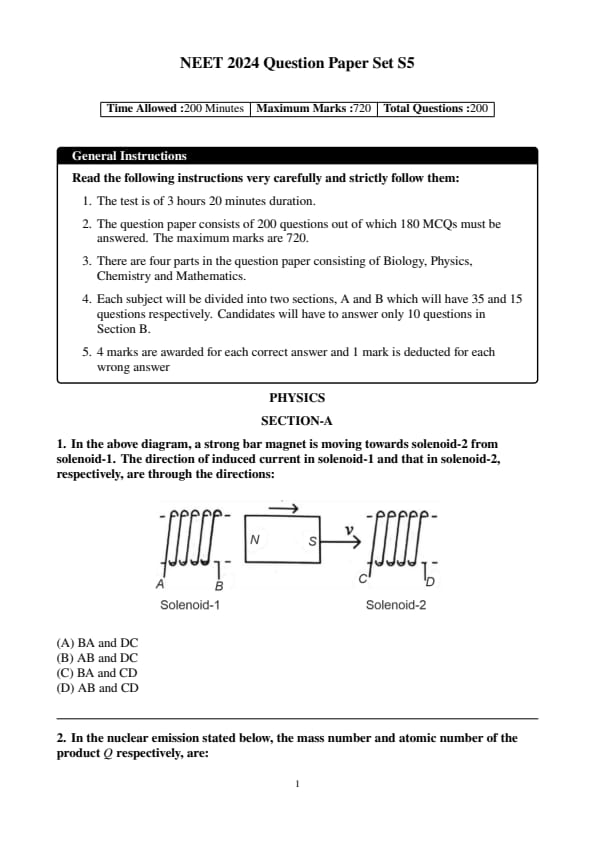
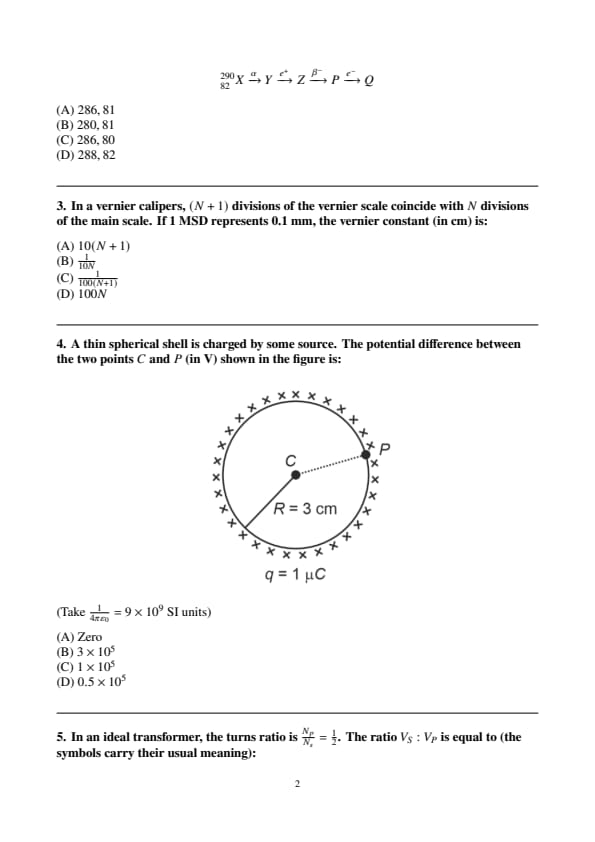
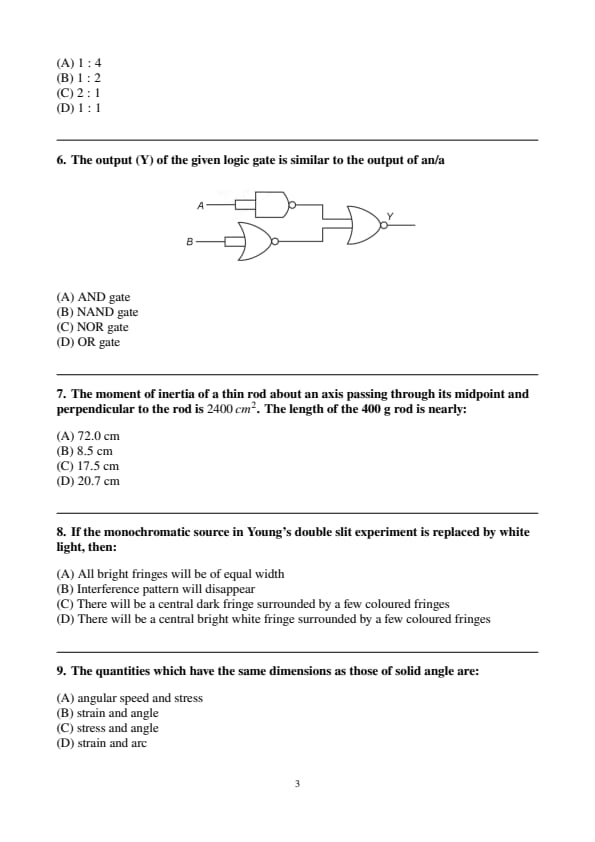
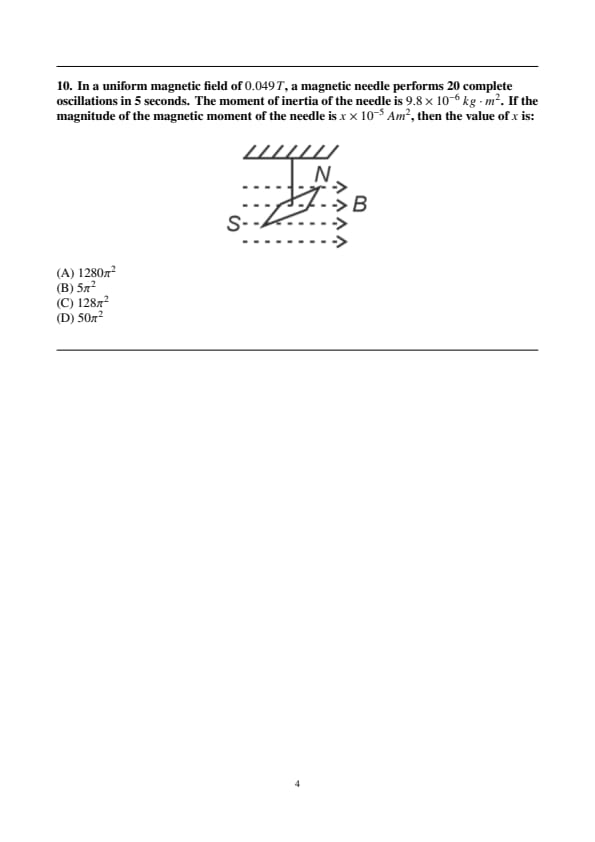
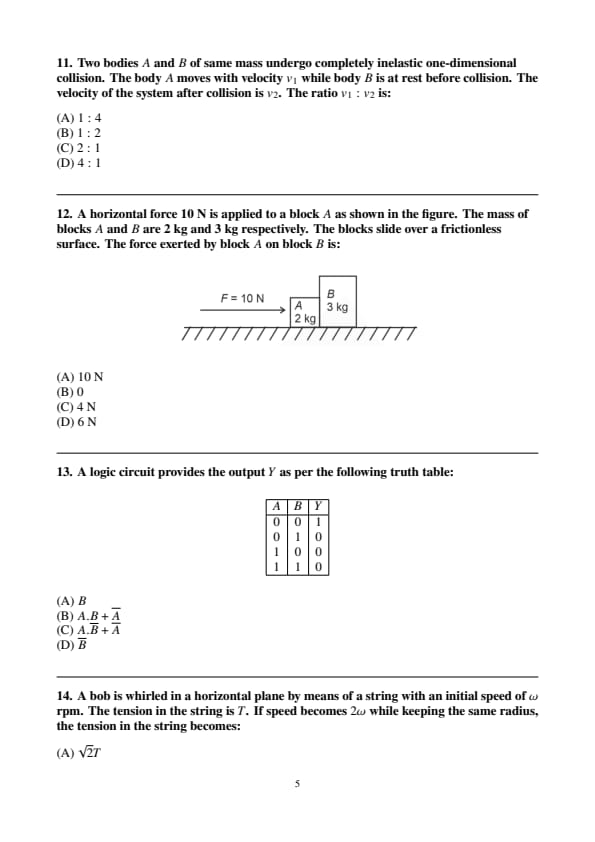
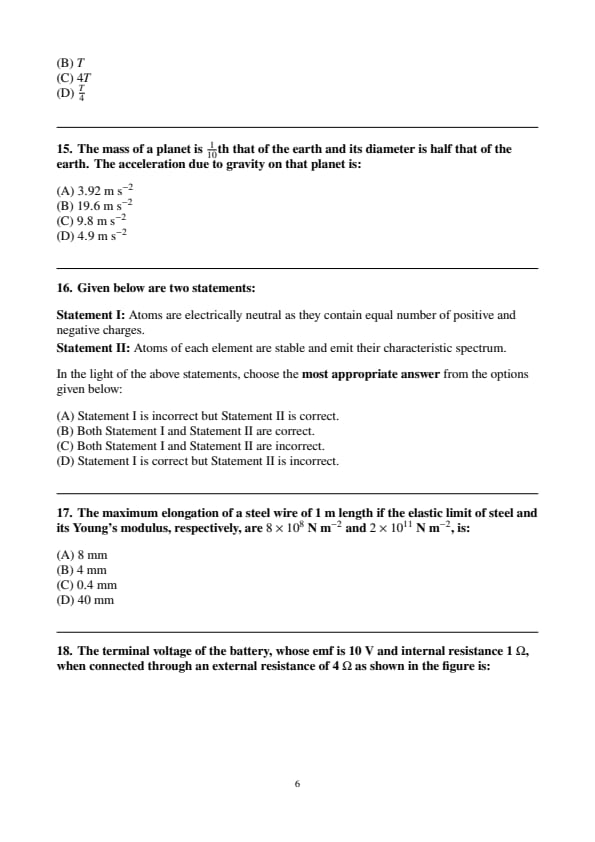
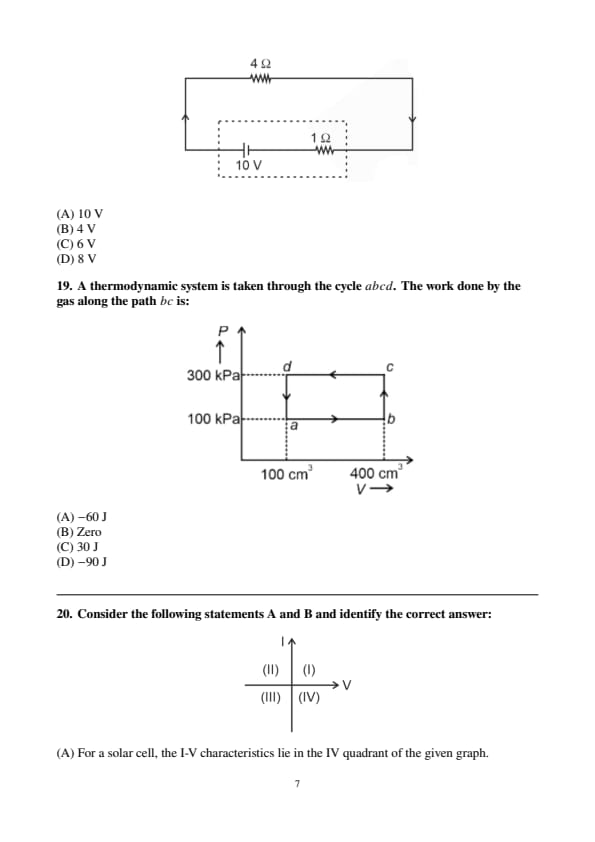
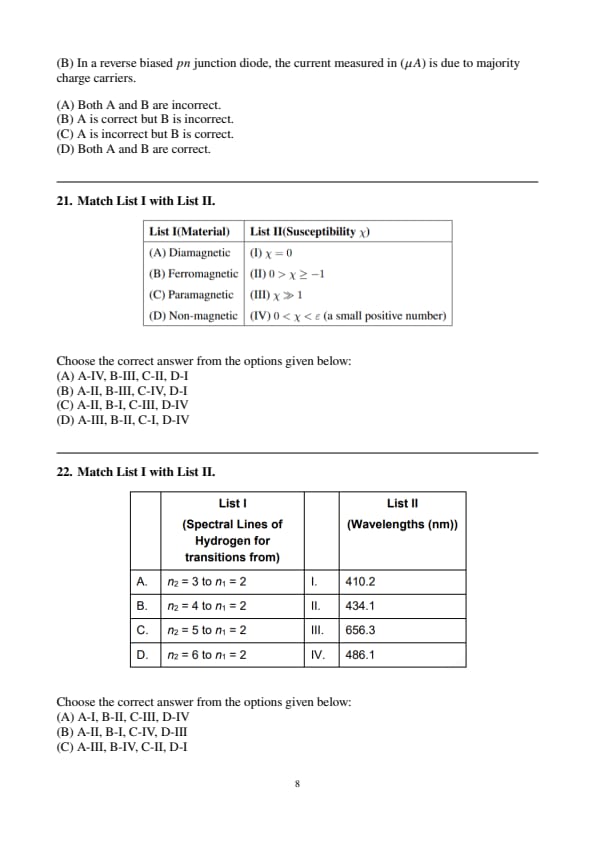
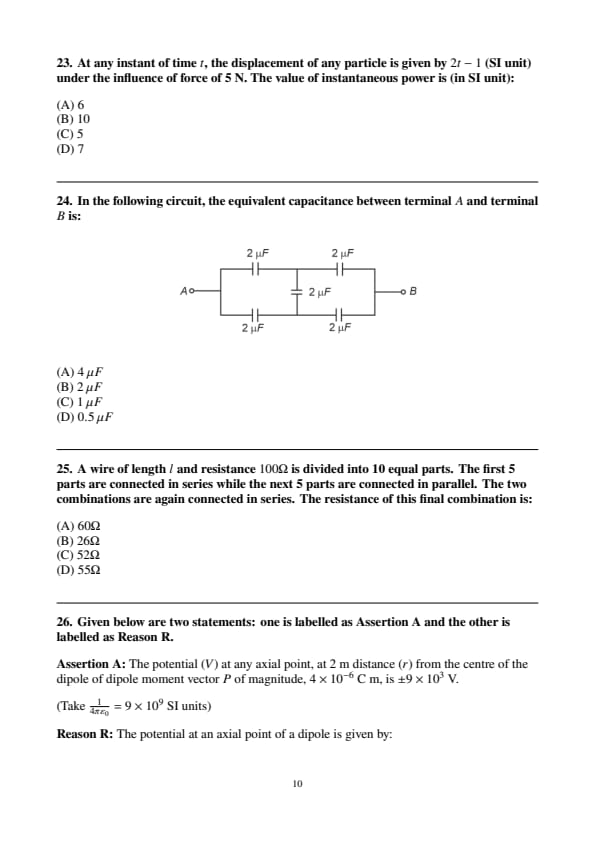
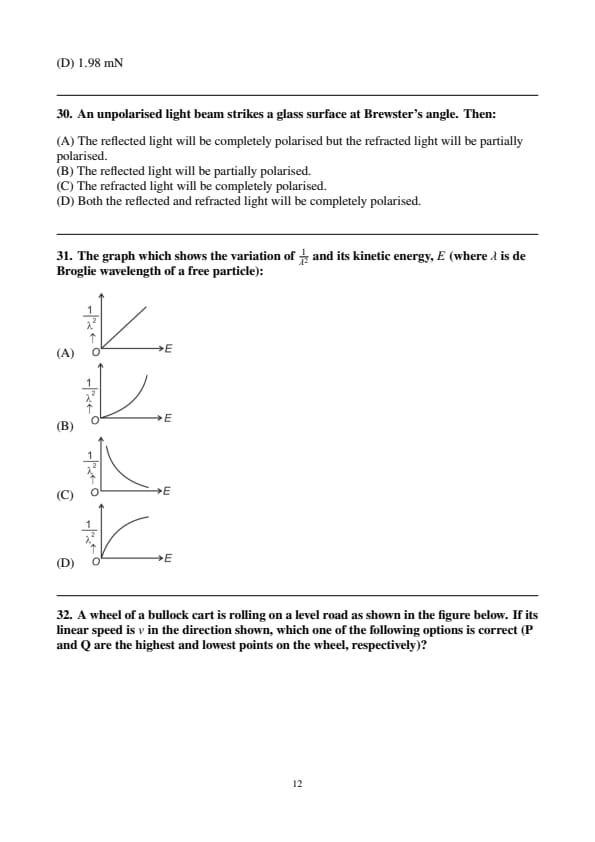
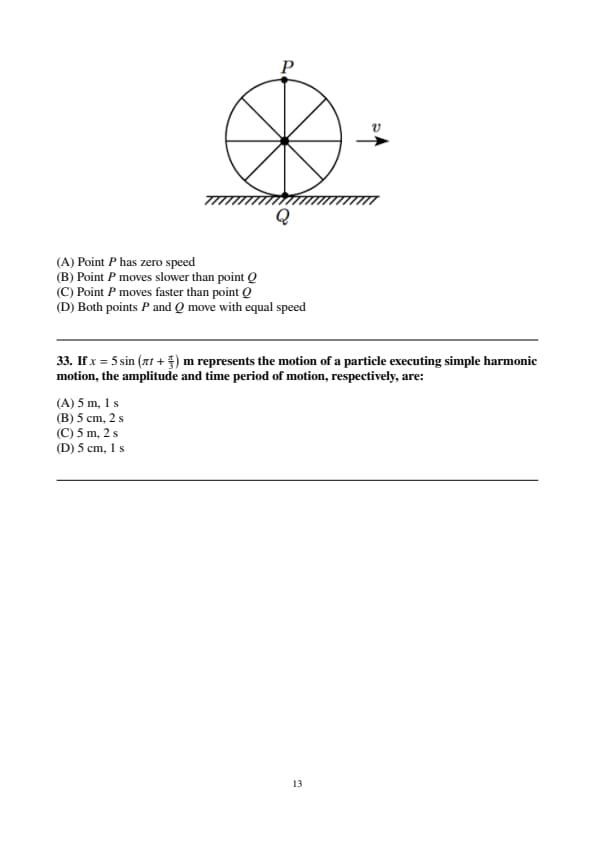
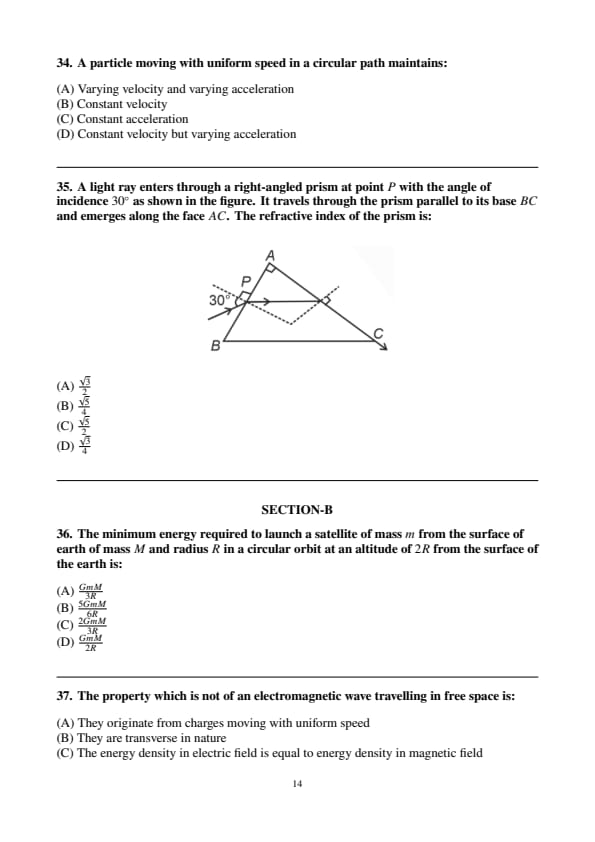
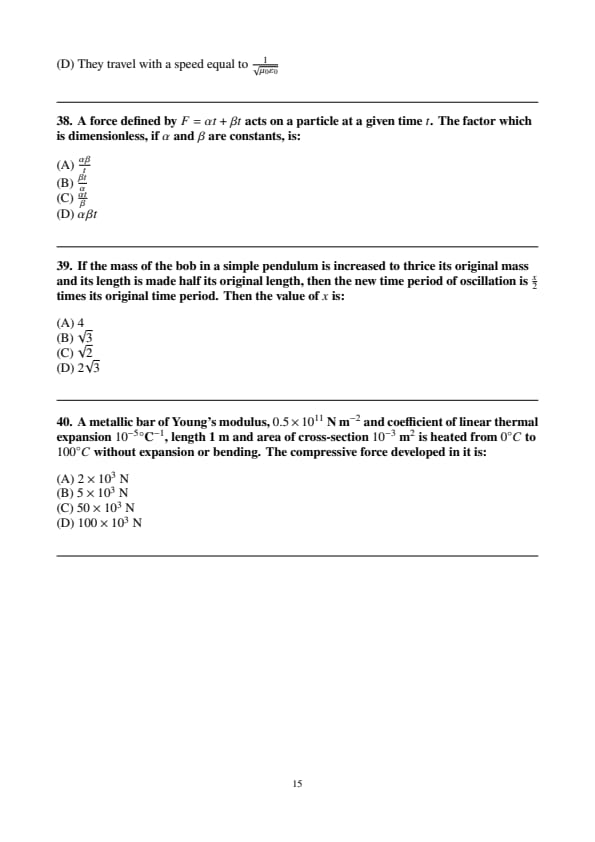
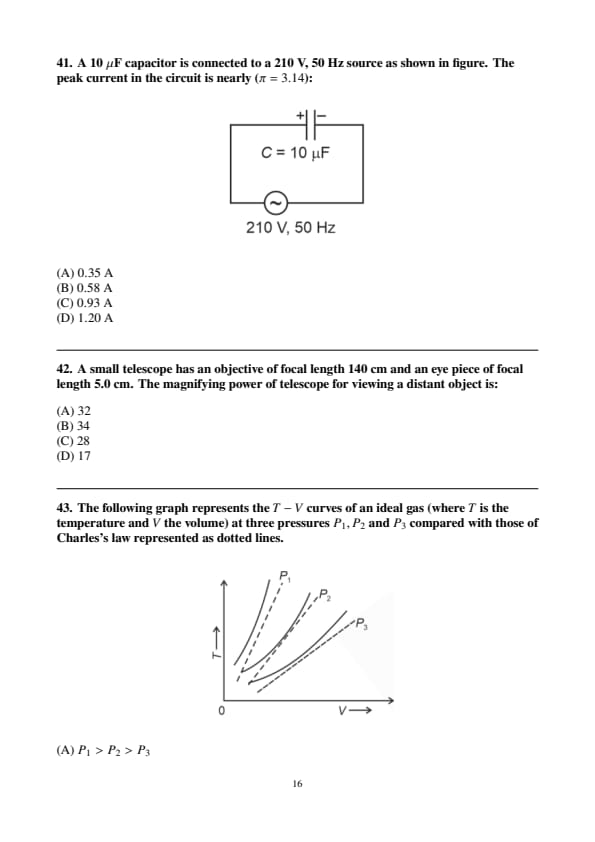
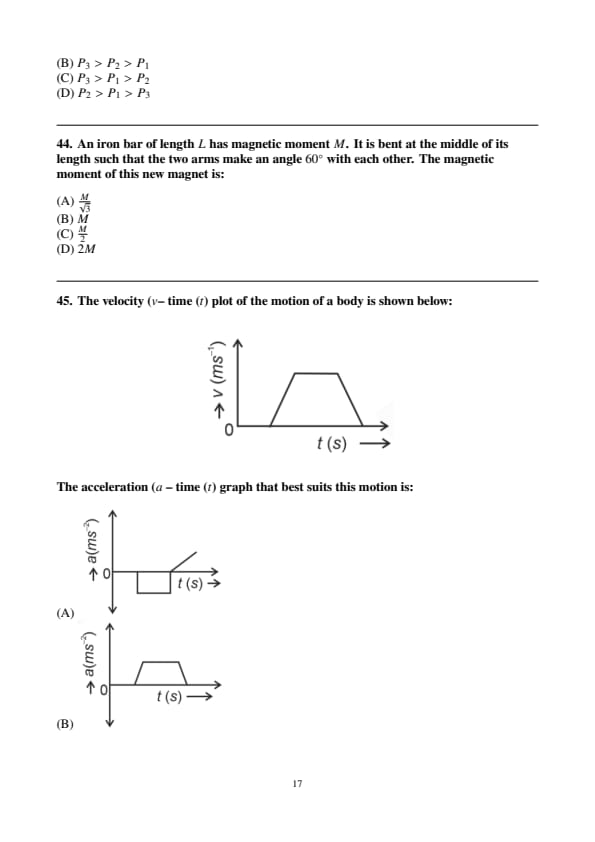
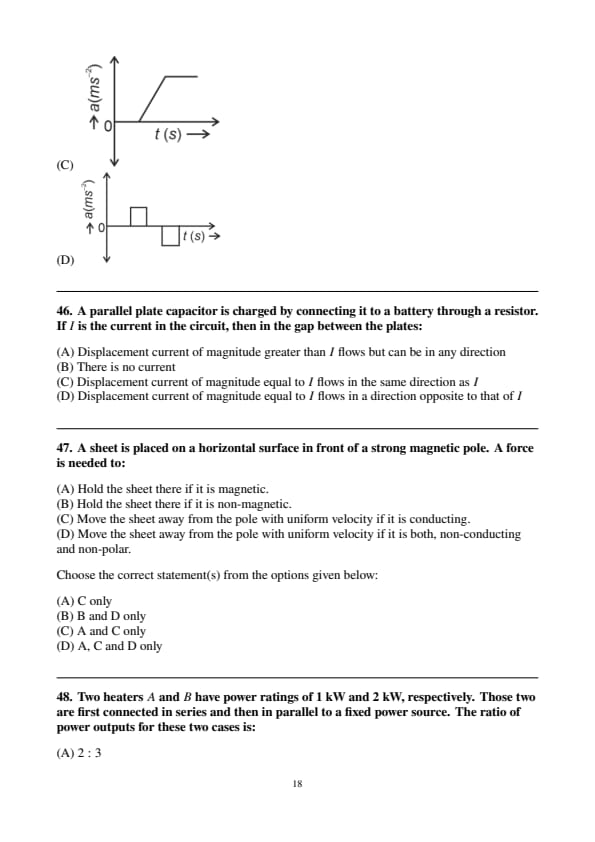
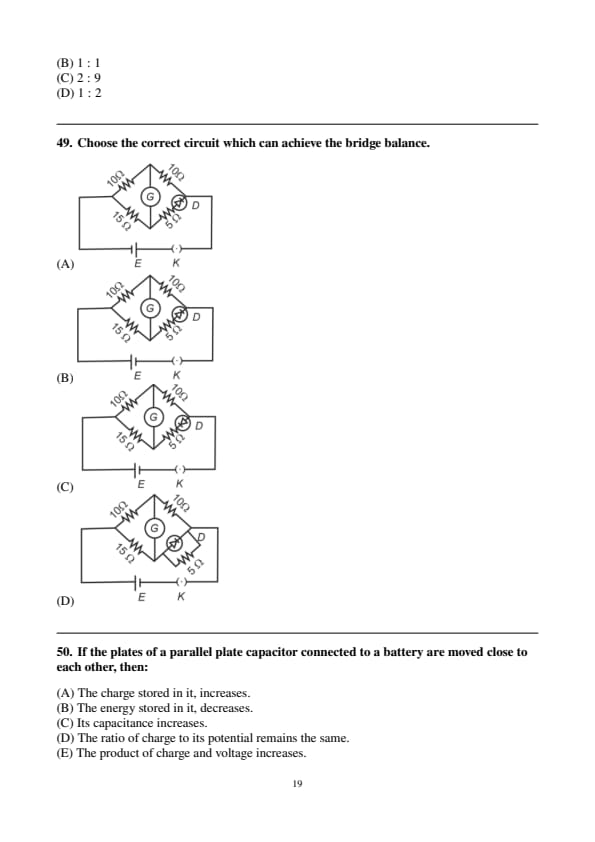
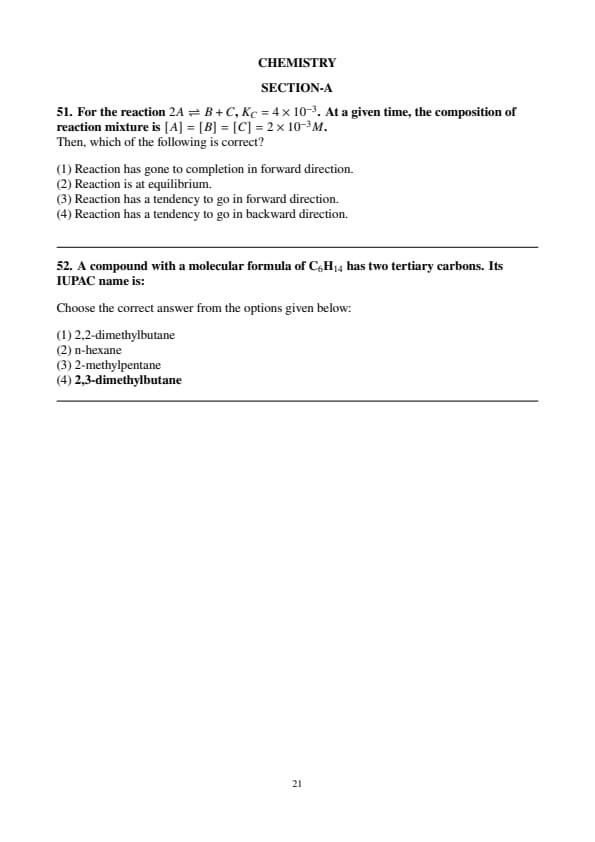
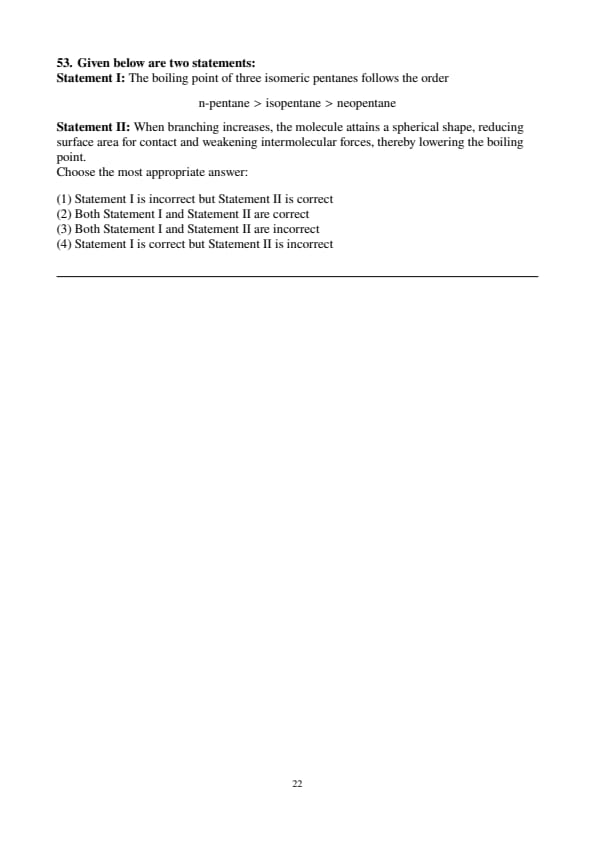
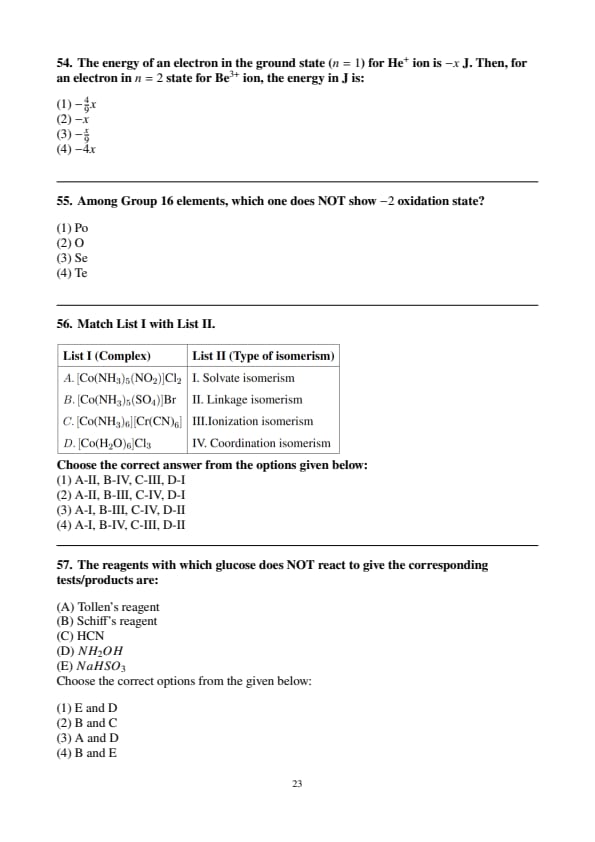
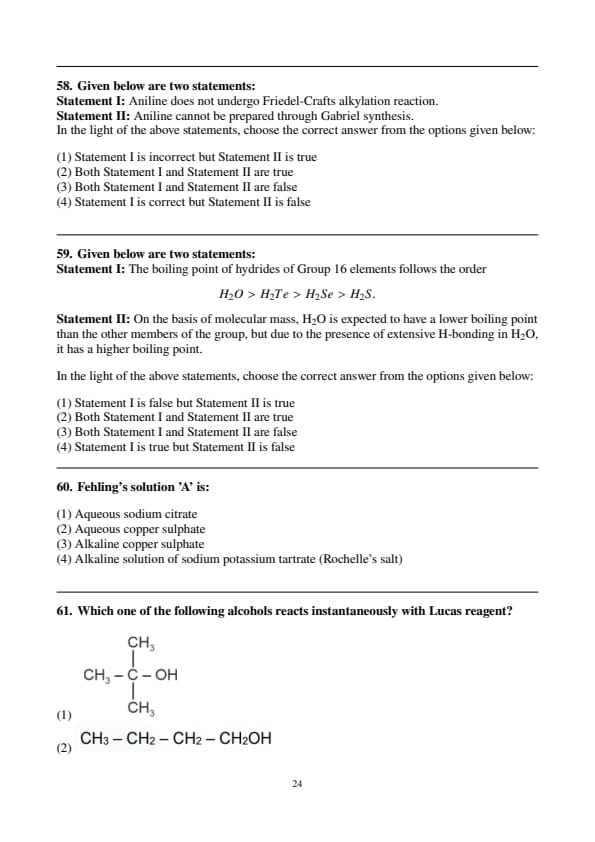
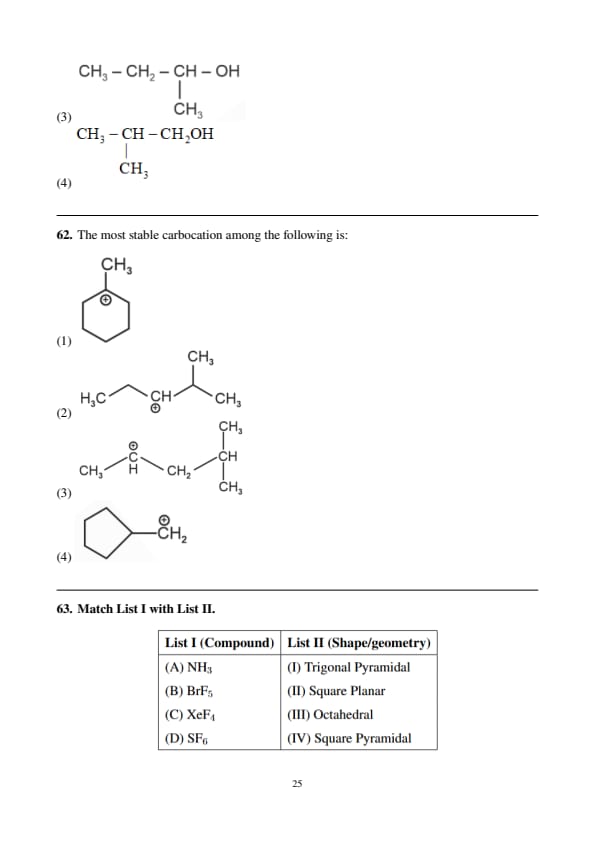
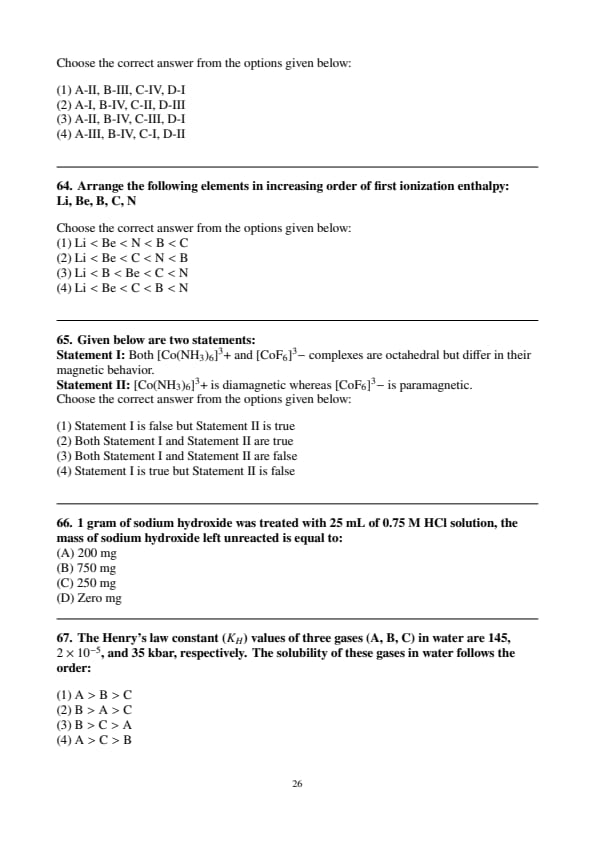
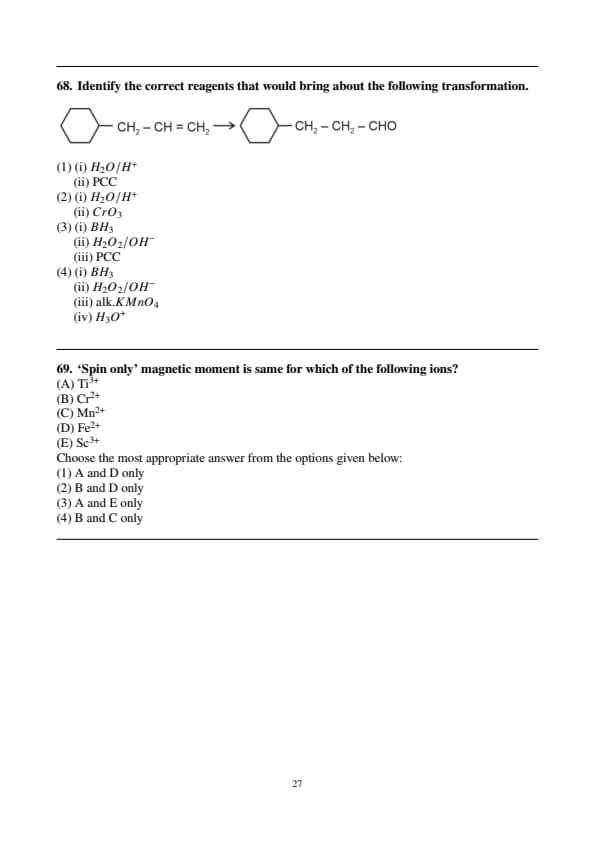
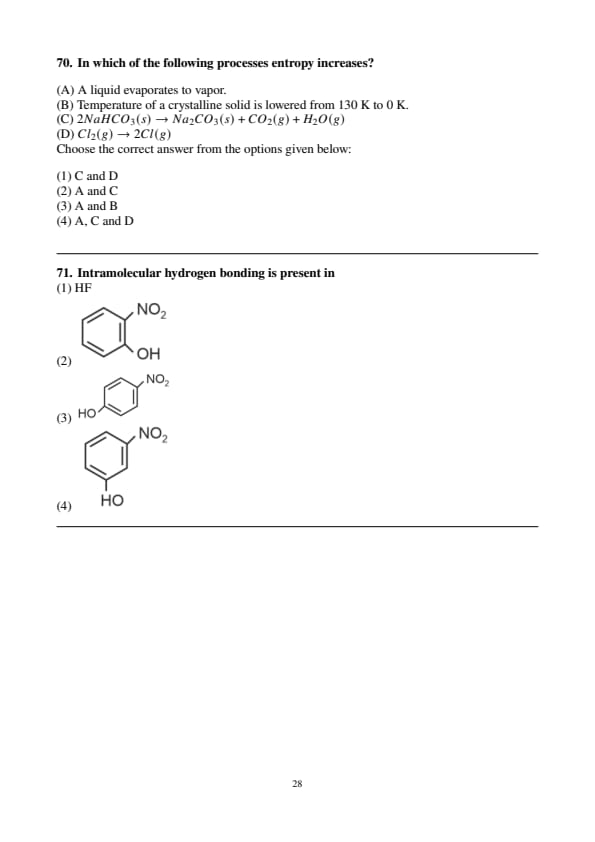
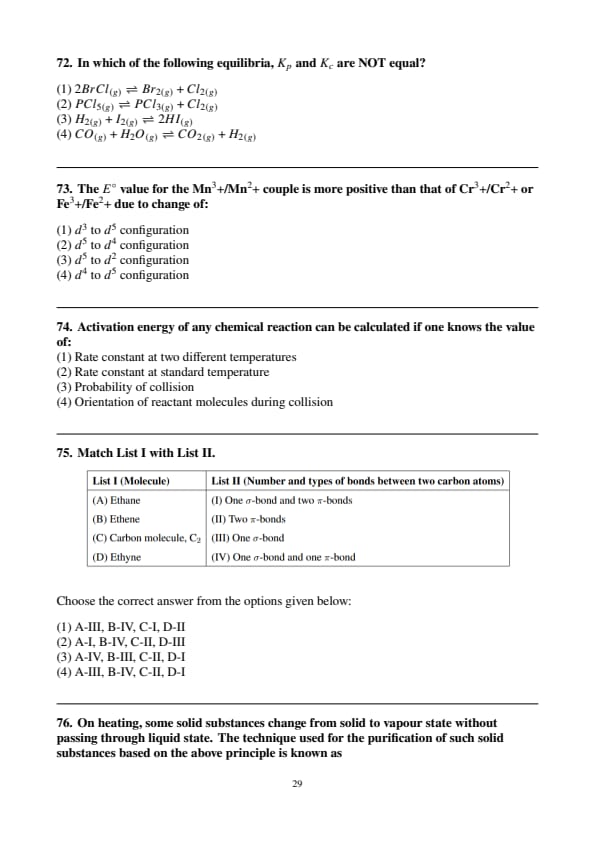
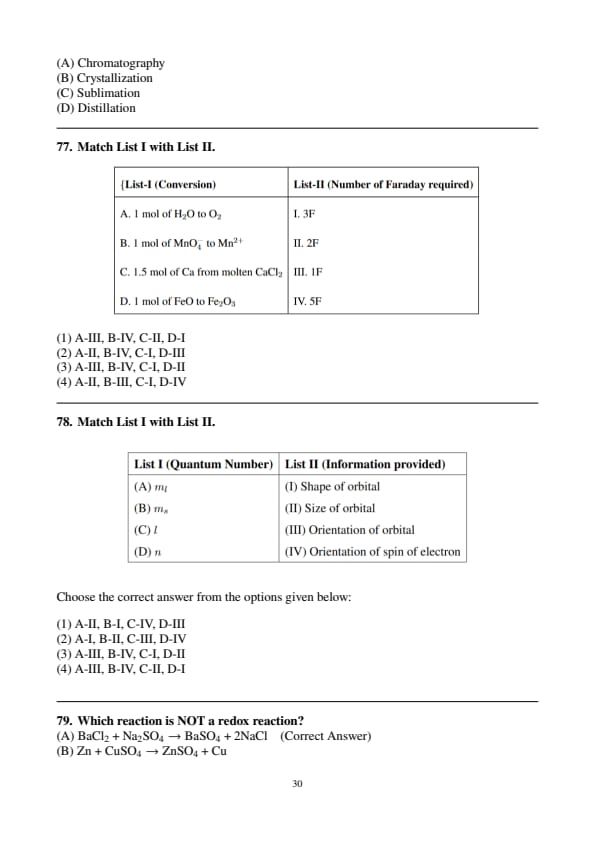
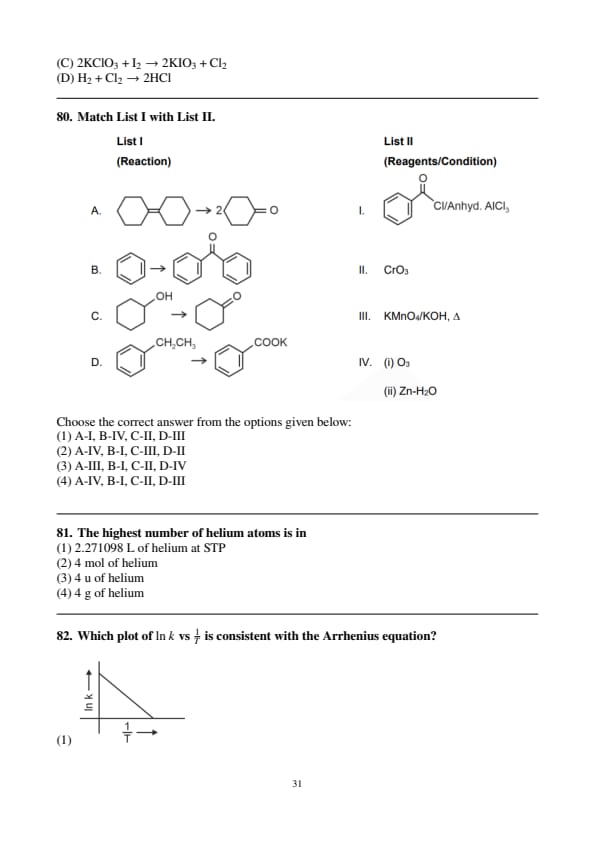
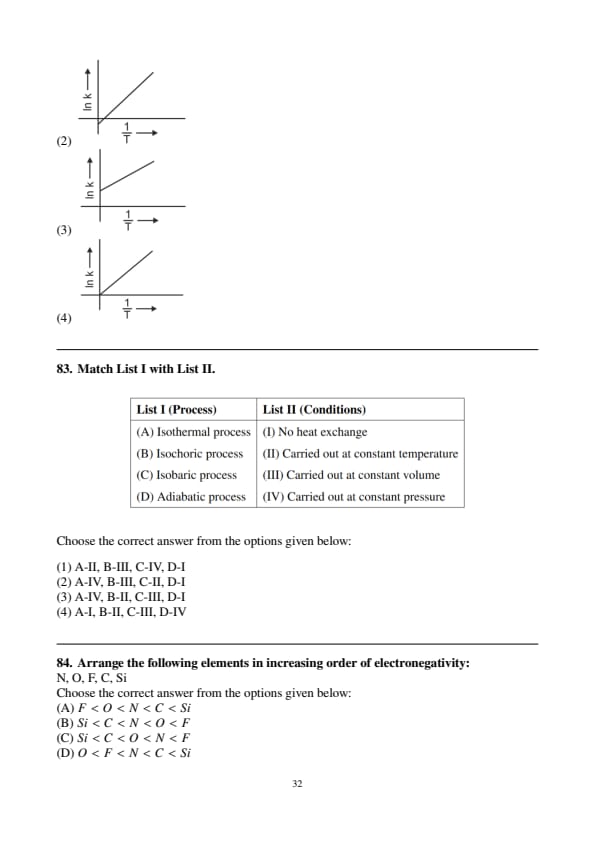
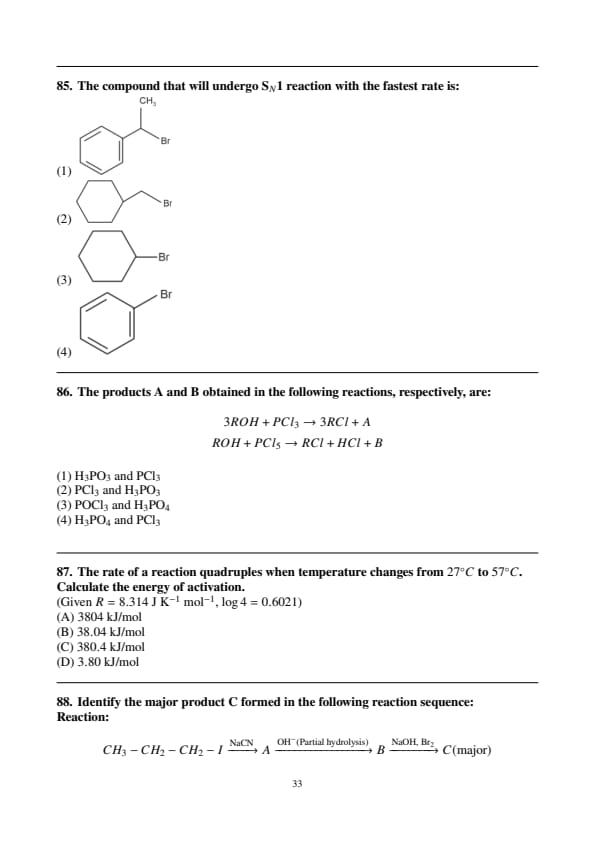
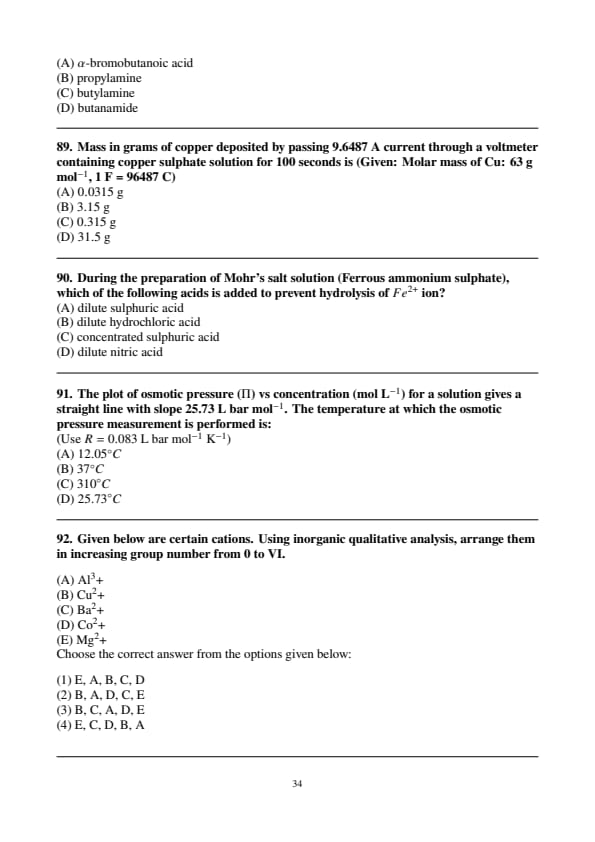
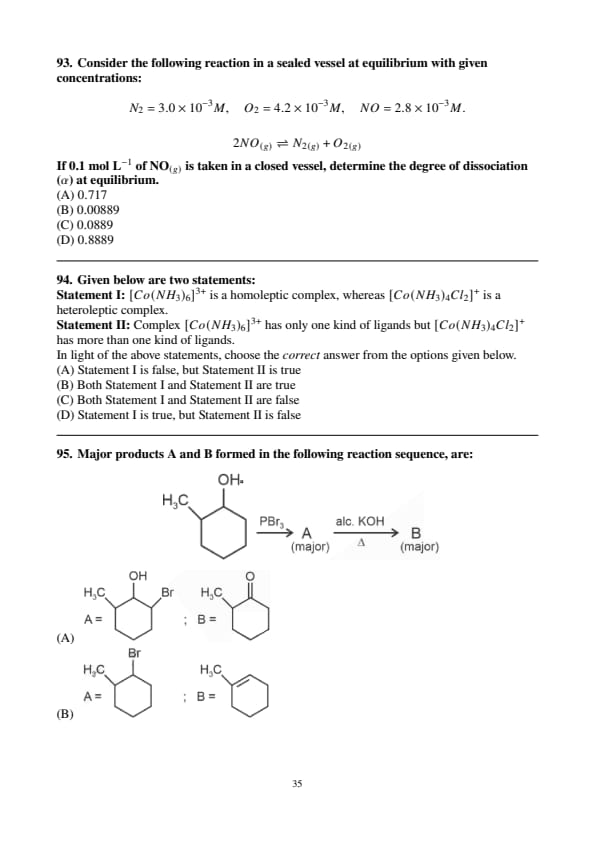
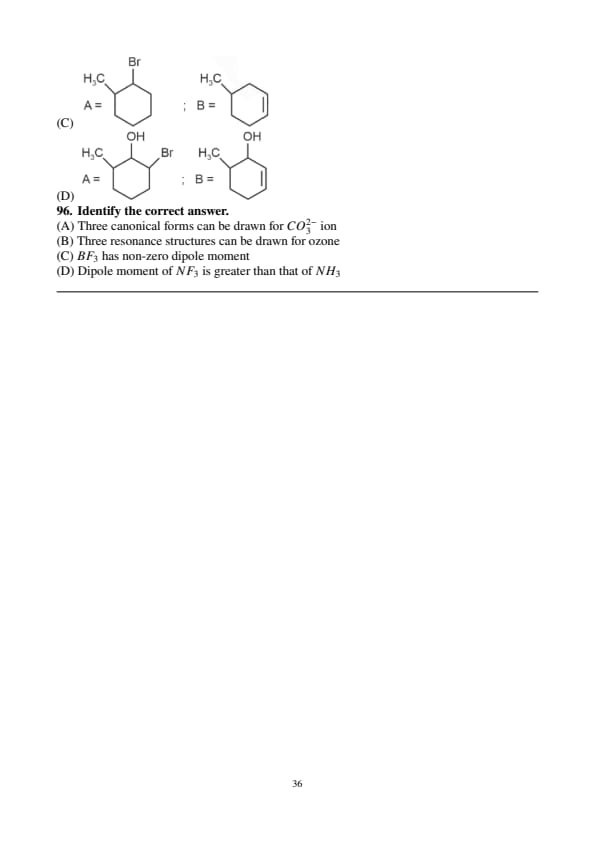
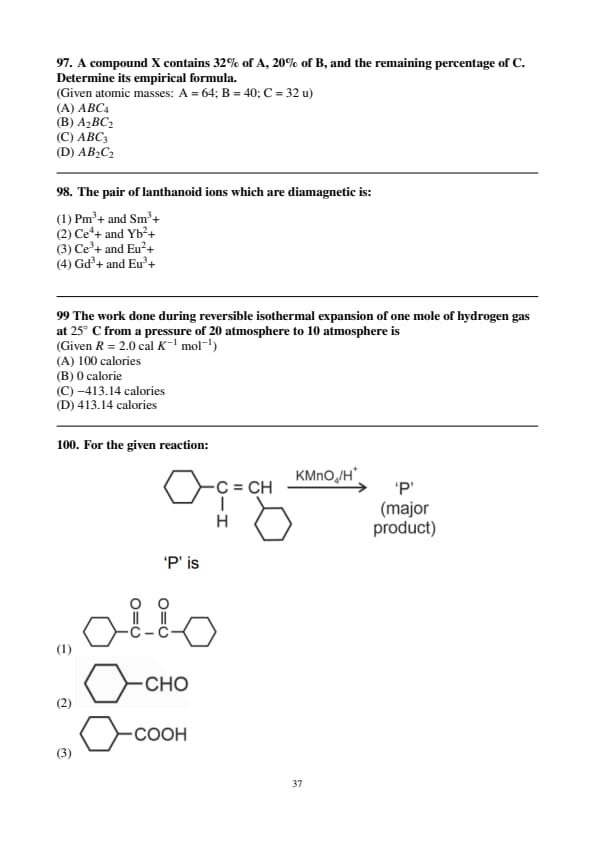
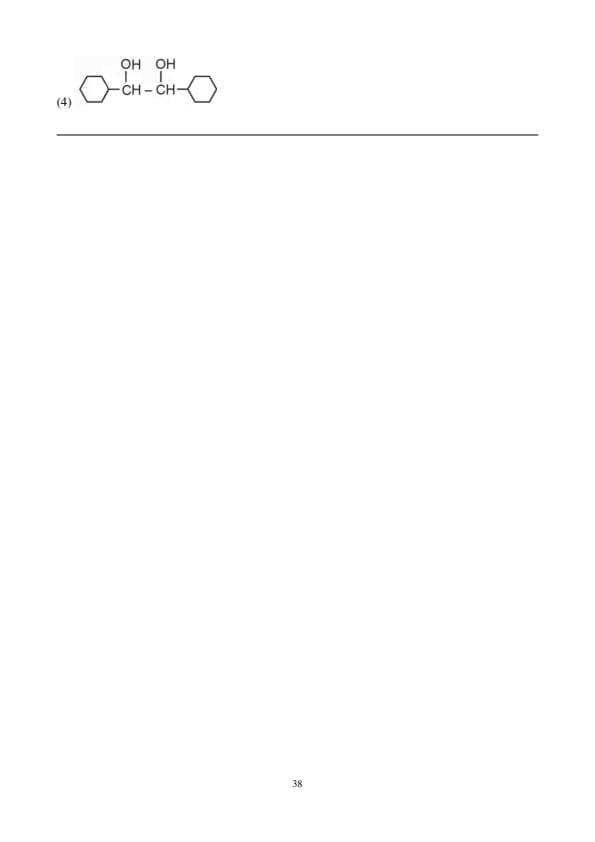
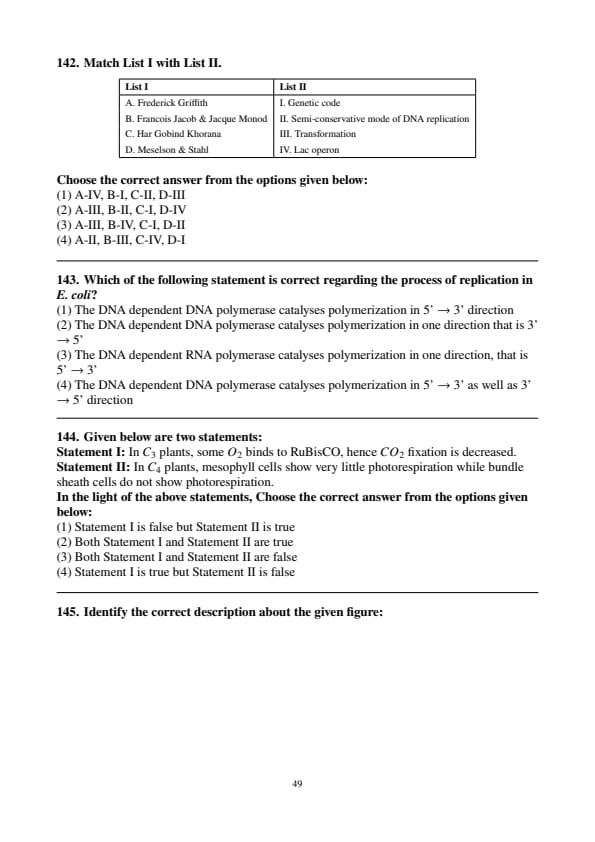
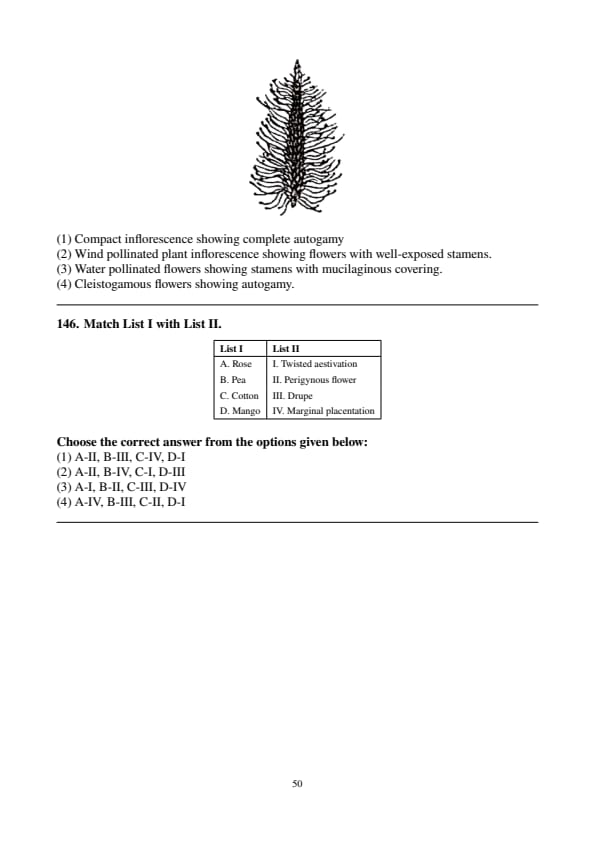
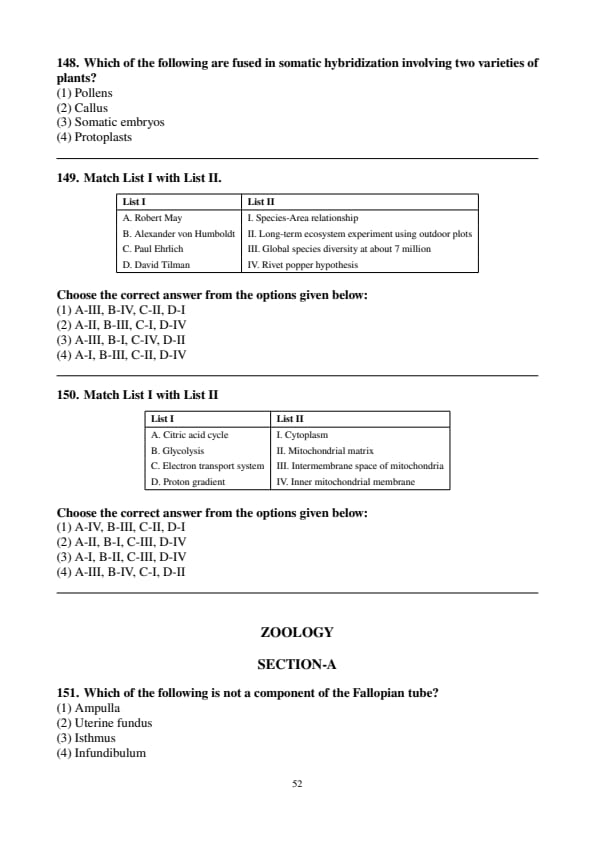
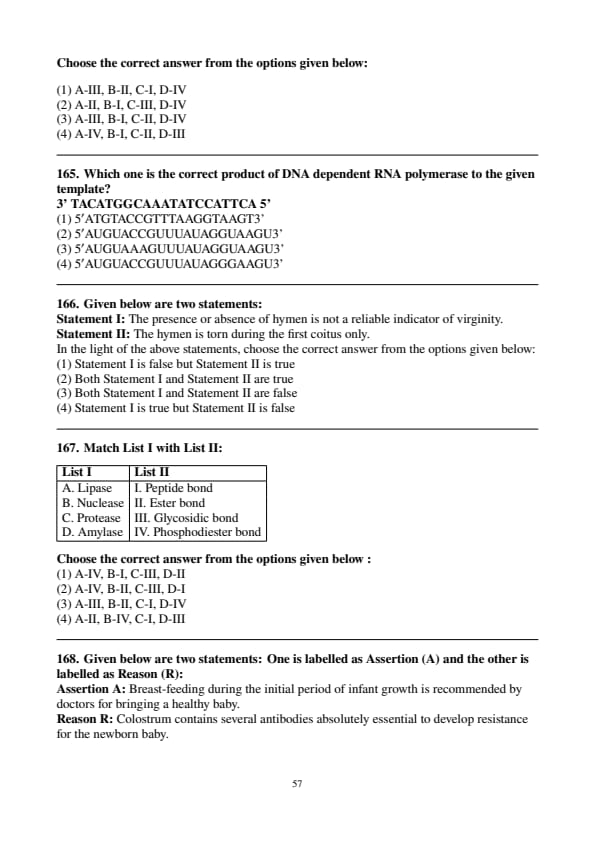
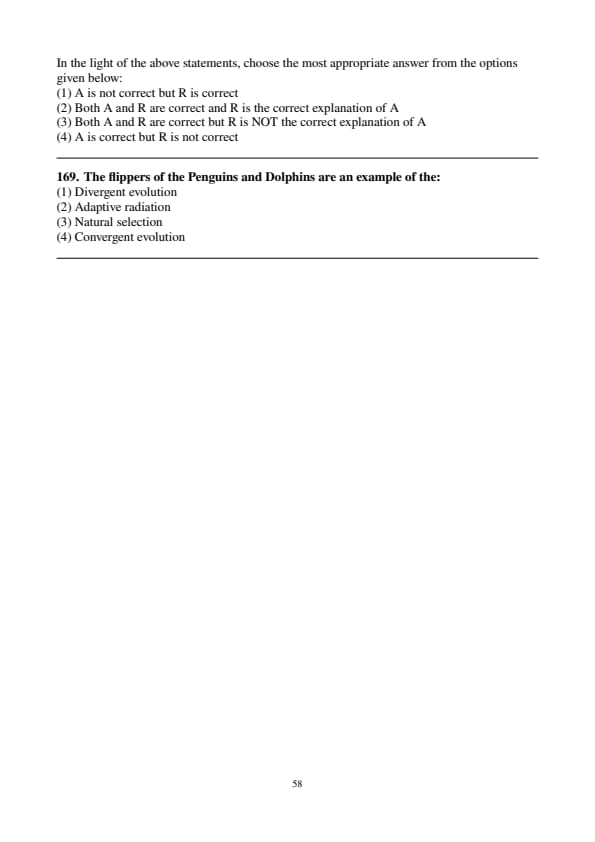
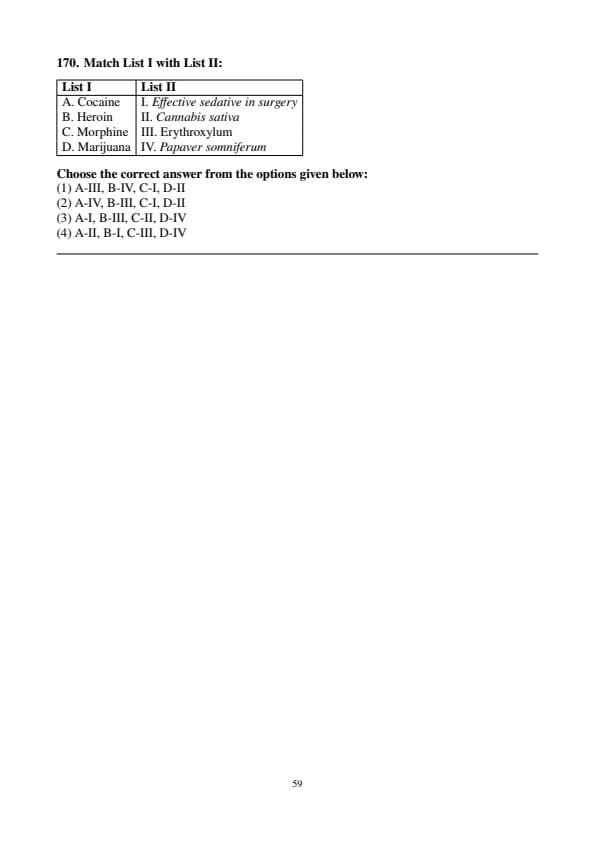
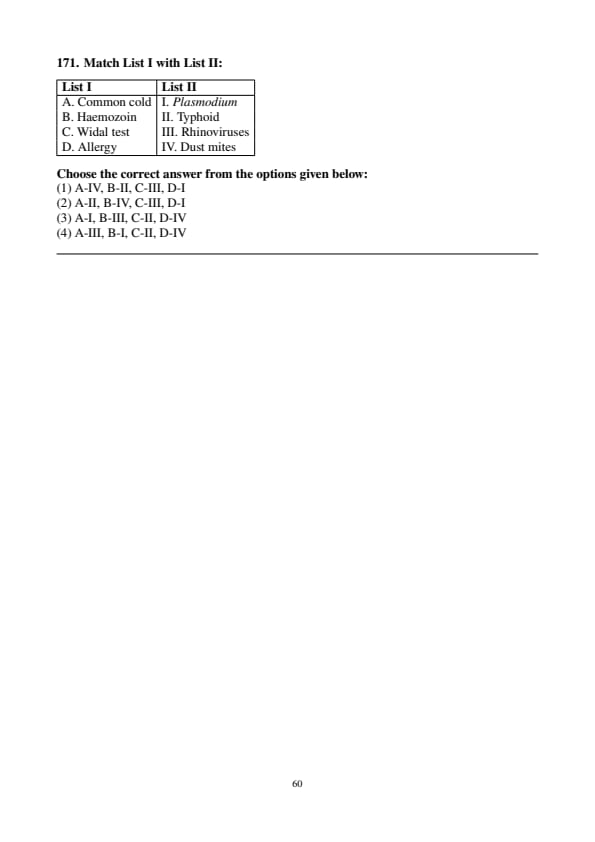
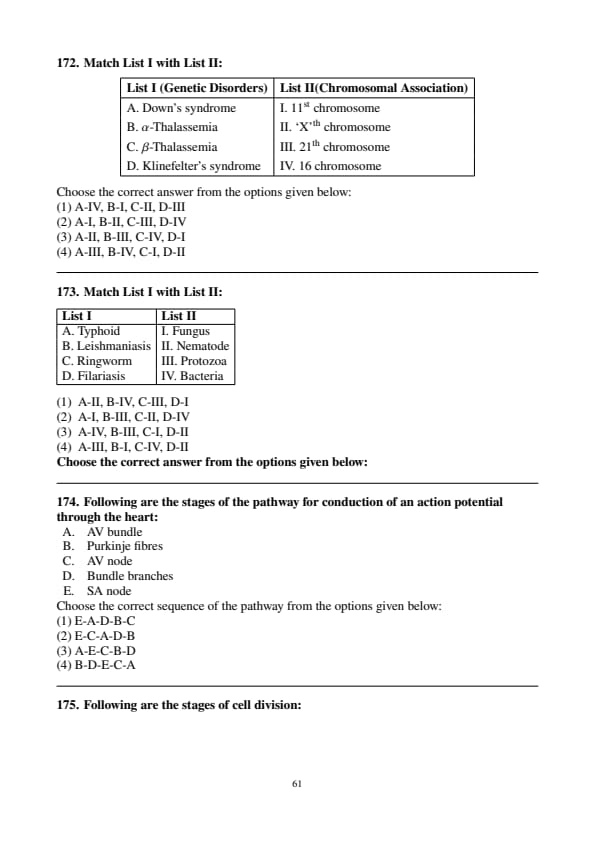
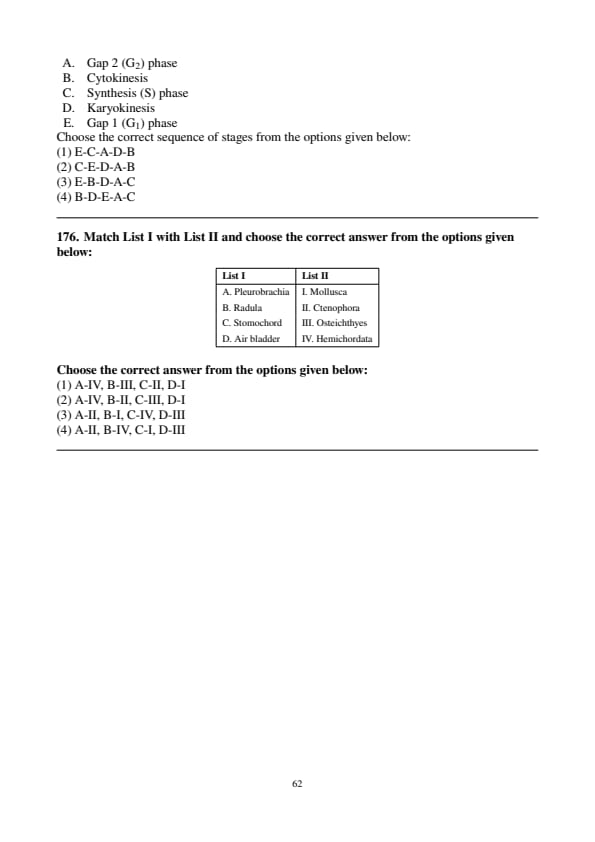
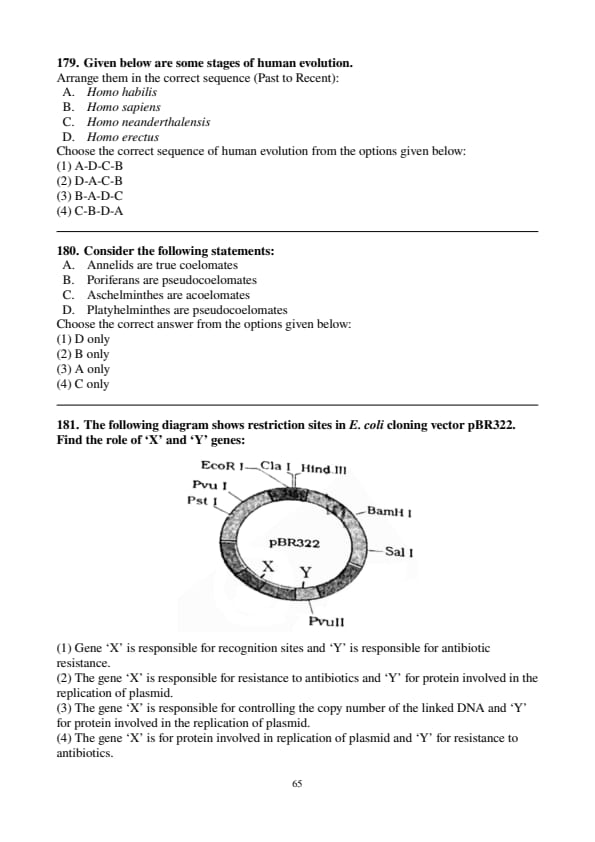
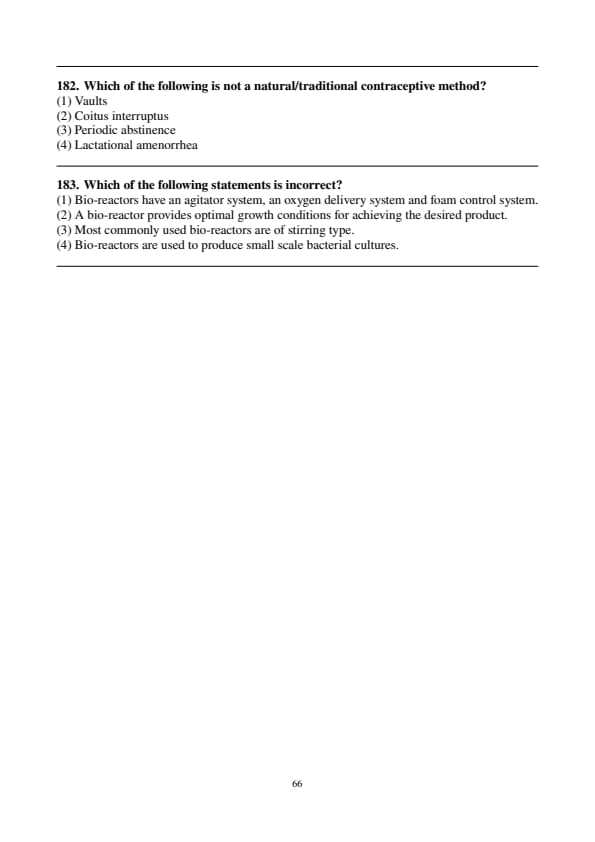
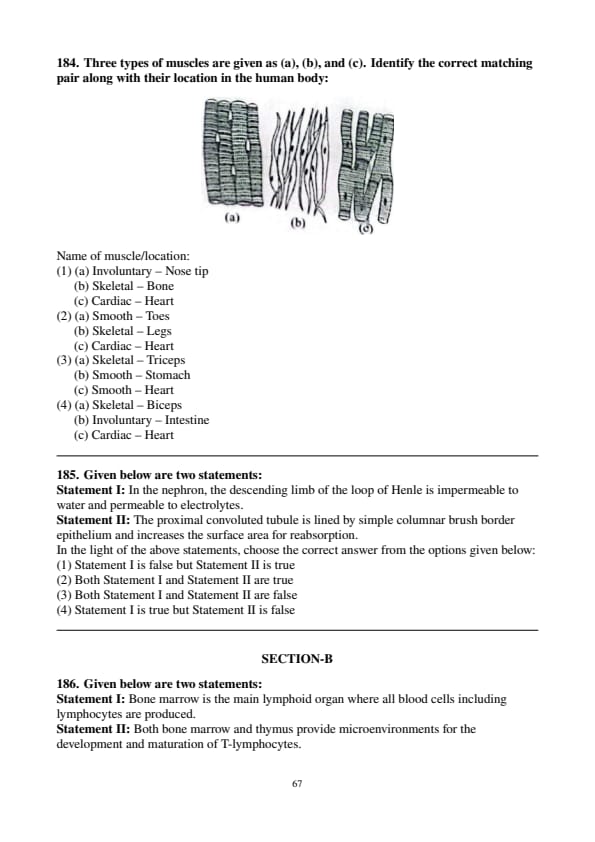
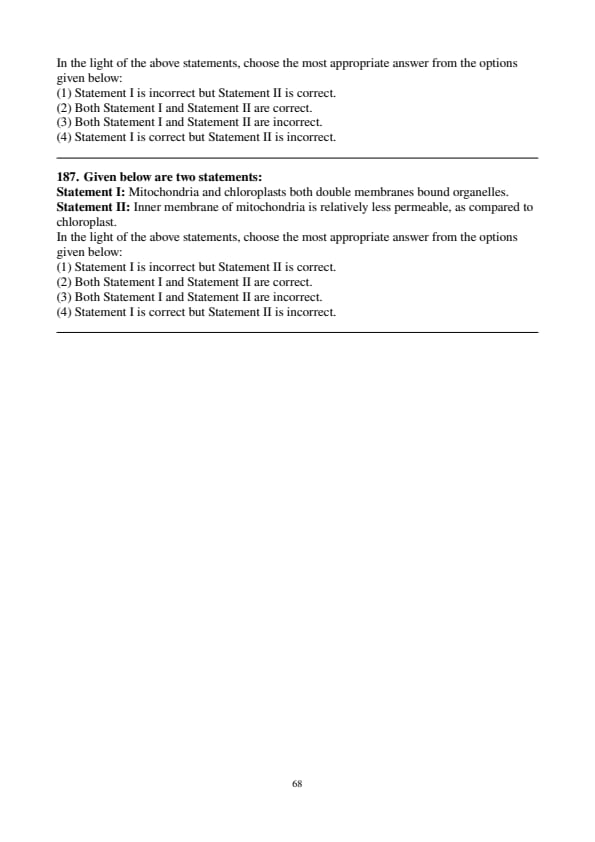
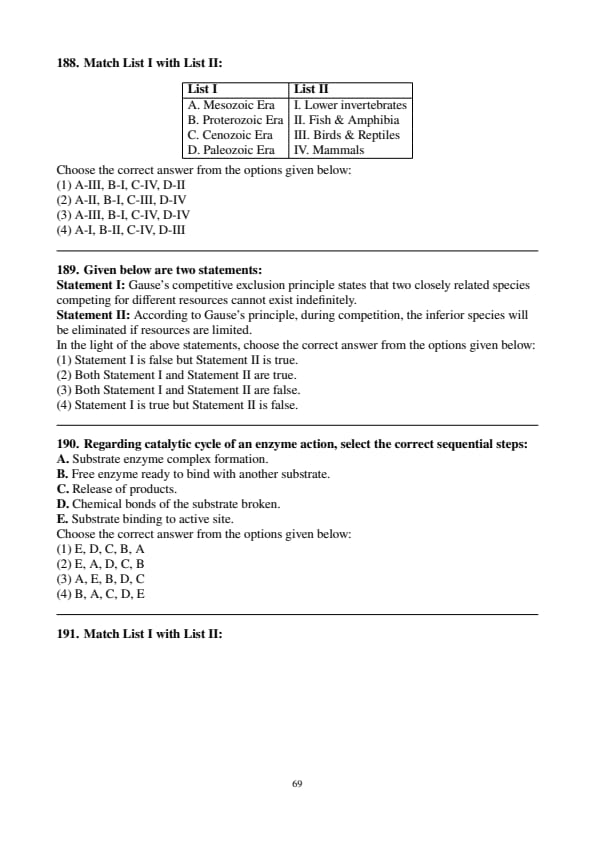
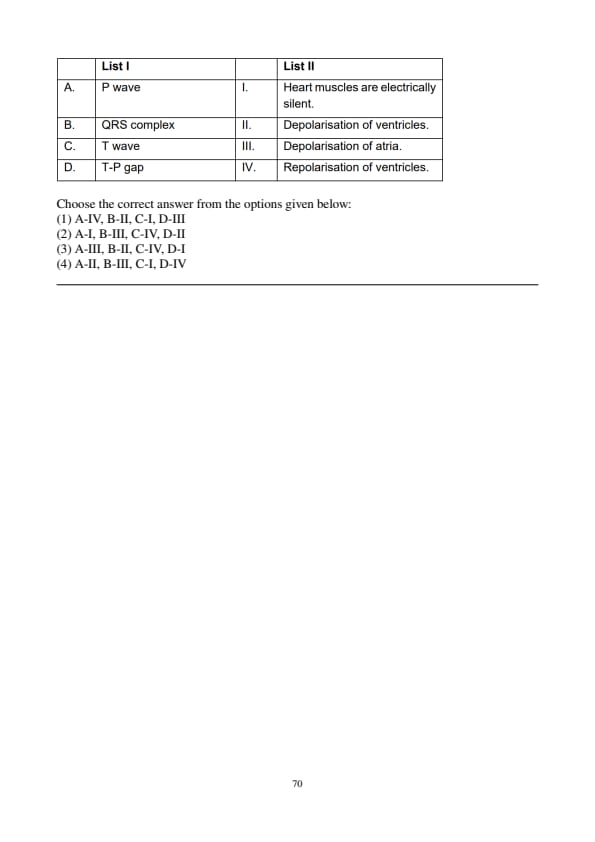
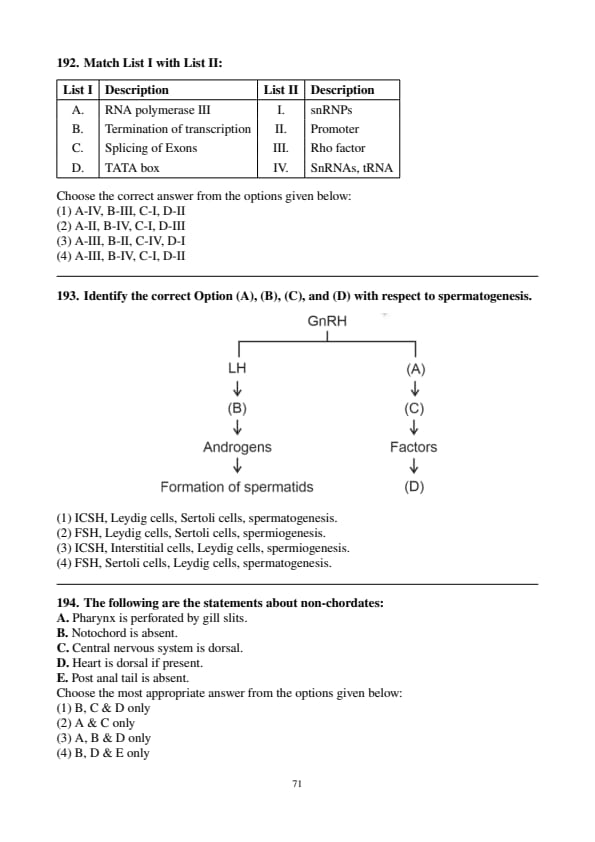

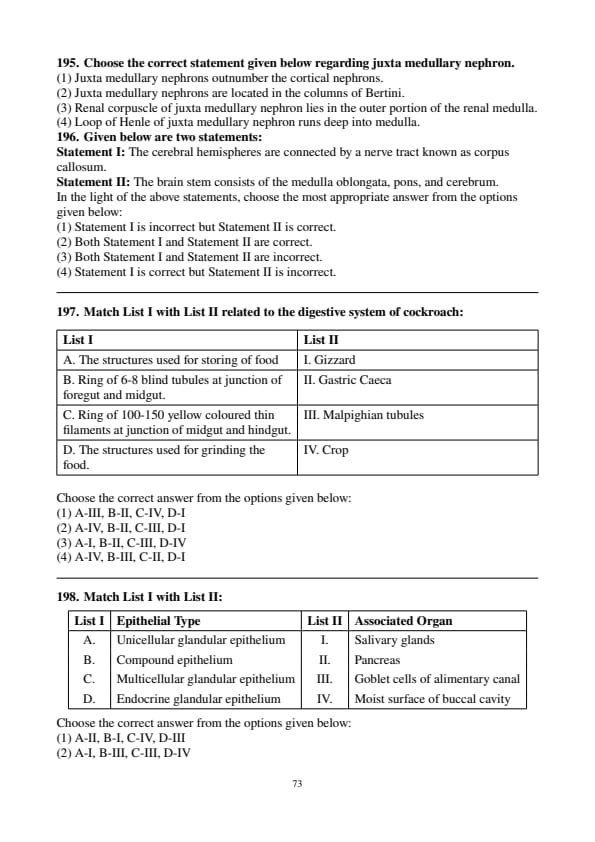
*The article might have information for the previous academic years, please refer the official website of the exam.