
NEET Eligibility Criteria 2026: Category-wise Qualification, Age Limits, Attempts
- Answer Key
- Merit List
- Seat Inkate
- Tripura Counselling
- Nagaland Counselling
- Kerala Counselling
- UP Counselling
- Assam Counselling
- West Bengal Counselling
- MP Counselling
- Haryana Counselling
- Chhattisgarh Counselling
- Gujarat Counselling
- Participating Colleges
- AP Counselling
- Manipur Counselling
- Mark Vs Rank
- Mizoram NEET Counselling
- Ayush Counselling
- TN NEET Counselling
- Andhra Pradesh Counsellin
- Karnataka NEET Counsellin
- Jharkhand NEET Counsellin
- MH NEET Counselling
- Bihar NEET Counselling
- Counselling
- Seat Allotment


Content Writer | Updated On - Feb 9, 2026
The NEET UG 2026 eligibility criteria outline the age, academic Qualifications, subject requirements and attempts limits for candidates wanting to appear for the exam. Before applying for NEET UG 2026, it is recommended that all candidates carefully check and confirm that they meet the eligibility criteria. Failure to meet any of the requirements could result in disqualification from the exam process.
Key Highlights :
- Candidates who have passed class 12 with at least 50% marks or those waiting for their result fulfils the NEET UG 2026 eligibility criteria .
- The minimum age for all categories(general, OBC, pwd) is 17 years, which must be met by the time of admission or by December 31 of the admission year.
- There is no maximum age limit for NEET UG 2026.
- Indian citizens and Overseas Citizen of India(OCI) who wish to study medical courses abroad also need to qualify for NEET UG 2026.
The NEET UG 2026 exam scheduled has been released on the official website. The National Testing Agency or NTA has fixed the date for NEET UG 2026 exam, and that is May 03, 2026. The NEET UG 2026 registration is ongoing and will end on March 08, 2026. Candidates who meet the NEET UG 2026 eligibility criteria are invited to apply.
Important Links:
- NEET Registration 2026
- How to Fill NEET 2026 Application form
- NEET UG 2026 Form Correction
- NEET Age Limit 2026
- NEET Eligibility Criteria 2026
1.2 NEET 2026 Eligibility Criteria for MBBS
1.3 NEET 2026 Eligibility Criteria for BAMS/BSMS/BUMS/BHMS Courses
1.4 NEET 2026 Eligibility Criteria for Jammu , Kashmir and Ladakh
1.5 NEET 2026 Eligibility Criteria for NRI/OCI/Foreign Students
1.6 NEET 2026 Eligibility Criteria: Category-wise Quota Seats
1.7 NEET 2026 Eligibility Criteria : 15% for AIQ Seats
1.8 NEET 2026 Eligibility Criteria : For State Quota Seats
1.10 Is 75% Criteria required for NEET 2026
1.11 Why Aadhar is Important for NEET 2026
- NEET 2026 Qualifying Codes and Criteria
- NEET 2026 Attempt Limits
- General FAQ for NEET Eligibility 2026
Also Check: NEET 2026: Registration
NEET Eligibility Criteria 2026
The NEET eligibility Criteria covers educational Qualification, age limits, nationality and other important factors needed to apply for the exam. Candidates appearing for NEET UG 2026 must meet these requirements. In 2017, a 25 year age limit was introduced but was later challenged and temporarily allowed by the Supreme Court on October 4 2021, the NMC discussed removing the age limit.
| Criteria | Details |
|---|---|
| Minimum Age | Candidates must be at least 17 years old as of December 31, 2025. |
| Upper Age Limit | No upper age limit for NEET UG 2026. |
| Educational Qualification | Must have passed Class 12 or equivalent with Physics, Chemistry, Biology/Biotechnology, and English. |
| Minimum Marks (PCB + English) | General category: 50% marks; Reserved category (SC/ST/OBC): 40% marks; PwD: 45% marks |
| Nationality | Indian citizens, NRIs, OCIs, PIOs, and foreign nationals are eligible to apply. |
| Number of Attempts | No limit on the number of attempts for NEET UG. |
Also Check:
NEET Age limit 2026
The NEET 2026 has introduced changes to the Age Limit criteria , allowing more flexibility for the candidates. With the minimum age limit of 17 years remaining unchanged, the previous upper age limit has been removed, meaning there is no upper age limit for candidates to appear for the exam.
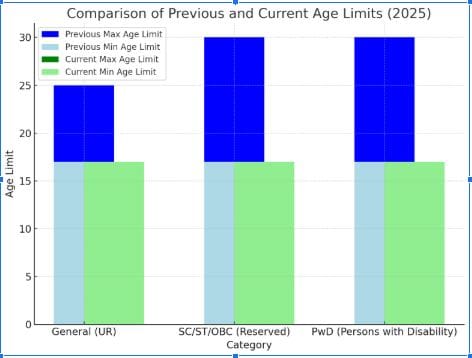
Detailed Table compares previous age limit and current age limit for different categories, reflecting important updates.
| Category | Previous Age Limit | Current Age Limit (2026) |
|---|---|---|
| General (UR) | Minimum: 17 years, Maximum: 25 years | Minimum: 17 years, No upper age limit |
| SC/ST/OBC (Reserved) | Minimum: 17 years, Maximum: 30 years | Minimum: 17 years, No upper age limit |
| PwD (Persons with Disability) | Minimum: 17 years, Maximum: 30 years | Minimum: 17 years, No upper age limit |
Age Limits for three categories: General, SC/ST/OBC and PWD
- The Previous maximum age limit was higher than the maximum current age limit for all categories.
- The Previous minimum age limit was also higher than the minimum current age limit for all categories.
- The reductions in both maximum and minimum age limits are consistent across the three categories.
NEET 2026 Eligibility Criteria for MBBS
The NEET UG eligibility Criteria for MBBS outline the requirements that candidates must meet in order to be eligible for the exam. These criteria cover aspects such as age limits, Educational Qualification, Marks , Nationality and No. of Attempts allowed.
Detailed Table for NEET Eligibility Criteria for MBBS
| Criteria | Details |
|---|---|
| Minimum Age | Candidates must be at least 17 years old as of December 31, 2025. |
| Upper Age Limit | No upper age limit for NEET UG 2026. |
| Educational Qualification | Must have passed Class 12 or equivalent with Physics, Chemistry, Biology/Biotechnology, and English. |
| Minimum Marks (PCB + English) |
|
| Subjects Required | Physics, Chemistry, Biology/Biotechnology, and English are mandatory subjects. |
| Nationality | Indian citizens, NRIs, OCIs, PIOs, and foreign nationals are eligible to apply. |
| Number of Attempts | No limit on the number of attempts for NEET UG. |
NEET 2026 Eligibility Criteria for BAMS/BSMS/BUMS/BHMS Courses
The Eligibility Criteria for admission to Bachelor of Ayurvedic Medicine and Surgery(BAMS), Bachelor of Siddha Medicine Surgery (BSMS), Bachelor of Homoeopathic Medicine and Surgery(BHMS), Bachelor of Unani Medicine and surgery(BUMS) are set by NTA and relevant authorities.
These guidelines ensure that candidates meet the academic, age, and qualifying examination requirements to pursue AYUSH undergraduate courses. The National Eligibility cum Entrance Test (NEET-UG) is mandatory for admission to all AYUSH programs across India. Below are the detailed criteria for aspiring candidates.
| Criteria | Details |
|---|---|
| Minimum Qualification | Candidates must have passed Class 12 or equivalent with Physics, Chemistry, and Biology/Biotechnology as core subjects. |
| Minimum Marks in Class 12 | General category: 50% aggregate in PCB; Reserved categories (SC/ST/OBC): 40%; PwD: 45%. |
| Age Limit | Minimum: 17 years as of December 31, 2025; No upper age limit for NEET 2026. |
| Nationality | Indian citizens, Overseas Citizens of India (OCI), Non-Resident Indians (NRI), and Foreign Nationals are eligible. |
| Additional Requirement for BUMS | Candidates must have passed Class 10 with Urdu or equivalent as a subject. |
| NEET Qualification | Candidates must qualify NEET (UG) 2026 with the minimum percentile specified by the National Testing Agency (NTA). |
| Reservation Policies | As per the Government of India guidelines, reservations for SC, ST, OBC, EWS, and PwD categories apply. |
NEET 2026 Eligibility Criteria for Jammu , Kashmir and Ladakh
For NEET 2026, candidates from J&K and Ladakh have specific eligibility criteria, particularly for the All India Quota(AIQ) and state Quota Seats.
Detailed Table for Eligibility Criteria for Jammu, Kashmir and Ladakh
| Criteria | Details |
|---|---|
| Domicile | Candidates from Jammu & Kashmir and Ladakh must fulfill the domicile requirements set by their respective state governments to be eligible for State Quota seats. |
| Eligibility for AIQ (All India Quota) | Candidates from J&K and Ladakh are eligible to apply for AIQ seats (15% of total seats) as per the National Medical Commission (NMC) guidelines. |
| State Quota Seats | Candidates from J&K and Ladakh can apply for State Quota seats provided they meet the state-specific domicile requirements and are residents of those regions. |
| J&K / Ladakh Migrants | Migrant candidates from J&K and Ladakh can apply for AIQ seats, but for State Quota seats, they need to meet the domicile conditions as per the state’s rules. |
| Required Documents for Domicile | Candidates from J&K and Ladakh must provide appropriate domicile proof (e.g., Permanent Resident Certificate) to claim state-based reservation or seats. |
| Special Conditions | For MNS (Military Nursing Service) aspirants, J&K and Ladakh candidates are eligible to appear for NEET 2026, and they can apply for MNS seats based on their NEET score. |
NEET 2026 Eligibility Criteria for NRI/OCI/Foreign Students
The eligibility Criteria for NRI/OCI/ Foreign Students for NEET UG 2026 ensures equal opportunities while considering their unique academic and residency backgrounds. These students must meet specific educational qualifications, age limits and documentation requirements to be eligible for the exam.
Detailed Table of Eligibility Criteria for NRI/OCI/Foreign Students
| Criteria | Details |
|---|---|
| Minimum Age | Must be at least 17 years old as of December 31, 2025. |
| Upper Age Limit | No upper age limit. |
| Educational Qualification | Must have completed Class 12 or equivalent with Physics, Chemistry, Biology/Biotechnology, and English. |
| Minimum Marks (PCB) |
|
| Eligibility for Admission | Eligible for admission to MBBS/BDS programs in Indian medical colleges based on NEET scores. |
| Document Requirements | Must provide a valid passport, proof of NRI/OCI/foreign status, and academic certificates. |
NEET 2026 Eligibility Criteria: Category-wise Quota Seats
The NEET 2026 Category wise Quota seats are allocated based on various reservation policies established by the Government of India. India to promote fair access to medical education. These quotas ensure that candidates from different categories, including Scheduled Castes (SC), Scheduled Tribes (ST), Other Backward Classes (OBC), Economically Weaker Sections (EWS), and Persons with Disabilities (PwD), have reserved seats in government medical colleges. Additionally, a certain percentage of seats are also reserved under the All India Quota (AIQ) and State Quota.
Detailed Table for NEET 2026 Category-wise Quota Seats
| Category | Percentage of Reserved Seats |
|---|---|
| All India Quota (AIQ) | 15% of total seats in government medical colleges |
| State Quota | 85% of total seats in government medical colleges |
| Scheduled Castes (SC) | 15% of total seats |
| Scheduled Tribes (ST) | 7.5% of total seats |
| Other Backward Classes (OBC-NCL) | 27% of total seats (for Central Educational Institutions and AIQ) |
| Economically Weaker Section (EWS) | 10% of total seats (for General category candidates) |
| Persons with Disabilities (PwD) | 5% horizontal reservation across all categories |
| Management and NRI Quota | Varies by private colleges and deemed universities (higher fees) |
| Open Category (General) | Remaining unreserved seats available based on merit |
NEET 2026 Eligibility Criteria : 15% for AIQ Seats
The Eligibility Criteria for NRI/OCI, and Foreign students appearing for NEET UG 2026 ensure equal opportunities while considering their unique academic and residency background. These students must meet specific educational qualifications, age limits and documentation requirements to be eligible for the exam.
| Criteria | Details |
|---|---|
| Minimum Age | Must be at least 17 years old as of December 31, 2025. |
| Upper Age Limit | No upper age limit. |
| Educational Qualification | Must have completed Class 12 or equivalent with Physics, Chemistry, Biology/Biotechnology, and English. |
| Minimum Marks (PCB) |
|
| Eligibility for Admission | Eligible for admission to MBBS/BDS programs in Indian medical colleges based on NEET scores. |
| Document Requirements | Must provide a valid passport, proof of NRI/OCI/foreign status, and academic certificates. |
NEET 2025 Eligibility Criteria : For State Quota Seats
The NEET 2026 Eligibility Criteria may change for state quota seats may vary across states, with each state having rules and requirements. However the general eligibility conditions include factors such as nationality , domicile, age, educational qualifications , and NEET performance.
Detailed Table for NEET Eligibility criteria for State Quota Seats
| Criteria | Details |
|---|---|
| Citizenship | Indian Nationals, NRIs, OCIs, PIOs, and Foreign Nationals may be eligible. Some states may restrict to residents/domiciles only. |
| Domicile Requirement | Must be a domicile of the respective state. Proof of residency may be required. |
| Educational Qualification | Must have completed Class 12 or equivalent with Physics, Chemistry, Biology/Biotechnology, and English. |
| Minimum Marks | Varies by state. Typically, General category: 50%, Reserved categories (SC/ST/OBC): 40%. |
| NEET Score | Must appear for NEET 2026 and secure the required cutoff set by the state authorities. |
| Age Criteria | At least 17 years old by December 31, 2025. No upper age limit. |
| State-Specific Criteria | Additional state-specific requirements such as reservations, weightage, or extra exams may apply. |
| Document Verification | Submission of domicile proof, NEET scorecard, academic certificates, and other state-specific documents may be required. |
What is the 12 Percentage required for NEET 2026?
To be eligible for NEET 2026, candidates must have passed class 12 with a minimum of 50% aggregate marks in Physics , chemistry and Biology/Biotechnology for the general category. 40% for SC/ST/OBC Categories and 45% for General PWD Candidates.
Is 75% Criteria required for NEET 2026
No, The 75% Criteria is not required for NEET 2026. Candidates need to pass with a minimum of 50% marks in Physics, Chemistry, and Biology/Biotechnology for the General category, 40% for SC/ST/OBC, and 45% for General-PwD to be eligible. NEET eligibility does not mandate a 75% criterion like some other entrance exams (e.g., JEE).
Why Aadhar is Important for NEET 2026
Aadhar is Important for NEET 2026 registration. As a unique identification system in India, Aadhar helps streamline the application process , ensure candidates' identities are accurately verified. Furthermore, it facilitates a smoother faster registration experience for the candidates by reducing errors and ensuring accuracy of information.
Detail Table about Importance of Aadhar for NEET 2026
| Reason | Explanation |
|---|---|
| Identity Verification | Aadhar ensures the candidate’s identity is authentic, preventing impersonation and fraud during the exam process. |
| Streamlined Registration | Aadhar allows for smooth verification of candidate details through UIDAI, reducing errors and making the process faster. |
| Government Mandate | The Ministry of Health and Family Welfare has made Aadhar mandatory for NEET registration to maintain consistency. |
| Prevention of Multiple Registrations | Aadhar helps in ensuring each candidate registers only once for NEET, promoting fairness and preventing duplicate registrations. |
| Data Security and Privacy | Using Aadhar ensures that candidates' data is protected and standardized, minimizing the risks of data fraud or mismanagement. |
Also Check:
NEET 2026 Qualifying Codes and Criteria
The NEET UG 2026 qualifying exam code helps candidates select the appropriate code based on their educational background. These codes represent the specific qualifying criteria for eligibility to appear in the NEET UG 2026 examination.
Detailed list of codes and their corresponding Descriptions
| Code | Qualifying Exam |
|---|---|
| Code 1 | Candidates appearing for their Class 12 exam in 2026 and awaiting results. |
| Code 2 | Candidates who have completed Class 12 or equivalent from a recognised board with Physics, Chemistry, Biology/Biotechnology, and English. |
| Code 3 | Candidates who have passed their Intermediate/Pre-degree Examination in Science from an Indian University or Board. |
| Code 4 | Candidates who have completed a Pre-professional/Pre-medical Examination after Higher Secondary Examination with PCB and English. |
| Code 5 | Candidates enrolled in a 3-year degree course with PCB subjects and have passed the first year, provided their course qualifies as per NEET criteria. |
| Code 6 | Candidates who have completed a BSc degree with at least two subjects among Physics, Chemistry, Biology, or Biotechnology. |
| Code 7 | Candidates who have completed their education equivalent to Class 12 in a foreign country, meeting NEET criteria with PCB and English. |
NEET 2026 Attempt Limits
For NEET UG 2026, there is no limit on the number of attempts for candidates. This change gives students flexibility to appear for the exam multiple times without any restriction on the number of attempts, as long as they meet the age and educational qualification requirements.
Detailed Table for NEET 2026 Attempt Limits
| Criteria | Details |
|---|---|
| Number of Attempts | No limit on the number of attempts for NEET UG 2026. |
| Eligibility Requirements | Candidates must still meet the age and educational qualification criteria for each attempt. |
| Flexibility | Candidates can appear for the exam as many times as they wish. |
| Attempt Count | The number of attempts will not be counted by NTA, allowing multiple attempts over the years. |
General FAQ for NEET Eligibility 2026
Ques. How many languages can NEET 2026 be taken in?
Ans. NEET 2026 will be offered in 13 languages- English, Hindi, Gujarati, Assamese, Bengali, Gujarati ,Malayalam, Kannada, Marathi, Odia, Tamil, telugu and Punjabi.
Ques. Can I apply for NEET 2026 if I am below 17 years of age?
Ans. No, the minimum age requirement for NEET 2026 is 17 years.
Ques. I have a gap between Class 11 and Class 12 will I be eligible for NEET 2026?
Ans. Yes, Candidates with a gap year are eligible for NEET 2026.
Ques Are there any upper age limit for NEET 2026?
Ans. No, there is no upper age limit for NEET 2026. This means candidates of any age can apply for the exam.
Ques. I am 40 years old, can I take the NEET exam 2026?
Ans. Yes you can take the exam at age of 40, if you meet educational Qualification and nationality requirements.
*The article might have information for the previous academic years, please refer the official website of the exam.
Ask your question
Answered Questions
Best way to prepare for NEET is by starting early and being dedicated. Join a coaching class or take one online.
For the UG Engineering courses, candidates need to have 10+2 with 45% for the general category. However, the aggregate percentage will be 40% for SC/ST/OBC. For the PG Engineering courses, candidates need to have graduation with 50% and 45% for the SC/ST/OBC.
PDUSU eligibility criteria for the M.Ed program is merit scored in the B.Ed program from a recognized University or Board.
Eligibility requirements for Rajiv Gandhi Proudyogiki Vishwavidyalaya (RGPV) programs as follows:
- B.Tech - Pass 10 +2 with 45% aggregate marks (40% for reserved category)
- MBA - graduate degree with minimum 50% aggregate marks(45% aggregate for reserved category)
- B.Pharma - Pass 10 +2 with PCM with 50% aggregate marks
- B.Arch - Pass 10 +2 with Mathematics with 50%aggregate marks
- M.Tech - BE/ BTech in the relevant stream with 50% aggregate marks
- M.Pharma - BPharm with 55% aggregate marks
- Diploma - Bachelor’s degree in the relevant stream from a recognised university
There are different scholarships provided for VIT students and each has different Criteria. Some of them are mentioned below.
- VITEEE Scholarship under GV School Development Programme (GVSDP): Scholarships are given to the rank scored in VITEEE in the first year of the program and are continued on the basis of the criteria mentioned in the award letter issued during admission.
- Smt. Rajeswari Viswanathan Memorial Scholarship: Scholarships given to meritorious candidates from an economically weak background who satisfy the criteria specified in the application.
- Merit Awards for NRI and Foreign students: For the top 10 students of each branch of a program from 1st to final year with a record of 75% above attendance and no history of arrears, also do not violate the university's code of conduct.
- Cent percent Attendance Awards: Students who maintain a record of 100% attendance
- Sports Scholarship: For the students with great records and performance in various sports.


