
GATE 2024 Sociology (XH-C6) Question Paper Pdf - Check Solutions with Answer Key Pdf
- Chemistry Syllabus
- Maths Syllabus
- Physics Syllabus
- Exam Pattern
- Paper Analysis
- Chemical Engg Syllabus
- Civil Engg Syllabus
- ECE Syllabus
- Mechanical Engg Syllabus
- Engg Science Syllabus
- Mining Engg Syllabus
- IN Syllabus
- CSE Syllabus
- EE Syllabus
- AE Syllabus
- BM Syllabus
- GG Syllabus
- EY Syllabus
- ST Syllabus
- TF Syllaus
- AR Syllabus
- XL Syllabus
- MT Syllabus
- PI Syllabus
- PE Syllabus
- ME Pattern
- TF Pattern
- CE Pattern
- EE Pattern
- EC Pattern
- CS Pattern
- BT Pattern
- BM Pattern
- IN Pattern
- DA Syllabus
- NA & ME Syallabus
- ES & Engg Syllabus
- Geomatics Engg Syllabus
- Agri Engg Syllabus
- Humanities and Social Sci
- PI Syllabus

.jpg?tr=h-55,w-55,c-force)
Content Strategist|Tech-innovator|National Hackathon Winner | Updated On - Jan 28, 2025
GATE 2024 Sociology Question Paper with Answer Key PDF for February 10, Shift 2 is available for download. IISc/IITs successfully conducted the exam in the afternoon session from 2:30 PM to 5:30 PM. As per the students’ initial reactions, the GATE 2024 Sociology Question Paper was reported as Moderate to Challenging. The General Aptitude section was considered Easy to Moderate, the Sociological Theory section as Moderate, and the Core Sociology section as Moderate to Difficult.
GATE 2024 Sociology Question Paper with Answer Key PDF
Candidates can download the GATE 2024 Sociology Question Paper with Answer Key PDFs using the link below.
| GATE 2024 Sociology Question Paper with Answer Key |  Download Download |
Check Solution |
GATE Sociology 2024 Questions with Solutions
GENERAL APTITUDE
Question 1:
If ‘→’ denotes increasing order of intensity, then the meaning of the words [simmer → seethe → smolder] is analogous to [break → raze → ]. Which one of the given options is appropriate to fill the blank?
Correct Answer: (B) obliterate
View Solution
Step 1: Understanding the analogy. The given sequence [simmer → seethe → smolder] represents an increasing intensity in the description of heat. Similarly, [break → raze → ] represents an increasing intensity in the context of destruction.
Step 2: Analyzing the options.
• Option (A): obfuscate — This means to make something unclear or obscure. It is unrelated to the context of destruction.
• Option (B): obliterate — This means to completely destroy or wipe out, which corresponds to the most intense level of destruction in the sequence.
• Option (C): fracture — This refers to a crack or breaking of something, which is less intense than ”raze.”
• Option (D): fissure — This refers to a narrow crack or opening, which is also less intense than ”raze.”
Conclusion: The correct word to complete the sequence is obliterate, as it signifies the highest level of destruction, analogous to ”smolder” in the given analogy.
Question 2:
In a locality, the houses are numbered in the following way: The house-numbers on one side of a road are consecutive odd integers starting from 301, while the house-numbers on the other side of the road are consecutive even numbers starting from 302. The total number of houses is the same on both sides of the road. If the difference of the sum of the house-numbers between the two sides of the road is 27, then the number of houses on each side of the road is:
Correct Answer: (A) 27
View Solution
Step 1: Represent the sequence of house numbers. The house numbers on one side of the road are consecutive odd numbers starting from 301: 301, 303, 305, . . . This sequence is an arithmetic progression (AP) with the first term a1 = 301 and common difference d = 2. Similarly, the house numbers on the other side of the road are consecutive even numbers starting from 302: 302, 304, 306, . . . This sequence is an arithmetic progression (AP) with the first term a2 = 302 and common difference d = 2. Let the number of houses on each side of the road be n.
Step 2: Calculate the sum of house numbers on each side. The sum of an AP is given by: S = n/2[2a + (n − 1)d]. For the odd-numbered side: Sodd = n/2[2(301) + (n − 1)(2)] = n/2[602 + 2n − 2] = n/2(600 + 2n) = n(300 + n). For the even-numbered side: Seven = n/2[2(302) + (n − 1)(2)] = n/2[604 + 2n − 2] = n/2(602 + 2n) = n(301 + n).
Step 3: Difference between the sums. The difference between the sums is given as: Seven − Sodd = 27. Substituting the values: n(301 + n) − n(300 + n) = 27 => n · 301 + n2 − n · 300 − n2 = 27 => n = 27
Conclusion: The number of houses on each side of the road is 27.
Question 3:
For positive integers p and q, with p/q ≠ 1, (p/q)q = p(p/q) − 1. Then,
Correct Answer: (A) q/p = p/q
View Solution
Step 1: Start with the given equation. The equation provided is: (p/q)q = p(p/q) − 1. Simplify the left-hand side: (p/q)q = pq/qq. Equating this to the right-hand side: pq/qq = p(p/q) − 1.
Step 2: Expand and simplify the right-hand side. Expand p(p/q) − 1: pq/qq = p(p − q)/q = pp/q -1. Multiply through by qq to eliminate the denominator: pq = qqp(p − q)/q.
Step 3: Check the equality condition. For this equation to hold, consider the symmetry in p/q and q/p. The equation simplifies further under the assumption: p/q = q/p. Thus, the correct relationship is: q/p = p/q.
Question 4:
Which one of the given options is a possible value of x in the following sequence? 3, 7, 15, x, 63, 127, 255
Correct Answer: (D) 31
View Solution
Step 1: Identify the pattern in the sequence. The given sequence is: 3, 7, 15, x, 63, 127, 255. Observing the numbers, they are of the form: 2n − 1, where n is a positive integer.
Step 2: Verify each term.
3 = 22 − 1, 7 = 23 − 1, 15 = 24 − 1, x = 25 − 1 = 31, 63 = 26 − 1, 127 = 27 − 1, 255 = 28 − 1.
Step 3: Conclusion. The value of x that satisfies the sequence is: x = 31.
Question 5:
On a given day, how many times will the second-hand and the minute-hand of a clock cross each other during the clock time 12:05:00 hours to 12:55:00 hours?
Correct Answer: (C) 50
View Solution
Step 1: Understanding the problem. The second-hand and the minute-hand of a clock cross each other 60 times in one hour. Each crossing corresponds to the time when the two hands align at the same position.
Step 2: Total crossings in 50 minutes. The given time interval is from 12:05:00 to 12:55:00, which is 50 minutes. The number of crossings in one minute is: 60 crossings / 60 minutes = 1 crossing per minute. Thus, in 50 minutes, the total number of crossings is: 50 crossings.
Step 3: Conclusion. The second-hand and the minute-hand will cross each other exactly 50 times during the time interval 12:05:00 to 12:55:00.
Question 6:
In the given text, the blanks are numbered (i)–(iv). Select the best match for all the blanks. From the ancient Athenian arena to the modern Olympic stadiums, athletics (i) the potential for a spectacle. The crowd (ii) with bated breath as the Olympian artist twists his body, stretching the javelin behind him. Twelve strides in, he begins to cross-step. Six cross-steps (iii) in an abrupt stop on his left foot. As his body (iv) like a door turning on a hinge, the javelin is launched skyward at a precise angle.
Correct Answer: (D) holds, waits, culminate, pivots
View Solution
Step 1: Analyze the grammatical structure. Each blank requires a word that fits both grammatically and contextually. The singular subject “athletics” matches with the verb “holds” for (i). Similarly, the singular subject “crowd” matches with “waits” for (ii).
Step 2: Examine the actions described. The phrase “Six cross-steps (iii)” describes the culmination of a sequence, requiring the base verb “culminate” (plural form for “steps”). Lastly, “his body (iv)” describes a rotational action, appropriately described by “pivots.”
Step 3: Verify correctness of selected option. The combination in Option (D): “holds, waits, culminate, pivots” satisfies all grammatical and contextual requirements.
Question 7:
Three distinct sets of indistinguishable twins are to be seated at a circular table that has 8 identical chairs. Unique seating arrangements are defined by the relative positions of the people. How many unique seating arrangements are possible such that each person is sitting next to their twin?
Correct Answer: (A) 12
View Solution
Step 1: Understanding the problem. The problem involves seating three distinct sets of twins (A, B, C) around a circular table such that: 1. Each twin is seated next to their pair. 2. The arrangement is defined by the relative positions, making the seating circular.
Step 2: Represent each twin as a pair. Each twin pair can be treated as a single unit (A, B, C), which leaves us with three distinct units to arrange around the circular table.
Step 3: Arrangements of three units in a circular table. For a circular table, the number of unique arrangements of n distinct objects is given by: (n − 1)!. For three twin pairs: (3 − 1)! = 2! = 2. Thus, there are 2 ways to arrange the three pairs around the table.
Step 4: Arrangements within each pair. Within each pair (A, B, C), the twins can be seated in 2 ways (e.g., A1A2 or A2A1). Since there are three pairs, the total number of arrangements is: 2 × 2 × 2 = 8
Step 5: Total number of unique arrangements. The total number of unique arrangements is the product of the two results above: 2 × 8 = 16. However, due to the identical nature of the table (rotational symmetry), the final count is divided by 2 (as rotations result in identical arrangements). Thus: 16 / 2 = 12.
Conclusion. The total number of unique seating arrangements is: 12
Question 8:
The chart given below compares the Installed Capacity (MW) of four power generation technologies, T1, T2, T3, and T4, and their Electricity Generation (MWh) in a time of 1000 hours (h). The Capacity Factor of a power generation technology is: Capacity Factor = Electricity Generation (MWh) / Installed Capacity (MW) × 1000(h). Which one of the given technologies has the highest Capacity Factor?
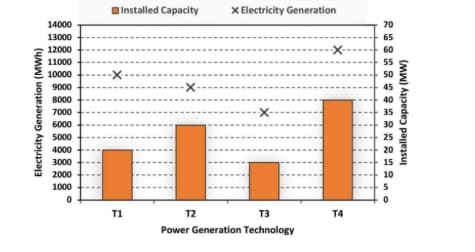
Correct Answer: (A) T1
View Solution
Step 1: Using the given formula, compute the Capacity Factor for each technology: Capacity Factor = Electricity Generation (MWh) / Installed Capacity (MW) × 1000. For each technology: - T1: Capacity Factor = 5000 / (10 × 1000) = 0.5 = 50%. - T2: Capacity Factor = 7000 / (20 × 1000) = 0.35 = 35%. - T3: Capacity Factor = 4000 / (10 × 1000) = 0.4 = 40%. - T4: Capacity Factor = 10000 / (40 × 1000) = 0.25 = 25%.
Step 2: Comparing the Capacity Factors: The highest Capacity Factor is 50%, which corresponds to technology T1.
Conclusion: The technology with the highest Capacity Factor is T1.
Question 9:
In the 4 × 4 array shown below, each cell of the first three columns has either a cross (X) or a number, as per the given rule.

Rule: The number in a cell represents the count of crosses (X) around its immediate neighboring cells (left, right, top, bottom, diagonals). As per this rule, the maximum number of crosses possible in the empty column is:
Correct Answer: (C) 2
View Solution
Step 1: Analyze the rules of the problem. Each number in the grid specifies how many X’s (crosses) are in its immediate vicinity, including diagonal, vertical, and horizontal neighbors.
Step 2: Determine constraints for the empty column. The fourth column is currently empty. To maximize the number of X’s in this column, the following conditions must be met for the cells in the first three columns: - (1, 3) = 2: This cell already has two neighboring X’s in (2, 2) and (2, 3). Thus, (1, 4) cannot be X. - (2, 3) = 3: This cell has one neighboring X at (2, 2) and requires two additional X’s. We place X at (2, 4) and (3, 4). - (3, 3) = 4: This cell already has two neighboring X’s at (3, 2) and (4, 3). We add two more X’s at (3, 4) and (4, 4). Note: (3, 4) is already X, so we only add X at (4, 4).
Step 3: Verify placement of X’s in the fourth column. The final arrangement for the fourth column is as follows:

There are 2 crosses (X’s) in the fourth column.
Step 4: Conclusion. The maximum number of X’s in the empty column is 2.
Question 10:
During a half-moon phase, the Earth-Moon-Sun form a right triangle. If the Moon-Earth-Sun angle at this half-moon phase is measured to be 89.85°, the ratio of the Earth-Sun and Earth-Moon distances is closest to:
Correct Answer: (B) 382
View Solution
Step 1: Understanding the geometry of the problem. During the half-moon phase, the Earth, Moon, and Sun form a right triangle with the right angle at the Moon. The angle ∠Moon-Earth-Sun is given as 89.85°. Using trigonometric relationships in this triangle, we can compute the ratio of the Earth-Sun distance (DES) to the Earth-Moon distance (DEM).
Step 2: Using the tangent function. From the given geometry, we have: tan(∠Moon-Earth-Sun) = DES / DEM. Given ∠Moon-Earth-Sun = 89.85°, we compute: tan(89.85°).
Step 3: Approximation of tan(89.85°). Using a calculator or trigonometric tables: tan(89.85°) ≈ 382.
Step 4: Verifying the ratio. The ratio of the Earth-Sun distance to the Earth-Moon distance is approximately: DES / DEM ≈ 382.
Conclusion. The ratio DES / DEM is closest to 382. Thus, the correct answer is: (B) 382
Sociology
Question 11:
Amma’s tone in the context of the given passage is that of: For Amma, the difference between men and women was a kind of discrimination and inequality; she felt strongly about women’s rights but was not familiar with concepts like gender and patriarchy. She would have dismissed Betty Friedan because she was predominantly dealing with the problems of white middle-class women in the United States. Amma, and women of her generation, could de-link the oppression of women from the wider struggle for the liberation of human beings from class exploitation and imperialism. So Amma continued to play her role as mother and wife, but would often complain: ‘I am a doormat on which everyone wipes their emotional dirt off’.
Correct Answer: (B) Protest
View Solution
Step 1: Understanding Amma’s perspective. The passage describes Amma’s view on gender inequality and her struggle against discrimination. While she felt strongly about women’s rights, she lacked familiarity with modern concepts like patriarchy and gender. Her tone conveys a sense of dissatisfaction and active resistance to being treated unfairly.
Step 2: Interpreting the tone. Amma’s statement, “I am a doormat on which everyone wipes their emotional dirt off,” reflects her frustration and unwillingness to accept her situation passively. This aligns more with an attitude of protest rather than compromise, contentment, or resignation.
Conclusion: The tone that best captures Amma’s feelings and expressions in the given context is Protest.
Question 12:
Fill in the blanks by choosing the correct sequence for the following passage: I am wearing for the first time some (i)—— that I have never been able to wear for long at a time, as they are horribly tight. I usually put them on just before giving a lecture. The painful pressure they exert on my feet goads my oratorical capacities to their utmost. This sharp and overwhelming pain makes me sing like a nightingale or like one of those Neapolitan singers who also wear (ii)—— that are too tight. The visceral physical longing, the overwhelming torture provoked by my (iii)——, forces me to extract from words distilled and sublime truths, generalized by the supreme inquisition of the pain my (iv)—– suffer.
Correct Answer: (C) (i) patent-leather shoes (ii) shoes (iii) patent-leather shoes (iv) feet
View Solution
Step 1: Analyzing the context. The passage discusses something worn that causes pain and affects oratorical performance. The context mentions “feet,” implying the item worn is related to footwear. Therefore, the correct answer for (i) and (ii) must involve shoes.
Step 2: Matching the sequence. The pain and pressure mentioned align with shoes that are tight and uncomfortable. Additionally, (iii) and (iv) refer to the part of the body affected by wearing shoes, which are the feet.
Step 3: Verifying the choice. Option (C) matches perfectly: - (i) patent-leather shoes - (ii) shoes - (iii) patent-leather shoes - (iv) feet
Step 4: Conclusion. The correct sequence is given in Option (C).
Question 13:
The appropriate synonym for the word ‘ignite’ in the following passage will be: Spirituality must be integrated with education. Self-realization is the focus. Each one of us must become aware of our higher self. We are links of a great past to a grand future. We should ignite our dormant inner energy and let it guide our lives. The radiance of such minds embarked on constructive endeavor will bring peace, prosperity, and bliss to this nation.
Correct Answer: (A) Encourage
View Solution
Step 1: Analyzing the context of the word ”ignite.” In the given passage, ”ignite” is used in the phrase ”ignite our dormant inner energy,” which implies awakening or inspiring energy to take action or bring about transformation.
Step 2: Evaluating options. - Encourage: This aligns with the idea of inspiring or awakening energy and is an appropriate synonym for ”ignite” in this context. - Simulate: This means to imitate or replicate, which does not fit the context. - Dissipate: This means to scatter or disperse, which is the opposite of the intended meaning of ”ignite.” - Engross: This means to absorb or involve completely, which is unrelated to the context of awakening energy.
Conclusion: The correct synonym for ”ignite” in this context is ”Encourage,” as it captures the meaning of inspiring or awakening energy.
Question 14:
Which of the following sentences is punctuated correctly?
Correct Answer: (B) ‘One day I’ll write a book’, I said, ‘not just a thriller, but a real book, about real people.’
View Solution
Step 1: Analyzing the correct use of punctuation. In option (B), the sentence adheres to standard punctuation rules: 1. Quotation marks are used correctly to enclose the spoken words. 2. A comma follows the reporting clause (”I said”) inside the quotation marks. 3. The punctuation of the second quoted phrase correctly uses commas within the quotation marks. 4. The sentence ends with the appropriate punctuation mark (a period) inside the quotation marks.
Step 2: Evaluating other options. - Option (A): The use of punctuation for the reporting clause (‘I said’) is incorrect. Also, the punctuation in the second sentence is flawed. - Option (C): The placement of punctuation marks outside the quotation marks is incorrect. - Option (D): The reporting clause is punctuated incorrectly, and the sentence does not use commas correctly for clarity.
Conclusion: Option (B) is the only one that follows standard punctuation rules, making it the correct answer.
Question 15:
Fill in the blanks with the correct combination of tenses for the given sentence: textitDarwin’s work (i) —– a related effect that (ii) —– influenced the development of environmental politics – a ‘decentering’ of the human being.
Correct Answer: (C) (i)had,(ii)has
View Solution
Step 1: Understanding the context of the sentence. The sentence describes an effect of Darwin’s work in the past that continues to have an influence in the present. Thus, the first blank requires the past perfect tense, “had,” to show that Darwin’s work had a related effect. The second blank requires the present perfect tense, “has,” to indicate that the influence is ongoing.
Step 2: Correct usage of tenses. - The past perfect “had” establishes that the related effect is from the past. - The present perfect “has” reflects that the influence is still relevant and continuing.
Step 3: Analyzing the options. - Option (A): Incorrect as ”have” is not appropriate for the first blank. - Option (B): Incorrect as “have” in the second blank implies a general present and not a continuing influence. - Option (C): Correct as it uses “had” for the past and “has” for the ongoing influence. - Option (D): Incorrect as “has” in the first blank doesn’t indicate past occurrence.
The correct answer is (C).
Question 16:
Which of the following options holds a similar relationship as the words, ‘Music: Notes’ ?
Correct Answer: (C) House: Bricks
View Solution
Step 1: Understanding the relationship. The relationship between ”Music” and ”Notes” is that notes are the building blocks or fundamental components used to create music.
Step 2: Analyzing the options. - Option (A): ”Water” and ”Cold drink” do not represent a component-structure relationship. Water can be an ingredient in a cold drink, but it does not align with the relationship. - Option (B): ”Paper” and ”Class Notes” involve a medium and content relationship, not a building-block analogy. - Option (C): ”House” and ”Bricks” form the correct relationship as bricks are the fundamental building blocks of a house, similar to how notes are the building blocks of music. - Option (D): ”Graphite” and ”Charcoal” are materials, but they do not share a component-construction relationship like ”Music” and ”Notes.”
Step 3: Conclusion. The correct answer is (C) as it perfectly represents the component-structure relationship.
Question 17:
In a particular code, if “RAMAN” is written as 52 and “MAP” is written as 33, then how will you code “CLICK”?
Correct Answer: (B) 43
View Solution
Step 1: Understanding the coding pattern. To decode the given pattern: - Each letter is assigned a numeric value corresponding to its position in the English alphabet. For example: A = 1, B = 2, C = 3, . . . , Z = 26.
Step 2: Compute the codes for the given examples. - For “RAMAN”: R = 18, A = 1, M = 13, A = 1, N = 14. The sum of these values is: 18 + 1 + 13 + 1 + 14 = 47. Adding the total number of letters (5) gives: 47 + 5 = 52. - For “MAP”: M = 13, A = 1, P = 16. The sum of these values is: 13 + 1 + 16 = 30. Adding the total number of letters (3) gives: 30 + 3 = 33.
Step 3: Compute the code for “CLICK.” - For “CLICK”: C = 3, L = 12, I = 9, C = 3, K = 11. The sum of these values is: 3 + 12 + 9 + 3 + 11 = 38. Adding the total number of letters (5) gives: 38 + 5 = 43.
Conclusion. The code for “CLICK” is: 43.
Question 18:
On the basis of the statements given below, which valid assumption(s) can be made? Statements: • Life has suffering. • Desire is the cause of suffering. • The end of desire is the end of suffering. • Desire can be reduced by following the noble eightfold path. Assumptions: 1. Suffering is because of wants. 2. Life is not always full of suffering. 3. The eightfold path can reduce suffering. 4. Suffering is caused by life.
Correct Answer: (B) Only 1, 2 and 3
View Solution
Step 1: Analyze the assumptions based on the statements.
• Assumption 1: Suffering is because of wants. This assumption directly follows from the statement, ”Desire is the cause of suffering.” Hence, it is valid.
• Assumption 2: Life is not always full of suffering. The statement ”The end of desire is the end of suffering” implies that suffering can end, and therefore, life is not always full of suffering. Hence, this assumption is valid.
• Assumption 3: The eightfold path can reduce suffering. This is explicitly stated in the last point, ”Desire can be reduced by following the noble eightfold path.” Hence, this assumption is valid.
• Assumption 4: Suffering is caused by life. This assumption is not valid as the statements do not suggest that life itself causes suffering but rather that desire causes suffering.
Step 2: Conclusion. The valid assumptions are 1, 2, and 3.
Question 19:
If ‘KARAMCHAND’ is coded as ‘ICPCKEFCLF’ what should be the code of ‘CREATION’ ?
Correct Answer: (A) ATCCRKMP
View Solution
Step 1: Understand the pattern in coding. Observe the transformation of the word ”KARAMCHAND” into ”ICPCKEFCLF”: • Each letter in the original word is replaced by a corresponding letter based on a specific positional relationship. • The pattern involves alternating changes in position or substitution rules. For instance: K → I, A → C, R → P, A → C, M → K, C → E, H → F, A → C, N → L, D → F.
Step 2: Apply the same transformation to ”CREATION”. Following the same pattern: C → A, R → T, E → C, A → C, T → R, I → K, O → M, N → P.
Step 3: Write the coded word. Thus, ”CREATION” is coded as ”ATCCRKMP”.
Question 20:
Given an input line of numbers and words, a machine rearranges them following a particular rule in each step. Here is an illustration of an input and rearrangement sequence (Step 1 to Step 5): Input: 61 wb ob 48 45 29 34 sb pb lb Step 1: lb wb ob 48 45 29 34 sb pb 61 Step 2: lb ob wb 45 29 34 sb pb 61 48 Step 3: lb ob pb wb 29 34 sb 61 48 45 Step 4: lb ob pb sb wb 29 61 48 45 34 Step 5: lb ob pb sb wb 61 48 45 34 29 Based on the rules followed in the above steps, answer the following question: Input: cb kb eb 58 49 23 38 jb nb gb 69 82 Which of the following represents the position of 58 in the fourth step? (Step-5 is the last step of the arrangement.)
Correct Answer: (C) Third from the right
View Solution
Step 1: Analyze the given example. - The process begins by arranging the words lexicographically (alphabetical order) and the numbers in descending order in each step. - At each step, one word and one number are placed in their correct positions.
Step 2: Analyze the new input. Input: cb kb eb 58 49 23 38 jb nb gb 69 82
Step 3: Perform the rearrangement for each step.
Step 1: eb kb cb 49 23 38 jb nb gb 69 82 58
Step 2: eb cb kb 38 23 jb nb gb 69 82 58 49
Step 3: eb cb jb 23 nb gb 69 82 58 49 38 kb
Step 4: eb cb gb 69 nb 82 58 49 38 kb 23 jb
Step 4: Determine the position of 58 in Step 4. - From Step 4: eb cb gb 69 nb 82 58 49 38 kb 23 jb - Position of 58: Third from the right.
Conclusion: The position of 58 in the fourth step is (C) Third from the right.
Question 21:
In a certain type of code, ‘they play cricket together’ is written as ‘mv kb lb iv’; ‘they score maximum points’ is written as ‘gb lb mb kv’; ‘cricket score earned points’ is written as ‘mb gv kb kv’ and ‘points are earned together’ is written as ‘kv mv ob gv.’ What is the code for ‘earned maximum points’ ?
Correct Answer: (A) gv gb kv
View Solution
Step 1: Analyze the given coded sentences. • ‘they play cricket together’ → {mv, kb, lb, iv} • ‘they score maximum points’ → {gb, lb, mb, kv} • ‘cricket score earned points’ → {mb, gv, kb, kv} • ‘points are earned together’ → {kv, mv, ob, gv}
Step 2: Identify unique words and their codes. • ‘points’ appears in the second, third, and fourth sentences. Its code is {kv}. • ‘earned’ appears in the third and fourth sentences. Its code is {gv}. • ‘maximum’ appears only in the second sentence. Its code is {gb}.
Step 3: Combine the codes for ‘earned maximum points’. From the above analysis, the codes for the words are: ‘earned’ → gv, ‘maximum’ → gb, ‘points’ → kv. Thus, the code for ‘earned maximum points’ is gv gb kv.
Question 22:
Which of the statement(s) about the passage weaken(s) the argument presented? Scientists associate large brains with greater intelligence. However, in the evolutionary context, it has also been identified that beyond a point, the size of the brain has not increased and yet after a particular period, in spite of no significant change in brain size, humans have made significant progress. Certain researchers propose that this is because, while the overall brain size may not have changed, marked structural changes can be noticed in specific structures that run parallel to an increase in human intelligence.
Correct Answer: (A) Recent studies refute the hypothesis that region-specific brain development is necessarily associated with rapid human progress
View Solution
Step 1: Analyze the argument presented in the passage. The passage emphasizes that while brain size may not have changed significantly, structural changes in specific brain regions are proposed to explain human progress. It associates intelligence with specific region-based development rather than overall brain size.
Step 2: Evaluate each option.
• Option (A): This directly challenges the argument by refuting the hypothesis that region-specific brain development is linked to human progress. This weakens the central claim of the passage.
• Option (B): This does not weaken the argument as it merely mentions an observation about Neanderthal extinction, which is unrelated to structural brain changes in humans.
• Option (C): This is speculative and does not address the argument about brain size and structural changes.
• Option (D): This supports the idea that intelligence and brain function are not solely dependent on size, but it does not directly refute the passage’s claim about structural changes driving progress.
Step 3: Conclusion. Option (A) is the correct choice as it explicitly refutes the argument presented in the passage.
Question 23:
The narrator’s use of ‘I’ in the given passage is/are: I have never been any good at the more lurid sort of writing. Psychopathic killers, impotent war-heroes, self-tortured film stars, and seedy espionage agents must exist in the world, but strangely enough I do not come across them, and I prefer to write about the people and places I have known and the lives of those whose paths I have crossed. This crossing of paths makes for stories rather than novels, and although I have worked in both mediums, I am happier being a short-story writer than a novelist.
Correct Answer: (A) Self-conscious; (C) Confessional and communicating
View Solution
Step 1: Analyze the tone and context of the passage. The narrator uses ”I” to describe their personal experience, preferences, and observations. The tone is introspective, focusing on their inclination toward writing stories based on real people and places rather than fictional, dramatic characters.
Step 2: Evaluate each option.
• Option (A): Self-conscious. The narrator reflects on their limitations and preferences as a writer, showing self-awareness about their style and choice of subject matter.
• Option (B): Apologetic and regretful. There is no evidence of the narrator expressing regret or apology for their writing preferences.
• Option (C): Confessional and communicating. The narrator openly admits their writing style and preferences, making this option appropriate.
• Option (D): Egotistical and vain. The tone of the passage is modest and reflective, not egotistical or self-centered.
Conclusion: The correct choices are (A) and (C) as the narrator is self-conscious about their writing and confessional in their expression of personal experiences.
Question 24:
Which of the following recommended action(s) seem to be appropriate with the stated problem? Stated problem: Many students at educational institutes do not attend classes in the post-pandemic scenario.
Correct Answer: (B) Counselling sessions should be organized to address the issues such students face.; (C) Surveys should be conducted to identify the reasons for their absence.
View Solution
Step 1: Analyze the stated problem. The problem involves students not attending classes in the post-pandemic scenario. The reasons for such behavior could vary, including psychological, logistical, or academic factors. Addressing this issue requires understanding the root cause and providing support.
Step 2: Evaluate each option.
• Option (A): Disciplinary action against all students should be taken as a warning. This approach may not address the root cause and could worsen the situation by alienating students further.
• Option (B): Counselling sessions should be organized to address the issues such students face. This is an effective measure as it focuses on understanding and resolving students’ concerns, making it an appropriate choice.
• Option (C): Surveys should be conducted to identify the reasons for their absence. This is a logical step to understand the underlying issues contributing to absenteeism, making it an appropriate action.
• Option (D): Course content should immediately be changed. There is no evidence that the course content is the reason for absenteeism, so this option is not directly relevant.
Step 3: Conclusion. The correct actions to address the problem are (B) and (C), as they focus on understanding and resolving the students’ issues effectively.
Question 25:
Read the passage and identify the statement(s) which follow(s) from it: The purpose of this work is to inform educators about the brain science related to emotion and learning, and, more important, to offer strategies to apply these understandings to their own teaching. Although many of the approaches I describe will be familiar, integrating the lens of emotion and the brain may be a new concept. As an educator I had been trained in how to deliver content and organize my lessons, but I had not been taught how to design learning experiences that support emotions for learning.
Correct Answer: (A) The author wishes, through his work, to inform us about brain science and learning.; (C) The author feels that the newness of his approach lies in linking emotion-oriented approach to the brain; (D) The author wants to use emotions as a strategy for learning.
View Solution
Step 1: Analyze the passage. The author emphasizes the importance of integrating brain science and emotions into the process of learning. He also mentions that this concept may be new for educators and that it has not traditionally been included in teaching strategies. Additionally, the focus on emotions as a learning strategy is highlighted.
Step 2: Evaluate each statement.
• Statement (A): This is correct as the author explicitly states the intention to inform educators about brain science and learning.
• Statement (B): While the author wishes to offer strategies, the emphasis of the passage is not solely on applying learnings to teaching but on integrating emotions, making this statement incomplete.
• Statement (C): This is correct as the author highlights the novelty of linking emotions with brain science in teaching methods.
• Statement (D): This is correct because the author discusses the importance of using emotions as a strategy to support learning experiences.
Step 3: Conclusion. The statements (A), (C), and (D) accurately follow from the passage.
Question 26:
If A says that his mother is the daughter of B’s mother, then how is B related to A?
Correct Answer: (A) Uncle; (B) Aunt
View Solution
Step 1: Interpret the relationship. A states that his mother is the daughter of B’s mother. This implies that A’s mother and B are siblings (children of B’s mother).
Step 2: Identify the relationship. • If B is male, then B would be A’s Uncle. • If B is female, then B would be A’s Aunt.
Step 3: Conclusion. Depending on the gender of B, the correct relationship can be either Uncle (if male) or Aunt (if female).
Question 27:
Fill in the blank with the correct option. According to Thomas Kuhn, activities of normal science are like puzzle solving, since they seek to reach that include solving instrumental, conceptual and methodological problems within the confines of certain rules.
Correct Answer: (A) new conclusions in existing ways
View Solution
Step 1: Understand the concept of normal science. According to Thomas Kuhn, normal science operates within an established framework (paradigm) and aims to solve problems that are consistent with this framework. These activities resemble puzzle solving as they aim to extend or refine the existing paradigm.
Step 2: Analyze the given statement. The blank must describe the goal of normal science, which involves achieving results (conclusions) within the boundaries of existing scientific methods and frameworks.
Step 3: Evaluate the options.
• Option (A): new conclusions in existing ways aligns with the idea of extending the paradigm by solving problems within its confines.
• Option (B): existing conclusions in new ways is incorrect because normal science does not aim to reinterpret known conclusions but to refine or extend them.
• Option (C): new publishers is unrelated to the scientific activities described.
• Option (D): new junior researchers is irrelevant to the goal of normal science.
Step 4: Conclusion. The correct answer is (A) new conclusions in existing ways.
Question 28:
‘We are constantly doing gender without realizing it.’ Select one of the given options that best explains the above statement.
Correct Answer: (A) We socially construct our behaviours to perform our gender roles.
View Solution
Step 1: Understand the context of the statement. The statement ”We are constantly doing gender without realizing it” suggests that gender is not merely an innate characteristic but rather a continuous, unconscious social behavior. This aligns with sociological theories, such as Judith Butler’s concept of gender performativity, which proposes that gender is constructed through repeated actions and behaviors.
Step 2: Analyze the options.
• Option (A): We socially construct our behaviours to perform our gender roles. This directly aligns with the idea that gender is performed through socially learned behaviors and expectations.
• Option (B): Biological sex determines our gender identities. This is incorrect as the statement emphasizes the performative aspect of gender, not its biological basis.
• Option (C): Gender is not a performance; it is an identity. This contradicts the idea presented in the statement, which views gender as a performance.
• Option (D): Gender performance is about individual determinism. This is incorrect as gender performance is shaped by societal norms and not purely individual choices.
Step 3: Conclusion. The correct answer is (A) We socially construct our behaviours to perform our gender roles.
Question 29:
Normal distribution is widely used in quantitative analysis in social sciences. Which of the given statements is NOT correct about the normal distribution?
Correct Answer: (B) 70.2% of the cases fall under ±1 of one standard deviation.
View Solution
Step 1: Understand the properties of normal distribution. The normal distribution is characterized by: • Symmetrical bell-shaped curve. • Most of the data is concentrated around the mean. • The mean, median, and mode of the distribution are the same. • Approximately 68% of the data falls within ±1 standard deviation from the mean.
Step 2: Analyze each statement.
• (A): Correct. In a normal distribution, most of the data is clustered near the mean, as the tails represent lower probabilities.
• (B): Incorrect. Approximately 68.27%, not 70.2%, of the data lies within ±1 standard deviation from the mean in a normal distribution.
• (C): Correct. In a normal distribution, the mean, median, and mode coincide.
• (D): Correct. The normal distribution is perfectly symmetrical about the mean.
Step 3: Conclusion. The correct answer is (B) 70.2% of the cases fall under ±1 of one standard deviation.
Question 30:
Which one of the given statements is NOT correct?
Correct Answer: (B) Logistic regression is used to predict values of dependent variable using independent variables.
View Solution
Step 1: Analyze the statements.
• (A): This statement is correct. Factor analysis is a statistical technique used to identify and group attributes (or variables) of respondents based on shared variance.
• (B): This statement is NOT correct. Logistic regression is not primarily used to predict dependent variable values directly; rather, it is used to estimate the probability of a binary outcome (e.g., success/failure) based on independent variables.
• (C): This statement is correct. Sociologists frequently use quantitative methods, such as surveys and statistical analysis, to understand societal trends and relationships.
• (D): This statement is correct. Cluster analysis is a technique used to group respondents based on their attributes or characteristics.
Step 2: Conclusion. The correct answer is (B) as it inaccurately describes the application of logistic regression.
Question 31:
Fill in the blank with the correct option. According to Ray Oldenberg, are social surroundings different from home and workplaces which are important for civil society, democracy and civic engagement.
Correct Answer: (C) Third places
View Solution
Step 1: Understanding the concept of ”Third Places.” According to Ray Oldenburg, ”third places” refer to informal gathering places that are distinct from the ”first place” (home) and the ”second place” (workplaces). These places play a critical role in fostering civil society, encouraging social interaction, and promoting democracy and civic engagement.
Step 2: Analyze the options.
• (A): Instagram and YouTube are virtual platforms, not physical social surroundings as defined by Oldenburg.
• (B): Villages are geographical units and do not fit the specific concept of ”third places.”
• (C): Correct. Third places such as cafes, parks, and community centers align with Oldenburg’s definition.
• (D): Districts refer to administrative or geographical areas and are not ”third places.”
Step 3: Conclusion. The correct answer is (C) ”Third places,” as they match Ray Oldenburg’s concept.
Question 32:
Fill in the blank with the correct option. Paul Lazarsfeld and Robert Merton coined the term to explain the phenomenon wherein media provides a massive amount of coverage that the audience becomes numb and fails to act on the information, regardless of how compelling the issue.
Correct Answer: (B) narcotizing dysfunction
View Solution
Step 1: Understanding the concept of ”Narcotizing Dysfunction.” The term ”narcotizing dysfunction” was introduced by Paul Lazarsfeld and Robert Merton to describe a phenomenon where excessive exposure to media information leads to apathy among the audience. Instead of taking action on the information, the audience feels overwhelmed and passive, thus failing to engage with the issue.
Step 2: Analyze the options.
• (A): ”Dysfunctional media” is a general term and does not specifically address the phenomenon described.
• (B): Correct. ”Narcotizing dysfunction” accurately describes the audience’s numbness and inaction due to information overload.
• (C): ”Manufacturing consent,” a term by Noam Chomsky and Edward Herman, refers to media manipulation to shape public opinion, not the phenomenon in question.
• (D): ”Echo chamber” refers to a situation where beliefs are amplified by repeated exposure within a closed system, not to audience apathy.
Step 3: Conclusion. The correct answer is (B) ”narcotizing dysfunction,” as it matches the concept described by Lazarsfeld and Merton.
Question 33:
Fill in the blank with the correct option. According to Max Weber, social stratification is a function of .
Correct Answer: (B) economic and social factors
View Solution
Step 1: Understanding Max Weber’s theory of social stratification. Max Weber proposed that social stratification is multidimensional, involving economic factors (class), social factors (status), and political factors (power). He argued that stratification cannot be explained by economic factors alone but also involves social and political dynamics.
Step 2: Analyze the options.
• (A): ”Economic factors only” is incorrect as Weber included more than economic factors.
• (B): Correct. Weber emphasized the roles of economic and social factors in stratification.
• (C): ”Honour and status only” does not encompass the economic and political aspects Weber discussed.
• (D): ”Political power and status only” is incomplete as it excludes economic factors.
Step 3: Conclusion. The correct answer is (B) ”economic and social factors,” as Weber’s approach highlights both dimensions in addition to political factors.
Question 34:
Fill in the blank with the correct option. According to Durkheim, collective consciousness and division of labour in a given society would be to each other.
Correct Answer: (B) inversely related
View Solution
Step 1: Understanding Durkheim’s perspective. Durkheim in his work on the division of labour emphasized that as the division of labour in a society increases, collective consciousness (shared beliefs and values) tends to decrease. This is because specialized roles lead to individualism, reducing the need for a strong collective consciousness.
Step 2: Analyze the options.
• (A): ”Directly related” is incorrect because collective consciousness weakens with increased division of labour.
• (B): Correct. Durkheim proposed that collective consciousness and division of labour are inversely related.
• (C): ”Not related” is incorrect as Durkheim clearly establishes a relationship between the two concepts.
• (D): ”Dialectically related” is not the term Durkheim uses to describe the relationship.
Step 3: Conclusion. The correct answer is (B) ”inversely related,” as per Durkheim’s theory.
Question 35:
Fill in the blank with the correct option. argued for a shift in social movements post-1968 towards questions of self- management and technologies of rule as central driving concerns, analyzing these movements as struggles over the self-production of society.
Correct Answer: (B) Alain Touraine
View Solution
Step 1: Understanding the context of the question. Alain Touraine, a prominent sociologist, extensively analyzed social movements post-1968. He argued for a paradigm shift in understanding social movements, focusing on self-management, technologies of rule, and the self-production of society. These themes became central to his analysis of how movements operate beyond traditional frameworks.
Step 2: Evaluate the options.
• (A): Eric Hobsbawm primarily focused on the history of labor and revolutionary movements but did not specifically emphasize the self-production of society in the context described.
• (B): Alain Touraine is correct as he argued for this specific shift in analyzing social movements post-1968.
• (C): Henri Lefebvre’s work emphasized the critique of everyday life and urban spaces, which does not align with the focus on self-management and technologies of rule.
• (D): Michel Foucault focused on power and technologies of rule but not explicitly within the framework of post-1968 social movements as described here.
Step 3: Conclusion. The correct answer is (B) Alain Touraine, as his work directly relates to the ideas of self-management and the self-production of society in the context of social movements.
Question 36:
The recognition that social identities are multi-layered, often overlapping, and non-discrete, comes from which of the following conceptual frameworks?
Correct Answer: (C) Intersectionality
View Solution
Step 1: Understanding the concept of intersectionality. Intersectionality is a conceptual framework developed to analyze how different social identities (such as race, gender, class, sexuality) intersect to create unique systems of oppression or privilege. It recognizes that these identities are multi-layered, overlapping, and cannot be understood in isolation.
Step 2: Evaluate the options.
• (A) Multiple sovereignties refer to systems of governance and authority, not the framework for understanding overlapping social identities.
• (B) Sanskritization is a sociological process in which lower castes adopt the practices of higher castes; it does not analyze multi-layered identities.
• (C) Intersectionality is the correct choice as it explicitly addresses overlapping and multi-layered social identities.
• (D) Social diffusion pertains to the spread of cultural elements within or across societies and is not related to analyzing social identities.
Step 3: Conclusion. The correct answer is (C) Intersectionality, as it is the appropriate framework for analyzing overlapping and non-discrete social identities.
Question 37:
The movement against dam in India has contributed significantly to the formation of the World Commission on Dams.
Correct Answer: (C) Sardar Sarovar
View Solution
Step 1: Understanding the context of the movement against the Sardar Sarovar Dam. The Sardar Sarovar Dam, constructed on the Narmada River, became a significant point of contention due to its large-scale displacement of people, environmental concerns, and the impact on the ecosystem. The Narmada Bachao Andolan (NBA), led by activists like Medha Patkar, brought international attention to these issues.
Step 2: Formation of the World Commission on Dams. The protests against the Sardar Sarovar Dam played a key role in highlighting the need for better assessment of the environmental and social impacts of large dam projects worldwide. This contributed significantly to the establishment of the World Commission on Dams, which aimed to address such concerns globally.
Step 3: Evaluate the options.
• (A) Koel Karo dam project faced resistance but is unrelated to the formation of the World Commission on Dams.
• (B) Tehri Dam also faced opposition, but it is not associated with the formation of the World Commission on Dams.
• (C) Sardar Sarovar is the correct answer, as the protests against this dam were instrumental in establishing the commission.
• (D) Subansiri dam has faced opposition, but it is not connected to the World Commission on Dams.
Step 4: Conclusion. The correct answer is (C) Sardar Sarovar, as the movement against this dam significantly influenced the formation of the World Commission on Dams.
Question 38:
Which thinker is associated with the concept of participatory development?
Correct Answer: (B) Robert Chambers
View Solution
Step 1: Understanding Participatory Development. Participatory development is a process that emphasizes involving local populations in the planning and implementation of development projects. This approach seeks to empower communities, ensure sustainability, and address the specific needs of stakeholders.
Step 2: Thinkers and their contributions.
• (A) Andr ́e B ́eteille: A renowned Indian sociologist, B ́eteille is known for his work on caste, class, and inequality but is not associated with participatory development.
• (B) Robert Chambers: Chambers is a prominent advocate of participatory rural development and has significantly contributed to the theory and practice of participatory methods in development.
• (C) Andre Gunder Frank: Known for his work on dependency theory, Frank is not associated with participatory development.
• (D) Robert Putnam: Known for his work on social capital, Putnam’s focus is different from participatory development.
Step 3: Conclusion. The correct answer is (B) Robert Chambers, who has extensively worked on participatory development and is widely recognized in this field.
Question 39:
Select the option that best describes ‘petty commodity producers’ in the context of the agrarian economy in India.
Correct Answer: (A) They are family-based operations that occasionally hire in / hire out some labour.
View Solution
Step 1: Understanding Petty Commodity Producers. Petty commodity producers are small-scale producers who combine both subsistence and market-oriented production. They generally operate on family labour and sometimes hire or hire out labour based on seasonal demand.
Step 2: Analyzing the Options.
• (A) They are family-based operations that occasionally hire in / hire out some labour: This is the correct description of petty commodity producers as they rely on family-based labour with minimal use of external labour.
• (B) They do not own land and work as reverse tenants: This describes landless laborers or reverse tenancy, which is not applicable to petty commodity producers.
• (C) They produce only for fulfilling their subsistence needs: Petty commodity producers are involved in both subsistence and market-oriented production, making this option incorrect.
• (D) Their presence is restricted to adivasi-dominated areas: This is incorrect as petty commodity production is a widespread phenomenon and not limited to any specific region.
Step 3: Conclusion. The best description of petty commodity producers is given by (A), which highlights their family-based operations and occasional hiring of labour.
Question 40:
Despite the constitutional provision of equality of all citizens before the law, in practice, Dalits are often excluded from access to common property resources and public spaces (e.g., pastures, water resources etc.). Which theorist’s conceptualization of power best explains this scenario?
Correct Answer: (C) Ralph Dahrendorf
View Solution
Step 1: Understanding the Context. The exclusion of Dalits from access to common property resources and public spaces despite constitutional provisions highlights structural inequality and the role of power in maintaining social hierarchies.
Step 2: Analyzing the Theorists.
• (A) Emile Durkheim: Durkheim’s work focuses on social solidarity and collective consciousness but does not directly address the structural power dynamics leading to exclusion.
• (B) Talcott Parsons: Parsons emphasizes the functionalist perspective, focusing on how systems maintain stability rather than addressing power inequalities.
• (C) Ralph Dahrendorf: Dahrendorf’s conceptualization of power highlights the role of authority and conflict in creating and maintaining social divisions. His work explains how dominant groups use power to exclude marginalized communities.
• (D) Edmund Leach: Leach’s work is more focused on structuralism and symbolism rather than directly addressing systemic exclusion due to power dynamics.
Step 3: Conclusion. Ralph Dahrendorf’s theory best explains the scenario as it addresses how power is used to perpetuate social hierarchies and exclusion.
Question 41:
Governmentality, as defined by Michel Foucault, refers to which one of the following conceptual ideas?
Correct Answer: (C) Technologies of the self
View Solution
Step 1: Understanding the Concept of Governmentality. Governmentality, as introduced by Michel Foucault, refers to the ways in which the state exercises control over the population and how individuals govern themselves. It focuses on the intersection of power, knowledge, and subjectivity.
Step 2: Analyzing the Options.
• (A) Strategic essentialism: This concept, introduced by Gayatri Spivak, refers to the strategic use of identity categories for political purposes, not directly related to Foucault’s concept of governmentality.
• (B) Substantial equivalence: This is a term used in food and biotechnology regulations, unrelated to Foucault’s work.
• (C) Technologies of the self: This concept by Foucault describes the methods and practices individuals use to shape their own identities and conduct within the broader framework of power and governance, making it closely linked to governmentality.
• (D) Individualization of risk: This term is more associated with Ulrich Beck’s work on risk society and does not directly pertain to Foucault’s governmentality.
Step 3: Conclusion. The correct answer is (C) because ”Technologies of the self” aligns with Foucault’s exploration of how individuals internalize and exercise power over themselves.
Question 42:
Fill in the blank with the correct option . ‘Theoretical Brahmins and empirical Shudras’ is a phrase used by to castigate the Indian social sciences.
Correct Answer: (C) Gopal Guru
View Solution
Step 1: Understanding the Context. The phrase ”Theoretical Brahmins and empirical Shudras” was coined by Gopal Guru to critique the division of labor in Indian social sciences. He highlighted the inequitable distribution of intellectual labor, where privileged upper castes dominated theoretical discourse, leaving empirical fieldwork to marginalized communities.
Step 2: Analyzing the Options.
• (A) Sharmila Rege: Known for her work on Dalit feminism and caste, but not associated with this phrase.
• (B) Gail Omvedt: A scholar and activist in Dalit and women’s movements, but she did not coin this phrase.
• (C) Gopal Guru: Correct, as he used this phrase to critique caste hierarchies within Indian academia.
• (D) Kancha Ilaiah: Known for his work on caste and democracy but not related to this specific critique.
Step 3: Conclusion. The phrase ”Theoretical Brahmins and empirical Shudras” is attributed to Gopal Guru, who critiqued the hierarchical practices within Indian social sciences.
Question 43:
Which of the following statement(s) is / are correct?
(A) ‘Book view’ refers to an understanding of rural India through a study of texts.
(B) ‘Field view’ refers to a perspective of rural India obtained through Indologists and historians.
(C) Indologists have described the village as ‘sink of localism’.
(D) The term ‘village republic’ was used to describe the thriving, interconnected traditional rural economy with strong linkages with the city.
Correct Answer: (A) ‘Book view’ refers to an understanding of rural India through a study of texts.
View Solution
Step 1: Explanation of Terms.
• ‘Book view’: This refers to the perspective derived from studying texts and literature to understand rural India. It involves theoretical interpretations rather than firsthand observations.
• ‘Field view’: This involves empirical observations of rural India, primarily obtained by anthropologists, sociologists, and historians through fieldwork. However, it is not primarily associated with Indologists.
• ‘Sink of localism’: The phrase was used critically to describe rural India’s limitations, but it is not directly attributed to Indologists.
• ‘Village republic’: This term refers to rural economies with limited external linkages rather than strong connections with cities, making this description incorrect.
Step 2: Analyzing the Statements.
• (A) Correct. ‘Book view’ pertains to text-based understanding.
• (B) Incorrect. Field view is derived from direct observation, not solely Indologists or historians.
• (C) Incorrect. The attribution of ”sink of localism” to Indologists is not accurate.
• (D) Incorrect. The term ”village republic” emphasizes rural self-sufficiency, not urban linkages.
Step 3: Conclusion. The only correct statement is (A).
Question 44:
Select the option(s) that best describe(s) the term ‘gentrification.’
(A) The transformation of an urban neighbourhood when affluent people move to poor and working-class areas of the city.
(B) The process of ghettoization of working-class neighbourhoods.
(C) The process of feminization of the neighbourhood.
(D) The process of urban gentry migrating to rural areas.
Correct Answer: (A) The transformation of an urban neighbourhood when affluent people move to poor and working-class areas of the city.
View Solution
Step 1: Understanding Gentrification. Gentrification refers to the process where wealthier individuals move into urban, working-class, or economically underprivileged areas. This often leads to: • Renovation of housing and infrastructure. • Displacement of original, lower-income residents. • Increase in property values and cost of living.
Step 2: Analyzing the Options.
• (A) Correct. This option accurately describes gentrification as a transformation of urban neighbourhoods due to affluent individuals moving in.
• (B) Incorrect. Ghettoization refers to the segregation and isolation of a community, often the opposite of gentrification.
• (C) Incorrect. Feminization refers to a sociological phenomenon, unrelated to gentrification.
• (D) Incorrect. Gentrification is not about urban gentry moving to rural areas but rather to urban working-class areas.
Step 3: Conclusion. The only correct description of gentrification is (A).
Question 45:
Fill in the blanks with the correct option. Hochschild’s book, ‘The Managed Heart’ on is based on a study of and .
Correct Answer: (C) emotional labour; flight attendants; bill collectors
View Solution
Step 1: Understanding Emotional Labour. Emotional labour, as conceptualized by Arlie Hochschild in her book ‘The Managed Heart,’ refers to the management of emotions by employees to fulfill the emotional requirements of their job roles. This involves displaying certain emotions as per organizational expectations, especially in service-oriented professions.
Step 2: Analyzing the Study. Hochschild’s research focused on the emotional labour performed by: • Flight attendants, who are required to maintain a cheerful demeanor to ensure customer satisfaction. • Bill collectors, who manage their emotions to enforce rules and collect payments effectively.
Step 3: Evaluating the Options.
• (A) Incorrect. Receptionists were not a focus of Hochschild’s study.
• (B) Incorrect. Although bill collectors were part of the study, receptionists were not.
• (C) Correct. This option correctly identifies flight attendants and bill collectors as the subjects of Hochschild’s research.
• (D) Incorrect. While emotions are central to Hochschild’s work, this option does not align with the professions studied.
Step 4: Conclusion. The correct answer is (C), as it accurately reflects the subjects and focus of Hochschild’s research.
Question 46:
Fill in the blanks with the correct option. According to Granovetter, strong ties are important for , and weak ties are valuable for gaining access to .
Correct Answer: (A) emotional support; new information and opportunities
View Solution
Step 1: Understanding the Concept of Strong and Weak Ties. Mark Granovetter, in his seminal work on social networks, emphasized the importance of strong and weak ties: • Strong ties: These are close relationships such as family and friends, which provide emotional support. • Weak ties: These are acquaintances or loose connections, which act as bridges to access new information and opportunities.
Step 2: Analyzing the Options.
• (A) Correct. Strong ties provide emotional support, and weak ties help in accessing new information and opportunities, as described by Granovetter.
• (B) Incorrect. Monetary support is not the primary focus of Granovetter’s theory.
• (C) Incorrect. While social support is relevant, economic support is not explicitly linked to strong or weak ties.
• (D) Incorrect. Marital alliances are not part of Granovetter’s framework on ties.
Step 3: Conclusion. The correct answer is (A), as it aligns with Granovetter’s theory of strong and weak ties.
Question 47:
Fill in the blanks with the correct option. A researcher wants to study college students’ usage of dating applications in their mobile phones. She had contacted the first 100 students in front of the library. 20 of them did not have a mobile phone. Out of the rest, 20 refused to fill the survey questionnaire. The incidence rate and response rate for the study are and respectively.
Correct Answer: (C) 80% & 75%
View Solution
Step 1: Calculate the Incidence Rate. The incidence rate is the percentage of students who have mobile phones: Total students = 100, Students without mobile phones = 20 Students with mobile phones = 100 − 20 = 80 Incidence rate = (Students with mobile phones / Total students) × 100 = (80 / 100) × 100 = 80%
Step 2: Calculate the Response Rate. The response rate is the percentage of students who filled the survey questionnaire out of those with mobile phones: Students with mobile phones = 80, Students who refused to fill the questionnaire = 20 Students who filled the questionnaire = 80 − 20 = 60 Response rate = (Students who filled the questionnaire / Students with mobile phones) × 100 = (60 / 80) × 100 = 75%
Step 3: Conclusion. The incidence rate and response rate are 80% and 75%, respectively. Hence, the correct answer is (C).
Question 48:
Select the option that has the correct pairing of person and contribution. Person Code Contribution Code Laud Humphreys M Italian American Community X William Foote-Whyte N Tearoom Trade Y Elton Mayo O Worker Productivity Z
Correct Answer: (D) MY; NX; OZ
View Solution
Step 1: Understand the contributions of the individuals. - Laud Humphreys (M) is known for his work on the Tearoom Trade (Y). - William Foote-Whyte (N) is associated with the Italian American Community (X). - Elton Mayo (O) is recognized for his studies on Worker Productivity (Z).
Step 2: Match the persons with their contributions and codes. - Laud Humphreys: M → Y - William Foote-Whyte: N → X - Elton Mayo: O → Z
Step 3: Verify the correct option. From the above matches, the correct pairing is: MY; NX; OZ. Thus, the correct answer is (D).
Question 49:
Select the option that has the correct pairing of author and concept. Author Code Concept Code Bronislaw Malinowski L Sociological imagination Q Erving Goffman M Imponderabilia of everyday life R Claude Levi-Strauss N Matrimonial strategies S Pierre Bourdieu O Generalized exchange T Social performance U
Correct Answer: (B) LR; MU; NT; OS
View Solution
Step 1: Match authors to their respective concepts. - Bronislaw Malinowski (L) is associated with Imponderabilia of everyday life (R). - Erving Goffman (M) is linked to Social performance (U). - Claude Levi-Strauss (N) is known for Matrimonial strategies (S). - Pierre Bourdieu (O) is associated with Generalized exchange (T).
Step 2: Verify the codes for each pairing. - Bronislaw Malinowski: L → R - Erving Goffman: M → U - Claude Levi-Strauss: N → S - Pierre Bourdieu: O → T
Step 3: Choose the correct option. From the above matches, the correct sequence is: LR; MU; NT; OS. Thus, the correct answer is (B).
Question 50:
Fill in the blank with the correct option. According to Victor Turner, ‘rites of passage’ are defined as rituals of .
Correct Answer: (B) transition
View Solution
Step 1: Understand the concept of ’rites of passage.’ Victor Turner expanded upon Arnold van Gennep’s original concept of ’rites of passage,’ describing these as rituals that signify a person’s transition from one status or stage in life to another. Turner emphasized the liminal phase, a period of ambiguity and transition, as central to these rites.
Step 2: Identify the appropriate term. The term that best describes the purpose of these rituals is ”transition,” as they involve moving from one stage or social role to another, such as from childhood to adulthood, or from life to death.
Conclusion: The correct option is (B) transition.
Question 51:
When Hurricane Katrina hit the United States in 2005, affluent and poor people alike became its victims. However, those who did not own automobiles were less able than others to evacuate in advance of the storm. Which conclusion can be inferred from the above paragraph?
Correct Answer: (A) Class position affects people’s vulnerability to natural disasters.
View Solution
Step 1: Analyze the information provided in the paragraph. The paragraph highlights that both affluent and poor people were victims of Hurricane Katrina. However, it specifies that individuals without automobiles, likely belonging to lower-income classes, were at a disadvantage when it came to evacuation.
Step 2: Evaluate the options.
- Option (A): Class position affects people’s vulnerability to natural disasters. This is directly supported by the paragraph, as the lack of automobile ownership among lower-income individuals made them more vulnerable. - Option (B): Automobile ownership is a hindrance to evacuation. This contradicts the paragraph, which emphasizes that not owning automobiles was the disadvantage. - Option (C): Affluent people were more affected by Hurricane Katrina because they had to return to their homes filled with debris. The paragraph does not provide evidence to support this claim. - Option (D): Evacuation processes did not take into account the gendered dimensions of class. The paragraph does not mention gender-related factors.
Conclusion: The most appropriate conclusion is (A) Class position affects people’s vulnerability to natural disasters.
Question 52:
Select the option that has the correct pairing of book title and key contribution. Book Title Code Key Contribution Code Elementary Aspects of Peasant Insurgency in Colonial India L Distinction between social and political movements Q The Non-Party Political Process M Critique of nationalist and Marxist historiography R Reinventing Revolution: New Social Movements and the Socialist Tradition in India N New arenas of counter-action in the wake of diminishing legitimacy of the state in the project of social transformation S Nine Theses on Social Movements O Emergence of movements based in identities other than social class T
Correct Answer: (B) LR; MS; NT; OQ
View Solution
Step 1: Match book titles with the key contributions. - Elementary Aspects of Peasant Insurgency in Colonial India (L): This book discusses the critique of nationalist and Marxist historiography (R). - The Non-Party Political Process (M): It focuses on distinction between social and political movements (Q). - Reinventing Revolution: New Social Movements and the Socialist Tradition in India (N): It explores new arenas of counter-action in the wake of diminishing legitimacy of the state in the project of social transformation (S). - Nine Theses on Social Movements (O): This book highlights the emergence of movements based in identities other than social class (T).
Step 2: Verify correct pairings as per options. - Option (B): LR; MS; NT; OQ matches all book titles and key contributions correctly.
Conclusion: The correct answer is (B).
Question 53:
According to Homans, the more often in the recent past a person has received a particular reward, the less valuable any further unit of that reward becomes for that person. Select the option(s) that do(es) NOT reflect the above.
Correct Answer: (B) Stimulus proposition; (C) Rationality proposition; (D) Value proposition
View Solution
Step 1: Understand the proposition mentioned in the question. The Deprivation / Satiation Proposition refers to the idea that the more frequently a person receives a reward, the less valuable that reward becomes. This is directly stated in the question and aligns with Homans’ theory.
Step 2: Identify propositions that do NOT reflect the above. - Stimulus Proposition: This proposition relates to how similar past situations influence behavior, not the diminishing value of rewards. - Rationality Proposition: This refers to individuals choosing actions that maximize rewards, unrelated to the frequency of reward reception. - Value Proposition: This refers to the importance or attractiveness of a reward to an individual, unrelated to diminishing value due to repetition.
Step 3: Eliminate correct propositions. - Deprivation / Satiation Proposition (A): This accurately reflects the idea described in the question.
Conclusion: The correct options that do NOT reflect the proposition are (B),(C),(D).
Question 54:
Which of the following is / are associated with scientific management?
Correct Answer: (A) Non-separation of mental and manual labour
View Solution
Step 1: Understand scientific management. Scientific management, introduced by Frederick W. Taylor, focuses on improving efficiency through systematic study and organization of work processes. It emphasizes specialization and task optimization.
Step 2: Analyze the options.
- Option (A): Non-separation of mental and manual labour: This reflects the principle of integrating planning (mental) and execution (manual) in the workflow. This aligns with the principles of scientific management.
- Option (B): Subdivision of tasks: While scientific management involves task specialization, it does not explicitly refer to extreme fragmentation or subdivision as a principle.
- Option (C): Close managerial control of work effort: Scientific management promotes standardization and control but does not emphasize micromanagement.
- Option (D): Deskilling: Deskilling is a consequence of excessive specialization but is not directly associated with Taylor’s principles.
Conclusion: The correct option associated with scientific management is (A).
Question 55:
As a sociological concept, ‘pizza effect’ is NOT related to which of the following option(s)?
Correct Answer: (A) Conformity; (B) Fast thinking process; (C) Ethnocentrism
View Solution
Step 1: Understanding the ‘pizza effect’. The term ‘pizza effect’ refers to the phenomenon where cultural practices or elements are exported to another culture, gain recognition or transformation abroad, and then reintroduced to the originating culture in an altered or glorified form. This term originally described the global journey of pizza and how its perception evolved internationally.
Step 2: Analyzing the options.
- Option (A): Conformity: This refers to aligning oneself with group norms or societal expectations, which is unrelated to the ’pizza effect’ as it does not involve cultural reintroduction.
- Option (B): Fast thinking process: This concept relates to cognitive psychology and decision-making, which is unrelated to the cultural dynamics of the ’pizza effect.’
- Option (C): Ethnocentrism: This involves viewing one’s culture as superior, which is unrelated to the reciprocal exchange and transformation described by the ’pizza effect.’
- Option (D): Re-acculturation: This directly relates to the ’pizza effect,’ as it describes the reintroduction of a modified cultural element into the originating culture.
Conclusion: The options (A), (B), and (C) are NOT related to the concept of ’pizza effect.’
Question 56:
Which of the following author(s) highlighted the connection between kinship terminology and kinship structure in India?
Correct Answer: (A) Irawati Karve; (B) Lewis Henry Morgan
View Solution
Step 1: Understanding the contributions of the authors.
1. Irawati Karve: She made significant contributions to the study of kinship systems in India, particularly focusing on kinship terminology and its relationship with kinship structure in diverse Indian societies.
2. Lewis Henry Morgan: A foundational figure in anthropology, Morgan extensively studied kinship systems globally, including terminologies, and their connection to societal organization. His frameworks have been applied to Indian kinship studies.
3. T.N. Madan: While T.N. Madan contributed to Indian sociology, his focus was not primarily on kinship terminology in relation to kinship structures.
4. Leela Dube: Leela Dube made pioneering contributions to gender and kinship studies in India but did not primarily focus on the connection between kinship terminology and structure.
Step 2: Evaluating the options.
- Option (A): Irawati Karve: Correct, as she emphasized the link between kinship terminology and kinship structure in Indian societies.
- Option (B): Lewis Henry Morgan: Correct, as his theories on kinship terminology and societal structure apply globally, including India.
- Option (C): T.N. Madan: Incorrect, as his work did not emphasize this specific connection.
- Option (D): Leela Dube: Incorrect, as her work primarily focused on gender and kinship rather than terminology.
Conclusion: The correct answers are (A) and (B).
Question 57:
What is/are the strategy/strategies proposed by B. R Ambedkar for Dalits to overcome caste oppression?
Correct Answer: (B) Electoral mobilization
View Solution
Step 1: Analyzing Ambedkar’s strategies. Dr. B. R. Ambedkar, a prominent social reformer and political leader, proposed various strategies to uplift Dalits and combat caste oppression. Among them:
1. Endogamy: Ambedkar identified endogamy as one of the causes of caste, but he did not advocate for it as a solution to caste oppression.
2. Electoral mobilization: Ambedkar emphasized the importance of political representation and electoral mobilization for Dalits to secure their rights and combat social inequality. He believed political empowerment was a key strategy for social reform.
3. Reform of Hinduism: While Ambedkar critically analyzed Hinduism and its role in perpetuating caste, he advocated for Dalits to renounce Hinduism rather than reform it. His famous conversion to Buddhism exemplifies this stance.
4. Civil disobedience: Although civil disobedience was a tool used by other freedom fighters, Ambedkar primarily focused on legal and political means to address caste oppression.
Step 2: Evaluating the options.
- Option (A): Endogamy: Incorrect. Ambedkar criticized endogamy as a cause of caste but did not propose it as a solution.
- Option (B): Electoral mobilization: Correct. Ambedkar strongly advocated for Dalit participation in politics and electoral mobilization to overcome caste oppression.
- Option (C): Reform of Hinduism: Incorrect. Ambedkar rejected Hinduism and urged Dalits to convert to Buddhism instead of reforming Hinduism.
- Option (D): Civil disobedience: Incorrect. Ambedkar’s approach was rooted in constitutional and legal reform rather than civil disobedience.
Conclusion: The correct answer is (B).
Question 58:
Which of the following is/are NOT author(s) of the essay, ’Can the Subaltern Speak?’
Correct Answer: (A) Dipesh Chakrabarty; (B) Partha Chatterjee; (C) Ranajit Guha
View Solution
Step 1: Understanding the essay and its author. The essay ’Can the Subaltern Speak?’ is a seminal work written by Gayatri Chakravorty Spivak. It is a critique of the subaltern studies group and postcolonial theory, emphasizing the challenges faced by marginalized voices in being heard within dominant discourses.
Step 2: Evaluating the options.
- Option (A): Dipesh Chakrabarty: Incorrect. Dipesh Chakrabarty is a prominent historian and member of the Subaltern Studies group but is not the author of ’Can the Subaltern Speak?’.
- Option (B): Partha Chatterjee: Incorrect. Partha Chatterjee is another influential figure in subaltern studies but is not the author of the essay.
- Option (C): Ranajit Guha: Incorrect. Ranajit Guha is the founder of the Subaltern Studies collective but did not author this essay.
- Option (D): Gayatri Chakravorty Spivak: Correct. Spivak is the sole author of the essay ’Can the Subaltern Speak?’.
Conclusion: The correct answer is (A),(B),(C).
Question 59:
In his critique of modernization theory, Ra ́ul Prebisch posits which of the following option(s) as central to his liberal theory of dependency?
Correct Answer: (A) A breakdown of the chain of dependency between core and periphery.; (C) Strengthening of domestic markets of production and consumption.
View Solution
Step 1: Understanding Ra ́ul Prebisch’s critique. Ra ́ul Prebisch, a key proponent of dependency theory, critiqued modernization theory by highlighting the exploitative relationship between the core (developed nations) and the periphery (developing nations). He argued for the importance of reducing dependency on the global economic structure dominated by developed countries.
Step 2: Evaluating the options.
- Option (A): A breakdown of the chain of dependency between core and periphery. Correct. Prebisch emphasized breaking the dependency on core countries to allow for self-sustained development in peripheral economies.
- Option (B): Decoupling from the world systems theory. Incorrect. Prebisch critiqued the exploitative aspects of global systems but did not advocate for complete decoupling from them.
- Option (C): Strengthening of domestic markets of production and consumption. Correct. Strengthening domestic production and consumption was a central element of Prebisch’s strategy to reduce reliance on external markets.
- Option (D): A heterogeneous movement from tradition to modernity. Incorrect. This is more aligned with modernization theory, which Prebisch critiqued.
Conclusion: The correct answers are (A),(C).
Question 60:
The Mathura Rape Case that took place in 1972 is considered to be a watershed moment for women’s rights. From the following options, select which legal change(s) was/were introduced in the aftermath of the mobilizations following this case?
Correct Answer: (B) Change in the reading of consent under the law dealing with rape.; (C) Declaration of custodial rape as a criminal offence.; (D) Placing the burden of proof on the accused rather than the victim.
View Solution
Step 1: Understanding the significance of the Mathura Rape Case. The Mathura Rape Case of 1972 highlighted issues of consent, custodial violence, and systemic failures in addressing sexual violence. This case catalyzed widespread mobilization for legal reforms in India.
Step 2: Analyzing the options.
- Option (A): Declaration of the 2-finger test as unconstitutional. Incorrect. The 2-finger test was not addressed immediately following the Mathura Rape Case; it was later deemed unconstitutional by the Supreme Court in 2013.
- Option (B): Change in the reading of consent under the law dealing with rape. Correct. The case resulted in a shift in how consent was legally interpreted, emphasizing the victim’s perspective.
- Option (C): Declaration of custodial rape as a criminal offence. Correct. The incident underscored the need for laws addressing custodial rape, leading to amendments in the Indian Penal Code.
- Option (D): Placing the burden of proof on the accused rather than the victim. Correct. Reforms included provisions to lessen the burden on the victim during legal proceedings.
Conclusion: The correct answers are (B),(C),(D).
Question 61:
Which of the following is / are associated with liberalization of the world economy?
Correct Answer: (A) Withdrawal of the state from provision of welfare measures.; (C) Capital’s search for the cheapest resource.
View Solution
Step 1: Understanding liberalization of the world economy. Liberalization refers to the process of reducing government intervention in economic activities, emphasizing market-driven policies and global competition.
Step 2: Analyzing the options.
- Option (A): Withdrawal of the state from provision of welfare measures. Correct. Liberalization often involves reducing the role of the state in welfare and public service provisions, shifting responsibility to private players.
- Option (B): Planned economy. Incorrect. A planned economy, characterized by central government control, contrasts with liberalization, which promotes market forces.
- Option (C): Capital’s search for the cheapest resource. Correct. Liberalization facilitates the movement of capital globally in search of cost-efficient resources and labor.
- Option (D): The presence of tariff barriers. Incorrect. Liberalization aims to reduce tariff and non-tariff barriers to promote free trade.
Conclusion: The correct answers are (A),(C).
Question 62:
Reena and Sheena are Hindi-speaking neighbours who grew up together. Reena refers to Sheena’s mother as mausi (mother’s sister). This is an example of which of the following kinship type(s)?
Correct Answer: (B) Fictive kinship
View Solution
Step 1: Understanding the concept of kinship types. Kinship is the system of social relationships that define connections between individuals, often through biological or social ties. Fictive kinship refers to relationships that are socially constructed and not based on blood or marriage ties.
Step 2: Analyzing the scenario. - In the given scenario, Reena calls Sheena’s mother mausi, which is a term traditionally used to refer to one’s maternal aunt. This relationship is not biological but socially constructed, fitting the definition of fictive kinship.
Step 3: Evaluating the options.
- Option (A): Telescoping. Incorrect. Telescoping in kinship refers to compressing generational terms, which is not applicable here.
- Option (B): Fictive kinship. Correct. This relationship is created socially, not biologically, and is therefore an example of fictive kinship.
- Option (C): Surrogate kinship. Incorrect. Surrogate kinship typically involves substitute parental or familial roles, which is not relevant here.
- Option (D): Matrilineal kinship. Incorrect. Matrilineal kinship is based on descent traced through the mother’s line, which does not apply here.
Conclusion: The correct answer is (B).
Question 63:
A.R. Radcliffe-Brown is associated with fieldwork in which of the following region(s)?
Correct Answer: (C) The Andaman Islands
View Solution
Step 1: Background of A.R. Radcliffe-Brown. A.R. Radcliffe-Brown was a prominent British social anthropologist known for his work on structural-functionalism. He conducted extensive fieldwork to understand the social structures and their functions within different communities.
Step 2: Identifying his fieldwork region. Radcliffe-Brown is particularly associated with his fieldwork in the Andaman Islands. His research there formed the basis of his seminal work, ”The Andaman Islanders”, where he analyzed the social structure and rituals of the indigenous communities.
Step 3: Evaluating the options.
- Option (A): Papua New Guinea. Incorrect. Radcliffe-Brown did not conduct significant fieldwork in Papua New Guinea.
- Option (B): The Trobriand Islands. Incorrect. The Trobriand Islands are famously associated with Bronis law Malinowski, not Radcliffe-Brown.
- Option (C): The Andaman Islands. Correct. This is the region where Radcliffe-Brown conducted his most notable fieldwork.
- Option (D): Highland Burma. Incorrect. Highland Burma is not a region associated with Radcliffe-Brown’s research.
Conclusion: The correct answer is (C).
Question 64:
Which of the following option(s) is/are feature(s) of the protests against the farm laws of 2020?
Correct Answer: (A) They called for guaranteed procurement in all 23 crops for which the government had declared a Minimum Support Price.; (B) They challenged the growing entry of corporate capital in agriculture.
View Solution
Step 1: Background of the farm laws and protests. The farm laws of 2020 introduced by the Government of India sought to deregulate agricultural markets, allowing farmers to sell their produce outside the government-designated mandis. These laws were met with widespread protests, particularly in northern India, as farmers feared these laws would weaken the Minimum Support Price (MSP) system and increase the influence of corporate entities in agriculture.
Step 2: Evaluating the features of the protests.
- Option (A): Guaranteed procurement and MSP. Correct. One of the key demands of the protesting farmers was guaranteed procurement at MSP for all 23 crops for which MSP was declared.
- Option (B): Opposition to corporate capital. Correct. Farmers opposed the entry of corporate entities in agriculture, fearing exploitation and loss of control over pricing.
- Option (C): Attention to carbon emissions. Incorrect. The protests were focused on agricultural reforms and MSP, not on carbon emissions.
- Option (D): Pesticide victims of Kasargod. Incorrect. This issue was not directly related to the farm law protests of 2020.
Conclusion: The correct answers are (A) and (B).
Question 65:
Which of the following option(s) is/are a feature of the Marxist method?
Correct Answer: (B) Historical materialism; (C) Dialectical materialism
View Solution
Step 1: Understanding the Marxist method. The Marxist method focuses on understanding societal development and change through the lens of material conditions and class relations. Key features of this method include: - Historical Materialism: This is the application of materialist philosophy to the study of historical development. It posits that economic base (modes of production) shapes the superstructure (culture, politics, etc.). - Dialectical Materialism: This is the philosophical foundation of Marxism, emphasizing the role of contradictions (thesis, antithesis, synthesis) in driving societal change.
Step 2: Evaluating the options.
- Option (A): Ideological determinism. Incorrect. Marxism emphasizes material conditions rather than ideology as the primary driver of change.
- Option (B): Historical materialism. Correct. It is a core aspect of the Marxist method, explaining historical progression based on material and economic factors.
- Option (C): Dialectical materialism. Correct. This philosophical framework underpins Marxist theory.
- Option (D): Materialist pessimism. Incorrect. Marxism is not inherently pessimistic but seeks to critique and change societal structures.
Conclusion: The correct answers are (B) and (C).
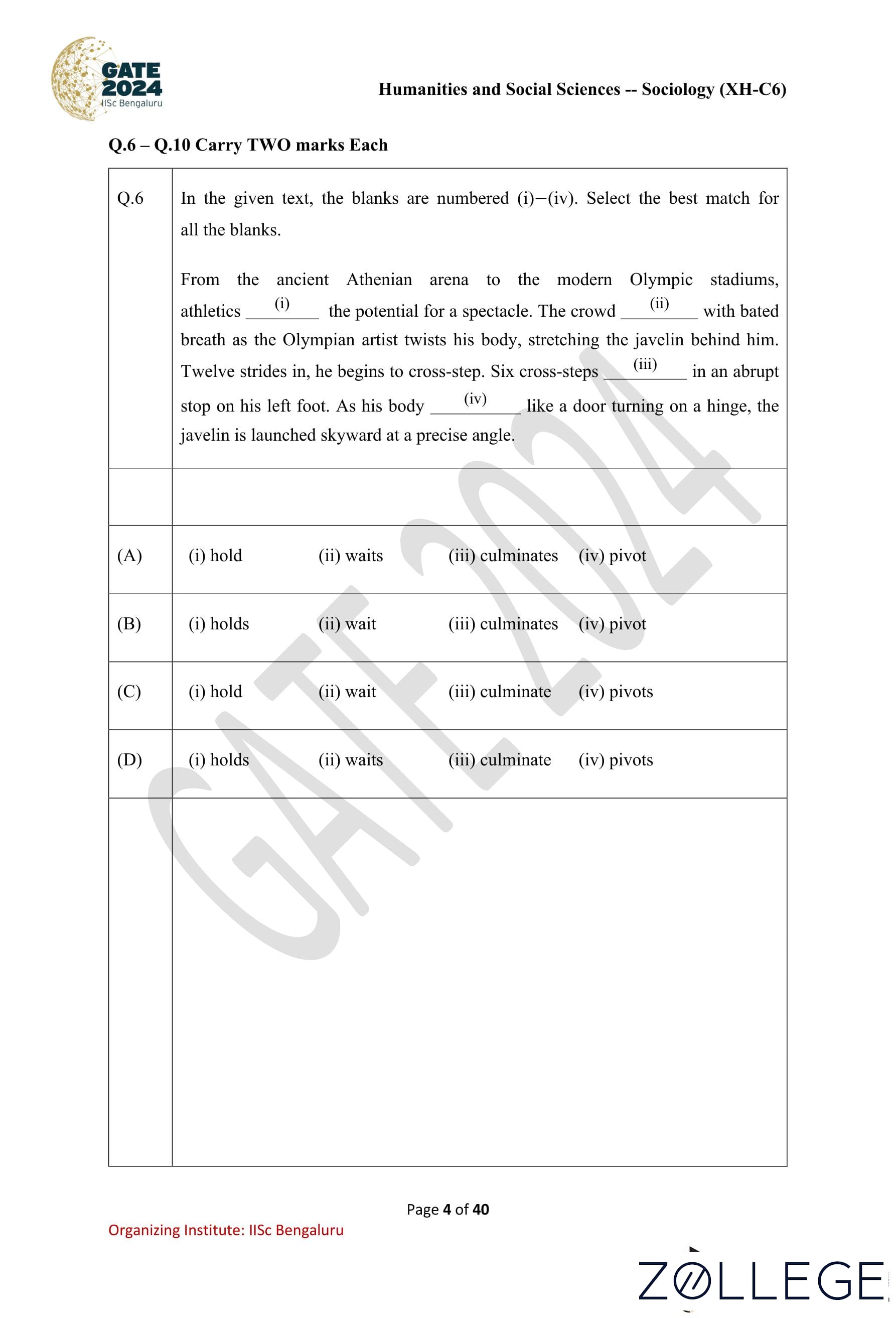
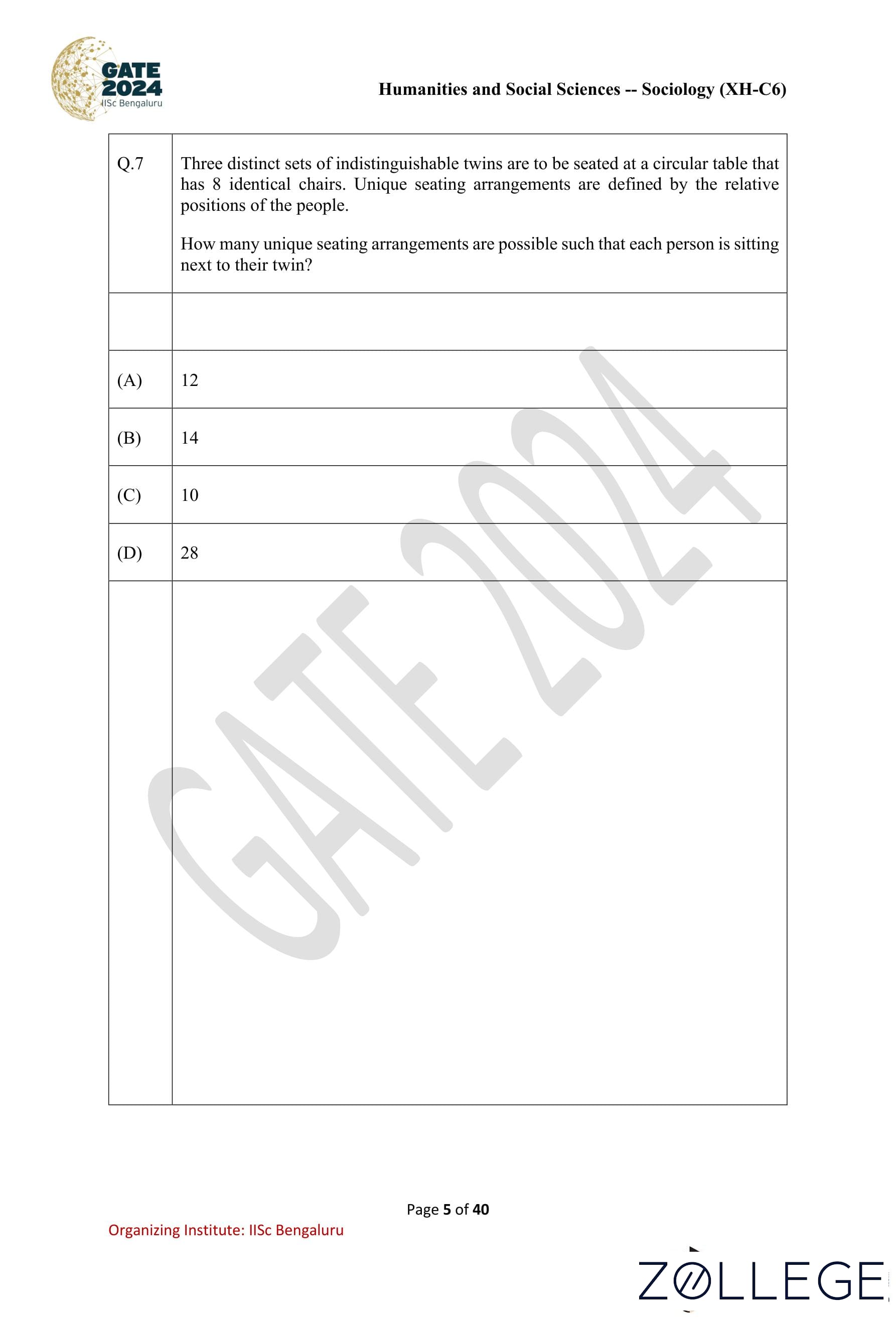
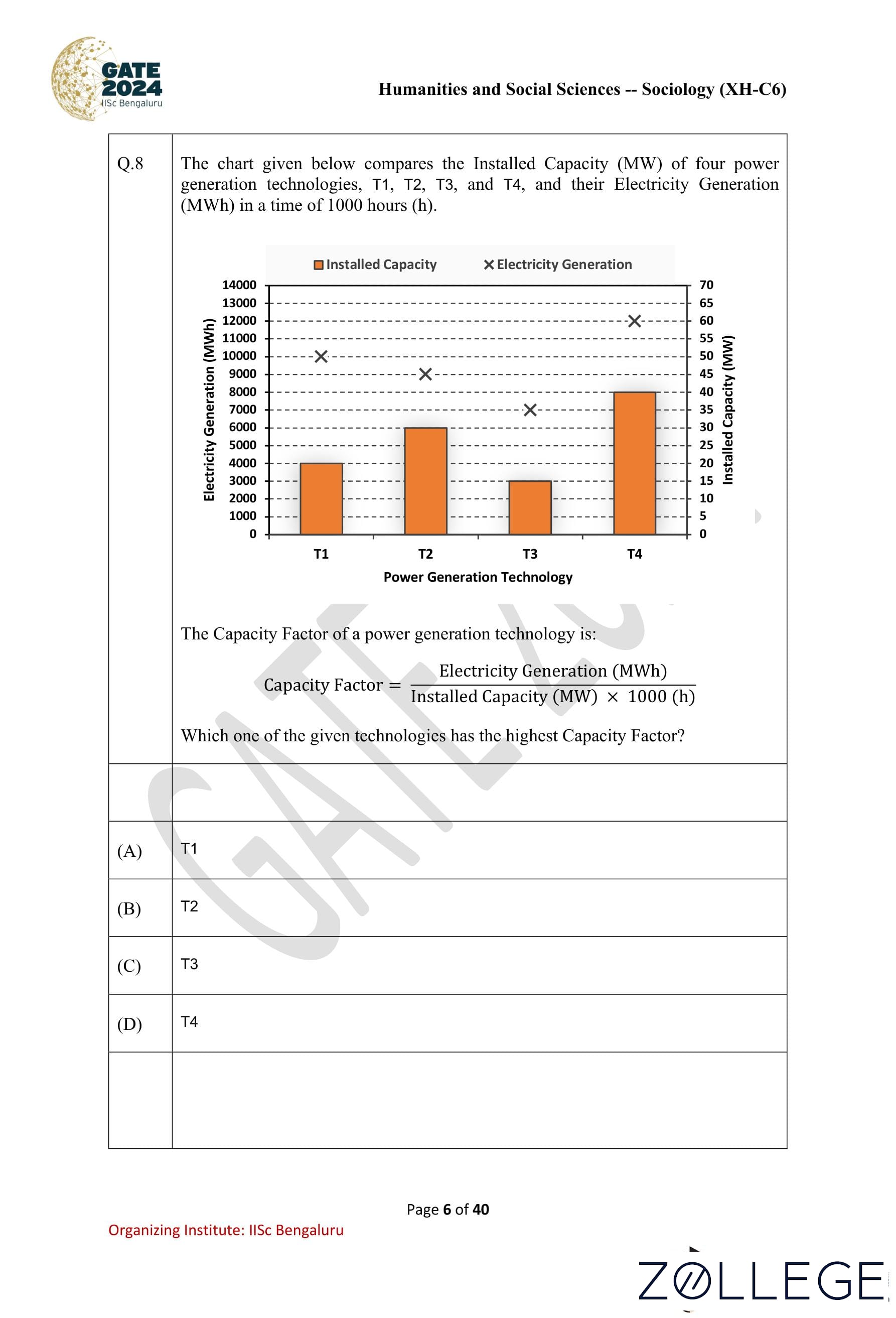
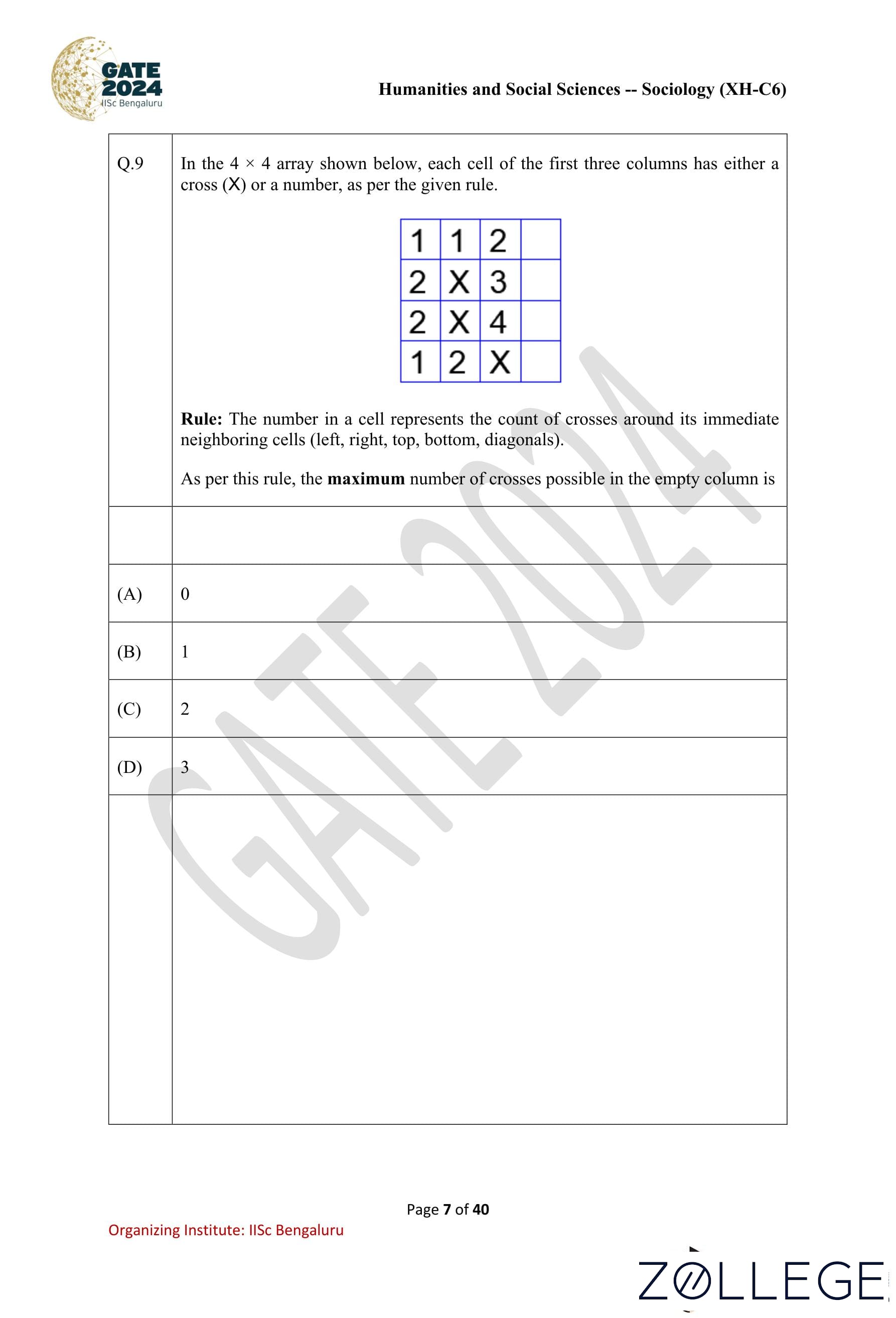
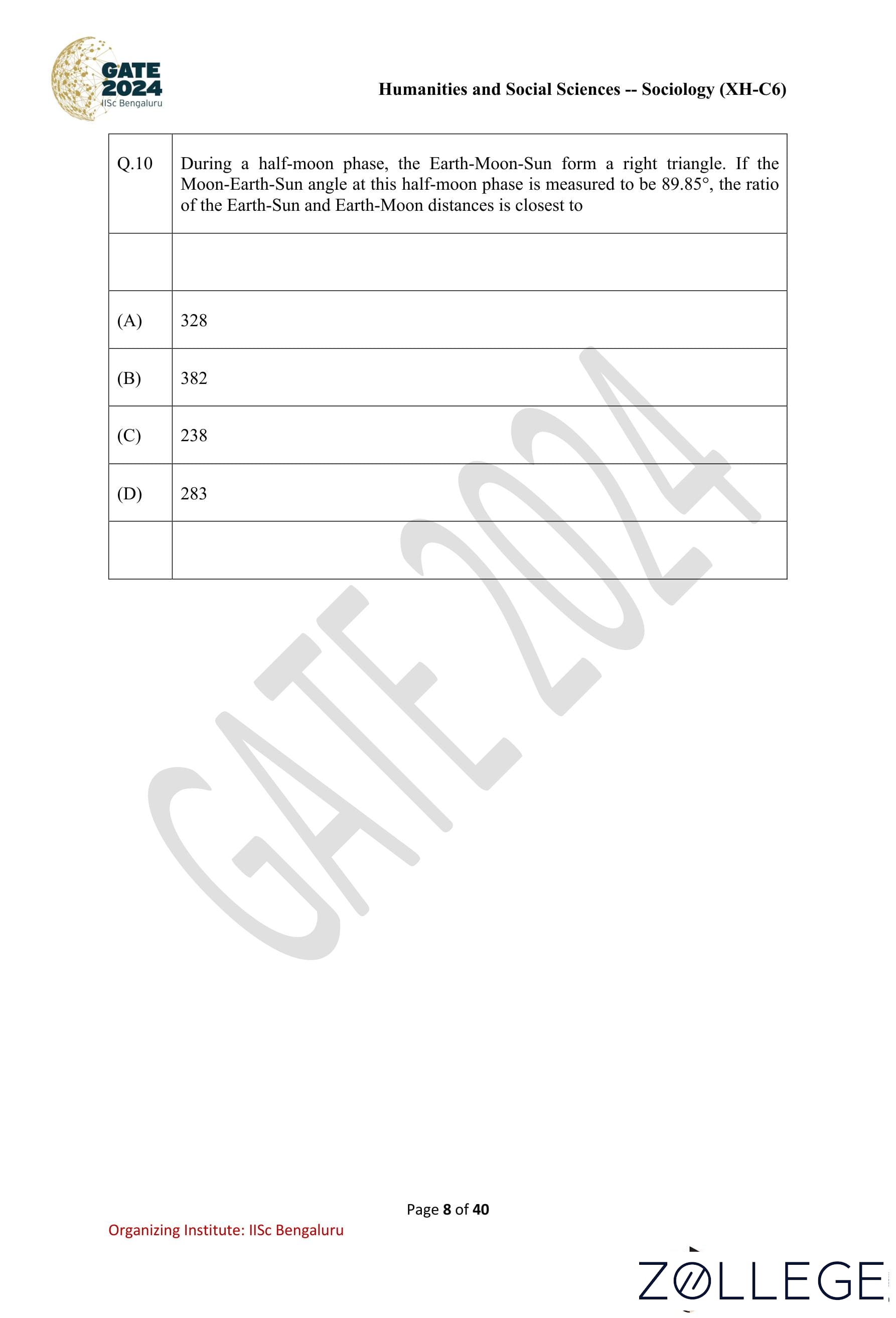
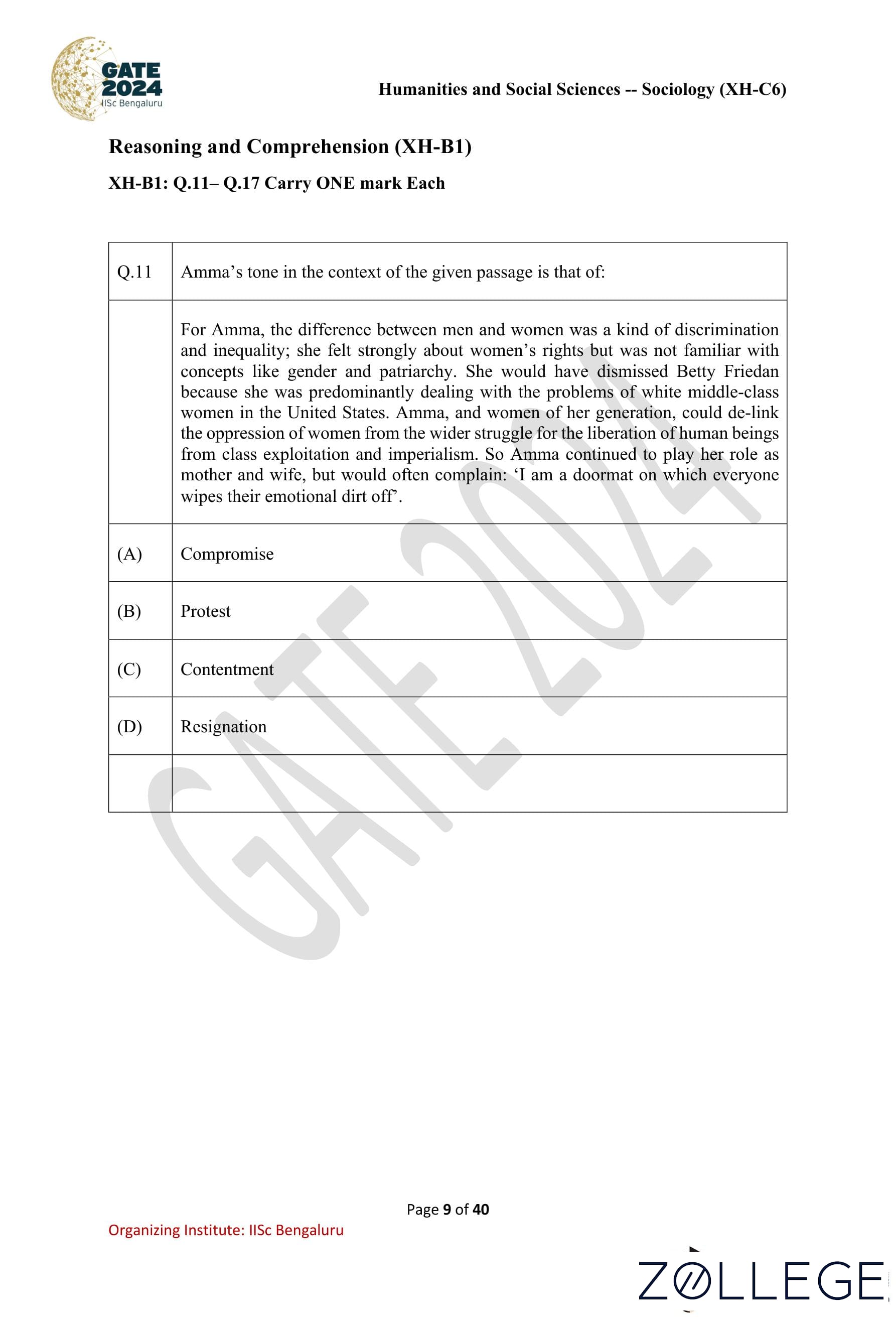
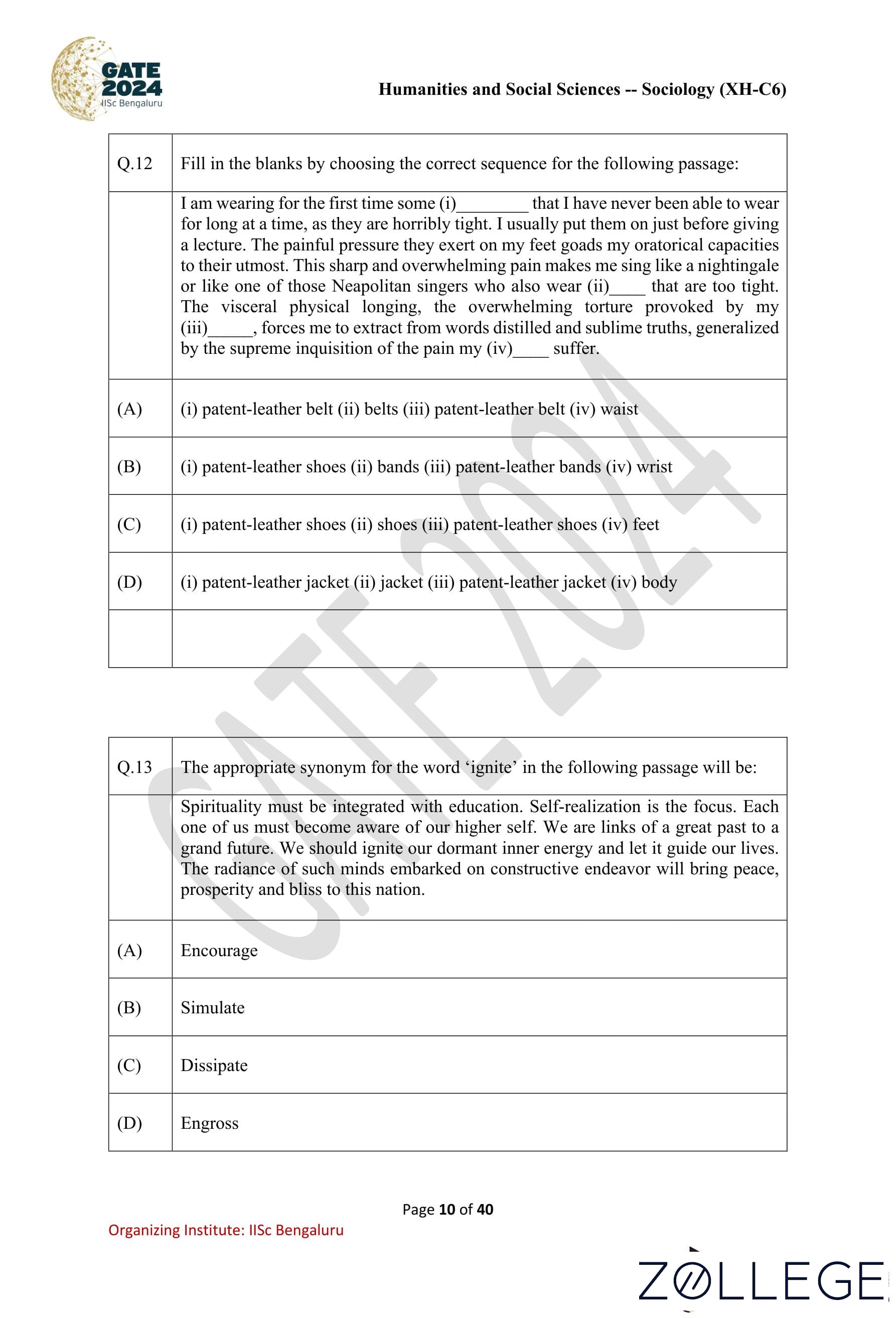
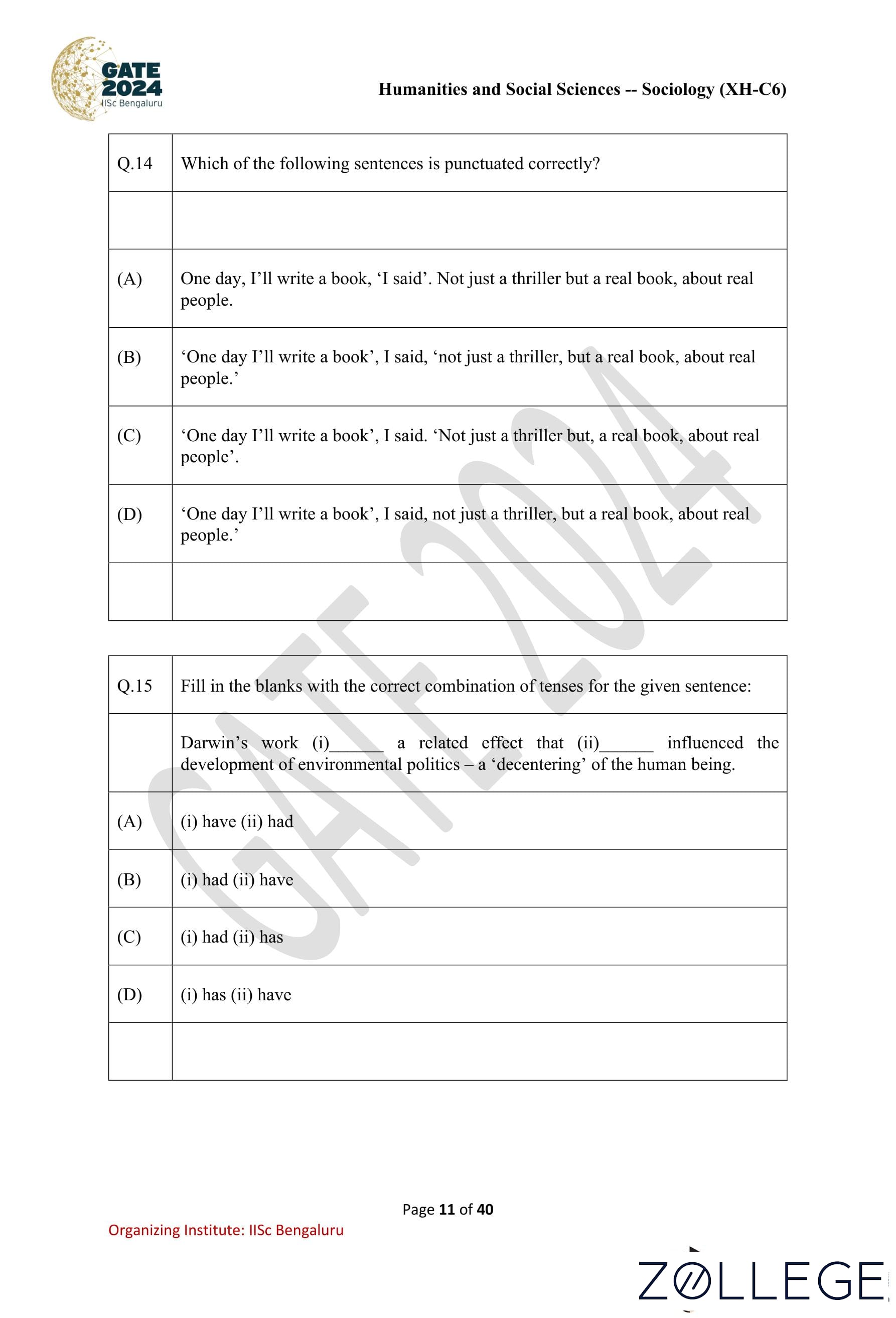
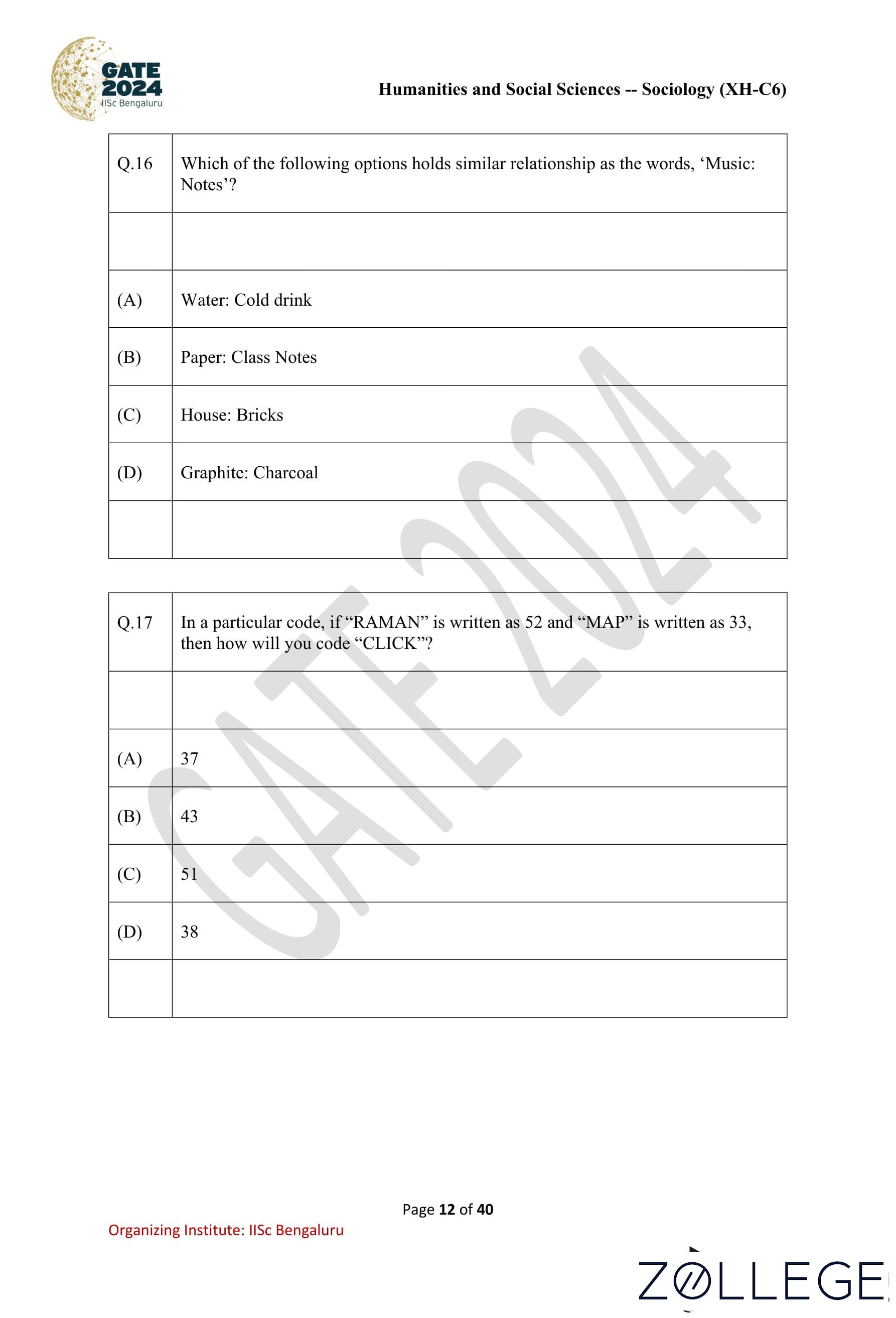
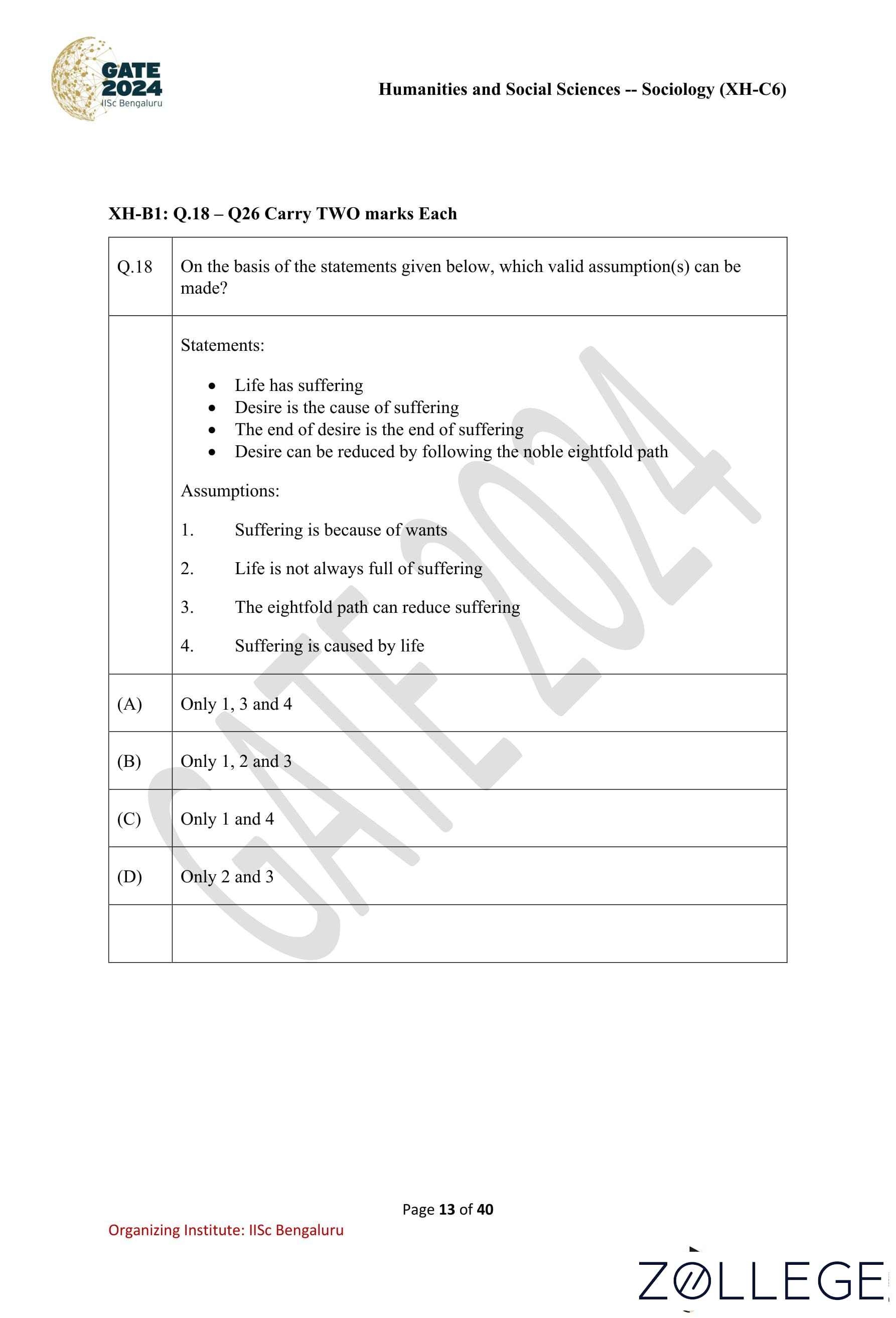
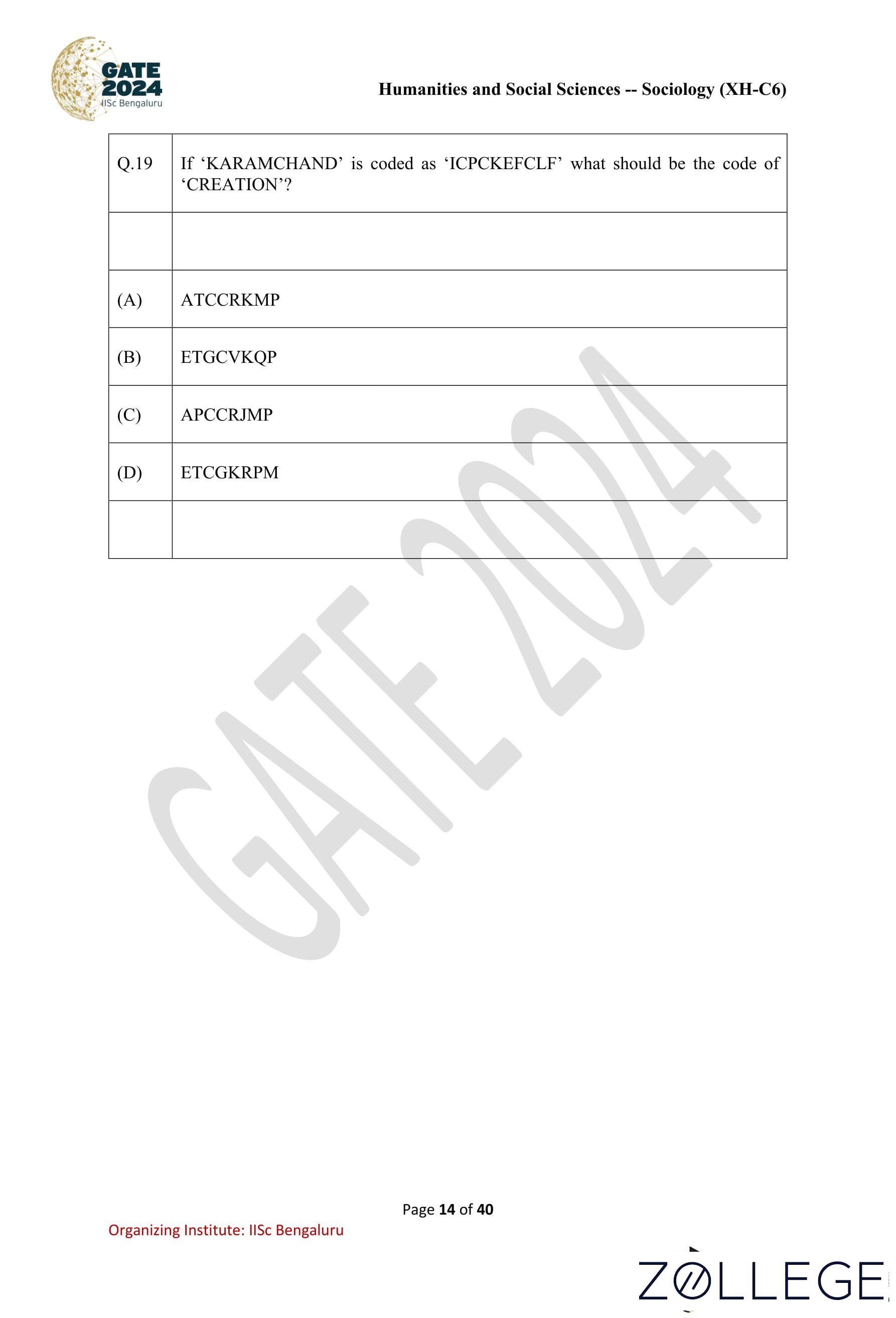
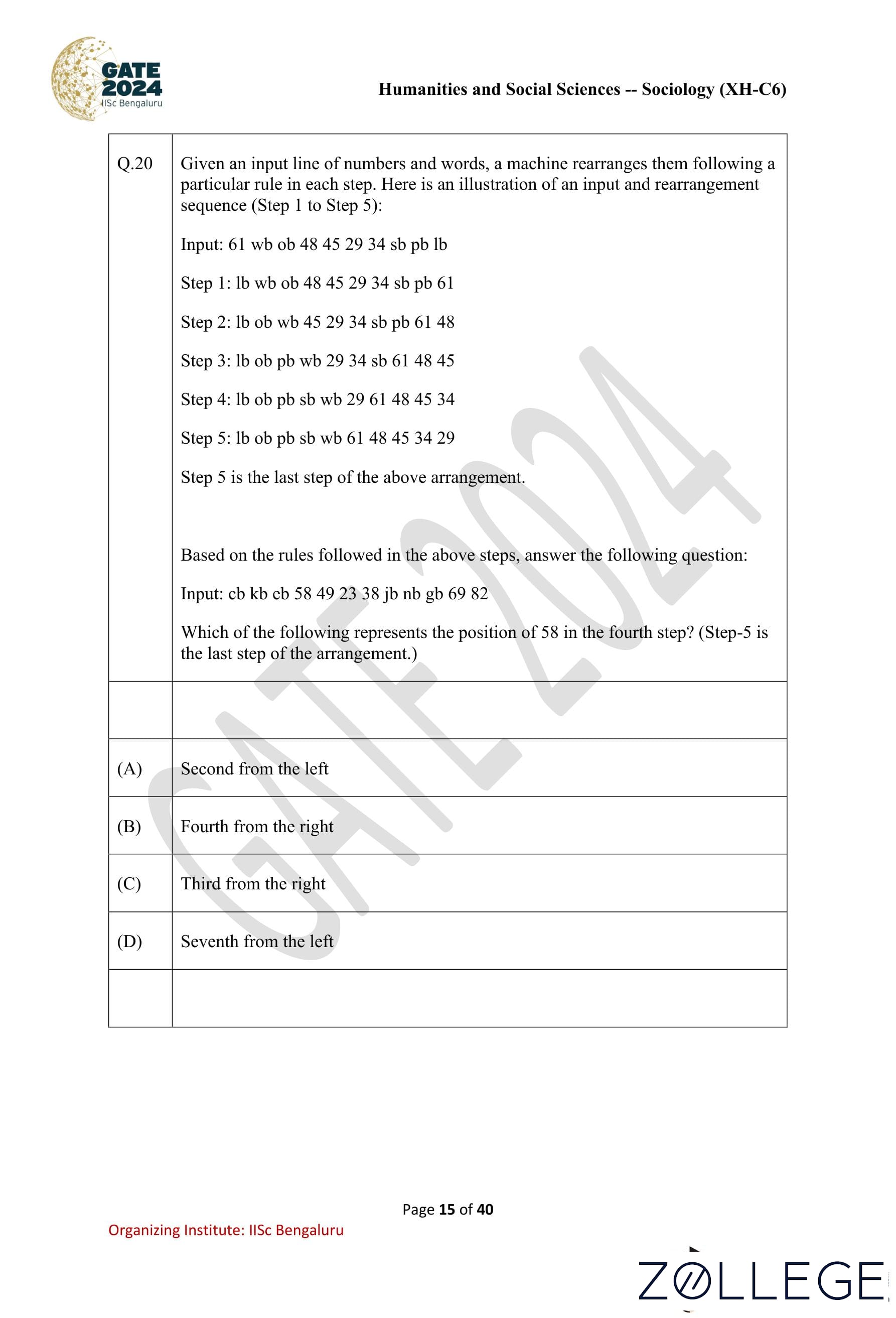
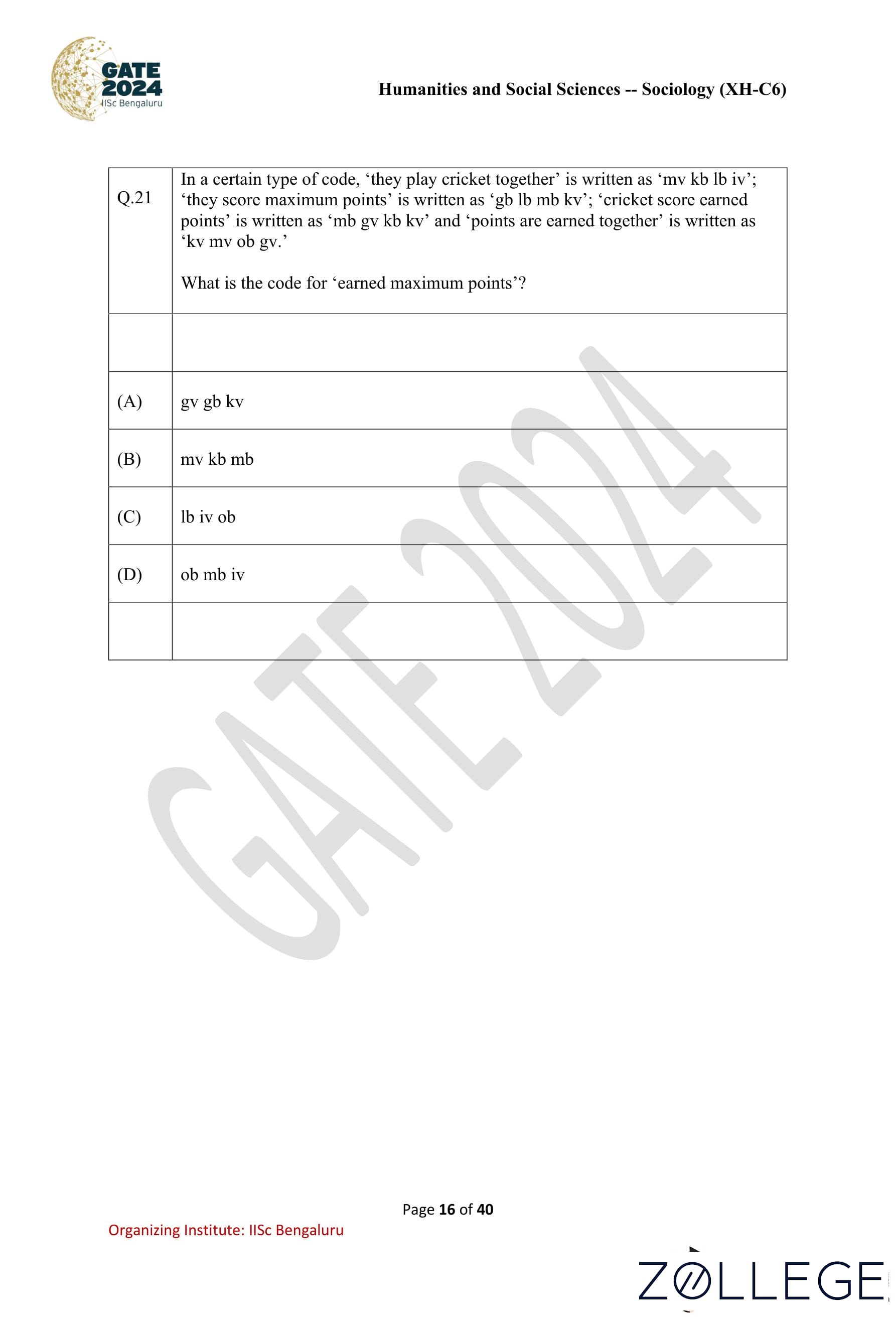
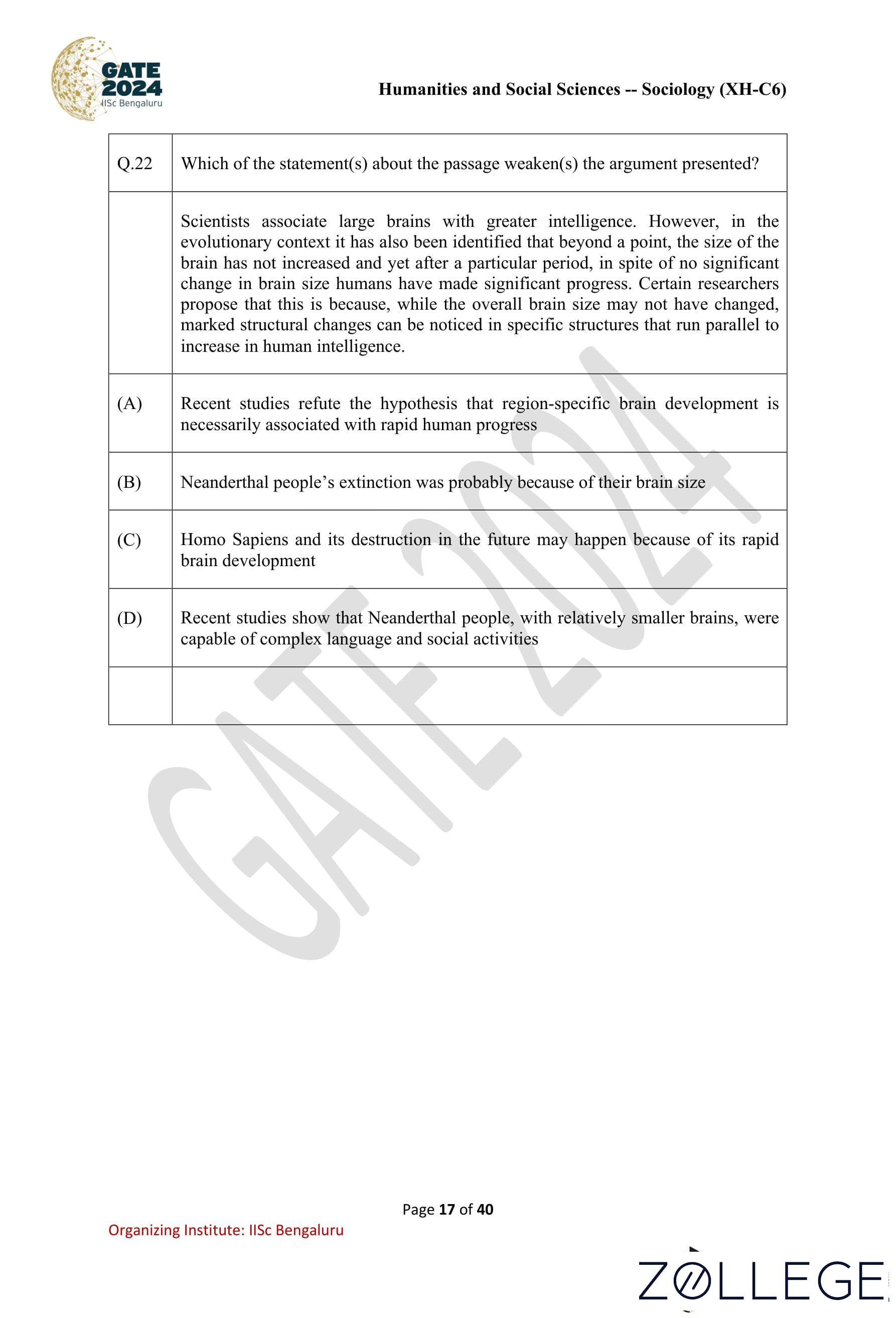
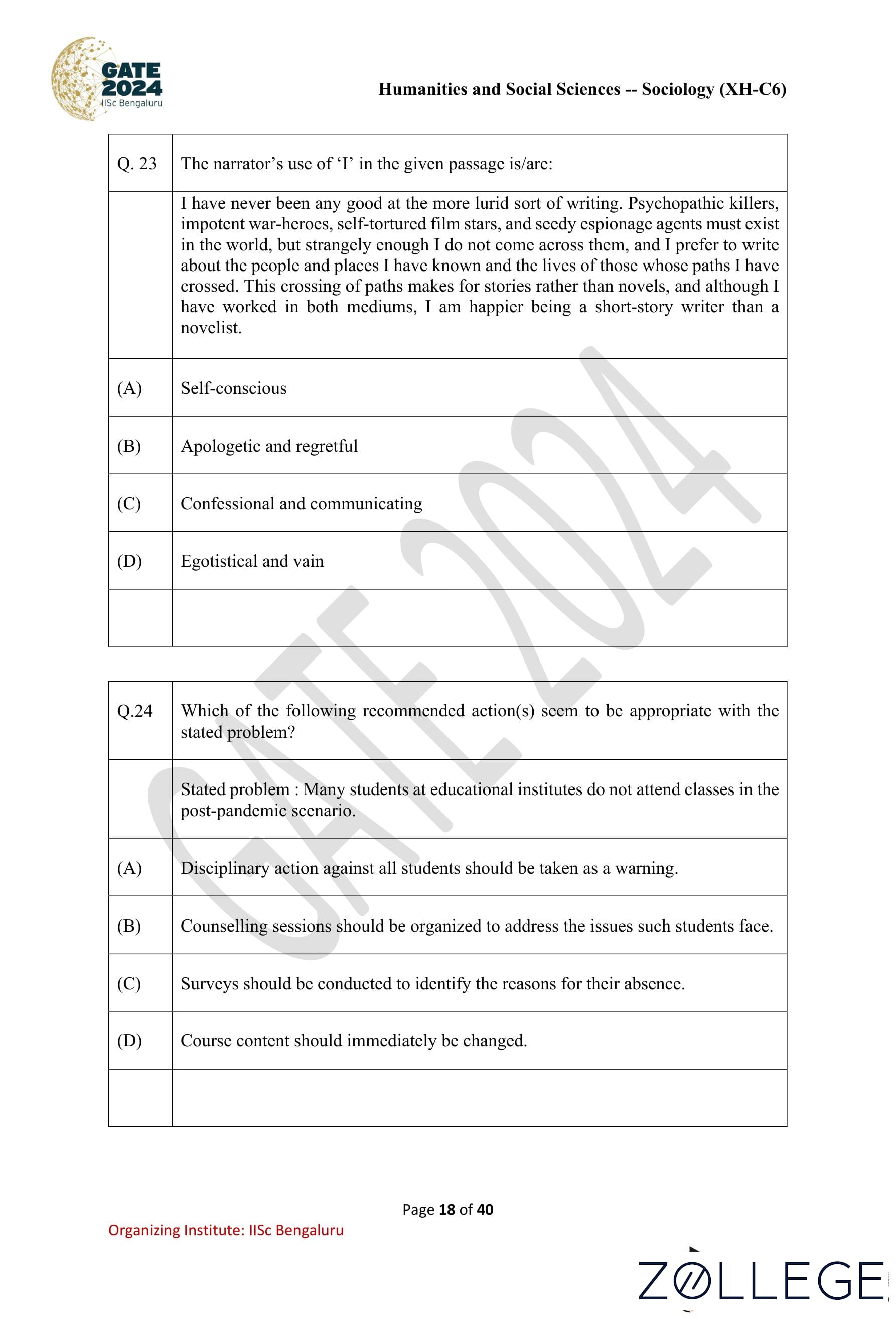
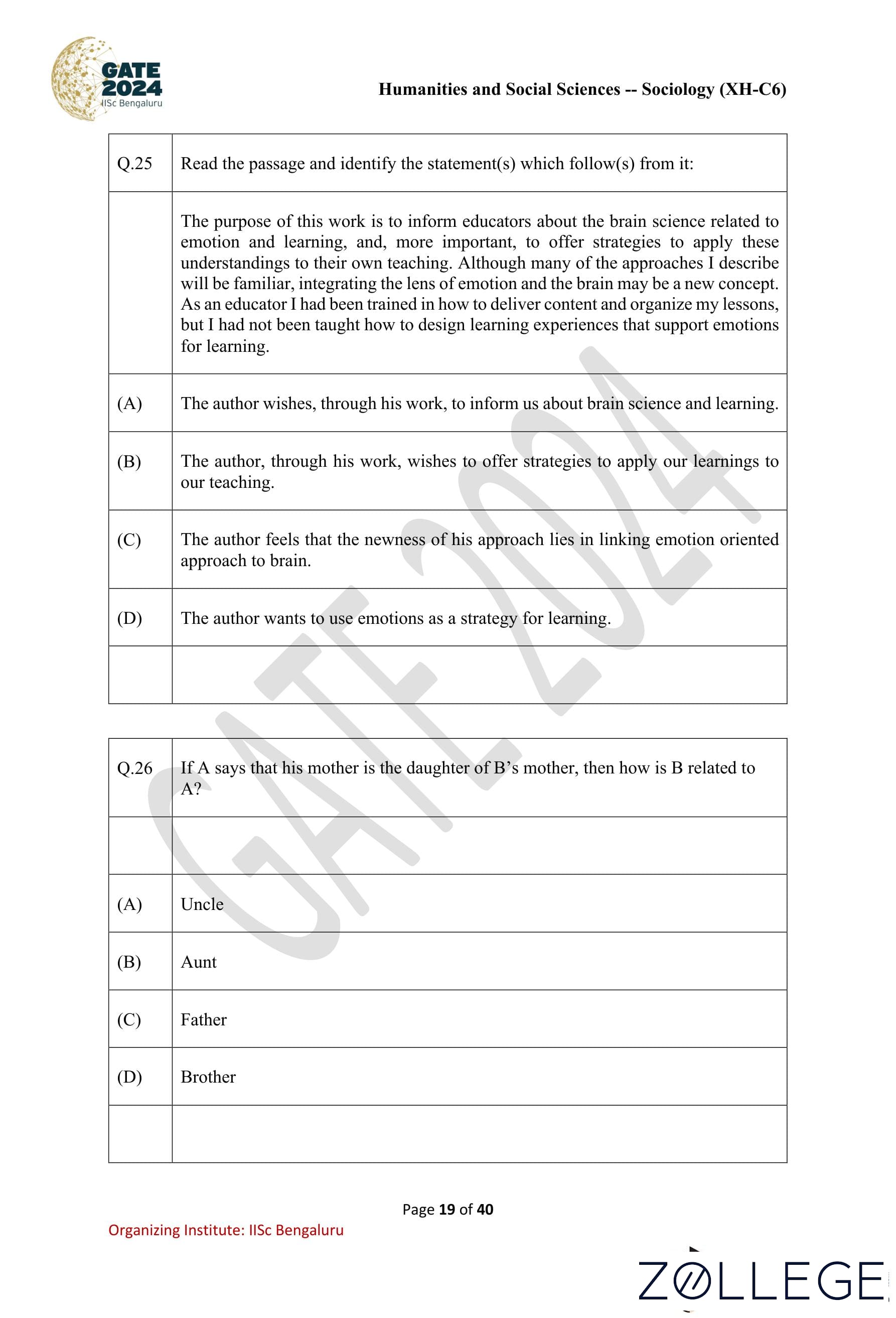
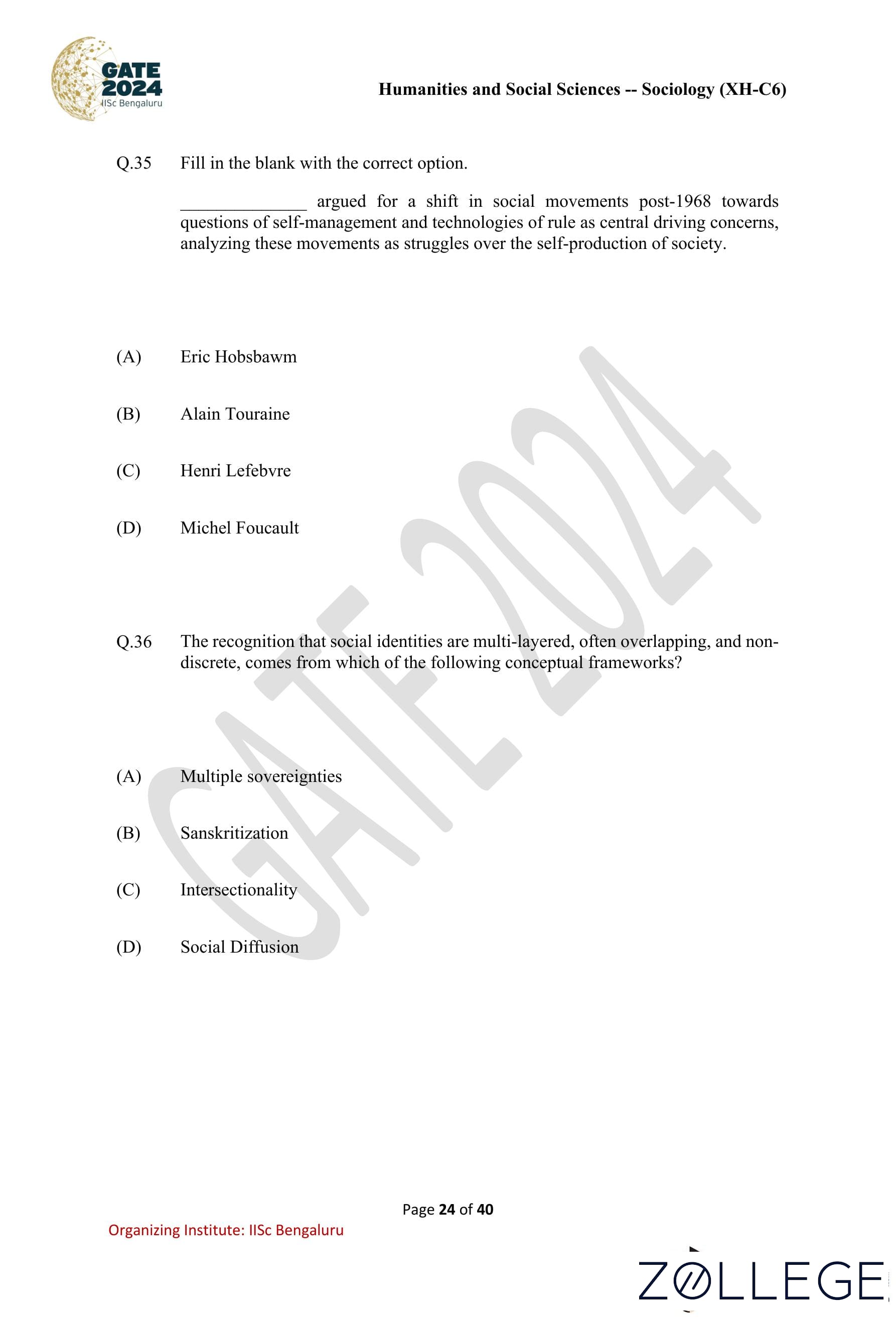
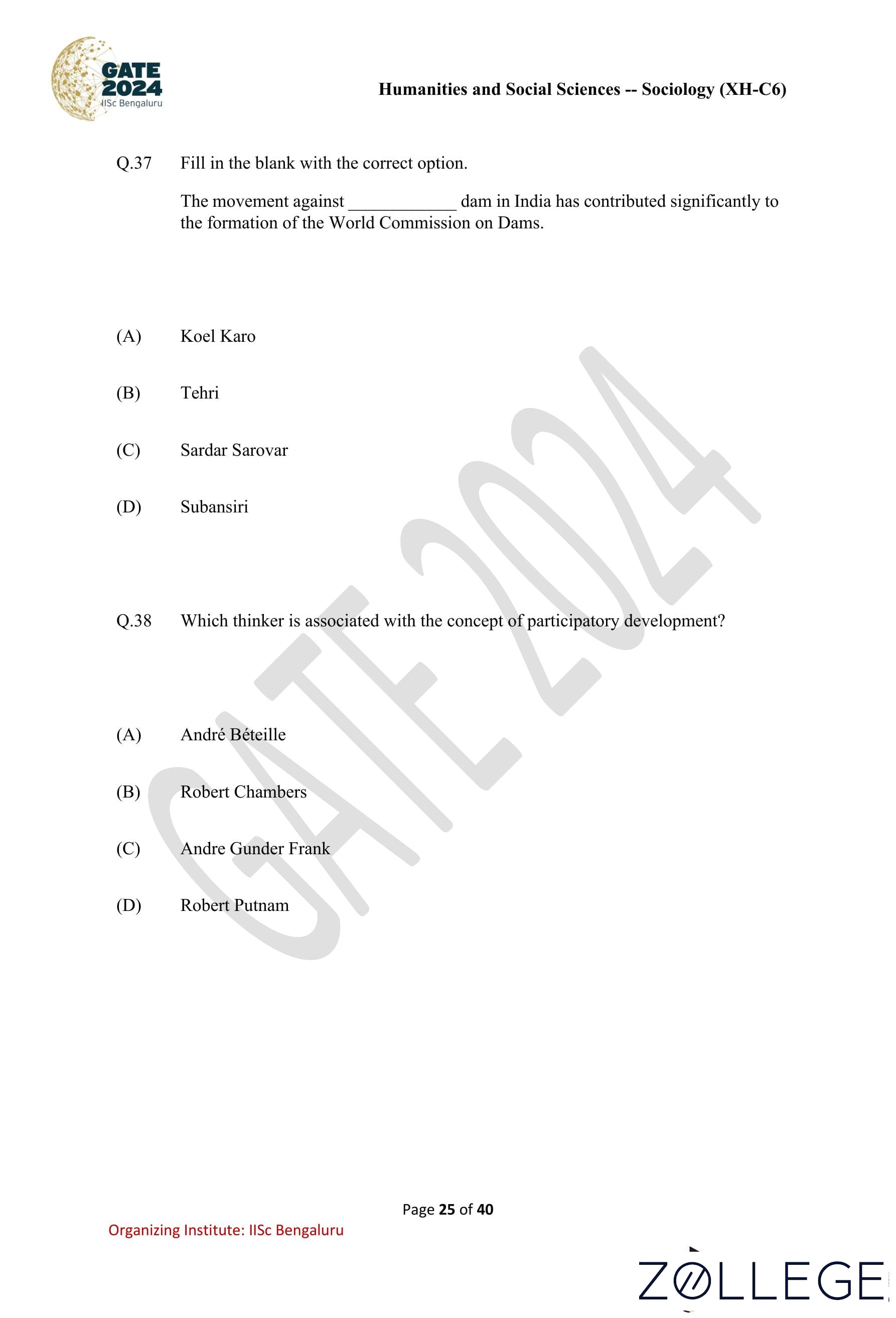
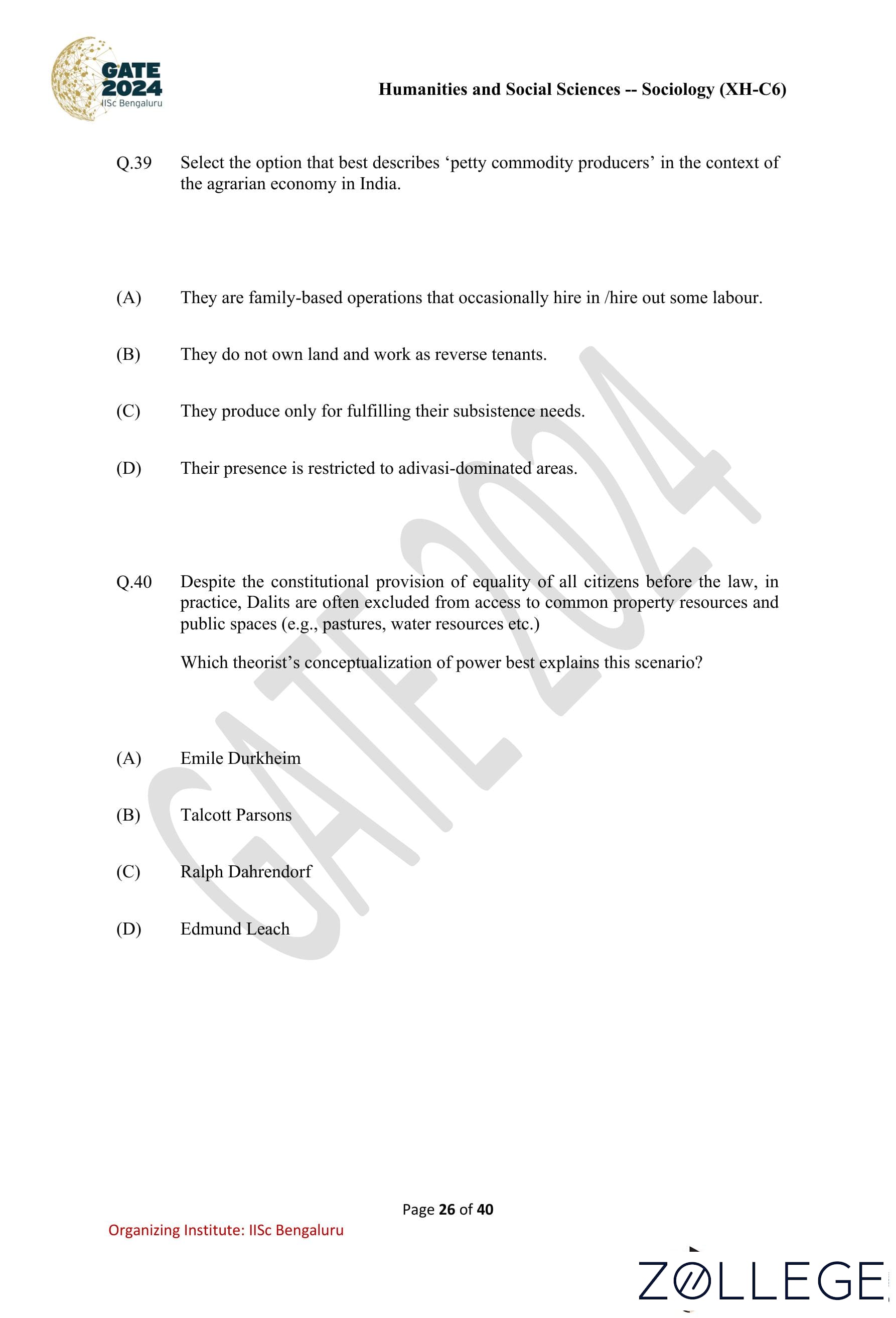
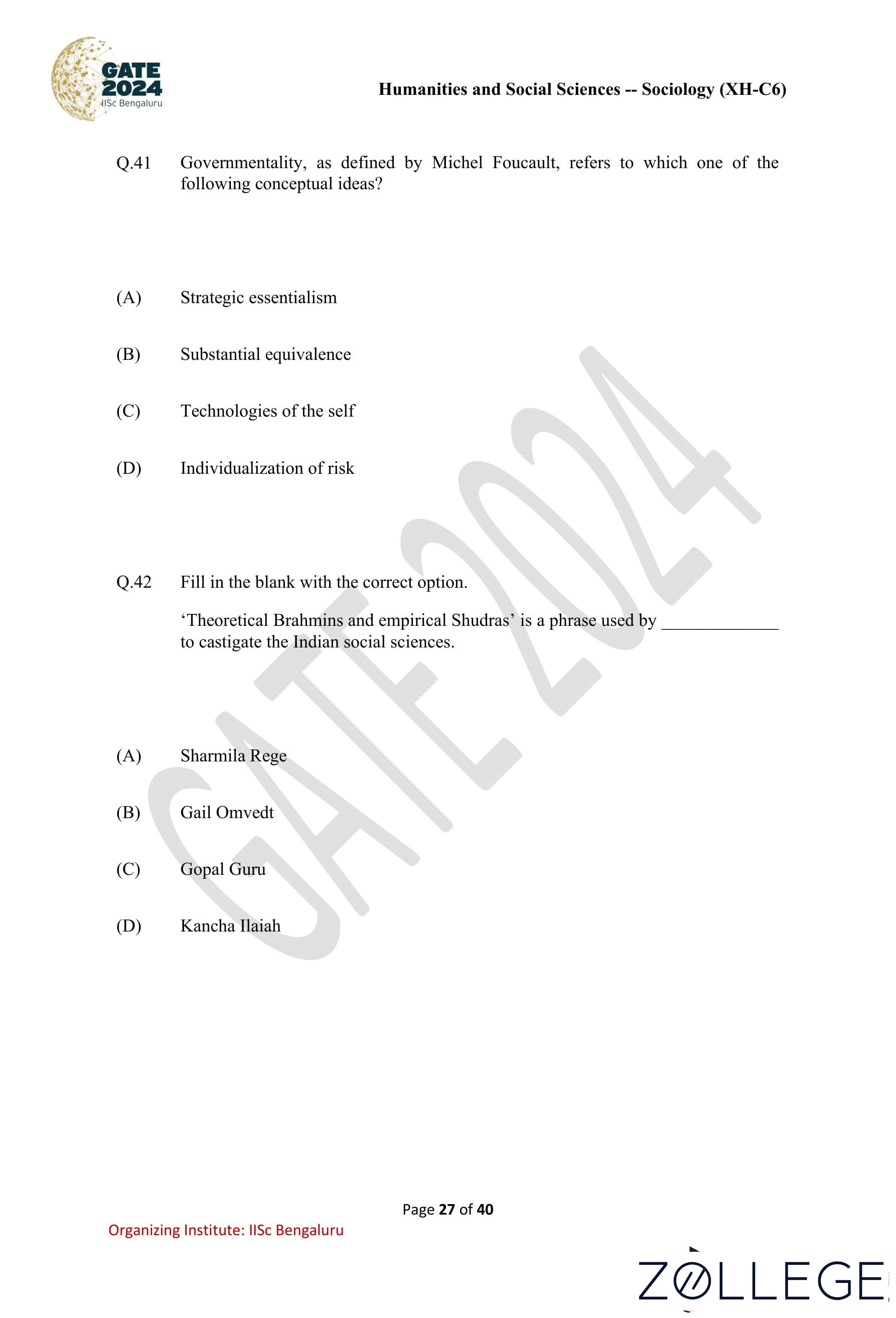
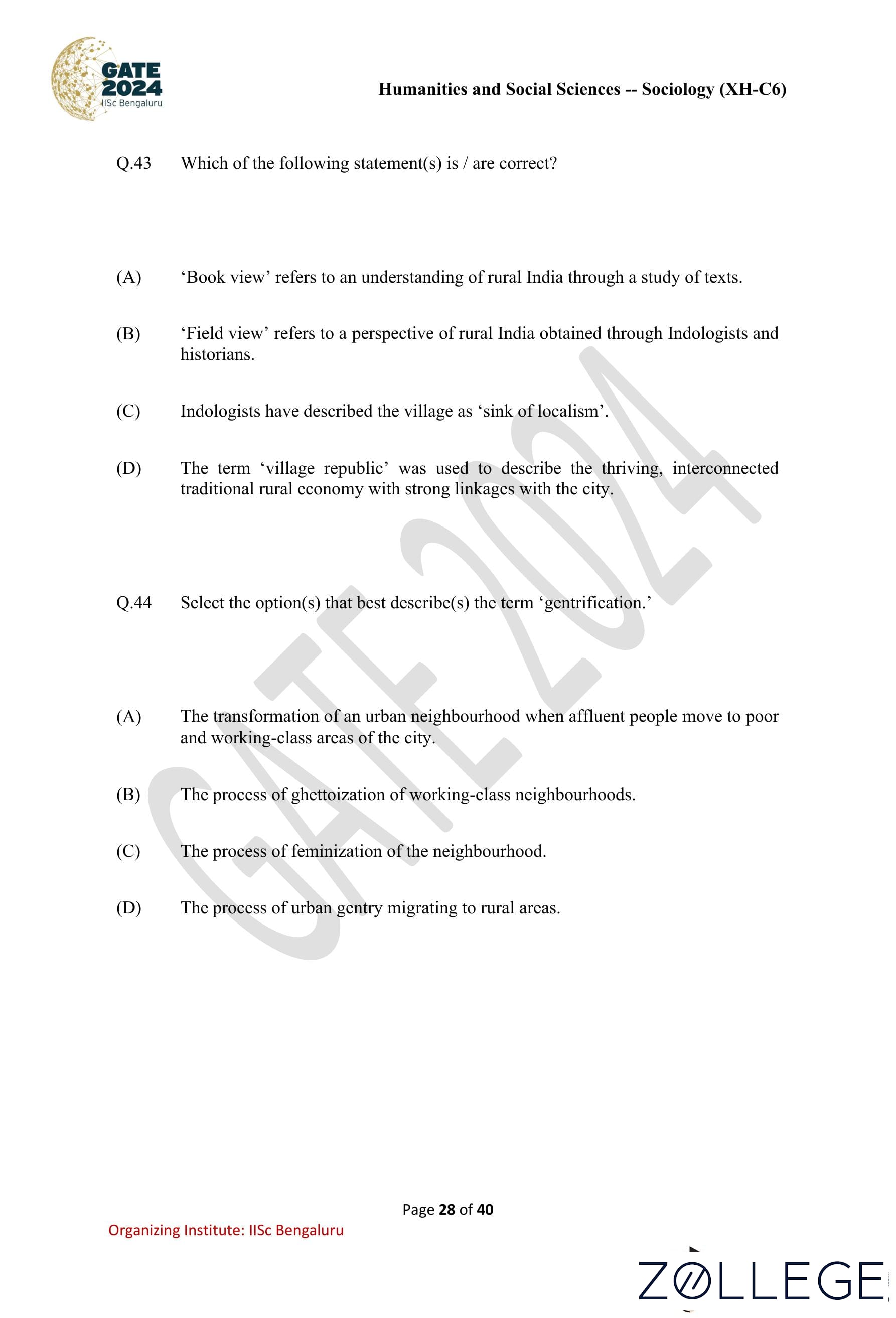
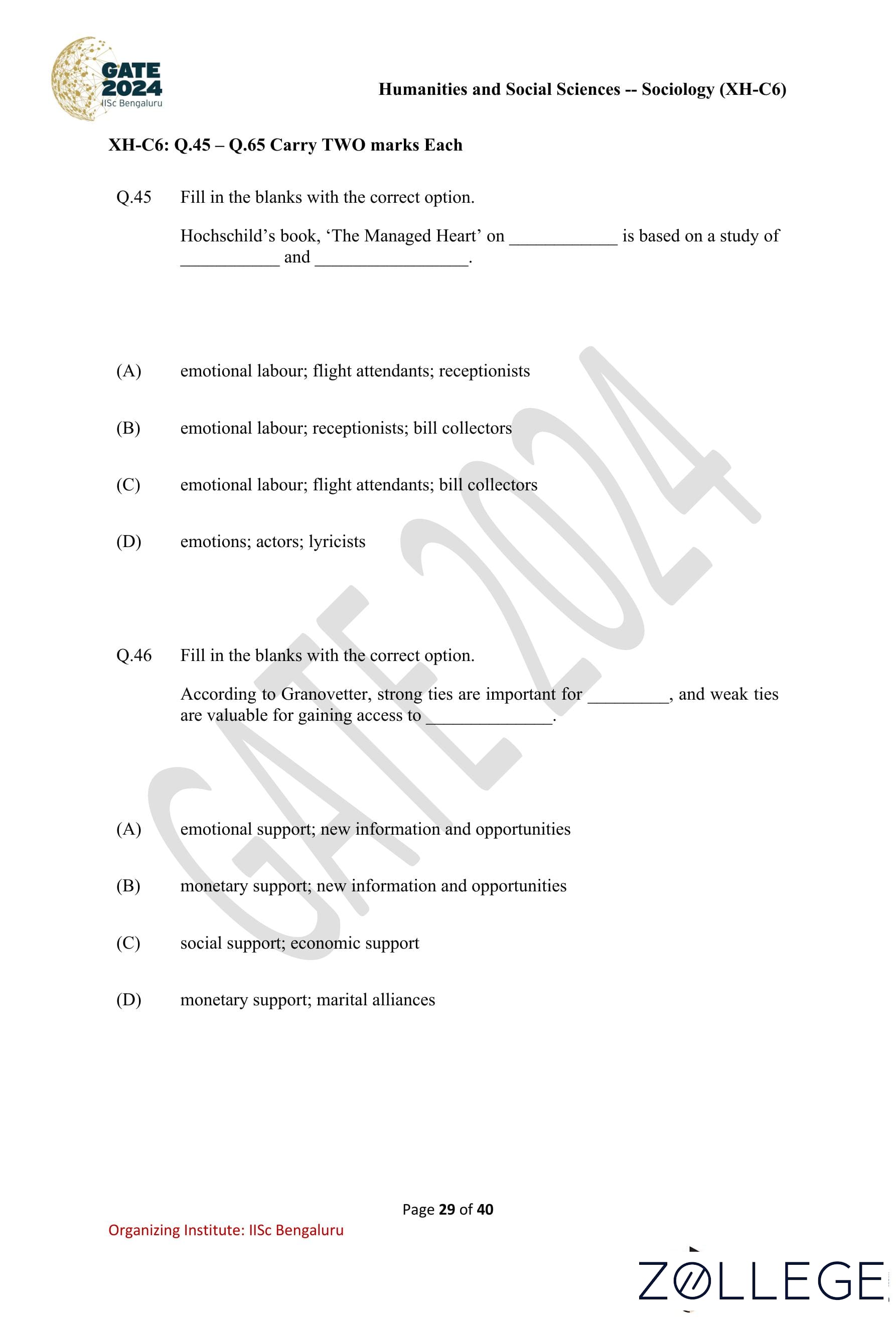
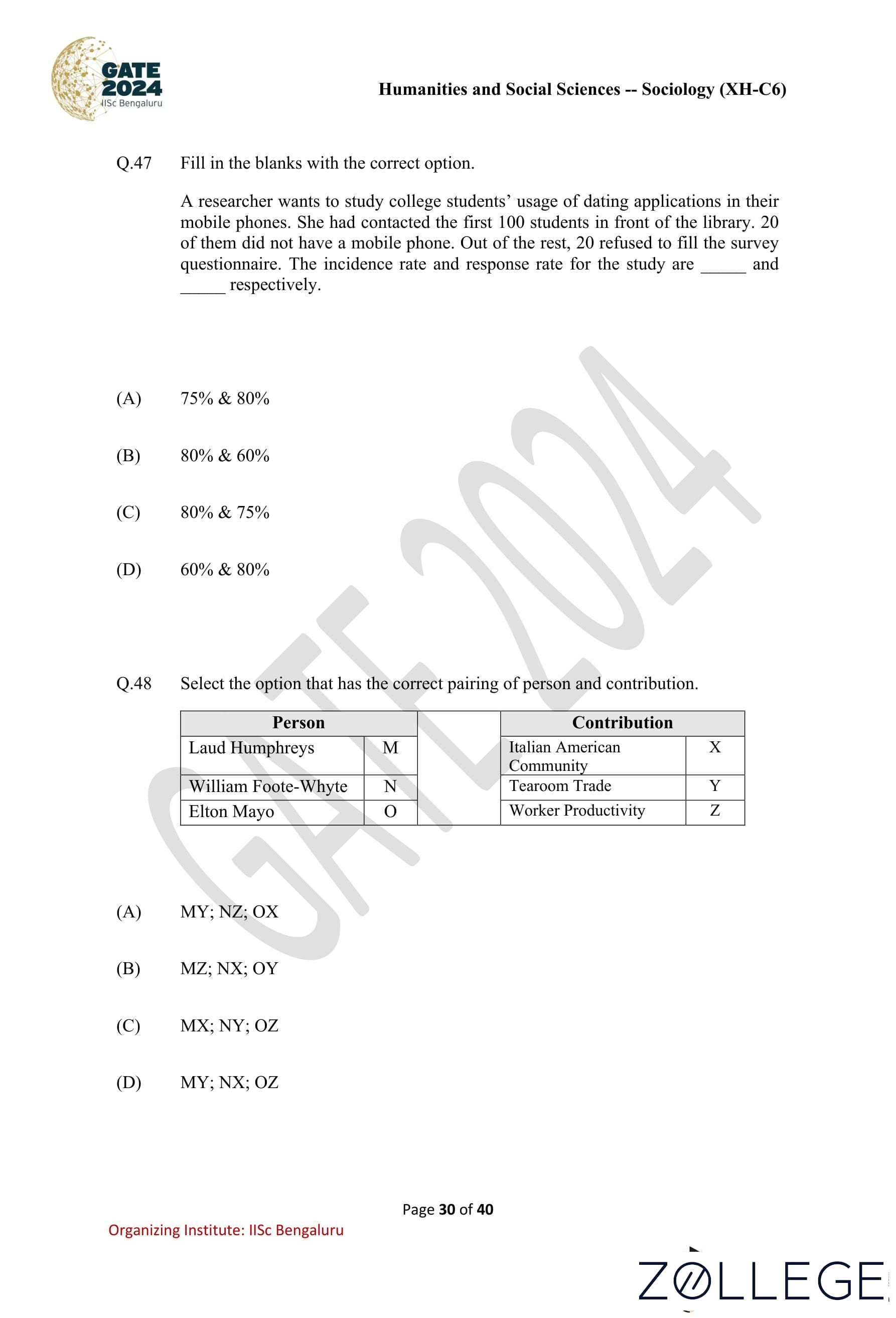
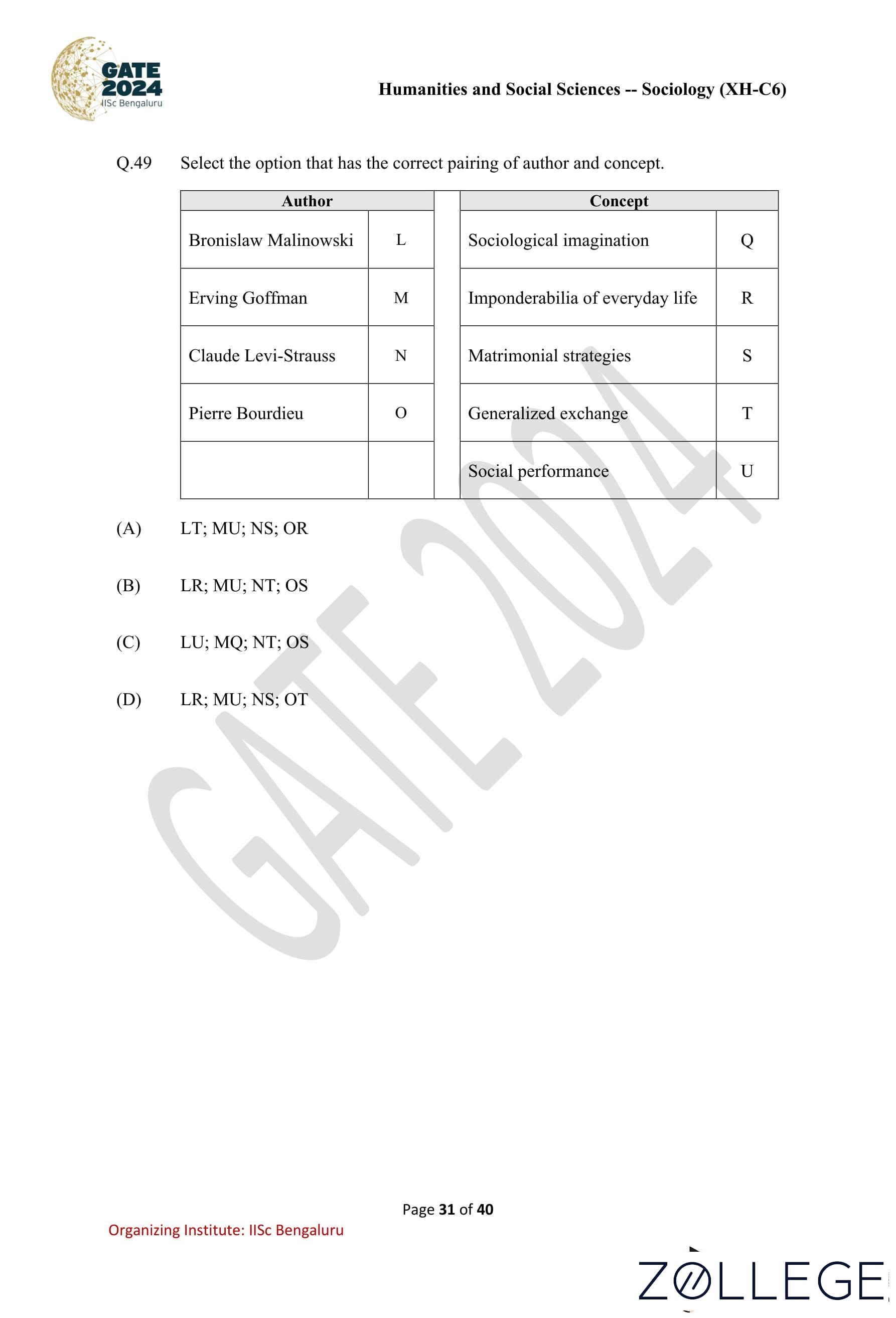
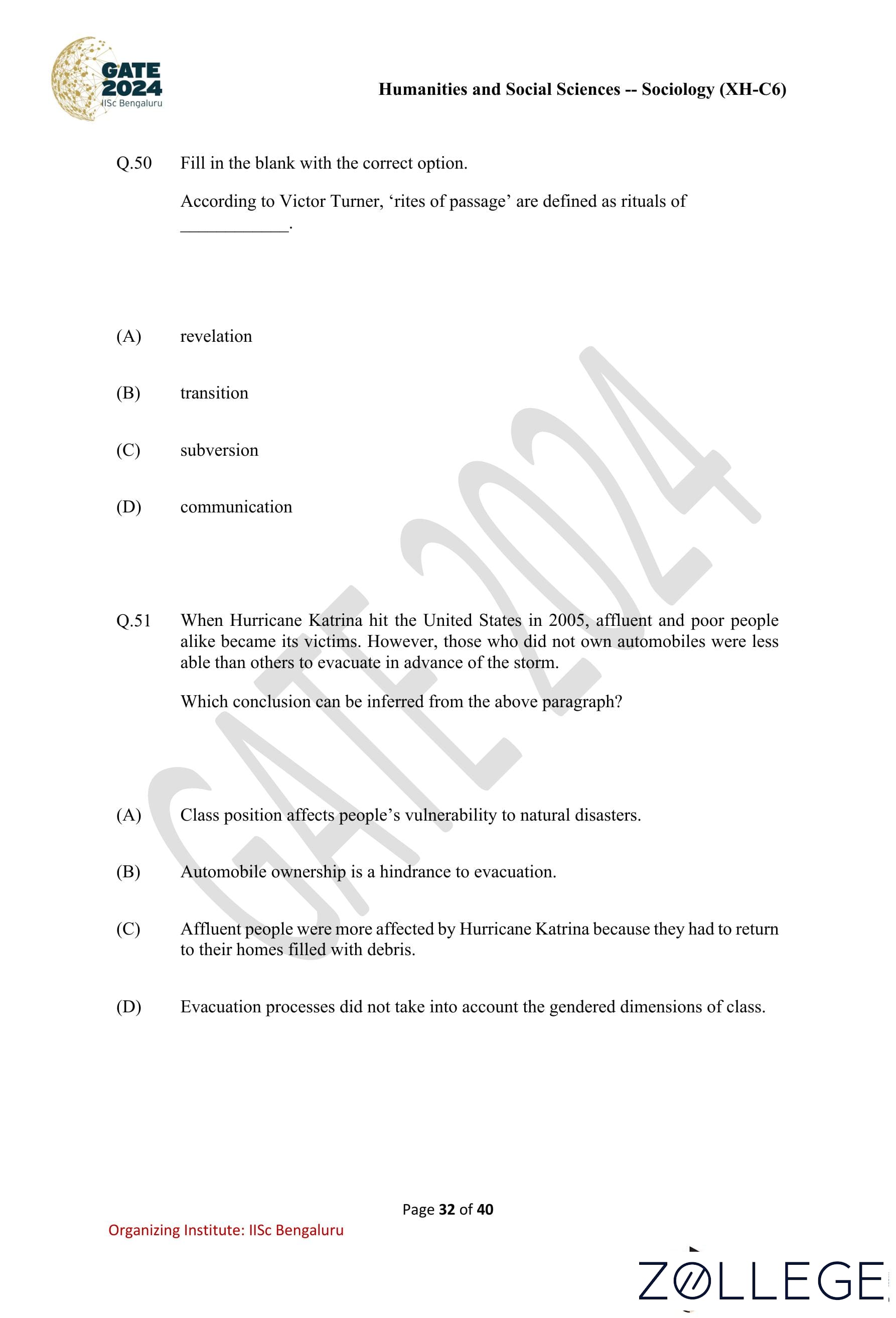
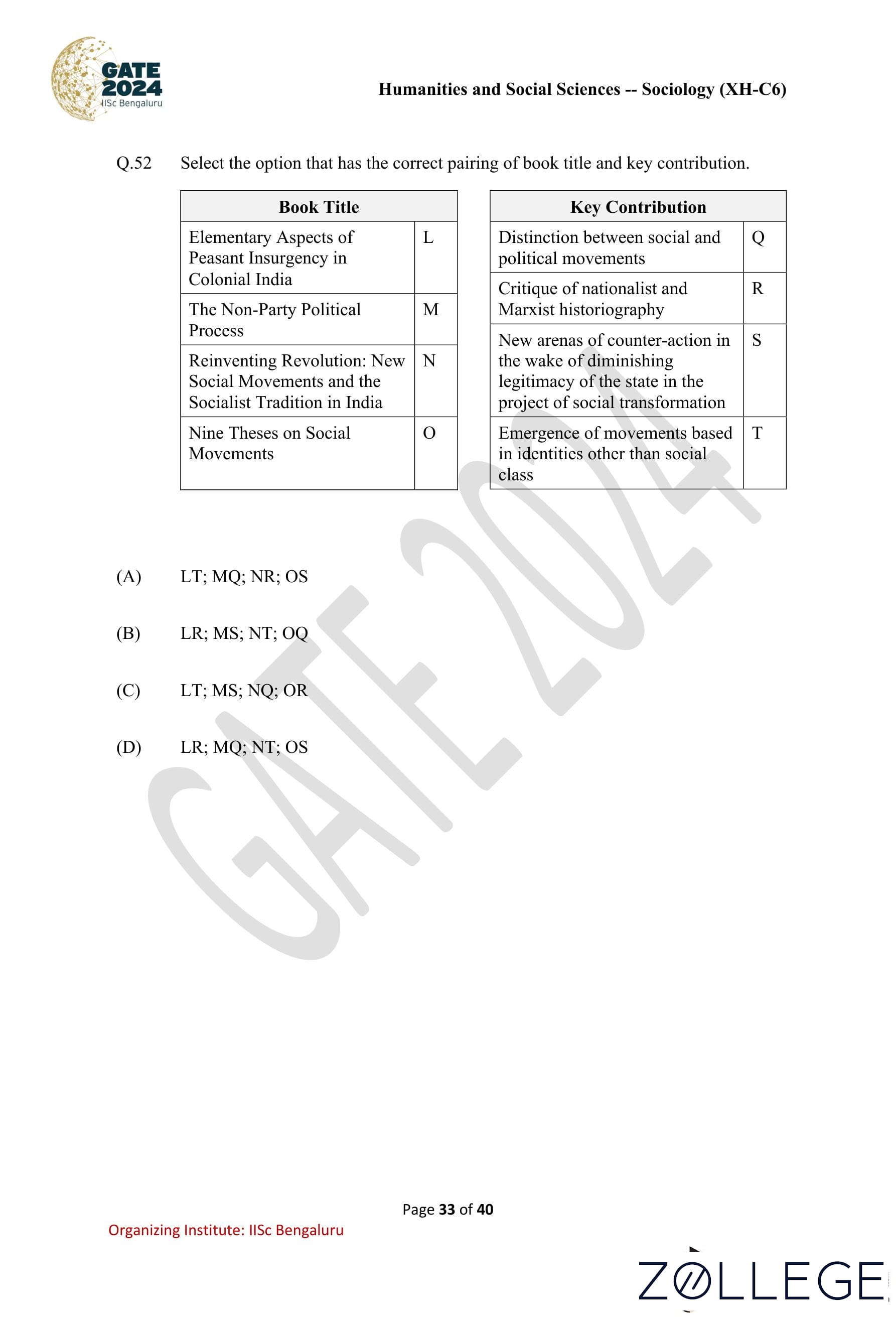
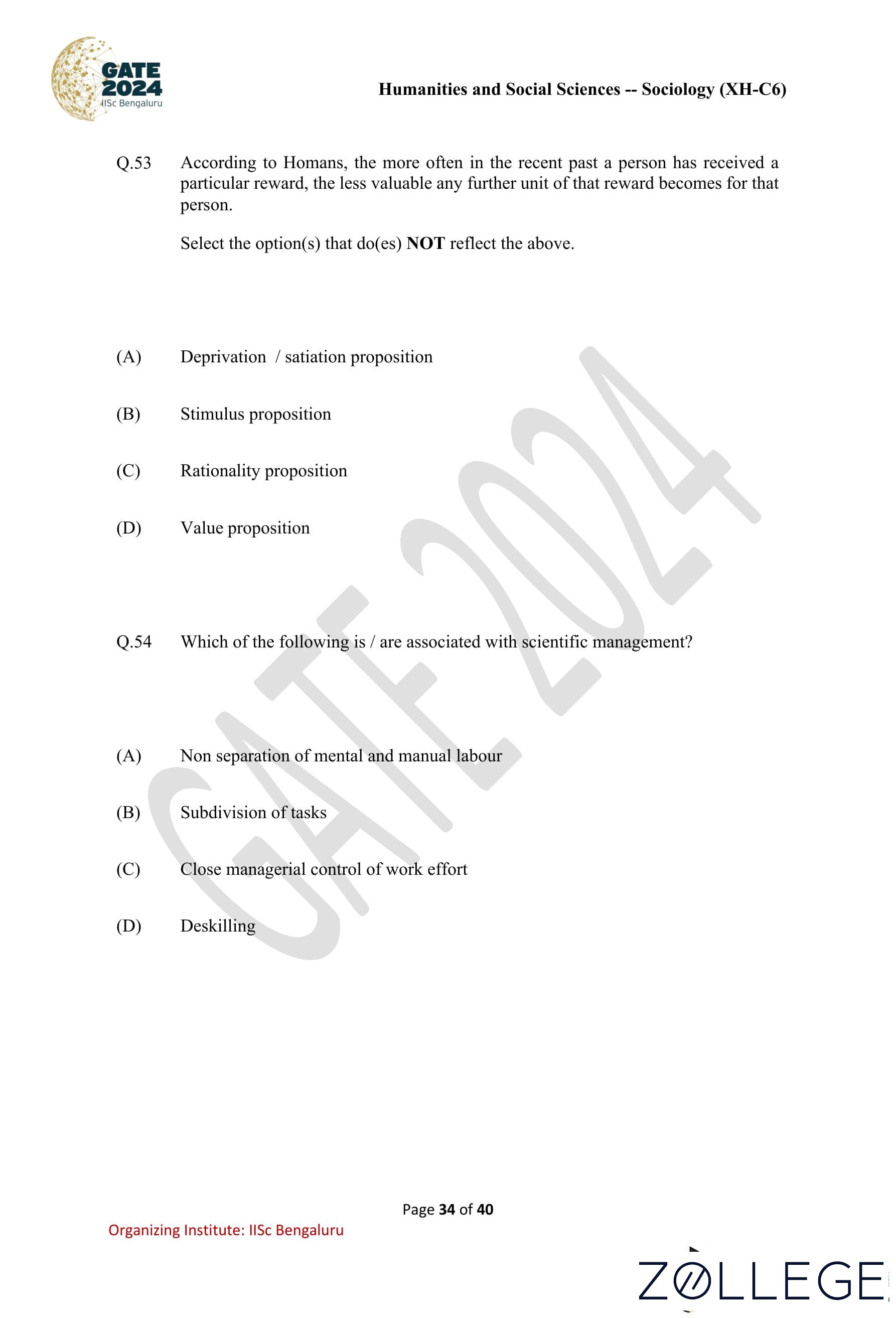
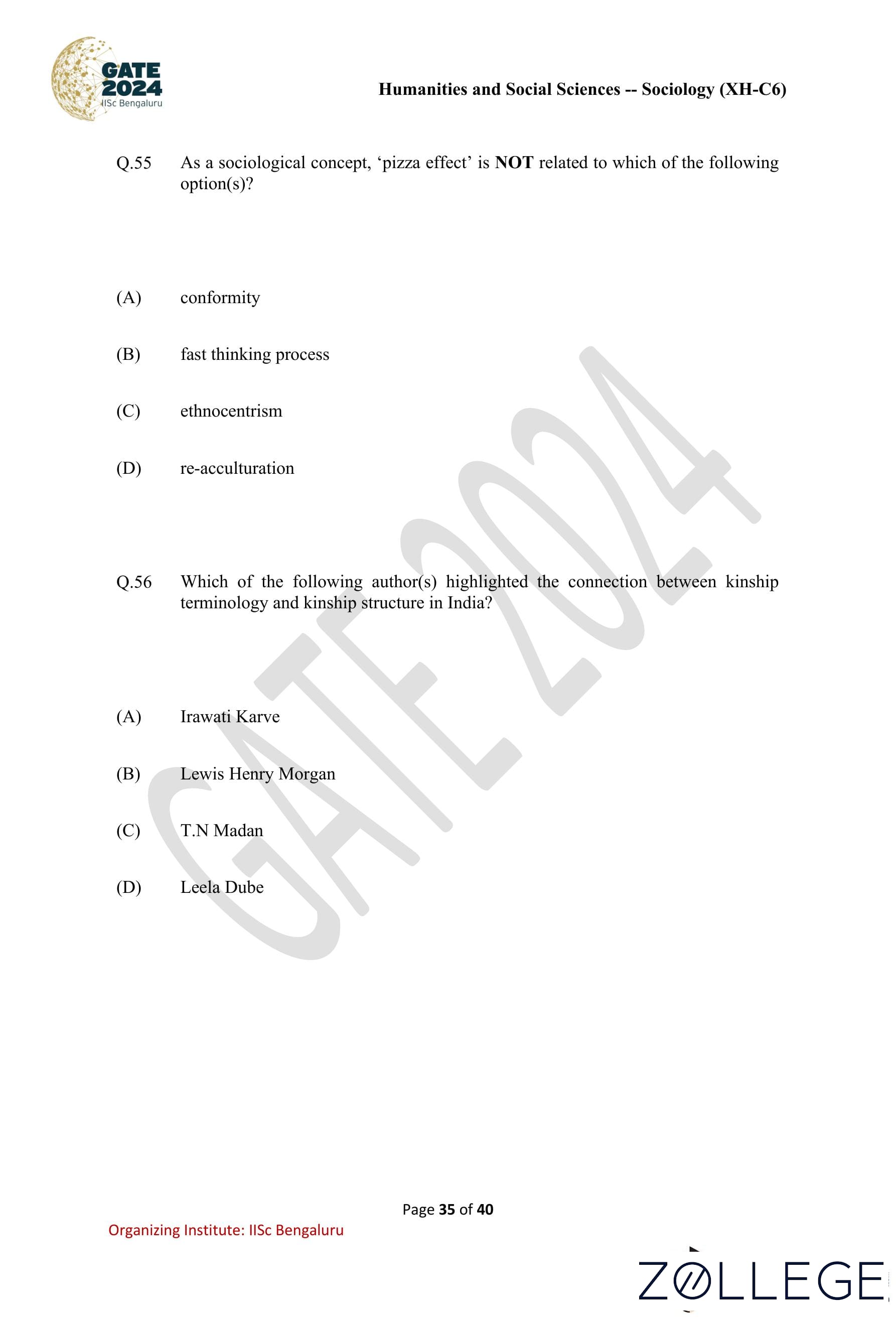
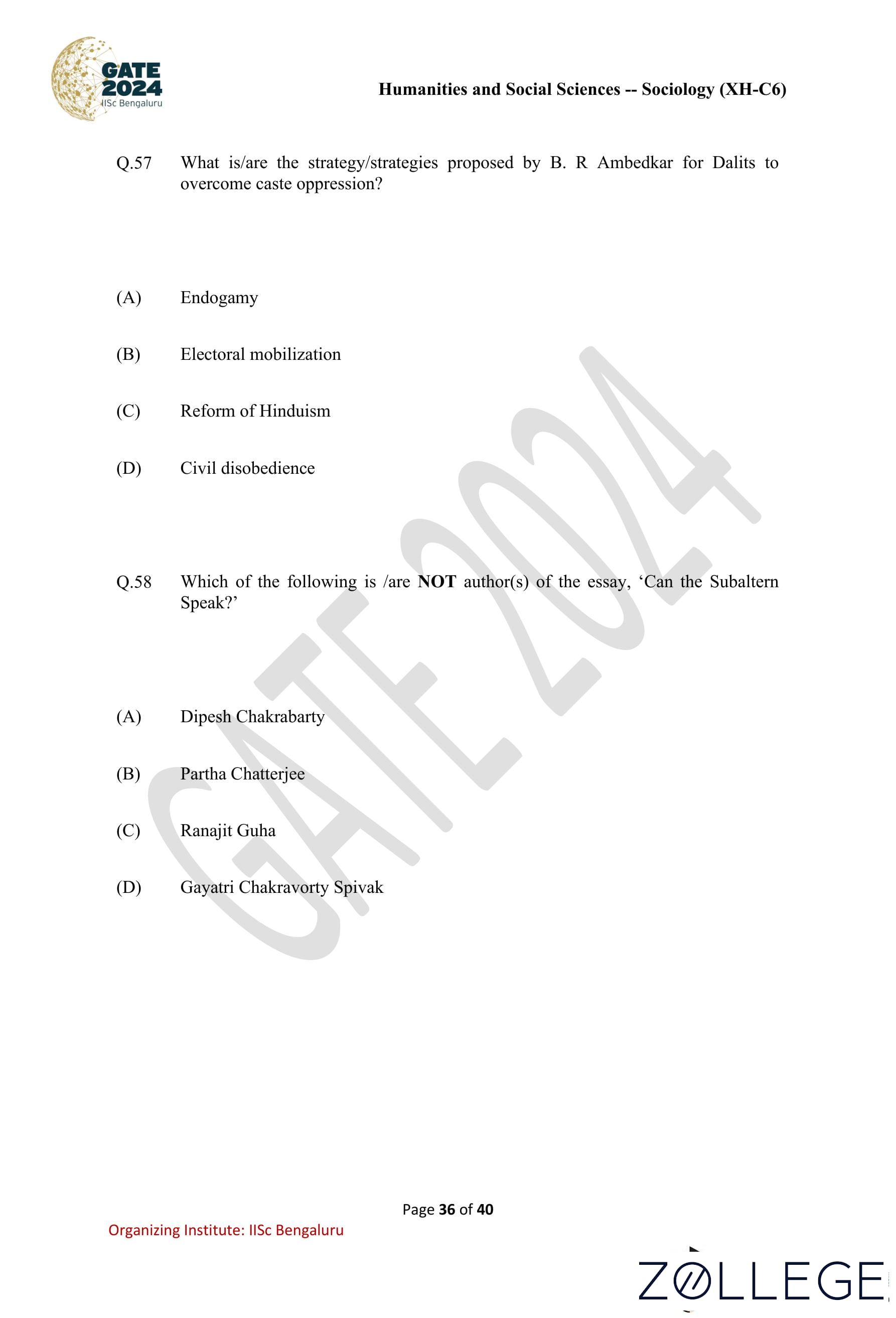
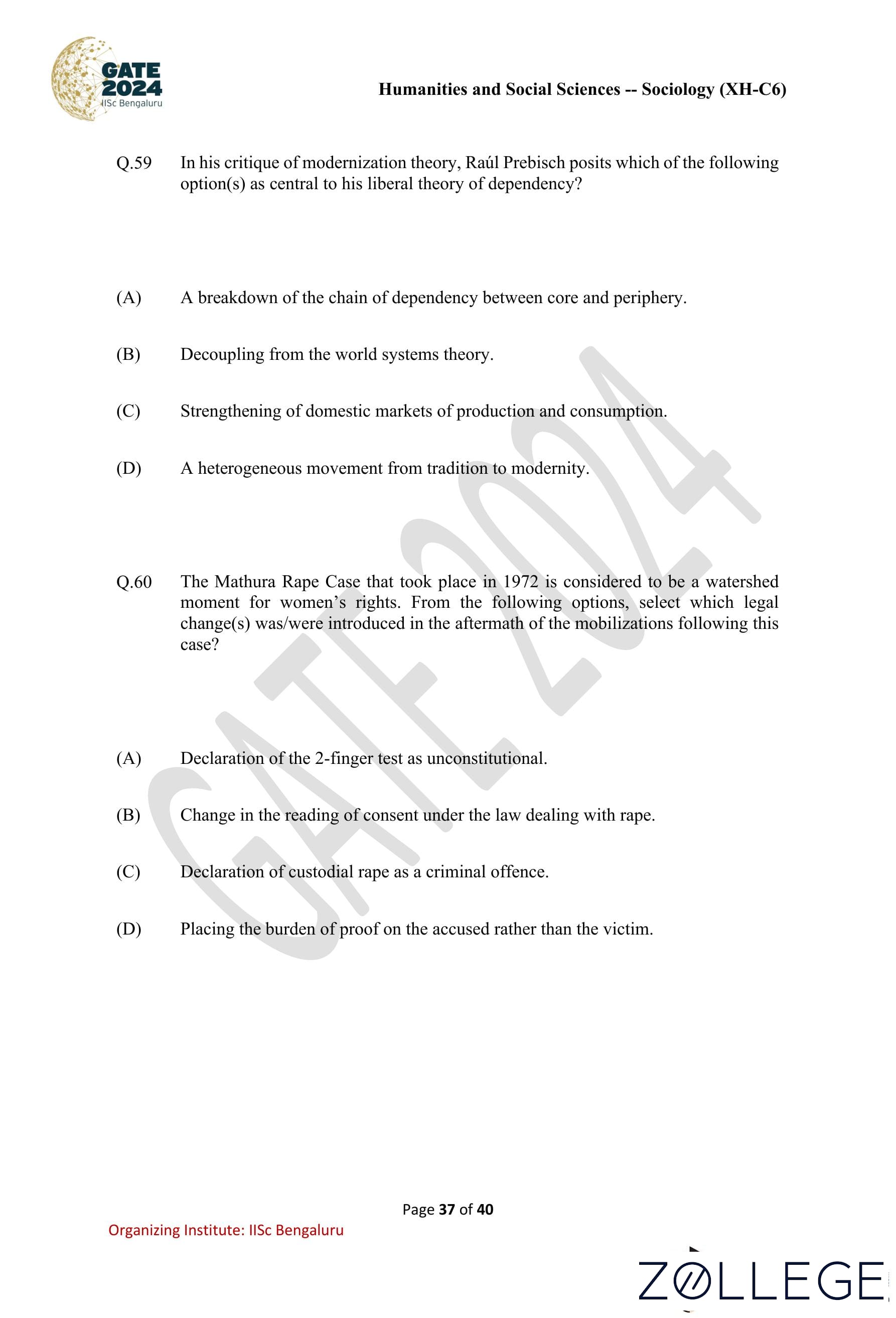
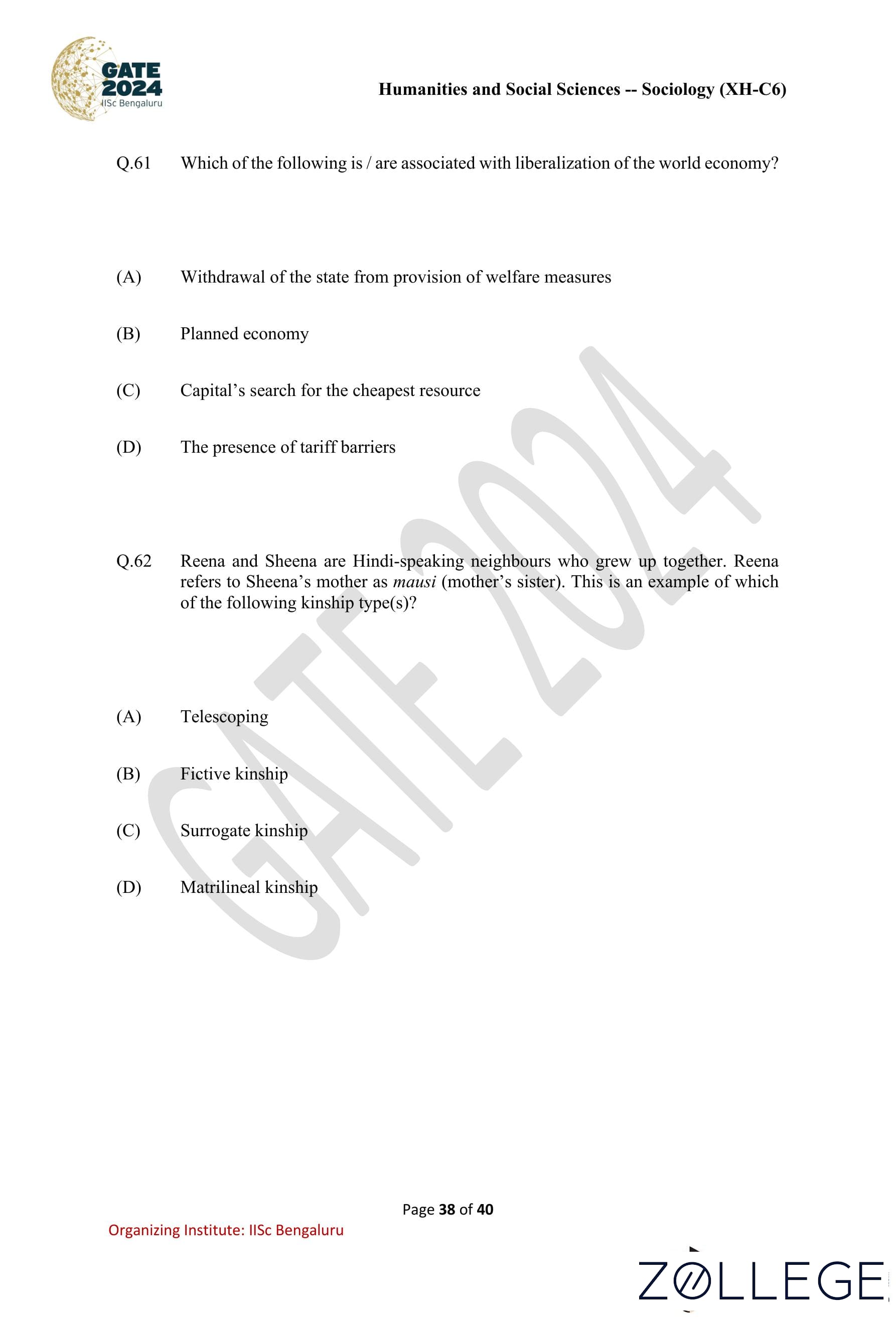
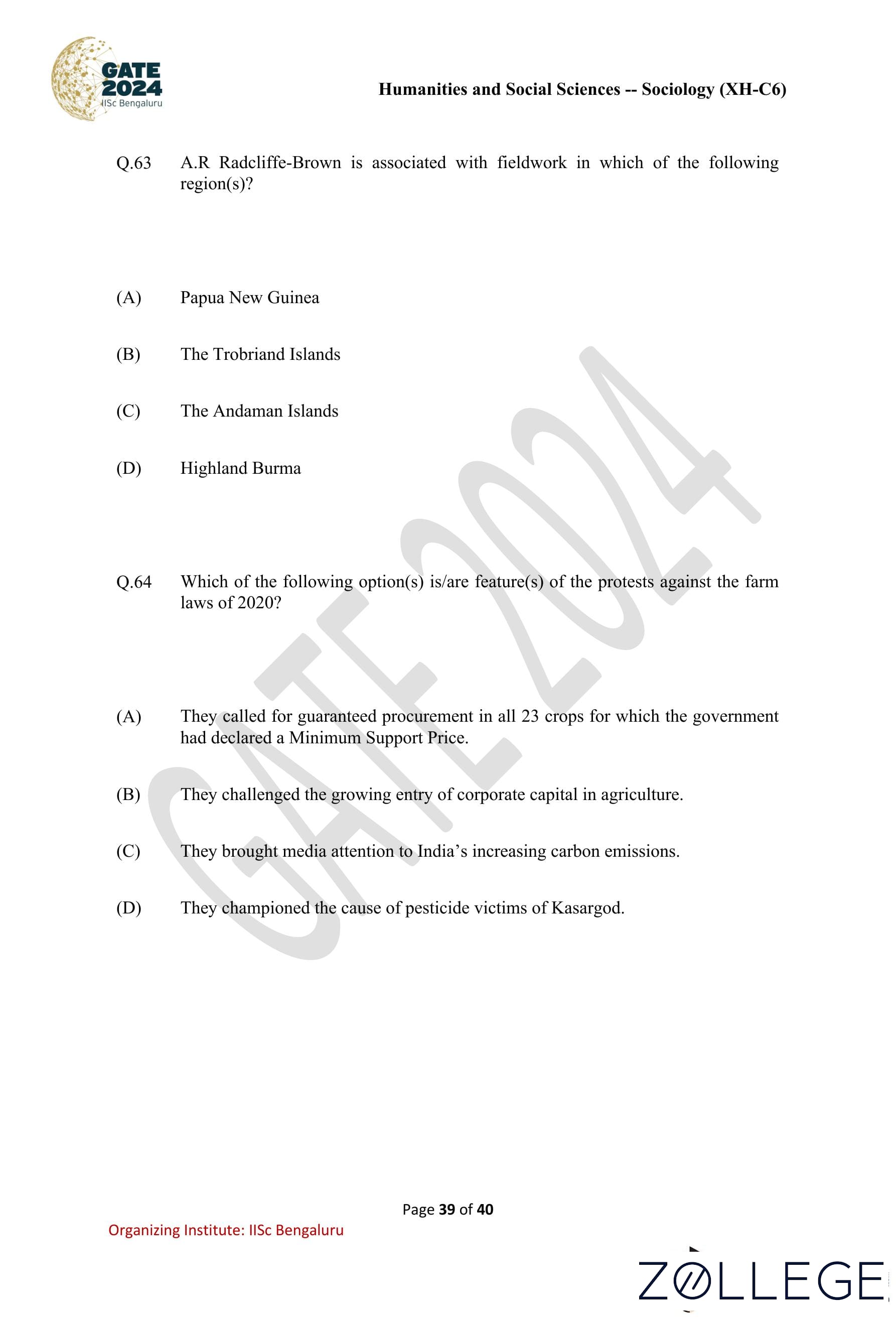
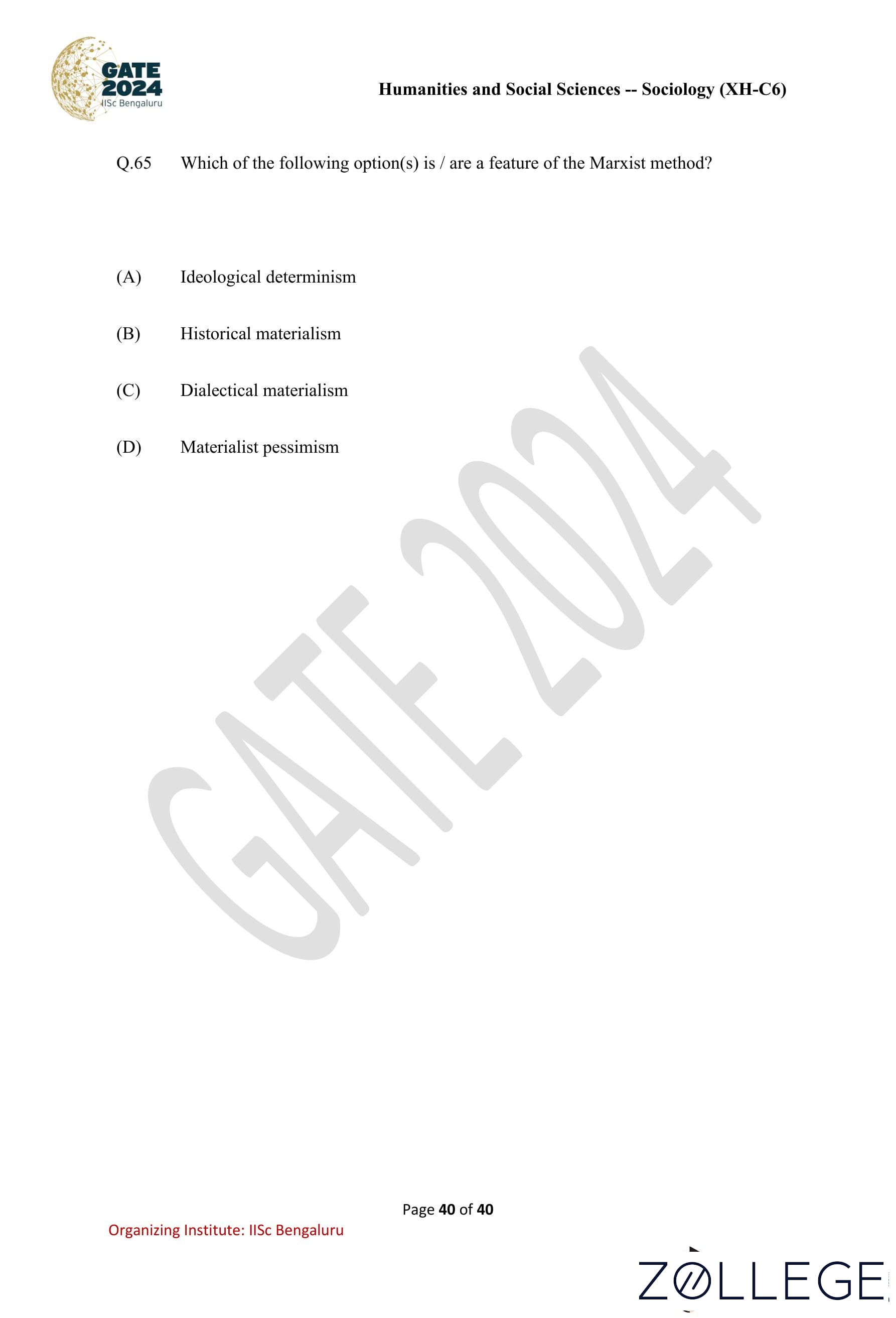
*The article might have information for the previous academic years, please refer the official website of the exam.